

P0122 on 2010-2012 Audi A3 1.2L TSI: Throttle Position Sensor Circuit Low Causes and Fixes
For the Audi A3 with the 1.2L TSI (CBZA) engine, code P0122 almost always points to a faulty throttle body, as the sensor is integrated. Expect symptoms like limp mode, EPC light, and poor acceleration. The standard fix is replacing the entire throttle body assembly, often a Magneti Marelli unit, followed by a mandatory electronic adaptation procedure using a tool like VCDS. This issue is common across other VW, Skoda, and Seat models using the same engine.
- P0122 on an Audi A3 1.2L TSI indicates an electrical failure in the throttle position sensor circuit, not a dirty throttle body.
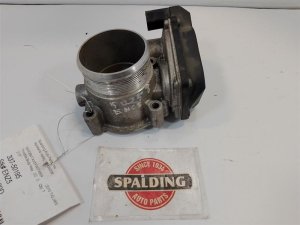
- The sensor is integrated into the throttle body; you cannot replace it separately. The entire throttle body assembly (OEM Part 03F133062B or 03F133062C) is the typical fix.
- Always inspect the wiring harness and connector for damage before ordering a new throttle body, though the part itself is the most common culprit.
- After replacing the throttle body, you MUST perform a Throttle Body Alignment (TBA) with a compatible scan tool (like VCDS) for the engine to run correctly.
What's Unique About the 2003-2012 Audi A3
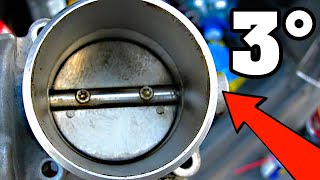
The Audi A3 8P generation with the 1.2L TSI (CBZA) engine uses a fully electronic 'drive-by-wire' throttle system. Unlike older cars, the throttle position sensor is not a separate, replaceable part; it is integrated into the throttle body assembly, which is commonly a Magneti Marelli-made unit known for this failure. Therefore, a P0122 code on this specific vehicle almost never means replacing just a small sensor. The entire throttle body unit is the focus of diagnosis and is the most commonly replaced part to resolve this electrical fault. This issue is frequently accompanied by P0222, the low circuit code for the secondary TPS (G188), as both sensors are housed in the same unit and tend to fail together.
Generation note: The 2003-2012 year range covers the Audi A3 8P generation. However, the 1.2L TSI CBZA engine was only introduced in this platform from 2010 onwards. This guide is specific to the 2010, 2011, and 2012 model years equipped with this engine and also applies to many other VAG vehicles with the same powertrain.
Symptoms You May Notice
- Check Engine Light is on
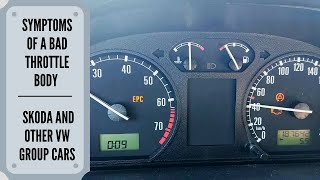
- EPC (Electronic Power Control) warning light is on.
- Vehicle enters 'limp mode' with drastically reduced power.
- Poor, delayed, or non-responsive acceleration.
- Hesitation or stumbling during acceleration
- Rough or unstable idle
- Engine may stall, especially when braking.
- Engine will not rev past a low limit (e.g., 2000-3000 RPM).
- Replacing the accelerator pedal position sensor. While part of the same system, P0122 specifically points to the sensor at the throttle body ('A' circuit), not the pedal sensor. Pedal sensor faults have their own distinct codes (e.g., P2122, P2127).
- Cleaning a dirty throttle body. While cleaning is good practice for idle issues or a P0121 (performance) code, it will not fix a P0122, which is an electrical circuit failure, not a mechanical obstruction or performance range issue.
Most Likely Causes
- Faulty Throttle Body Assembly 🔴 High Probability → Shop Fuel Injection Throttle Body The internal electronic sensors (G69 & G188) within the Magneti Marelli throttle body are a very common failure point. The failure is often due to worn internal contacts or broken bond wires inside the sealed sensor unit. Since the sensor is integrated, the entire unit must be replaced.
How to confirm: Using a VAG-compatible scan tool (like VCDS), observe the live data for 'Throttle Position Sensor G69'. If the reading is stuck at a very low percentage (e.g., 0%) or voltage (e.g., <0.2V) and does not change when the accelerator is pressed, the sensor inside the throttle body has failed. Often, the code P0222 for the second sensor (G188) will also be present, which is a strong confirmation.
Typical fix: Replace the entire throttle body assembly. After replacement, a Throttle Body Alignment (TBA) procedure must be performed using a compatible scan tool (like VCDS). This is a mandatory step for the ECM to learn the new sensor's range.
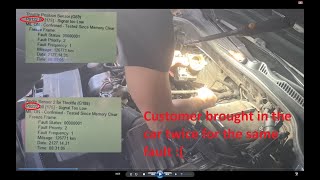
Est. part cost: $100-$350 - Wiring Harness or Connector Damage 🟡 Medium Probability The wiring loom near the throttle body is subject to engine vibration and heat, which can cause wires to chafe, break, or short to ground over time. A Skoda owner with a 1.2 TSI experienced a similar issue where the wires inside the throttle body's plastic housing had failed solder joints, requiring re-soldering. 🎬 Watch this video to see how to repair the internal throttle body wiring for free.
How to confirm: Visually inspect the wiring harness leading to the throttle body for any signs of chafing, melting, or corrosion. Unplug the connector and check for bent, corroded, or pushed-back pins. Use a multimeter to check for continuity on the signal wire and to verify there isn't a short to ground. A wiring diagram is essential for tracing the correct pins back to the ECM.
Typical fix: Repair the damaged section of the wiring harness or replace the connector pigtail. Ensure the repaired harness is properly secured away from heat sources and vibration points. In some cases, the fault may be internal to the throttle body's connector, requiring disassembly and re-soldering of the connections.
Est. part cost: $10-$50
Rare But Worth Checking
- Faulty Engine Control Module (ECM): This is very uncommon and should only be considered after the throttle body and all associated wiring have been definitively ruled out. An ECM failure can cause a loss of the 5V reference signal to the sensor or an inability to read the incoming signal correctly.
Diagnosis Steps
- Connect a VAG-compatible scan tool (like VCDS) and read fault codes from the Engine (01) module.
- Confirm P0122 is present. Note if P0222 or other throttle-related codes are also stored.
- Navigate to Live Data/Measuring Blocks. For UDS controllers, use Advanced Measuring Blocks and select variables for throttle position sensors 1 and 2. For older controllers, go to Group 062.
- Observe the voltage or angle percentage for Sensor 1 (G69). With Key On, Engine Off, it should show a steady value. P0122 suggests this value will be abnormally low (e.g., <0.2V) or zero.
- Slowly press the accelerator pedal to the floor. The voltage/percentage for a healthy sensor should increase smoothly. If it stays low, jumps erratically, or has dead spots, this confirms a sensor or wiring issue.
- Turn the ignition off and disconnect the electrical connector at the throttle body. Inspect the 6-pin connector and the pins on the throttle body for corrosion, moisture, or damage.
- Inspect the wiring harness leading to the throttle body for any visible signs of chafing, breaks, or heat damage, paying close attention to points where the loom flexes.
- If wiring appears intact, the failure is almost certainly internal to the throttle body. Replace the throttle body assembly.
- After replacing the throttle body, a Throttle Body Alignment (TBA) is mandatory. With VCDS, go to Engine -> Basic Settings -> Group 060 and activate. The tool will show 'ADP RUN' and then 'ADP OK'. This allows the ECM to learn the new sensor's closed and open positions.
- Clear all fault codes, cycle the ignition, and perform a test drive to ensure the EPC light stays off and throttle response is normal.
Parts You'll Likely Need
- Throttle Body Assembly
(OEM #03F133062B)— This is the most common failure for a P0122 code on this engine, as the throttle position sensor is integrated into the assembly and not sold separately. The original part is often a Magneti Marelli unit. Part number 03F133062C is a reported successor/replacement.
Trusted brands: VDO (OEM), Bosch, Magneti Marelli (Original), Trucktec Automotive, NRF
OEM price range: $250-$400
Aftermarket price range: $90-$200
Related Codes That Often Appear With This One
- P0222 — This is the equivalent 'Circuit Low' fault for the secondary throttle position sensor ('B' circuit / G188). Seeing P0122 and P0222 together is extremely common and strongly indicates a failure within the throttle body assembly itself or its main connector/wiring, as both sensors are in the same housing.
- P0221 — This code relates to the second throttle position sensor ('B' circuit) having a performance/range problem. The ECM often cross-checks both sensors, and a failure in one can trigger faults for the other.
- P0638 — This code for 'Throttle Actuator Control Range/Performance' can appear alongside TPS codes, indicating a general problem with the throttle body's ability to respond to commands, which is a logical consequence of having invalid position sensor data.
Platform-Specific Known Issues
- source — A user on the Briskoda forum with a 2013 Skoda Yeti (1.2L engine) experienced P0122, P0222, P0221, and P0638 simultaneously. Cleaning the throttle body did not resolve the issue, as the codes returned shortly after. This is a classic example of the electronic failure of the integrated sensors, where cleaning has no effect.
- source — A Volkswagen owner on Reddit posted about getting a P0122 code with EPC light. They confirmed that replacing the throttle body resolved the issue completely, with the repair taking about an hour. The EPC light went away after the second engine start.
Mechanic-Grade Diagnostic Values
- Throttle Body Connector (T6k) Pinout Voltages (Key On, Engine Off) — expected: Pin 1 (Signal G69): ~0.5-1.0V at closed throttle, rising smoothly to ~4.5V at wide open. Pin 2 (5V Reference): Stable 5.0V. Pin 4 (Signal G188): High at rest (~4.5V), decreasing smoothly as throttle opens. Pin 6 (Sensor Ground): 0V (continuity to chassis ground).. Failure: For P0122, Pin 1 voltage will be stuck below ~0.2V and will not change when the throttle is opened. Pin 2 having 0V indicates a wiring or ECM issue.
- VCDS Measuring Blocks - Group 062 (Drive-by-Wire) — expected: Field 1 (G187/G69): Should be a low percentage (5-15%) at idle. Field 2 (G188): Should be a high percentage (80-95%) at idle.. Failure: When the accelerator is pressed, Field 1 should increase and Field 2 should decrease smoothly. If the values are frozen, jump erratically, or are at 0%, it indicates a failed sensor within the throttle body.
Scan Tool Commands That Help
- VCDS (VAG-COM): Basic Settings - Group 060 - Throttle Body Alignment (TBA) — This is a mandatory procedure after replacing the throttle body or disconnecting the battery for an extended period. It allows the ECM to re-learn the closed, open, and partial-load positions of the new throttle plate and sensors. Failure to perform this can result in rough idle, stalling, or incorrect throttle response.
Wiring & Ground Locations
- T6k Connector — The 6-pin electrical connector located directly on the throttle body assembly at the front of the engine.. This is the primary test point for all signals to and from the throttle body. A pinout is required for diagnosis. Pin 1: Signal for G69 (Sensor 'A'). Pin 2: 5V Reference. Pin 3: Motor. Pin 4: Signal for G188 (Sensor 'B'). Pin 5: Motor. Pin 6: Sensor Ground.
- Main Engine Ground Point — A primary ground stud is typically located on the chassis frame rail, near or behind the battery.. A poor engine or sensor ground can cause floating voltage levels and is a potential, though less common, cause for a 'Circuit Low' code. Verifying a solid connection from Pin 6 of the throttle connector to this ground point is a valid diagnostic step.
Real Owner Repair Stories
- megared17 on Reddit (2009 VW Jetta TDI with 222,000 miles (different engine, but same electronic throttle body failure pattern)) — Car started throwing "Engine Workshop" faults, stumbling, and triggered code P0638 (Throttle Body Valve fault).
❌ Tried (didn't work) The user noted the old part was filthy, but correctly identified the issue was likely electronic, not just dirt buildup.
✅ What actually fixed it Replaced the entire throttle body assembly. The user notes the repair took about 6 hours and cost $200 for the part. This resolved the fault codes and driveability issues.
OEM Part Supersession History
03F133062B→03F133062C— Standard part revision, likely for improved reliability or minor manufacturing changes.
Heads up: No known incompatibility. 03F133062C is the direct, backward-compatible replacement for 03F133062B.
Diagnostic Flowchart
Other Known Issues on This Vehicle
Issues unrelated to this code that are worth knowing about as an owner of this generation:
- Timing Chain Stretch/Failure 🔴 High — A widely known issue on early EA111 1.2 TSI engines (like CBZA/CBZB). Can occur at various mileages, sometimes as early as 30,000 miles. A rattling noise on cold startup is a key symptom. (Ref: While no formal recall, VAG released updated timing chain and tensioner kits to address the problem.)
- Excessive Oil Consumption 🟠 Medium — Some owners report higher than expected oil consumption, potentially related to piston rings or the PCV system.
- DSG Mechatronic Unit Failure 🔴 High — For models equipped with the 7-speed dry clutch DSG (DQ200), mechatronic unit failures are a well-documented and expensive problem, causing jerky shifting or complete loss of drive. (Ref: Various service campaigns and recalls were issued in different markets over the years.)
- General Electrical and Sensor Faults 🟡 Low — Owners report various minor electrical issues, including problems with window regulators, central locking, dashboard instrument clusters, and other sensors failing over time.
- Coolant Leaks / Water Pump Failure 🟠 Medium — Leaks from the water pump or associated plastic thermostat housing are a common point of failure, leading to coolant loss and potential overheating.
Used vs. New Parts: Buying Guide for This Vehicle
When a used part is the smart pick: A used throttle body can be a cost-effective option for a DIY repair if on a tight budget, as the replacement is straightforward. However, it is a gamble because this specific part is a known common failure item across the VAG lineup.
Donor-vehicle mileage cap: roughly under 70000 miles for the part to have meaningful remaining life.
What to inspect on the donor part:
- Ask the seller for the mileage of the donor vehicle; lower is significantly better.
- Inspect the electrical connector pins for any signs of corrosion, moisture, or damage.
- Check the throttle plate for excessive carbon buildup, which might indicate a poorly maintained engine, but this is less critical than the electronics.
- If possible, get a warranty, even if it's only 30-60 days, as this provides some protection against receiving a part that has already failed.
OEM-only on this vehicle (don't cheap out):
- While not strictly 'OEM-only', the electronic throttle body is a critical component where quality matters. Cheap, unbranded aftermarket units have a high risk of premature failure or causing erratic behavior.
Aftermarket brands forum-validated for this vehicle:
- VDO (often the Original Equipment supplier, so this is equivalent to OEM).
- Bosch
- Pierburg (another OE producer).
Brands owners have reported issues with on this vehicle:
- Unbranded, low-cost units from online marketplaces. Forum discussions frequently highlight issues with these parts failing quickly or not performing the throttle body alignment correctly.
Real Owner Stories
Aggregated from forums and TSBs cited above. Mileages and costs reflect what owners reported in those sources.
2013 Skoda Yeti 1.2L TSI
Symptoms: Experienced P0122, P0222, P0221, and P0638 simultaneously. Attempted cleaning the throttle body but the codes returned shortly after.
What fixed it: The issue was identified as an electronic failure of the integrated sensors, requiring replacement of the throttle body assembly.
Source hint: Briskoda forum thread titled 'Fault codes P0222 P0122 P0221 P0638'
Volkswagen (VAG Platform) 1.2L TSI
Symptoms: Check engine light and EPC light were on due to P0122.
What fixed it: Replacing the throttle body resolved the issue completely. The repair took about an hour and the EPC light cleared after the second engine start.
Source hint: Reddit r/Volkswagen post 'P0122 check engine and EPC turns out I did need'
Skoda 1.2L TSI
Symptoms: Throttle-related fault codes caused by wiring failure.
What fixed it: Re-soldering failed solder joints inside the throttle body's plastic housing.
Source hint: Wiring Harness or Connector Damage section citing a Skoda owner experience
Related OBD-II Codes
Frequently Asked Questions
My Audi A3 1.2L TSI has an EPC light and won't rev past 3000 RPM. Is this related to P0122?
Can I just clean the throttle body on my CBZA engine to fix the P0122 code?
Is there a specific part number for the throttle body that fails on the 1.2 TSI?
Do I need special tools to replace the throttle body on my 2003-2012 Audi A3?
I'm seeing P0122 and P0222 together; does this mean I have two different broken parts?
Is the P0122 code related to the timing chain issues common on the CBZA engine?
Helpful Videos




We Have This Part in Stock

The information in this article is provided for general reference and educational purposes only. Vehicle specifications, procedures, and part compatibility can vary by production date, trim level, and region. Always consult your vehicle's factory service manual and verify part numbers before purchasing or performing repairs. Safety-critical components such as airbags, seat belts, and braking systems should be installed by a qualified professional.
- Audi A3:
- 🧭 Diagnostic Flowchart
- 🎬 Helpful Videos
- 🛍️ Shop This Part
- What's Unique About the 2003-2012 Audi A3
- Symptoms You May Notice
- Most Likely Causes
- Rare But Worth Checking
- Diagnosis Steps
- Parts You'll Likely Need
- Related Codes That Often Appear With This One
- Platform-Specific Known Issues
- Mechanic-Grade Diagnostic Values
- Scan Tool Commands That Help
- Wiring & Ground Locations
- Real Owner Repair Stories
- OEM Part Supersession History
- Other Known Issues on This Vehicle
- Used vs. New Parts: Buying Guide for This Vehicle
- Real Owner Stories
- 2013 Skoda Yeti 1.2L TSI
- Volkswagen (VAG Platform) 1.2L TSI
- Skoda 1.2L TSI
- Related OBD-II Codes
- Frequently Asked Questions
- 🎟️ Get 5% Off