

P0122 on 2005-2013 BMW 3 Series (E90/E92): Throttle & Pedal Sensor Fixes
On a 2005-2013 BMW 3 Series, code P0122 is most often caused by a faulty accelerator pedal assembly or a failing throttle body. Expect to pay $150-$250 for a new pedal assembly or $200-$500 for a new throttle body. Both are common DIY fixes.
- P0122 on an E9x BMW means the voltage from either the accelerator pedal sensor or the throttle body sensor is too low.
- The most common symptoms are limp mode, poor acceleration, and an erratic idle.
- Start your diagnosis at the accelerator pedal; it's a frequent failure point and easier to access and test than the throttle body.
- On diesel engines, the throttle body is a very common point of failure due to oil and soot contamination.
- The fix almost always involves replacing either the complete accelerator pedal assembly or the complete throttle body assembly.
What's Unique About the 2005-2013 BMW 3 Series
For the E9x generation 3 Series (2005-2013), P0122 creates a diagnostic challenge because the fault could lie in two different locations: the accelerator pedal assembly inside the cabin or the electronic throttle body in the engine bay. Unlike older cars with a physical cable, this system is fully electronic. The throttle position sensor is not sold separately; it is integrated into the throttle body assembly, requiring replacement of the entire unit if it fails. Owner experiences frequently point to the accelerator pedal assembly as a common point of failure that is often replaced first due to its accessibility and relatively lower cost. A BMW-specific scanner (like INPA or ISTA) is highly recommended to read proprietary codes that can help differentiate between a pedal fault and a throttle body fault, which a generic OBD-II scanner may not do.
Generation note: The 2005-2013 model years cover the entire E9x generation, which includes the E90 (sedan), E91 (wagon), E92 (coupe), and E93 (convertible). The causes and diagnostic principles for P0122 are consistent across this generation. However, specific part numbers for the throttle body and accelerator pedal will vary depending on the engine (e.g., N52, N54, N55, M57 diesel) and transmission type.
Symptoms You May Notice
- Check Engine Light is on
- Vehicle enters 'limp mode' (reduced engine power and RPM limit)
- Illumination of DSC, ABS, and/or yellow BRAKE warning lights
- Hesitation or significant lag during acceleration
- Unresponsive or 'dead' accelerator pedal
- Rough or erratic idle speed
- Engine stalling
- Harsh or delayed automatic transmission shifting
- Replacing the throttle body when the actual fault is a less expensive accelerator pedal assembly.
- Replacing sensors without first testing the wiring harness and connectors for shorts or open circuits.
- Guessing between the pedal and throttle body without using a BMW-specific scan tool to read detailed sub-codes.
Most Likely Causes
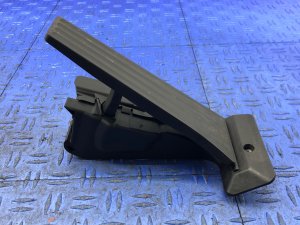
- Faulty Accelerator Pedal Assembly 🔴 High Probability → Shop Accelerator Pedal Assembly The electronic sensors within the pedal assembly are a known failure point that can wear out over time, leading to incorrect voltage signals. It contains two redundant sensors for safety, and a discrepancy between them can trigger faults.
How to confirm: With a multimeter, back-probe the pedal's electrical connector. Check for a stable 5V reference, a good ground, and a signal voltage that sweeps smoothly from ~0.5V to ~4.5V as the pedal is pressed, with no dropouts. A BMW-specific scan tool can also read live data from the two redundant pedal sensors to check for inconsistencies, which is the most reliable method.
Typical fix: Replace the entire accelerator pedal assembly. It is typically held in by one bolt and an electrical connector, making it a straightforward DIY job. 🎬 Watch: How to remove and install the gas pedal
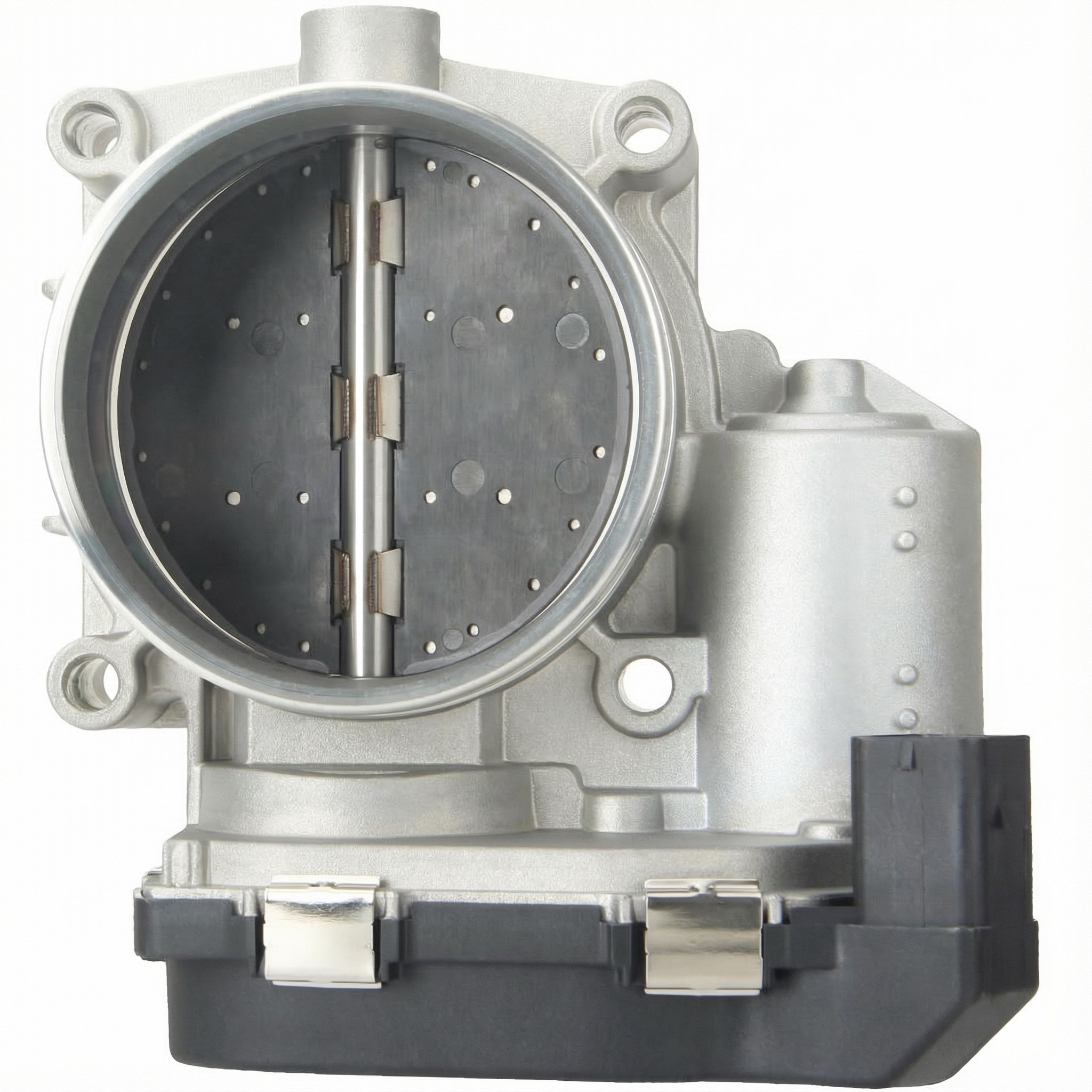
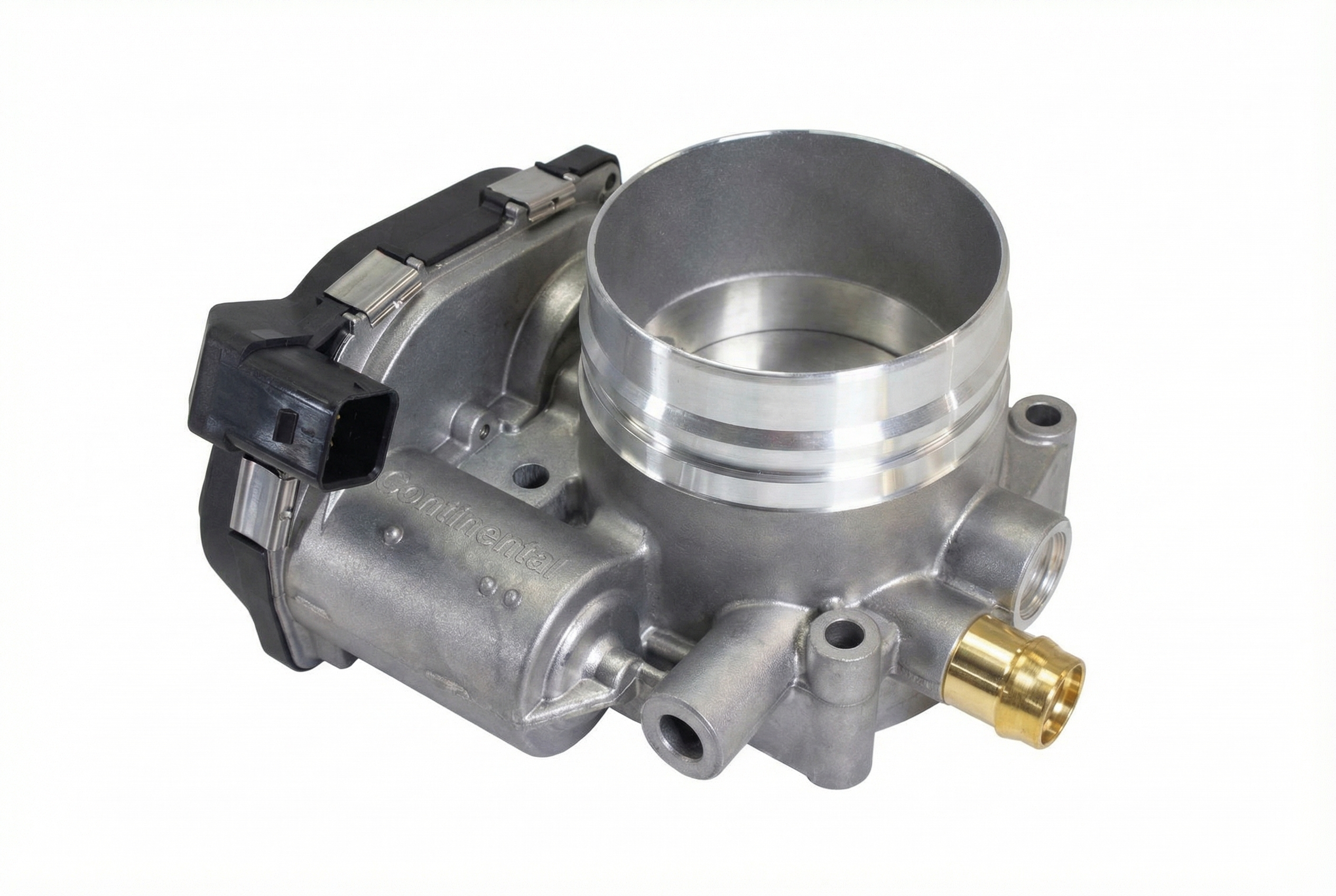
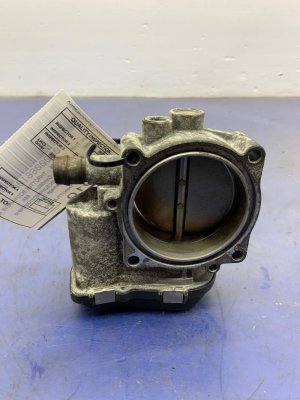
Est. part cost: $150-$250 - Faulty Electronic Throttle Body 🟡 Medium Probability → Shop Fuel Injection Throttle Body The position sensor is integrated into the throttle body and cannot be replaced separately. The internal electronics can fail, or on diesel models, the mechanism can get contaminated with oil and soot from the PCV/EGR system, causing it to short out or stick. On N54 engines, failures are common enough that it is a well-documented issue. 🎬 Watch: N54 throttle body replacement DIY guide
How to confirm: Visually inspect the throttle body and its connector for oil contamination or physical damage. Test the wiring for 5V reference, ground, and signal continuity back to the DME. If the pedal and wiring are good, the throttle body is the likely culprit. BMW-specific codes like 2CF6 often point directly to throttle body failure.
Typical fix: Replace the entire throttle body assembly. After replacement, a throttle adaptation reset is required using a scan tool or a specific key-on/pedal-press procedure.
Est. part cost: $200-$600 - Wiring Harness or Connector Issue ⚪ Low Probability Wires can chafe or break, and connector pins can corrode or back out, causing a short to ground or an open circuit. This is less common than component failure but should always be checked, particularly the harness near the throttle body.
How to confirm: Perform a visual inspection of the wiring to both the accelerator pedal and the throttle body. Check for continuity, shorts, and proper voltage at the connectors using a multimeter. Wiggle the harness while monitoring live data to see if the signal drops out.
Typical fix: Repair the damaged section of wiring or replace the connector pigtail.
Est. part cost: $20-$50
Rare But Worth Checking
- Faulty Engine Control Module (DME): This is very rare. The DME should only be considered after all other possibilities, including sensors, wiring, and grounds, have been exhaustively tested and ruled out.
Diagnosis Steps
- Read Fault Codes: Use a BMW-specific scanner (INPA, ISTA) to confirm P0122 and check for more detailed proprietary codes that can pinpoint the fault (e.g., pedal vs. throttle body). Note any other related codes.
- Inspect Wiring: Visually inspect the wiring and connectors at both the accelerator pedal (inside the car, above the pedal) and the throttle body (in the engine bay). Look for damage, corrosion, or loose connections.
- Test the Accelerator Pedal: Disconnect the pedal connector. Use a multimeter to verify a 5-volt reference and a good ground. Reconnect and back-probe the signal wire. The voltage should sweep smoothly from low (~0.5V) to high (~4.5V) as you press the pedal. Any jumps or dropouts indicate a bad pedal assembly.
- Test the Throttle Body: If the pedal tests good, move to the throttle body. Inspect the connector for oil fouling, especially on diesel and N54 models. Test the wiring for 5V reference and ground. Check the signal wire for a consistent reading.
- Clean the Throttle Body: As a preliminary step, you can remove the throttle body and clean it thoroughly with throttle body cleaner to ensure the butterfly valve isn't sticking, though this is less likely to fix a 'circuit low' code which is typically electronic.
- Isolate the Fault: Based on the voltage tests and any BMW-specific codes, determine which component (pedal or throttle body) or section of wiring is faulty.
- Replace the Faulty Component: Replace either the accelerator pedal assembly or the entire throttle body.
- Clear Codes and Perform Adaptation Reset: After replacement, clear the codes with a scanner. Perform a throttle adaptation reset. A common procedure is: Key in, press START (engine off), press the accelerator to the floor for 30-60 seconds, press START to turn off, release the pedal, and wait 2 minutes before starting the engine.
Parts You'll Likely Need
- Accelerator Pedal Assembly
(OEM #35426786282 (verify by VIN))— This is a very common failure point for the P0122 code on the E9x platform and is a complete, plug-and-play unit.
Trusted brands: BMW (Genuine), VDO, Bosch
OEM price range: $180-$250
Aftermarket price range: $120-$180 - Electronic Throttle Body Assembly
(OEM #13547556119 (N54) / 13547556118 (N52))— The internal position sensor fails and is not serviceable separately. The entire assembly must be replaced. Part number varies by engine.
Trusted brands: BMW (Genuine), VDO (OEM), Continental (OEM), Pierburg
OEM price range: $450-$600
Aftermarket price range: $200-$400
Related Codes That Often Appear With This One
- P0120 — This is a general fault for the Throttle/Pedal Position Sensor 'A' Circuit, often appearing alongside more specific codes like P0122.
- P0123 — This code for 'Circuit High Input' can appear intermittently with P0122 if the sensor is failing erratically, sending signals that are both too high and too low.
- P2135 — This code indicates a correlation error between the two redundant throttle/pedal position sensors ('A'/'B'). It often points directly to a failing sensor assembly (either pedal or throttle body).
- 2CF6 — A BMW-specific code for 'Throttle-valve actuator, start check', which strongly indicates a failing electronic throttle body on the N54 engine.
Platform-Specific Known Issues
- On diesel models (335d), the throttle body (often called an anti-shudder valve) is highly prone to failure from internal oil and soot contamination, which shorts out the electronics and triggers a P0122 code.
- On N54-powered models (335i), the throttle body is a known failure point, often accompanied by BMW-specific code 2CF6.
- On N52-powered models (325i, 328i, 330i), the throttle body part number is typically 13547556118.
Mechanic-Grade Diagnostic Values
- Throttle or Pedal Position Sensor Signal Voltage — expected: Smooth sweep from ~0.5V (closed/idle) to ~4.5V (wide open throttle) with key on, engine off.. Failure: Voltage below ~0.2V, or any sudden drops, spikes, or dead spots during the sweep.
- Sensor Reference Voltage at Connector — expected: Stable 5.0V DC with key on, engine off.. Failure: Voltage significantly lower than 5.0V or no voltage, indicating a wiring or DME issue.
- Throttle Position Sensor Internal Resistance — expected: Typically between 1-10 kΩ, but varies by manufacturer.. Failure: Infinite resistance (open circuit) or zero resistance (short circuit).
- Throttle Body Motor Wiring Gauge (N52 vs S54) — expected: N52 uses ~0.75 mm^2 (~18 gauge) wire; S54 ITBs use ~2.5 mm^2 (~14 gauge) wire.. Failure: Not a failure indicator, but highlights the different current draw requirements between throttle body types, useful for custom swaps.
Hidden / Shadow Codes Worth Checking
- 2D09: Drosselklappe (Throttle Valve). A generic BMW-specific code indicating a fault with the throttle body. Often appears with 2CFB. (see via BMW-specific scanner like INPA, ISTA, or advanced tools like Bimmergeeks ProTool.)
- 2CFB: Throttle-valve adaptation value. Indicates the DME is unable to learn or verify the throttle valve's end stops (adaptation). This points to a mechanical or electronic failure preventing proper calibration. (see via BMW-specific scanner like INPA, ISTA.)
- 2CF6 / 2CF7: Throttle valve potentiometer 1/2, plausibility. These codes indicate a disagreement between the throttle position sensor signals and the calculated air mass, pointing strongly to a failing throttle body on N54 engines. (see via BMW-specific scanner like INPA, ISTA.)
- 2ACB: DME Master Relay. While not directly a throttle code, a failing main relay can cause intermittent power loss to the DME and its sensors, potentially triggering a P0122 as a symptom of a larger electrical problem. (see via BMW-specific scanner like INPA, ISTA.)
Scan Tool Commands That Help
- ISTA: System Test Throttle Actuator — To command the throttle body through its full range of motion to check for electronic or mechanical faults. The test provides a pass/fail result, but be aware it can be overly sensitive and sometimes fail a functional part.
- ISTA: Delete engine adaptation values — This should be performed after replacing the throttle body or accelerator pedal to clear all learned values and force the DME to re-learn the new component's operating range.
- INPA/ISTA: Read live data from pedal/throttle sensors — To monitor the voltage signals from both redundant sensors in the pedal and throttle body in real-time. This helps identify which sensor is dropping out or providing an erratic signal.
Wiring & Ground Locations
- DME Connector Pins (N52/N54) — At the main Engine Control Module (DME) connector in the engine bay electronics box (E-box).. For end-to-end continuity testing of the throttle body harness, the specific pins are 14, 15, 16, 36, 37, and 38. Knowing these allows a technician to test the wiring from the component back to the computer without guesswork.
- Throttle Body Harness Chafe Point — In the engine bay, where the throttle body wiring harness may come into contact with other components.. There are documented cases of the throttle valve signal wire chafing against an air conditioning pipe, causing an intermittent short to ground that perfectly mimics a failing throttle body.
Real Owner Repair Stories
- Bimmerpost user 'Podunk' (2007 BMW 335i (N54), 92k miles, modified with JB4 tune and MHD backend flash.) — Goes into limp mode with throttle body codes (2CEC, 2CED, 2D09, 2CF6, etc.). Idle hunts aggressively. No throttle response.
❌ Tried (didn't work) Replacing the throttle body with a used OEM unit. The fix only lasts for about 1,000 miles before symptoms return., The owner is on their 4th throttle body in 10,000 miles., Resetting adaptations after each install.
✅ What actually fixed it The issue was not resolved in the thread, but the pattern strongly suggests the root cause is not the throttle body itself. The likely culprit is an underlying electrical issue, possibly related to the aftermarket JB4 tune interfering with the DME's signals, a failing DME, or a persistent wiring short that slowly damages the replacement throttle bodies. This highlights the need to investigate beyond the component when repeat failures occur. - Reddit user on r/BmwTech (2008 BMW 335i (N54)) — Engine starts but idle surges. Codes 2D09 (Throttle valve) and 2FCB (Throttle adaptation) are present.
❌ Tried (didn't work) Resetting adaptations using the pedal method., Swapping in a known-good throttle body from another car., Resetting all adaptations with INPA software.
✅ What actually fixed it The user noted they also intermittently received code 2ACB for the 'DME Master Relay'. The unresolved conclusion points to a likely electrical supply problem, where the main relay is failing and not providing stable power to the DME and its components, causing the throttle-related codes as a secondary symptom.
OEM Part Supersession History
Multiple (e.g., 35406753094, 35406762481)→35426786282— Part evolution and consolidation.
Heads up: The part number 35426786282 is listed for many BMWs, including E90, but also earlier E46/E39 models. It is critical to verify the correct pedal part number by VIN, as there are variations for manual vs. automatic and pre/post-LCI models.
Model Year Variations Within This Range
- Approx. 2006 vs 2007+: Early N52 engines with the MSV70 DME used an oval-shaped throttle body electrical connector. Later N52 engines with the MSV80 DME, and all N54 engines with the MSD80/81 DME, use a squared 6-pin connector. This is a critical difference when sourcing a replacement throttle body or diagnosing wiring.
Diagnostic Flowchart
Other Known Issues on This Vehicle
Issues unrelated to this code that are worth knowing about as an owner of this generation:
- Electric Water Pump & Thermostat Failure (N52/N54/N55) 🔴 High — Very common, typically fails between 60,000-100,000 miles with little to no warning.
- Oil Filter Housing Gasket (OFHG) Leak (All Engines) 🔴 High — Extremely common. If left unfixed, leaking oil drips onto the serpentine belt, causing it to slip, shred, and potentially get sucked into the engine's front main seal, leading to catastrophic failure.
- Valve Cover & Gasket Leak (All Engines) 🟠 Medium — Very common. The plastic valve cover can crack and the gasket becomes brittle, causing oil leaks onto the exhaust manifold (fire risk) or into spark plug wells (misfires).
- High-Pressure Fuel Pump (HPFP) Failure (N54 Engine) 🔴 High — A notorious and widespread issue on the N54 engine, leading to long cranks, sudden power loss, and limp mode. (Ref: Yes, multiple recalls and an extended warranty were issued by BMW (e.g., NHTSA Action Number PE10022).)
- Turbocharger Wastegate Rattle (N54 Engine) 🟠 Medium → Shop Turbocharger — Common on higher-mileage N54s. Caused by wear in the wastegate actuator rod/bushings, leading to a rattling noise on deceleration and potential low-boost fault codes. (Ref: BMW extended the warranty for wastegate issues on some vehicles.)
- VANOS Solenoid Failure (N52/N54/N55) 🟡 Low — Common but relatively easy and inexpensive to fix. Causes rough idle, poor performance, and VANOS-related fault codes. Often fixed by cleaning or replacing the two solenoids at the front of the engine. (Ref: A recall was issued for the VANOS housing bolts on some N52 models.)
- Fuel Injector Failure (N54 Engine) 🔴 High — Common failure item. Leaky injectors can cause misfires, rough idle, and in severe cases, wash fuel into the cylinder, leading to engine damage. (Ref: Injectors have gone through many revisions; later index numbers (e.g., Index 12) are considered more reliable.)
Used vs. New Parts: Buying Guide for This Vehicle
When a used part is the smart pick: A used accelerator pedal assembly is generally a reasonable choice, as it is located inside the cabin, protected from engine heat and contamination. For the throttle body, a used part is a gamble; while it can save money, these parts are a known failure item (especially on N54/diesel) and you may inherit a worn-out component.
Donor-vehicle mileage cap: roughly under 80000 miles for the part to have meaningful remaining life.
What to inspect on the donor part:
- For throttle bodies, inspect the connector pins for any signs of corrosion, oil contamination, or damage.
- Check the throttle plate for excessive carbon buildup, which might indicate a hard life.
- Ask the seller if the part was tested or if it comes from a running vehicle with no throttle-related fault codes.
OEM-only on this vehicle (don't cheap out):
- Electronic Throttle Body: While OEM brands like VDO are excellent, avoid no-name, cheap aftermarket throttle bodies, as their internal electronics may not meet BMW's precise signaling requirements, leading to repeat failures.
Aftermarket brands forum-validated for this vehicle:
- VDO (often the Original Equipment Manufacturer for BMW)
- Continental (also an OEM supplier)
- Bosch
- Pierburg
Brands owners have reported issues with on this vehicle:
- Unbranded, low-cost parts from online marketplaces are frequently cited in forums as failing quickly or being dead-on-arrival.
Real Owner Stories
Aggregated from forums and TSBs cited above. Mileages and costs reflect what owners reported in those sources.
BMW 3 Series (E90)
Symptoms: The owner experienced a P0122 code and attempted to resolve it by replacing the whole throttle pedal, but the code persisted.
What fixed it: The context notes this as a case where proper diagnosis of the throttle body or wiring was required after the pedal replacement failed to fix the issue.
Source hint: Bimmerpost (e90post.com) thread titled 'P0122'
Related OBD-II Codes
Frequently Asked Questions
My 2009 335i is showing P0122 and a BMW-specific code 2CF6. What does this mean?
I have a 335d diesel; why is my throttle body failing and causing P0122?
Can I just replace the sensor on my N52 engine's throttle body (part 13547556118)?
Is there a specific procedure to reset the car after replacing the pedal or throttle body?
My 3 Series has DSC, ABS, and yellow BRAKE lights on along with P0122. Are these related?
Is the accelerator pedal a difficult repair on the E90 3 Series?
Helpful Videos
We Have This Part in Stock

The information in this article is provided for general reference and educational purposes only. Vehicle specifications, procedures, and part compatibility can vary by production date, trim level, and region. Always consult your vehicle's factory service manual and verify part numbers before purchasing or performing repairs. Safety-critical components such as airbags, seat belts, and braking systems should be installed by a qualified professional.
- BMW 3 Series:
- 🧭 Diagnostic Flowchart
- 🎬 Helpful Videos
- 🛍️ Shop This Part
- What's Unique About the 2005-2013 BMW 3 Series
- Symptoms You May Notice
- Most Likely Causes
- Rare But Worth Checking
- Diagnosis Steps
- Parts You'll Likely Need
- Related Codes That Often Appear With This One
- Platform-Specific Known Issues
- Mechanic-Grade Diagnostic Values
- Hidden / Shadow Codes Worth Checking
- Scan Tool Commands That Help
- Wiring & Ground Locations
- Real Owner Repair Stories
- OEM Part Supersession History
- Model Year Variations Within This Range
- Other Known Issues on This Vehicle
- Used vs. New Parts: Buying Guide for This Vehicle
- Real Owner Stories
- BMW 3 Series (E90)
- Related OBD-II Codes
- Frequently Asked Questions
- 🎟️ Get 5% Off