

P0131 on 2017-2024 Chrysler Pacifica 3.6L: O2 Sensor Low Voltage Causes and Fixes
On a 2017-2024 Pacifica, P0131 almost always means the upstream oxygen sensor on the rear, firewall-side of the engine has failed. Replacing this sensor is the most common fix. Expect to pay $40-$80 for a quality aftermarket sensor (NTK is the OEM supplier and is strongly recommended) or $120-$180 for an OEM Mopar part.
- P0131 on your Pacifica points to the upstream O2 sensor on the rear (firewall side) cylinder bank.
- The most common fix is to replace the sensor itself. DIY is possible but access is tight.
- Use an OEM Mopar or NTK branded replacement sensor to avoid compatibility issues.
- Before replacing parts, visually inspect the sensor's wiring for any heat damage or melting.
- Consider asking a dealer to check for any available PCM software updates, as this can sometimes be the root cause.
What's Unique About the 2017-2024 Chrysler Pacifica
On the Chrysler Pacifica's transversely mounted 3.6L Pentastar V6, 'Bank 1' is the rear cylinder bank, located against the firewall. This makes accessing 'Sensor 1' (the upstream sensor) more challenging than on other vehicles where it might be at the front. While the code itself is standard, owners and technicians across all Pentastar platforms (Jeep, Dodge, Chrysler) strongly recommend using only OEM (Mopar) or the original equipment manufacturer brand, NTK, for replacement sensors. Using other aftermarket brands like Bosch frequently leads to the code returning.
Symptoms You May Notice
- Check Engine Light is on
- Decreased fuel economy
- Rough or unstable idle
- Engine hesitation or reduced performance, especially on acceleration.
- A strong smell of gasoline from the exhaust.
- Possible engine misfires or stalling in severe cases.
- Replacing the catalytic converter. A P0131 code is a cause, not a result, of catalytic converter problems. A failing O2 sensor can lead to converter damage if ignored, but the converter itself does not cause this code.
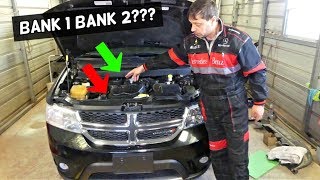
- Replacing the wrong O2 sensor. Bank 1 is the REAR bank on the Pacifica, and Sensor 1 is the UPSTREAM sensor (before the catalytic converter). It's easy to mix up banks or confuse the upstream and downstream sensors. 🎬 Watch: How to identify Bank 1 and Bank 2 on your Pentastar engine.
- Using an incompatible aftermarket O2 sensor. Many owners report that using brands other than Mopar or NTK on the 3.6L Pentastar engine will cause the P0131 code to return shortly after replacement.
Most Likely Causes
- Failed Upstream Oxygen Sensor (Bank 1, Sensor 1) 🔴 High Probability → Shop Oxygen Sensor Oxygen sensors are wear-and-tear items with a finite lifespan, typically 70,000-100,000 miles. Constant exposure to high exhaust temperatures and gases causes them to degrade over time. The Pentastar engine platform is also known to be particularly sensitive, often rejecting non-OEM sensor brands.
How to confirm: Using an OBD-II scanner with live data, observe the voltage for O2S11 (Bank 1, Sensor 1). A healthy sensor will show voltage fluctuating rapidly between approximately 0.1V and 0.9V. If the voltage is stuck consistently below 0.4V, the sensor is likely faulty.
Typical fix: Replace the Bank 1, Sensor 1 oxygen sensor. On the Pacifica 3.6L, this is the upstream sensor on the rear exhaust manifold (firewall side). It is critical to use a Mopar or NTK branded sensor.
Est. part cost: $40-$180 - Damaged Wiring or Connector 🟡 Medium Probability The sensor wiring is routed near the hot exhaust manifold, making it susceptible to melting, chafing, or becoming brittle and cracking over time. The connector itself can also accumulate dirt and moisture, leading to corrosion.
How to confirm: Visually inspect the entire wiring harness from the O2 sensor to the main engine harness. Look for any signs of melting, burns, exposed wires, or corrosion on the connector pins. Tug gently on the wires at the connector to ensure they are secure.
Typical fix: Repair the damaged section of wire or replace the connector pigtail. Ensure the repaired harness is secured away from the hot exhaust components.
Est. part cost: $10-$30 - Exhaust Leak ⚪ Low Probability Leaks can develop at the exhaust manifold gasket or any flange/weld joint before the O2 sensor. This allows outside air to be drawn into the exhaust stream, which the sensor interprets as a lean condition (low voltage).
How to confirm: Listen for a ticking or hissing sound from the engine bay, especially when the engine is cold. A visual inspection may reveal black soot marks around the leak. A smoke test is the most definitive way to find small leaks.
Typical fix: Replace the leaking gasket or repair the cracked exhaust component.
Est. part cost: $20-$150
Rare But Worth Checking
- Low Fuel Pressure: If the engine is genuinely running lean due to a weak fuel pump or clogged filter, the O2 sensor will accurately report low voltage. This would typically be accompanied by other codes or more severe drivability issues.
- Vacuum Leak: A significant vacuum leak (e.g., from an intake manifold gasket or a cracked vacuum hose) can let unmetered air into the engine, causing a lean condition that the O2 sensor detects. This usually triggers other lean codes (like P0171) as well.
- Oil Contamination from Oil Filter Housing Leak: The 3.6L Pentastar is notorious for its oil filter housing assembly cracking and leaking oil into the engine valley. This oil can drip down the back of the engine onto the O2 sensor wiring and connector for Bank 1, contaminating it and causing sensor failure. If you find oil on the sensor or harness, the leak must be fixed along with replacing the sensor. 🎬 Watch: How to replace a leaking oil cooler on a Chrysler Pacifica.
- Powertrain Control Module (PCM) Software: Chrysler has issued TSBs for other sensor codes on this platform where a PCM software update is the fix. It's worth asking a dealer to check if any software updates are available for your vehicle's VIN before performing expensive repairs.
- Faulty Powertrain Control Module (PCM): This is very rare. The PCM itself could be failing to interpret the sensor signal correctly. This should only be considered after all other possibilities have been exhaustively ruled out.
Diagnosis Steps
- Confirm the code P0131 is present using an OBD-II scanner.
- Check for any Technical Service Bulletins (TSBs) or available PCM software updates for your vehicle's VIN. A dealer can do this for you. TSB #18-050-22 REV. A, for example, addresses several O2 sensor heater circuit codes for the 2021 Pacifica Hybrid via a software update.
- Using the scanner's live data function, monitor the short-term and long-term fuel trims for Bank 1. High positive numbers (e.g., >10%) suggest the engine is trying to compensate for a lean condition.
- Watch the live voltage data for 'O2S11'. If it's stuck below 0.4V and not fluctuating, the sensor is likely bad.
- Perform a thorough visual inspection of the Bank 1, Sensor 1 (rear, upstream) O2 sensor's wiring and connector. Look for any signs of melting, chafing, corrosion, or oil contamination from the common oil filter housing leak.
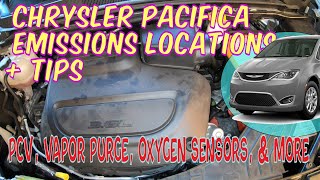
- Inspect the exhaust manifold and nearby pipes for any signs of an exhaust leak (soot, audible ticking). 🎬 See this video for help locating your Pacifica's oxygen sensors and emissions components.
- If wiring is good and no leaks are found, the O2 sensor itself is the most probable cause.
- After replacing the sensor (with a Mopar or NTK part), clear the code and perform a test drive to ensure the fix is complete and the code does not return.
Parts You'll Likely Need
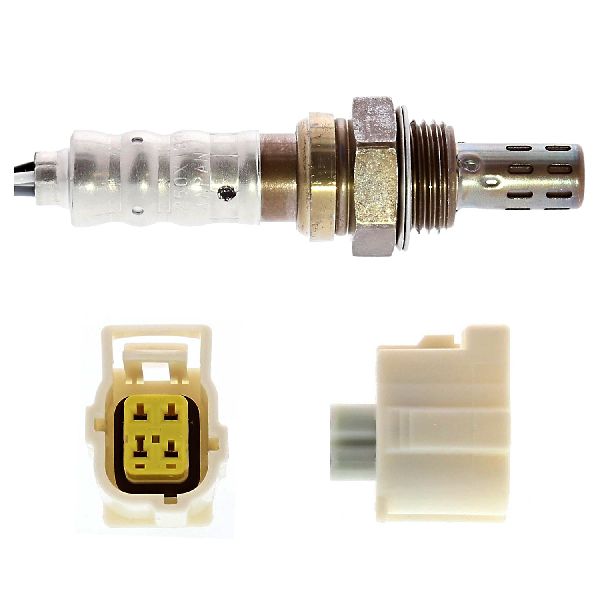
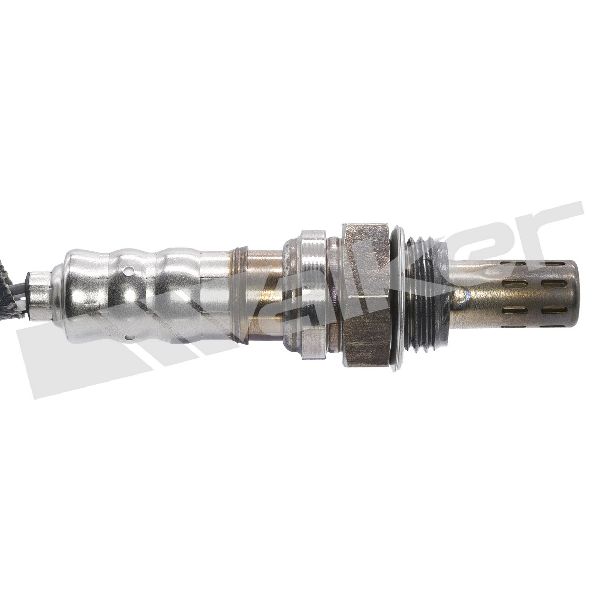
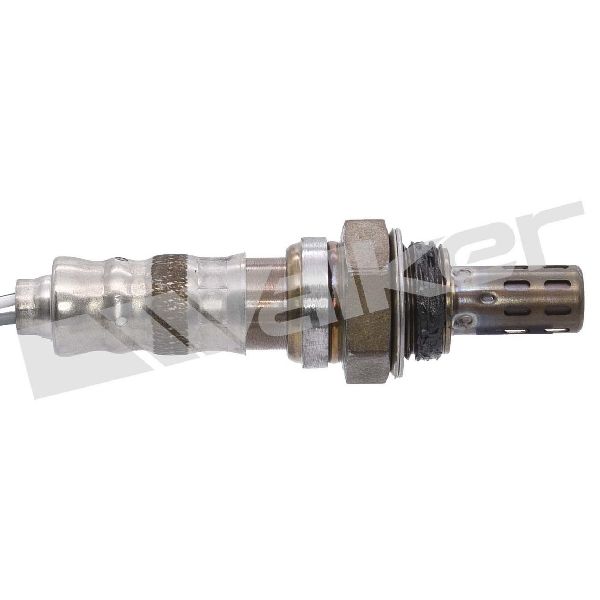
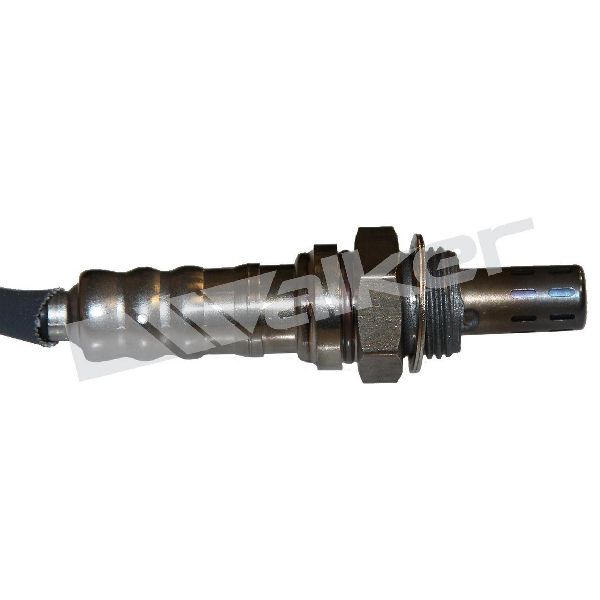
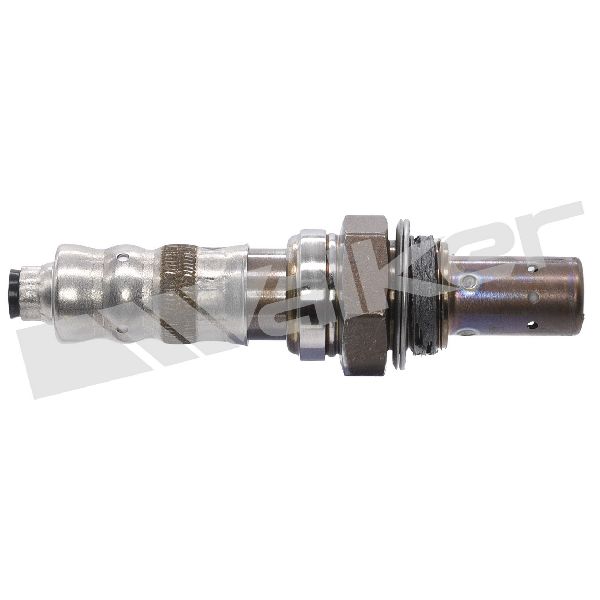
- Oxygen Sensor (Bank 1, Sensor 1)
(OEM #05149180AB)— This is the upstream sensor for the rear bank, which is the component directly identified by the P0131 code. It is the most common failure point for this issue.
Trusted brands: Mopar (OEM), NTK (OEM Supplier, Part #23161 or #23158 depending on specific application, verify by fitment)
OEM price range: $120-$180
Aftermarket price range: $40-$80
Related Codes That Often Appear With This One
- P0171 — If there is a legitimate lean condition (like a vacuum leak or exhaust leak), the PCM will set both P0171 (System Too Lean Bank 1) and P0131 as the O2 sensor reports the lean mixture.
- P0130 — P0130 indicates a general O2 sensor circuit malfunction, which can sometimes appear alongside the more specific P0131 low voltage code.
- P0172 — In confusing scenarios, a failing sensor can sometimes cause the PCM to overcorrect by adding too much fuel, leading to both a perceived lean condition (P0131) and an actual rich condition (P0172) being stored intermittently as the system struggles to maintain balance.
Technical Service Bulletins (TSBs) & Recalls
- TSB #18-050-22 REV. A: This TSB is for the 2021 Pacifica Hybrid and involves a PCM software update to address a list of potential MIL-causing codes, including several for O2 sensor heater circuits (P0031, P0032, P0037, P0038, etc.). While not directly for P0131, it shows a pattern of software fixes for sensor-related faults on this platform.
- TSB #18-002-19 REV A: While for a different code (P0369 Cam Sensor), this TSB also points to a PCM software update to change fault sensitivity, indicating a pattern of Chrysler using software updates to address overly sensitive sensor monitoring on the 3.6L Pentastar engine.
Platform-Specific Known Issues
- Real-World Repair Story: Intermittent P0131: A user on the iATN network reported a 2004 Pacifica (a predecessor platform) that would repeatedly set a P0131 code every 200 miles. The technician replaced the sensor twice with aftermarket parts, and the code returned both times. A third replacement with a genuine OEM sensor also failed to fix the issue, highlighting that while the sensor is the most common cause, underlying issues like intermittent wiring faults or even rare PCM glitches must be considered if the problem persists after a proper part replacement.
Mechanic-Grade Diagnostic Values
- O2 Sensor Heater Circuit Resistance — expected: 3 to 15 Ohms across the two heater pins (same color wires) on the sensor connector.. Failure: A reading of infinite resistance (OL) or near-zero ohms indicates a failed heater element.
- O2 Sensor Signal Wire Bias Voltage (KOEO) — expected: Approximately 0.45 Volts DC.. Failure: Significantly higher or lower voltage suggests a PCM or wiring fault. This test is performed on the harness-side connector with the sensor disconnected.
- Long-Term Fuel Trim (LTFT) for Bank 1 — expected: Close to 0%, typically within +/- 5%.. Failure: Consistently high positive values (e.g., > +10%) indicate the PCM is compensating for a perceived lean condition, which supports a P0131 diagnosis.
- O2 Sensor Signal Circuit to PCM Resistance — expected: Less than 5.0 Ohms.. Failure: A higher reading indicates excessive resistance or an open in the signal wire between the sensor connector and the PCM.
Scan Tool Commands That Help
- wiTECH (Chrysler Dealer Tool): O2 Sensor Verification/Relearn Procedure — After replacing an O2 sensor to ensure it is properly learned by the PCM. The procedure involves driving at 50 MPH and performing 3-5 deceleration events (foot off pedal for 10 seconds). The 'Oxygen Sensor percent' value in the data display should not vary by more than 4.0%.
Wiring & Ground Locations
- Bank 1, Sensor 1 Connector — On the rear (firewall side) exhaust manifold, before the catalytic converter. Access is tight and may require working from above and below the vehicle.. This is the primary connector to inspect for damage, corrosion, or oil contamination from the oil filter housing leak.
- G304 / G305 — Key PCM and engine ground points, typically located on the engine block, cylinder heads, or on the chassis/inner fender near the firewall.. A poor ground connection at these points can cause erratic voltage readings for multiple engine sensors, including the O2 sensor, leading to a false P0131 code.
OEM Part Supersession History
5149180AA→05149180AB— Standard part revision and update by the manufacturer.
Heads up: The new part number (05149180AB) is the correct and current replacement for the original. Using old stock of 5149180AA is not recommended.NTK 23162 / 23161→N/A— N/A
Heads up: On Pentastar applications, NTK uses different part numbers (e.g., 23161 and 23162) that may appear physically identical but have different wire harness lengths (e.g., 14 inches vs 10 inches). Using the wrong part may result in a harness that is too short to reach the connector or has too much slack, risking damage. Always verify fitment for the specific vehicle and sensor position.
Model Year Variations Within This Range
- 2021-2024: A significant facelift occurred for the 2021 model year, introducing new exterior styling and, notably, an all-wheel-drive (AWD) option for gasoline models. The AWD system may alter the routing of the exhaust and could affect access to the Bank 1 O2 sensor compared to FWD models.
Diagnostic Flowchart
Other Known Issues on This Vehicle
Issues unrelated to this code that are worth knowing about as an owner of this generation:
- Rocker Arm / Lifter Failure ('Pentastar Tick') 🔴 High — Common on earlier (pre-2016) Pentastar engines, but still reported on later models. Often manifests as a distinct ticking sound from the top of the engine that can lead to misfire codes (P0300-P0306) and eventual camshaft damage if ignored.
- 9-Speed Transmission Harsh Shifting / Shudder 🟠 Medium — Frequently reported by owners of 2017-2021 models. Symptoms include harsh/jerky shifting, loud clunks, and sudden hesitation. Often, the fix is a dealer-performed software update for the Transmission Control Module (TCM), as described in TSBs like 21-006-21, rather than a mechanical repair. (Ref: TSB 21-006-21)
- Engine Stop-Start (ESS) System Failure 🟡 Low — Extremely common. The system will display 'Stop/Start Unavailable' or 'Service Stop/Start System'. The root cause is almost always the failure of the small, secondary auxiliary battery, which has a short lifespan (1-3 years). Replacing the auxiliary battery typically resolves the issue.
- Oil Filter Housing / Cooler Assembly Leaks 🔴 High — A notorious failure point across all 3.6L Pentastar applications. The plastic housing, located in the 'V' of the engine, cracks or its gaskets fail, causing oil to leak down the back of the engine and transmission. This is often misdiagnosed as a rear main seal leak.
- EVAP Purge Valve Failure 🟡 Low — A common issue that can cause a rough idle, difficulty starting immediately after refueling, and EVAP-related check engine codes (P0440-P0455). It's a relatively simple and inexpensive part to replace.
Used vs. New Parts: Buying Guide for This Vehicle
When a used part is the smart pick: For this specific repair, using a used part is NEVER recommended. Oxygen sensors are a wear-and-tear component with a finite lifespan. Installing a used sensor is likely to result in the same code returning in a short amount of time.
What to inspect on the donor part:
- Do not purchase a used oxygen sensor.
OEM-only on this vehicle (don't cheap out):
- Oxygen Sensor
Aftermarket brands forum-validated for this vehicle:
- NTK (Original Equipment Manufacturer)
- Denso
Brands owners have reported issues with on this vehicle:
- Bosch (Frequently reported by owners of Pentastar-equipped vehicles to cause compatibility issues or premature failure)
- Universal or no-name sensors
Real Owner Stories
Aggregated from forums and TSBs cited above. Mileages and costs reflect what owners reported in those sources.
2004 Chrysler Pacifica — ~200 miles
Symptoms: The vehicle would repeatedly set a P0131 code every 200 miles.
What fixed it: The technician replaced the sensor twice with aftermarket parts and once with a genuine OEM sensor, but the code returned, suggesting underlying issues like intermittent wiring faults or rare PCM glitches.
Source hint: iATN network report cited in 'Real-World Repair Story: Intermittent P0131'
Chrysler Owner Report — Electrical Instability
Symptoms: An owner reported that when the radio and other controls would go bright then dim, a code reader showed multiple codes including P0506, P0137, P0171, P0131, and P0302 (NHTSA ODI #11678542).
Related OBD-II Codes
Frequently Asked Questions
Where is the Bank 1, Sensor 1 oxygen sensor located on my Chrysler Pacifica 3.6L?
Can I use a Bosch or other aftermarket oxygen sensor to fix P0131 on my Pacifica?
Does TSB #18-050-22 REV. A apply to my 2021 Pacifica Hybrid regarding O2 sensor codes?
Could an oil leak cause my P0131 code on the 3.6L Pentastar?
Is there a software update for sensor sensitivity on the 3.6L engine?
What should the voltage look like for a healthy O2S11 sensor on my Pacifica?
Helpful Videos
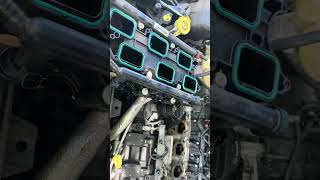
![2017 Chrysler Pacifica Oil Cooler Replacement. [3.6L]](https://img.youtube.com/vi/z1rrYCyqCN0/mqdefault.jpg)
We Have This Part in Stock


The information in this article is provided for general reference and educational purposes only. Vehicle specifications, procedures, and part compatibility can vary by production date, trim level, and region. Always consult your vehicle's factory service manual and verify part numbers before purchasing or performing repairs. Safety-critical components such as airbags, seat belts, and braking systems should be installed by a qualified professional.
- Chrysler Pacifica:
- 🧭 Diagnostic Flowchart
- 🎬 Helpful Videos
- 🛍️ Shop This Part
- What's Unique About the 2017-2024 Chrysler Pacifica
- Symptoms You May Notice
- Most Likely Causes
- Rare But Worth Checking
- Diagnosis Steps
- Parts You'll Likely Need
- Related Codes That Often Appear With This One
- Technical Service Bulletins (TSBs) & Recalls
- Platform-Specific Known Issues
- Mechanic-Grade Diagnostic Values
- Scan Tool Commands That Help
- Wiring & Ground Locations
- OEM Part Supersession History
- Model Year Variations Within This Range
- Other Known Issues on This Vehicle
- Used vs. New Parts: Buying Guide for This Vehicle
- Real Owner Stories
- 2004 Chrysler Pacifica — ~200 miles
- Chrysler Owner Report — Electrical Instability
- Related OBD-II Codes
- Frequently Asked Questions
- 🎟️ Get 5% Off