

P0132 on 2020-2024 Hyundai Palisade 3.8L: O2 Sensor Circuit High Voltage Causes and Fixes
This code indicates a high voltage reading from the upstream oxygen sensor on Bank 1 (the rear cylinder bank, closer to the firewall). The most common cause is a failed oxygen sensor, which is a DIY-friendly fix. Expect to pay $60-$150 for an aftermarket sensor or $250-$450 for an OEM part. Before replacing, check the wiring for heat damage.
- P0132 on your Palisade points to a high voltage signal from the upstream O2 sensor on the rear cylinder bank (Bank 1).
- The most likely fix is to replace the Bank 1, Sensor 1 oxygen sensor, OEM part number 39210-3L110.
- Before replacing the sensor, always perform a quick visual inspection of the wiring and connector for obvious damage like melting or corrosion, as the rear bank wiring is close to the exhaust.
- This is a DIY-friendly repair for those with basic tools, though a 22mm O2 sensor socket is recommended. Access to the rear sensor may be tight.
- Do not ignore this code, as it will cause poor fuel mileage and can eventually lead to expensive catalytic converter damage.
What's Unique About the 2020-2024 Hyundai Palisade
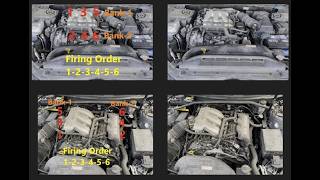
On the Palisade's transversely mounted 3.8L V6, 'Bank 1' refers to the cylinder bank located closer to the firewall (the rear bank), making access to this sensor slightly more challenging than Bank 2, which is at the front of the vehicle. While the P0132 code is common across many manufacturers, the key for Palisade owners is correctly identifying and accessing the Bank 1, Sensor 1 location. 🎬 Watch: How to identify Bank 1 and Bank 2 on this engine. Otherwise, the causes and diagnostic principles are standard for this engine type.
Symptoms You May Notice
- Check Engine Light is on
- Reduced fuel economy
- Rough or unstable idle
- Hesitation or stumbling during acceleration
- Slightly smoky or rich-smelling exhaust
- Replacing the catalytic converter. P0132 points to the upstream sensor or its circuit, not the converter.
- Replacing the wrong oxygen sensor (e.g., Bank 2 sensor at the front of the vehicle, or the downstream Sensor 2 after the catalytic converter). P0132 is specifically for Bank 1, Sensor 1 (rear bank, pre-catalyst).
Most Likely Causes
- Faulty Bank 1, Sensor 1 Oxygen Sensor 🔴 High Probability → Shop Oxygen Sensor Oxygen sensors are wear items exposed to extreme exhaust temperatures, leading to eventual failure or contamination. An internal short in the sensor's element or heater circuit is a common failure mode that causes a high voltage reading.
How to confirm: Use a scan tool to monitor the live data for the B1S1 O2 sensor. A healthy sensor's voltage will fluctuate rapidly between approximately 0.1V and 0.9V. If the voltage is stuck high (e.g., >0.9V), the sensor has likely fail 🎬 See this walkthrough on diagnosing and fixing high voltage O2 codes.ed.
Typical fix: Replace the Bank 1, Sensor 1 (Upstream, Rear Bank) oxygen sensor. This requires an O2 sensor socket (typically 22mm) and may be easier to access from underneath the vehicle.
Est. part cost: $60-$450 - Wiring or Connector Issue 🟡 Medium Probability The sensor wiring is routed near the hot exhaust manifold, making it susceptible to heat damage, melting, or becoming brittle over time. The connector can also accumulate dirt or corrosion, leading to a short circuit.
How to confirm: Visually inspect the wiring harness and connector leading to the Bank 1, Sensor 1 O2 sensor. Look for any signs of melting, chafing, corrosion, or broken wires. Check for a short to voltage using a multimeter on the signal wire.
Typical fix: Repair the damaged section of the wiring harness or clean/replace the connector. Use heat-resistant loom to protect the new repair.
Est. part cost: $5-$50 - Engine Running Rich ⚪ Low Probability While not specific to this platform, issues like a leaking fuel injector, a faulty fuel pressure regulator, or even a dirty mass airflow sensor can cause a rich condition that the O2 sensor is accurately reporting.
How to confirm: Check for other accompanying trouble codes (e.g., fuel trim codes like P0172). Use a scan tool to check long-term and short-term fuel trims. A strong negative fuel trim (e.g., -10% or more) indicates the PCM is trying to compensate for a rich condition.
Typical fix: Diagnose and repair the root cause of the rich condition, such as cleaning the MAF sensor or replacing a leaking fuel injector.
Est. part cost: $100-$400
Rare But Worth Checking
- Exhaust Leak: An exhaust leak before or near the O2 sensor can sometimes disrupt sensor readings by allowing outside air into the exhaust stream. While this more commonly causes a lean code (low voltage), a significant leak can sometimes cause erratic readings that may trigger a P0132.
- Powertrain Control Module (PCM) Fault: → Shop Engine Control Module (ECM) In very rare cases, the PCM itself may have a faulty driver circuit, misinterpreting the sensor's signal. This should only be considered after all other possibilities, including the sensor and wiring, have been exhaustively ruled out.
Diagnosis Steps
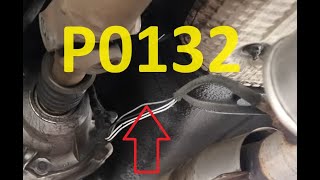
- Connect an OBD-II scanner and confirm that P0132 is the primary code. 🎬 Watch: A helpful guide to P0132 causes and common fixes. Note any other codes present, especially P0172 or P0152.
- Use the scanner's live data function to observe the voltage of the 'O2S B1S1' (Bank 1, Sensor 1).
- A healthy sensor should show voltage fluctuating rapidly between ~0.1V and 0.9V. If the voltage is stuck high (e.g., 0.9V or higher), it confirms the fault condition.
- Turn off the engine and allow it to cool completely. Locate the Bank 1, Sensor 1 O2 sensor on the rear exhaust manifold (closer to the firewall).
- Visually inspect the sensor's wiring harness and connector for any signs of melting, corrosion, or physical damage. Pay close attention to where the harness might contact the hot exhaust components.
- If the wiring appears intact, the most probable cause is a faulty oxygen sensor.
- If you have access to a multimeter, you can disconnect the sensor and test the heater circuit for proper resistance (check service manual for spec) and check the harness connector for correct reference voltage and ground.
- Before installing a new sensor, it's wise to check the fuse for the O2 sensor heater circuit, often labeled 'SENSOR 1' in the engine bay fuse box.
- If the sensor and wiring are confirmed to be good, further investigation into a rich running condition (fuel pressure, injectors) or a rare PCM fault is necessary.
Parts You'll Likely Need
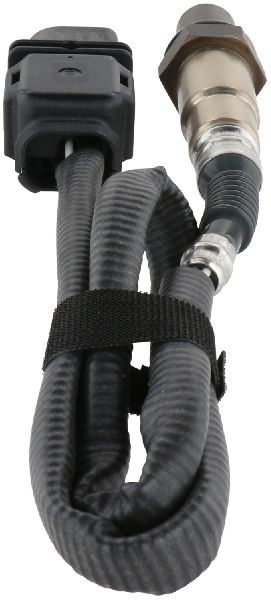
- Upstream Oxygen Sensor (Bank 1, Sensor 1)
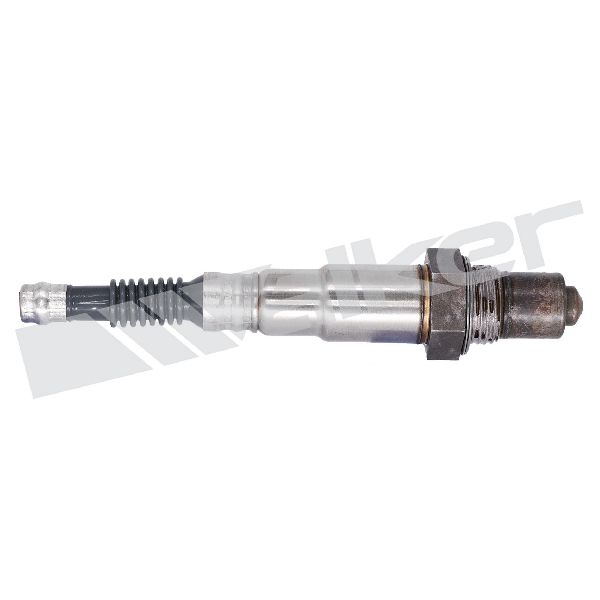
(OEM #39210-3L110)— This is the most common failure point for the P0132 code. It is a wear-and-tear component that degrades over time. Bank 1 is the rear bank, and this is the upstream sensor.
Trusted brands: Hyundai (OEM), Bosch, NGK/NTK, Denso
OEM price range: $250-$450
Aftermarket price range: $60-$150
Related Codes That Often Appear With This One
- P0172 — If the engine is genuinely running rich, you may also see a 'System Too Rich (Bank 1)' code along with P0132.
- P0133 — A failing oxygen sensor might also trigger a 'Slow Response' code as its performance degrades.
- P0152 — This is the equivalent high voltage code for Bank 2, Sensor 1. Seeing both P0132 and P0152 simultaneously might point towards a systemic issue like high fuel pressure rather than two independently failed sensors.
Technical Service Bulletins (TSBs) & Recalls
- No TSBs directly related to P0132 were found. However, owners should be aware of unrelated TSBs for this vehicle, such as those for wind noise or interior odors, which indicate Hyundai's process for addressing known issues.
Mechanic-Grade Diagnostic Values
- O2 Sensor Heater Circuit Resistance (Cold) — expected: ~9 Ohms. Failure: A reading of 0 Ohms (short circuit) or infinite/OL (open circuit).
Scan Tool Commands That Help
- Hyundai GDS (Global Diagnostic System) or equivalent: Live Data Monitoring (DTC Analysis) — This is the primary function to watch the B1S1 voltage in real-time. A stuck high voltage confirms the fault condition the code describes. Also used to monitor fuel trims to see if the PCM is compensating for a rich condition.
- Hyundai GDS (Global Diagnostic System) or equivalent: Actuation Test (e.g., Injector Disable) — If a true rich condition is suspected (indicated by high negative fuel trims), a technician can use the GDS to individually disable fuel injectors on Bank 1. If disabling a specific injector causes the O2 sensor voltage to drop, it points to that injector being the source of the rich condition.
- Hyundai GDS (Global Diagnostic System) or equivalent: Reset Adaptations (Auto Trans Adaptive Values) — After replacing a component that affects the air/fuel ratio (like an O2 sensor or fuel injector), resetting the PCM's learned fuel trim values is critical. This forces the system to relearn from a clean slate and helps verify the repair was successful.
Wiring & Ground Locations
- Bank 1 Injector/Coil Ground — On the 3.8L Lambda engine family, a key ground point for Bank 1 (rear bank) components is often located on the intake manifold itself.. A loose or corroded ground on the intake manifold, especially after service work, can cause erratic behavior or incorrect readings from sensors and actuators on that bank, potentially leading to fault codes. This is an often-overlooked check.
- Main Engine Ground Strap — Typically connects the engine block to the chassis, often near a passenger-side engine mount.. While a bad main ground causes widespread issues, it can create a voltage potential difference between the engine block (where the O2 sensor grounds through) and the chassis/PCM, leading to skewed sensor voltage readings that could be misinterpreted by the PCM.
Real Owner Repair Stories
- Carly Community User (2021 Hyundai Palisade) — Running excessively rich, reduced engine power, check engine light, rough running, increased fuel consumption, jerking during acceleration.
❌ Tried (didn't work) Initial self-diagnosis
✅ What actually fixed it A certified repair shop confirmed a defective fuel injector. Replacing the faulty injector resolved the rich mixture and all associated symptoms. This is a confirmed cause for a rich condition that would be reported by the O2 sensor and could trigger a P0132.
"I Checked Everything" — The Actual Cause
- In GDI engines like the Palisade's 3.8L, a persistent rich condition (which can cause P0132) can occur even with no vacuum leaks or faulty components. Frequent short-trip driving prevents the engine oil from reaching a temperature high enough to evaporate accumulated fuel. This fuel-saturated oil is then ingested through the PCV system, creating a genuine rich condition. A technician may find no faults with a smoke test or sensor tests. The actual fix is an oil and filter change to remove the contaminated oil.
OEM Part Supersession History
39210-3L110→N/A— No supersession found in public catalogs as of early 2026. This appears to be the consistent part number for the specified model years.
Heads up: This part is also used on the Kia Telluride and other Kia/Hyundai models with the 3.3L/3.8L engine, confirming its application across the Lambda engine family.
Model Year Variations Within This Range
- 2023-2024: The Palisade received a cosmetic facelift for the 2023 model year. However, the 3.8L Lambda II GDI V6 engine and its core emissions system remained unchanged. Diagnosis and parts for P0132 are consistent across the 2020-2024 range.
Diagnostic Flowchart
Other Known Issues on This Vehicle
Issues unrelated to this code that are worth knowing about as an owner of this generation:
- Tow Hitch Wiring Harness Fire Risk 🔴 High — Affects 2020-2022 models with an accessory tow hitch. Widespread enough to trigger a major safety recall (NHTSA 22V-633). (Ref: Recall 235 / NHTSA 22V-633)
- Excessive Wind Noise 🟡 Low — Very common complaint across all model years, typically starting at highway speeds. Often attributed to door/mirror seals. (Ref: Several TSBs exist to address alignment and add foam/stripping, but owner success varies.)
- Foul Interior Odor ('Smelly Headrests') 🟡 Low — Common in 2020-2021 Limited/Calligraphy trims with Nappa leather. The smell is often described as garlic or old socks. (Ref: TSB 20-BD-018H instructs dealers to neutralize the odor, and replace headrests if the smell persists.)
- Easily Cracked Windshields 🟠 Medium — Frequently reported by owners of 2020-2021 models, who claim the glass is fragile and cracks from minor impacts or stress. This has led to class-action lawsuits. (Ref: No recall, but the subject of multiple class-action lawsuits.)
- Musty A/C Smell from Evaporator Core 🟡 Low — Separate from the 'smelly headrest' issue, this is a common complaint where a musty odor comes from the vents, caused by microbial growth on the A/C evaporator. (Ref: No recall. A class-action lawsuit was filed. The fix is an intensive evaporator cleaning or replacement.)
Used vs. New Parts: Buying Guide for This Vehicle
When a used part is the smart pick: For this specific repair, a used part is NOT recommended. Oxygen sensors are wear-and-tear items with a finite lifespan. Installing a used sensor is likely to result in a repeat failure in the near future.
What to inspect on the donor part:
- Not applicable; avoid used oxygen sensors.
OEM-only on this vehicle (don't cheap out):
- While not strictly OEM-only, using the OEM sensor (part #39210-3L110) is the safest bet for guaranteed compatibility and performance. Some complex engine management systems are sensitive to the minor calibration differences in aftermarket sensors.
Aftermarket brands forum-validated for this vehicle:
- Denso: A major OEM supplier to many Asian automakers, known for high quality and direct-fit replacements.
- NGK / NTK: NGK and its sensor-specific brand NTK are also top-tier OEM suppliers with a strong reputation for reliability.
- Bosch: The inventor of the automotive oxygen sensor, Bosch provides high-quality aftermarket options, though it's important to ensure it is a direct-fit model and not a universal type.
Brands owners have reported issues with on this vehicle:
- Generic or unbranded 'no-name' sensors from online marketplaces. These often have poor quality control, leading to incorrect readings, premature failure, or triggering other codes. It is worth paying more for a reputable brand to avoid repeat labor.
Related OBD-II Codes
Frequently Asked Questions
Is there a TSB for the P0132 code on my 2020-2024 Hyundai Palisade?
Where is the Bank 1, Sensor 1 O2 sensor located on the 3.8L Lambda II V6?
Can I use a used oxygen sensor from a salvage yard to fix this code?
Which aftermarket sensor brands are recommended for the Palisade?
Could my Palisade's P0132 code be related to the tow hitch recall?
What is the specific Hyundai part number for the replacement sensor?
Helpful Videos

We Have This Part in Stock

The information in this article is provided for general reference and educational purposes only. Vehicle specifications, procedures, and part compatibility can vary by production date, trim level, and region. Always consult your vehicle's factory service manual and verify part numbers before purchasing or performing repairs. Safety-critical components such as airbags, seat belts, and braking systems should be installed by a qualified professional.
- Hyundai Palisade:
- 🧭 Diagnostic Flowchart
- 🎬 Helpful Videos
- 🛍️ Shop This Part
- What's Unique About the 2020-2024 Hyundai Palisade
- Symptoms You May Notice
- Most Likely Causes
- Rare But Worth Checking
- Diagnosis Steps
- Parts You'll Likely Need
- Related Codes That Often Appear With This One
- Technical Service Bulletins (TSBs) & Recalls
- Mechanic-Grade Diagnostic Values
- Scan Tool Commands That Help
- Wiring & Ground Locations
- Real Owner Repair Stories
- "I Checked Everything" — The Actual Cause
- OEM Part Supersession History
- Model Year Variations Within This Range
- Other Known Issues on This Vehicle
- Used vs. New Parts: Buying Guide for This Vehicle
- Related OBD-II Codes
- Frequently Asked Questions
- 🎟️ Get 5% Off