

P0133 on 2005-2015 Toyota Tacoma 2.7L: Slow A/F Sensor Causes and Fixes
On a 2005-2015 Tacoma with the 2.7L engine, code P0133 is almost always caused by a worn-out upstream Air/Fuel Ratio (O2) sensor. The second most likely cause is an exhaust leak before the sensor. Replacing the sensor with an OEM Denso part is the most common fix, costing around $120-$180 for the part. DIY difficulty is 2/5.
- P0133 on your 2.7L Tacoma almost always points to the upstream Air/Fuel Ratio sensor.
- Before replacing the sensor, always check for exhaust leaks between the engine and the sensor, as this is a common issue that can trigger the same code.
- To avoid the code returning, use a genuine Denso replacement sensor. Aftermarket sensors are known to cause issues.
- An oxygen sensor socket and penetrating oil will make the DIY replacement much easier.
What's Unique About the 2005-2015 Toyota Tacoma
The second-generation Tacoma with the 2.7L 2TR-FE engine is known for its reliability, but its A/F sensors are a common wear item. Owners frequently report that the original Denso sensors become slow after 100,000 miles, making P0133 a fairly common code as these trucks age. A crucial point for this platform is to thoroughly check for exhaust leaks at the manifold or the donut gasket between the manifold and downpipe before replacing the sensor, as these leaks can mimic the symptoms of a failed sensor and lead to a misdiagnosis. Some owners have reported cracked exhaust manifolds which can also introduce unmetered air and trigger the code.
Symptoms You May Notice
- Check Engine Light is on
- Decreased fuel economy
- Rough or uneven idle
- Engine hesitation or slower than normal acceleration
- Failure to pass an emissions test
- Black smoke from the exhaust in some cases
- Replacing the A/F sensor when an exhaust leak is the root cause.
- Replacing the downstream (Sensor 2) oxygen sensor instead of the upstream (Sensor 1) Air/Fuel sensor.
- Using a cheap, non-OEM (non-Denso) sensor, which often leads to the code returning or other performance issues.
Most Likely Causes
- Failing Upstream Air/Fuel Ratio Sensor 🔴 High Probability → Shop Oxygen Sensor The A/F sensor is a wear-and-tear item. Contamination from carbon, oil, and age degrades its ability to respond quickly. This is the most frequent cause of P0133 on high-mileage Tacomas, with many owners on forums like TacomaWorld confirming replacement fixed the issue.
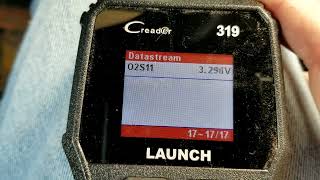
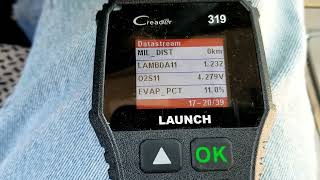
How to confirm: Use an OBD-II scanner with live data capabilities. Observe the Bank 1, Sensor 1 voltage. A healthy sensor's voltage should fluctuate rapidly between approximately 0.1V and 0.9V. A slow sensor will show very slow voltage changes or a relatively flat line, taking more than a second to swing from rich to lean.
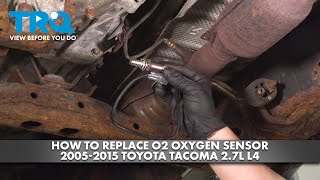
Typical fix: Replace the upstream Air/Fuel Ratio sensor. It is highly recommended to use the OEM manufacturer, Denso, to ensure compatibility and avoid recurring issues. An oxygen sensor socket is recommended for removal. Soaking the nuts with penetrating oil beforehand is advised due to rust.
Est. part cost: $120-$180 - Exhaust Leak Before the Sensor 🟡 Medium Probability The exhaust manifold gasket or the donut gasket between the manifold and downpipe can fail over time, allowing unmetered oxygen into the exhaust stream. This skews the sensor's readings, making the ECM interpret the data as a slow response. Cracked exhaust manifolds have also been reported on these trucks.
How to confirm: Perform a visual inspection of the exhaust manifold and gaskets for black soot trails, which indicate a leak. You may also hear a ticking or puffing noise, especially when the engine is cold, that quiets down as the engine warms up and the metal expands. A smoke test or spraying soapy water on the cold manifold and looking for bubbles on startup can also pinpoint a leak.
Typical fix: Replace the failed exhaust gasket(s). In some cases, the exhaust manifold itself may be cracked and require replacement.
Est. part cost: $20-$60 for gaskets
Rare But Worth Checking
- Damaged Wiring or Connectors: The wiring harness to the A/F sensor can be damaged by road debris or contact with hot exhaust components. Check for frayed wires, melted insulation, or corrosion in the connector. A user on TacomaWorld discovered their issue was related to wiring after replacing a sensor did not fix the code.
- Vacuum Leak: A significant vacuum leak from a cracked hose or faulty intake manifold gasket can cause a lean condition (often triggering a P0171 code alongside P0133) that may affect the sensor's readings.
- Failing Mass Airflow (MAF) Sensor: → Shop Fuel Injection Air Flow Meter A dirty or failing MAF sensor can provide incorrect airflow data to the ECM, leading to an improper air-fuel mixture and potentially triggering a P0133 code, though this is less common than a bad A/F sensor or exhaust leak.
Diagnosis Steps
- Scan for Codes: Use an OBD-II scanner to confirm P0133 is present. Note any other codes like P0171 or P0130, as they can point to a related root cause.
- Inspect for Exhaust Leaks: With the engine cold, start the vehicle and listen for any ticking or puffing sounds from the exhaust manifold area. Visually inspect the manifold and the gasket between it and the downpipe for any black soot marks indicating a leak. A smoke test is a more definitive method.
- Analyze Live Data: Using a scan tool, monitor the live data stream for 'O2S B1S1' or 'A/F Sensor B1S1'. At a steady 2500 RPM on a warm engine, the voltage should fluctuate rapidly. If the voltage is slow to change (taking more than 1-2 seconds to sweep) or stays fixed, the sensor is likely faulty.
- Inspect Wiring: Visually inspect the A/F sensor's wiring harness for any signs of damage, melting, or corrosion on the connector pins. Ensure it is securely connected.
- Test the Sensor Heater Circuit: A faulty heater circuit can cause a slow response. With a multimeter, you can check the resistance of the heater circuit pins on the sensor side of the connector (consult a service manual for specifications). This is more likely to throw a specific heater circuit code (like P0135) but is worth checking.
- Replace the Sensor: If no exhaust leaks or wiring issues are found and the live data indicates a slow response, the A/F sensor is the most probable cause and should be replaced with a Denso part.
Parts You'll Likely Need
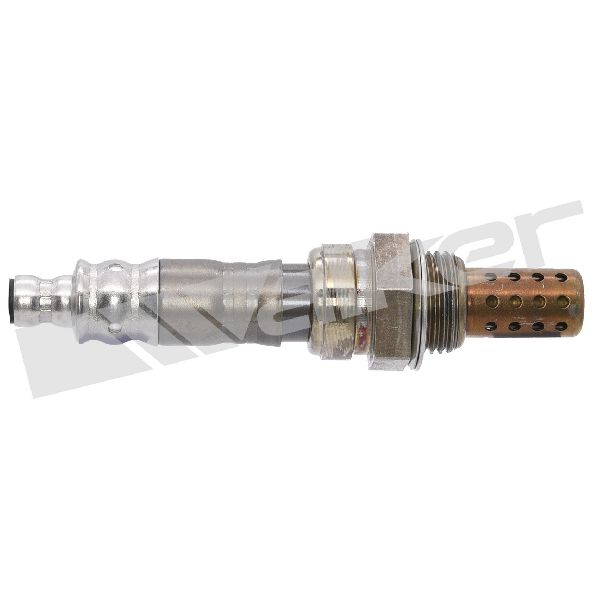
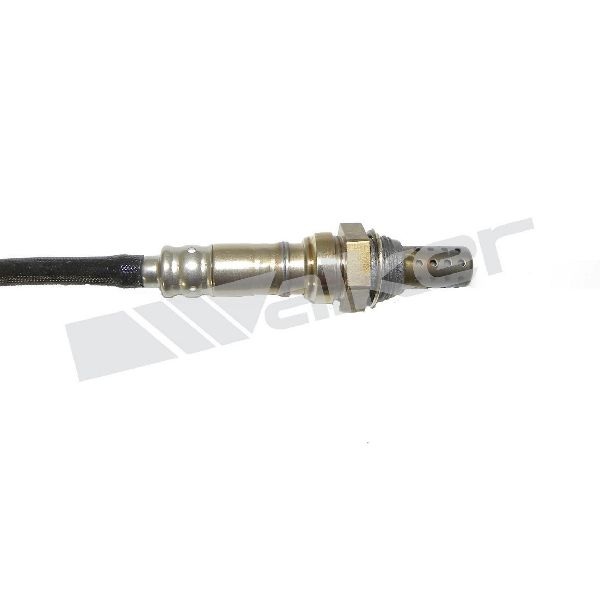
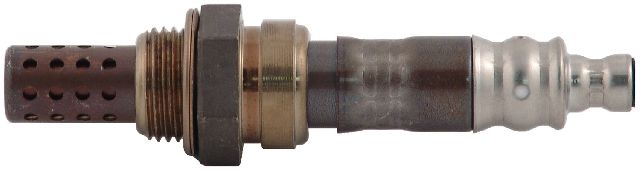
- Upstream Air/Fuel Ratio Sensor
(OEM #See notes)— This sensor is a common wear item and is the primary cause of the P0133 code. There are two different parts for this generation.
Trusted brands: Denso
OEM price range: $120-$180
Aftermarket price range: $70-$130 - Upstream Air/Fuel Ratio Sensor (2005-2012)
(OEM #Denso 234-9050 (Toyota 89467-04010))— This is the specific Denso (OEM) part for the 2005 through 2012 model years.
Trusted brands: Denso
OEM price range: $120-$150
Aftermarket price range: $70-$110 - Upstream Air/Fuel Ratio Sensor (2013-2015)
(OEM #Denso 234-9128 (Toyota 89467-04080))— This is the specific Denso (OEM) part for the 2013 through 2015 model years.
Trusted brands: Denso
OEM price range: $150-$180
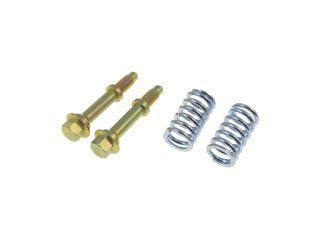
Aftermarket price range: $90-$130 - Exhaust Manifold Gasket — If an exhaust leak is found at the manifold-to-head connection, this gasket will need to be replaced.
Trusted brands: Fel-Pro, Mahle, Toyota OEM
OEM price range: $15-$30
Aftermarket price range: $10-$20
Related Codes That Often Appear With This One
- P0171 — This code for 'System Too Lean (Bank 1)' often appears with P0133 if an exhaust leak or vacuum leak is present, as the unmetered air causes both a lean condition and affects the A/F sensor's readings.
- P0420 — If P0133 is ignored for a long time, the poor fuel control can reduce the efficiency of the catalytic converter, eventually triggering the P0420 'Catalyst System Efficiency Below Threshold' code.
- P0130 — This code for 'O2 Sensor Circuit Malfunction (Bank 1, Sensor 1)' can appear alongside P0133, indicating a more general electrical fault with the sensor or its circuit, not just a slow response.
Mechanic-Grade Diagnostic Values
- A/F Sensor (B1S1) Voltage at Idle — expected: Stable around 3.3V.. Failure: Voltage is flat, stuck, or does not react instantly to throttle changes. Unlike traditional O2 sensors, it should NOT rapidly switch between 0.1V and 0.9V.
- A/F Sensor (B1S1) Voltage on Fuel Cut-off — expected: Jumps to 3.8V or higher.. Failure: Voltage does not rise significantly when snapping the throttle closed from ~4,000 RPM.
- A/F Sensor Heater Resistance — expected: 1.8 to 3.4 Ohms at 20°C (68°F) between terminals HT and +B of the sensor connector.. Failure: Resistance is outside the specified range, indicating a faulty internal heater.
- Long Term Fuel Trim (LTFT) — expected: Ideally within +/- 10%.. Failure: Consistently high positive trims (e.g., > +15%) can indicate an exhaust or vacuum leak is the root cause, not the sensor itself. A code may not be set until trims approach +/- 25%.
Hidden / Shadow Codes Worth Checking
- Mode $06, TID $01, CID $01: This refers to the raw data from the onboard diagnostic monitor for the Bank 1, Sensor 1 switching time test. It shows the measured response time value from the last test cycle compared to the minimum and maximum thresholds set by Toyota. (see via An advanced OBD-II scan tool capable of displaying Mode $06 data. A value close to or exceeding the maximum limit confirms the P0133 slow response condition directly from the ECU's perspective.)
Scan Tool Commands That Help
- Toyota Techstream: Active Test: 'A/F Control' — This is the most definitive bidirectional test to confirm a slow sensor. The software commands the engine to run rich (+25% fuel) and lean (-12.5% fuel). Graphing the A/F sensor voltage during this test will show a sluggish or flat response from a failing sensor, while a healthy sensor will react almost instantly.
Wiring & Ground Locations
- Engine-to-Firewall Ground Strap — Typically a braided strap located at the back of the 2TR-FE engine, connecting the cylinder head or engine block to the vehicle's firewall.. A poor engine ground can introduce electrical noise and voltage offsets, potentially affecting the sensitive A/F sensor readings and causing erratic behavior that could be misinterpreted as a slow response.
- Kick Panel Grounds — Ground points are located behind both the driver and passenger side kick panels.. These grounds are crucial for the body control module and other interior electronics, and can sometimes share paths with ECU grounds. Ensuring they are clean and tight is good practice when diagnosing any electrical-related engine code.
- A/F Sensor Connector Pins — At the A/F sensor electrical connector on the wiring harness.. Specific pins must be tested for diagnostics. The heater circuit resistance is measured between the HT and +B terminals on the sensor side. The signal wires can be back-probed here to check for correct voltage without disconnecting the sensor.
Real Owner Repair Stories
- Reddit user in r/MechanicAdvice (1996 Toyota Tacoma 2.7L) — Failed emissions test with codes P0130, P0133, and P0420.
❌ Tried (didn't work) Replacing only the downstream (Sensor 2) oxygen sensor.
✅ What actually fixed it Replacing both the upstream (Bank 1, Sensor 1) Air/Fuel sensor and the catalytic converter finally allowed the truck to pass emissions. This demonstrates how ignoring P0133 can lead to expensive converter damage.
"I Checked Everything" — The Actual Cause
- A common scenario for P0133 is a small exhaust leak from a cracked manifold or a failing gasket that only presents when the engine is cold. Mechanics often perform diagnostics, including smoke tests, on a fully warmed-up engine. By this time, thermal expansion of the metal components can temporarily seal the leak, causing the smoke test to pass and leading to a misdiagnosis. The key symptom is a distinct 'ticking' or 'puffing' sound from the manifold area on a cold start that disappears as the engine warms up.
OEM Part Supersession History
Denso 234-9050 (Toyota 89467-04010)→Denso 234-9128 (Toyota 89467-04080)— Change in sensor calibration or connector for later model years.
Heads up: The sensors for 2005-2012 and 2013-2015 are not interchangeable. Using the incorrect part number for your model year will result in the code returning or other performance issues.
Model Year Variations Within This Range
- 2013-2015: The upstream Air/Fuel ratio sensor part number changed for the 2013 model year. 2005-2012 models use Denso 234-9050, while 2013-2015 models require Denso 234-9128. It is critical to use the correct part for the specific model year.
Diagnostic Flowchart
Other Known Issues on This Vehicle
Issues unrelated to this code that are worth knowing about as an owner of this generation:
- Frame Rust/Corrosion 🔴 High — Very common, especially in cold climates with road salt. Led to a warranty enhancement program and class-action settlement for 2005-2010 models. (Ref: Customer Support Program ZKA, Limited Service Campaign K0D)
- Secondary Air Injection Pump Failure 🟠 Medium — Common failure, often due to the internal foam filter disintegrating and jamming the pump impeller. Can lead to codes like P2445. (Ref: An extended warranty was offered for some models, but not all years may be covered.)
- Broken Rear Leaf Springs 🔴 High — Prevalent on 2005-2011 models, where springs could fracture due to stress or corrosion, potentially puncturing the fuel tank. (Ref: NHTSA Recall #14V604000)
- Premature Clutch Wear (Manual Transmission) 🟡 Low — Some 2005-2011 models with manual transmissions experienced slipping clutches. A TSB was issued to replace the original LUK clutch with a superior Aisin unit. (Ref: TSB-0066-11)
Used vs. New Parts: Buying Guide for This Vehicle
When a used part is the smart pick: A used part is a smart choice for a cracked exhaust manifold. An OEM used manifold from a reputable salvage yard is often of higher quality and better fit than a new, low-cost aftermarket manifold.
Donor-vehicle mileage cap: roughly under 150000 miles for the part to have meaningful remaining life.
What to inspect on the donor part:
- Inspect the manifold thoroughly for any hairline cracks, especially near the collector welds and flange.
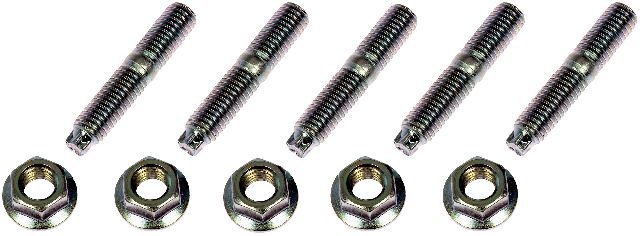
- Ensure all mounting studs are intact and not broken off.
- Check that the flange surfaces are flat and not severely warped or pitted.
OEM-only on this vehicle (don't cheap out):
- Upstream Air/Fuel Ratio Sensor
Aftermarket brands forum-validated for this vehicle:
- Denso (This is the Original Equipment Manufacturer and is the only brand highly recommended by Tacoma owners for A/F sensors).
Brands owners have reported issues with on this vehicle:
- Bosch (While a quality brand for many applications, forum users frequently report compatibility issues and recurring codes when using their universal or even direct-fit A/F sensors on this generation of Tacoma).
Real Owner Stories
Aggregated from forums and TSBs cited above. Mileages and costs reflect what owners reported in those sources.
2005-2015 Toyota Tacoma 2.7L
Symptoms: Error P0133 Oxygen Sensor Circuit Slow Response (Bank 1, Sensor 1).
What fixed it: Replacing the sensor with a genuine Denso part.
Cost: $30-$30
Source hint: TacomaWorld Thread: 'Help needed: Error P0133 Oxygen Sensor Circuit Slow Response (Bank 1, Sensor 1)'
1996 Toyota Tacoma 3.4L
Symptoms: Severe hesitation and power loss.
What fixed it: Replacing the upstream O2 sensor.
Source hint: TacomaWorld Thread: '96 3.4L P0133 Trouble code...'
2005-2015 Toyota Tacoma 2.7L
Symptoms: P0133 along with P0130 and a MAF code.
What fixed it: Discovered a cracked exhaust manifold was the likely root cause.
Source hint: TacomaWorld Thread: 'Cracked Exhaust Manifold, bad MAF & O2 sensor.'
Related OBD-II Codes
Frequently Asked Questions
Which brand of Air/Fuel Ratio sensor should I buy for my 2.7L Tacoma to fix P0133?
Can a cracked exhaust manifold cause the P0133 code on my 2TR-FE engine?
Is there a specific TSB for the P0133 code on the 2005-2015 Tacoma?
How can I tell if my P0133 is caused by an exhaust leak instead of a bad sensor?
I have high mileage on my Tacoma; is this a common failure?
Should I buy a new or used exhaust manifold if mine is cracked?
Helpful Videos
We Have This Part in Stock

The information in this article is provided for general reference and educational purposes only. Vehicle specifications, procedures, and part compatibility can vary by production date, trim level, and region. Always consult your vehicle's factory service manual and verify part numbers before purchasing or performing repairs. Safety-critical components such as airbags, seat belts, and braking systems should be installed by a qualified professional.
- Toyota Tacoma:
- 🧭 Diagnostic Flowchart
- 🎬 Helpful Videos
- 🛍️ Shop This Part
- What's Unique About the 2005-2015 Toyota Tacoma
- Symptoms You May Notice
- Most Likely Causes
- Rare But Worth Checking
- Diagnosis Steps
- Parts You'll Likely Need
- Related Codes That Often Appear With This One
- Mechanic-Grade Diagnostic Values
- Hidden / Shadow Codes Worth Checking
- Scan Tool Commands That Help
- Wiring & Ground Locations
- Real Owner Repair Stories
- "I Checked Everything" — The Actual Cause
- OEM Part Supersession History
- Model Year Variations Within This Range
- Other Known Issues on This Vehicle
- Used vs. New Parts: Buying Guide for This Vehicle
- Real Owner Stories
- 2005-2015 Toyota Tacoma 2.7L
- 1996 Toyota Tacoma 3.4L
- 2005-2015 Toyota Tacoma 2.7L
- Related OBD-II Codes
- Frequently Asked Questions
- 🎟️ Get 5% Off