

P0135 on 2001-2007 Toyota Highlander 3.0L V6: O2 Sensor Heater Fix
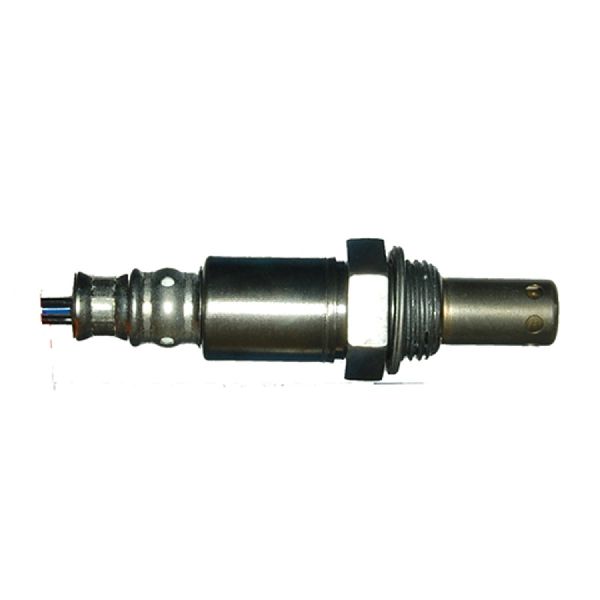
This code almost always means the heater element inside the Bank 1, Sensor 1 Air-Fuel Ratio Sensor has failed. Bank 1 is the rear cylinder bank against the firewall. Replacing this sensor with a quality Denso part is the most common fix. Expect to pay $70-$150 for the part.
- P0135 on your Highlander means the heater in your rear, pre-catalytic converter oxygen sensor has failed.
- The part you need to replace is the Air-Fuel Ratio Sensor for Bank 1, Sensor 1.
- Bank 1 is the cylinder bank against the firewall, and Sensor 1 is the sensor before the catalytic converter.
- Before buying a new sensor, always check the 'A/F Heater' or 'EFI' fuse first.
- Use a quality Denso or genuine Toyota sensor (Part # 89467-48011 or equivalent) for a reliable fix.
- Be prepared for a difficult replacement due to tight access at the rear of the engine.
What's Unique About the 2001-2007 Toyota Highlander
On the 1MZ-FE V6 engine, 'Bank 1' refers to the cylinder bank closer to the firewall (the rear bank), which contains cylinder #1. 'Sensor 1' is the sensor located in the exhaust manifold, before the catalytic converter. This specific sensor is often called an Air-Fuel Ratio (A/F) sensor by Toyota, which is a more precise type of wideband oxygen sensor. The failure of the internal heater element is a very common issue on this and many other Toyota engines from this era, making the sensor itself the primary suspect by a wide margin. Accessing this rear sensor is known to be difficult.
Symptoms You May Notice
- Check Engine Light is on.
- Reduced fuel economy.
- The vehicle may run slightly rough on a cold start or idle.
- Failure to pass an emissions test.
- In some cases, poor performance or intermittent misfires may be noticed, especially under load.
- Replacing the wrong sensor (e.g., Bank 2 Sensor 1 on the front manifold, or a downstream Sensor 2 after the catalytic converter).
- Replacing the sensor without first checking the fuse, which can lead to the new sensor also not working.
- Using a non-OEM or 'universal' sensor which can cause persistent codes or compatibility issues. Some owners report that only the specific Denso or Toyota part will resolve the code.
Most Likely Causes
- Failed Air-Fuel Ratio (O2) Sensor 🔴 High Probability → Shop Oxygen Sensor The internal heater element within the sensor is a common failure point due to age and countless heat cycles. This is the most frequent cause for P0135 on this platform.
How to confirm: Disconnect the sensor and measure the resistance between the two heater pins (usually the two same-colored wires, often black). A healthy sensor for this vehicle should have a very low resistance, typically between 0.8 and 1.4 ohms when cold. An open circuit (infinite resistance) or very high resistance confirms the heater element is broken.
Typical fix: Replace the Bank 1, Sensor 1 Air-Fuel Ratio Sensor. Using an OEM Denso part is highly recommended to avoid compatibility issues.
Est. part cost: $70-$150 - Blown Fuse or Faulty Relay 🟡 Medium Probability
How to confirm: Check the 'A/F Heater' or 'EFI' fuse in the under-hood fuse box. Inspect the corresponding relay if applicable. A visual inspection or testing with a multimeter will confirm if the fuse is blown.
Typical fix: Replace the blown fuse. If the fuse blows again immediately, it indicates a short circuit in the wiring or the sensor itself.
Est. part cost: $1-$5 - Damaged Wiring or Connector ⚪ Low Probability The wiring for the rear sensor is routed in a hot, tight area, making it susceptible to damage over time, though less common than sensor failure.
How to confirm: Visually inspect the wiring harness leading to the sensor for any signs of melting, chafing, or breaks. Check the connector for corrosion, moisture, or loose pins. Use a multimeter to check for 12V power and good ground at the connector with the ignition on.
Typical fix: Repair the damaged section of the wiring harness or clean/replace the connector.
Est. part cost: $5-$50
Rare But Worth Checking
- Faulty Engine Control Module (ECM): → Shop Engine Control Module (ECM) This is extremely rare. The ECM should only be considered after all other possibilities (sensor, wiring, fuses) have been exhaustively tested and ruled out.
Diagnosis Steps
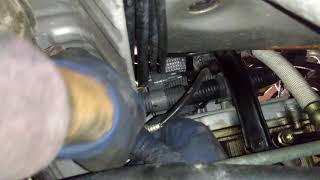
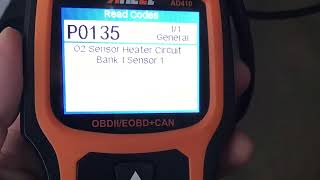
- Verify the code P0135 with an OBD-II scanner. 🎬 Watch: Diagnostic walkthrough for P0135 on a 2003 Highlander
- Check the 'A/F Heater' and/or 'EFI' fuse in the under-hood fuse box. Replace if blown.
- If the fuse is good, locate the Bank 1, Sensor 1 A/F sensor. It is on the rear exhaust manifold, between the engine and the firewall. Access is typically from underneath the vehicle. 🎬 See this 1MZ-FE Bank 1 Sensor 1 replacement guide
- Visually inspect the sensor's wiring harness and connector for any obvious damage, such as melting, fraying, or corrosion.
- Disconnect the sensor's electrical connector. It may be difficult to reach. The connector is located a few inches above the sensor itself.
- Using a multimeter set to resistance (Ohms), measure across the two heater pins on the sensor side of the connector (these are typically the two wires of the same color, often black).
- A good sensor should have a resistance between 0.8 and 1.4 ohms when cold. If the multimeter reads infinite resistance (OL) or a very high number, the heater element has failed and the sensor must be replaced. 🎬 Watch: How to test and replace a P0135 sensor
- If the sensor resistance is within spec, check for 12V power on the corresponding pins of the harness-side connector with the ignition key in the 'ON' position. Lack of power indicates a wiring or fuse issue upstream.
- If all tests pass but the code persists, the issue may be an intermittent connection or, very rarely, a faulty ECM.
Parts You'll Likely Need
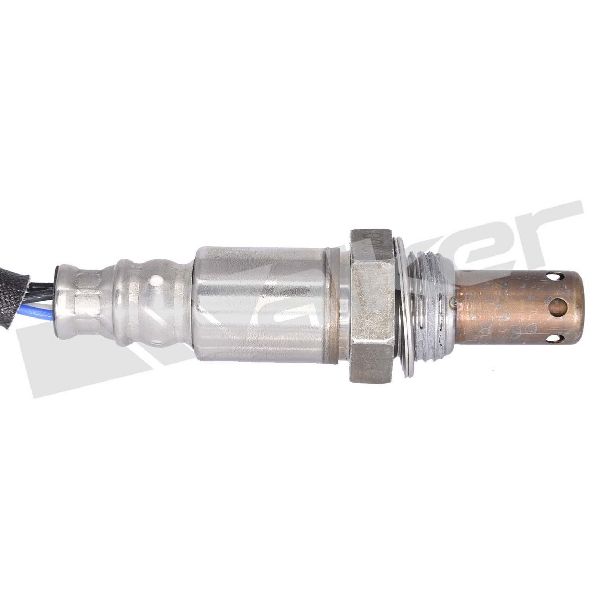
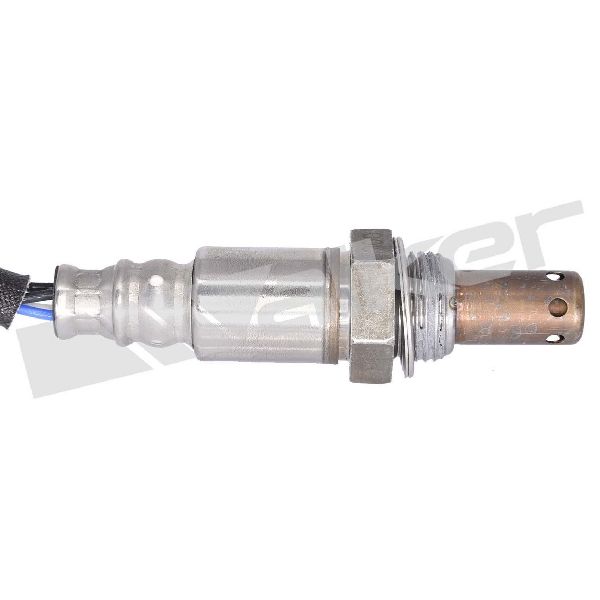
- Air-Fuel Ratio Sensor (Bank 1, Sensor 1)
(OEM #89467-48011)— The internal heater element fails, which is the direct cause of the P0135 code. This is a wear-and-tear item.
Trusted brands: Denso (OEM), Toyota
OEM price range: $150-$210
Aftermarket price range: $70-$150
Related Codes That Often Appear With This One
- P1135 — P1135 is a Toyota-specific code for 'Air/Fuel Sensor Heater Circuit Response (Bank 1 Sensor 1)'. It is very similar to P0135 and often points to the exact same failure of the sensor's heater element. Some scanners may show the generic P0135 while others show the manufacturer-specific P1135 for the same fault.
- P0155 — This is the identical heater circuit malfunction code but for Bank 2, Sensor 1 (the front, easier-to-access sensor). It's not uncommon for both sensors to fail around the same time due to similar age and wear.
Platform-Specific Known Issues
- Access to the Bank 1 Sensor 1 on the rear exhaust manifold is notoriously tight. It is often accessed from underneath the vehicle. Soaking the sensor threads with penetrating oil (like PB Blaster) beforehand is highly recommended, preferably on a warm (not hot) engine. A special 22mm (or 7/8") offset oxygen sensor socket is often required to gain enough leverage to remove the old sensor. Some owners have had success using a simple crescent wrench from above after letting the engine cool enough to touch.
Mechanic-Grade Diagnostic Values
- A/F Sensor Heater Current Draw — expected: 0.5 to 2.0 Amps. Failure: Current outside the expected range, indicating a faulty heater or wiring issue.
- Voltage at ECU Connector (Terminal HT1A) to Body Ground — expected: 9 - 14 Volts (with ignition ON). Failure: Voltage below 9V indicates a problem in the power supply circuit between the main relay and the ECU.
- Heater Ground Circuit Continuity — expected: Less than 0.1 Ohms. Failure: Higher resistance indicates a poor ground connection, which can impair heater function.
Scan Tool Commands That Help
- Toyota Techstream: Active Test: 'Control Injection Volume for A/F sensor' — To verify the A/F sensor's responsiveness after confirming the heater circuit is functional. The test forces the engine rich (-12.5% fuel) or lean (+12.5% fuel), and the technician watches the 'AF Lambda B1S1' value. A good sensor will show lambda values near 0.85 (rich) and 1.14 (lean) respectively, confirming it can accurately read changes in the air-fuel mixture.
Wiring & Ground Locations
- H11 — Engine wiring harness connector for the Bank 1, Sensor 1 Heated Oxygen Sensor.. This is the primary connector to inspect, disconnect for sensor testing, and test for power/ground from the harness side.
- HT1A — Terminal on the Engine Control Module (ECM) connector.. This is the specific ECU pin that provides power to the Bank 1 Sensor 1 heater. Checking for 9-14V here can confirm if the ECU is sending power, helping to isolate a fault to the wiring, sensor, or the ECU itself.
- EC — Engine compartment ground point located on the right side of the surge tank (intake manifold).. A poor engine ground can cause a variety of electrical issues, including incorrect sensor readings or heater circuit faults. This is a key ground point to check for corrosion and tightness if electrical issues are suspected.
- EA / EB — Engine compartment ground points located on the front fender aprons/radiator supports.. These are main chassis ground points for the engine bay. Verifying they are clean and secure is a fundamental step in diagnosing any electrical fault code.
Real Owner Repair Stories
- YouTube channel '2003 toyota highlander v6 p0135' (2003 Toyota Highlander V6) — Poor driveability, poor performance, high gas consumption, and intermittent misfires when going up hills.
❌ Tried (didn't work) The video directly diagnoses the issue as the sensor based on the P0135 code.
✅ What actually fixed it Replacing the Bank 1, Sensor 1 Air-Fuel Ratio sensor with a new Denso part. The video explicitly advises against using aftermarket brands like Bosch for this repair.
When the Usual Fixes Don't Work
- While the sensor is the most common failure, a scenario that can mimic a recurring sensor failure is when a technician replaces the sensor but fails to check the A/F Heater fuse. If the old sensor failed by shorting out and blowing the fuse, the new sensor will not receive power and the P0135 code will return immediately, leading to a misdiagnosis of a faulty new part or a wiring issue, when the simple fuse was the unaddressed link in the chain.
OEM Part Supersession History
89467-48010→89467-48011— Standard part revision by the manufacturer.
Heads up: The new part number (89467-48011) is the correct replacement for the original.
Model Year Variations Within This Range
- 2001-2003: These model years were equipped with the 3.0L 1MZ-FE V6 engine, which is the subject of this article. The specified OEM part number 89467-48011 applies to these years.
- 2004-2007: These model years used a different, larger 3.3L 3MZ-FE V6 engine. While the P0135 code can still occur, the part numbers and some diagnostic details may differ from the 1MZ-FE engine.
Diagnostic Flowchart
Other Known Issues on This Vehicle
Issues unrelated to this code that are worth knowing about as an owner of this generation:
- Engine Oil Sludge Buildup 🔴 High — Common in 2001-2002 models, especially with poor maintenance history. Can lead to oil starvation and catastrophic engine failure. (Ref: While no formal recall, this was a widely known issue. Some suggest the PCV system design in the rear valve cover was a contributor.)
- Transmission Failure / Harsh Shifting 🟠 Medium — A number of owners have reported issues ranging from harsh shifting and hesitation to complete transmission failure at higher mileage. (Ref: No specific recall, but a known complaint area.)
- EVAP System Faults (e.g., P0446) 🟡 Low — Check engine lights related to the evaporative emissions system are common. Often caused by a failed charcoal canister or a vacuum switching valve (VSV).
- Seized Brake Calipers 🟡 Low — Calipers, particularly the rear ones, can seize if not serviced regularly, leading to premature pad and rotor wear.
- Faulty A/C & Heater Controls 🟡 Low — Some owners report issues with the climate control where the temperature changes on its own, often traced to loose solder joints on the control panel's circuit board.
Used vs. New Parts: Buying Guide for This Vehicle
When a used part is the smart pick: A used part is generally not recommended for this repair. The only exception might be sourcing an undamaged wiring harness connector (pigtail) from a junkyard if the original connector is physically broken or melted.
Donor-vehicle mileage cap: roughly under 150000 miles for the part to have meaningful remaining life.
What to inspect on the donor part:
- For a pigtail: ensure the plastic is not brittle or cracked.
- Check that the connector's locking tab is intact.
- Inspect the internal pins to ensure they are straight and free of corrosion.
OEM-only on this vehicle (don't cheap out):
- Air-Fuel Ratio Sensor
Aftermarket brands forum-validated for this vehicle:
- Denso (This is the Original Equipment Manufacturer)
Brands owners have reported issues with on this vehicle:
- Bosch (Some owners and mechanics report compatibility issues or premature failure on this specific platform).
Real Owner Stories
Aggregated from forums and TSBs cited above. Mileages and costs reflect what owners reported in those sources.
2003 Toyota Highlander V6
Symptoms: Check engine light with codes P0135 and P0155.
What fixed it: Replacement of the upstream sensors using Denso part number #234-9009.
Source hint: DoItYourself.com Community Forums - 'Removing oxygen sensors 2003 Toyota Highlander V6 codes P0155 P0135'
2003 Lexus RX300 (1MZ-FE 3.0L V6)
Symptoms: Error code P0135; confirmed the sensor is the A/F Ratio sensor on the rear bank and noted it is very difficult to access.
What fixed it: Replacement with OEM part 89467-48011.
Source hint: ClubLexus.com - 'RX300 2003 error code P0135'
Toyota Solara (1MZ-FE 3.0L V6)
Symptoms: P0135 code triggered by heater circuit failure.
What fixed it: Replacing the rear sensor with Denso part 234-9021.
Source hint: SolaraGuy.com - 'P0135 code explanation'
2001-2007 Toyota Highlander
Symptoms: P0135 code present.
What fixed it: Replacing the Bank 1 Sensor 1 with a Denso part.
Source hint: ToyoSolutions
Related OBD-II Codes
Frequently Asked Questions
Where is the Bank 1 Sensor 1 located on my 3.0L V6 Highlander?
What is the recommended replacement part for a P0135 on this vehicle?
Can I test the sensor myself before buying a new one?
Which fuse should I check for the P0135 code?
Are there any special tools required for this repair?
Does the 1MZ-FE engine have any other major known issues I should watch for?
Helpful Videos


We Have This Part in Stock



The information in this article is provided for general reference and educational purposes only. Vehicle specifications, procedures, and part compatibility can vary by production date, trim level, and region. Always consult your vehicle's factory service manual and verify part numbers before purchasing or performing repairs. Safety-critical components such as airbags, seat belts, and braking systems should be installed by a qualified professional.
- Toyota Highlander:
- 🧭 Diagnostic Flowchart
- 🎬 Helpful Videos
- 🛍️ Shop This Part
- What's Unique About the 2001-2007 Toyota Highlander
- Symptoms You May Notice
- Most Likely Causes
- Rare But Worth Checking
- Diagnosis Steps
- Parts You'll Likely Need
- Related Codes That Often Appear With This One
- Platform-Specific Known Issues
- Mechanic-Grade Diagnostic Values
- Scan Tool Commands That Help
- Wiring & Ground Locations
- Real Owner Repair Stories
- When the Usual Fixes Don't Work
- OEM Part Supersession History
- Model Year Variations Within This Range
- Other Known Issues on This Vehicle
- Used vs. New Parts: Buying Guide for This Vehicle
- Real Owner Stories
- 2003 Toyota Highlander V6
- 2003 Lexus RX300 (1MZ-FE 3.0L V6)
- Toyota Solara (1MZ-FE 3.0L V6)
- 2001-2007 Toyota Highlander
- Related OBD-II Codes
- Frequently Asked Questions
- 🎟️ Get 5% Off