

P0138 on 2005-2010 Chevrolet Cobalt: O2 Sensor High Voltage Causes and Fixes
This code almost always points to a faulty downstream (post-catalytic converter) oxygen sensor. Replacing the sensor is the most common fix, costing around $25-$75 for an aftermarket part and is a straightforward DIY job for most owners. Before replacement, a visual inspection of the wiring harness for melting or damage is crucial.
- P0138 on a Cobalt almost always means the downstream O2 sensor has failed.
- Before buying a new sensor, visually inspect its wires for melting or physical damage, as this is a common secondary cause.
- This is a simple DIY repair for most, requiring only basic tools and an O2 sensor socket.
- Be aware of the much more serious, unrelated safety recalls for the ignition switch and power steering on this vehicle.
What's Unique About the 2005-2010 Chevrolet Cobalt
On the Chevrolet Cobalt, which uses a simple inline four-cylinder engine, there is only one exhaust bank, making 'Bank 1' the only one. 'Sensor 2' definitively refers to the downstream sensor. The most common cause for P0138 is simply the O2 sensor failing from age and contamination. While there are no specific TSBs for this code, it's critical for owners to be aware of the major ignition switch and power steering recalls affecting this entire model year range, which are unrelated but far more serious safety issues.
Symptoms You May Notice
- Check Engine Light is on
- Decreased fuel economy
- Rough or high idle, especially on startup
- Engine hesitation or stalling
- Failure to pass an emissions test
- Strong smell of gasoline or rich exhaust odor
- Hesitation when accelerating from a stop, as noted in manufacturer documentation for similar systems (TSB Bulletin #19NA077)
- Replacing the upstream (Sensor 1) oxygen sensor. This code specifically points to the downstream (Sensor 2) sensor, and the two are not interchangeable.
- Replacing the catalytic converter. While a P0138 can occur with a failing converter, it's not the direct cause. Usually, a bad converter would trigger a P0420 code. Always diagnose the sensor and wiring first.
Most Likely Causes
- Faulty Downstream Oxygen Sensor (Bank 1, Sensor 2) 🔴 High Probability → Shop Oxygen Sensor Oxygen sensors are wear-and-tear items that fail over time due to constant exposure to hot exhaust gases and contaminants. After 10+ years and over 100,000 miles of service, failure is very common. Contamination from silicone or lead can also degrade the sensor's ceramic element.
How to confirm: Use an OBD-II scanner to monitor the live data for the B1S2 O2 sensor. A healthy sensor should show a relatively stable voltage (e.g., ~0.6-0.8V) on a warm engine. If the voltage is stuck high (e.g., >0.9V) and doesn't change, the sensor is likely bad. This is the easiest sensor to access on the Cobalt, located underneath the car.
Typical fix: Replace the downstream oxygen sensor. This requires an O2 sensor socket (often 22mm or 7/8"). The sensor can be seized; apply penetrating oil and let it soak before attempting removal. Ensure the new sensor has anti-seize compound on the threads before installation.
Est. part cost: $25-$75 - Damaged Wiring or Connector 🟡 Medium Probability The sensor wiring runs under the vehicle and is exposed to road debris, moisture, and heat from the exhaust, which can cause wires to fray, melt, or corrode over time. Forum users on Chevy HHR Network (a platform mate) specifically mention checking that the long wire for sensor 2 has not come loose and made contact with the hot exhaust pipe. Manufacturer service bulletins for other Chevrolet models, such as TSB Bulletin #PIP5123B, also suggest inspecting for bent terminals on electrical connectors when P0138 is present.
How to confirm: Visually inspect the entire wiring harness leading from the downstream O2 sensor up to its connection point. Look for any signs of melting, chafing against the chassis or heat shields, breaks, or corrosion on the connector pins. Check for a short to voltage in the signal wire using a multimeter.
Typical fix: Repair or replace the damaged section of the wiring harness or the connector pigtail. Ensure the connection is clean and secure, and route the new wiring away from heat sources.
Est. part cost: $15-$40 - Engine Running Rich ⚪ Low Probability Issues like a leaking fuel injector or a faulty fuel pressure regulator can cause too much fuel to enter the engine. This unburnt fuel leads to a rich exhaust mixture, which the O2 sensor correctly reports as a high voltage signal.
How to confirm: Look for other symptoms like black smoke from the exhaust or a strong smell of gasoline. A fuel pressure test can confirm if pressure is above specification. Other codes related to the fuel system (e.g., P0172 - System Too Rich) may be present.
Typical fix: Diagnose and repair the root cause of the rich condition, such as replacing a faulty fuel injector or fuel pressure regulator.
Est. part cost: $50-$250
Rare But Worth Checking
- Exhaust Leak: While exhaust leaks before the sensor usually cause a low voltage code (lean condition), a leak near the sensor can sometimes disrupt the sensor's reading and ground, potentially causing a high voltage reading in some circumstances. On platform mates like the Chevy HHR, a cracked flex pipe is a common issue that can trigger various O2 codes.
- Blown Emission Fuse: According to TSB Bulletin #PIT5336, technicians may find that the "Emission 1" fuse is open when diagnosing multiple O2 sensor codes, including P0138.
- Faulty Powertrain Control Module (PCM): This is very rare. The PCM is the last thing to suspect after all other possibilities, including the sensor and wiring, have been thoroughly checked and ruled out. A faulty PCM could also be the cause of engine power loss.
Diagnosis Steps
- Connect an OBD-II scanner and confirm that P0138 is the active code. Check for any other codes, such as P013E, P2271, or P0420.
- Use the scanner's live data feature to observe the voltage from 'O2S B1S2' (Bank 1, Sensor 2).
- With the engine fully warmed up and running, observe the voltage. If it is stuck above 0.9 volts and does not fluctuate, the sensor or its circuit is faulty.
- Turn the engine off and let the exhaust cool. Safely raise and support the vehicle.
- Locate the downstream O2 sensor, which is installed in the exhaust pipe after the catalytic converter.
- Thoroughly inspect the sensor's wiring harness and connector for any signs of damage, melting, corrosion, or loose connections. Pay close attention to where the harness might contact the exhaust or chassis.
- If the wiring looks good, the most likely cause is a failed O2 sensor. Proceed with replacement.
- If replacing the sensor does not resolve the code, further testing of the circuit for shorts to voltage and checking for rich running conditions (e.g., fuel pressure test) is necessary.
Parts You'll Likely Need
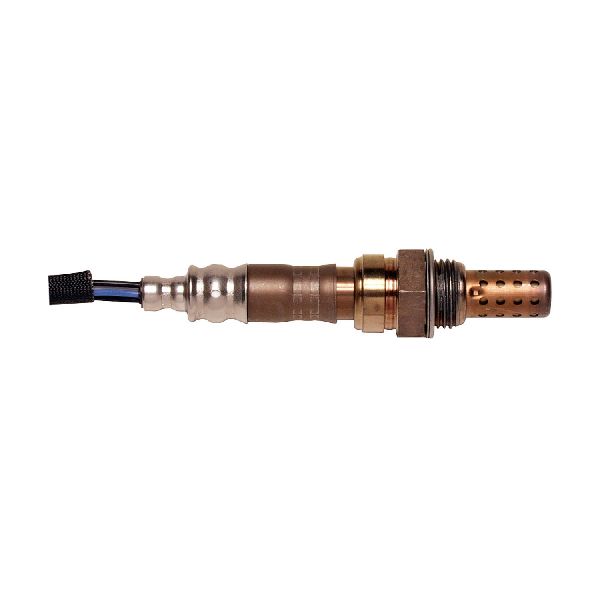
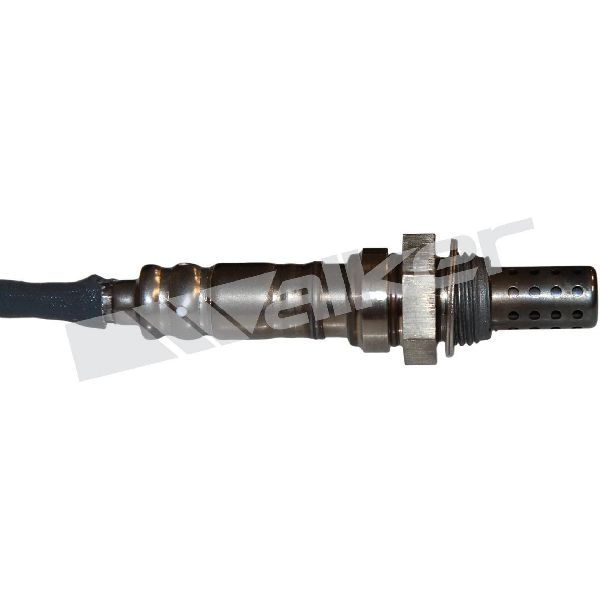
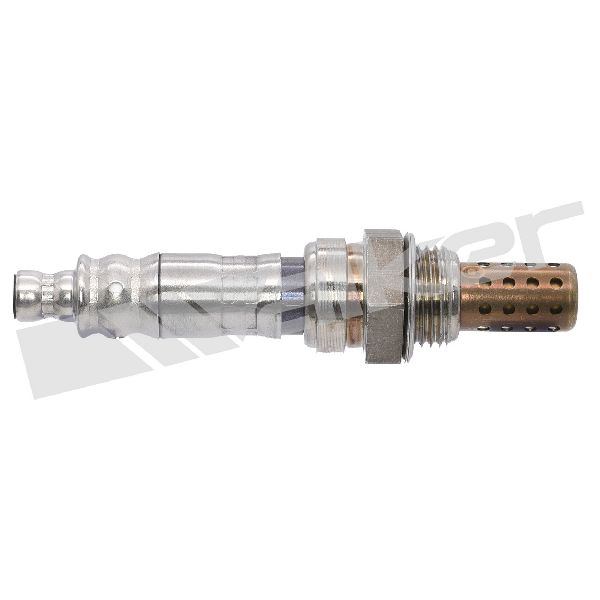
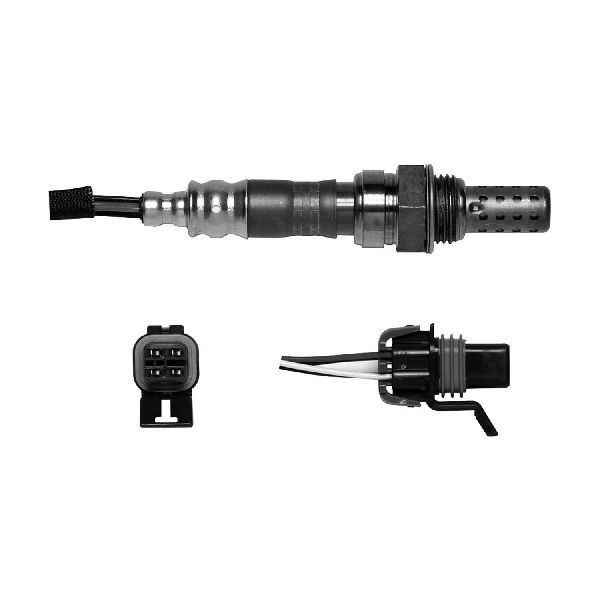
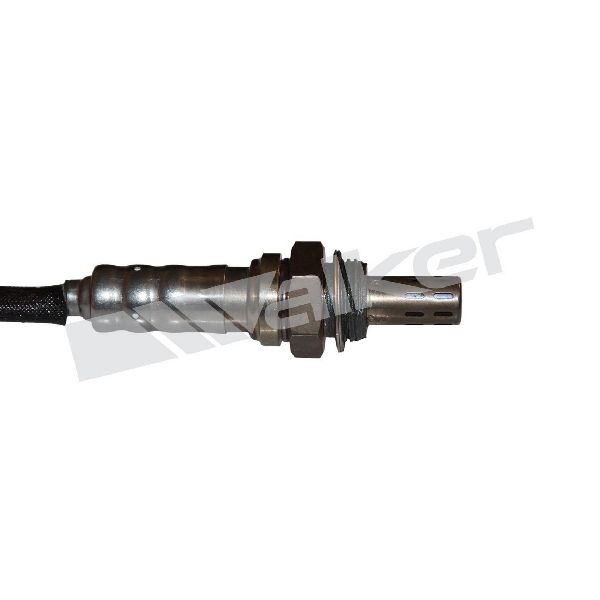
- Downstream Oxygen Sensor (Bank 1, Sensor 2)
(OEM #12616506)— This is the most common failure point for code P0138. The sensor degrades over time and provides incorrect high voltage readings.
Trusted brands: ACDelco (OEM), Denso (e.g., 234-4649), Bosch (e.g., 15510), NTK
OEM price range: $80-$100
Aftermarket price range: $25-$75
Related Codes That Often Appear With This One
- P0420 — If the downstream O2 sensor is faulty and providing incorrect readings, the PCM may also incorrectly flag the catalytic converter as inefficient, triggering a P0420 code.
- P013E — This code indicates a delayed response from the same sensor (Bank 1, Sensor 2), often appearing alongside P0138 as the sensor's performance degrades.
- P2271 — This code means the same sensor's signal is stuck rich, which is a more specific description of the high voltage condition seen in P0138. Seeing them together strongly points to a failed sensor.
Technical Service Bulletins (TSBs) & Recalls
- GM Special Coverage 12191B: Addresses a condition where the plastic supply or return port on the fuel pump module may crack, leading to a fuel leak. This is not directly related to P0138 but is a critical safety issue for the platform.
- TSB Bulletin #PIT5336: Notes that P0138 may be set alongside multiple other emission codes if the "Emission 1" fuse is open.
- TSB Bulletin #PIP5123B: Advises technicians to inspect for bent terminals on the X131 connector when P0138 and related O2 sensor codes are present.
- TSB Bulletin #19NA077: Mentions P0138 in relation to customer concerns of hesitation from a stop and illuminated malfunction indicator lamps.
Platform-Specific Known Issues
- This vehicle generation is subject to a major safety recall for a faulty ignition switch that can shut the engine off while driving, disabling power steering, brakes, and airbags. A heavy keychain can cause the switch to move out of the 'run' position.
- A recall was also issued for the electric power steering (EPS) motor, which can fail and cause a sudden loss of steering assist, particularly at low speeds.
- A recall and special coverage campaign (12191B) were issued for cracked fuel pump module ports, which could lead to a fuel leak and fire hazard.
Mechanic-Grade Diagnostic Values
- Downstream O2 Sensor (B1S2) Voltage — expected: Relatively stable between 0.5V and 0.8V on a warm, running engine at steady RPM.. Failure: Voltage is stuck high, consistently reading above 0.9V, often as high as 1.1V.
- O2 Sensor Heater Element Resistance — expected: Between 5 and 10 Ohms when measured across the two heater pins (often same-colored wires) on a disconnected sensor at room temperature.. Failure: An open circuit (OL or infinite resistance) or a reading significantly outside the 5-10 Ohm range indicates a failed heater element.
- Heater Circuit Power Supply — expected: Battery voltage (~12V) at the power supply pin (Pink/Black wire) on the harness-side connector with Key On, Engine Off.. Failure: No voltage or significantly low voltage points to a blown fuse (e.g., 'EXH' fuse), bad relay, or a break in the power supply wire.
Scan Tool Commands That Help
- Tech2 / GDS2 (or equivalent professional scanner): HO2S Live Data Graphing — This is the primary method to visually confirm a P0138 fault. A technician would graph the B1S2 voltage to see if it is flat-lining at a high voltage (above 0.9V) instead of showing the expected slow, stable reading. This confirms the PCM is seeing the fault condition in real-time.
Wiring & Ground Locations
- B1S2 Connector — The downstream O2 sensor connector is located above the steering rack/tie rod area on the driver's side. Access is typically achieved by reaching up from underneath the vehicle, near the driver's side wheel well.. This connector is a common point of failure due to its exposed location. Corrosion or damage here can interrupt the signal or heater circuit, causing P0138 or related codes. It must be inspected carefully.
- ECM Connector C2 (Pin 25) — At the Engine Control Module (ECM), located on the left side of the engine compartment. Pin 25 of the C2 connector (on LSJ engines, pinouts may vary slightly for L61) is the HO2S Low Signal for Bank 1 Sensor 2.. This is the specific pin where the PCM receives the low-side signal from the O2 sensor. A continuity test from this pin to the sensor connector can rule out a wiring break in the low signal wire (often Tan/White).
- ECM Connector C2 (Pin 24) — At the Engine Control Module (ECM). Pin 24 of the C2 connector is the HO2S High Signal for Bank 1 Sensor 2.. This is the pin for the high-side signal wire (often Purple). A short to voltage on this wire would directly cause a P0138 code. Testing this wire for voltage with the sensor disconnected is a key diagnostic step.
- G103 / G105 — G105 is a ground point on the left inner fender in the engine bay, near the ECM. G103 is a ground bolt on the body behind the driver's side headlight. A ground cable often runs between these two points.. G105 is a critical ground for the Engine Control Module (ECM). A poor ground here can cause a host of bizarre electronic issues and incorrect sensor readings, including O2 sensor faults. Ensuring this ground is clean and tight is a crucial step when diagnosing electrical gremlins.
Real Owner Repair Stories
- CarKiller Forum User (2010 Chevrolet Cobalt, 92,000 miles) — When starting cold, the engine idles way too high, then settles down after a minute or two. Check engine light is on with code P0138.
❌ Tried (didn't work) User was asking for advice before trying any fixes.
✅ What actually fixed it The community advice was to first inspect the wiring and connector for the downstream (post-cat) sensor, and if the wiring is good, to replace the sensor as it is the most likely cause for both the code and the high idle symptom. - NHTSA ODI #11505271 — An owner reported the check engine light illuminated and a mechanic retrieved fault code P0138. Despite unknown repairs being completed, the failure recurred.
- NHTSA ODI #11658828 — A driver reported that the check engine light continued to come on intermittently, with scans indicating problems with the O2 sensor via codes P0138 and P2271.
Model Year Variations Within This Range
- 2008-2009: For the 2.0L and 2.2L engines in these years, the O2 sensor connector is listed as a 6-terminal female connector (Black and Purple). This may differ from earlier or later models which might use a 4-terminal connector. It is crucial to verify the connector type before ordering a replacement sensor or pigtail.
Diagnostic Flowchart
Other Known Issues on This Vehicle
Issues unrelated to this code that are worth knowing about as an owner of this generation:
- Ignition Switch Failure 🔴 High — Extremely widespread across all model years. The defect can cause the engine to shut off while driving if the key is bumped or has a heavy keychain. (Ref: Recall 14V047)
- Electric Power Steering (EPS) Failure 🔴 High — Very common across all model years, leading to a sudden loss of power steering assist, making the vehicle difficult to steer at low speeds. (Ref: Recalls 10V073, 14V153)
- Timing Chain Tensioner/Guide Failure 🔴 High — Common on the 2.2L (L61) and 2.4L (LE5) Ecotec engines, especially on earlier models. A faulty tensioner can cause a rattling noise on startup, and if it fails completely, can lead to catastrophic engine damage.
- Cracked Fuel Pump Module Port 🔴 High — Common enough to warrant a recall in some states and a special coverage campaign in others. A crack in the plastic port leads to a fuel leak and fire risk. (Ref: Recall 09V419 / Special Coverage 12191B)
- Front Lower Control Arm Bushing Failure 🟠 Medium — A frequent point of failure, even at relatively low mileage (as low as 30k miles). Worn bushings cause a loud clunking or popping noise from the front suspension when going over bumps.
- Key Stuck in Ignition 🟡 Low — A very common annoyance where the ignition key cannot be removed. Often related to a faulty shifter mechanism or the ignition lock cylinder itself.
Used vs. New Parts: Buying Guide for This Vehicle
When a used part is the smart pick: For this repair, a used part only makes sense for the wiring harness pigtail if the original is damaged. A complete used harness section from a donor car can be a cost-effective fix for melted or corroded wiring. Never buy a used oxygen sensor itself.
Donor-vehicle mileage cap: roughly under 100000 miles for the part to have meaningful remaining life.
What to inspect on the donor part:
- For a wiring pigtail, inspect for any signs of melting, cracking, or brittleness in the plastic connector.
- Check that the wire insulation is flexible and not hardened or frayed.
- Ensure the locking tab on the connector is intact and functional.
- Look for clean, corrosion-free metal pins inside the connector.
OEM-only on this vehicle (don't cheap out):
- While not strictly OEM-only, many forum veterans and mechanics strongly recommend using OEM ACDelco or OE-equivalent (Denso, NTK) oxygen sensors. Some Ecotec engines are notoriously sensitive to aftermarket sensor brands, which can cause the code to return prematurely.
Aftermarket brands forum-validated for this vehicle:
- ACDelco (OEM)
- Denso
- NTK
Brands owners have reported issues with on this vehicle:
- Use caution with generic or store-brand sensors, and some owners have reported issues with Bosch sensors on this specific platform, leading to recurring codes.
Real Owner Stories
Aggregated from forums and TSBs cited above. Mileages and costs reflect what owners reported in those sources.
2006-2011 Chevrolet HHR (Platform Mate)
Symptoms: The owner experienced P0138 along with codes P013E and P2271.
What fixed it: The consensus for this platform-mate was replacing the #2 downstream sensor or repairing damaged wiring.
Source hint: Chevy HHR Network - 'Oxygen Sensor Codes P0138 and P2270'
2007 Chevrolet Cobalt — 31500 miles
Symptoms: Sudden onset of front-end clunking over bumps (noted during the same ownership period as platform issues).
What fixed it: Dealer diagnosed and replaced failed front lower control arm bushings.
Source hint: BobIsTheOilGuy.com - 'Chevy Cobalt, lower control arm bushings..'
2005 Chevrolet Cobalt
Symptoms: Significant front-end noise.
What fixed it: Replacing the A-arm (lower control arm) bushings; one user noted replacing the entire control arm is often easier.
Source hint: ChevroletForum.com - 'A arm bushings on cobalt'
Related OBD-II Codes
Frequently Asked Questions
Is there a recall for the fuel system on my Chevrolet Cobalt that could be related to a rich exhaust smell?
Where is the Bank 1, Sensor 2 oxygen sensor located on the Cobalt for inspection?
My Cobalt has a rough idle and P0138; could this be related to the ignition switch recall?
Could the P0138 code be caused by the wiring touching the exhaust on my Cobalt?
What tool do I need to replace the downstream O2 sensor on a 2007 Cobalt?
We Have This Part in Stock


The information in this article is provided for general reference and educational purposes only. Vehicle specifications, procedures, and part compatibility can vary by production date, trim level, and region. Always consult your vehicle's factory service manual and verify part numbers before purchasing or performing repairs. Safety-critical components such as airbags, seat belts, and braking systems should be installed by a qualified professional.
- Chevrolet Cobalt:
- 🧭 Diagnostic Flowchart
- 🛍️ Shop This Part
- What's Unique About the 2005-2010 Chevrolet Cobalt
- Symptoms You May Notice
- Most Likely Causes
- Rare But Worth Checking
- Diagnosis Steps
- Parts You'll Likely Need
- Related Codes That Often Appear With This One
- Technical Service Bulletins (TSBs) & Recalls
- Platform-Specific Known Issues
- Mechanic-Grade Diagnostic Values
- Scan Tool Commands That Help
- Wiring & Ground Locations
- Real Owner Repair Stories
- Model Year Variations Within This Range
- Other Known Issues on This Vehicle
- Used vs. New Parts: Buying Guide for This Vehicle
- Real Owner Stories
- 2006-2011 Chevrolet HHR (Platform Mate)
- 2007 Chevrolet Cobalt — 31500 miles
- 2005 Chevrolet Cobalt
- Related OBD-II Codes
- Frequently Asked Questions
- 🎟️ Get 5% Off