

P0138 on 2014-2019 Chevrolet Silverado 2500 HD 6.0L: O2 Sensor High Voltage Causes & Fixes
On a 2014-2019 Silverado 2500 HD with the 6.0L V8, code P0138 is most often caused by a failed downstream oxygen sensor on the driver's side (Bank 1, Sensor 2). Replacing it with an OEM ACDelco sensor is the most reliable fix. Before replacing, inspect the wiring harness for chafing near the front driveshaft on 4WD models. Expect to pay $40-$70 for the part.
- P0138 on your Silverado HD almost always points to the downstream O2 sensor on the driver's side.
- Before replacing the sensor, visually inspect the wiring harness for damage, especially near the front driveshaft on 4WD models.
- To ensure a lasting repair, use a genuine ACDelco replacement oxygen sensor (Part No. 12639692). Aftermarket sensors are known to cause issues on these trucks.
- This is a DIY-friendly repair for those with basic tools, including an O2 sensor socket.
What's Unique About the 2014-2019 Chevrolet Silverado 2500 HD
For the Silverado HD, this code is straightforward but has two common pitfalls. First, the wiring for the Bank 1 Sensor 2 is routed near the front driveshaft on 4WD models, creating a significant potential for the harness to chafe through and short circuit. This should always be inspected before replacing parts. Second, these trucks are notoriously sensitive to aftermarket sensors; owners and technicians frequently report that using non-OEM brands can cause the code to return quickly. A forum member on GM-Trucks.com detailed a lengthy and expensive repair saga on a 2015 Sierra 3500HD that started with aftermarket sensors, which the dealer ultimately wanted to replace with original GM parts to solve the problem. Sticking with the ACDelco original equipment sensor is highly recommended to avoid repeat repairs.
Generation note: This range covers two generations: the 2014 model year (GMT900 platform) and the 2015-2019 model years (K2XX platform). However, for this specific code on the 6.0L V8 engine, the diagnosis and the primary replacement part (the O2 sensor) are consistent across both generations.
Symptoms You May Notice
- Check Engine Light is on
- Reduced fuel economy
- Smell of fuel from the exhaust due to a rich condition
- Rough idle or engine hesitation
- Failure to pass an emissions inspection
- Replacing the O2 sensor with a non-OEM (aftermarket) brand. Many owners report that the P0138 code returns unless an original ACDelco sensor is used.
- Replacing the catalytic converter. While a failing converter can cause other codes (like P0420), P0138 specifically points to a sensor circuit voltage issue, not converter efficiency.
- Replacing the wrong O2 sensor. P0138 is for Bank 1 (driver's side) and Sensor 2 (downstream/after the catalytic converter). Always confirm the location before replacing.
Most Likely Causes
- Failed Bank 1, Sensor 2 Oxygen Sensor 🔴 High Probability → Shop Oxygen Sensor Oxygen sensors are wear items that fail from age, contamination, and heat cycles. Some owners have reported premature failure; one owner on a GM truck forum noted the code appeared on their 2015 model with only 20,000 miles. GM also issued a bulletin for the L96 engine in vans regarding sensor cracking from moisture, indicating a known sensitivity.
How to confirm: Use a scan tool to monitor the live data for the B1S2 O2 sensor. A healthy downstream sensor on a warm engine should show a relatively stable voltage. If the voltage is stuck high (e.g., >0.9V) and does not fluctuate, the sensor is likely bad.
Typical fix: Replace the Bank 1, Sensor 2 oxygen sensor. It is located on the driver's side of the vehicle, after the catalytic converter. Use of an OEM ACDelco part is strongly recommended.
Est. part cost: $40-$70 - Damaged O2 Sensor Wiring or Connector 🟡 Medium Probability → Shop Oxygen Sensor On 4WD models, the wiring harness for this sensor is routed directly over the front driveshaft. It is very common for the plastic harness clips to fail, allowing the harness to sag, contact the spinning driveshaft, and chafe through the wires, causing a short circuit. Wires can also be damaged by road debris or contact with hot exhaust components.
How to confirm: Visually inspect the entire wiring harness from the O2 sensor to its connection point. Pay extremely close attention to the area directly above the front driveshaft 🎬 Watch: How to check for common wiring harness damage for any signs of rubbing, melting, or exposed wires. Use a multimeter to check for a short to power on the signal wire if the visual inspection is inconclusive.
Typical fix: Repair the damaged section of the wiring harness using solder and heat-shrink tubing. Secure the repaired harness firmly away from the driveshaft and exhaust using new clips and zip ties.
Est. part cost: $10-$50 - Exhaust Leak ⚪ Low Probability The 6.0L Vortec engine is known for exhaust manifold bolts breaking, which creates a leak. An exhaust leak before the sensor can sometimes affect readings, though it more commonly causes lean codes.
How to confirm: Listen for hissing or ticking sounds from the exhaust system, especially when the engine is cold. Visually inspect the exhaust manifolds, gaskets, and pipes for black soot trails, which indicate a leak.
Typical fix: Replace the leaking gasket or repair the cracked exhaust component. This may involve extracting broken manifold bolts.
Est. part cost: $20-$200
Rare But Worth Checking
- Leaking Fuel Injector: → Shop Fuel Injector A fuel injector stuck open on Bank 1 can create a genuinely rich condition, causing the O2 sensor to read high voltage correctly. If a new sensor and verified wiring don't fix the code, this is a possible underlying cause, as one owner on a forum suspected after numerous failed fixes.
- Faulty Powertrain Control Module (PCM): This is very rare, but the PCM can fail internally and misinterpret the sensor's voltage signal. This should only be considered after all other possibilities, including wiring, sensors, and fuel system issues, have been exhaustively ruled out by a professional.
Diagnosis Steps
- Connect an OBD-II scanner and confirm that P0138 is the primary code. Note any other codes present, especially heater circuit (P0036) or no-activity (P0140) codes for the same sensor.
- Using the scanner's live data function, monitor the voltage for 'O2S B1S2' (Bank 1, Sensor 2) with the engine warm and running. Confirm if the voltage is stuck high, near or above 0.9V.
- Check the O2 sensor fuses in the under-hood 🎬 Watch: How to find and check your O2 sensor fuses fuse box. On these trucks, they are typically 10-amp fuses labeled 'O2A' (fuse 8) and 'O2B' (fuse 18).
- Raise the vehicle safely. Locate the Bank 1 Sensor 2 on the driver's side exhaust pipe, just after the catalytic converter.
- CRITICAL: Thoroughly inspect the sensor's wiring harness for any signs of melting, chafing, or damage. Pay special attention to the area where it passes over the front driveshaft on 4WD models, as this is a very common failure point.
- If the wiring looks good and the voltage is stuck high, the O2 sensor itself is the most likely cause. Replace it with an OEM ACDelco part.
- If a new sensor does not resolve the code, check long-term and short-term fuel trims on your scan tool. High negative numbers (e.g., -10% or more) on Bank 1 could indicate a true rich condition from a leaking fuel injector, which requires further fuel system diagnosis.
- If all else fails, the issue could be a rare wiring short further up the harness or a faulty PCM driver circuit, which may require professional diagnosis.
Parts You'll Likely Need
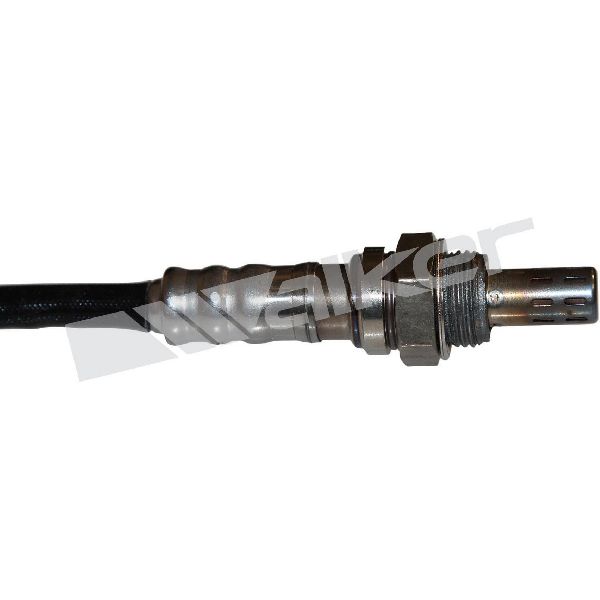
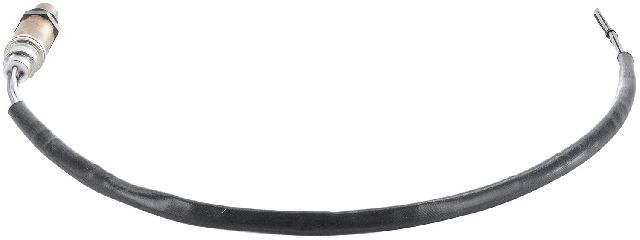
- Oxygen Sensor (Bank 1, Sensor 2)
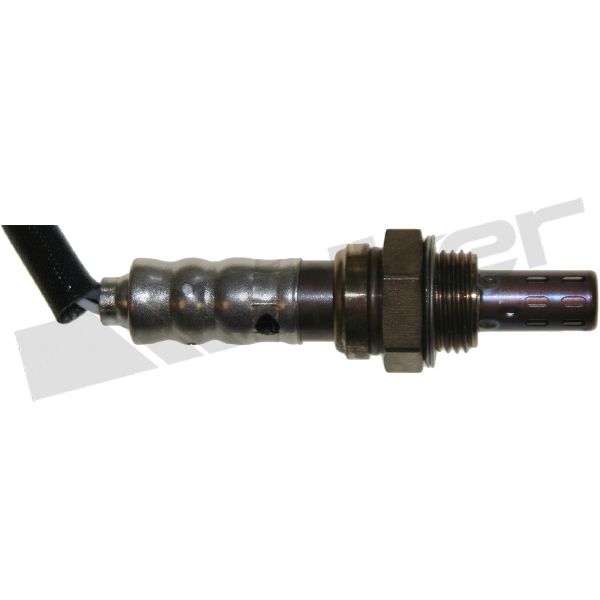
(OEM #12639692)— This is the downstream, driver's side oxygen sensor. It is the most common failure point for code P0138. Using the OEM part is highly recommended to prevent the code from returning.
Trusted brands: ACDelco (GM Genuine Parts)
OEM price range: $50-$70
Aftermarket price range: $40-$60
Related Codes That Often Appear With This One
- P0140 — This code means 'O2 Sensor Circuit No Activity Detected (Bank 1 Sensor 2)'. It can appear with P0138 if the wiring is damaged in a way that causes both a short to voltage and an open circuit, or if the sensor has failed internally in a complex way.
- P2271 — This code means 'O2 Sensor Signal Stuck Rich (Bank 1 Sensor 2)'. It is a very specific companion to P0138, as a 'stuck rich' signal is what a high voltage reading indicates.
- P0036 — This code relates to the heater circuit for the same O2 sensor (B1S2). A fault in the sensor's internal components or its wiring harness can trigger both heater and performance codes simultaneously.
Technical Service Bulletins (TSBs) & Recalls
- GM Preliminary Information Bulletin #PIP5093A: While written for 2011-2013 Express/Savana vans with the L96 engine, it notes that moisture splashing on hot O2 sensors can cause them to crack, leading to a variety of codes including P0138. This indicates a known sensitivity of these sensors on this engine family.
Platform-Specific Known Issues
- The wiring harness for the Bank 1 Sensor 2 is known to chafe against the front driveshaft on 4x4 models, leading to a short circuit and triggering code P0138. This should be the first physical inspection point after checking codes.
Mechanic-Grade Diagnostic Values
- O2 Sensor Heater Element Resistance — expected: 3 to 10 Ohms (Ω) when the sensor is cold.. Failure: A reading of OL (Open Loop/Infinite Resistance) or a value significantly outside the expected range indicates a failed heater element within the sensor.
- B1S2 Signal Voltage (Live Data) — expected: A relatively stable voltage, typically between 0.5V and 0.8V on a warm, running engine in closed loop.. Failure: A voltage signal that is stuck high, at or above 0.9V to 1.1V, for an extended period.
Wiring & Ground Locations
- B52D (Bank 1 Sensor 2 Connector) — On the driver's side, connecting the O2 sensor that is located after the catalytic converter to the chassis harness.. This 4-pin connector is where you can perform electrical tests for power, ground, and signal without removing the sensor. A 2015 GM wiring schematic provides the following pinout: * Pin A (WH/YE wire): Heated O2 Sensor Low Signal (Circuit 3121) * Pin B (VT/D-BU wire): Heated O2 Sensor High Signal (Circuit 3120) * Pin C (GY/WH wire): Heated O2 Sensor Heater Low Control (Circuit 3122) * Pin D (VT/D-BU wire): Powertrain Main Relay Fused Supply (Circuit 5294)
- PCM Engine Ground — On the rear of the driver's side cylinder head. It is a group of black wires in a ring terminal bolted directly to the engine block.. This is the main ground reference for the Powertrain Control Module and all the sensors it monitors, including the oxygen sensors. A poor connection here can cause erratic voltage readings and phantom codes for multiple sensors, not just P0138. While not a direct cause, it's a foundational check for any electrical diagnosis.
Real Owner Repair Stories
- GM-Trucks.com forum user 'dennisfly' (2005 Silverado 5.3L (Similar GMT800 platform, principle applies)) — Recurring P0053 (Heater Resistance code), but the diagnostic principle is relevant to sensor quality.
❌ Tried (didn't work) Replacing the original O2 sensor with a new Bosch sensor.
✅ What actually fixed it The user measured the resistance of the new Bosch sensor and found it was 12.7 ohms. The stock sensor on the other bank was 4 ohms. They then bought a new Denso sensor, which measured 5.6 ohms, and installing it fixed the problem permanently. This highlights that even a new aftermarket sensor can be out of spec for the GM system.
OEM Part Supersession History
12639692 (GM Genuine)→N/A - This is the current part number.
Heads up: Be aware that multiple ACDelco part numbers, such as 213-4532 and 213-4768, are used by vendors to refer to this GM part. As long as the part is a genuine GM or ACDelco Original Equipment part cross-referenced to GM #12639692, it is correct. Avoid confusion by verifying the GM part number.
Diagnostic Flowchart
Other Known Issues on This Vehicle
Issues unrelated to this code that are worth knowing about as an owner of this generation:
- Exhaust Manifold Bolt Breakage 🟠 Medium — Common across all years of the 6.0L Vortec engine. The high heat cycles cause the bolts, especially those closer to the firewall, to break, resulting in an exhaust leak.
- Throttle Body/Position Sensor Failure 🟠 Medium — A known issue with the 6.0L Vortec engine family. Can lead to a P2135 code, reduced engine power mode, and erratic idle.
- HVAC Mode Door Actuator Failure 🟡 Low — Common on the 2015-2019 models. Results in air not blowing from the selected vents (e.g., stuck on defrost).
- Transmission Shifting Concerns (Early Models) 🟠 Medium — More prevalent on 2014-2015 models. Owners report rough shifting, hesitation, and in some cases, premature failure of the 6L90 transmission.
Used vs. New Parts: Buying Guide for This Vehicle
When a used part is the smart pick: For this repair, a used part is only recommended for the wiring harness pigtail connector if the original is damaged. Never buy a used oxygen sensor itself, as it is a wear-and-tear component with a finite lifespan.
Donor-vehicle mileage cap: roughly under 80000 miles for the part to have meaningful remaining life.
What to inspect on the donor part:
- For a pigtail connector: ensure the plastic is not brittle or cracked.
- Check that the locking tab is intact and functional.
- Inspect for any corrosion on the pins inside the connector.
- Ensure there is at least 6-8 inches of clean, undamaged wire attached.
OEM-only on this vehicle (don't cheap out):
- Oxygen Sensor
Aftermarket brands forum-validated for this vehicle:
- ACDelco (Genuine GM part is the safest bet)
- Denso (Widely reported to be the original equipment manufacturer for GM)
- NGK / NTK (Also a highly-regarded OEM supplier with a strong reputation for reliability on GM vehicles)
Brands owners have reported issues with on this vehicle:
- Bosch (While a major O2 sensor manufacturer, forums contain multiple reports from GM truck owners of incompatibility, out-of-spec resistance, and codes returning shortly after installation)
- Generic store brands / no-name online parts (These have a high risk of being improperly calibrated for the sensitive GM PCM, leading to the code returning and wasted time/money)
Real Owner Stories
Aggregated from forums and TSBs cited above. Mileages and costs reflect what owners reported in those sources.
2015 Silverado 2500HD 6.0L — 50000 miles
Symptoms: Check Engine Light (CEL) came on with codes P0138, P013A, and P2271. Attempted remote start but it failed as the CEL returned with only P0138 after a sensor replacement.
What fixed it: The owner initially tried a Bosch sensor which did not work; the context suggests the issue required further diagnostic steps regarding sensor brand and circuit integrity.
Source hint: GM-Trucks.com owner_reports
2015 GMC 2500 HD — 20000 miles
Symptoms: Service Engine Light appeared at very low mileage.
What fixed it: Replacement of the Bank 1 Sensor 2 oxygen sensor.
Source hint: gm-trucks.com Thread 'P0138 Service Engine Code'
2015 Sierra 3500 HD 6.0L Flex
Symptoms: Check Engine Light on; owner experienced difficulties with aftermarket sensors and a multi-step dealer diagnostic process.
What fixed it: Diagnostic process involving checking for rich conditions and ensuring proper sensor compatibility.
Source hint: gm-trucks.com Thread 'Fixing a P0138 code on 2015 sierra 3500 HD'
2014-2019 Chevrolet Silverado 2500 HD 4WD
Symptoms: P0138 and P0140 codes present.
What fixed it: Inspecting the wiring harness above the front driveshaft for chafing and checking the O2 sensor fuses (O2A and O2B) in the under-hood fuse box.
Source hint: YouTube Video 'P0140 P0138 Code Chevy Truck (Check This First)'
Related OBD-II Codes
Frequently Asked Questions
Where is the Bank 1 Sensor 2 oxygen sensor located on my Silverado 2500 HD?
I have a 4WD model; is there a specific wiring issue I should check for P0138?
Does GM Preliminary Information Bulletin #PIP5093A apply to the L96 engine in my truck?
Which fuses should I check for the O2 sensor circuits on this vehicle?
Can I use an aftermarket oxygen sensor to fix this code?
Could my broken exhaust manifold bolts be causing this code?
Helpful Videos
We Have This Part in Stock

The information in this article is provided for general reference and educational purposes only. Vehicle specifications, procedures, and part compatibility can vary by production date, trim level, and region. Always consult your vehicle's factory service manual and verify part numbers before purchasing or performing repairs. Safety-critical components such as airbags, seat belts, and braking systems should be installed by a qualified professional.
- Chevrolet Silverado 2500 HD:
- 🧭 Diagnostic Flowchart
- 🎬 Helpful Videos
- 🛍️ Shop This Part
- What's Unique About the 2014-2019 Chevrolet Silverado 2500 HD
- Symptoms You May Notice
- Most Likely Causes
- Rare But Worth Checking
- Diagnosis Steps
- Parts You'll Likely Need
- Related Codes That Often Appear With This One
- Technical Service Bulletins (TSBs) & Recalls
- Platform-Specific Known Issues
- Mechanic-Grade Diagnostic Values
- Wiring & Ground Locations
- Real Owner Repair Stories
- OEM Part Supersession History
- Other Known Issues on This Vehicle
- Used vs. New Parts: Buying Guide for This Vehicle
- Real Owner Stories
- 2015 Silverado 2500HD 6.0L — 50000 miles
- 2015 GMC 2500 HD — 20000 miles
- 2015 Sierra 3500 HD 6.0L Flex
- 2014-2019 Chevrolet Silverado 2500 HD 4WD
- Related OBD-II Codes
- Frequently Asked Questions
- 🎟️ Get 5% Off