

P0139 on 2011-2015 Kia Sorento: Slow O2 Sensor Causes and Fixes
On a 2011-2015 Kia Sorento, code P0139 almost always means the downstream oxygen sensor (Bank 1, Sensor 2) has failed due to age or contamination. Replacing this sensor is the most common fix. Expect to pay $40-$90 for an aftermarket sensor or $150-$220 for an OEM part. Before replacing, a quick visual check for exhaust leaks near the manifold or flex pipe is recommended. It is a DIY-friendly repair.
- P0139 on your Sorento almost always points to a bad downstream (post-catalytic converter) oxygen sensor.
- Before replacing the sensor, visually inspect the exhaust flex pipe and manifold for cracks or soot, as leaks are the second most common cause.
- If you have the 2.4L engine and this code reappears after a fix, you should investigate for excessive oil consumption, a known issue with this engine that fouls sensors.
- The repair is DIY-friendly with a special O2 sensor socket, but the old sensor can be seized and difficult to remove.
What's Unique About the 2011-2015 Kia Sorento
The 2011-2015 Sorento (generation XM) uses common oxygen sensor technology. However, models equipped with the 2.4L Theta II GDI engine have a well-documented history of excessive oil consumption due to issues like sticking piston rings. This oil burning can foul the oxygen sensor with contaminants, leading to premature failure and a P0139 code. While no recalls specifically target the O2 sensors for this, related engine problems (covered under various campaigns and a class-action lawsuit) are often the root cause of repeated sensor failures. Therefore, if the sensor fails again after replacement on a 2.4L model, investigating oil consumption is crucial.
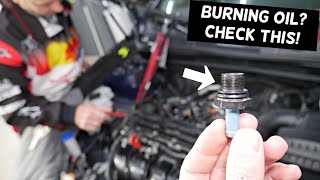
🎬 Watch: Why these Kia engines suffer from high oil consumption.Symptoms You May Notice
- Check Engine Light is on
- Failed emissions test
- Slight decrease in fuel economy
- Engine hesitation or stumbling on deceleration (rare)
- Replacing the catalytic converter. P0139 indicates a problem with the sensor that *monitors* the converter, not the converter itself. A failing converter typically sets a P0420 code.
- Replacing the upstream oxygen sensor (Bank 1, Sensor 1). This code is specific to the downstream (Sensor 2) location.
Most Likely Causes
- Failing Downstream Oxygen Sensor (Bank 1, Sensor 2) 🔴 High Probability → Shop Oxygen Sensor Sensors typically wear out after 60,000-100,000 miles. On 2.4L models, excessive engine oil consumption can foul the sensor with deposits, causing premature failure. On all models, the sensor can simply fail from age.
How to confirm: Using a scan tool, observe the live data for the B1S2 voltage. It should fluctuate slowly. If the voltage is stuck or responds very slowly (taking more than a second) after a sharp throttle snap, the sensor is bad. A healthy sensor's voltage should drop below 0.2 volts during fuel cut-off on deceleration.
Typical fix: Replace the Bank 1, Sensor 2 oxygen sensor. This is located after the catalytic converter. A 22mm or 7/8" slotted oxygen sensor socket is required.
Est. part cost: $40 - $220 - Exhaust System Leak 🟡 Medium Probability The flexible exhaust pipe section (flex pipe) located before the downstream sensor is a common failure point, developing cracks over time that introduce outside air and skew sensor readings. Leaks at the exhaust manifold gasket are also possible.
How to confirm: Visually inspect the exhaust system from the engine to the rear for cracks, holes, or black soot marks indicating a leak. A ticking, hissing, or popping noise that gets louder with acceleration often points to a leak at the exhaust manifold or flex pipe. A smoke test can confirm small, hard-to-see leaks.
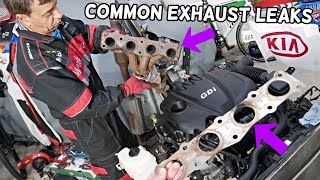
Typical fix: Repair or replace the leaking section of the exhaust. This may involve welding a crack or replacing a gasket or the entire flex pipe section. 🎬 See where these common Kia exhaust leaks usually occur.
Est. part cost: $20 - $300 - Damaged Wiring or Connectors ⚪ Low Probability The sensor wiring runs underneath the vehicle and is exposed to road debris, moisture, and heat, which can cause corrosion, chafing, or melting over time.
How to confirm: Visually inspect the wiring harness leading to the downstream O2 sensor for any signs of melting on the heat shield, chafing against the chassis, or corrosion at the connector pins. Check for blown fuses, often labeled 'SENSOR' in the engine bay fuse box.
Typical fix: Repair the damaged wiring or clean/replace the connector.
Est. part cost: $5 - $50
Rare But Worth Checking
- Leaking Fuel Injectors: A leaking fuel injector can create a rich running condition that the O2 sensor struggles to read, mimicking a slow response. This is worth considering if other fuel or misfire codes are present, or if both upstream and downstream sensors on the same bank show issues.
- PCM Software Issue: In some cases, the vehicle's computer may need a software update from the dealer to correct over-sensitive logic for monitoring the O2 sensor. Service Campaign SC07 for 2012-2013 models involved an ECM update, though not specifically for P0139, it shows a precedent for software fixes.
Diagnosis Steps
- Scan for other DTCs: Check for any other codes related to fuel trim (P0171, P0172), misfires (P030x), or other sensor circuits. Address those first.
- Visual Inspection: Inspect the Bank 1 Sensor 2 wiring harness for any melting, fraying, or corrosion. Check the exhaust system for any obvious cracks or black soot marks indicating a leak, paying close attention to the flex pipe and manifold area.
- Analyze Live Data: Using an OBD-II scanner, view the live data stream for the 'O2S B1S2' voltage. At operating temperature and steady RPM, the voltage should fluctuate slowly and smoothly, typically between 0.1V and 0.9V.
- Perform a Throttle Snap Test: While watching the live data, quickly press and release the accelerator. The B1S2 voltage should respond to the change in air/fuel mixture. If it is stuck or takes more than a second to react, the sensor is confirmed to be slow.
- Test for Exhaust Leaks: If the sensor appears to be working but the code persists, a smoke test can be performed on the exhaust system to pinpoint any small leaks that are not visually apparent. Alternatively, a shop rag can be used to temporarily block the tailpipe while listening for hissing sounds from the front of the exhaust.
- Check for TSBs: Inquire with a Kia dealer if any ECM/PCM software updates are available for your vehicle's VIN, as this can sometimes resolve overly sensitive monitoring parameters.
- If all else fails, consider the possibility of a leaking fuel injector or a PCM issue, though these are less common.
Parts You'll Likely Need
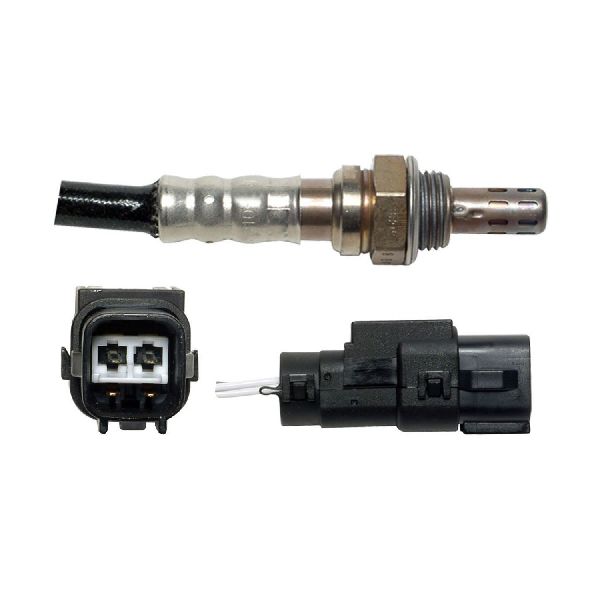
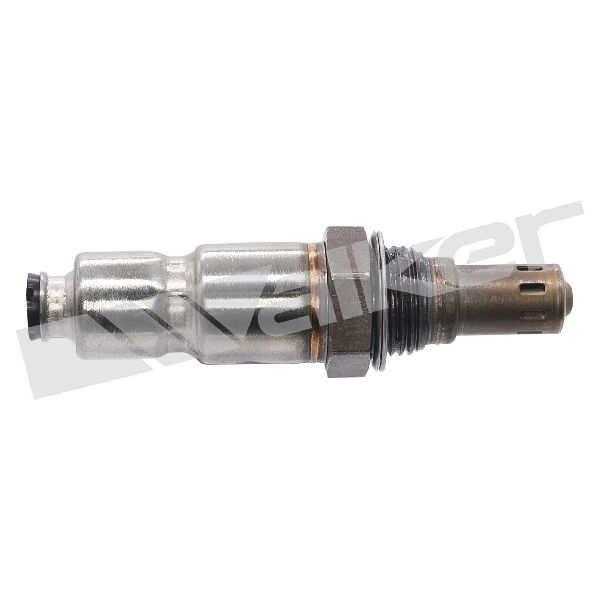
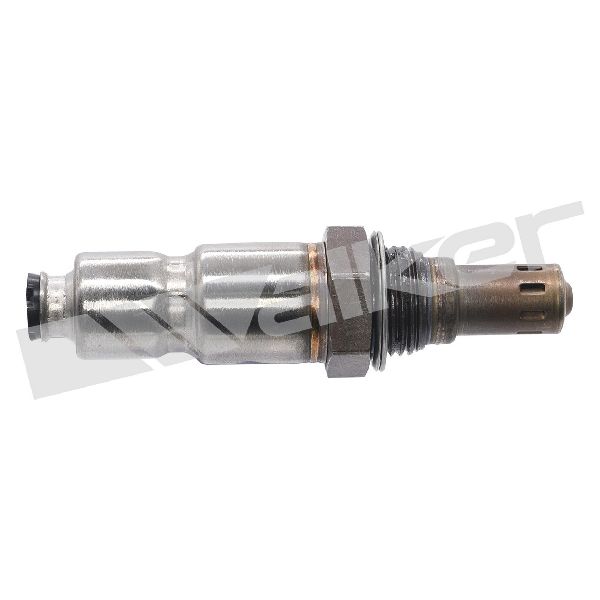
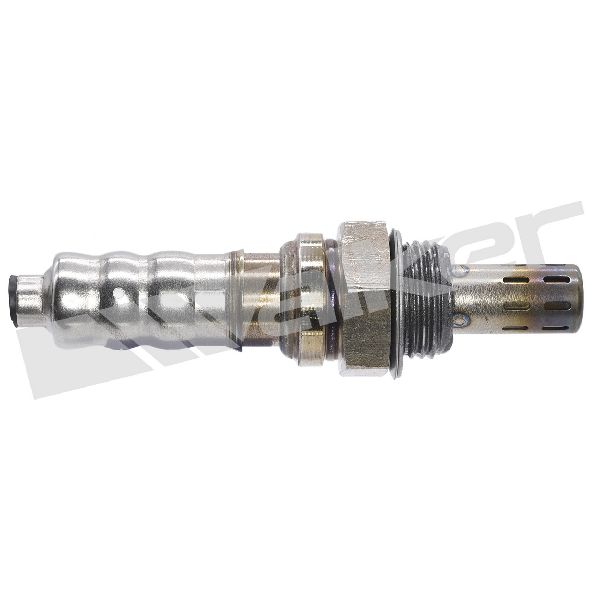
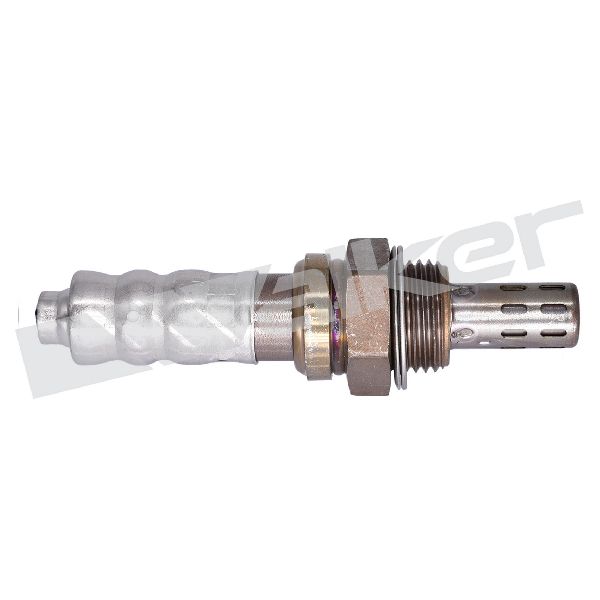
- Downstream Oxygen Sensor (Bank 1, Sensor 2)
(OEM #39210-2G200 (For 2.4L I4) / 39210-3CAA0 (For 3.5L/3.3L V6, Bank 1 is firewall side))— This is the most frequent cause of code P0139 due to age, wear, or contamination from issues like oil consumption.
Trusted brands: Denso, NGK / NTK, Bosch, Walker Products, TRQ
OEM price range: $150-$220
Aftermarket price range: $40-$90
Related Codes That Often Appear With This One
- P0420 — If the O2 sensor is failing, it may not be able to properly monitor the catalytic converter, which can sometimes lead to a P0420 (Catalyst System Efficiency Below Threshold) code, even if the converter is still good.
- P0137 — P0137 (O2 Sensor Circuit Low Voltage) can appear alongside P0139 as it also points to a problem within the same sensor's circuit.
- P1117 — This code, indicating an issue with the O2 sensor heater circuit for Bank 1 Sensor 2, often appears with P0139, strongly suggesting the sensor itself has failed.
Technical Service Bulletins (TSBs) & Recalls
- TSB CS1603 / WTY005: While not for P0139, this customer satisfaction program addresses failing exterior door latches on 2011 Sorentos, a common platform issue.
- TSB SA174: Provided an ECM update for P0638 on 2012 Sorentos, showing a history of driveability issues being fixed with software updates.
- TSB SC07: An ECM software update for 2012-2013 Sorentos to address DTC P0087, further indicating that ECU updates are a potential fix for some codes on this platform.
Platform-Specific Known Issues
- The 2.4L Theta II engine used in many of these Sorentos was subject to recalls and a class-action lawsuit for premature bearing wear and excessive oil consumption. While not directly related to the O2 sensor, the underlying conditions (such as oil consumption) can lead to oil and carbon fouling, which destroys oxygen sensors, causing P0139 to appear.
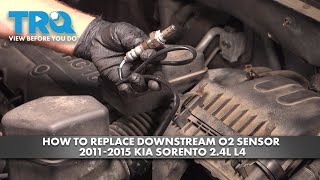
- A video from 1A Auto provides a step-by-step visual guide for replacing the downstream O2 sensor on the 2.4L Sorento, highlighting the connector location and the need for a special socket. 🎬 Watch: Step-by-step guide to replacing the downstream O2 sensor.
Mechanic-Grade Diagnostic Values
- Downstream O2 Sensor (B1S2) Heater Circuit Resistance — expected: 4 - 10 Ohms at room temperature. Failure: An Open Loop (OL) or infinite resistance reading on a multimeter indicates a failed internal heater element, requiring sensor replacement.
- Downstream O2 Sensor (B1S2) Voltage during Deceleration Fuel Cut-Off — expected: Voltage should drop below 0.2 volts.. Failure: The PCM will set code P0139 if the sensor voltage fails to drop below 0.2 volts for a continuous period of 7 seconds or more during a fuel cut-off event.
- O2 Sensor Tightening Torque — expected: 40 - 50 Nm (29 - 36 lb-ft). Failure: Under-tightening can cause exhaust leaks at the sensor bung, while over-tightening can damage the sensor or the exhaust threads.
Scan Tool Commands That Help
- Kia GDS (Global Diagnostic System): DTC Analysis — After retrieving P0139, this function can link the code to any available Technical Service Bulletins (TSBs), component information, and guided diagnostic procedures within the factory tool.
- Kia GDS (Global Diagnostic System): Current Data (Live Data) — To graph the B1S2 voltage in real-time. This is essential for visually confirming a slow response during throttle snaps or induced rich/lean conditions.
- Kia GDS (Global Diagnostic System): O2 Test Result / Monitoring Test Result — This function displays the results of the vehicle's onboard readiness monitors (similar to Mode 6 data), which can show the exact measured response time from the last test cycle and compare it against the PCM's pass/fail threshold.
Wiring & Ground Locations
- Fuse 'SENSOR 1' — Located in the main engine compartment fuse/relay box.. This 15A fuse often provides the 12V power for the oxygen sensor heater circuits. If this fuse is blown, the sensor cannot heat up quickly, causing it to respond slowly and potentially trigger a P0139 code, often accompanied by a heater circuit code (like P0141).
- B1S2 Connector — Under the vehicle, on the exhaust pipe just after the catalytic converter. The connector is usually clipped to a metal bracket on the vehicle's underbody or a heat shield.. This is the primary point for all electrical testing of the sensor and harness. Its exposed location makes it vulnerable to corrosion, heat damage from the exhaust, and physical damage from road debris.
- Heater Circuit Ground — The ground for the heater circuit is not a chassis ground; it is a wire that runs directly back to and is controlled by the Powertrain Control Module (PCM).. A break or high resistance in this specific ground wire between the sensor connector and the PCM will cause the heater to fail and can trigger slow response or heater circuit codes. Confirming continuity on this wire is a key diagnostic step if the sensor and power supply are good.
OEM Part Supersession History
39210-3CAA0→N/A— N/A
Heads up: This part number is for the UPSTREAM (Bank 1 or Bank 2, Sensor 1) sensor on V6 models, NOT the downstream sensor as previously indicated. Installing this in the downstream position will not work correctly.
Model Year Variations Within This Range
- 2014-2015: The 2014 model year facelift introduced a 3.3L GDI V6 to replace the 3.5L MPI V6, and the 2.4L engine was also updated to GDI. While the P0139 code's meaning is the same, the specific part numbers for the oxygen sensors and the PCM software calibrations are different between the earlier MPI and later GDI engines. Using a sensor for the wrong engine type, even if it physically fits, can cause performance issues or persistent codes.
Diagnostic Flowchart
Other Known Issues on This Vehicle
Issues unrelated to this code that are worth knowing about as an owner of this generation:
- Catastrophic Engine Failure (2.4L Theta II & 3.3L V6) 🔴 High — Widespread, can occur under 100,000 miles. Subject of class-action lawsuits and numerous recalls/campaigns (e.g., SC147). (Ref: Multiple, including NHTSA 17V224000)
- Excessive Oil Consumption (2.4L Theta II GDI) 🔴 High — Very common, often starting around 70,000-90,000 miles. Can be over 1 quart per 1,000 miles. (Ref: Related to engine warranty extensions and KSDS update campaigns.)
- Failing Exterior Door Handles/Latches 🟠 Medium — Extremely common, especially on the 2011 model year. The handle fails to open the door from the outside. (Ref: TSB CS1603 / WTY005 (Customer Satisfaction Program))
- Headlight Connector Overheating / Bulb Burnout 🟡 Low — Common on 2011-2013 models. The low-beam connector can melt, causing the headlight to fail. Kia extended the warranty to cover this for some owners. (Ref: No recall, but subject of NHTSA investigation PE20-008 and warranty extension.)
- Timing Chain Rattle / Tensioner Failure 🟠 Medium — Reported in some vehicles, typically over 60,000 miles. A rattling noise on cold starts is the primary symptom.
- Peeling White Paint ('Snow White Pearl') 🟡 Low — Affects 2013-2016 models with this specific paint color. Paint delaminates in large sheets.
Used vs. New Parts: Buying Guide for This Vehicle
When a used part is the smart pick: It is NEVER recommended to buy a used oxygen sensor. They are a wear-and-tear component with a finite service life of approximately 60,000 to 100,000 miles. A used sensor from a salvage yard is already partially (or fully) consumed and is highly likely to fail soon after installation, wasting time and money.
What to inspect on the donor part:
- Not applicable. Do not purchase used oxygen sensors.
OEM-only on this vehicle (don't cheap out):
- While not strictly 'OEM-only', using a sensor from an unknown or unverified brand is a common cause of repeat failures. The PCM is calibrated for the specific response characteristics of the original sensor.
Aftermarket brands forum-validated for this vehicle:
- NTK / NGK (Often the original OEM supplier for Kia)
- Denso (A primary OEM supplier for many Asian vehicles)
- Mando (A known OEM supplier for Hyundai/Kia parts)
Brands owners have reported issues with on this vehicle:
- Unbranded, 'white-box' sensors from online marketplaces. While Bosch is a reputable brand, some forum veterans and professional mechanics prefer to stick with NTK or Denso for Kia/Hyundai vehicles to ensure perfect compatibility with the factory ECU calibration.
Real Owner Stories
Aggregated from forums and TSBs cited above. Mileages and costs reflect what owners reported in those sources.
2011-2015 Kia Sorento
Symptoms: Check engine light on; difficulty removing a seized sensor during repair.
What fixed it: Replacement of the downstream O2 sensor after using plenty of penetrating oil to loosen it.
Source hint: kia-forums.com threads discussing P0139 consensus
2018 Kia Sorento 2.4L Theta II
Symptoms: Excessive oil consumption and the need for the KSDS (Knock Sensor Detection System) update to maintain warranty eligibility.
What fixed it: The owner detailed the link between the engine's oil consumption issues and the repeated failure of exhaust components like the O2 sensor.
Source hint: reddit.com/r/kia thread regarding Theta II engine oil consumption
Related OBD-II Codes
Frequently Asked Questions
Could the excessive oil consumption on my 2.4L Theta II Sorento be causing this P0139 code?
I hear a ticking noise from the engine bay of my Sorento along with the P0139 code. What should I check?
Is there a software update for my 2012 Sorento that might address driveability or sensor codes?
What tools do I need to replace the Bank 1 Sensor 2 oxygen sensor on my Sorento?
Could a blown fuse be the reason my downstream O2 sensor isn't responding?
Does the KSDS update for the Theta II engine relate to my O2 sensor issues?
Helpful Videos

We Have This Part in Stock


The information in this article is provided for general reference and educational purposes only. Vehicle specifications, procedures, and part compatibility can vary by production date, trim level, and region. Always consult your vehicle's factory service manual and verify part numbers before purchasing or performing repairs. Safety-critical components such as airbags, seat belts, and braking systems should be installed by a qualified professional.
- Kia Sorento:
- 🧭 Diagnostic Flowchart
- 🎬 Helpful Videos
- 🛍️ Shop This Part
- What's Unique About the 2011-2015 Kia Sorento
- Symptoms You May Notice
- Most Likely Causes
- Rare But Worth Checking
- Diagnosis Steps
- Parts You'll Likely Need
- Related Codes That Often Appear With This One
- Technical Service Bulletins (TSBs) & Recalls
- Platform-Specific Known Issues
- Mechanic-Grade Diagnostic Values
- Scan Tool Commands That Help
- Wiring & Ground Locations
- OEM Part Supersession History
- Model Year Variations Within This Range
- Other Known Issues on This Vehicle
- Used vs. New Parts: Buying Guide for This Vehicle
- Real Owner Stories
- 2011-2015 Kia Sorento
- 2018 Kia Sorento 2.4L Theta II
- Related OBD-II Codes
- Frequently Asked Questions
- 🎟️ Get 5% Off