

P0140 on 2010-2017 GMC Terrain 2.4L: O2 Sensor Inactivity Causes and Fixes
This code almost always means the downstream oxygen sensor (Bank 1, Sensor 2) has failed or its wiring is damaged. On a 2010-2017 Terrain 2.4L, this is a straightforward DIY replacement. Expect to pay $45-$75 for an aftermarket sensor and $80-$120 for an OEM ACDelco part. Before replacing, check fuse #41 in the under-hood fuse box.
- P0140 on your Terrain means the rear oxygen sensor (Sensor 2) is not sending a signal.
- You can continue to drive the vehicle, but you will fail an emissions test and won't be alerted to other potential engine issues.
- The most likely cause is a failed sensor itself, which is a common wear-and-tear item often hastened by the engine's oil consumption issue.
- Before replacing the sensor, always check fuse #41 (15A) in the under-hood fuse box and perform a quick visual inspection of the wiring for damage.
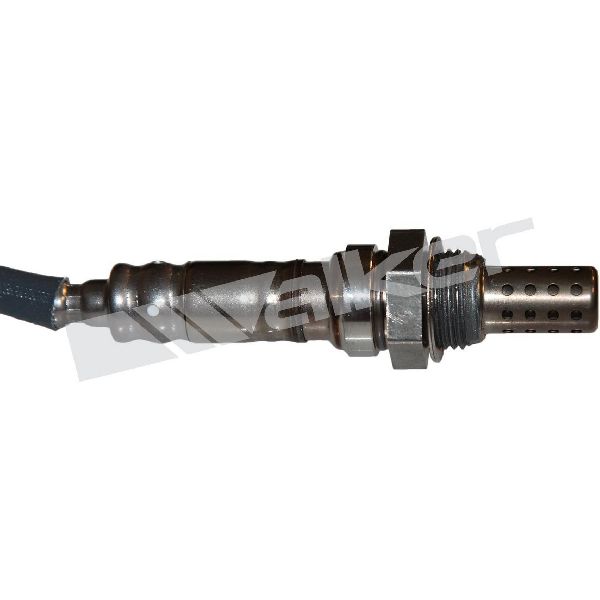
- The correct replacement part is the 'downstream' or 'post-catalyst' oxygen sensor. The GM part number is 12639692 (ACDelco 213-4768).
What's Unique About the 2010-2017 GMC Terrain
The 2010-2017 GMC Terrain's first generation spans two versions of the 2.4L Ecotec: the LAF (2010-2011) and the direct-injection LEA (2012-2017). While the engines differ, the downstream O2 sensor's function and diagnosis for P0140 are identical. These Ecotec engines are notoriously prone to excessive oil consumption due to piston ring issues, a problem acknowledged by GM through multiple special coverage programs and TSBs. While high oil consumption more commonly leads to a P0420 (Catalyst Efficiency) code from a contaminated catalytic converter, the oil burning can also foul the O2 sensor itself, causing it to fail electrically and result in a P0140 inactivity code.
Symptoms You May Notice
- Check Engine Light is on.
- Vehicle will not pass an emissions/smog test.
- In rare cases, a slight decrease in fuel efficiency may be noticed.
- Replacing the upstream (Sensor 1) oxygen sensor. P0140 specifically refers to Sensor 2, which is after the catalytic converter.
- Replacing the catalytic converter. While a bad converter can cause other codes (like P0420), it will not cause a P0140 'no activity' electrical fault.
Most Likely Causes
- Failed Downstream Oxygen Sensor 🔴 High Probability → Shop Oxygen Sensor Oxygen sensors are wear items with a finite lifespan, typically 100,000 to 150,000 miles. On this platform, contamination from excessive oil blow-by, a known engine issue, can accelerate failure by coating the sensor element. Normal aging also causes them to fail electrically.
How to confirm: After checking the fuse and wiring, this is the most likely cause. Use a scan tool to watch the live data for the B1S2 voltage. If it is stuck at a fixed value (e.g., 450mV) and does not change, or shows 0V, the sensor has failed. A healthy downstream sensor should show a slow, lazy switching voltage, typically above 0.6V on a warm engine.
Typical fix: Replace the Bank 1 Sensor 2 (downstream) oxygen sensor. This is a common DIY repair.
Est. part cost: $45-$120 - Damaged Wiring or Connector 🟡 Medium Probability The sensor wiring is located under the vehicle on the passenger side and is exposed to road debris, water, and heat from the exhaust. This can cause wires to break, melt on heat shields, or the connector pins to corrode. Sometimes the connector is simply not plugged in securely after previous service.
How to confirm: Visually inspect the entire wiring harness from the O2 sensor to where it connects to the main harness near the passenger side of the transmission. Look for frayed wires, melted plastic, or green/white corrosion on the connector pins. Tug gently on the wires at the connector to ensure they are secure.
Typical fix: Repair the damaged section of the wire or replace the connector pigtail.
Est. part cost: $10-$30 - Blown O2 Sensor Heater Fuse ⚪ Low Probability → Shop Oxygen Sensor A short in the heater circuit wiring or the sensor's internal heater element can cause the fuse to blow, preventing the sensor from reaching operating temperature and sending a signal.
How to confirm: Locate the under-hood fuse box. The fuse for the downstream (post-catalyst) O2 sensor is fuse #41 🎬 Watch: How to find the O2 sensor fuse location, a 15A blue fuse. Visually inspect the fuse or test it for continuity with a multimeter. The fuse for the upstream sensor is #43.
Typical fix: Replace the blown fuse. If it blows again immediately, a short circuit exists in the heater wiring or the sensor itself that must be found and repaired.
Est. part cost: $1-$5
Rare But Worth Checking
- Exhaust Leak: An exhaust leak before the sensor can introduce oxygen into the exhaust stream, causing erratic readings. While this is more likely to set a performance code (like P0420) rather than a 'no activity' code, it's worth a quick check if other causes are ruled out.
- Faulty Powertrain Control Module (PCM): → Shop Engine Control Module (ECM) This is extremely rare. The PCM's internal driver for the O2 sensor circuit can fail. This should only be considered after all other possibilities (sensor, wiring, fuses) have been exhaustively ruled out by a professional.
Diagnosis Steps
- Read the code with an OBD-II scanner to confirm P0140 is present.
- Open the under-hood fuse box (driver's side) and check fuse #41 (15A). This fuse powers the downstream O2 sensor. Replace if blown.
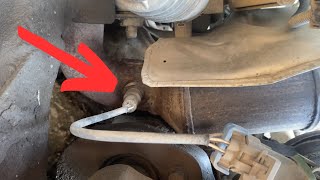
- Safely raise the vehicle. Locate the downstream O2 sensor, which is installed in the exhaust pipe after the catalytic converter, visible from the passenger side.
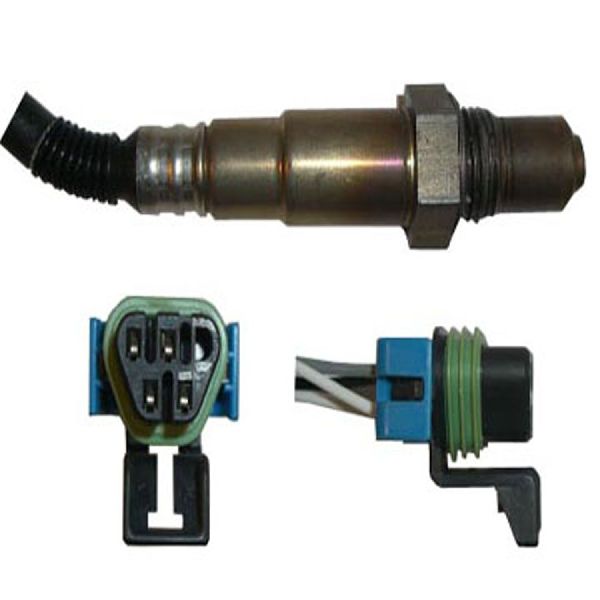
- Visually inspect the sensor's wiring harness and its blue connector. Look for any signs of melting, chafing, corrosion, or road damage. Ensure the connector is securely plugged in.
- If the wiring looks good, use a scan tool to monitor the live data for 'O2S B1S2'. The voltage should show some activity. If it is stuck at a specific number (often around 0.45V) or shows 0V 🎬 See this quick guide on diagnosing and fixing P0140, the sensor has likely failed.
- As a definitive test, use a multimeter to check for 12V power at the heater circuit wire and a good ground at the connector. If power and ground are present but the sensor shows no activity on the scan tool, the sensor is bad.
- If all tests pass, the most probable cause is a failed oxygen sensor.
Parts You'll Likely Need
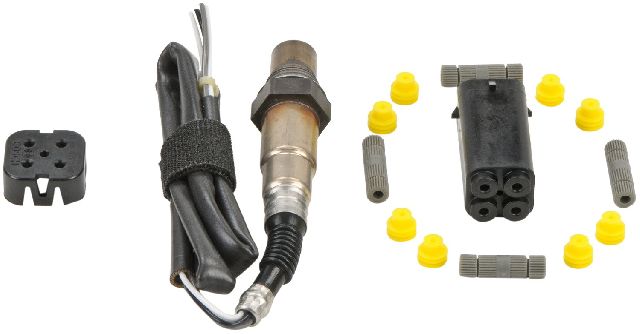
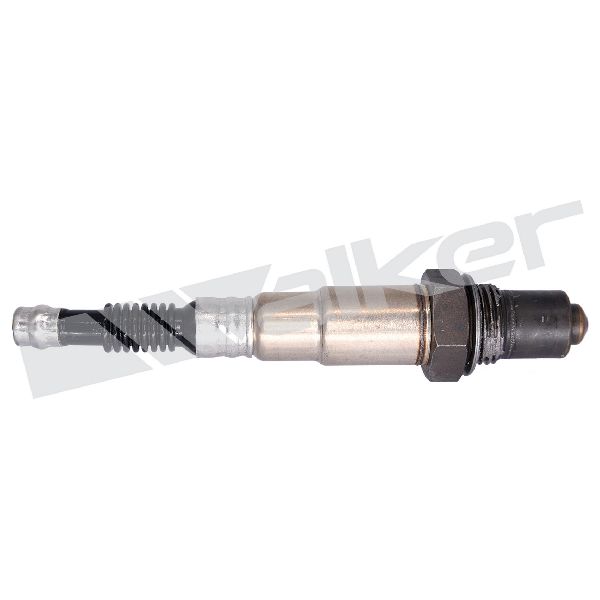
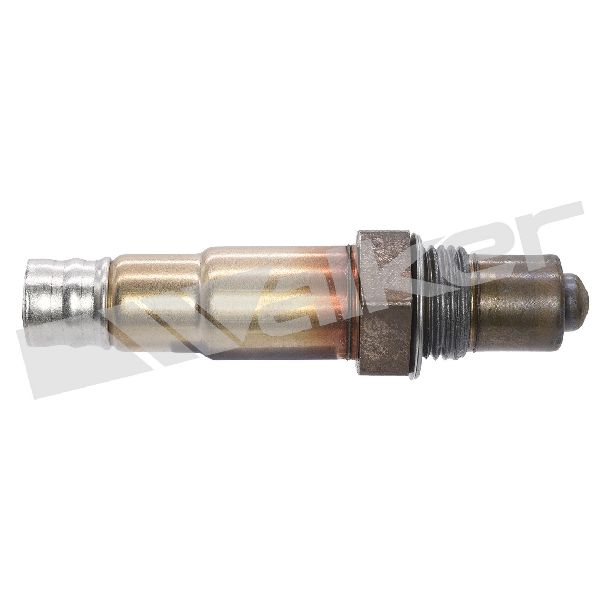
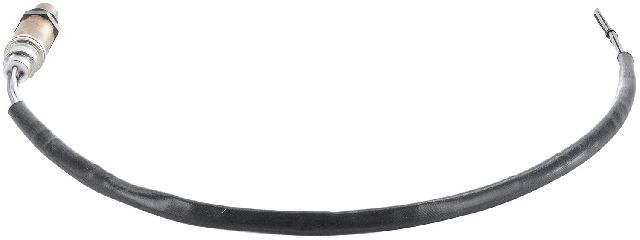
- Downstream Oxygen Sensor (Bank 1, Sensor 2)
(OEM #12639692)— This is the component that has failed in the vast majority of P0140 cases.
Trusted brands: ACDelco (GM Genuine), Denso, NGK/NTK, Bosch
OEM price range: $80-$120
Aftermarket price range: $45-$75
Related Codes That Often Appear With This One
- P0137 — O2 Sensor Circuit Low Voltage (Bank 1 Sensor 2) - This can be a related code indicating a problem with the sensor's signal circuit, often preceding a total failure that logs P0140.
- P0138 — O2 Sensor Circuit High Voltage (Bank 1 Sensor 2) - A Reddit user reported this code alongside P0140, suggesting a complex electrical issue.
- P0036 — HO2S Heater Control Circuit (Bank 1 Sensor 2) - This code points specifically to a problem with the sensor's internal heater. A failed heater will prevent the sensor from working correctly, leading to the P0140 inactivity code.
- P0420 — Catalyst System Efficiency Below Threshold (Bank 1) - Due to the platform's high oil consumption, it's common to see P0420. If the O2 sensor also fails due to contamination or age, both codes can appear.
Technical Service Bulletins (TSBs) & Recalls
- Special Coverage #15285C / #16118 / N192291100: These related documents address excessive oil consumption on 2011, 2012, and 2013 models respectively, due to piston ring wear. While not directly for P0140, this is the root cause of much of the exhaust component failure on this platform.
- TSB #PIT5171B: While for a different code (U0140), this bulletin notes that wiring harnesses in the under-vehicle area (specifically near connector X411) are prone to corrosion and damage, which is a relevant data point for P0140 wiring issues.
Platform-Specific Known Issues
- The wiring harness for the downstream O2 sensor is somewhat exposed under the passenger side of the vehicle, making it susceptible to damage from road debris or improper jacking.
- Given the known oil consumption issues with the 2.4L Ecotec engine, a P0140 code can be an indirect symptom of this larger problem, as oil ash can contaminate and destroy the sensor over time.
Mechanic-Grade Diagnostic Values
- Downstream O2 Sensor (B1S2) Heater Circuit Resistance — expected: 10-25 Ohms. Failure: An open circuit (infinite resistance) or a shorted circuit (near zero resistance) indicates a failed heater element inside the sensor.
- Downstream O2 Sensor (B1S2) Voltage (Scan Tool) — expected: Relatively steady voltage above 0.6V on a fully warmed-up engine at a constant RPM.. Failure: Voltage is stuck at a fixed value (commonly ~450 mV), reads 0V, or fluctuates rapidly mimicking the upstream sensor.
Scan Tool Commands That Help
- GM GDS2 / Tech2: HO2S Heater Commanded State (On/Off) — This bidirectional control allows a technician to command the O2 sensor's heater circuit on and off directly. It is used to verify that the wiring, fuse, and relay for the heater circuit are functional. If the heater can be commanded on and current draw is observed, it confirms the circuit integrity up to the sensor itself, strongly pointing to an internal sensor failure if a P0140 or heater code is present.
Wiring & Ground Locations
- G110 — On the left front of the engine, near the ignition coil 4 takeout.. Wiring diagrams indicate this is a primary engine ground. A corroded or loose G110 can cause a variety of sensor data issues, including erratic or missing signals from components like the oxygen sensors that rely on a clean ground reference.
- X411 Connector — Under the vehicle on the driver's side, attached to the frame rail, located behind and to the left of the fuel tank.. While more commonly associated with communication codes like U0140 and U0432 due to GMLAN network wires passing through it, this connector is a major junction point in a highly exposed area. GM TSB PIT5427B specifically calls out this connector for corrosion issues. Any wiring passing through this area is suspect, and while not the primary cause for P0140, damage here could affect the O2 sensor harness that runs nearby.
Model Year Variations Within This Range
- 2010-2011 (LAF) vs 2012-2017 (LEA): The 2010-2011 models used the LAF 2.4L engine, while 2012-2017 models used the LEA 2.4L with direct injection. However, for the purposes of the P0140 code, the downstream oxygen sensor (GM Part #12639692 / ACDelco #213-4768) and its function are identical across both engine versions within this generation.
Diagnostic Flowchart
Other Known Issues on This Vehicle
Issues unrelated to this code that are worth knowing about as an owner of this generation:
- Excessive Oil Consumption 🔴 High — Extremely common, especially on 2010-2013 models. Caused by faulty, low-tension piston rings. Can begin as early as 50,000-60,000 miles. (Ref: Special Coverage Adjustments #15285C, #16118, N192291100, and others extended warranty coverage for piston/ring replacement.)
- Timing Chain Stretch / Failure 🔴 High — Very common, typically occurs between 80,000 and 120,000 miles. Caused by stretched chains, failed plastic guides, or a faulty tensioner.
- Faulty Camshaft Position Actuator Solenoids 🟠 Medium → Shop Engine Camshaft — Common failure item leading to rough running, hesitation, and codes like P0010, P0011, P0013, or P0014. (Ref: TSB 15-06-01-002B)
- Clogged/Frozen PCV Orifice 🟠 Medium — The PCV orifice is integrated into the intake manifold and can clog or freeze in cold weather, leading to high crankcase pressure and blown main seals (rear main seal leak).
- High-Pressure Fuel Pump Failure (LEA Engine) 🟠 Medium — The high-pressure fuel pump on the direct-injected LEA engine (2012-2017) can fail, causing stalling, hard starting, and fuel mixing with engine oil.
Used vs. New Parts: Buying Guide for This Vehicle
When a used part is the smart pick: Never. Oxygen sensors are consumable wear-and-tear items with a finite lifespan. They are sensitive electronic components that degrade with mileage and are easily contaminated by oil, coolant, and carbon. The cost savings of a used sensor are minimal compared to the high risk of installing a part that is already failing or will fail shortly.
What to inspect on the donor part:
- Not applicable. Do not purchase used oxygen sensors. Forum and mechanic consensus is that installing a used electrical sensor is a poor gamble that can lead to repeated repairs.
OEM-only on this vehicle (don't cheap out):
- While not strictly 'OEM-only', using a reputable OE-supplier brand is critical. Cheap, unbranded sensors are a common source of recurring issues.
Aftermarket brands forum-validated for this vehicle:
- Denso
- NGK/NTK
- Bosch
Brands owners have reported issues with on this vehicle:
- Unbranded, no-name sensors from online marketplaces. While tempting due to low cost, they often have incorrect resistance values or poor longevity, causing the code to return.
Real Owner Stories
Aggregated from forums and TSBs cited above. Mileages and costs reflect what owners reported in those sources.
2014 Chevy Equinox 2.4L Ecotec
Symptoms: Multiple codes were present, all pointing to the downstream sensor.
What fixed it: Replacement of the downstream O2 sensor with a Denso part.
Source hint: YouTube - SlothKingGarage - 'Chevy Equinox Downstream O2 Sensor Replacement'
2010-2017 GMC Terrain 2.4L Ecotec
Symptoms: Check engine light on; vehicle needed to pass emissions/smog test.
What fixed it: Replacing the downstream sensor and clearing the code.
Source hint: equinoxforum.net / terrainforum.net
Related OBD-II Codes
Frequently Asked Questions
Which fuse should I check for a P0140 code on my GMC Terrain?
Could my Terrain's high oil consumption be causing this O2 sensor failure?
Where is the Bank 1 Sensor 2 located on the 2.4L Ecotec engine?
Is there a specific wiring issue I should look for under the vehicle?
What is the typical lifespan of the oxygen sensor on this platform?
Can I use parts from a Chevy Equinox to fix my P0140 code?
Helpful Videos
![How to Fix P0140 Engine Code in 3 Minutes [2 DIY Method / Only $9.53]](https://img.youtube.com/vi/3ruvJ5yn2GI/mqdefault.jpg)
We Have This Part in Stock

The information in this article is provided for general reference and educational purposes only. Vehicle specifications, procedures, and part compatibility can vary by production date, trim level, and region. Always consult your vehicle's factory service manual and verify part numbers before purchasing or performing repairs. Safety-critical components such as airbags, seat belts, and braking systems should be installed by a qualified professional.
- GMC Terrain:
- 🧭 Diagnostic Flowchart
- 🎬 Helpful Videos
- 🛍️ Shop This Part
- What's Unique About the 2010-2017 GMC Terrain
- Symptoms You May Notice
- Most Likely Causes
- Rare But Worth Checking
- Diagnosis Steps
- Parts You'll Likely Need
- Related Codes That Often Appear With This One
- Technical Service Bulletins (TSBs) & Recalls
- Platform-Specific Known Issues
- Mechanic-Grade Diagnostic Values
- Scan Tool Commands That Help
- Wiring & Ground Locations
- Model Year Variations Within This Range
- Other Known Issues on This Vehicle
- Used vs. New Parts: Buying Guide for This Vehicle
- Real Owner Stories
- 2014 Chevy Equinox 2.4L Ecotec
- 2010-2017 GMC Terrain 2.4L Ecotec
- Related OBD-II Codes
- Frequently Asked Questions
- 🎟️ Get 5% Off