

P0141 on 2018-2024 Chevrolet Equinox 1.5L Turbo: O2 Sensor Heater Fixes
This code almost always means the downstream oxygen sensor (Bank 1, Sensor 2) has a failed internal heater. Replacing the sensor is the typical fix. Expect to pay $40-$80 for an aftermarket part or $90-$150 for an OEM ACDelco sensor. It's a straightforward DIY job for many, requiring an O2 sensor socket. Note that the OEM replacement part may require a scan tool for a reset procedure.
- P0141 points specifically to a fault in the heater circuit for the downstream O2 sensor (Sensor 2).
- The most common cause by far is simply a failed O2 sensor, which is a standard wear item.
- Driving with this code will not harm your engine, but you will fail an emissions test.
- Before buying a new sensor, perform a quick visual check of the wiring for obvious damage and check the O2 heater fuse.
- Replacement is a DIY-friendly task requiring an O2 sensor socket (usually 22mm or 7/8"), but be aware that an OEM sensor may require a scan tool reset procedure after installation.
What's Unique About the 2018-2024 Chevrolet Equinox
The 2018-2024 Equinox belongs to the third generation, and this code is a common and straightforward issue. There are no unique design flaws or widespread problems that make this vehicle prone to P0141. The cause is almost always a standard part failure due to age and heat cycles. The 1.5L Turbo engine has only one exhaust bank, so 'Bank 1' is the only bank, and 'Sensor 2' definitively refers to the downstream sensor after the catalytic converter.
Symptoms You May Notice
- Check Engine Light is on.
- Failing a state emissions test.
- Potential for a gasoline smell from the exhaust in some cases.
- Replacing the upstream (Bank 1, Sensor 1) O2 sensor. P0141 is specific to Sensor 2.
- Replacing the catalytic converter. A bad catalytic converter typically sets a P0420 code, not a P0141 heater circuit code.
Most Likely Causes
- Failed Downstream O2 Sensor 🔴 High Probability → Shop Oxygen Sensor Oxygen sensors are wear-and-tear items. The internal heater element is subjected to thousands of heat cycles and eventually burns out, creating an open circuit. This is the most common reason for P0141.
How to confirm: Unplug the sensor and measure the resistance between the two heater circuit pins (usually the two same-colored wires, e.g., black or white). An infinite resistance reading (open loop) confirms the heater has failed. A good heater will have a low resistance, typically between 4 and 20 ohms.
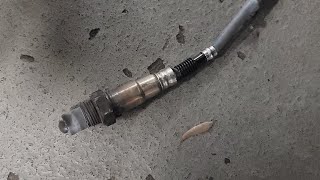
Typical fix: Replace the Bank 1, Sensor 2 (downstream) oxygen sensor. The OEM part is ACDelco 12701634. 🎬 See a quick walkthrough of the downstream sensor replacement process. Note that after replacement, a scan tool may be required to perform a reset or programming procedure.
Est. part cost: $40-$150 - Damaged Wiring or Connector 🟡 Medium Probability The wiring harness for the downstream O2 sensor runs under the vehicle and is exposed to road debris, water, and heat. Wires can become frayed, melted on the exhaust, or corroded at the connector pins.
How to confirm: Visually inspect the entire wiring harness from the sensor to where it connects to the main vehicle harness. Check for chafing, melting, or breaks. Unplug the connector and check for green or white corrosion on the pins.
Typical fix: Repair the damaged section of wire or clean/replace the connector.
Est. part cost: $5-$50 - Blown Fuse ⚪ Low Probability
How to confirm: Check the fuse box for a fuse labeled for the O2 sensor heater ('O2 HTR', 'EMISSIONS', etc.). While fuse locations for the 2nd Gen Equinox are well-documented, the specific fuse for the 3rd Gen (2018+) is less clearly defined in public diagrams. Check the under-hood fuse block first. Consult your owner's manual for the specific fuse location and designation.
Typical fix: Replace the blown fuse. If the fuse blows again immediately, it indicates a short circuit in the wiring or the sensor itself that must be found.
Est. part cost: $1-$5
Rare But Worth Checking
- Faulty Engine Control Module (ECM): → Shop Engine Control Module (ECM) This is extremely rare. Before condemning the ECM, all other possibilities (sensor, wiring, fuse) must be exhaustively ruled out by a professional. This would likely be accompanied by other trouble codes. An internal short in the ECM can cause this code and may be diagnosed by checking for continuity between the heater power and ground pins at the ECM connector itself.
Diagnosis Steps
- Read the code with an OBD-II scanner to confirm P0141 is the only code present.
- Visually inspect the downstream O2 sensor's wiring harness and connector. Look for any signs of melting, chafing, or corrosion.
- Locate the fuse for the oxygen sensor heater circuit. On the 2018+ Equinox, there are three fuse panels: under the hood, under the driver's side dash, and in the rear cargo area. The relevant fuse is most likely in the under-hood fuse block. Check your owner's manual for a fuse labeled 'O2 HTR' or similar.
- If the wiring and fuse are okay, the sensor itself is the most likely culprit. 🎬 Watch this guide to understand how the heater circuit fails. To be certain, disconnect the sensor's electrical connector.
- Using a multimeter set to Ohms (Ω), measure the resistance across the heater circuit pins on the sensor side of the connector. A reading of 'OL' or infinite resistance means the heater is burned out and the sensor must be replaced. A good sensor should read between 4 and 20 ohms.
- If resistance is within spec, check for 12-volt power on the harness side of the connector (with the key on, engine off). The heater power wire is typically pink with a black stripe on these GM models. If there is no power, the wiring issue is upstream of the connector or the fuse is blown.
- If the sensor heater has failed, replace the Bank 1 Sensor 2 oxygen sensor. An O2 sensor socket (22mm or 7/8") is highly recommended.
- After replacement, clear the trouble code with the scanner. Note that some documentation for the OEM part suggests a special setup procedure or programming may be required. If the light returns, this step may need to be performed by a shop with a GM-compatible scan tool. Drive the vehicle to ensure the light does not return.
Parts You'll Likely Need
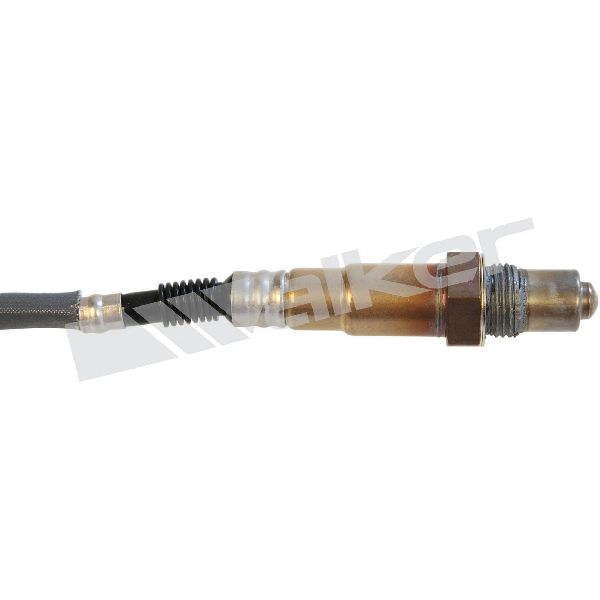
- Downstream Oxygen Sensor (Bank 1, Sensor 2)
(OEM #12701634)— This is the component that contains the heater element that fails and triggers the P0141 code.
Trusted brands: ACDelco (OEM), Bosch, Denso, NGK/NTK
OEM price range: $90-$150
Aftermarket price range: $40-$80
Mechanic-Grade Diagnostic Values
- O2 Sensor Heater Element Resistance — expected: 4-20 Ohms (multiple sources cite ranges like 4-6, 4-10, and 5-20 Ohms). Failure: Infinite resistance (OL) indicates an open circuit (burned out heater). Near zero resistance indicates a short circuit.
- Voltage at Heater Circuit Power Wire (Harness Side) — expected: ~12 Volts (Battery Voltage). Failure: 0 Volts indicates a blown fuse or a break in the power wire.
Hidden / Shadow Codes Worth Checking
- Mode $06, TID $A2: Represents the 'Heater Resistance Error Test' for Bank 1 Sensor 2. Advanced scan tools can read this monitor's raw data to see the resistance value the ECM is measuring, which can confirm a fault without manual testing. (see via An advanced OBD-II scanner capable of displaying Mode $06 test results.)
Scan Tool Commands That Help
- GDS2 (GM Dealer Tool) or equivalent professional scanner: Oxygen Sensor Heater Reset/Programming — After replacing the oxygen sensor with a new OEM ACDelco part (12701634). Multiple OEM parts sources state that a special setup procedure is required to ensure the ECM correctly recognizes and operates the new sensor heater.
- GDS2 or equivalent: O2 Heater Circuit Bidirectional Test — During diagnosis, a technician can use this function to command the O2 sensor heater ON and OFF to verify the integrity of the circuit. This allows testing of the wiring and ECM's control function independently of the sensor itself.
Wiring & Ground Locations
- Downstream O2 Sensor Heater Wires — At the 4-pin connector for the Bank 1 Sensor 2 oxygen sensor.. Knowing the wire colors is essential for testing. On many modern GM vehicles, the heater circuit consists of a Pink/Black wire (12V battery voltage) and a Gray/White wire (Heater Low Control, which is ground-side switched by the ECM). The other two wires are for the sensor signal.
- Primary ECM Ground — On similar GM 1.5L LFV engines, a main ground for the ECM is located on a 10mm bolt on the back of the cylinder head.. The ECM controls the ground for the heater circuit. A poor ECM ground can cause a wide range of issues, including erratic behavior of components it controls. While not a common cause for a single P0141, it should be checked if other electrical issues are present.
Real Owner Repair Stories
🎬 Watch this technician diagnose heater resistance codes on a 2019 Equinox.- YouTube channel 'Ford Boss Me' (2019 Chevrolet Equinox 1.5L Turbo) — Check Engine Light with codes P0036 and P0054 (Heater Resistance codes, functionally similar to P0141).
❌ Tried (didn't work) The video proceeds directly to diagnosis and replacement, no other failed attempts were mentioned.
✅ What actually fixed it The problem was fixed by replacing the downstream oxygen sensor (Bank 1, Sensor 2). The video shows the location and the successful outcome after replacement.
When the Usual Fixes Don't Work
- While most cases are a simple sensor replacement, a notable counter-narrative is the requirement for a 'programming/special setup procedure' after installing a new OEM ACDelco sensor. A DIYer or shop that replaces the sensor but does not perform this scan tool reset may find the P0141 code returns, leading them to misdiagnose a wiring or ECM fault when the actual issue is a failure to initialize the new component correctly.
OEM Part Supersession History
12663317→12701634— Standard part revision by the manufacturer, likely for improved materials, reliability, or manufacturing process.
Model Year Variations Within This Range
- 2022-2024: The Equinox received a cosmetic facelift for the 2022 model year with new front/rear fascias and lighting. The 2.0L engine option was dropped, making the 1.5L Turbo the only engine. These changes did not affect the part number or diagnosis for P0141.
- 2023-2024: The 1.5L Turbo engine received a minor performance update, increasing output from 170 to 175 horsepower. This software or minor mechanical change does not affect the diagnosis for the P0141 code.
Diagnostic Flowchart
Other Known Issues on This Vehicle
Issues unrelated to this code that are worth knowing about as an owner of this generation:
- Failing Brake Vacuum Pump 🔴 High — A widespread and well-documented problem, subject of a class-action lawsuit. Can occur at various mileages, leading to a hard brake pedal and 'Service Brake Assist' warning. (Ref: TSB 21-NA-268 (describes how pump failure can damage the camshaft))
- Cracked Pistons / Low-Speed Pre-Ignition (LSPI) 🔴 High — A known issue on early 1.5L turbo engines (esp. 2018-2021), though less common than vacuum pump failure. Can cause catastrophic engine failure. (Ref: Internal GM recommendations point to using specific dexos1 Gen 2 oil to mitigate LSPI.)
- Moisture/Ice in Charge Air Cooler (CAC) 🟠 Medium — Common in cold or humid climates, causing 'Reduced Engine Power' warnings and setting codes like P0299 and P2227. (Ref: TSB 18-NA-020)
- Missing Start-Stop Accumulator Bolts 🟠 Medium — Affects certain 2018-2020 models. Can lead to a transmission fluid leak and potential loss of propulsion. (Ref: NHTSA Recall 20V668000)
- Excessive Oil Consumption 🟠 Medium — Reported on some 2018-2020 models, though more prevalent in the previous generation's 2.4L engine. Often linked to piston ring issues.
Used vs. New Parts: Buying Guide for This Vehicle
When a used part is the smart pick: For this repair, a used part is almost never a smart choice. The oxygen sensor is a wear-and-tear item with a finite lifespan. A used sensor from a junkyard may fail shortly after installation, wasting time and money.
Donor-vehicle mileage cap: roughly under 30000 miles for the part to have meaningful remaining life.
What to inspect on the donor part:
- If forced to use a used part, source it from the newest, lowest-mileage vehicle possible.
- Inspect the connector for any corrosion or damage.
- Check the sensor tip for heavy carbon fouling or white deposits, which could indicate issues with the donor engine.
OEM-only on this vehicle (don't cheap out):
- While not strictly 'OEM-only', using the OEM ACDelco sensor (12701634) is highly recommended to ensure compatibility with the ECM, especially given the documented requirement for a post-installation setup procedure.
Aftermarket brands forum-validated for this vehicle:
- Bosch
- Denso
- NGK/NTK
Brands owners have reported issues with on this vehicle:
- Avoid unbranded, 'white-box' sensors from online marketplaces. These often have incorrect heater resistance values or poor construction, leading to the code returning quickly.
Real Owner Stories
Aggregated from forums and TSBs cited above. Mileages and costs reflect what owners reported in those sources.
2019 Chevrolet Equinox 1.5L Turbo
Symptoms: Check engine light with codes P0036, P0054, and others related to internal resistance. The scan tool showed the Bank 1 Sensor 2 voltage was stuck high at around 1.25 volts and was not changing.
What fixed it: Replaced the downstream oxygen sensor (Bank 1, Sensor 2). The old sensor was difficult to remove and required heating with a torch.
Source hint: YouTube video titled '2019 Chevrolet Equinox - P0036 & P0054 - bank 1 sensor 2 Oxygen Sensor Replacement' by Ford Boss Me
Documented NHTSA Reports
Symptoms: An owner reported an ongoing issue where the dashboard goes blank while driving, accompanied by a cluster of trouble codes including P0141, P0036, P0037, and P0138. The vehicle also required multiple accelerator pedal and throttle harness replacements (NHTSA ODI #11221744).
Related OBD-II Codes
Frequently Asked Questions
What is the specific replacement part number for the downstream O2 sensor on my 2018-2024 Chevrolet Equinox 1.5L?
I'm seeing P0141 on my 2019 Equinox along with P0036 and P0054. Are these related?
Where is the fuse for the O2 sensor heater located on the 3rd Gen Equinox?
Could my 'Reduced Engine Power' warning be related to the P0141 code?
Does the GMC Terrain 1.5L Turbo share this same O2 sensor issue?
What color wires should I look for when testing the O2 sensor heater circuit?
Helpful Videos
We Have This Part in Stock

The information in this article is provided for general reference and educational purposes only. Vehicle specifications, procedures, and part compatibility can vary by production date, trim level, and region. Always consult your vehicle's factory service manual and verify part numbers before purchasing or performing repairs. Safety-critical components such as airbags, seat belts, and braking systems should be installed by a qualified professional.
- Chevrolet Equinox:
- 🧭 Diagnostic Flowchart
- 🎬 Helpful Videos
- 🛍️ Shop This Part
- What's Unique About the 2018-2024 Chevrolet Equinox
- Symptoms You May Notice
- Most Likely Causes
- Rare But Worth Checking
- Diagnosis Steps
- Parts You'll Likely Need
- Mechanic-Grade Diagnostic Values
- Hidden / Shadow Codes Worth Checking
- Scan Tool Commands That Help
- Wiring & Ground Locations
- Real Owner Repair Stories
- When the Usual Fixes Don't Work
- OEM Part Supersession History
- Model Year Variations Within This Range
- Other Known Issues on This Vehicle
- Used vs. New Parts: Buying Guide for This Vehicle
- Real Owner Stories
- 2019 Chevrolet Equinox 1.5L Turbo
- Documented NHTSA Reports
- Related OBD-II Codes
- Frequently Asked Questions
- 🎟️ Get 5% Off