

P0141 on 2005-2010 Pontiac G6: O2 Sensor Heater Failure Causes and Fixes
On a 2005-2010 Pontiac G6, code P0141 almost always means the downstream oxygen (O2) sensor has failed. Replacing the sensor, which costs about $40-$100 for an aftermarket part, is the most common fix. The job is DIY-friendly with the right tools, primarily an O2 sensor socket. Before replacing, check the 'EMISSIONS' fuse in the underhood fuse box.
- P0141 on a Pontiac G6 points to a problem with the heater in the downstream O2 sensor.
- The most likely fix is replacing the Bank 1, Sensor 2 O2 sensor.
- Before buying a new sensor, always check the 'EMISSIONS' fuse in the underhood fuse box, as it's a simple and cheap potential fix.
- This is a DIY-friendly repair for most home mechanics, but an O2 sensor socket (22mm or 7/8") is highly recommended to avoid frustration and damaging the new part.
- Do not replace the catalytic converter for this code; it is not the cause. A catalytic converter issue would likely trigger a P0420 code.
What's Unique About the 2005-2010 Pontiac G6
For the Pontiac G6, the location of 'Bank 1, Sensor 2' depends on the engine. On the 2.4L 4-cylinder engine, there is only one bank, so this code refers to the single downstream sensor located after the catalytic converter. On the 3.5L, 3.6L, and 3.9L V6 engines, 'Bank 1' is the bank of cylinders closer to the firewall (the rear bank), and Sensor 2 is the downstream sensor for that bank. While the code is common across many cars, the primary cause on the G6 is overwhelmingly the failure of the sensor's internal heater element rather than complex wiring issues. Access to the rear bank sensor on V6 models can be tight.
Symptoms You May Notice
- Check Engine Light is on
- Failing a vehicle emissions test
- Slight decrease in fuel economy (less common, as the downstream sensor has minimal impact on fuel trim)
- Replacing the catalytic converter. A P0141 code is for the sensor's heater circuit, not the efficiency of the converter. A bad converter would typically set a P0420 code.
- Replacing the wrong oxygen sensor. Always confirm you are replacing Bank 1, Sensor 2, which is the downstream sensor. On V6 models, this is the sensor after the catalytic converter on the firewall side of the engine. 🎬 Watch: Locate and replace sensors on V6 models
Most Likely Causes
- Failed Bank 1, Sensor 2 Oxygen Sensor 🔴 High Probability → Shop Oxygen Sensor The internal heater element within the oxygen sensor is a common failure point due to age and constant, rapid heat cycles. It is a wear-and-tear item that eventually burns out.
How to confirm: Unplug the sensor and use a multimeter to check the resistance across the two heater circuit pins (typically the two wires of the same color, often black on GM sensors). A healthy sensor should have a resistance reading between 4 and 10 ohms when cool. An open circuit (infinite resistance) or a reading far outside this range confirms a bad heater element. 🎬 See how to diagnose a P0141 heater circuit code
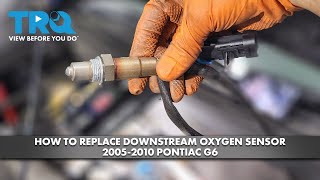
Typical fix: Replace the Bank 1, Sensor 2 oxygen sensor. Apply anti-seize compound to the threads of the new sensor before installation. A 22mm or 7/8" slotted oxygen sensor socket is highly recommended for removal and installation. 🎬 Watch: Step-by-step downstream oxygen sensor replacement guide
Est. part cost: $40-$100 - Blown Fuse for O2 Heater Circuit 🟡 Medium Probability A short circuit in the sensor or its wiring can cause the corresponding fuse to blow as a protective measure. This is a common check that should be performed before replacing the sensor.
How to confirm: Locate the underhood fuse box next to the battery. Check the 15A fuse, often labeled 'EMISSIONS 2' or 'REAR O2 SENSOR' depending on the year. Visually inspect the fuse or use a multimeter/test light to check for continuity.
Typical fix: Replace the blown fuse. If the new fuse blows immediately, a short circuit exists in the wiring or the sensor itself that must be diagnosed and repaired.
Est. part cost: $1-$5 - Damaged Wiring or Connector ⚪ Low Probability The sensor wiring is located under the vehicle and is exposed to road debris, moisture, and extreme heat from the exhaust. This can cause wires to melt, chafe on heat shields, or corrode at the connector pins.
How to confirm: Visually inspect the wiring harness and connector leading to the O2 sensor for any signs of melting, chafing, corrosion, or breaks. Check for 12V power on the power wire (often pink) and a good ground at the connector with the key on, engine off.
Typical fix: Repair the damaged section of wiring or replace the connector pigtail. Use heat-shrink tubing to protect repairs from moisture.
Est. part cost: $10-$30
Rare But Worth Checking
- Faulty Powertrain Control Module (PCM): → Shop Engine Control Module (ECM) This is extremely rare. Before considering PCM replacement, all other possibilities, including the sensor, fuse, and wiring, must be exhaustively tested and ruled out. A faulty PCM driver for the heater circuit is a last resort diagnosis.
Diagnosis Steps
- Read the code with an OBD-II scanner to confirm P0141 is present.
- Locate the underhood fuse box and check the fuse for the O2 sensor heaters (often a 15A fuse labeled 'EMISSIONS'). Replace if blown and re-test.
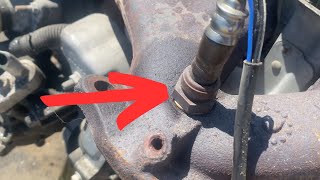
- If the fuse is good, locate the correct sensor. For 2.4L engines, it's the sensor after the catalytic converter. For V6 engines, it's the sensor after the catalytic converter on the rear bank (firewall side).
- Visually inspect the sensor's wiring harness and connector for any obvious damage, such as melting, chafing against the exhaust or heat shields, or corrosion in the connector.
- Disconnect the sensor and test the resistance of the heater element with a multimeter across the two same-colored wires (usually black). A reading outside of 4-10 ohms (especially an open circuit/infinite resistance) indicates a failed sensor.
- If the sensor's resistance is within spec, test for 12-volt power and ground at the vehicle-side connector with the ignition key in the 'On' position. The pink wire is typically the 12V supply.
- If 12V power is missing and the fuse is good, there is an open in the power wire. If ground is missing, trace the ground circuit. If both are present and the sensor tests good, the issue may be an intermittent connection or a rare PCM fault.
Parts You'll Likely Need
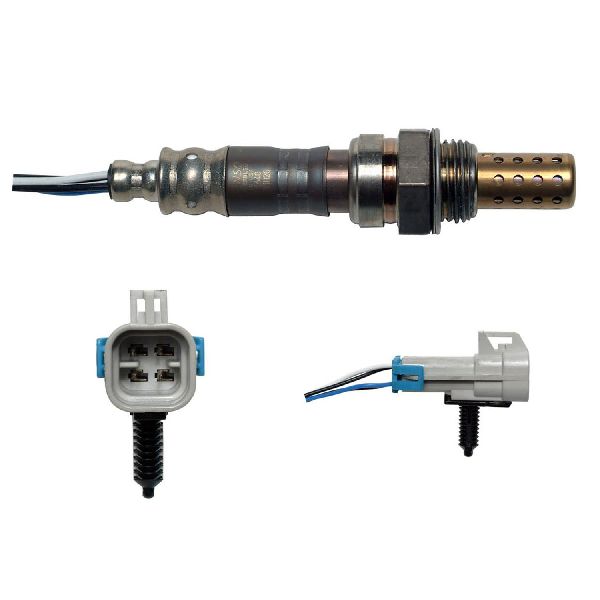
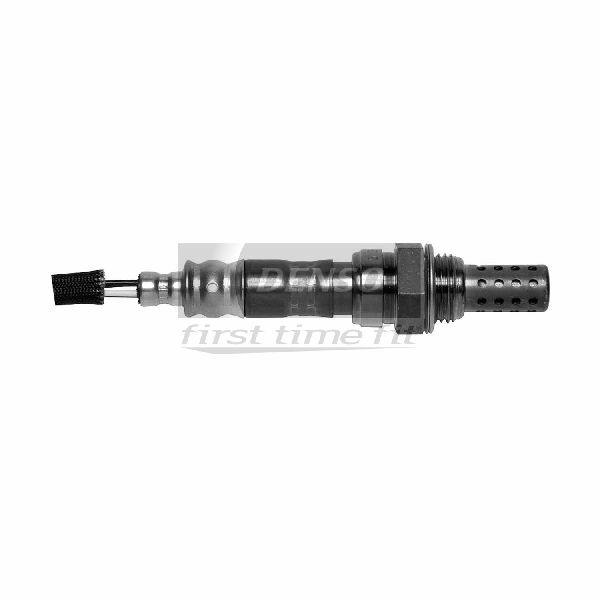
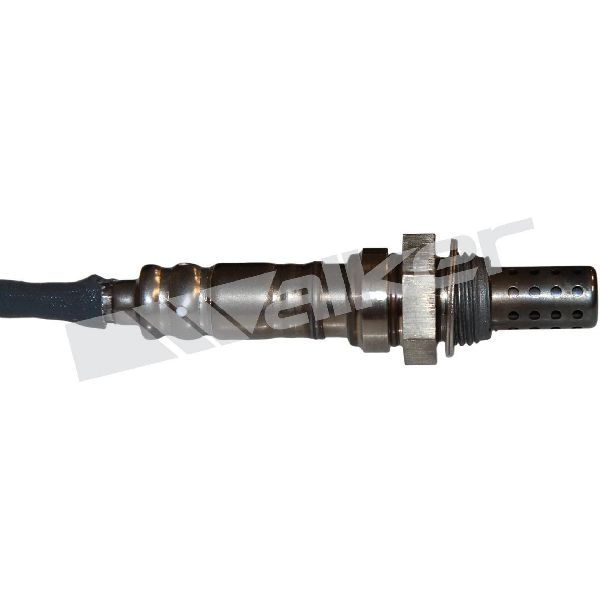
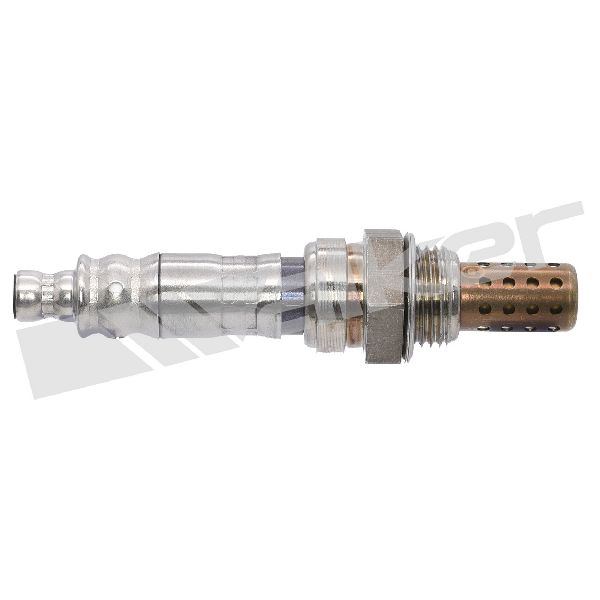
- Oxygen Sensor (Bank 1, Sensor 2)
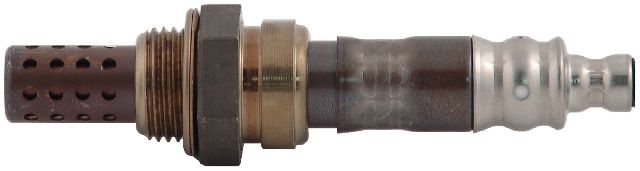
(OEM #ACDelco 213-4229 (Verify by VIN, but common for many G6 applications))— This is the component that contains the heater element that fails, triggering the P0141 code. It is the most frequent solution to the problem.
Trusted brands: ACDelco, Denso, NGK/NTK, Bosch
OEM price range: $80-$150
Aftermarket price range: $40-$100
Related Codes That Often Appear With This One
- P0135 — This is the heater circuit code for Bank 1, Sensor 1 (upstream). If both appear, it could indicate a common power or ground issue for that entire bank's heater circuits, such as a blown fuse or a wiring problem closer to the source.
- P0161 — This is the heater circuit code for Bank 2, Sensor 2 (on V6 engines). If seen with P0141, it strongly suggests a problem common to both downstream sensor heater circuits, like a shared fuse or relay.
Technical Service Bulletins (TSBs) & Recalls
- TSB #24-NA-042: While for a 2024 GM truck, this bulletin is relevant as it addresses a common GM issue where O2 sensor wiring is mis-routed and contacts the hot exhaust pipe, causing a short and triggering heater circuit codes. This highlights a potential failure point to inspect on the G6.
Platform-Specific Known Issues
- Access to Bank 1 Sensor on V6 Models: Owners on forums frequently report that while replacing the downstream sensor on the 2.4L I4 engine is straightforward, accessing Bank 1, Sensor 2 on the V6 models is more challenging due to tight clearance between the rear exhaust manifold/catalytic converter and the firewall.
- Wiring Prone to Electrical Issues: Some G6 owners report a higher-than-average number of electrical issues related to wiring, such as broken terminal clamps or shorted wires. While not specific to P0141, it reinforces the need to thoroughly inspect the O2 sensor wiring for damage before replacing the sensor itself.
Mechanic-Grade Diagnostic Values
- O2 Sensor Heater Element Resistance — expected: 4 - 10 Ohms at room temperature.. Failure: Infinite resistance (open circuit) or near zero Ohms (short circuit).
- Heater Circuit Power Supply Voltage — expected: Battery voltage (approx. 12V) with key on, engine off.. Failure: 0V indicates a blown fuse or an open in the power wire (typically pink) from the fuse block.
- Heater Circuit Ground Control (via Scan Tool) — expected: With the sensor plugged in and engine running, the PCM should apply a pulse-width modulated (PWM) ground to the control wire.. Failure: A constant ground or no ground signal when commanded ON may indicate a wiring short or a faulty PCM driver.
Scan Tool Commands That Help
- Tech 2 / GDS2: O2 Sensor Heater Test or Bidirectional Control — This function allows a technician to manually command the O2 sensor heater circuit on and off. It is used to verify that the PCM driver, wiring, and the heater element itself are all capable of functioning when a direct command is given. If the heater activates with the scan tool but not during normal operation, it points towards a problem with the enabling criteria or PCM logic rather than a hard electrical fault.
Wiring & Ground Locations
- G105 — On the left rear side of the engine compartment, on an engine-to-transmission stud, below the upper coolant hose.. This is a primary engine ground. A loose or corroded connection at G105 can cause a variety of sensor and module communication issues, including erratic behavior of the O2 sensor circuits which rely on a solid engine ground reference.
- G106 — For the 2.4L engine, it's on the left rear of the engine. For 3.5L and 3.9L engines, it's also on the left rear of the engine. For the 3.6L, it's on the right front of the engine.. This is another critical engine ground point. Its location varies by engine, so confirming its integrity is vital when diagnosing any engine control system fault.
- HO2S B1S2 Connector — On the wiring harness leading to the oxygen sensor located after the catalytic converter (on the firewall side for V6 engines).. This is where all electrical tests for the sensor are performed. The typical 4-wire GM connector has a Pink (12V+ power), a Tan/White (PCM low reference), a Tan (PCM signal), and a Black wire (Heater ground control from PCM). Verifying power and ground at this connector is a key diagnostic step.
Real Owner Repair Stories
- g6ownersclub.com forum user (2008 Pontiac G6 2.4L) — Check Engine Light with code P0141.
❌ Tried (didn't work) Replaced the Bank 1 Sensor 2 oxygen sensor twice with two different brands., Checked the 'EMISSIONS' fuse, which was good.
✅ What actually fixed it The user traced the wiring from the O2 sensor connector and found a wire that had corroded and broken internally, about 8 inches up from the connector inside the protective loom. The exterior of the loom and wire appeared undamaged. Repairing the broken wire and sealing it with heat shrink resolved the code permanently.
OEM Part Supersession History
GM 12589321→ACDelco 213-4229 (also cross-references to GM 12609457)— Part number consolidation and potential minor updates to materials or internal construction over the production lifespan.
Heads up: While universal sensors are available, many professional technicians and forum users strongly recommend using an OEM-branded sensor (ACDelco, or the original manufacturer like Denso/NTK) to avoid incompatibility issues with the PCM's strict heater resistance monitoring.
Model Year Variations Within This Range
- 2009.5-2010: For the 2.4L engine, a mid-cycle refresh for the 2009.5 model year introduced a 6-speed automatic transmission (6T40) alongside the existing 4-speed. While the O2 sensor part number generally remains the same, wiring harness routing and connector locations may have minor differences between the 4-speed and 6-speed equipped cars. Always verify the physical location before ordering parts.
Diagnostic Flowchart
Used vs. New Parts: Buying Guide for This Vehicle
When a used part is the smart pick: For this repair, a used part is NOT recommended. Oxygen sensors are wear-and-tear items with a finite lifespan. The heater element is the most common failure point, and a used sensor from a junkyard has an unknown number of heat cycles and remaining life. The cost savings are minimal compared to the risk of premature failure and repeating the labor.
What to inspect on the donor part:
- Not applicable as used sensors are not advised.
Aftermarket brands forum-validated for this vehicle:
- ACDelco (OEM)
- Denso (often the original manufacturer for GM)
- NGK / NTK
- Bosch
- Delphi
Brands owners have reported issues with on this vehicle:
- No-name, unbranded 'universal' sensors from online marketplaces. These often have incorrect heater resistance values that can cause the P0141 code to return immediately or fail within a few months.
Real Owner Stories
Aggregated from forums and TSBs cited above. Mileages and costs reflect what owners reported in those sources.
2010 Pontiac G6 2.4L — 70000 miles
Symptoms: Car went into limp mode after about twelve miles, with dash messages for 'loss of power', 'service esc', and 'service traction'. The check engine light was on with multiple codes, including P0141.
What fixed it: Replaced a missing 10A emissions fuse in slot #6 of the fuse box after unnecessarily replacing both O2 sensors, the MAF sensor, and the throttle body.
Source hint: 2CarPros
2007 Pontiac G6 — 155228 miles
Symptoms: Check engine light was on with multiple codes pulled from the computer, including P0141 for the oxygen sensor heater circuit.
What fixed it: The diagnostic report indicated the vehicle needed the rear O2 sensor replaced.
Source hint: Automotive Service & Repair
Pontiac G6
Symptoms: Check Engine Light on with code P0141.
What fixed it: The code was resolved after the owner found and replaced a blown 'EMISSIONS' fuse.
Source hint: g6performance.com
Related OBD-II Codes
Frequently Asked Questions
Where is the Bank 1, Sensor 2 oxygen sensor located on my Pontiac G6?
Is it difficult to access the P0141 sensor on the V6 G6 models?
What fuse should I check first for a P0141 code?
How can I test the oxygen sensor to confirm it's bad?
My G6 has other electrical problems. Could this be related to my P0141 code?
I have a P0141 on my Chevy Malibu. Is the diagnosis the same as for the G6?
Helpful Videos
We Have This Part in Stock


The information in this article is provided for general reference and educational purposes only. Vehicle specifications, procedures, and part compatibility can vary by production date, trim level, and region. Always consult your vehicle's factory service manual and verify part numbers before purchasing or performing repairs. Safety-critical components such as airbags, seat belts, and braking systems should be installed by a qualified professional.
- Pontiac G6:
- 🧭 Diagnostic Flowchart
- 🎬 Helpful Videos
- 🛍️ Shop This Part
- What's Unique About the 2005-2010 Pontiac G6
- Symptoms You May Notice
- Most Likely Causes
- Rare But Worth Checking
- Diagnosis Steps
- Parts You'll Likely Need
- Related Codes That Often Appear With This One
- Technical Service Bulletins (TSBs) & Recalls
- Platform-Specific Known Issues
- Mechanic-Grade Diagnostic Values
- Scan Tool Commands That Help
- Wiring & Ground Locations
- Real Owner Repair Stories
- OEM Part Supersession History
- Model Year Variations Within This Range
- Used vs. New Parts: Buying Guide for This Vehicle
- Real Owner Stories
- 2010 Pontiac G6 2.4L — 70000 miles
- 2007 Pontiac G6 — 155228 miles
- Pontiac G6
- Related OBD-II Codes
- Frequently Asked Questions
- 🎟️ Get 5% Off