

P0141 on 2003-2006 Porsche Cayenne 4.5L V8: O2 Sensor Heater Fixes
On a 2003-2006 Cayenne, code P0141 is almost always a failed downstream oxygen sensor on the passenger side. Before buying parts, check fuse #18 (a 7.5A mini fuse) in the engine bay fuse box. A quality replacement sensor from a brand like Bosch costs around $100-$180.
- P0141 on a 2003-2006 Cayenne V8 points to the heater circuit in the passenger-side, post-catalyst O2 sensor.
- ALWAYS check fuse #18 (7.5A) in the engine bay fuse box before buying any parts. It's a common and easy fix.
- If the fuse is good, the O2 sensor itself has most likely failed. A good sensor should have a heater resistance of 4-10 ohms.
- Driving with this code is generally safe but will prevent you from passing an emissions test.
- Use a quality replacement sensor from a reputable brand like Bosch (OEM supplier); avoid universal, splice-in sensors.
What's Unique About the 2003-2006 Porsche Cayenne
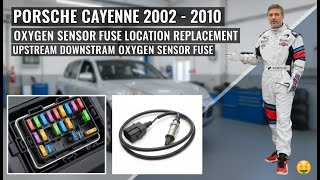
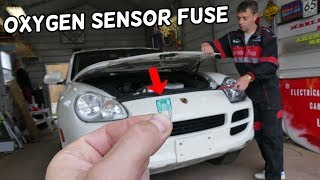
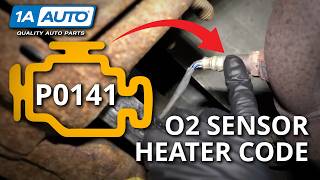
The first-generation Porsche Cayenne (955) has a specific and common failure point that can trigger this code: a blown fuse. The oxygen sensor heater circuits are protected by fuses in the engine bay fuse box. Before assuming the sensor itself has failed, it is critical to check fuse #18, which is a 7.5A fuse dedicated to the downstream sensors. 🎬 Watch: Locate and check your Cayenne's O2 sensor fuses. This simple check can save significant time and money, as a much easier fix than replacing the sensor. If codes P0141 (Bank 1) and P0161 (Bank 2) appear together, a blown fuse #18 is the most probable cause.
Symptoms You May Notice
- Check Engine Light is on
- Failure to pass a vehicle emissions test
- Slightly decreased fuel economy
- Replacing the oxygen sensor without first checking the fuse. If the fuse is blown, a new sensor will not fix the problem and the code will remain.
- Replacing the wrong sensor (e.g., upstream Sensor 1 instead of downstream Sensor 2, or the driver's side sensor instead of the passenger's side).
Most Likely Causes
- Failed Bank 1, Sensor 2 Oxygen Sensor 🔴 High Probability → Shop Oxygen Sensor The internal heater element in oxygen sensors has a finite lifespan and will eventually burn out from age and countless heat cycles. It is considered a wear-and-tear item.
How to confirm: After confirming the fuse is good, disconnect the sensor and measure the resistance between the two heater circuit pins (typically the two same-colored wires, often white). 🎬 See how to test O2 sensor heater circuit resistance. A good Bosch sensor should have a resistance between 4 and 10 ohms when cold. An open circuit (infinite resistance or 'OL' on a multimeter) or a short (near-zero resistance) confirms the heater has failed.
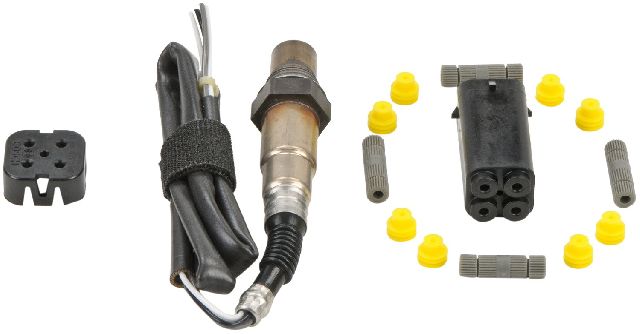
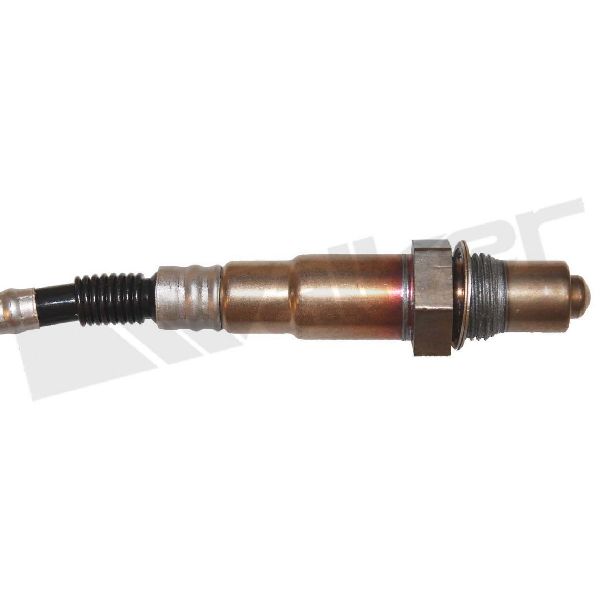
Typical fix: Replace the Bank 1, Sensor 2 (passenger side, downstream) oxygen sensor. Use a proper O2 sensor socket for removal and installation. 🎬 Watch this walkthrough for replacing Cayenne oxygen sensors. The recommended OEM-quality replacement is a Bosch direct-fit sensor.
Est. part cost: $80-$180 - Blown Fuse 🟡 Medium Probability The O2 sensor heater circuits are fused in the engine bay. An electrical short in a sensor or its wiring can cause the fuse to blow. This is a well-documented issue on Cayenne forums.
How to confirm: Locate the fuse box in the engine compartment on the driver's side, under the plastic cowl. Open it and check fuse #18. It is a 7.5A mini blade fuse. A visual inspection or a multimeter test will confirm if it's blown.
Typical fix: Replace the blown 7.5A fuse. If the new fuse blows immediately, it indicates a dead short in the wiring or, more likely, one of the downstream O2 sensors has failed and is drawing too much current.
Est. part cost: $1-$5 - Damaged Wiring or Connector ⚪ Low Probability The wiring is routed near hot exhaust components and is exposed to road debris, which can lead to melting, chafing, or corrosion over time. A Rennlist forum user reported persistent O2 codes after sensor replacement, suspecting a wiring harness issue.
How to confirm: Visually inspect the entire wiring harness for the Bank 1, Sensor 2 O2 sensor, from the sensor itself to the main engine harness. Check for melted plastic, frayed wires, or corrosion inside the connector. With the key on, check for 12V power at the heater circuit pins on the harness-side connector.
Typical fix: Repair the damaged section of the wiring harness or replace the connector pigtail. Ensure the repair is properly insulated and secured away from heat sources.
Est. part cost: $10-$50
Rare But Worth Checking
- Faulty Engine Control Module (ECM/DME): → Shop Engine Control Module (ECM) This is extremely rare. Before considering the ECM, all other possibilities (fuse, wiring, sensor) must be exhaustively ruled out by a professional. The ECM driver for the heater circuit can fail, but it is an unlikely cause.
Diagnosis Steps
- Read the code with an OBD-II scanner to confirm P0141 is the active fault.
- Open the hood and locate the main fuse box in the engine bay on the driver's side, under the plastic cowl panel.
- Identify and inspect fuse #18. This is a 7.5A fuse that powers the downstream O2 sensor heaters. If it is blown, replace it, clear the codes, and see if the fault returns. If it blows again, a sensor is shorted.
- If the fuse is good, safely raise the vehicle to access the exhaust.
- Locate the Bank 1 (passenger side) downstream (post-catalytic converter) oxygen sensor.
- Inspect the sensor's wiring and connector for any signs of physical damage, melting, or corrosion.
- If the wiring looks good, disconnect the sensor. Use a multimeter to measure the resistance across the heater circuit pins on the sensor side (usually the two white wires). A reading between 4-10 ohms is expected for a good sensor. A reading of infinite resistance (open loop) or near zero (short) indicates a failed heater element.
- If resistance is within spec, check for 12V power at the corresponding pins on the harness-side connector with the ignition on.
- If power and ground are present and the sensor's resistance is good, but the code persists, there may be an intermittent wiring issue or a rare ECM fault.
Parts You'll Likely Need
- Downstream Oxygen Sensor (Bank 1, Sensor 2)
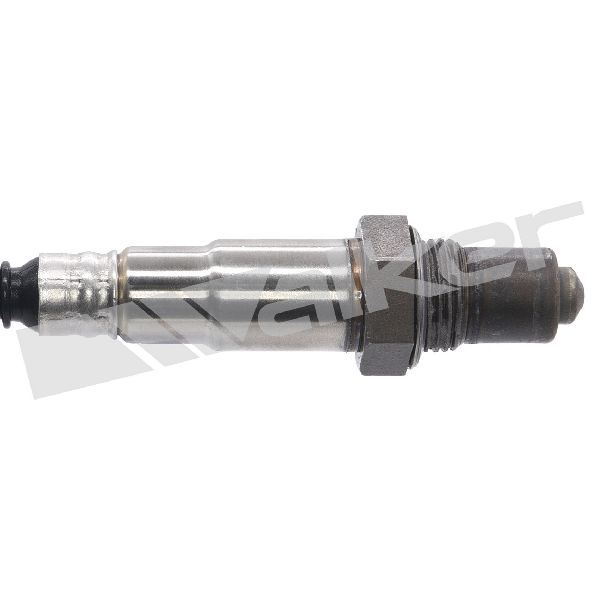
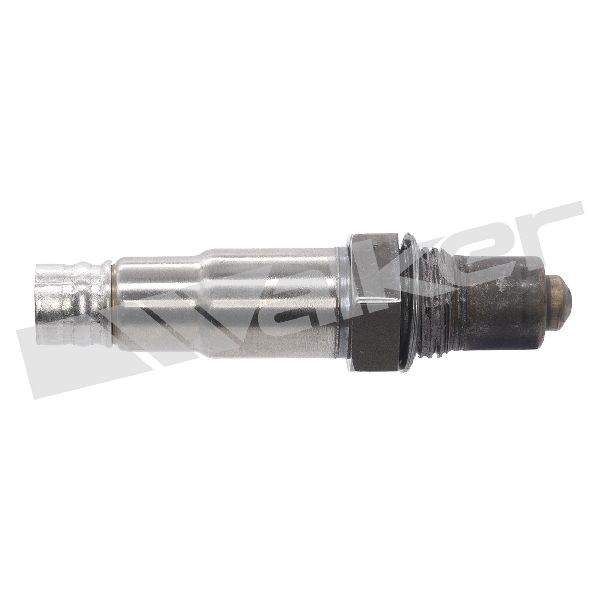
(OEM #955-606-138-01 (Porsche), Bosch 16498 or W0133-1915334)— This is the most common cause of a P0141 code once the fuse has been verified as good. The internal heater element fails with age.
Trusted brands: Bosch, Denso, NTK
OEM price range: $150-$220
Aftermarket price range: $80-$180 - Mini Blade Fuse (7.5A) — Fuse #18 in the engine bay fuse box protects the downstream O2 sensor heater circuit and can blow if a sensor shorts out.
Trusted brands: Bosch, Littelfuse
OEM price range: $1-$5
Aftermarket price range: $1-$5
Related Codes That Often Appear With This One
- P0161 — P0161 is the heater circuit code for Bank 2, Sensor 2 (driver's side, downstream). If both P0141 and P0161 appear together, it strongly suggests a common power supply issue, making the shared fuse (#18) the most likely culprit.
Platform-Specific Known Issues
- Real-World Forum Experience: Fuse Check is Mandatory: Multiple threads on Rennlist and other Porsche forums confirm that checking the O2 sensor fuses is the first step. A user on Rennlist with an '06 S model experienced recurring O2 sensor codes and found wiggling the sensor harness would blow the fuse, indicating a short in the sensor or wiring.
- Wiring Harness Susceptibility: A Rennlist user with a persistent P0141 code, even after replacing the Bosch sensor twice and confirming good resistance values, concluded the issue must be in the vehicle's wiring harness. This highlights that while less common, wiring faults should be investigated if a new sensor and good fuse do not resolve the code.
Mechanic-Grade Diagnostic Values
- O2 Sensor Heater Element Resistance — expected: 4-10 Ohms when cold (measured across the two same-colored wires on the sensor connector).. Failure: Infinite resistance (OL) indicates an open circuit; near-zero Ohms indicates a short circuit.
- Heater Circuit Power Supply — expected: ~12V (measured at the harness-side connector pin for the heater circuit with ignition on).. Failure: 0V indicates a wiring issue, blown fuse, or faulty DME relay.
- Main Engine-to-Chassis Ground Strap Resistance — expected: 0.0 - 0.2 Ohms (measured between the engine block and a clean chassis point).. Failure: A reading higher than 0.2 Ohms indicates a corroded or loose ground connection that can cause various electrical faults.
Scan Tool Commands That Help
- Durametric: Drive Links / Activations — To manually activate the O2 sensor heater circuit after verifying the fuse and sensor resistance are good. This forces the DME to send power down the circuit, allowing a technician to confirm the integrity of the wiring and the DME's driver circuit by checking for voltage at the sensor connector.
- Porsche PIWIS Tester: DME Control Unit Diagnostics — The dealer-level tool can perform comprehensive tests of the entire circuit, monitoring voltage and current draw in real-time to pinpoint faults that may be missed by basic multimeter checks.
Wiring & Ground Locations
- Fuse #18 — In the main fuse box located in the engine compartment on the driver's side, under the plastic cowl panel.. This 7.5A fuse provides power to the heater circuits for both downstream (Sensor 2) oxygen sensors. It is a common failure point when a sensor shorts out.
- Main Engine Ground Strap (Upper) — In the engine bay, connecting the engine to the strut tower.. A poor ground connection here can cause a host of electrical issues, including erratic sensor readings and fault codes. Verifying its integrity is a key step in diagnosing persistent electrical gremlins.
- Main Engine Ground Strap (Lower) — Underneath the vehicle, connecting the bottom of the engine to the frame in the front right corner.. This is a primary ground path for the engine. Corrosion or looseness here due to road exposure can lead to insufficient grounding for various components, including the DME and its sensor circuits.
- Alternator Ground Strap — Connects the alternator to the left front frame rail.. While less direct, a poor ground for the charging system can introduce electrical noise and voltage stability problems throughout the vehicle, potentially affecting sensitive sensor circuits.
Real Owner Repair Stories
- Rennlist user 'Jochy' (Porsche Cayenne (model year not specified, but 955 generation)) — Persistent Check Engine Light with codes P0141, P0138, and P2318.
❌ Tried (didn't work) Replaced all four O2 sensors with new Bosch parts., Checked fuses for both banks (found them to be good)., Replaced the Bank 1 Sensor 2 a second time, suspecting the first replacement was faulty.
✅ What actually fixed it The user concluded the problem was a fault within the vehicle's wiring harness after confirming the new sensor had correct resistance and the harness had correct voltage at the connector. The thread points to investigating the harness as the next step when parts and fuses don't solve the issue.
OEM Part Supersession History
955-606-138-01 (Porsche)→Bosch 16498 (OEM Supplier Part)— OEM Supplier Availability
Heads up: The Bosch part is functionally identical to the Porsche-branded part but is sold in a Bosch box, often at a significantly lower price. Forum discussions confirm that buying the OEM supplier part is a common cost-saving measure without sacrificing quality.
Model Year Variations Within This Range
- 2003-2006: No significant variations affecting the diagnosis or repair of code P0141 have been documented for the 4.5L V8 models within this year range. The primary mechanical and electrical changes occurred with the 957 generation facelift in model year 2008.
Diagnostic Flowchart
Other Known Issues on This Vehicle
Issues unrelated to this code that are worth knowing about as an owner of this generation:
- Plastic Coolant Pipe Failure 🔴 High — Extremely common on all 4.5L V8s. Considered a 'when, not if' failure. Can occur anytime after 60,000 miles. (Ref: No recall, but Porsche later offered an official aluminum pipe upgrade kit to permanently fix the issue.)
- Driveshaft Center Support Bearing Failure 🟠 Medium — Very common. The rubber support perishes over time, typically failing between 65,000 and 125,000 miles, causing a thumping/banging noise from under the center console.
- Cylinder Bore Scoring 🔴 High — A significant and well-documented issue, particularly on the naturally aspirated 4.5L V8 (M48.00) which used a Lokasil cylinder coating. More prevalent in cold climates. Symptoms include high oil consumption and a rhythmic ticking/knocking noise at idle.
- Ignition Coil Failure 🟡 Low — Common due to high engine bay temperatures. Leads to engine misfires (P0300-P0308 codes). Often replaced as a full set when one fails.
- Air Suspension Faults 🟠 Medium — Common on vehicles equipped with optional air suspension. Issues include leaking air struts and failing compressors, leading to the vehicle not maintaining ride height.
Used vs. New Parts: Buying Guide for This Vehicle
When a used part is the smart pick: For this repair, a used part is generally not recommended for the oxygen sensor itself. However, sourcing a used wiring connector pigtail from a salvage yard is a viable option if the original connector is damaged or corroded.
Donor-vehicle mileage cap: roughly under 150000 miles for the part to have meaningful remaining life.
What to inspect on the donor part:
- For a wiring pigtail: ensure the plastic is not brittle or cracked.
- Check for the absence of green or white corrosion on the connector pins.
- Verify the locking tab is intact and functional.
- Ensure there is at least 6-8 inches of flexible, undamaged wire attached.
OEM-only on this vehicle (don't cheap out):
- While not strictly 'OEM-only', it is strongly advised to use either a genuine Porsche sensor or one from the original equipment manufacturer, Bosch.
Aftermarket brands forum-validated for this vehicle:
- Bosch (OEM supplier)
- Denso
- NTK
Brands owners have reported issues with on this vehicle:
- Universal sensors that require cutting and splicing wires.
- Unbranded, low-cost sensors from online marketplaces, as they have a high failure rate.
Real Owner Stories
Aggregated from forums and TSBs cited above. Mileages and costs reflect what owners reported in those sources.
2006 Cayenne S 4.5L V8
Symptoms: Recurring O2 sensor codes; found that wiggling the sensor harness would cause the fuse to blow.
What fixed it: Identified a short circuit in the sensor or wiring that was blowing the fuse.
Source hint: Rennlist - 'O2 sensor ground blowing fuses'
2003-2006 Cayenne 4.5L V8
Symptoms: Persistent P0141 code even after replacing the Bosch sensor twice and confirming good resistance values.
What fixed it: The owner concluded the issue was a fault within the vehicle's wiring harness rather than the sensor itself.
Source hint: Rennlist - 'P2318 P0138 P0141 Persistent CEL'
2003-2006 Cayenne 4.5L V8
Symptoms: Multiple obscure fault codes appearing simultaneously.
What fixed it: Replacing a single blown fuse in the engine bay fuse box.
Source hint: Rennlist - 'Resolved a Few Fault Codes By Replacing a Blown Fuse'
Related OBD-II Codes
Frequently Asked Questions
Where is the fuse for the O2 sensor heater located on my 2003-2006 Cayenne?
Which specific oxygen sensor does the P0141 code refer to on the 4.5L V8 engine?
What is the recommended replacement brand for the O2 sensor on this vehicle?
What resistance should I see when testing the heater circuit on a new Bosch sensor?
If I replace the fuse and it blows again immediately, what does that indicate?
Is there a known issue with the wiring harness for the O2 sensors on the Cayenne?
Helpful Videos

Used OEM Parts in Stock
New Aftermarket Parts Available


The information in this article is provided for general reference and educational purposes only. Vehicle specifications, procedures, and part compatibility can vary by production date, trim level, and region. Always consult your vehicle's factory service manual and verify part numbers before purchasing or performing repairs. Safety-critical components such as airbags, seat belts, and braking systems should be installed by a qualified professional.
- Porsche Cayenne:
- 🧭 Diagnostic Flowchart
- 🎬 Helpful Videos
- 🛍️ Shop This Part
- What's Unique About the 2003-2006 Porsche Cayenne
- Symptoms You May Notice
- Most Likely Causes
- Rare But Worth Checking
- Diagnosis Steps
- Parts You'll Likely Need
- Related Codes That Often Appear With This One
- Platform-Specific Known Issues
- Mechanic-Grade Diagnostic Values
- Scan Tool Commands That Help
- Wiring & Ground Locations
- Real Owner Repair Stories
- OEM Part Supersession History
- Model Year Variations Within This Range
- Other Known Issues on This Vehicle
- Used vs. New Parts: Buying Guide for This Vehicle
- Real Owner Stories
- 2006 Cayenne S 4.5L V8
- 2003-2006 Cayenne 4.5L V8
- 2003-2006 Cayenne 4.5L V8
- Related OBD-II Codes
- Frequently Asked Questions
- 🎟️ Get 5% Off