

P0170 on 2005-2015 Toyota Tacoma 4.0L V6: Fuel Trim Malfunction Causes and Fixes
Code P0170 on a 2nd Gen Tacoma most often points to a dirty Mass Airflow (MAF) sensor, a vacuum leak, or a failing upstream Air/Fuel Ratio sensor. Cleaning the MAF sensor is the first and cheapest step. If that doesn't work, suspect a vacuum leak (especially the PCV hose) or a tired Bank 1 A/F sensor. In some cases, a weakening fuel pump can be the culprit.
- P0170 means your Tacoma's engine computer can't balance the air-fuel mixture on Bank 1.
- Start your diagnosis by cleaning the Mass Airflow (MAF) sensor—it's easy, cheap, and a very common fix.
- If cleaning the MAF doesn't work, your next steps are to check for vacuum leaks (cracked hoses) and test the upstream O2 sensor on the passenger side.
- Don't rule out a weak fuel pump, especially if the truck hesitates badly under acceleration. This is a known issue on Tacomas.
- Always use a dedicated MAF sensor cleaner, and stick with high-quality Denso sensors for replacement parts to avoid future issues.
What's Unique About the 2005-2015 Toyota Tacoma
While the 1GR-FE engine is known for its durability, the P0170 code on this platform often leads owners down a path of checking the usual suspects like the MAF sensor and vacuum leaks. However, owner experiences on forums like Tacoma World suggest that fuel delivery issues, such as a weakening fuel pump or a clogged, non-serviceable in-tank fuel filter, are a significant and sometimes overlooked cause. Unlike some other vehicles where a fuel filter is an easy maintenance item, on the Tacoma it is part of the fuel pump assembly inside the tank. Replacing it requires either lifting the truck bed, which some owners find to be a 30-minute job, or dropping the fuel tank.
Symptoms You May Notice
- Check Engine Light is on
- Poor or reduced fuel economy
- Engine hesitation or stumbling, especially during acceleration
- Rough idle, may fluctuate between 500-900 RPM
- Noticeable loss of power
- In severe cases, the engine may stall or be very difficult to start
- Black smoke from the tailpipe if running rich
- Hissing sound from the engine bay if a vacuum leak is present
- Replacing the downstream (post-catalyst) O2 sensor. This sensor primarily monitors catalyst efficiency and has minimal impact on fuel trim.
- Replacing the throttle position sensor without proper diagnosis. While it can cause performance issues, it's not a primary cause for a P0170 code.
Most Likely Causes
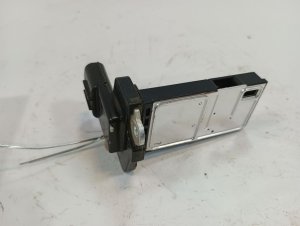
- Dirty or Faulty Mass Airflow (MAF) Sensor 🔴 High Probability → Shop Fuel Injection Air Flow Meter The MAF sensor is located in the intake tract and can become contaminated with dirt, debris, or oil from aftermarket oiled air filters, causing it to read airflow inaccurately.
How to confirm: Inspect the MAF sensor element for dirt or debris. Monitor the MAF reading on an OBD-II scanner; at idle, it should be stable. Cleaning the sensor with dedicated MAF cleaner is a common first step that often resolves the issue.
Typical fix: Clean the sensor with a specialized MAF sensor cleaner. If cleaning doesn't resolve the issue, the sensor must be replaced. Always use a quality brand like Denso.
Est. part cost: $10-$15 for cleaner, $70-$150 for a new sensor - Vacuum Leak 🟡 Medium Probability Rubber vacuum hoses and intake gaskets become brittle and crack with age and heat cycles, allowing unmetered air to enter the engine after the MAF sensor. The PCV hose is a particularly common failure point.
How to confirm: Visually inspect all vacuum hoses, especially the PCV hose and intake snorkel, for cracks or loose connections. A smoke test is the most effective way to find small leaks around the intake manifold gaskets.
Typical fix: Replace the cracked hose or leaking gasket. The PCV valve itself can also be a source of the leak and is an inexpensive replacement.
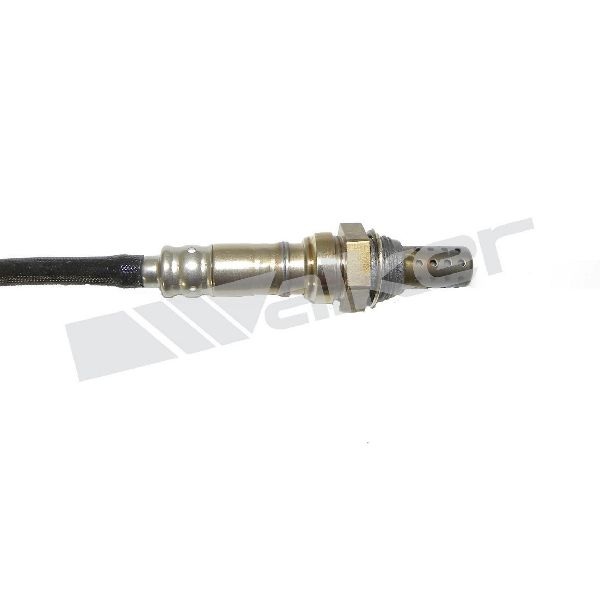
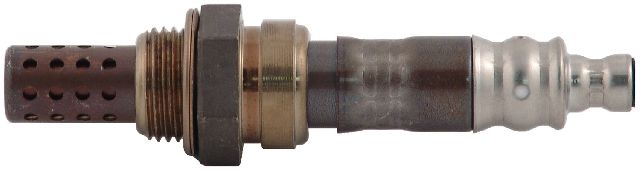
Est. part cost: $10-$80 depending on the hose or gasket - Failing Upstream Air-Fuel Ratio (A/F) Sensor (Bank 1) 🟡 Medium Probability → Shop Oxygen Sensor
How to confirm: Monitor the sensor's voltage on a scan tool. A healthy upstream A/F sensor should fluctuate rapidly. A lazy or stuck sensor will not respond correctly to changes in the air-fuel mixture, providing bad data to the ECM. Cleaning is not recommended for these sensors.
Typical fix: Replace the Bank 1, Sensor 1 Air-Fuel Ratio sensor. It is located on the exhaust manifold of the passenger side (Bank 1) before the catalytic converter. It is highly recommended to use the OEM Denso sensor.
Est. part cost: $100-$220 - Weak Fuel Pump or Clogged Fuel Filter ⚪ Low Probability → Shop Fuel Filter Forum discussions indicate that a failing fuel pump can cause a lean condition that triggers this code. The fuel filter is integrated into the pump assembly in the tank and is not a separate, easily serviceable part. This can become an issue at higher mileage.
How to confirm: Perform a fuel pressure test at the fuel rail. If pressure is below specification, the pump is likely weak. A Tacoma owner diagnosed this by spraying starter fluid into the intake; the engine revved normally, indicating a lack of fuel was the issue.
Typical fix: Replace the entire fuel pump and sender assembly. This requires either removing the truck bed or dropping the fuel tank. 🎬 See this step-by-step Tacoma fuel pump replacement walkthrough
Est. part cost: $200-$400
Rare But Worth Checking
- Clogged Fuel Injector(s) on Bank 1: If the malfunction is isolated to one bank and other causes are ruled out, a dirty or failing injector could be restricting fuel flow to one or more cylinders. Some owners have reported this after using fuel system cleaners that dislodge debris. Overheating in rear cylinders on early 1GR-FE engines has been hypothetically linked to injector failure.
- Exhaust Leak: A leak in the exhaust manifold or pipe before the first A/F sensor can draw in outside air, making the sensor read a false lean condition and causing the ECM to add too much fuel.
- Contaminated Engine Oil: Engine oil that is heavily contaminated with fuel (e.g., from a leaking injector) or is long overdue for a change can sometimes trigger a fuel trim code.
Diagnosis Steps
- Connect an OBD-II scanner and check for any other codes. Note the Long-Term Fuel Trim (LTFT) and Short-Term Fuel Trim (STFT) values for Bank 1. High positive values (e.g., LTFT + STFT adding up to +20% or more) confirm a lean condition. High negative values indicate a rich condition.
- Visually inspect the air intake hose between the air filter box and the throttle body for any cracks or loose clamps.
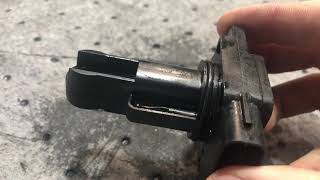
- Turn the engine off, unplug and remove the Mass Airflow (MAF) sensor. Carefully spray the sensor's wires with dedicated MAF cleaner. Let it dry completely before reinstalling. 🎬 Watch: How to clean your Tacoma's MAF sensor Do not touch the wires or use other cleaners like brake cleaner.
- After reinstalling the MAF, clear the codes and drive the vehicle to see if the code returns. If it does, proceed to the next step.
- With the engine running, carefully inspect all accessible vacuum lines for cracks or damage, paying close attention to the PCV hose and brake booster line.
- To find hidden vacuum leaks, perform a smoke test on the intake system. This will push smoke through the intake and reveal any leaks at gaskets or hidden hoses. 🎬 Watch: How to perform a DIY smoke test
- If no vacuum leaks are found, use the scanner to graph the voltage of the Bank 1, Sensor 1 (upstream) Air/Fuel Ratio sensor. It should switch rapidly and show appropriate response to induced rich/lean conditions (e.g., by adding propane to the intake). A slow, stuck, or flat-lined sensor likely needs replacement.
- If all else fails, perform a fuel pressure test to check the health of the fuel pump. Low pressure indicates a failing pump or clogged filter assembly.
Parts You'll Likely Need
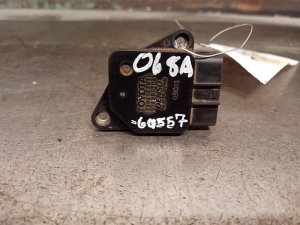
- Mass Airflow (MAF) Sensor
(OEM #22204-0F030)— This sensor gets dirty and provides inaccurate airflow readings, which is a very common cause of fuel trim codes on many vehicles, including the Tacoma.
Trusted brands: Denso (OEM)
OEM price range: $110-$170
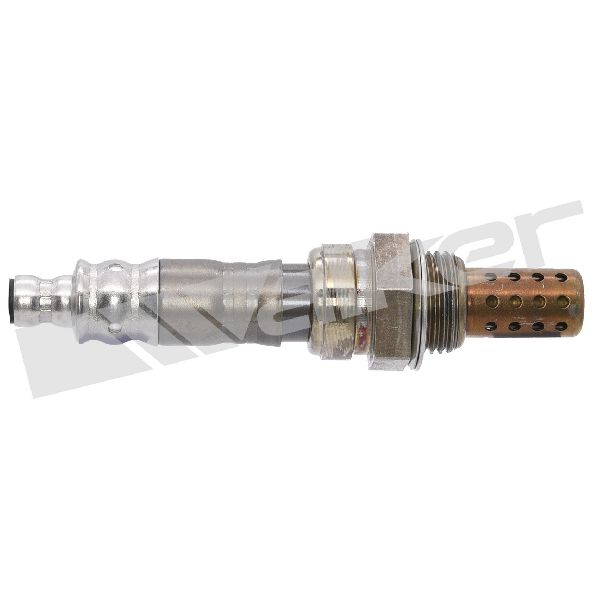
Aftermarket price range: $60-$120 - Air-Fuel Ratio Sensor (Bank 1, Sensor 1)
(OEM #89467-35110)— This is the primary sensor used for fuel control. As it ages, it can become slow or biased, sending incorrect information to the ECM and causing this code. It is highly recommended to use the OEM Denso part.
Trusted brands: Denso (OEM)
OEM price range: $150-$220
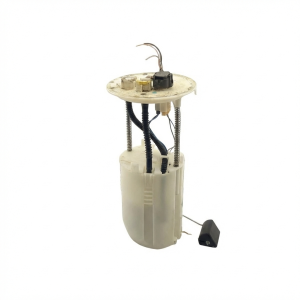
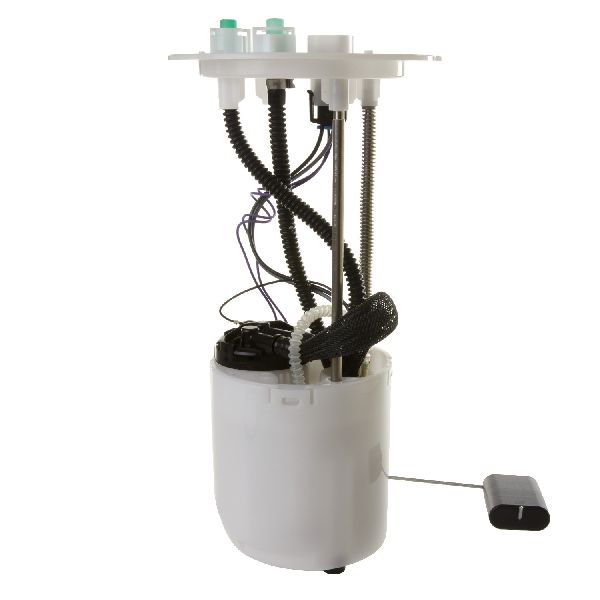
Aftermarket price range: $80-$150 - Fuel Pump and Hanger Assembly
(OEM #77020-04061 (Varies by model year/configuration))— A weak fuel pump causes low fuel pressure, leading to a lean condition the ECM cannot correct. On the Tacoma, this is a known, though less common, cause of fuel trim issues.
Trusted brands: Denso, Aisin
OEM price range: $300-$450
Aftermarket price range: $150-$250
Related Codes That Often Appear With This One
- P0171 — P0171 is 'System Too Lean (Bank 1)'. P0170 is a more general fuel trim malfunction code, but it is often set due to an underlying lean condition that would also trigger P0171. Many scanners may show P0171 when P0170 is the root code.
- P0174 — This is 'System Too Lean (Bank 2)'. If seen with P0171, it indicates a problem affecting both banks, such as a faulty MAF sensor or a vacuum leak at the intake manifold, before the banks split.
- P0300-P0306 — If the fuel mixture is incorrect enough, it can cause misfires. P0300 is a random misfire code, while P0301 through P0306 would indicate misfires on specific cylinders. Misfires on cylinders 1, 3, or 5 correspond to Bank 1.
Mechanic-Grade Diagnostic Values
- Fuel Pressure (at fuel rail, engine idling) — expected: Approx. 40 - 42 PSI. Failure: Pressure significantly lower than 40 PSI suggests a weak fuel pump or clogged filter. Pressure significantly higher suggests a faulty fuel pressure regulator.
- Mass Airflow (MAF) Sensor Reading (at warm idle) — expected: 3.5 - 5.0 g/s. Failure: A common rule of thumb is that g/s should roughly equal engine displacement in liters, so a reading far from 4.0 g/s is suspect. Readings that are unstable, jumpy, or do not increase smoothly with RPM indicate a faulty sensor.
- Long Term Fuel Trim (LTFT) — expected: Ideally within +/- 10%. Failure: A value consistently above +10% indicates the engine is compensating for a lean condition. A value consistently below -10% indicates a rich condition. The ECM will typically set a code like P0171/P0174 when the average fuel trim learning value exceeds +/- 35%.
- A/F Sensor Voltage (Upstream) — expected: On Toyota wideband sensors, the voltage should hold steady around 3.3V at stoichiometric (idle/cruise). It will drop towards 2.8V for rich mixtures and rise towards 3.8V+ for lean mixtures.. Failure: A sensor that is stuck at one voltage, does not respond to changes in throttle, or has a slow response time is faulty.
Scan Tool Commands That Help
- Toyota Techstream: Active Test: Control the Fuel Pump / Speed — This allows a technician to turn the fuel pump on and off manually to verify its operation and to perform a fuel pressure test without starting the engine.
- Toyota Techstream: Active Test: Injector — Allows for sequentially shutting off individual injectors to identify a clogged or faulty injector. If disabling an injector on Bank 1 causes little to no change in RPM, that injector or cylinder has a problem.
- Toyota Techstream: Utility: Reset Memory — After replacing a component like a MAF sensor or A/F sensor, this function should be used to clear the long-term fuel trim learning values from the ECM. This forces the computer to start with a clean slate and learn new fuel trims based on the new part's readings, preventing the old, incorrect learned values from causing issues.
Wiring & Ground Locations
- A4 (Connector) — At the ECM, this connector contains the pins for the Air Fuel Ratio Sensor (Bank 1 Sensor 1).. Verifying continuity and checking for voltage at these specific pins is crucial for diagnosing a faulty A/F sensor vs. a wiring issue. A wiring diagram is needed to identify the specific pin numbers for the heater and sensor signal wires.
- M1 (Connector) — At the ECM, this connector contains the pins for the Mass Air Flow Meter.. Allows for testing the MAF sensor's wiring back to the ECM. Technicians can check for proper voltage, ground, and signal at this connector to rule out harness damage.
- Engine Ground Points — There are multiple critical ground points on the 1GR-FE. Key locations include the intake manifold, the front passenger side of the engine block, and the firewall.. A corroded or loose ground can cause erratic sensor readings for the MAF, A/F sensors, and other critical components, leading to fuel trim issues that are difficult to diagnose. Ensuring all grounds are clean and tight is a critical step.
Real Owner Repair Stories
- Tacoma World forum user (2006 Toyota Tacoma) — Engine would not rev past 2,000 RPM, felt like it was stalling, very slow acceleration. Threw code P0170.
❌ Tried (didn't work) Cleaned the MAF sensor, Replaced the Fuel Pressure Regulator, Checked for vacuum leaks with brake cleaner
✅ What actually fixed it The user sprayed brake cleaner into the intake while trying to rev the engine, and it revved up perfectly. This indicated a lack of fuel. The user had replaced the fuel pump a year prior with an aftermarket part. Replacing the faulty aftermarket fuel pump with a new one resolved the P0170 code and all driveability issues.
"I Checked Everything" — The Actual Cause
- A user on Tacoma World reported P0170 with severe hesitation. After cleaning the MAF and checking for vacuum leaks yielded no results, they confirmed a fuel delivery problem by spraying starter fluid into the intake, which allowed the engine to rev normally. The final cause was a failing (aftermarket) fuel pump that was providing insufficient pressure under load, a problem a smoke test would never find.
OEM Part Supersession History
89467-35110→89467-04060— Standard part number update and consolidation by Toyota.
Heads up: While functionally similar, the primary difference can be the wire harness length. Using the wrong part number might result in a harness that is too short to reach the connector. Always verify the correct part number by VIN before purchasing.
Model Year Variations Within This Range
- 2009-2015: Beginning in 2009, the 1GR-FE engine was updated with dual VVT-i (variable valve timing on both intake and exhaust camshafts). This increased horsepower from 236 to 270. While the fundamental causes of P0170 remain the same, the dual VVT-i system adds complexity with more solenoids and sensors that could potentially fail, though they are not a primary cause of this specific code.
- 2012-2015: For the 2012 model year, a secondary air injection system was added to meet stricter emissions standards. A failure in this system can cause its own set of codes but is not typically associated with P0170.
Diagnostic Flowchart
Other Known Issues on This Vehicle
Issues unrelated to this code that are worth knowing about as an owner of this generation:
- Frame Rust Perforation 🔴 High — Very common, especially in cold climates with road salt usage. Affects 2005-2017 models. (Ref: Toyota issued a Limited Service Campaign (LSC K0D) and Customer Support Program (CSP ZKA) which included frame inspection, CRC application, and frame replacement for qualifying vehicles.)
- Secondary Air Injection System Failure 🟠 Medium — Common failure, particularly on 2012 models. The internal foam filter disintegrates and destroys the pump impeller, leading to codes like P2445 and limp mode. (Ref: No recall, but a well-known issue. Owners often perform a 'Uni filter mod' to replace the foam filter as a preventative measure.)
- Head Gasket Failure (Early Models) 🟠 Medium — More common on earlier 1GR-FE engines (approx. 2005-2006). Often presents as a misfire on cylinder 6 on cold starts. (Ref: No recall, but Toyota reportedly updated the head gasket design in later years to address the issue.)
- Rear Leaf Spring Breakage 🔴 High — Common enough to warrant a recall. Springs could corrode and fracture, potentially puncturing the fuel tank or damaging a brake line. (Ref: Yes, a recall was issued for approximately 700,000 Tacoma trucks from 2005-2011.)
- Water Pump Failure 🟡 Low — Considered a wear-and-tear item, but failures around 100,000-150,000 miles are not uncommon. A leak can lead to overheating and potentially cause more severe head gasket issues.
Used vs. New Parts: Buying Guide for This Vehicle
When a used part is the smart pick: For this repair, used parts are generally not recommended for the key electronic sensors or the fuel pump. The risk of receiving a part that is near the end of its life or already faulty is high. A used part makes sense for hard components like a replacement intake manifold or fuel rail if they were physically damaged, but not for the common failure items for this code.
Donor-vehicle mileage cap: roughly under 80000 miles for the part to have meaningful remaining life.
What to inspect on the donor part:
- For any electronic part, verify the donor vehicle did not have a Check Engine Light on.
- Inspect wiring harnesses for any signs of rodent damage, brittleness, or previous repairs.
- Avoid parts from vehicles that show signs of flood damage or excessive corrosion.
OEM-only on this vehicle (don't cheap out):
- Mass Airflow (MAF) Sensor
- Air/Fuel Ratio (A/F) Sensor
Aftermarket brands forum-validated for this vehicle:
- Denso (This is the Original Equipment Manufacturer for Toyota, so their parts are identical to OEM without the Toyota box and markup).
- Aisin (Often an OEM supplier for Toyota, especially for fuel system and drivetrain components).
Brands owners have reported issues with on this vehicle:
- Unnamed or 'white box' sensors from online marketplaces. Forum users frequently report that cheap aftermarket MAF and A/F sensors are often dead-on-arrival, have incorrect calibration leading to persistent codes, or fail within a few months.
Real Owner Stories
Aggregated from forums and TSBs cited above. Mileages and costs reflect what owners reported in those sources.
2005-2015 Toyota Tacoma 1GR-FE 4.0L V6
Symptoms: The owner diagnosed a lean condition by spraying starter fluid into the intake; the engine revved normally, indicating a lack of fuel was the issue.
What fixed it: Replacement of the entire fuel pump and sender assembly, which required either removing the truck bed or dropping the fuel tank.
Source hint: Tacoma World: P0170 Fuel Trim Bank 1 (Solution)
2005-2015 Toyota Tacoma 1GR-FE 4.0L V6
Symptoms: The user experienced both P0174 and P0170 lean codes and sought community advice on the diagnostic process.
What fixed it: The diagnostic process pointed towards the MAF sensor, fuel pump, or injectors.
Source hint: Tacoma World: p0174/p0170 Too lean, please help
Related OBD-II Codes
Frequently Asked Questions
Is there a specific brand of Mass Airflow (MAF) sensor I should use for my 4.0L V6 Tacoma?
I have a 2012 Tacoma; is there a known issue that could cause engine codes or limp mode?
My 2005 Tacoma has a misfire on cylinder 6 during cold starts; could this be related to the fuel trim issues?
Is there a recall for the frame rust I noticed while inspecting my vacuum lines?
Which Air-Fuel Ratio sensor should I replace for a P0170 code on my V6 Tacoma?
Can I just clean the Air-Fuel Ratio sensor to fix the P0170 code?
Helpful Videos

Used OEM Parts in Stock
New Aftermarket Parts Available


The information in this article is provided for general reference and educational purposes only. Vehicle specifications, procedures, and part compatibility can vary by production date, trim level, and region. Always consult your vehicle's factory service manual and verify part numbers before purchasing or performing repairs. Safety-critical components such as airbags, seat belts, and braking systems should be installed by a qualified professional.
- Toyota Tacoma:
- 🧭 Diagnostic Flowchart
- 🎬 Helpful Videos
- 🛍️ Shop This Part
- What's Unique About the 2005-2015 Toyota Tacoma
- Symptoms You May Notice
- Most Likely Causes
- Rare But Worth Checking
- Diagnosis Steps
- Parts You'll Likely Need
- Related Codes That Often Appear With This One
- Mechanic-Grade Diagnostic Values
- Scan Tool Commands That Help
- Wiring & Ground Locations
- Real Owner Repair Stories
- "I Checked Everything" — The Actual Cause
- OEM Part Supersession History
- Model Year Variations Within This Range
- Other Known Issues on This Vehicle
- Used vs. New Parts: Buying Guide for This Vehicle
- Real Owner Stories
- 2005-2015 Toyota Tacoma 1GR-FE 4.0L V6
- 2005-2015 Toyota Tacoma 1GR-FE 4.0L V6
- Related OBD-II Codes
- Frequently Asked Questions
- 🎟️ Get 5% Off