

P0171 on 2006-2023 Dodge Charger: Causes and Fixes for System Too Lean
Code P0171 on a Dodge Charger means the engine is running lean on Bank 1. The most common causes are vacuum leaks from failed intake manifold gaskets or cracked PCV hoses. A thorough inspection for leaks, especially with a smoke test, is the best first step. On 3.6L engines, the intake gaskets are a primary suspect; on HEMI V8s, check the PCV system first.
- P0171 means Bank 1 is too lean; there's too much air or not enough fuel.
- The most likely cause on any Charger engine is a vacuum leak. Start by inspecting intake manifold gaskets and all vacuum hoses.
- For 3.6L V6 engines (2011+), a cracked intake manifold is a very common culprit.
- Do not replace the O2 sensor first. It is almost always just reporting the lean condition.
- If no vacuum leaks are found, the next step is to test the fuel pressure to check for a weak fuel pump or clogged filter.
What's Unique About the 2006-2023 Dodge Charger
Across the 2006-2023 Charger lineup, P0171 is frequently caused by vacuum leaks, but the specific source often depends on the engine. For the 3.6L Pentastar V6 (2011+), a very common failure point is the lower intake manifold gaskets, which become brittle and fail to seal, allowing unmetered air to enter. On the HEMI V8 engines (5.7L/6.4L), while intake gaskets can still be a culprit, vacuum leaks also commonly arise from aged PCV hoses and the PCV valve itself, which can crack or get stuck open, creating a significant vacuum leak.
Generation note: This guide covers two generations of the Dodge Charger: the LX (2006-2010) and the LD (2011-2023). The introduction of the 3.6L Pentastar engine in 2011 brought different common failure points (like the lower intake gaskets) compared to the earlier V6 engines. While the general causes are similar for HEMI engines across both generations, specific part numbers for gaskets and hoses will differ. For example, 5.7L HEMIs from 2003-2008 use a different intake gasket set than 2009+ models.
Symptoms You May Notice
- Check Engine Light is on
- Rough or unstable idle
- Hesitation or lack of power during acceleration
- Engine stalling, especially when coming to a stop
- Hissing sound from the engine bay indicating a vacuum leak
- Reduced fuel economy
- Engine pinging or knocking under load
- Random misfire codes (P0300) may accompany P0171
- Replacing the oxygen sensor first. The O2 sensor is usually just the messenger reporting the problem, not the cause. Always diagnose for vacuum leaks and fuel delivery issues before replacing sensors.
Most Likely Causes
- Vacuum Leak (Intake Manifold Gaskets, PCV Hoses, etc.) 🔴 High Probability Intake manifold gaskets on all engines are a known failure point, becoming hard and brittle over time. On the 3.6L Pentastar, the lower intake gaskets are particularly notorious for failure. On HEMI engines, the PCV hose that connects to the back of the intake manifold is a frequent culprit, often cracking on the underside where it's not visible.
How to confirm: Perform a visual inspection of all vacuum hoses. The most effective method is to use a smoke machine to introduce smoke into the intake system and watch for where it escapes. Alternatively, you can carefully spray short bursts of brake cleaner or a propane torch (unlit) around suspected leak points with the engine idling; a change in idle RPM indicates a leak.
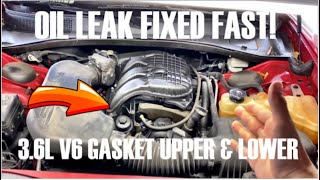
Typical fix: Replace the failed gasket(s) or hose(s). If replacing intake gaskets on the 3.6L, it is recommended to replace both upper and lower sets. If the intake manifold itself is cracked, it must be replaced.
Est. part cost: $20-$300 - Weak Fuel Pump or Clogged Fuel Filter 🟡 Medium Probability → Shop Fuel Filter The fuel pump motor can weaken over time, reducing its ability to supply adequate pressure. Some Charger models have two fuel pumps (primary and secondary), adding complexity to the system. A failing pump may not keep up with demand under load.
How to confirm: Connect a fuel pressure gauge to the fuel rail's service port. Check the pressure at idle and compare it to the manufacturer's specification (typically around 58 psi for many models, with a target range of 53-63 PSI cited for some). A significant drop in pressure under load indicates a delivery problem.
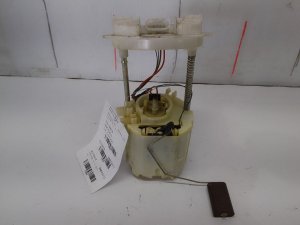
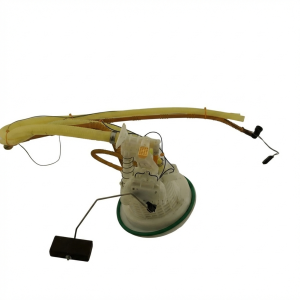
Typical fix: Replace the weak fuel pump and/or the clogged fuel filter. On most models, the filter is an integrated part of the fuel pump module assembly, which is located inside the fuel tank. 🎬 See this walkthrough for diagnosing and replacing the fuel pump.
Est. part cost: $150-$400 - Dirty or Faulty Mass Airflow (MAF) Sensor ⚪ Low Probability → Shop Fuel Injection Air Flow Meter Note: Most Charger engines in this range use a Manifold Absolute Pressure (MAP) sensor instead of a MAF sensor. However, if equipped, a dirty MAF sensor can under-report the amount of air entering the engine, causing the computer to command too little fuel.
How to confirm: Locate the sensor in the intake tube after the air filter. Carefully remove it and inspect the sensitive wires. If they appear dirty, clean them ONLY with a dedicated MAF sensor cleaner spray. Do not touch the wires.
Typical fix: Clean the sensor. If cleaning does not resolve the issue or the sensor has failed, it will need to be replaced.
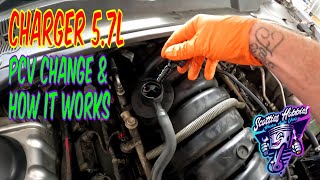
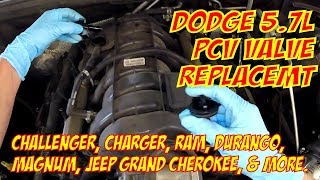
Est. part cost: $15-$80 - Stuck Open or Leaking PCV Valve 🟡 Medium Probability → Shop PCV Valve The PCV valve can get stuck open, creating a constant vacuum leak as unmetered air is pulled from the crankcase into the intake manifold. This is a very common issue on the HEMI engines. 🎬 Watch: How to replace the PCV valve on a 5.7L HEMI.
How to confirm: Remove the PCV valve and shake it. A good valve should make a rattling sound. If it doesn't, or if it's visibly damaged or oily, it should be replaced. Also inspect the hose connected to it for cracks or softness.
Typical fix: Replace the PCV valve and any associated brittle hoses.
Est. part cost: $10-$50
Rare But Worth Checking
- Clogged Fuel Injector(s): → Shop Fuel Injector While less common to cause a single-bank lean code, a partially clogged injector on Bank 1 can restrict fuel flow to one or more cylinders, contributing to a lean condition.
- Exhaust Leak Before the Upstream O2 Sensor: → Shop Oxygen Sensor A crack in the exhaust manifold or a leaking gasket before the Bank 1 O2 sensor can allow outside air to be pulled into the exhaust stream. This tricks the O2 sensor into thinking the engine is running lean, causing the PCM to incorrectly add fuel.
- Faulty Upstream Oxygen (O2) Sensor: → Shop Oxygen Sensor It is far more common for the O2 sensor to correctly report a lean condition than to cause one. However, a lazy or failing sensor can send incorrect, low-voltage signals to the PCM, mimicking a lean state. Technicians often see this misdiagnosed, with the O2 sensor being replaced when it was not the root cause.
Diagnosis Steps
- Check for any other stored trouble codes. If P0174 is also present, focus on causes that affect both engine banks.
- With the engine running, listen for an obvious hissing sound that would indicate a large vacuum leak.
- Visually inspect the air intake boot, all vacuum lines, and the PCV system for cracks, loose connections, or damage. Pay close attention to the PCV hose on HEMI engines.
- Use a scan tool to monitor Short-Term Fuel Trim (STFT) and Long-Term Fuel Trim (LTFT) for Bank 1. High positive numbers (e.g., >15-20%) confirm the lean condition and the PCM's attempt to compensate.
- Perform a smoke test on the intake system. This is the most reliable way to find hard-to-see vacuum leaks from gaskets (especially intake manifold gaskets) and hoses. 🎬 Watch: How to use a smoke machine to find leaks.
- If no vacuum leaks are found, test the fuel pressure at the fuel rail. Ensure it meets the manufacturer's specifications (typically ~58 psi, with a target of 53-63 PSI cited for some models) both at idle and when revving the engine.
- If applicable to your engine, inspect and clean the MAF sensor using dedicated cleaner.
- If fuel pressure and intake are good, consider testing the Bank 1 upstream O2 sensor for proper operation or checking for clogged fuel injectors.
Parts You'll Likely Need
- Intake Manifold Gasket Set
(OEM #3.6L Lower: 5184331AC; 5.7L/6.4L (2009+): 53022143AB; 5.7L (2003-2008): 53032382AB; 5.7L/6.4L (2019+): 68545089AA)— This is a very common failure point leading to vacuum leaks that cause a P0171 code, especially on the 3.6L Pentastar.
Trusted brands: Mopar, Fel-Pro, Victor Reinz
OEM price range: $50-$100
Aftermarket price range: $20-$60 - PCV Valve or Hose — Cracked PCV hoses or a stuck-open valve create a significant vacuum leak, a common issue on HEMI engines.
Trusted brands: Mopar, Dorman
OEM price range: $25-$60
Aftermarket price range: $10-$30 - Fuel Pump Module Assembly — A weak fuel pump is a primary cause of insufficient fuel delivery, leading to a lean condition.
Trusted brands: Bosch, Delphi, Mopar
OEM price range: $300-$500
Aftermarket price range: $150-$400
Related Codes That Often Appear With This One
- P0174 — This is the 'System Too Lean' code for Bank 2. If both P0171 and P0174 are present, it strongly suggests a problem affecting the entire engine, such as a large vacuum leak at the intake manifold common to both banks, a fuel delivery issue, or a faulty MAP/MAF sensor.
- P0300-P0308 — Misfire codes (P0300 for random, P0301-P0308 for specific cylinders) can occur because a lean air/fuel mixture may not ignite properly in the cylinders.
Platform-Specific Known Issues
- On 3.6L Pentastar engines (2011-2023), the plastic intake manifold itself can crack near the PCV port or warp at the gasket surfaces, requiring a full replacement of the
Mechanic-Grade Diagnostic Values
- Fuel Pressure (all engines) — expected: 53 to 63 PSI. Failure: Pressure drops significantly under load or is below 53 PSI at idle.
- Upstream O2 Sensor Voltage (all engines) — expected: Fluctuating between 0.1 and 0.9 volts (100-900 mV) in closed loop.. Failure: Voltage is stuck low (e.g., under 0.2V) for an extended period, which is what the PCM sees to trigger P0171. This indicates the sensor is reading excessive oxygen.
- Engine Vacuum at Idle (all engines) — expected: 18-19 inches of mercury (inHg), solid and steady.. Failure: Low or unsteady vacuum can indicate a significant vacuum leak, incorrect valve timing, or other mechanical engine issues that can cause a lean code.
- Long-Term and Short-Term Fuel Trim (LTFT + STFT) — expected: The sum should be within +/- 7% at idle.. Failure: A sustained positive value, especially one that exceeds +20-25%, confirms the PCM is adding fuel to compensate for a lean condition.
Scan Tool Commands That Help
- wiTECH or advanced scan tool: O2 Sensor Heater Test — To verify the integrity of the O2 sensor's internal heater circuit. A faulty heater can delay the sensor from entering closed loop, affecting fuel trims, though it usually sets a specific heater circuit code.
- wiTECH or advanced scan tool: Fuel Injector Pulser/Balance Test — After confirming fuel pressure is good, this command allows a technician to individually fire each injector to check for a consistent drop in fuel pressure, identifying a weak or clogged injector without removing the fuel rail.
Wiring & Ground Locations
- G105 / G106 — Located at the rear of the engine on 5.7L and 6.1L models. On 2.7L, G106 is on the left side of the engine.. These are primary engine grounds. A poor ground connection can cause erratic sensor readings, including from the O2 sensors and MAP sensor, potentially leading to incorrect fuel trim adjustments.
- G304 — A common ground point, often located in the passenger cabin or under-dash area, serving multiple modules.. This ground serves various interior modules. While less likely to directly cause P0171, a fault here can create bizarre electrical issues that could indirectly affect PCM operation or other related systems.
- PCM Connector C2 (3.6L) — The second large connector on the Powertrain Control Module.. This connector contains the pinouts for critical sensors. For example, Pin 96 is for the O2 2/2 Heater Control, Pin 90 is for Throttle Position Sensor 2 Signal, and Pin 89 is for the Crankshaft Position Sensor ground. Checking for corrosion or pushed-out pins here is a crucial step when diagnosing persistent electronic-related lean codes.
- Main Engine to Firewall Ground Strap — On older models (e.g., '69, but principle applies), a strap runs from the rear of the cylinder head to the firewall. On modern Chargers, look for braided straps from the engine block to the chassis/frame rail.. This is the main path for the engine's electrical system to ground to the vehicle's body. Corrosion or a loose connection here can cause a host of issues, including charging problems and incorrect sensor readings that could lead to a P0171 code.
Real Owner Repair Stories
- YouTube diagnostic video (2019 Dodge Charger 3.6L) — P0171 (System Too Lean Bank 1) and P0300 (Random Misfire).
❌ Tried (didn't work) Clearing codes (P0171 returned), Replacing the Bank 1 upstream O2 sensor
✅ What actually fixed it The diagnostic consultation concluded that after passing a smoke test, the next steps were to verify engine vacuum (checking for mechanical timing issues) and fuel pressure. The final fix was not posted in the clip, but the key takeaway was that a clean smoke test and a new O2 sensor did not resolve the issue, pointing towards a fuel delivery or mechanical problem. - AliExpress product review (2015 Dodge Charger R/T (5.7L)) — P0171 (System Too Lean), P0300 (Random Misfire), coolant pooling under passenger side, white smoke from exhaust on cold starts.
❌ Tried (didn't work) Received a mechanic quote of $850 for diagnosis and OEM gasket replacement.
✅ What actually fixed it The owner replaced the intake manifold gaskets themselves using an aftermarket kit, which resolved all symptoms and codes. This story confirms the intake manifold gasket as a direct cause for the P0171 and P0300 combination.
"I Checked Everything" — The Actual Cause
- In a case involving a 2019 3.6L Charger, the vehicle passed a smoke test, and a new upstream O2 sensor was installed, but the P0171 code persisted. The professional diagnosis then shifted to checking for a fuel delivery problem (weak pump) or a base mechanical engine issue (like incorrect valve timing) causing low engine vacuum, as these would not be revealed by a standard smoke test.
OEM Part Supersession History
05281824AA→5184331AC— Part has been updated by Mopar. The new design is often a more durable material or improved seal design compared to the original.
Heads up: The new part number (5184331AC) is the correct service replacement for the original.
Model Year Variations Within This Range
- 2009+: HEMI 5.7L engines from 2009 onwards (often called the 'Eagle' V8) use a different intake manifold gasket (PN 53022143AB) than the pre-2009 'pre-Eagle' engines. The port design and gasket shape are different.
- 2011+: The introduction of the 3.6L Pentastar V6 brought a new two-piece (upper and lower) plastic intake manifold design. The lower intake gaskets (PN 5184331AC) are a very common failure point for vacuum leaks, more so than on the prior V6 engines.
Diagnostic Flowchart
Other Known Issues on This Vehicle
Issues unrelated to this code that are worth knowing about as an owner of this generation:
- HEMI Lifter/Camshaft Failure ('HEMI Tick') 🔴 High → Shop Engine Camshaft — Common on 5.7L and 6.4L HEMI engines, particularly those with extended idle times. Can occur at any mileage but becomes more prevalent after 60,000 miles. Starts as a light tick and can progress to a misfire and catastrophic engine damage if ignored. (Ref: Multiple TSBs exist, but no universal recall. TSB 09-019-23 addresses a cold-start tick from exhaust manifolds, which can be confused with the more serious lifter tick.)
- 3.6L Pentastar Oil Filter/Cooler Housing Leak 🔴 High — Extremely common across all vehicles with the 3.6L Pentastar. The plastic housing, located in the engine valley, warps and cracks from heat cycles, causing major oil and/or coolant leaks. Failure can occur as early as 50,000 miles. (Ref: No recall has been issued, despite widespread failures. Aftermarket solutions with aluminum housings (like Dorman 926-959) are the recommended permanent fix.)
- Uconnect 8.4" Screen Delamination & Ghost Touch 🟠 Medium — Affects 2017 and newer models with the 8.4-inch Uconnect system. The screen adhesive fails, causing bubbling and 'ghost touches' where the system acts on its own. Often starts 1-3 years into ownership. (Ref: No recall, but many owners on forums report getting goodwill replacements from dealers even out of warranty.)
- Electronic Shifter 'Service Shifter' Message 🟠 Medium — Common on 2014+ models with the electronic shifter. The vehicle may display a 'Service Shifter' warning, fail to show the selected gear, or not shift out of Park. Often requires replacement of the entire shifter assembly.
- 3.6L Pentastar Rocker Arm Failure 🔴 High — A known issue on early (2011-2013) 3.6L engines where needle bearings in the rocker arms fail, leading to a ticking noise, camshaft damage, and misfires. Chrysler issued an extended warranty (10 years/150,000 miles) for the left cylinder head on some early models to address a related problem. (Ref: Extended Warranty X56 / TSB 09-002-14 Rev. B for a related cylinder head issue.)
Used vs. New Parts: Buying Guide for This Vehicle
When a used part is the smart pick: For a P0171 repair, a used intake manifold from a low-mileage donor vehicle can be a cost-effective choice, especially if the original is cracked. However, always install it with new gaskets.
Donor-vehicle mileage cap: roughly under 75000 miles for the part to have meaningful remaining life.
What to inspect on the donor part:
- For an intake manifold, check for cracks, especially around mounting points and the PCV port area.
- Ensure the gasket surfaces are not warped or deeply scored.
- For a fuel pump assembly, confirm the donor vehicle's mileage and avoid parts from vehicles that sat for a long time with old fuel.
OEM-only on this vehicle (don't cheap out):
- Oxygen (O2) Sensors: While cheaper aftermarket options exist, many technicians and forums report higher failure rates or incorrect readings. Using Mopar or the OEM supplier (like NTK/NGK) is strongly recommended to avoid repeat diagnostics.
- Powertrain Control Module (PCM): If the PCM is determined to be the fault (rare), it must be replaced with a Mopar unit and programmed to the vehicle's VIN.
Aftermarket brands forum-validated for this vehicle:
- Gaskets: Fel-Pro is a highly respected brand for intake manifold gaskets and is often considered equivalent or superior to OEM.
- Fuel Pumps: Bosch and Delphi are reputable OEM suppliers and their aftermarket pumps are generally considered reliable.
Brands owners have reported issues with on this vehicle:
- Unbranded 'no-name' sensors from online marketplaces. These are a frequent source of frustration, often failing quickly or providing inaccurate data that makes diagnosis even more difficult.
Real Owner Stories
Aggregated from forums and TSBs cited above. Mileages and costs reflect what owners reported in those sources.
2016 Dodge Charger SXT 3.6L
Symptoms: P0171 code appeared on the vehicle.
What fixed it: The issue was discussed in relation to potential vacuum leaks or fuel system lean conditions common to the platform.
Source hint: Reddit r/Charger thread titled 'P0171 code on my 16 charger sxt'
Dodge Charger (Year Unspecified) 3.6L/5.7L/6.4L
Symptoms: Lean codes P0171 and P0174 appearing together.
What fixed it: Resolved lean codes by addressing common air/fuel delivery issues shared across the LX/LD platform.
Source hint: chargerforums.com thread titled 'P0171-P0174-lean-codes-resolved'
Dodge Charger (Engine Swap)
Symptoms: P0171 and P0174 codes appearing after an engine swap.
What fixed it: Inspection for vacuum leaks, specifically looking at intake manifold gaskets and PCV connections which are known failure points.
Source hint: chargerforums.com thread titled 'p0171-and-p0174-after-engine-swap'
Related OBD-II Codes
Frequently Asked Questions
I have a 3.6L Pentastar Charger; are there specific gaskets I should replace to fix a P0171?
My HEMI Charger has a P0171 and a 'tick' sound; does TSB 09-019-23 explain this?
Is there a permanent fix for the oil cooler housing leaks that often accompany engine issues on the 3.6L?
Can a bad PCV valve cause a lean condition on the 5.7L or 6.4L HEMI?
What is the correct fuel pressure for a Dodge Charger to rule out a P0171 fuel delivery issue?
Does the Dodge Charger use a MAF sensor that I should clean to fix this code?
Helpful Videos
Used OEM Parts in Stock
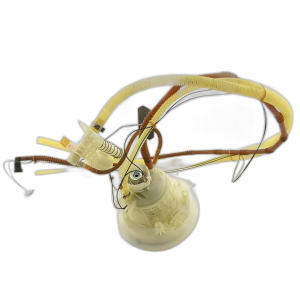
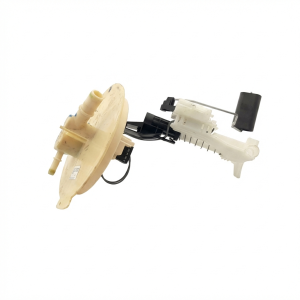
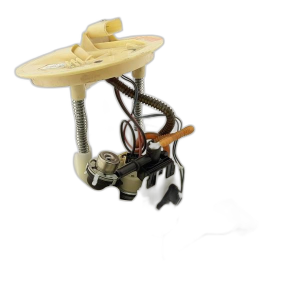
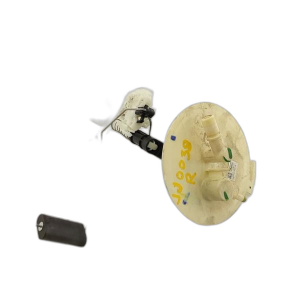
New Aftermarket Parts Available


The information in this article is provided for general reference and educational purposes only. Vehicle specifications, procedures, and part compatibility can vary by production date, trim level, and region. Always consult your vehicle's factory service manual and verify part numbers before purchasing or performing repairs. Safety-critical components such as airbags, seat belts, and braking systems should be installed by a qualified professional.
- Dodge Charger:
- 🧭 Diagnostic Flowchart
- 🎬 Helpful Videos
- 🛍️ Shop This Part
- What's Unique About the 2006-2023 Dodge Charger
- Symptoms You May Notice
- Most Likely Causes
- Rare But Worth Checking
- Diagnosis Steps
- Parts You'll Likely Need
- Related Codes That Often Appear With This One
- Platform-Specific Known Issues
- Mechanic-Grade Diagnostic Values
- Scan Tool Commands That Help
- Wiring & Ground Locations
- Real Owner Repair Stories
- "I Checked Everything" — The Actual Cause
- OEM Part Supersession History
- Model Year Variations Within This Range
- Other Known Issues on This Vehicle
- Used vs. New Parts: Buying Guide for This Vehicle
- Real Owner Stories
- 2016 Dodge Charger SXT 3.6L
- Dodge Charger (Year Unspecified) 3.6L/5.7L/6.4L
- Dodge Charger (Engine Swap)
- Related OBD-II Codes
- Frequently Asked Questions
- 🎟️ Get 5% Off