

P0171 on 2010-2015 Toyota Prius: "System Too Lean" Causes and Fixes
On a 3rd Gen Prius, P0171 is most often caused by a dirty Mass Air Flow (MAF) sensor, which is a simple cleaning job. If that doesn't work, suspect a vacuum leak from a bad intake manifold gasket (especially after EGR service) or a faulty Purge VSV. On higher-mileage cars, a failing fuel pump is a common final culprit after other fixes have failed.
- Start with the cheapest, easiest fix: clean the Mass Air Flow (MAF) sensor with dedicated cleaner.
- If cleaning the MAF doesn't work, your next step should be to check for vacuum leaks, paying special attention to the intake manifold gaskets.
- If your Prius has high mileage (over 150,000 miles) and the above steps don't fix the code, the fuel pump is a likely culprit.
- Driving for a long time with P0171 can lead to poor performance and potential engine damage, so it's best to address it promptly.
What's Unique About the 2010-2015 Toyota Prius
The 3rd Generation Prius (2010-2015) is particularly prone to this code from a few specific issues. While a dirty Mass Air Flow (MAF) sensor is a common culprit on many Toyotas, this Prius model also frequently suffers from vacuum leaks caused by flattened intake manifold gaskets, an issue often unmasked right after performing the platform's necessary EGR system cleaning. Furthermore, Toyota issued a TSB (T-SB-0041-15) identifying a faulty Purge VSV as a known cause. Finally, owners on forums like PriusChat have extensively documented that a weakening fuel pump is a common, though often overlooked, cause of P0171 on higher-mileage examples after more common parts have already been replaced.
Symptoms You May Notice
- Check Engine Light is on
- Reduced fuel economy
- Rough or unstable idle
- Hesitation or lack of power, especially when starting from a stop
- Engine stalling at stops (in some cases)
- Misfire or 'chugging' feeling during slow acceleration
- Replacing the Air/Fuel (O2) sensor first. The sensor is usually just doing its job by reporting the lean condition. Always diagnose MAF, vacuum leaks, and fuel pressure first.
- Overlooking the intake manifold gasket after an EGR service. Many owners perform the common EGR cleaning, then get a P0171 code and don't realize the old, flattened gasket is the new source of the problem.
Most Likely Causes
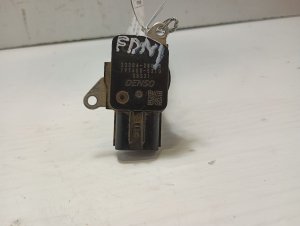
- Dirty Mass Air Flow (MAF) Sensor 🔴 High Probability → Shop Fuel Injection Air Flow Meter The MAF sensor is located in the intake tract and can become contaminated with dirt and oil vapor over time, causing it to under-report airflow and lead to a lean condition. This is the most common and easiest first step in diagnosis.
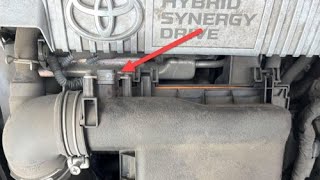
How to confirm: Remove the sensor and visually inspect the two small wire elements. If they appear dirty or coated in grime, cleaning is warranted. This is the easiest and cheapest first step. 🎬 Watch: A quick guide to diagnosing and fixing the P0171 code.
Typical fix: Carefully clean the sensor elements with a dedicated MAF sensor cleaner spray. Do not touch the wires or use other cleaners like brake cleaner. Allow it to air dry completely before reinstalling. If cleaning doesn't resolve the issue, the sensor may need to be replaced.
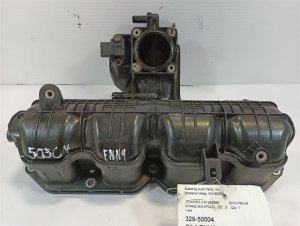
Est. part cost: $10-$15 for cleaner, $50-$180 for a new sensor - Vacuum Leak (Intake Manifold Gasket) 🔴 High Probability The intake manifold gaskets on the 2ZR-FXE engine are known to flatten and harden over time, allowing unmetered air to enter the engine. This issue is very frequently discovered immediately after performing an EGR cooler/intake manifold cleaning, as the old, compressed gasket fails to reseal properly.
How to confirm: Perform a smoke test on the intake system; smoke will visibly escape from the gasket area. Alternatively, with the engine running, carefully spray short bursts of brake cleaner or propane around the intake manifold mating surface and listen for a change in engine RPM. A high positive Long-Term Fuel Trim at idle that decreases significantly at higher RPM also strongly suggests a vacuum leak.
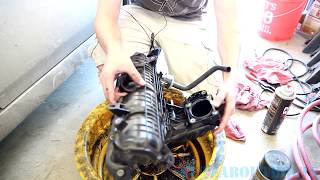
Typical fix: Replace the intake manifold gaskets. It is highly recommended to use a new gasket anytime the intake manifold is removed 🎬 See this walkthrough on cleaning the intake manifold and replacing gaskets. for other service, such as EGR cleaning.
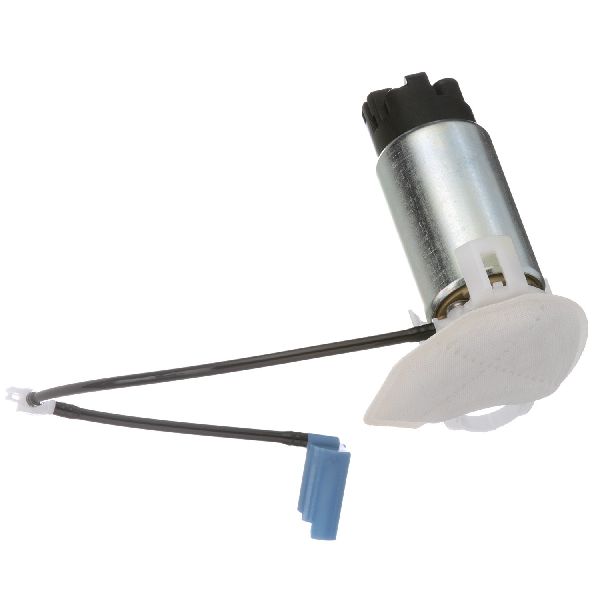
Est. part cost: $15-$40 - Failing Fuel Pump 🟡 Medium Probability → Shop Fuel Pump On higher-mileage (typically 150k+ miles) Priuses, the original fuel pump can weaken and fail to provide adequate fuel pressure (spec is 44-50 PSI). This is often the root cause after owners have already replaced the MAF sensor and checked for vacuum leaks.
How to confirm: A fuel pressure test is the definitive diagnostic step. One owner on PriusChat measured their failing system at only 26 PSI. In many DIY cases, this is diagnosed by replacing the pump after other common causes have been ruled out, as detailed in multiple forum threads.
Typical fix: Replace the fuel pump assembly, which is located inside the fuel tank under the rear seat. 🎬 Watch: How to replace the fuel pump on a 2010 Prius.
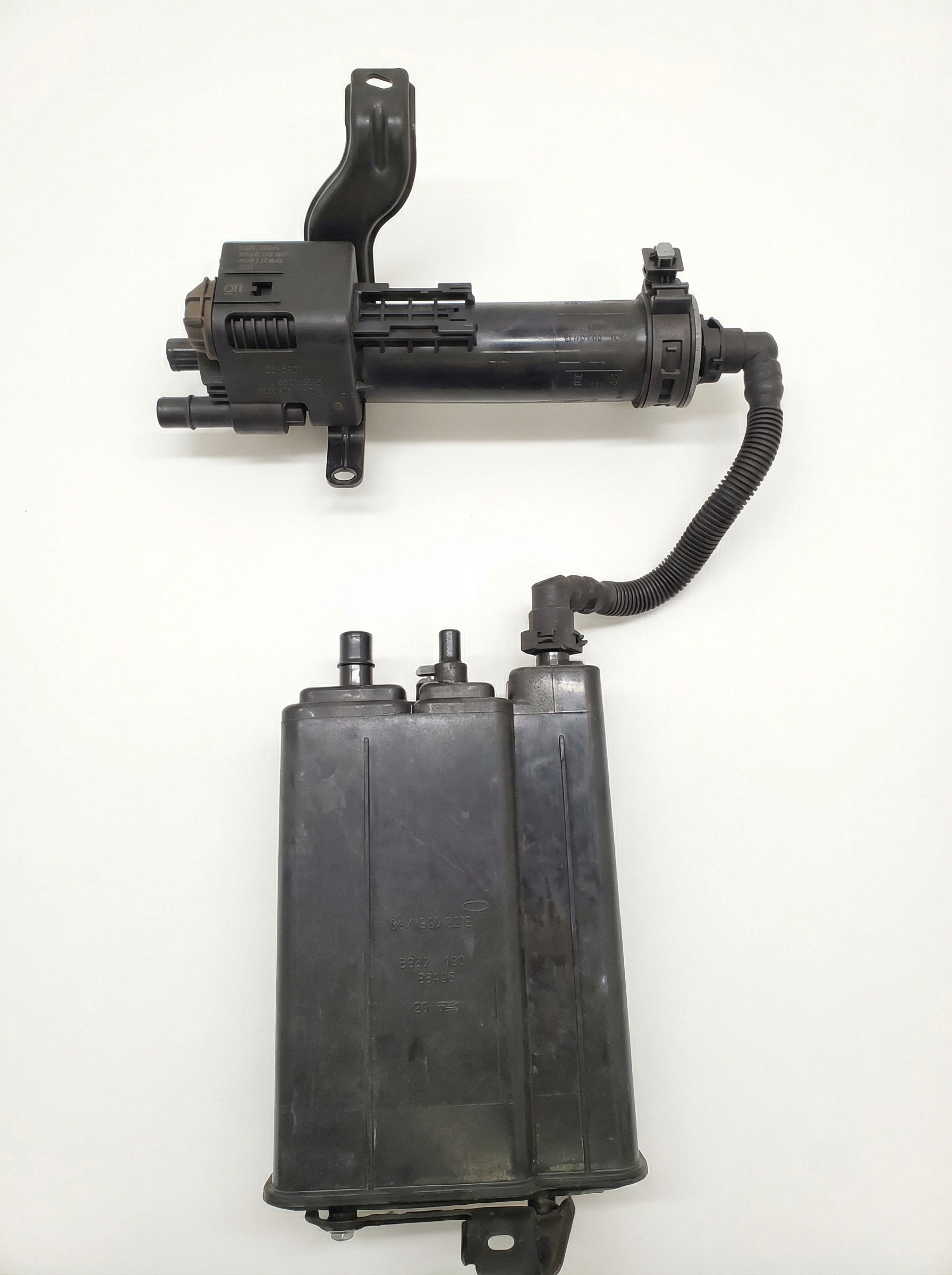
Est. part cost: $150-$400 - Faulty Purge VSV (Vacuum Switching Valve) 🟡 Medium Probability → Shop Vapor Canister Toyota issued Technical Service Bulletin T-SB-0041-15 for 2010-2013 Prius models specifically for this issue. A faulty Purge VSV or a separated vacuum line from it can cause P0171, often accompanied by other codes like P0A0F, P3190, or P3191.
How to confirm: Check for the presence of related DTCs (P0A0F, P3190, P3191). Visually inspect the Purge VSV and its vacuum lines near the throttle body to ensure they are connected and not cracked. If the lines are secure, the valve itself may be faulty.
Typical fix: Per T-SB-0041-15, the official fix is to replace the Purge VSV assembly and have the Engine Control Module (ECM) reprogrammed by a dealer or qualified shop with the latest calibration.
Est. part cost: $40-$90 for the valve - Vacuum Leak (PCV Hose or other vacuum lines) ⚪ Low Probability Rubber hoses become brittle with age and heat cycles, leading to cracks and leaks. The PCV (Positive Crankcase Ventilation) system is a common source of vacuum leaks on many vehicles.
How to confirm: Visually inspect all vacuum hoses connected to the intake manifold and throttle body for cracks, swelling, or loose connections. A smoke test is also highly effective.
Typical fix: Replace the cracked or leaking hose.
Est. part cost: $10-$30
Rare But Worth Checking
- Faulty Air/Fuel Ratio Sensor (Upstream O2 Sensor): → Shop Oxygen Sensor While the A/F sensor is what detects the lean condition, it's less commonly the cause of the problem itself compared to MAF issues or vacuum leaks. A failing sensor might also trigger other codes related to sensor performance (e.g., heater circuit codes) or show lazy voltage readings on a scan tool. Many owners replace this unnecessarily.
- Clogged Fuel Injectors: → Shop Fuel Injector If one or more injectors are partially clogged, they won't deliver the amount of fuel the ECM commands. This is less common than a system-wide issue like a weak fuel pump, but one PriusChat user reported fixing P0171 by replacing restricted injectors after other attempts failed.
Diagnosis Steps
- Connect an OBD-II scanner and check for any other stored codes, especially P0A0F, P3190, or P3191.
- View live data, specifically Long-Term Fuel Trim (LTFT) and Short-Term Fuel Trim (STFT). High positive values (e.g., LTFT over +20%) confirm the lean condition.
- Observe LTFT at idle and then at a steady 2500 RPM. If the LTFT is high at idle but drops significantly at 2500 RPM, this strongly indicates a vacuum leak. If the LTFT remains high across all RPMs, it points more toward a MAF sensor or fuel delivery issue.
- Inspect and clean the MAF sensor using dedicated MAF cleaner as the first physical step.
- Clear the codes and test drive. If the code returns, perform a smoke test to find vacuum leaks. Pay extremely close attention to the intake manifold gasket and all PCV/vacuum hoses.
- Inspect the Purge VSV and its hoses near the throttle body for cracks or disconnection, per TSB T-SB-0041-15.
- If no vacuum leaks are found and the vehicle has high mileage (150k+), a fuel pressure test is the next logical step. The target pressure is 44-50 PSI. A weak fuel pump is a very likely culprit in this scenario.
- Only after confirming good fuel pressure and no vacuum leaks should you consider a faulty A/F sensor or clogged fuel injectors as the primary cause.
Parts You'll Likely Need
- Mass Air Flow (MAF) Sensor
(OEM #22204-37010)— This is the most common cause of P0171 on the Gen 3 Prius. It often just needs cleaning, but sometimes requires replacement if it has failed electronically.
Trusted brands: Denso (OEM Manufacturer)
OEM price range: $120-$180
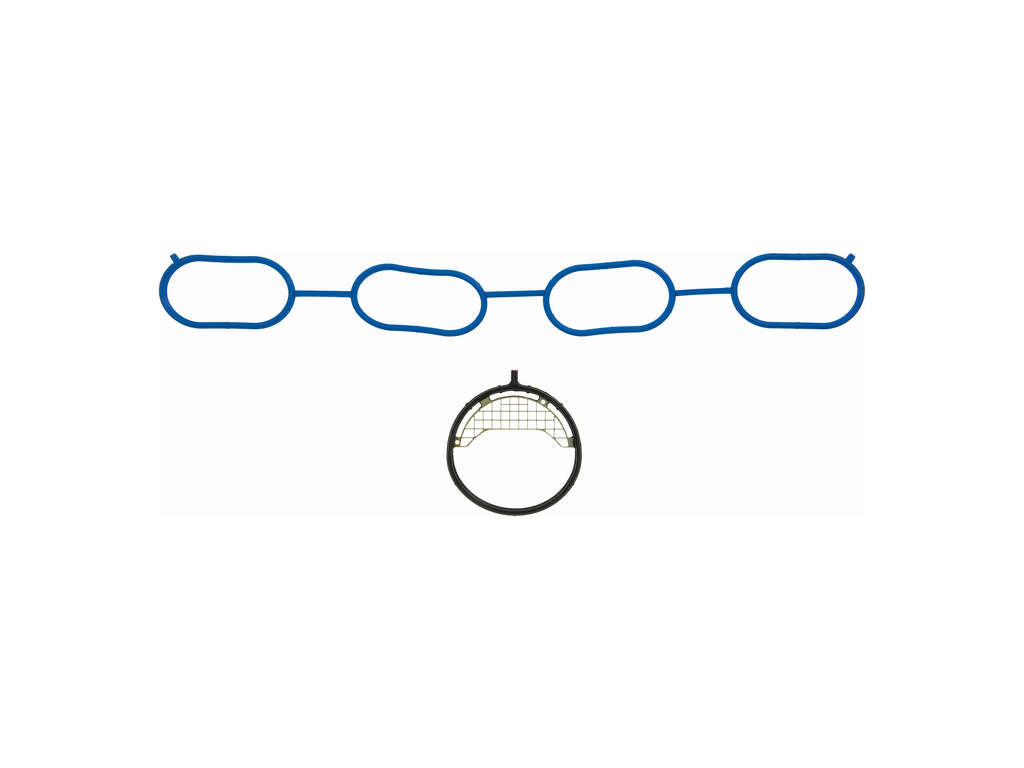
Aftermarket price range: $50-$100 - Intake Manifold Gasket Set
(OEM #17171-37030)— These gaskets are a known failure point and a very common source of vacuum leaks that trigger P0171, especially after the intake manifold has been removed for EGR service.
Trusted brands: Toyota (OE), Fel-Pro
OEM price range: $25-$40
Aftermarket price range: $15-$25 - Fuel Pump Assembly
(OEM #77020-47080)— A common but often overlooked cause on higher-mileage vehicles after simpler fixes have failed. A weak pump cannot supply enough fuel, causing a lean condition.
Trusted brands: Denso (OEM Manufacturer)
OEM price range: $300-$450
Aftermarket price range: $150-$250 - Purge VSV (Vacuum Switching Valve)
(OEM #90910-TC001)— Identified in TSB T-SB-0041-15 as a specific cause for P0171 on 2010-2013 models, often with other codes. A cracked hose or faulty valve creates a vacuum leak.
Trusted brands: Toyota (OE)
OEM price range: $60-$90
Aftermarket price range: $40-$70
Related Codes That Often Appear With This One
- P0A0F, P3190, P3191: If these codes are present with P0171, the cause is very likely the Purge VSV per TSB T-SB-0041-15.
Technical Service Bulletins (TSBs) & Recalls
- T-SB-0041-15: 'MIL "ON" DTC P0A0F, P3190, P3191, P0171 Due to Purge VSV Vacuum Line Separation'. This TSB for 2010-2013 Prius models states that a faulty Purge VSV can cause the P0171 code. The fix requires replacing the valve and reprogramming the ECM.
Platform-Specific Known Issues
- The intake manifold gaskets are known to degrade and cause vacuum leaks. This problem is frequently triggered after performing an EGR system cleaning, a common maintenance task on this engine. Re-using the old gasket is a common mistake.
- Forum data strongly suggests that a weak fuel pump is a frequent cause of P0171 on Priuses with over 150,000 miles, often after other parts have been needlessly replaced.
- Per TSB T-SB-0041-15, a faulty Purge VSV is a documented cause for this code on 2010-2013 models, requiring a part replacement and ECM reprogram.
Mechanic-Grade Diagnostic Values
- Fuel Pressure — expected: 304 to 343 kPa (44 to 50 psi) with the pump running (can be commanded via scan tool).. Failure: Pressure significantly below 44 psi indicates a weak fuel pump or clogged filter. One owner reported a failing system at 26 PSI.
- Long-Term Fuel Trim (LTFT) Threshold — expected: Ideally close to 0%. Normal operating range is typically within +/- 10%.. Failure: A 'smoothed fuel trim learning value' of +33% or more will trigger the P0171 DTC.
- Mass Air Flow (MAF) Sensor Reading at Idle — expected: 2 to 7 grams/second (g/s) on a scan tool.. Failure: Readings significantly lower than expected suggest a dirty or failing sensor that is under-reporting airflow.
- Fuel Injector Resistance — expected: 11.6 to 12.4 Ω at 20°C (68°F) across the two terminals of the injector.. Failure: Resistance outside this range indicates a faulty injector coil.
- Mass Air Flow (MAF) Sensor Voltage — expected: Should fluctuate with airflow. Not a static value.. Failure: Voltage remaining below 0.2V or above 4.9V for more than 3 seconds indicates a circuit fault or failed sensor, triggering codes like P0102 or P0103.
Hidden / Shadow Codes Worth Checking
- Mode 6 Data: Smoothed Fuel Trim: This is not a separate code but the underlying data the ECM uses to trigger P0171. Technicians with advanced scan tools can monitor this value to see how close the vehicle is to the malfunction threshold before the Check Engine Light comes on. The threshold is when the combined short and long-term fuel correction value exceeds +33%. (see via Advanced OBD-II scanner or Toyota Techstream software under the engine data list.)
Scan Tool Commands That Help
- Toyota Techstream: Active Test: Control the Fuel Pump / Speed — This allows a technician to run the fuel pump with the engine off. It is essential for accurately and safely measuring maximum fuel pressure to diagnose a weak fuel pump.
- Toyota Techstream: Active Test: A/F Control — This function forces the fuel mixture rich (+25%) or lean (-12.5%). By observing the A/F sensor's voltage response, a technician can determine if the sensor is lazy/failed or if it is correctly reporting a lean condition caused by another component.
Wiring & Ground Locations
- MAF Sensor Connector (D5) — On the air cleaner filter box assembly where the main intake tube begins.. This 5-pin connector provides power, ground, and signal lines for the MAF sensor. Corrosion or damage to the pins or pigtail can cause incorrect airflow readings, leading directly to P0171. Key pins are D5-5 (VG signal) and D5-4 (E2G ground).
- ECM (Engine Control Module) — Located in the engine compartment on the driver's side, next to the main fuse/relay box.. This is the termination point for the MAF sensor wiring (e.g., pins D28-94 for VG and D28-117 for E2G). Verifying continuity between the MAF connector and these ECM pins is a key step in diagnosing a circuit fault.
- Engine Ground Point — A primary ground bolt is located on the engine block near the driver's side, behind the fuse box area.. A poor or corroded main engine ground can cause a variety of erratic sensor readings, including the MAF sensor, which can contribute to or cause a P0171 code.
Real Owner Repair Stories
- PriusChat user 'lexibothersme' (2010 Toyota Prius, 147,800 miles) — P0171 Check Engine Light, poor MPG.
❌ Tried (didn't work) Replacing MAF sensor, Replacing spark plugs, Replacing upstream Air/Fuel sensor (Denso 234-9090), Cleaning intake manifold, Replacing PCV valve, Replacing downstream O2 sensor (Denso 234-4400)
✅ What actually fixed it Replacing the fuel pump assembly. A used pump from a 90,000-mile donor vehicle and a new fuel pump gasket resolved the code and restored MPG. - YouTube channel 'Prius Maintenance' (2013 Toyota Prius) — P0171 and P3190 codes, car stalled after hearing a 'pop'.
❌ Tried (didn't work) Cleaning the MAF sensor and replacing the air filter initially did not solve the underlying issue.
✅ What actually fixed it Two vacuum hoses had popped off due to excessive crankcase pressure. The root cause was determined to be a faulty PCV valve. The final repair involved replacing the PCV valve, the intake manifold gasket, the water pump, and the thermostat, which permanently fixed the issue.
"I Checked Everything" — The Actual Cause
- A common scenario documented on forums is where the intake system passes a smoke test and the MAF sensor has been cleaned or replaced, yet the P0171 code persists. In many of these cases, especially on cars over 150,000 miles, the actual cause was a weak fuel pump unable to provide the required 44-50 PSI of pressure.
- An exhaust leak, such as a crack in the exhaust manifold or a bad flange gasket located *before* the upstream A/F sensor, can cause P0171. This allows outside oxygen to be drawn into the exhaust stream, making the A/F sensor report a false lean condition. An intake smoke test will show no leaks, and the problem is only found by performing a smoke test on the exhaust system.
When the Usual Fixes Don't Work
- Multiple owner accounts, particularly for vehicles with over 150,000 miles, detail a frustrating diagnostic process where the most common fixes (cleaning/replacing the MAF sensor, replacing the A/F sensor, and searching for vacuum leaks) did not resolve the P0171 code. In a significant number of these documented cases, the problem was only solved after replacing the fuel pump, which had weakened over time and was delivering insufficient fuel pressure.
OEM Part Supersession History
77020-47080→77020-47081— Standard part revision by the manufacturer.
Heads up: The parts are interchangeable; the new part number is the correct replacement for the original.
Model Year Variations Within This Range
- 2010-2013: These model years are specifically called out in Toyota Technical Service Bulletin T-SB-0041-15. A faulty Purge VSV (Vacuum Switching Valve) or a separated vacuum line from it can cause P0171, often with P0A0F, P3190, or P3191. The official fix requires replacing the valve and reprogramming the ECM, which may not be required for later model years not covered by the TSB.
Diagnostic Flowchart
Other Known Issues on This Vehicle
Issues unrelated to this code that are worth knowing about as an owner of this generation:
- EGR System Clogging 🔴 High — Very common, recommended as preventative maintenance every 50k-100k miles. If ignored, can lead to engine knocking, misfires (P030x), and eventual head gasket failure.
- Excessive Oil Consumption 🟠 Medium — Common in 2010-2014 models, often starting around 80k-100k miles. Caused by a piston and ring design. (Ref: T-SB-0168-16 (Inspection) and T-SB-0169-16 (Repair))
- Brake Actuator Assembly Failure 🔴 High — A well-documented and critical failure. The unit fails internally, causing a loss of brake assist, multiple warning lights, and a loud, frequent buzzing noise from the pump. Can occur at various mileages. (Ref: Limited recalls (e.g., for 2010 models) and a Warranty Enhancement Program (ZE1) existed but have expired for most owners, making it a very expensive out-of-pocket repair.)
- Head Gasket Failure 🔴 High — Often a direct consequence of an ignored clogged EGR system, which causes cylinder 1 to run hot. Usually occurs at higher mileages (>150k) if EGR maintenance is neglected.
- Inverter Coolant Pump Failure 🟠 Medium — The electric water pump for the hybrid inverter can fail. Toyota issued recalls for this, but it's a known failure point. (Ref: Recalls were issued.)
Used vs. New Parts: Buying Guide for This Vehicle
When a used part is the smart pick: For this repair, obtaining a complete fuel pump assembly from a lower-mileage (under 100k miles) donor vehicle is a documented, cost-effective strategy that has worked for owners. Hard parts like the intake manifold or throttle body are also excellent candidates for used purchase as they have low failure rates.
Donor-vehicle mileage cap: roughly under 100000 miles for the part to have meaningful remaining life.
What to inspect on the donor part:
- For a fuel pump, ensure the plastic housing is not cracked or brittle.
- Check that all electrical connectors and fuel line ports are intact and not damaged.
- Verify the part number on the used part matches the original or its superseded number.
OEM-only on this vehicle (don't cheap out):
- Mass Air Flow (MAF) Sensor
- Air/Fuel Ratio (O2) Sensor
Aftermarket brands forum-validated for this vehicle:
- Denso (OEM manufacturer for sensors and fuel pump)
- Fel-Pro (for intake manifold gaskets)
Brands owners have reported issues with on this vehicle:
- Unnamed, low-cost sensors from online marketplaces are frequently reported on forums as being poorly calibrated, leading to persistent or new trouble codes.
Real Owner Stories
Aggregated from forums and TSBs cited above. Mileages and costs reflect what owners reported in those sources.
2010 Toyota Prius 1.8L — 147000 miles
Symptoms: System Too Lean code persisted after replacing the MAF sensor, A/F sensor, and cleaning the intake manifold.
What fixed it: Installation of a new fuel pump assembly (P/N 77020-47080).
Source hint: PriusChat Thread: 'P0171 System Too Lean fixed on 2010 Prius'
2010-2015 Toyota Prius 1.8L
Symptoms: Hesitation or lack of power, especially when starting from a stop; chugging feeling during slow acceleration; replaced nearly every related component including plugs, O2 sensors, injectors, PCV, and fuel pump.
What fixed it: The source describes this as a 'stubborn' diagnostic challenge where the owner replaced almost all related components to chase the code.
Source hint: Reddit Thread: 'Stubborn P0171 code'
2010-2013 Toyota Prius 1.8L
Symptoms: Check Engine Light on with DTC P0171, potentially accompanied by engine failing to start or running poorly.
What fixed it: Replacing the Purge VSV assembly and reprogramming the Engine Control Module (ECM).
Source hint: TSB T-SB-0041-15
Related OBD-II Codes
Frequently Asked Questions
Does TSB T-SB-0041-15 apply to my 2014 or 2015 Prius?
I just cleaned my EGR cooler and now I have a P0171 code. What happened?
My Prius has over 150,000 miles and cleaning the MAF didn't fix P0171. What should I check next?
Can I use brake cleaner to clean my Prius MAF sensor?
What are the specific symptoms of a P0171 on a Prius when starting from a stop?
Is the Purge VSV fix a simple part swap?
Helpful Videos

Used OEM Parts in Stock
New Aftermarket Parts Available


The information in this article is provided for general reference and educational purposes only. Vehicle specifications, procedures, and part compatibility can vary by production date, trim level, and region. Always consult your vehicle's factory service manual and verify part numbers before purchasing or performing repairs. Safety-critical components such as airbags, seat belts, and braking systems should be installed by a qualified professional.
- Toyota Prius:
- 🧭 Diagnostic Flowchart
- 🎬 Helpful Videos
- 🛍️ Shop This Part
- What's Unique About the 2010-2015 Toyota Prius
- Symptoms You May Notice
- Most Likely Causes
- Rare But Worth Checking
- Diagnosis Steps
- Parts You'll Likely Need
- Related Codes That Often Appear With This One
- Technical Service Bulletins (TSBs) & Recalls
- Platform-Specific Known Issues
- Mechanic-Grade Diagnostic Values
- Hidden / Shadow Codes Worth Checking
- Scan Tool Commands That Help
- Wiring & Ground Locations
- Real Owner Repair Stories
- "I Checked Everything" — The Actual Cause
- When the Usual Fixes Don't Work
- OEM Part Supersession History
- Model Year Variations Within This Range
- Other Known Issues on This Vehicle
- Used vs. New Parts: Buying Guide for This Vehicle
- Real Owner Stories
- 2010 Toyota Prius 1.8L — 147000 miles
- 2010-2015 Toyota Prius 1.8L
- 2010-2013 Toyota Prius 1.8L
- Related OBD-II Codes
- Frequently Asked Questions
- 🎟️ Get 5% Off