

P0174 on 1997-2004 Ford F-150 4.6L: System Too Lean Bank 2 Causes and Fixes
On a 1997-2004 F-150 with the 4.6L V8, code P0174 is almost always caused by a vacuum leak. The most common culprit is a rotted rubber PCV hose elbow on the back of the intake manifold. This is a cheap part (under $20) and a common DIY fix. If both P0171 and P0174 are present, this is the first place to look.
- P0174 on this truck almost always means there is a vacuum leak.
- Before buying any parts, carefully inspect the rubber PCV hose elbow at the back of the engine; it is the most likely culprit.
- If you have both P0174 and P0171 codes, the problem is a widespread issue like a dirty MAF sensor or a large vacuum leak.
- Do not replace the O2 sensor as a first step; it is almost always just doing its job by reporting the lean condition.
- A smoke test is the most efficient and accurate way to find the source of a vacuum leak if it's not immediately obvious.
What's Unique About the 1997-2004 Ford F-150
The 10th generation F-150 (1997-2003/4) with the 4.6L Modular V8 is famous for developing vacuum leaks as it ages. The rubber and plastic components in the engine bay become brittle from years of heat cycles. The most notorious failure point is the PCV (Positive Crankcase Ventilation) hose assembly, particularly the rubber elbow that connects to the back of the intake manifold, which is a very frequent cause of this code. Forum users repeatedly confirm this is the first part to check.
Generation note: This range covers the 10th generation F-150 (1997-2003) and the 11th generation (2004). The 2004 model year included both the new 11th-gen body style and a 'Heritage' edition that was a carryover of the 10th-gen platform. While the fundamental causes are similar, vacuum line and PCV hose routing can differ slightly. The P0174 issue is common across all years in this range due to the shared 4.6L 2V engine design.
Symptoms You May Notice
- Check Engine Light is on
- Rough or fluctuating idle, sometimes stalling at stops
- Hesitation or stumbling during acceleration
- Reduced fuel economy
- Engine misfires, which may trigger other codes (e.g., P0300, P0302, P0304, P0306, P0308)
- Hissing sound from the engine bay, especially from behind the throttle body
- Replacing the oxygen (O2) sensor. The O2 sensor is usually just accurately reporting the lean condition caused by something else. Unless it has its own specific fault code (like for a heater circuit), it is rarely the cause of P0174.
Most Likely Causes
- Cracked PCV Hose Elbow 🔴 High Probability → Shop PCV Valve Hose The rubber elbow is located at the back of the intake manifold, where it is exposed to intense heat. Over time, it becomes brittle, cracks, and collapses, creating a large vacuum leak. This is the most cited cause in owner forums.
How to confirm: With the engine running, listen for a hissing sound from behind the throttle body. You can often feel the hole in the elbow with your hand, or it may be visibly collapsed or torn. A smoke test is the most definitive way to confirm the leak.
Typical fix: Replace the PCV hose assembly or just the affected rubber elbow. This is a common DIY repair, though access can be tight.
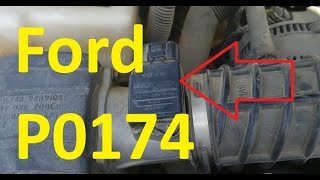
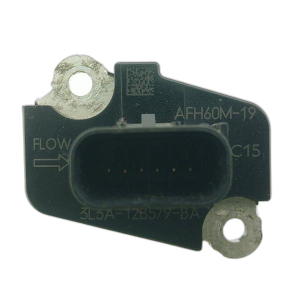
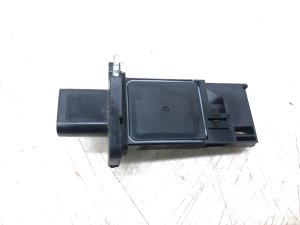
Est. part cost: $10-$30 - Dirty Mass Air Flow (MAF) Sensor 🟡 Medium Probability → Shop Fuel Injection Air Flow Meter Oil vapors from the crankcase ventilation system or fine dust that gets past the air filter can coat the sensor's delicate wire, causing it to under-report the amount of air entering the engine. The PCM then injects too little fuel, creating a lean condition across both banks (P0171 and P0174).
How to confirm: Remove the sensor from the intake tube and inspect the sensing wire. If it appears dirty, clean it ONLY with dedicated MAF sensor cleaner spray. Never touch the wire. A good diagnostic step is to unplug the MAF sensor; if the engine runs better on its default tables, the MAF is likely faulty or dirty.
Typical fix: Clean the MAF sensor. If cleaning doesn't resolve the issue, the sensor may need to be replaced.
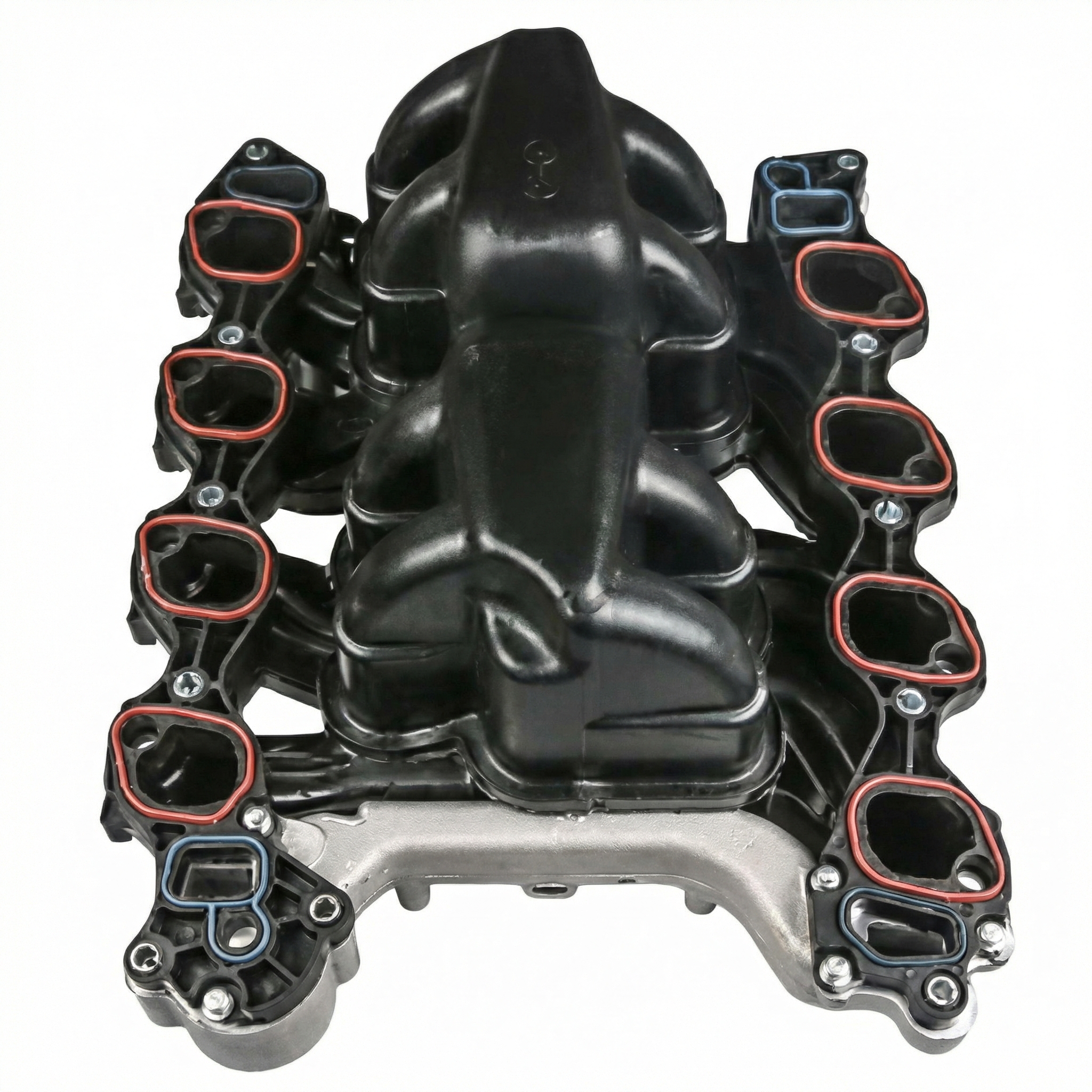
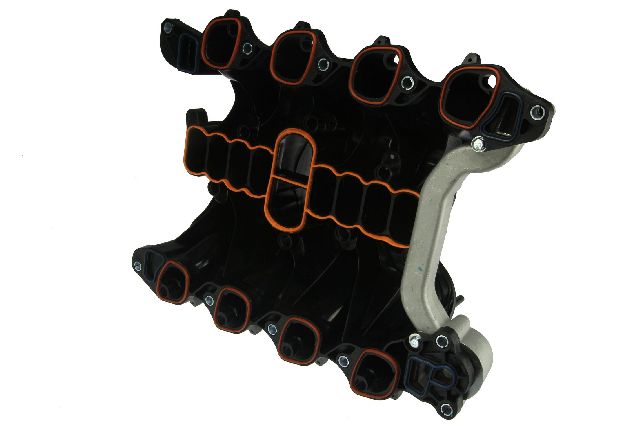
Est. part cost: $10-$15 for cleaner, $60-$150 for a new sensor - Leaking Intake Manifold Gaskets 🟡 Medium Probability → Shop Engine Intake Manifold The intake manifold gaskets can fail with age, allowing unmetered air to be drawn directly into the intake ports. This is more common on higher-mileage trucks. On some models, the plastic intake manifold itself can crack, especially around the coolant crossover, causing both a vacuum leak and a coolant leak.
How to confirm: A smoke test is the most effective method. Alternatively, you can carefully spray a non-flammable liquid like brake cleaner or a small amount of starting fluid around the gasket mating surfaces with the engine idling. A change in engine RPM indicates a leak.
Typical fix: Replace the intake manifold gaskets. This is a more involved repair. If the manifold itself is cracked, it must be replaced.
Est. part cost: $40-$80 for a gasket set - Other Cracked Vacuum Hoses ⚪ Low Probability → Shop Vacuum Hose Similar to the PCV elbow, other rubber vacuum lines and connectors throughout the engine bay can become brittle and crack, especially those connected to the EGR system, brake booster, or fuel pressure regulator.
How to confirm: Visually inspect all vacuum lines for cracks or disconnections. A smoke test is the best way to find small or hidden leaks.
Typical fix: Replace the damaged section of hose or the specific connector.
Est. part cost: $5-$25
Rare But Worth Checking
- Weak Fuel Pump or Clogged Fuel Filter: → Shop Fuel Pump If fuel trims are high at idle and increase with RPM, it points to a fuel delivery problem rather than a vacuum leak. Check fuel pressure at the fuel rail to confirm. A clogged fuel filter is a common maintenance item that can cause this.
- Faulty DPFE Sensor: A failing Differential Pressure Feedback EGR (DPFE) sensor can sometimes cause lean codes, often accompanied by a P0401 code. The sensor's hoses can also rot and leak.
- Exhaust Leak Before O2 Sensor: → Shop Oxygen Sensor A crack in the driver's side exhaust manifold or a leak in the flange gasket can allow oxygen to be drawn into the exhaust stream, fooling the O2 sensor into reporting a lean condition. Even a loose O2 sensor can cause this.
Diagnosis Steps
- Check for other codes. If P0171 is also present, suspect a central issue like the MAF sensor or a major vacuum leak affecting both banks.
- Visually and physically inspect the PCV hose elbow at the back of the intake manifold. This is the most common failure point. Feel for cracks, holes, or a soft, collapsed texture.
- Inspect all other accessible vacuum lines for obvious cracks or disconnections, especially the lines going to the EGR valve and brake booster.
- If no obvious leaks are found, clean the Mass Air Flow (MAF) sensor using dedicated MAF sensor cleaner. After cleaning, disconnect the battery for 10 minutes to reset the PCM's fuel trims.
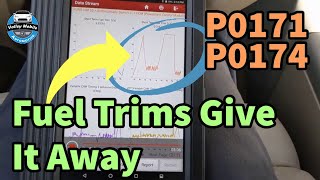
- With a scan tool, observe Long Term Fuel Trim (LTFT) values at idle. High positive numbers (e.g., +15% or higher) that decrease as RPMs increase to ~2500 RPM strongly suggest a vacuum leak. If the numbers stay high or get worse with RPM, suspect a fuel delivery or MAF issue.
- If a vacuum leak is suspected but not found, perform a smoke test. This involves feeding pressurized smoke into the intake system to definitively locate any hard-to-see vacuum leaks from gaskets, hoses, or the intake resonator.
- Check fuel pressure at the fuel rail using a fuel pressure gauge to rule out a weak fuel pump or clogged filter. Compare the reading to the manufacturer's specification.
- Check for exhaust leaks between the cylinder head and the upstream O2 sensor. A ticking noise when cold is a common symptom of a cracked exhaust manifold.
Parts You'll Likely Need
- PCV Valve Hose Elbow
(OEM #Ford F75Z-6C324-JA (Hose Assembly))— This is the most frequent cause of P0174 on this engine due to heat degradation causing it to crack and leak.
Trusted brands: Motorcraft, Dorman (Help! part #46022 or #46017, depending on year)
OEM price range: $25-$45
Aftermarket price range: $10-$25 - Mass Air Flow (MAF) Sensor Cleaner — Cleaning a dirty MAF sensor is a common, low-cost diagnostic and repair step before replacing the sensor itself.
Trusted brands: CRC, WD-40 Specialist
OEM price range: N/A
Aftermarket price range: $10-$15 - Intake Manifold Gasket Set
(OEM #Motorcraft MS-98004-1)— If a smoke test reveals a leak at the intake manifold, these gaskets must be replaced to seal the leak.
Trusted brands: Motorcraft, Fel-Pro
OEM price range: $60-$100
Aftermarket price range: $40-$80
Related Codes That Often Appear With This One
- P0171 — System Too Lean (Bank 1). When both P0171 and P0174 are present, it strongly points to a large vacuum leak (like the PCV elbow or intake gaskets) or a faulty MAF sensor affecting the entire engine.
- P0401 — EGR Flow Insufficient. This can be caused by the same cracked vacuum lines that cause lean codes, or a faulty DPFE sensor that can also contribute to lean conditions.
Technical Service Bulletins (TSBs) & Recalls
- TSB 03-16-1: Addresses lean codes P0171/P0174, pointing to potential causes like leaking intake manifold gaskets and recommending a PCM reflash in some cases (though this TSB was primarily for the 3.8L engine, the diagnostic principles are often cited by techs).
Platform-Specific Known Issues
- Some models are equipped with a 'heated' PCV valve that has coolant lines running to it. A leak in this assembly can cause both vacuum and coolant leaks.
- The large plastic air intake resonator, located between the air filter box and the throttle body, can develop cracks with age, causing a significant unmetered air leak.
- The grommet for the PCV valve itself can become hard and brittle, failing to seal properly and creating a vacuum leak at the valve cover.
Mechanic-Grade Diagnostic Values
- Mass Air Flow (MAF) Sensor Reading at Idle — expected: 4-7 g/s (grams per second). A common rule of thumb is that the g/s reading should roughly match the engine displacement in liters, so ~4.6 g/s is a good target.. Failure: A reading significantly lower than 4 g/s or higher than 7 g/s at a stable, warm idle suggests a faulty sensor or a large vacuum leak.
- Mass Air Flow (MAF) Sensor Voltage at Idle — expected: ~0.6 - 1.0V DC.. Failure: Voltage near zero, or significantly above 1.0V at idle. The voltage should increase smoothly and linearly with RPM, up to ~4.5V at wide-open throttle.
- Long Term Fuel Trim (LTFT) at Idle vs. 2500 RPM — expected: Ideally close to 0%. Under +10% is generally acceptable.. Failure: High positive fuel trims (e.g., +15% to +25%) at idle that decrease significantly when RPMs are held at 2500 strongly indicates a vacuum leak. If trims remain high or increase with RPM, it points towards a fuel delivery issue or a skewed MAF sensor.
- Fuel Pressure (Key On, Engine Off) — expected: 35-45 PSI.. Failure: Pressure below 35 PSI indicates a potential weak fuel pump, clogged fuel filter, or faulty fuel pressure regulator.
Scan Tool Commands That Help
- Ford IDS / FORScan / various scan tools: Clear KAM (Keep Alive Memory) — After replacing a component like a MAF sensor or fixing a vacuum leak, clearing the KAM forces the PCM to erase all learned fuel trim adjustments and start fresh. This is more thorough than just clearing codes and is critical for an accurate re-learn.
- Ford IDS / FORScan / various scan tools: Idle Relearn Procedure — After clearing the KAM or disconnecting the battery, the engine may idle erratically. A specific relearn procedure (idling for a set time with and without A/C on, then in gear) is required to teach the PCM the correct idle strategy.
Wiring & Ground Locations
- G101 — On the right side (passenger side) fender apron, near the battery.. This is a primary power ground for the engine control system. Corrosion or a loose connection here can cause erratic behavior and incorrect readings from multiple sensors, including the MAF and O2 sensors, leading to false lean codes.
- G104 — On the left side (driver's side) fender apron, near the hood hinge.. This is a critical case ground for the PCM. A poor connection can lead to unpredictable electrical issues and incorrect sensor reference voltages, potentially causing lean codes.
- MAF Sensor Connector — On the MAF sensor, located in the air intake tube between the air filter box and the throttle body.. The connector pins provide power, ground, and signal return for the MAF. Verifying 12V power (Red wire on some models) and good ground (Black/White wire on some models) is a key diagnostic step before condemning the sensor.
Real Owner Repair Stories
- Ford F150 Forum (2005 F-150 4.6L with 175,000 miles) — P0307 (Cylinder 7 misfire) and P0174 (Bank 2 lean). Engine lurching/hesitating at idle and under acceleration.
❌ Tried (didn't work) Replaced COP and spark plug on cylinder 7, Verified spark with a spark tester, Verified injector signal with a NOID light
✅ What actually fixed it The user swapped the fuel injector from cylinder 6 to cylinder 7. During the swap, they noticed the O-ring on the original #6 injector was cut. After replacing the O-rings and re-seating the injectors properly, the issue was resolved, indicating the lean code was caused by a vacuum leak through a bad fuel injector O-ring on Bank 2. - Reddit r/MechanicAdvice (2003 F-150 4.6L) — P0171 and P0174. Extremely rough idle, barely accelerates, high RPMs to shift, smells rich.
❌ Tried (didn't work) Replaced Air Filter, Replaced MAF Sensor, Replaced Fuel Filter, Replaced all plugs, COPs, and injectors, Replaced both upstream O2 sensors, Cleaned EGR valve and replaced gasket, Cleaned throttle body and replaced gasket, Replaced intake manifold gasket, Checked all vacuum lines, Replaced DPFE Sensor, Replaced IAT Sensor
✅ What actually fixed it The user updated that the driver's side catalytic converter was glowing red after idling, and new codes (P0136, P1131, P1151) appeared after the lean codes cleared. This strongly indicates the ultimate root cause was a severely clogged catalytic converter on Bank 2, which can create backpressure and sensor reading issues that manifest as lean codes initially.
"I Checked Everything" — The Actual Cause
- An internal diaphragm leak in the brake booster can cause a significant vacuum leak that triggers P0171/P0174. This type of leak will not be found with a smoke test because the smoke cannot enter the sealed booster canister. A diagnostic test is to disconnect the vacuum hose from the booster and securely plug it. If the fuel trims return to normal, the brake booster is faulty and needs replacement.
When the Usual Fixes Don't Work
- While the PCV elbow is the most common cause, it is not the only one. In a documented case on a 2005 F-150, a user replaced the spark plug and COP for a P0307/P0174 combination with no success. The final fix was found to be a cut fuel injector O-ring, which was allowing unmetered air directly into the intake port for that cylinder, causing both the misfire and the bank-specific lean code. This highlights the need to consider all potential sources of unmetered air, not just the most common ones.
OEM Part Supersession History
Ford F75Z-6C324-FA→Ford F75Z-6C324-JA— Part revision for the PCV hose assembly.
Heads up: The parts are generally interchangeable, but the newer JA revision is the correct service part.
Model Year Variations Within This Range
- 1999-2001: Early PI (Performance Improved) intake manifolds on these engines used a plastic coolant crossover that was prone to cracking, causing coolant leaks. This was revised in later models to a cast aluminum crossover. When replacing a cracked manifold, it is critical to use the updated design.
- 1997-2004: The 4.6L V8 was produced in two main plants, Windsor and Romeo. There are minor differences, but for the purpose of P0174, the vacuum system, PCV layout, and intake manifold design are functionally identical and prone to the same failures.
Diagnostic Flowchart
Other Known Issues on This Vehicle
Issues unrelated to this code that are worth knowing about as an owner of this generation:
- Spark Plug Ejection ('Blowout') 🔴 High — Common on 2-valve engines (1997-2003) which had fewer threads in the aluminum cylinder heads. Can occur at any mileage, often after a spark plug change if not torqued correctly.
- Cracked Plastic Intake Manifold 🔴 High → Shop Engine Intake Manifold — Very common on 1996-2001 models with the all-composite manifold, which would crack at the front coolant crossover. Ford settled a class-action lawsuit over this issue. Later models with an aluminum crossover are less prone but can still leak at the gaskets. (Ref: Class-action lawsuit settlement covered 1996-2002 models.)
- Timing Chain Guide/Tensioner Failure 🟠 Medium — The plastic timing chain guides and tensioners can wear out or break, typically after 100,000-150,000 miles, causing a rattling noise on startup and potential timing issues.
- Body and Frame Rust 🟠 Medium — Common in the 'Salt Belt'. Critical areas to inspect are the rocker panels, cab corners, bed supports, and the frame itself, especially around the leaf spring hangers.
- Cracked Exhaust Manifolds 🟡 Low → Shop Exhaust Manifold — The original cast iron manifolds can develop hairline cracks with age and heat cycles, causing an exhaust leak tick, especially when cold.
Used vs. New Parts: Buying Guide for This Vehicle
When a used part is the smart pick: For this repair, obtaining a used OEM intake manifold from a junkyard can be a smart choice, especially if the original has cracked. An OEM Ford manifold often has better flow characteristics than some aftermarket replacements. Other simple mechanical parts like vacuum line brackets or connectors are also good candidates for used parts.
Donor-vehicle mileage cap: roughly under 120000 miles for the part to have meaningful remaining life.
What to inspect on the donor part:
- For an intake manifold, inspect the plastic for any hairline cracks, especially around the thermostat housing and coolant crossover.
- Ensure all threaded inserts for bolts are present and not stripped.
- Check that the gasket surfaces are clean and not warped or heavily pitted.
- Avoid parts from vehicles that show signs of severe overheating or engine fire.
OEM-only on this vehicle (don't cheap out):
- Mass Air Flow (MAF) Sensor: Many forum users and mechanics report that aftermarket MAF sensors for this platform can be poorly calibrated, leading to persistent performance issues or other codes. Sticking with a Motorcraft OEM sensor is highly recommended.
Aftermarket brands forum-validated for this vehicle:
- Fel-Pro: Widely trusted for intake manifold gaskets (P/N MS921213 or similar).
- Motorcraft: The OEM choice for all parts, especially electronic sensors and the PCV hose assembly.
- Dorman: Offers a replacement intake manifold (P/N 615-278) that is readily available, though some dyno tests on Mustang platforms show it may result in a slight horsepower loss compared to the OEM Ford design due to smaller runners.
Brands owners have reported issues with on this vehicle:
- Unbranded/No-Name eBay Parts: Particularly for the intake manifold and MAF sensor. A cheap eBay intake manifold failed on one owner after just a few years. Generic electronic sensors are a frequent source of unresolved issues.
Real Owner Stories
Aggregated from forums and TSBs cited above. Mileages and costs reflect what owners reported in those sources.
1999 Ford F-150 5.4L
Symptoms: Freeze frame data showed lean conditions; owner considered changing the fuel filter first.
What fixed it: The PCV elbow behind the throttle body was identified as the most likely culprit.
Source hint: f150forum.com - Thread 'The Dreadful P0171 & P0174 Error Code'
2004 Ford F-150 5.4L 3v
Symptoms: Battled P0171 and P0174 codes for two years.
What fixed it: Replacing the PCV assembly and cleaning the MAF sensor.
Source hint: f150online.com - Thread 'PCV Elbow - 2004 5.4L 3v'
Ford F-150 (Year Unspecified)
Symptoms: Code P0174 returned even after replacing the PCV elbow.
What fixed it: Found another cracked vacuum hose coming off the same PCV line 'tri-y' fitting.
Source hint: ford-trucks.com - Thread 'Code P0174 system too lean bank 2...'
Ford F-150 (Year Unspecified)
Symptoms: P0171 and P0174 codes present.
What fixed it: Replaced the PCV tube and grommet.
Cost: $48.39-$48.39
Source hint: f150forum.com - Thread 'P0171 P0174 help please'
Related OBD-II Codes
Frequently Asked Questions
Does TSB 03-16-1 apply to my 1997-2004 Ford F-150 4.6L?
I hear a hissing sound behind my throttle body; what is the most likely part I need?
Can I clean the MAF sensor on my F-150 myself to fix P0174?
How much should I expect to pay for a replacement PCV tube and grommet?
Why does my F-150 stall at stops and hesitate when I accelerate?
Is there a specific test to confirm if my intake manifold gaskets are leaking?
Helpful Videos
Used OEM Parts in Stock
New Aftermarket Parts Available


The information in this article is provided for general reference and educational purposes only. Vehicle specifications, procedures, and part compatibility can vary by production date, trim level, and region. Always consult your vehicle's factory service manual and verify part numbers before purchasing or performing repairs. Safety-critical components such as airbags, seat belts, and braking systems should be installed by a qualified professional.
- Ford F-150:
- 🧭 Diagnostic Flowchart
- 🎬 Helpful Videos
- 🛍️ Shop This Part
- What's Unique About the 1997-2004 Ford F-150
- Symptoms You May Notice
- Most Likely Causes
- Rare But Worth Checking
- Diagnosis Steps
- Parts You'll Likely Need
- Related Codes That Often Appear With This One
- Technical Service Bulletins (TSBs) & Recalls
- Platform-Specific Known Issues
- Mechanic-Grade Diagnostic Values
- Scan Tool Commands That Help
- Wiring & Ground Locations
- Real Owner Repair Stories
- "I Checked Everything" — The Actual Cause
- When the Usual Fixes Don't Work
- OEM Part Supersession History
- Model Year Variations Within This Range
- Other Known Issues on This Vehicle
- Used vs. New Parts: Buying Guide for This Vehicle
- Real Owner Stories
- 1999 Ford F-150 5.4L
- 2004 Ford F-150 5.4L 3v
- Ford F-150 (Year Unspecified)
- Ford F-150 (Year Unspecified)
- Related OBD-II Codes
- Frequently Asked Questions
- 🎟️ Get 5% Off