

P0175 on 2015-2017 Ford Mustang GT 5.0L: Causes and Fixes for System Too Rich Bank 2
P0175 on a 2015-2017 Mustang GT means the driver's side of the engine (Bank 2) is running too rich. The most common causes are a dirty Mass Airflow (MAF) sensor, a faulty upstream O2 sensor on Bank 2, or a leaking fuel injector. Cleaning the MAF sensor is a good first step, followed by inspecting the Bank 2 O2 sensor.
- P0175 means the driver's side of your 5.0L V8 is getting too much fuel.
- Start your diagnosis by cleaning the Mass Airflow (MAF) sensor, as it's a common, low-cost first step.
- If cleaning the MAF doesn't work, the next most likely causes are a bad upstream O2 sensor on the driver's side or a leaking fuel injector.
- Driving with this code for a long time can cause expensive damage to your catalytic converter, so it's best to address it promptly.
What's Unique About the 2015-2017 Ford Mustang GT
The 5.0L Coyote engine is sensitive to airflow and fuel system changes. While the causes for P0175 are common across many V8s, owners of these Mustangs often find the issue stems from a contaminated MAF sensor, sometimes due to an over-oiled aftermarket air filter. Leaking fuel injectors are also a notable, though more serious, possibility on this platform. Unlike some later model F-150s with the same engine, the 2015-2017 Mustang is less prone to flex-fuel software glitches causing rich codes, making mechanical or sensor faults more likely culprits.
Symptoms You May Notice
- Check Engine Light is on
- Reduced fuel economy
- Rough or unstable idle
- Hesitation or stumbling during acceleration
- Strong smell of gasoline from the exhaust
- Black smoke from the exhaust, especially at idle
- Engine misfires, potentially with corresponding codes (P0305, P0306, P0307, P0308)
- Replacing the catalytic converter. A rich condition can damage a catalytic converter over time, but the converter itself is not the cause of the P0175 code.
- Immediately replacing the O2 sensor. The O2 sensor is often just doing its job by correctly reporting a rich condition caused by another component like a dirty MAF sensor or a leaking injector. Diagnosis is key.
Most Likely Causes
- Dirty or Faulty Mass Airflow (MAF) Sensor 🔴 High Probability → Shop Fuel Injection Air Flow Meter The MAF sensor can become contaminated, especially if an aftermarket oiled air filter is used and over-oiled. This causes the sensor to send incorrect, lower-than-actual airflow readings to the PCM, which then injects too much fuel for the real amount of air entering the engine.
How to confirm: Inspect the MAF sensor wires for dirt, oil, or debris. You can also monitor MAF readings with a scan tool; at a normal warm idle, a 5.0L Coyote should read around 4-6 g/s. A faulty sensor may provide erratic or out-of-spec readings. Cleaning is a simple first step.
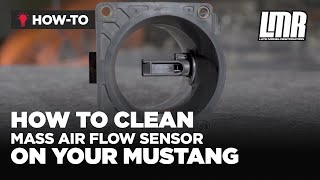
Typical fix: Clean the sensor with a dedicated MAF sensor cleaner spray. 🎬 Watch this quick guide on cleaning your Mustang's MAF sensor. Do not touch the sensor wires. If cleaning doesn't resolve the issue, the sensor must be replaced. The Motorcraft part is AFLS-195 (Ford P/N 8V2Z-12B579-A).
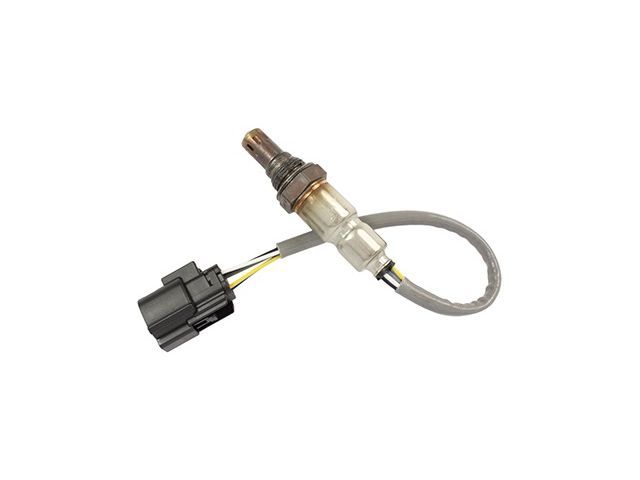
Est. part cost: $10-$20 for cleaner, $110-$180 for a new Motorcraft sensor. - Faulty Bank 2, Sensor 1 Oxygen (O2) Sensor 🟡 Medium Probability → Shop Oxygen Sensor The upstream O2 sensor measures oxygen in the exhaust. If it fails or becomes contaminated, it can get 'stuck' reading high voltage, sending a false 'rich' signal to the PCM. The PCM then incorrectly reduces fuel, but if the sensor is the root cause, the code will persist.
How to confirm: Use a scan tool to graph the voltage of the Bank 2 Sensor 1 O2 sensor. A healthy sensor will switch rapidly between approximately 0.1V and 0.9V. A sensor that is lazy, stuck high (e.g., >0.8V), or not responding needs replacement. A good diagnostic step is to swap the upstream O2 sensors between Bank 1 and Bank 2. If the code changes to P0172 (Rich Bank 1), the sensor is confirmed to be faulty.
Typical fix: Replace the Bank 2 (driver's side) upstream O2 sensor. The Motorcraft part number is DY-1346. 🎬 See how to replace the upstream O2 sensor on this platform.
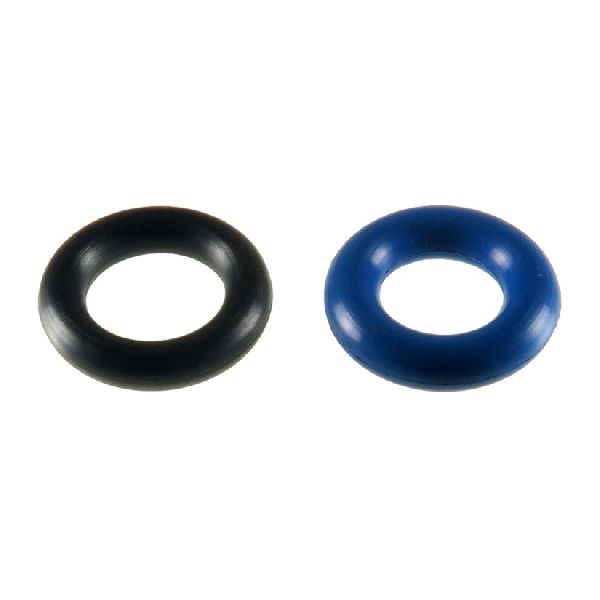
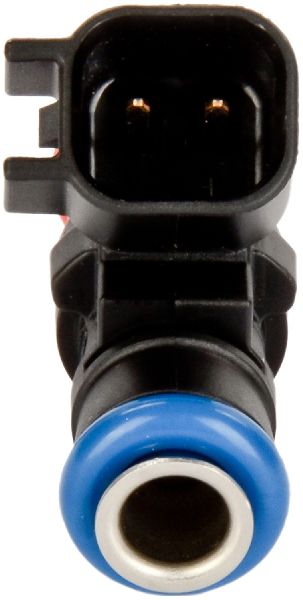
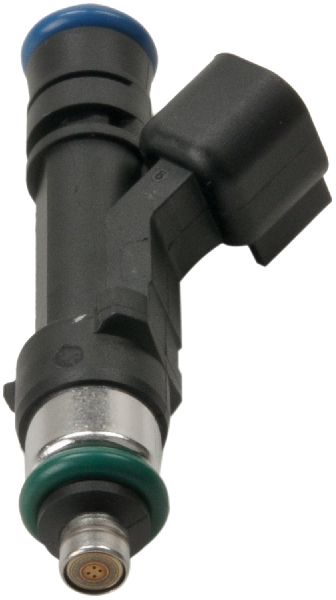
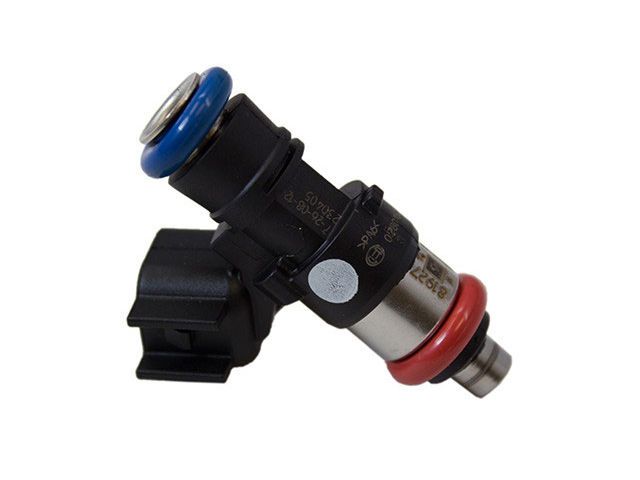
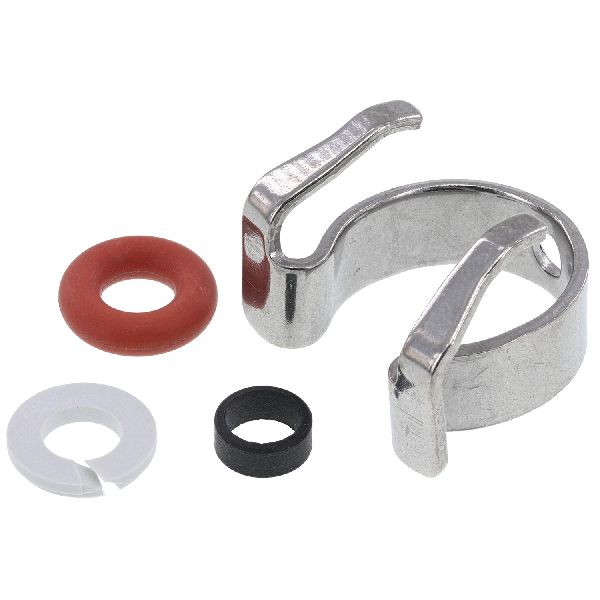
Est. part cost: $50-$100 - Leaking Fuel Injector(s) on Bank 2 🟡 Medium Probability → Shop Fuel Injector A fuel injector can get stuck partially open due to mechanical failure or debris, continuously leaking fuel into a cylinder on Bank 2. This directly causes a rich condition on that side of the engine.
How to confirm: This is more difficult to diagnose. A professional may perform a fuel pressure leak-down test or an injector balance test. A DIY method is to pull the spark plugs on Bank 2 (cylinders 5, 6, 7, 8) and look for one that is black, sooty, and smells of raw fuel, which indicates the leaking injector's cylinder.
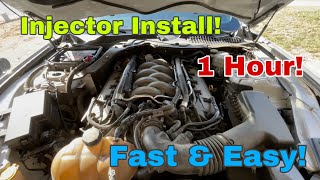
Typical fix: Replace the faulty fuel injector(s). It is often recommended to replace all injectors on that bank 🎬 Follow this walkthrough to install new fuel injectors properly. at the same time. The OEM Motorcraft part number is CM-5187 (Ford P/N BR3Z-9F593-A).
Est. part cost: $70-$150 per injector. - High Fuel Pressure ⚪ Low Probability
How to confirm: Connect a fuel pressure gauge to the fuel rail and check the pressure at idle. Compare the reading to the manufacturer's specification (typically 55-65 PSI for this model). High pressure could indicate a faulty fuel pressure regulator, which is part of the in-tank fuel pump assembly on this vehicle, or a restriction in the fuel system.
Typical fix: If pressure is high, the issue is likely with the fuel pump assembly, which contains the integrated regulator. This requires replacing the entire fuel pump module.
Est. part cost: $300-$500 for a fuel pump assembly
Rare But Worth Checking
- Leaking EVAP Purge Valve: → Shop Vapor Canister The evaporative emissions (EVAP) purge valve (or canister purge valve) can get stuck open, allowing unmetered fuel vapors from the charcoal canister to enter the intake manifold. This introduces extra fuel that the PCM doesn't account for, which can cause a rich condition, often affecting both banks (P0172 & P0175).
- Faulty Manifold Absolute Pressure (MAP) Sensor: A MAP sensor that is reading incorrectly (reporting higher pressure/load than actual) can cause the PCM to command more fuel, leading to a rich condition. On the F-150 with the 5.0L, this is a more commonly cited cause when both banks are rich.
Diagnosis Steps
- Use an OBD-II scanner to confirm the P0175 code and check for any other related codes, especially P0172 or misfire codes.
- View live data on the scanner. Check long-term fuel trims (LTFT) for Bank 2. A significant negative number (e.g., -15% or more) confirms the PCM is subtracting fuel to correct a rich condition.
- Inspect the air intake system from the filter to the throttle body for any blockages and ensure the air filter is clean.
- Carefully remove and inspect the Mass Airflow (MAF) sensor. Clean it with dedicated MAF cleaner spray and let it dry completely before reinstalling. Reset the PCM by disconnecting the battery for 15 minutes.
- Reset the codes and drive the vehicle to see if the code returns. If it does, proceed to the next steps.
- Use the scanner to graph the live voltage data from the Bank 2, Sensor 1 (upstream) O2 sensor. It should fluctuate rapidly between ~0.1V and ~0.9V. If it's stuck high or slow to respond, it's likely faulty. Consider swapping with the Bank 1 sensor to confirm.
- Test the fuel pressure using a mechanical gauge to ensure it is within the manufacturer's specification (typically 55-65 PSI).
- If other causes are ruled out, suspect a leaking fuel injector on Bank 2. Inspect the spark plugs on that bank for signs of one being excessively black and sooty compared to the others. This may require professional diagnosis with an injector balance test.
Parts You'll Likely Need
- Mass Airflow (MAF) Sensor
(OEM #8V2Z-12B579-A (Motorcraft AFLS-195))— Often gets contaminated, leading to incorrect air readings, which is a primary cause for rich/lean codes.
Trusted brands: Motorcraft
OEM price range: $110-$180
Aftermarket price range: $70-$120 - Upstream Oxygen Sensor (Bank 2, Sensor 1)
(OEM #DY-1346)— This sensor directly measures the air-fuel ratio for Bank 2. A failure can cause the computer to make incorrect fuel adjustments.
Trusted brands: Motorcraft, Bosch, Denso, NTK
OEM price range: $70-$110
Aftermarket price range: $50-$90 - Fuel Injector
(OEM #BR3Z-9F593-A (Motorcraft CM-5187))— A mechanically stuck or leaking injector is a common cause of a rich condition isolated to a single bank.
Trusted brands: Motorcraft, Bosch
OEM price range: $90-$150
Aftermarket price range: $60-$100
Related Codes That Often Appear With This One
- P0172 — System Too Rich (Bank 1). If both P0172 and P0175 are present, it points to a problem affecting both engine banks, such as the MAF sensor, a fuel pressure issue, or a stuck-open EVAP purge valve.
- P0300, P0305, P0306, P0307, P0308 — Cylinder Misfire codes. A severe rich condition from a leaking injector can foul the spark plug in a specific cylinder and lead to misfires on the affected bank.
Platform-Specific Known Issues
- A recall (14S27 / NHTSA 14V706000) was issued for some early 2015 Mustangs for a fuel pressure sensor that may not have been seated properly, potentially causing a fuel leak. While not a direct cause of P0175, it highlights the sensitivity of the fuel system.
- Some owners on forums report that a failing Intake Manifold Runner Control (IMRC) actuator can cause various driveability issues and codes, though it's more commonly associated with misfires than a single-bank rich condition.
Mechanic-Grade Diagnostic Values
- Fuel Injector Coil Resistance — expected: 11.0 - 16.0 Ohms (High Impedance). Failure: A reading significantly outside this range, or an open circuit (infinite resistance).
- Long Term Fuel Trim (LTFT) Bank 2 — expected: -10% to +10%. Failure: A sustained negative value of -20% or more indicates the PCM is consistently removing fuel to compensate for a rich condition, which can trigger P0175.
- Fuel Pressure Leak-Down Test — expected: Fuel pressure should hold steady after turning the engine off.. Failure: A rapid drop in fuel pressure after the engine is off suggests a leak in the system, most likely a leaking fuel injector.
Scan Tool Commands That Help
- Ford IDS / FORScan: KAM (Keep Alive Memory) Reset — After replacing a component that affects air or fuel metering (like a MAF sensor or fuel injectors), a KAM reset should be performed. This clears the learned long-term fuel trim tables, forcing the PCM to create new ones based on data from the new parts. Failing to do this can cause the old, incorrect adjustments to persist.
- Ford IDS / High-End Scan Tool: Power Balance Test — To help isolate a leaking injector. This test deactivates one cylinder at a time and measures the RPM drop. If deactivating a cylinder on Bank 2 causes little to no change in RPM, it may indicate that cylinder was already running poorly due to being flooded with fuel from a leaking injector.
- Ford IDS / FORScan: Clear/Reset All Adaptations — This is a more comprehensive reset than just the KAM. It should be used after major repairs to ensure all learned values are returned to their baseline, followed by a comprehensive drive cycle to allow the system to relearn.
Wiring & Ground Locations
- Bank 2 O2 Sensor Harness — The Bank 2 (driver's side) upstream O2 sensor is located in the exhaust manifold before the catalytic converter. The harness runs up the back of the engine bay.. The wiring can be susceptible to heat damage from the exhaust manifold or chafing against other components, leading to short circuits or open circuits that can cause false rich signals from the O2 sensor.
- Main Engine Ground — A primary engine-to-chassis ground strap is typically located on the driver's side of the engine block, connecting to the frame rail.. A poor or corroded ground can cause electrical noise and incorrect readings from various sensors, including the O2 sensors and MAF sensor, potentially leading to incorrect fuel calculations and rich/lean codes.
Real Owner Repair Stories
- Mustang6G.com forum member (2017 Mustang GT) — Car throwing P0172 and P0175 (rich on both banks), erratic fuel trims.
❌ Tried (didn't work) Replacing spark plugs.
✅ What actually fixed it The user suspected a bad O2 sensor or a leaking injector. A forum member suggested that since both banks were affected, it was more likely a shared component. The final fix was not explicitly stated in the thread, but the diagnosis pointed away from single-bank issues towards a MAF or fuel pressure problem.
OEM Part Supersession History
N/A→8V2Z-12B579-A (Motorcraft AFLS-195)— This is the standard service part for the MAF sensor across many Ford models of this era.
Heads up: This part is widely used and generally compatible, but always verify fitment for the specific vehicle.N/A→BR3Z-9F593-A (Motorcraft CM-5187)— This is the standard service fuel injector for the 2011-2017 5.0L Coyote engine.
Heads up: This injector is NOT compatible with the 2018+ Gen 3 Coyote engine, which uses a dual-injection (port and direct) system with different injectors.
Model Year Variations Within This Range
- 2015-2017: The 2015-2017 Mustang GT uses the Gen 2 Coyote 5.0L engine. This engine features larger valves, stiffer valve springs, and revised intake/exhaust camshafts compared to the Gen 1 (2011-2014). It also introduced Charge Motion Control Valves (CMCV) in the intake manifold. These components are consistent across the 2015-2017 range. The major change came in 2018 with the Gen 3 Coyote, which introduced dual fuel injection and is not relevant to this code on this vehicle range.
Diagnostic Flowchart
Other Known Issues on This Vehicle
Issues unrelated to this code that are worth knowing about as an owner of this generation:
- A/C Evaporator Core Leak 🔴 High — Common on 2015-2017 models. Leads to poor A/C performance and loss of refrigerant. (Ref: TSB 18-2256 / 18-2166 indicates the evaporator can be replaced without replacing the entire climate control housing.)
- Engine "BBQ Tick" or "Typewriter Tick" 🟡 Low — A widely discussed intermittent ticking noise, present on Coyote engines since 2011. Often heard at idle when warm. Ford generally considers this a normal characteristic. (Ref: Ford has issued TSBs acknowledging the noise but stating no repairs should be attempted as it does not affect engine durability.)
- Aluminum Hood Corrosion/Paint Bubbling 🟠 Medium — Corrosion can form on the leading edge and seams of the aluminum hood, causing paint to bubble and peel. This has been an issue on many Ford aluminum panels. (Ref: TSB 19-2026 (superseding earlier versions) addresses the corrosion issue, recommending panel replacement. Warranty coverage varies by vehicle age and specific corrosion warranty terms.)
- Intake Manifold Runner Control (IMRC) Failure 🟠 Medium — The plastic actuator arms or shafts for the IMRC plates inside the intake manifold can break, causing rough running, loss of power, and misfire codes. More common on 2015-2017 models.
- Warped Valve Covers 🟡 Low — Some 5.0L engines may develop oil leaks from the valve cover gaskets due to the composite valve covers warping from heat. (Ref: TSB 19-2309 provides a procedure to add fasteners to the valve covers to correct the condition.)
Used vs. New Parts: Buying Guide for This Vehicle
When a used part is the smart pick: Used parts are generally not recommended for critical fuel and sensor components for this repair. The cost savings are minimal compared to the risk of receiving a part that is already worn or faulty. Structural components like an intake manifold or fuel rail could be sourced used, but the electronic sensors and mechanical injectors themselves should be purchased new.
Donor-vehicle mileage cap: roughly under 50000 miles for the part to have meaningful remaining life.
What to inspect on the donor part:
- For sensors, check for physical damage, corrosion on pins, or cut wires.
- For injectors, look for cracks in the plastic body or heavy corrosion on the metal tip.
- Always try to source from a reputable seller who provides the VIN and mileage of the donor vehicle.
OEM-only on this vehicle (don't cheap out):
- Mass Airflow (MAF) Sensor: Aftermarket MAF sensors are notoriously unreliable and can cause persistent fuel trim issues. Stick with a genuine Motorcraft part.
- Fuel Injectors: Cheap aftermarket injectors often have inconsistent flow rates and poor spray patterns, leading to performance problems and new trouble codes. Use OEM Motorcraft or reputable remanufactured OEM injectors from a specialist.
Aftermarket brands forum-validated for this vehicle:
- O2 Sensors: Denso, Bosch, and NTK are the original equipment manufacturers for many automakers, including Ford. These brands are widely considered reliable replacements.
Brands owners have reported issues with on this vehicle:
- Unbranded or 'no-name' electronic sensors (MAF, O2) and fuel injectors from online marketplaces. These parts often fail to meet OEM specifications and can cause more problems than they solve.
Real Owner Stories
Aggregated from forums and TSBs cited above. Mileages and costs reflect what owners reported in those sources.
2016 Ford F-150 5.0L V8
Symptoms: Rich on both banks (P0172 and P0175) with symptoms including a no-start condition when the engine was cold.
What fixed it: The diagnostic process involved checking for a skewed ethanol percentage reading in the PCM, a known issue for the Coyote engine family.
Source hint: Ford-Trucks.com thread titled '2016 5.0 P0172 and P0175 Rich On Both Banks'
2018 Ford F-150 5.0L V8
Symptoms: Rich codes and engine misfires specifically on Bank 2.
What fixed it: A complex diagnostic and repair process that included replacing coils, spark plugs, fuel injectors, and sensors.
Source hint: FordF150Forum.com user documentation of Bank 2 misfires and rich codes
2015 Ford Mustang GT 5.0L V8
Symptoms: P0172/P0175 codes appearing after installing aftermarket performance parts.
What fixed it: Cleaning MAF sensor contamination caused by oiled filters or adjusting aftermarket tunes.
Source hint: Mustang6G.com forum threads regarding P0172/P0175 and aftermarket tunes
Related OBD-II Codes
Frequently Asked Questions
Could the fuel pressure sensor recall on my early 2015 Mustang GT be causing the P0175 code?
What is the correct Motorcraft replacement part for the MAF sensor on my 5.0L Coyote?
I have a P0175 on Bank 2; which O2 sensor should I replace and what is the part number?
My Mustang has a 'typewriter tick' at idle along with the P0175 code. Are they related?
Can I clean the MAF sensor myself to fix the P0175 code?
How can I tell if a leaking fuel injector is causing the P0175 on my 5.0L?
Helpful Videos


Used OEM Parts in Stock
New Aftermarket Parts Available

The information in this article is provided for general reference and educational purposes only. Vehicle specifications, procedures, and part compatibility can vary by production date, trim level, and region. Always consult your vehicle's factory service manual and verify part numbers before purchasing or performing repairs. Safety-critical components such as airbags, seat belts, and braking systems should be installed by a qualified professional.
- Ford Mustang GT:
- 🧭 Diagnostic Flowchart
- 🎬 Helpful Videos
- 🛍️ Shop This Part
- What's Unique About the 2015-2017 Ford Mustang GT
- Symptoms You May Notice
- Most Likely Causes
- Rare But Worth Checking
- Diagnosis Steps
- Parts You'll Likely Need
- Related Codes That Often Appear With This One
- Platform-Specific Known Issues
- Mechanic-Grade Diagnostic Values
- Scan Tool Commands That Help
- Wiring & Ground Locations
- Real Owner Repair Stories
- OEM Part Supersession History
- Model Year Variations Within This Range
- Other Known Issues on This Vehicle
- Used vs. New Parts: Buying Guide for This Vehicle
- Real Owner Stories
- 2016 Ford F-150 5.0L V8
- 2018 Ford F-150 5.0L V8
- 2015 Ford Mustang GT 5.0L V8
- Related OBD-II Codes
- Frequently Asked Questions
- 🎟️ Get 5% Off