

P0191 on 2006-2013 Audi A3 2.0L FSI: Fuel Pressure Causes and Fixes
On the 2.0L FSI (EA113) engine, P0191 is almost always caused by a worn-out high-pressure fuel pump (HPFP) cam follower. This inexpensive part ($25-$50) is a known failure point and should be inspected and likely replaced before suspecting the more expensive G247 sensor or the HPFP itself. Neglecting the follower can lead to catastrophic damage to the pump and intake camshaft.
- For a P0191 code on a 2.0L FSI Audi A3, inspect the HPFP cam follower before buying any parts.
- A worn cam follower is the most likely cause; it's an inexpensive part that can prevent thousands in repairs.
- Symptoms typically include severe power loss, stalling, and a check engine light.
- Do not immediately replace the fuel pressure sensor; it is usually just reporting the mechanical fault accurately.
- This repair can be done DIY if you are mechanically experienced, but it involves opening the high-pressure fuel system which requires care.
What's Unique About the 2006-2013 Audi A3
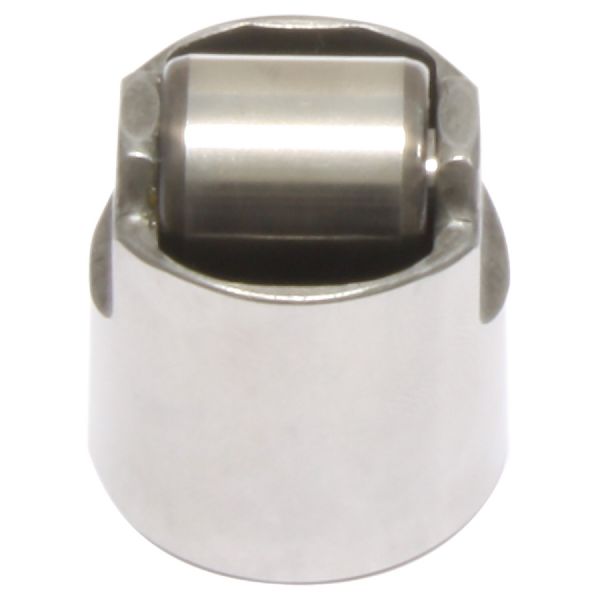
The 2.0L FSI engine (also known by its engine code EA113) is infamous for a specific, high-failure-rate component that directly causes this code: the cam follower. This small, thimble-shaped metal part acts as a sacrificial buffer between the intake camshaft's dedicated fuel pump lobe and the High-Pressure Fuel Pump (HPFP) piston. It is a wear item that frequently fails; the protective coating wears off, leading to rapid deterioration. A worn or perforated follower can cause damage to the HPFP's piston and the camshaft lobe, leading to the fuel pressure deviations that trigger P0191. Enthusiast communities and expert technicians strongly recommend checking the cam follower every 10,000-15,000 miles on tuned vehicles or 30,000-50,000 miles on stock vehicles, as it's the most probable and cheapest initial fix.
Symptoms You May Notice
- Check Engine Light is on
- Significant loss of power and hesitation, especially during acceleration or high RPMs.
- Engine may not rev past 3000-4000 RPM (limp mode).
- Rough idle or stalling, especially when warm or at a stop.
- Hard starting or extended cranking before the engine turns over.
- Decreased fuel economy.
- Audible 'screeching' or unusual noises from the engine bay if pressure is excessively high.
- Replacing the fuel rail pressure sensor (G247) without first inspecting the HPFP cam follower. The sensor is often correctly reporting a mechanical failure, and replacing it will not fix the underlying issue. This is the most common mistake made when diagnosing this code.
Most Likely Causes
- Worn High-Pressure Fuel Pump (HPFP) Cam Follower 🔴 High Probability → Shop Engine Valve Tappet The cam follower on the 2.0L FSI engine is a well-documented weak point and is considered a routine maintenance item by enthusiasts. Its surface coating wears down over time, and failure is a matter of 'when,' not 'if.'
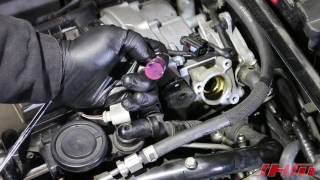
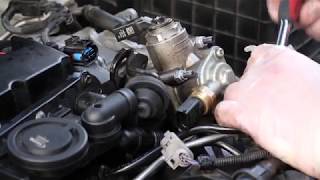
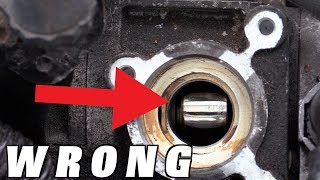
How to confirm: Remove the High-Pressure Fuel Pump (HPFP) from the cylinder head. The bucket-style cam follower can then be removed with a finger or magnet. Inspect the contact surface for wear. Any breach of the black coating, deep scoring, or a visible hole means it has failed and must be replaced. Also, inspect the camshaft lobe for scoring and the HPFP piston for wear or damage.
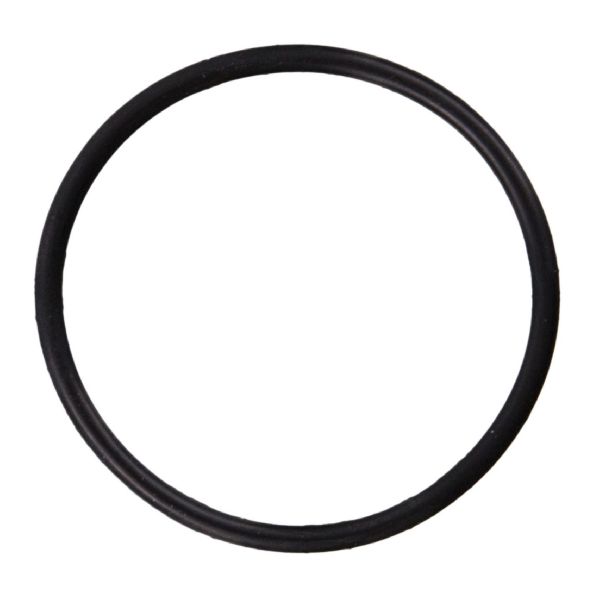
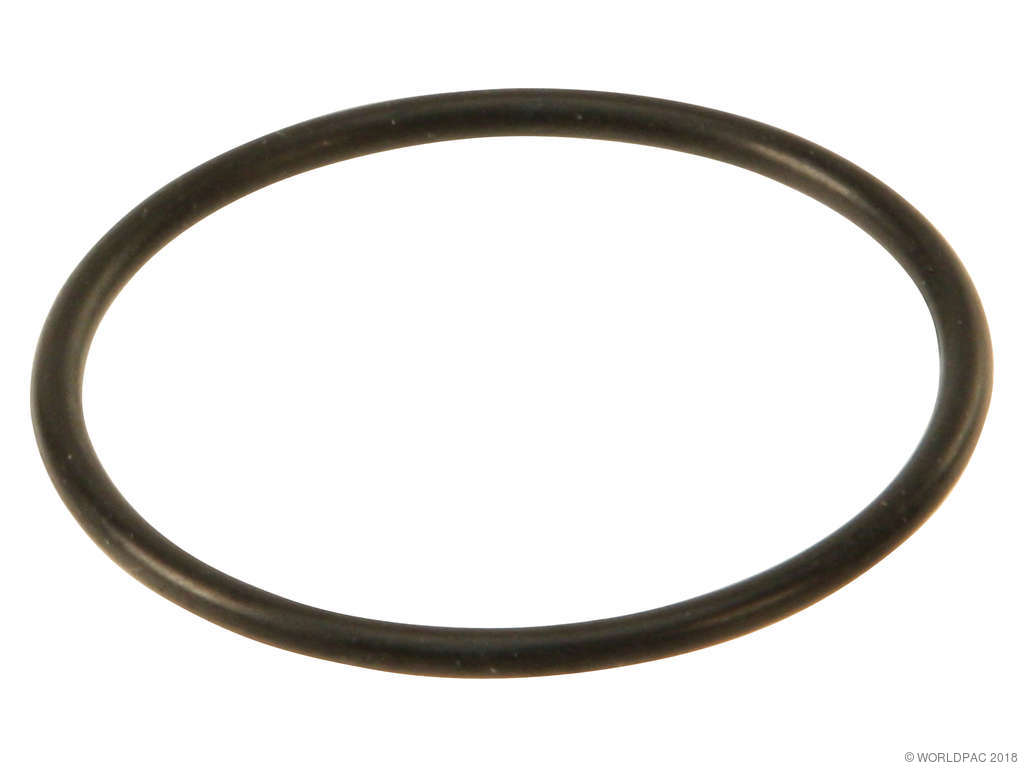
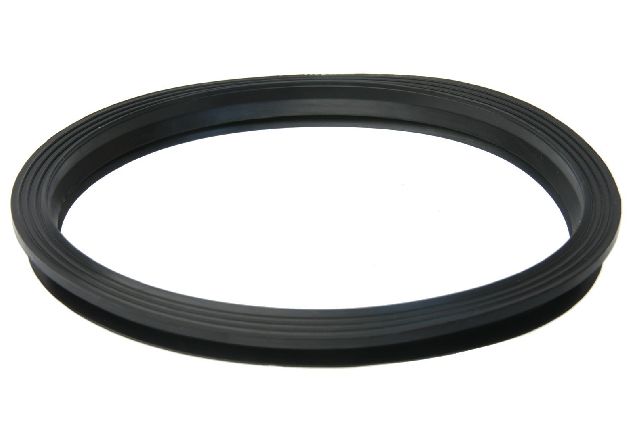
Typical fix: Replace the cam follower (Part No. 06D109309C). It is 🎬 Watch: This step-by-step tutorial shows you how to replace the follower. highly recommended to replace the HPFP seal (O-ring) at the same time. If the follower has failed completely, the HPFP and potentially the intake camshaft will also need to be replaced due to collateral damage.
Est. part cost: $25-$50 - Failing High-Pressure Fuel Pump (HPFP) 🟡 Medium Probability → Shop Fuel Pump HPFP failure is often a direct consequence of a neglected, worn-out cam follower which damages the pump's piston. The pump itself can also fail internally over time, leading to an inability to generate the required pressure.
How to confirm: After confirming the cam follower and camshaft lobe are in good condition, use a diagnostic tool like VCDS to monitor fuel rail pressure in Measuring Value Blocks (MVB). Compare 'specified' vs. 'actual' pressure under load (e.g., during a wide-open throttle pull in 3rd gear). If actual pressure consistently lags behind specified pressure and the low-pressure system is healthy, the HPFP is likely faulty.
Typical fix: Replace the High-Pressure Fuel Pump and the cam follower simultaneously. It is unwise to install a new pump with an old follower.
Est. part cost: $250-$500 - Faulty Fuel Rail Pressure Sensor (G247) ⚪ Low Probability → Shop Fuel Pressure Sensor While sensors can fail, on this engine it is far more likely that the sensor is correctly reporting a mechanical problem. It is a very common misdiagnosis. However, incorrect sensor readings can cause the ECM to command incorrect fuel pressure.
How to confirm: Check the sensor's wiring and connector for damage or corrosion. With a multimeter, verify the 5V reference voltage between terminals 1 and 3 of the connector with the ignition on. Check for continuity between the sensor connector and the ECM; resistance should be 1.5 ohms maximum. An oscilloscope is the best tool to check for an erratic signal, but this is less common than a mechanical fault.
Typical fix: Replace the fuel rail pressure sensor. The sensor is located on the end of the high-pressure fuel rail.
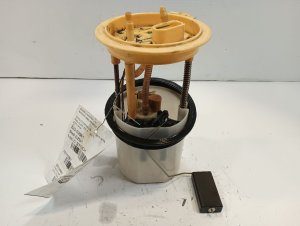
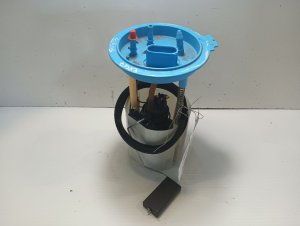
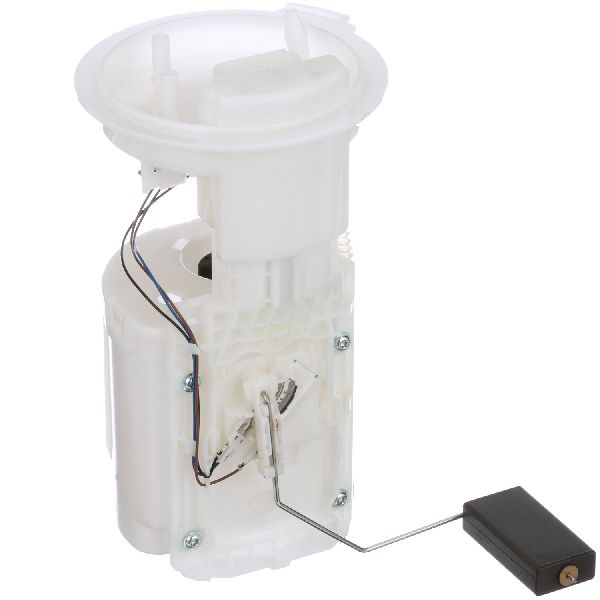
Est. part cost: $50-$150 - Weak In-Tank Low-Pressure Fuel Pump (LPFP) or Faulty Control Module ⚪ Low Probability → Shop Fuel Pump The LPFP supplies fuel from the tank to the HPFP. If its volume or pressure is insufficient (e.g., below 4 bar at idle), the HPFP will be starved and unable to meet the pressure demanded by the ECM, triggering a high-side code like P0191.
How to confirm: Use a diagnostic tool (like VCDS) to check the low-pressure fuel system's specified vs. actual pressure (Measuring Value Block 103). Also monitor the LPFP duty cycle (MVB 106.2); a value consistently above 70% suggests the pump is working too hard to maintain pressure. A mechanical gauge can also be used to verify pressure from the tank as a sanity check.
Typical fix: Replace the in-tank fuel pump or the fuel pump control module, which is often located under the rear seat.
Est. part cost: $150-$300
Rare But Worth Checking
- Wiring or Connector Issue: Damage to the wiring harness for the G247 sensor can cause an intermittent or constant fault. Inspect the harness for any signs of chafing, corrosion, or loose pins at the connector to the sensor and at the ECM. A short to ground in the G247 circuit can cause the ECU to read 0 bar, leading to a stall.
- Clogged Fuel Filter: → Shop Fuel Filter A severely clogged fuel filter can restrict flow to the HPFP, mimicking a failing LPFP. If the filter hasn't been changed per the maintenance schedule (typically every 40,000-60,000 miles), it's a worthwhile and inexpensive check.
- Damaged Intake Camshaft Lobe: If a worn cam follower is neglected, the HPFP piston will ride directly on the camshaft lobe, destroying it. This flattens the lobe, reducing the pump's stroke and its ability to generate pressure, causing a persistent P0191 or P0087. This requires camshaft replacement.
Diagnosis Steps
- Scan the ECM for all stored trouble codes. Note any other codes present, such as P0087, P2293, or P2177, as they provide critical context.
- Crucial First Step: Relieve fuel pressure. Remove the High-Pressure Fuel Pump (HPFP) to physically inspect the cam follower for wear or failure. This is the most likely cause. If it is worn, replace it (Part No. 06D109309C) and inspect the HPFP's piston and the camshaft lobe for any scoring or damage.
- If the cam follower and camshaft are in good condition, reinstall the HPFP with a new o-ring seal.
- Using a diagnostic tool (VCDS is preferred), log fuel pressure. In Measuring Blocks, compare 'specified' vs. 'actual' high fuel rail pressure (e.g., MVB 230) while idling and under a full-throttle acceleration run in a safe location. A significant deviation points to a mechanical pump issue.
- Check the low-pressure fuel system. Monitor its pressure using the scan tool (MVB 103) to ensure the HPFP is receiving adequate fuel supply (should be ~4-5 bar at idle). Check the LPFP duty cycle in MVB 106.2; a value consistently over 70% indicates a problem.
- Inspect the wiring and connector for the fuel rail pressure sensor (G247). Look for any visible damage, corrosion, or loose connections. Test for the 5V reference signal and ground at the connector.
- If all mechanical components (follower, cam lobe, LPFP) and wiring appear to be in good order, the HPFP itself is the next most likely cause. The G247 sensor is the least likely cause of the issue.
Parts You'll Likely Need
- HPFP Cam Follower
(OEM #06D109309C)— This is the most common failure point on the 2.0L FSI engine that leads to fuel pressure codes like P0191. It is a known wear item and should be inspected regularly.
Trusted brands: INA, VW/Audi Genuine
Related Codes That Often Appear With This One
- P0087 — P0087 means 'Fuel Rail/System Pressure - Too Low'. This code is a very common companion to P0191 as they both point to insufficient pressure in the high-pressure fuel system, typically caused by a worn cam follower or failing HPFP.
- P2293 — This code for 'Fuel Pressure Regulator 2 Performance' is also directly related to the HPFP and can be triggered by the same mechanical failures (cam follower, pump) that cause P0191.
- P2177 — This code means 'System Too Lean Off Idle'. A lack of fuel pressure will cause a lean running condition, which the oxygen sensors will detect and flag, especially under load.
- P310B — This code indicates 'Low Pressure Fuel regulation: Fuel Pressure Outside Specification' and points to an issue with the in-tank pump or its control module. It can appear if the low-pressure side is failing to supply the high-pressure side.
Technical Service Bulletins (TSBs) & Recalls
- TSB 24-08-58 (TPI 2017356/2): Addresses testing procedures for low fuel pressure codes like P0087 and P2293 on 2.0T FSI engines, often related to the same faults that cause P0191.
- TSB 2027417: While this TSB is for the low-pressure sensor (G410), it highlights the fuel system's sensitivity and known issues within the platform, recommending replacement with an updated part (06E 906 051 K) if low-pressure codes are present.
- General TSBs exist for diagnosing high-pressure fuel system codes, often advising technicians to inspect the cam follower and camshaft lobe as a primary step.
Platform-Specific Known Issues
- The 2.0L FSI (EA113) engine has a well-documented, widespread history of premature cam follower wear. Failure to inspect and replace this inexpensive part can lead to a very expensive repair involving the HPFP and the intake camshaft.
- Some early 2006 models had a camshaft with a less durable material for the fuel pump lobe, making them even more susceptible to damage from a worn follower. VW later revised the camshaft material.
Mechanic-Grade Diagnostic Values
- High-Pressure Fuel Rail (G247 Sensor) - Specified vs. Actual — expected: At idle, pressure should be 25.0 to 50.0 bar. Under load, it should rise with engine speed up to 110.0 bar. The deviation between specified and actual should be a maximum of 5.0 bar.. Failure: If 'actual' pressure consistently fails to meet 'specified' pressure, it indicates a mechanical issue (HPFP, follower, LPFP). If 'actual' is erratic or reads 0, it may be the sensor or wiring.
- Low-Pressure Fuel System (G410 Sensor) — expected: Pressure should be regulated between 4.0 and 6.5 bar.. Failure: Pressure consistently below 4.0 bar indicates a failing in-tank pump (LPFP), clogged filter, or faulty controller.
- Low-Pressure Fuel Pump (LPFP) Duty Cycle — expected: Using VCDS Measuring Block 106, field 2, the duty cycle should be below 70%.. Failure: A value consistently above 70% indicates the LPFP is working excessively hard to supply the HPFP, pointing to a restriction (filter) or a failing LPFP.
- G247 Sensor Connector Voltage — expected: With ignition on, engine off, and connector unplugged: Terminal 3 to Ground should be ~5V (reference voltage). Terminal 1 to Battery Positive should show battery voltage.. Failure: Absence of the 5V reference points to a wiring or ECM issue. Absence of voltage at terminal 1 points to a wiring issue.
- G247 Sensor Wiring Resistance — expected: With ignition off, check resistance between the G247 connector pins and the corresponding pins at the ECM's T60 connector (Pin 1 to T60/14, Pin 2 to T60/25, Pin 3 to T60/26). Resistance should be a maximum of 1.5 Ω.. Failure: Higher resistance indicates a break or corrosion in the wiring harness.
Scan Tool Commands That Help
- VCDS (VAG-COM): Measuring Value Blocks (MVB) 103, 106, 140, 230 — These blocks are essential for diagnosing P0191. MVB 103 shows low-pressure side performance. MVB 106 shows the low-pressure pump's duty cycle. MVB 140 and 230 are used to compare specified vs. actual high-pressure rail values, which is critical for differentiating a mechanical pump failure from a sensor error.
Wiring & Ground Locations
- 12 - Main Engine Ground — In the engine compartment on the left side, near the battery and under the plenum/scuttle cover.. This is a primary ground point for the engine management system. A poor connection here can cause a host of intermittent electrical issues, including erratic sensor readings for the G247.
- 607 - ECU Ground — In the left plenum chamber, near the Engine Control Module (ECM).. A direct ground for the ECM. Corrosion or a loose connection here can directly impact the ECM's ability to correctly interpret signals from the G247 fuel pressure sensor.
- G247 Sensor Connector — On the end of the high-pressure fuel rail.. This is the direct connection point for the sensor. The pins are: Pin 1 (to ECM T60/14), Pin 2 (to ECM T60/25), and Pin 3 (to ECM T60/26). Testing voltage and continuity at these specific pins is required for electrical diagnosis.
- Fuel Pump Control Module (J538) — Located under the rear passenger seat, on top of the access cover for the in-tank fuel pump.. This module controls the low-pressure fuel pump. A failure or wiring issue here will starve the high-pressure pump, leading to P0191.
Real Owner Repair Stories
- AudiWorld Forums user (Audi A6 (with similar FSI fuel system)) — Random stalling, VCDS showed G247 sensor randomly reporting 0 bar, causing the engine to shut down.
❌ Tried (didn't work) Replaced High-Pressure Fuel Pump (HPFP), Replaced in-tank low-pressure fuel pump (LPFP), Replaced fuel filter, Checked all wiring, fuses, and relays
✅ What actually fixed it Found a disconnected vacuum line on the back of the intake manifold. After reconnecting it, the random fuel pressure drop and stalling issue was resolved. - Reddit r/GolfGTI user (MK7 GTI with upgraded Autotech HPFP (similar EA888 system, but relevant failure mode)) — P0088 (Pressure too high) and P0191 codes appeared after switching to an E85 tune. Car ran horribly with power cutting out.
❌ Tried (didn't work) Initially suspected a bad fuel rail sensor.
✅ What actually fixed it The user was advised that new HPFP internals can get 'gunked up' by ethanol before they are fully broken in. The fix was to switch back to standard gasoline for a few tanks to 'clean' and break in the pump assembly. The issue was resolved and did not return after more than a year.
OEM Part Supersession History
06D109309C (and earlier revisions)→This part number remains the standard for the bucket-style follower. However, a popular permanent upgrade is a conversion kit to use the roller-style follower from the later TSI (EA888) engine.— The original flat tappet 'bucket' design is a major flaw, wearing out rapidly. The TSI roller follower design is far more durable.
Heads up: The TSI roller follower (P/N 06H109311B) cannot be used without a special adapter kit (from brands like iABED or H2Sport) that requires machining of the camshaft adjuster housing.
Model Year Variations Within This Range
- 2005-2008.5: The 2.0L FSI engine in the A3 was primarily the BPY or BWA (timing belt driven EA113) engine. Later model years (2008.5+) began phasing in the 2.0L TFSI (timing chain driven EA888) engine, which has a different fuel system design, including a roller-style cam follower from the factory. This guide is specific to the earlier EA113 engine.
Diagnostic Flowchart
Used vs. New Parts: Buying Guide for This Vehicle
When a used part is the smart pick: For this specific repair, buying used parts is generally not recommended. The key failure components (cam follower, HPFP, sensors) are either wear items or sensitive electronics. A used intake camshaft could be considered if the original is damaged, but it must be inspected meticulously for lobe wear.
Donor-vehicle mileage cap: roughly under 60000 miles for the part to have meaningful remaining life.
What to inspect on the donor part:
- For an intake camshaft: Verify the fuel pump lobe is perfectly smooth with no scoring, discoloration, or flattening.
- For a sensor or module: Ask for the donor vehicle's VIN to check for service history or open recalls. Avoid parts from flood or collision vehicles.
OEM-only on this vehicle (don't cheap out):
- HPFP Cam Follower: This part is inexpensive and critical. Never install a used one. Use a new OEM (INA) or Genuine VW/Audi part.
- High-Pressure Fuel Pump (HPFP): While expensive, a used HPFP carries a high risk of having been damaged by a previous follower failure. A new or professionally rebuilt unit is the only reliable option.
- Fuel Rail Pressure Sensor (G247): This is a sensitive electronic component. The risk of getting a faulty used sensor that causes diagnostic confusion is high. Buy new.
Aftermarket brands forum-validated for this vehicle:
- Cam Follower: INA (Original Equipment Manufacturer).
- HPFP (Upgraded Internals): Autotech, Integrated Engineering (IE).
- LPFP (Upgraded): Bar-Tek.
Brands owners have reported issues with on this vehicle:
- Unbranded/white-box cam followers or fuel pumps from online marketplaces. The metallurgy and tolerances are critical, and low-quality parts can fail catastrophically very quickly.
Real Owner Stories
Aggregated from forums and TSBs cited above. Mileages and costs reflect what owners reported in those sources.
2006 Audi A3 BLY
Symptoms: The vehicle threw code P0191 and was running on low pressure, even after a new fuel rail pressure sensor was installed.
What fixed it: Diagnosis determined the issue was not the sensor but a mechanical fault on the high-pressure fuel pump (HPFP) side of the system.
Source hint: ScannerDanner Forum: P0191 Fuel Rail Pressure Sensor 'A' Circuit Range/Performance
Audi A3 2.0T
Symptoms: The owner was experiencing code P0087, which is often seen with P0191.
What fixed it: The problem was ultimately a worn camshaft lobe, which was causing the fuel pressure issue even after the cam follower had already been replaced.
Source hint: YouTube: Audi A3 2.0T P0087 Fuel Pressure Issue FIXED!
Related OBD-II Codes
Frequently Asked Questions
Is it true that the cam follower is a routine maintenance item on my 2006-2013 A3 2.0T FSI?
I need to replace my cam follower. What is the correct part number and what else should I replace with it?
My cam follower completely failed. What other parts could be damaged on my A3?
Should I just replace the Fuel Rail Pressure Sensor (G247) to fix P0191?
Are the early 2006 Audi A3 models more likely to have this problem?
How can I test my High-Pressure Fuel Pump (HPFP) at home?
Are there any Technical Service Bulletins (TSBs) related to this fuel pressure issue?
Helpful Videos
Used OEM Parts in Stock
New Aftermarket Parts Available


The information in this article is provided for general reference and educational purposes only. Vehicle specifications, procedures, and part compatibility can vary by production date, trim level, and region. Always consult your vehicle's factory service manual and verify part numbers before purchasing or performing repairs. Safety-critical components such as airbags, seat belts, and braking systems should be installed by a qualified professional.
- Audi A3:
- 🧭 Diagnostic Flowchart
- 🎬 Helpful Videos
- 🛍️ Shop This Part
- What's Unique About the 2006-2013 Audi A3
- Symptoms You May Notice
- Most Likely Causes
- Rare But Worth Checking
- Diagnosis Steps
- Parts You'll Likely Need
- Related Codes That Often Appear With This One
- Technical Service Bulletins (TSBs) & Recalls
- Platform-Specific Known Issues
- Mechanic-Grade Diagnostic Values
- Scan Tool Commands That Help
- Wiring & Ground Locations
- Real Owner Repair Stories
- OEM Part Supersession History
- Model Year Variations Within This Range
- Used vs. New Parts: Buying Guide for This Vehicle
- Real Owner Stories
- 2006 Audi A3 BLY
- Audi A3 2.0T
- Related OBD-II Codes
- Frequently Asked Questions
- 🎟️ Get 5% Off