

P0191 on 2010-2017 Chevrolet Equinox 2.4L: Causes and Fixes for Fuel Pressure Issues
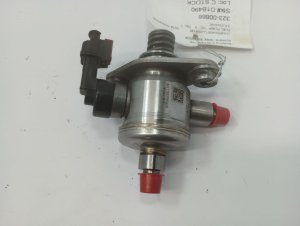
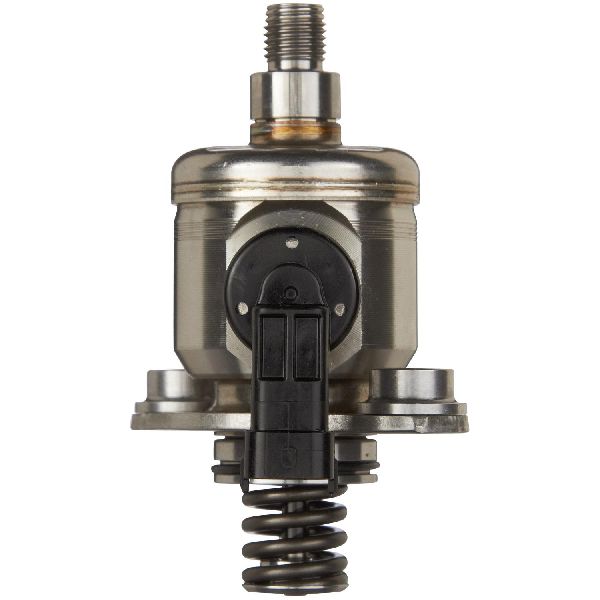
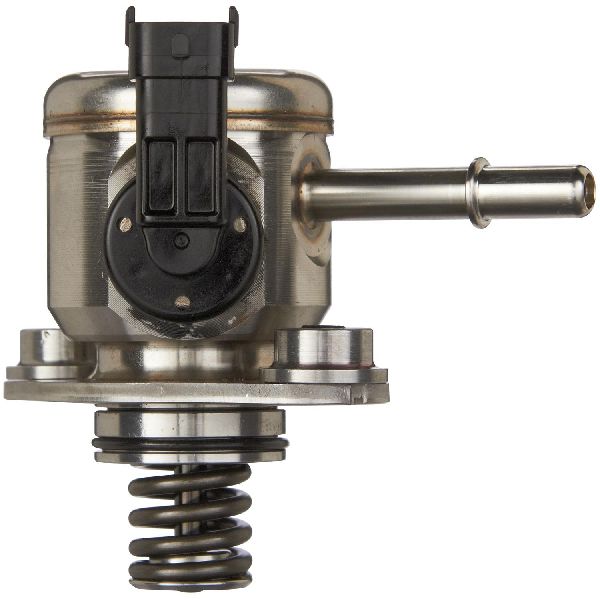
On the 2.4L Equinox, code P0191 is most commonly caused by a failing high-pressure fuel pump (HPFP). Using an aftermarket pump is a frequent and well-documented cause for this code to appear, even on a new part; always use an OEM/ACDelco replacement (Part No. 12641847). Expect to pay $180-$250 for an OEM pump.
- P0191 on a 2.4L Equinox is most often caused by a failing high-pressure fuel pump (HPFP).
- A key diagnostic step is to use a scan tool to watch if the actual fuel pressure gets 'stuck' high when the computer commands it to drop at a stop.
- If you smell gas in your engine oil, the HPFP has failed and is leaking fuel into the crankcase.
- It is critical to use an OEM/ACDelco replacement HPFP. Aftermarket pumps are known to cause this exact code right out of the box.
- Always replace the one-time-use high-pressure fuel line when replacing the pump to prevent dangerous leaks.
What's Unique About the 2010-2017 Chevrolet Equinox
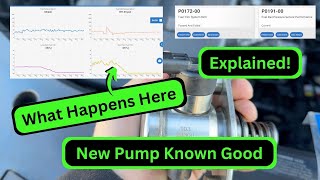
The 2.4L Ecotec engine in this generation of Equinox is known for issues with its high-pressure fuel pump (HPFP). A common failure mode for the HPFP is an internal seal leak, which allows fuel to contaminate the engine oil, often setting a P0172 (System Too Rich) code. 🎬 Watch: Diagnosing P0172 and P0191 codes on the 2.4L engine. However, another frequent issue, specifically related to P0191, is the pump's inability to regulate pressure correctly, especially after a stop. Many owners and technicians report that using aftermarket (non-OEM) high-pressure fuel pumps is a direct cause of the P0191 code. The ECM runs a rationality test during deceleration where it commands zero pressure; an aftermarket pump often fails this test, gets 'stuck' at a higher pressure, and triggers the code, leading to a 'Reduced Engine Power' mode.
Symptoms You May Notice
- Check Engine Light illuminated
- "Service StabiliTrak" message
- Engine goes into "Reduced Engine Power" mode
- Engine stalling, especially when coming to a stop or at idle in gear
- Rough or unstable idle
- Hesitation or lack of power during acceleration
- Hard starting or long crank times
- Engine 'dieseling' or stumbling after shutoff
- Strong smell of gasoline from the engine oil dipstick
- Replacing the fuel rail pressure sensor when the high-pressure fuel pump is the actual cause.
- Replacing the in-tank (low-pressure) fuel pump, which is a separate part of the fuel system and does not typically cause this specific code on its own.
- Installing an aftermarket (non-OEM) high-pressure fuel pump, which often causes the P0191 code to appear immediately.
Most Likely Causes
- Failing or Incompatible High-Pressure Fuel Pump (HPFP) 🔴 High Probability → Shop Fuel Pump This is a well-documented failure point on the 2.4L Ecotec engine. The internal pressure regulating components (solenoid) of the pump can fail, causing it to not respond correctly to the ECM's commands. Crucially, aftermarket pumps are widely reported to fail the ECM's rationality check during deceleration, causing P0191 even when brand new.
How to confirm: Using a scan tool, monitor the 'Desired Fuel Rail Pressure' and 'Actual Fuel Rail Pressure' PIDs. Come to a stop while driving. The ECM will command the desired pressure to drop to near zero to test the system. A healthy OEM pump will allow the actual pressure to drop to the low-side pressure (around 50-70 PSI). A failing or incompatible aftermarket pump will often get stuck at a higher pressure (e.g., 200-300 PSI), causing the ECM to set the code and enter limp mode. Also, check the oil for a strong fuel smell, which indicates a failed internal pump seal.
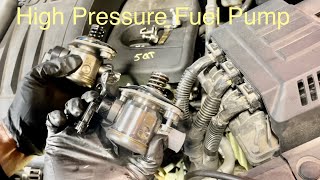
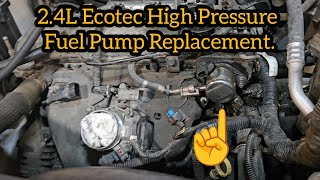
Typical fix: Replace the high-pressure fuel pump with a new OEM (ACDelco/GM Genuine) part. It is mandatory to also replace the one-time-use high-pressure fuel line that connects to the pump to prevent leaks. An oil and filter change is required 🎬 See this step-by-step guide for replacing the high-pressure fuel pump. if fuel contamination is present.
Est. part cost: $230-$350 - Faulty Fuel Rail Pressure Sensor 🟡 Medium Probability → Shop Fuel Pressure Sensor The sensor itself can fail due to heat, vibration, or internal electronic failure, sending incorrect or erratic voltage signals to the ECM. In some cases, the sensor housing can crack from vibration fatigue.
How to confirm: With a scan tool, observe the fuel pressure reading with the key on, engine off. If the reading is nonsensical or doesn't change with engine operation, the sensor may be faulty. A definitive test involves comparing the scan tool's pressure reading to a mechanical fuel pressure gauge; if the readings differ significantly, the sensor is bad. This requires removing the intake manifold for access to the sensor.
Typical fix: Replace the fuel rail pressure sensor. This is a labor-intensive job as it requires removing the intake manifold for access. 🎬 Watch: How to find the fuel rail pressure sensor location.
Est. part cost: $40-$125 - Wiring or Connector Issues ⚪ Low Probability The wiring harness or connector for the fuel rail pressure sensor can become damaged, corroded, or develop loose pins, leading to an intermittent or lost signal.
How to confirm: Visually inspect the wiring harness and connector for the fuel rail pressure sensor and the high-pressure fuel pump. Look for any signs of damage, corrosion, chafing, or loose pins. Perform a continuity and resistance test on the sensor circuit wires back to the ECM.
Typical fix: Repair the damaged section of the wiring harness or replace the connector pigtail.
Est. part cost: $10-$50
Rare But Worth Checking
- Faulty Engine Control Module (ECM): → Shop Engine Control Module (ECM) This is extremely rare. One technician on a forum replaced a PCM for this code only to find the true cause was the HPFP. Before condemning the ECM, all other possibilities, including the pump, sensor, and wiring, must be exhaustively ruled out. An ECM replacement requires programming to the vehicle.
- Low-Pressure Fuel System Issue: While less common for P0191 alone, a failing in-tank (low-pressure) fuel pump or a clogged fuel filter can starve the HPFP, causing pressure performance issues. This would typically be accompanied by other codes like P0087 (Fuel Rail/System Pressure - Too Low). Manufacturer TSB Bulletin #PIP5151F notes that vehicles may experience hard start, no start, or rough running with codes P0087, P0088, and P0191 if fuel system contamination is present.
Diagnosis Steps
- Check for other stored DTCs. Codes like P0172, P2635, or P228C strongly suggest a high-pressure fuel pump issue.
- Check the engine oil dipstick for a strong smell of gasoline. If present, this is a definitive sign that the HPFP internal seal has failed and the pump must be replaced.
- Using a scan tool, monitor 'Desired Fuel Rail Pressure' vs. 'Actual Fuel Rail Pressure'. Note if an aftermarket HPFP is installed.
- Perform a test drive and come to a complete stop while monitoring the PIDs. Observe if the 'Desired' pressure drops to zero (or a very low value) and if the 'Actual' pressure follows down to the low-side pressure (50-70 PSI) or gets stuck at a higher value (e.g., 200+ PSI).
- If the actual pressure gets stuck high during the deceleration test, the HPFP is the cause. This is the classic failure mode for aftermarket pumps on this engine.
- If the 'Actual' pressure reading is erratic, stuck at one value, or seems completely illogical at all times, inspect the fuel rail pressure sensor and its wiring.
- To confirm a bad sensor, compare the scan tool's reading to a mechanical gauge. This requires accessing the fuel rail by removing the intake manifold.
- If no other cause is found, inspect the wiring and connector at the fuel rail pressure sensor and the high-pressure fuel pump for any visible damage, corrosion, or loose connections.
Parts You'll Likely Need
- High-Pressure Fuel Pump
(OEM #12641847)— This is the most common failure point causing P0191 on this engine. Using an OEM pump is critical to avoid repeat failures or new codes, as aftermarket versions are known to fail the ECM's pressure rationality test. This part number supersedes 12608371, 12633115, 12633423, and 12639694.
Trusted brands: ACDelco, GM Genuine Parts
OEM price range: $180-$250
Aftermarket price range: $80-$150 - High-Pressure Fuel Feed Pipe
(OEM #12608374)— This pipe is a one-time-use part per GM service information. It must be replaced anytime it is loosened to prevent dangerous high-pressure fuel leaks.
Trusted brands: ACDelco, GM Genuine Parts
OEM price range: $50-$85
Aftermarket price range: $30-$60 - Fuel Rail Pressure Sensor
(OEM #12684286)— This sensor can fail and provide incorrect readings to the ECM, though it is less common than the pump failing. Replacement requires removing the intake manifold.
Trusted brands: ACDelco, Bosch
OEM price range: $80-$125
Aftermarket price range: $40-$70
Related Codes That Often Appear With This One
- P0172 — System Too Rich. This code is very common when the HPFP fails and leaks fuel into the engine oil. The fuel vapor is pulled through the PCV system, creating a rich condition that the ECM detects.
- P2635 — Fuel Pump 'A' Flow Performance. This code often appears alongside P0191 and points directly to a performance issue with the fuel pump itself.
- P228C — Fuel Pressure Regulator 1 Exceeded Control Limits. This code can appear with P0191 when the HPFP is unable to maintain the pressure commanded by the ECM.
Technical Service Bulletins (TSBs) & Recalls
- Recall 43180: Voluntary Emission Recall for 2010-2011 models regarding the high-pressure fuel pump developing excessive wear and leaking fuel into the engine oil crankcase.
- PIP5094: Preliminary Information bulletin from GM addressing diagnosis for DTC P0191, often in combination with other fuel system codes.
- Bulletin #PIP5151F: Manufacturer service bulletin addressing hard start, no start, or rough running conditions where technicians may find codes P0087, P0088, P0191, and P128E, potentially requiring a complete fuel system cleaning if contamination is found.
Platform-Specific Known Issues
- GM issued a voluntary emission recall (43180) for 2010-2011 models for excessive wear on the HPFP shaft, which could cause fuel to leak into the crankcase.
- Using aftermarket high-pressure fuel pumps is widely reported in forums and by technicians to be a direct cause of the P0191 code and reduced power mode, even if the pump is brand new. One owner reported going through three faulty aftermarket pumps before an OEM GM pump resolved the
- NHTSA ODI #11632552 describes a situation where an owner found extremely low oil levels and the vehicle appeared to be burning oil, with diagnostic codes including P0011, P0191, P228D, P0089, and P0014.
Mechanic-Grade Diagnostic Values
- Low-Side Fuel Pressure (Key On, Engine Off) — expected: 276-448 kPa (40-65 PSI). Failure: Pressure below this range indicates a weak in-tank pump or leak, starving the HPFP.
- High-Side Fuel Pressure at Idle — expected: Approx. 3,000–5,000 PSI. Failure: Significantly lower pressure suggests a weak HPFP; erratic readings can point to a bad sensor.
- High-Side Fuel Pressure at Wide-Open Throttle (WOT) — expected: Should climb above 18,000 PSI. Failure: Failure to reach high pressures under load points to a failing HPFP.
- Fuel Rail Pressure Sensor Signal Voltage — expected: 0.5V - 4.5V. Failure: Voltage that is stuck, or goes outside this range, indicates a sensor or wiring fault.
- ECM Ground Circuit Resistance — expected: < 1.0 Ohm. Failure: Higher resistance from the ECM ground pin to the negative battery terminal indicates a poor ground at G112, causing various electrical faults.
- GDI Fuel Injector Internal Resistance — expected: 1.1 to 2.0 Ohms. Failure: A reading of OL (open circuit) or significantly outside this range indicates a failed injector coil.
Scan Tool Commands That Help
- Manual Test / Scan Tool Observation: HPFP Solenoid Disconnect Test — To quickly test the default state of the HPFP. The 2.4L Ecotec uses a normally closed pump; unplugging the electrical connector on the pump's solenoid with the engine running should cause fuel pressure to rise to its maximum mechanical limit. If pressure drops or does not change, the pump's internal regulator is faulty.
Wiring & Ground Locations
- G112 — On the engine block, tucked under the alternator and just above the A/C compressor.. This is a primary ground for the Powertrain Control Module (PCM). Corrosion or a broken wire at this location is common and can cause erratic sensor readings, incorrect module behavior, and set false trouble codes, including P0191.
- PCM Connector Pins (Ground) — On the two main PCM connectors (gray and black), the ground wires are large black-and-white wires located at the top left terminal of each connector.. These are the specific pins to probe when performing a voltage drop test or checking resistance to ground (G112) to verify the integrity of the PCM's ground circuit. A bad connection here can mimic a failed sensor or module.
Real Owner Repair Stories
- Automotive Diagnostics & Programming YouTube Channel (2010+ Chevrolet Equinox 2.4L) — Check Engine Light with code P0191, vehicle enters Reduced Engine Power mode, especially after coming to a stop.
❌ Tried (didn't work) The vehicle had an aftermarket high-pressure fuel pump installed to fix a previous issue.
✅ What actually fixed it Replacing the aftermarket high-pressure fuel pump with a genuine GM/ACDelco pump (Part No. 12641847). The aftermarket pump was unable to pass the ECM's deceleration rationality test, where desired pressure is commanded to zero. The aftermarket pump would get 'stuck' at a higher pressure (e.g., 200-300 PSI), while the OEM pump correctly allowed pressure to drop to the low-side level (50-70 PSI), resolving the code. - Chevy Equinox Forum user (2014 Chevrolet Equinox) — Persistent P0191 code.
❌ Tried (didn't work) Replaced in-tank fuel pump, Replaced high-pressure fuel pump, Replaced throttle body, Replaced MAP sensor, Replaced intake manifold sensor, Replaced high and low pressure sensors, Replaced air filter
✅ What actually fixed it The user did not post a final resolution, but the thread illustrates a classic 'parts cannon' approach where multiple expensive components were replaced without fixing the root cause. Other forum members suggested investigating a vacuum leak or a faulty ECM as the next steps. This story highlights the importance of proper diagnosis over blind parts replacement. - NHTSA ODI #11476716 — An owner reported the vehicle goes into limp mode after 15 minutes of driving with codes P0191 and P0172. The dealership replaced the fuel tank fuel pump, but the issue persisted during the drive home.
OEM Part Supersession History
12608371, 12633115, 12633423, 12639694→12641847— Standard design updates and improvements by the manufacturer.
Heads up: While aftermarket pumps may physically fit, many are based on earlier designs or have different internal regulator logic that fails the ECM's deceleration rationality test on 2011+ models, causing an immediate P0191 code.
Model Year Variations Within This Range
- 2010-2011 (LAF Engine): These early models were subject to GM Voluntary Emission Recall #43180 for excessive wear on the HPFP shaft and seal, leading to fuel-in-oil contamination. The recommended fix was replacement with the updated pump (12641847).
- 2011-2017 (Primarily LEA Engine): The ECM software logic for the P0191 rationality test appears to be more stringent on later models compared to the 2010 model year. This makes 2011-2017 vehicles particularly sensitive to the performance of aftermarket high-pressure fuel pumps, which frequently fail the test.
- 2012-2017 (LEA/LUK Engines): The LEA engine is the FlexFuel (E85) compatible version of the earlier LAF. While most sources point to the same HPFP (12641847) for both, technicians should always verify the correct pump by VIN, as E85 compatibility can sometimes require different fuel system components.
Diagnostic Flowchart
Real Owner Stories
Aggregated from forums and TSBs cited above. Mileages and costs reflect what owners reported in those sources.
2015 Chevrolet Equinox 2.4L
Symptoms: Scan data showed 'desired pressure' dropping to 0 at idle, characteristic of a failed internal solenoid in the high-pressure fuel pump.
What fixed it: Replaced the failing aftermarket pump with an OEM GM pump.
Source hint: ScannerDanner Forum - '2015 equinox 2.4 p0191'
2014 Chevrolet Equinox LS 2.4L
Symptoms: Triggered P0191 and went into reduced engine power mode in cold weather after an engine swap that re-used the original high-pressure fuel pump.
What fixed it: Diagnosed as a failure of the re-used original high-pressure fuel pump.
Source hint: Reddit (r/MechanicAdvice) - 'P0191 2014 Chevy equinox LS 2.4L'
2012 Buick Regal 2.4L Ecotec
Symptoms: Engine code P0191 popped up immediately after installing a brand new genuine GM high-pressure fuel pump.
What fixed it: Checked and repaired damaged sensor connectors that were disturbed during the pump replacement.
Source hint: Reddit - 'Replaced High Pressure Fuel Pump on 2.4l Ecotec non-turbo. But engine code P0191 pops up'
2014 Chevrolet Equinox 2.4L
Symptoms: Vehicle went into Limp Mode with P0191 and P2635 codes. Owner went through three separate new aftermarket high-pressure fuel pumps from a major parts store, all of which were faulty out of the box.
What fixed it: Installed a genuine GM high-pressure fuel pump.
Source hint: Reddit - '2014 Chevy Equinox 2.4L - Limp Mode, P0191 & P2635 Codes'
Related OBD-II Codes
Frequently Asked Questions
Does GM Recall 43180 for the high-pressure fuel pump apply to my 2014 Chevrolet Equinox?
I just installed a brand new aftermarket high-pressure fuel pump on my 2.4L Ecotec, but I'm still getting P0191 and 'Reduced Engine Power'. Why?
Why does my engine oil dipstick smell strongly of gasoline when I have a P0191 code?
Can I easily replace the fuel rail pressure sensor on my 2012 Equinox 2.4L?
What does GM bulletin PIP5094 say about the P0191 code?
Helpful Videos

Used OEM Parts in Stock
New Aftermarket Parts Available


The information in this article is provided for general reference and educational purposes only. Vehicle specifications, procedures, and part compatibility can vary by production date, trim level, and region. Always consult your vehicle's factory service manual and verify part numbers before purchasing or performing repairs. Safety-critical components such as airbags, seat belts, and braking systems should be installed by a qualified professional.
- Chevrolet Equinox:
- 🧭 Diagnostic Flowchart
- 🎬 Helpful Videos
- 🛍️ Shop This Part
- What's Unique About the 2010-2017 Chevrolet Equinox
- Symptoms You May Notice
- Most Likely Causes
- Rare But Worth Checking
- Diagnosis Steps
- Parts You'll Likely Need
- Related Codes That Often Appear With This One
- Technical Service Bulletins (TSBs) & Recalls
- Platform-Specific Known Issues
- Mechanic-Grade Diagnostic Values
- Scan Tool Commands That Help
- Wiring & Ground Locations
- Real Owner Repair Stories
- OEM Part Supersession History
- Model Year Variations Within This Range
- Real Owner Stories
- 2015 Chevrolet Equinox 2.4L
- 2014 Chevrolet Equinox LS 2.4L
- 2012 Buick Regal 2.4L Ecotec
- 2014 Chevrolet Equinox 2.4L
- Related OBD-II Codes
- Frequently Asked Questions
- 🎟️ Get 5% Off