

P0191 on 2006-2010 Ford Explorer 4.6L: Fuel Rail Pressure Causes and Fixes
On a 2006-2010 Explorer, P0191 is most often caused by a corroded Fuel Pump Driver Module (FPDM) located above the spare tire. Inspecting this module for damage is the first step. If it's not corroded, the Fuel Rail Pressure (FRP) sensor is the next likely culprit. Aftermarket FPDM kits often include improved mounting hardware to prevent a repeat failure.
- Before buying any parts for a P0191 code, your first step should always be to inspect the Fuel Pump Driver Module (FPDM) above the spare tire for corrosion.
- If the FPDM is corroded, replace it. Aftermarket kits like the Dorman 590-001 include improved mounting hardware with standoffs to prevent the problem from recurring and are a highly recommended fix.
- Do not immediately assume the in-tank fuel pump has failed; it is far less likely to be the cause than the FPDM or the FRP sensor on this specific vehicle.
What's Unique About the 2006-2010 Ford Explorer
Ford trucks and SUVs from this era, including the fourth-generation Explorer, use an external Fuel Pump Driver Module (FPDM) to regulate the fuel pump. This module, made of aluminum, is mounted directly to the steel frame crossmember near the spare tire. This design choice leads to severe galvanic corrosion between the two dissimilar metals, which destroys the module's housing and internal circuit board. This specific failure is the most common cause of P0191 on this platform and is often misdiagnosed as a bad fuel pump.
Symptoms You May Notice
- Check Engine Light is on
- Engine stalling, sometimes after warming up and refusing to restart for a period of time
- Hesitation or loss of power during acceleration
- Hard starting or failure to start
- Rough idle or jerking
- Decreased fuel economy
- Engine runs only at high RPM (above 2000) but stalls at idle
- Replacing the in-tank fuel pump before inspecting the Fuel Pump Driver Module (FPDM). The FPDM fails much more frequently on this vehicle and exhibits the same symptoms.
- Replacing the Fuel Rail Pressure (FRP) sensor without first inspecting the FPDM. While the FRP can fail, the FPDM is the more probable cause specific to this platform.
Most Likely Causes
- Corroded/Failed Fuel Pump Driver Module (FPDM) 🔴 High Probability → Shop Fuel Pump The FPDM is made of aluminum and mounted directly to a steel frame member, causing severe galvanic corrosion from road salt and moisture trapped between the two surfaces.
How to confirm: Lower the spare tire and visually inspect the FPDM mounted on the frame crossmember above it. Look for a cracked aluminum case, white powdery corrosion, or a hole eaten through the back of the module. The module may feel loose or break off its mounting points when touched.
Typical fix: Replace the Fuel Pump Driver Module. Aftermarket kits, like the Dorman 590-001, include new mounting hardware with rubber standoffs or bushings that create a gap between the module and the frame, preventing direct contact and mitigating future corrosion.
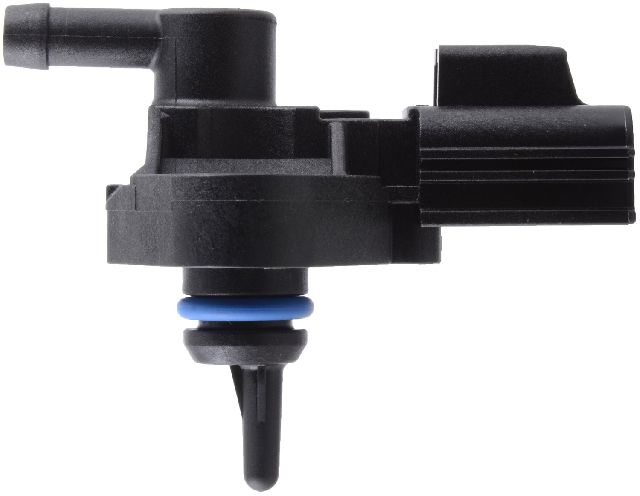
Est. part cost: $50-$120 - Faulty Fuel Rail Pressure (FRP) Sensor 🟡 Medium Probability → Shop Fuel Pressure Sensor The sensor can fail from age, heat cycles, and vibration, leading to incorrect or erratic pressure readings. It is a common failure point for this code across many Ford vehicles. NHTSA ODI #10446792 notes a case where an owner replaced the fuel rail pressure sensor for a P0191 code, though they noted the underlying issue persisted, highlighting the complexity of Ford fuel systems.
How to confirm: Using a scan tool, monitor the Fuel Rail Pressure (FRP) PID. With the Key On, Engine Off (KOEO), pressure should be low and stable. While running, it should be around 35-45 PSI at idle and increase with RPM. If the pressure reads an abnormal fixed value (e.g., 0 psi or a very high number) or fluctuates wildly regardless of engine state, the sensor is likely bad. A diagnostic chart shows that at 0 PSI, the sensor voltage should be 0.5V, and at 70 PSI, it should be 4.5V.
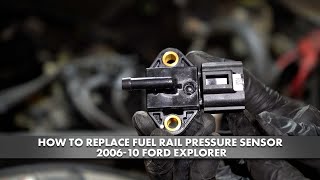
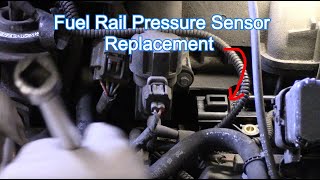
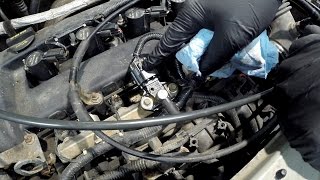
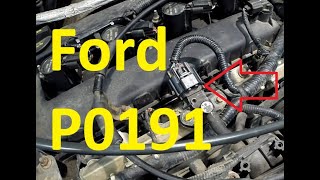
Typical fix: Replace the Fuel Rail Pressure sensor. On the 4.6L V8, it is located on the driver-side fuel rail and is relatively easy to access without removing the intake manifold. Always depressurize the fuel system before removal.
Est. part cost: $40-$100 - Failing In-Tank Fuel Pump ⚪ Low Probability → Shop Fuel Pump
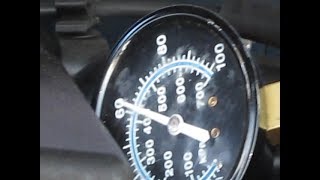
How to confirm: If the FPDM and FRP sensor are confirmed good, perform a fuel pressure test with a mechanical gauge at the fuel rail's Schrader valve. If pressure is low or inconsistent with the FRP sensor's readings, the fuel pump may be weak. NHTSA ODI #10780588 describes a situation where a vehicle stalled at 45mph and a shop found code P0191, eventually verifying no fuel pressure and finding broken bolts holding the internal fuel pump.
Typical fix: Replace the in-tank fuel pump assembly. This requires dropping the fuel tank.
Est. part cost: $200-$400
Rare But Worth Checking
- Clogged Fuel Filter: → Shop Fuel Filter The fuel filter on this model is typically integrated into the fuel pump assembly inside the tank and is considered non-serviceable separately. It's usually replaced along with the fuel pump.
- Damaged Wiring or Connectors: Check the wiring harness and connectors for the FPDM (near the spare tire) and the FRP sensor (on the engine) for corrosion, chafing, or loose pins. Manufacturer Bulletin #TSB 19-2231 notes that P0191 can be caused by an engine harness chafe on the powertrain control module (PCM) bracket.
- Faulty Powertrain Control Module (PCM): → Shop Engine Control Module (ECM) This is extremely rare. Manufacturer Bulletin #TSB 18-2326 indicates that certain Ford vehicles may exhibit an illuminated MIL with P0191 stored in the PCM, requiring specific service procedures to correct the module's logic or associated conditions.
Diagnosis Steps
- Read the codes: Use an OBD-II scanner to confirm P0191 and check for any other related codes like P1233 (FPDM Offline) or P0642 (Reference Voltage).
- Inspect the Fuel Pump Driver Module (FPDM): This is the most critical first step. Lower the spare tire to gain access to the FPDM on the rear frame crossmember. Visually inspect it for cracks, holes, and white, powdery corrosion. If significant corrosion is present, it is almost certainly the cause.
- Monitor Fuel Rail Pressure: If the FPDM appears okay, connect a scan tool and observe the 'FRP' (Fuel Rail Pressure) PID. The pressure should be around 35-45 PSI at idle and react to engine RPM changes. If it's stuck at 0, a very high number, or is highly erratic, the FRP sensor or its wiring is suspect.
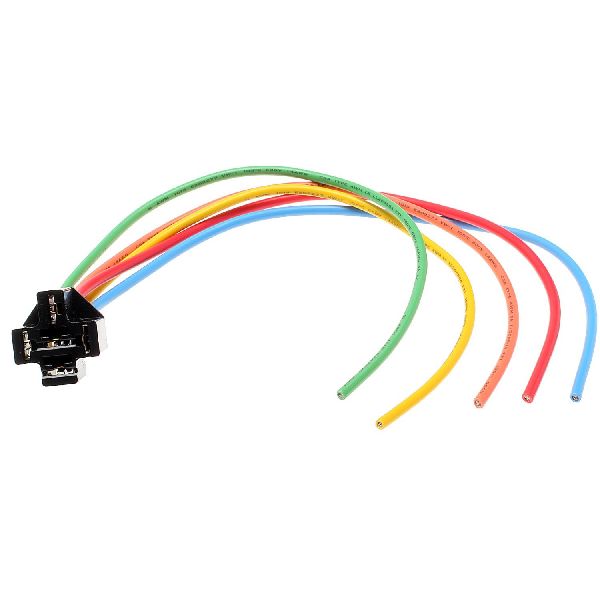
- Check Wiring: Inspect the electrical connectors and wiring to both the FPDM and the FRP sensor for any signs of damage, corrosion, or looseness. Pay close attention to the FPDM connector (C4033), which is exposed to weather.
- Test Fuel Pressure Manually: If the scan tool data is inconclusive, connect a mechanical fuel pressure gauge to the Schrader valve on the fuel rail to verify the actual pressure against the sensor's readings. If the gauge shows good, steady pressure but the scan tool shows erratic readings, the FRP sensor is bad.
- Suspect the Fuel Pump: If the FPDM is good, the FRP sensor is good, and the mechanical gauge shows low or no pressure, the in-tank fuel pump is the likely culprit.
Parts You'll Likely Need
- Fuel Pump Driver Module (FPDM)
(OEM #5L8Z-9D370-A)— This is the most common failure point for P0191 on this vehicle due to galvanic corrosion from its mounting location.
Trusted brands: Motorcraft, Dorman (Part #590-001), Standard Motor Products
OEM price range: $80-$130
Aftermarket price range: $50-$90 - Fuel Rail Pressure Sensor (FRP Sensor)
(OEM #3R3Z-9F972-AA)— This sensor provides the pressure reading to the PCM and can fail, sending erratic signals.
Trusted brands: Motorcraft, Bosch, Delphi
OEM price range: $60-$110
Aftermarket price range: $40-$80
Related Codes That Often Appear With This One
- P1233 — This Ford-specific code means 'Fuel Pump Driver Module Offline' and strongly points to a failed FPDM as the root cause.
- P0171 / P0174 — These 'System Too Lean' codes can be triggered if the fuel pressure is consistently too low, causing an insufficient amount of fuel to be delivered to the engine.
- P0642 — This code for 'Sensor Reference Voltage 'A' Circuit Low' can appear with P0191, indicating a potential wiring or PCM issue affecting the 5-volt reference circuit shared by multiple sensors, including the FRP sensor.
Technical Service Bulletins (TSBs) & Recalls
- TSB 05-3-1: While not for the 2006-2010 models specifically, an earlier TSB was issued for P0191 on other Ford vehicles, indicating a history of issues with this system.
- TSB 21574: Not directly for P0191, but addresses a common VCT tick/rattle noise in the 4.6L 3V engine between 800-1200 RPM, which owners may also experience. Ford considers this noise normal.
- Bulletin #TSB 18-2326: Notes that several Ford models may exhibit an illuminated MIL with DTC P0191 stored in the powertrain control module.
- Bulletin #TSB 19-2231: Highlights that P0191 may be triggered due to an engine harness chafe on the PCM bracket in certain Ford engine configurations.
Platform-Specific Known Issues
- The primary issue is the galvanic corrosion of the aluminum Fuel Pump Driver Module (FPDM) due to its direct mounting to the steel frame, a design flaw common in Ford trucks and SUVs of this period.
- Aftermarket FPDM replacements, such as the Dorman 590-001, are considered an OE FIX because they include redesigned mounting hardware with rubber bushings to physically separate the module from the frame, preventing the corrosion that caused the original part to fail.
Mechanic-Grade Diagnostic Values
- FRP Sensor Voltage vs. Pressure — expected: The sensor signal should correlate with pressure: 0.5V at 0 PSI, 1.6V at 20 PSI, 2.8V at 40 PSI, and 4.5V at 70 PSI.. Failure: A voltage reading that is stuck high (above 4.5V) or low (below 0.5V) regardless of actual pressure, or does not align with the expected pressure values.
- FPDM Control (FPC) Signal from PCM — expected: A duty cycle between 5% and 50% is a valid 'ON' command. A duty cycle between 70% and 80% is a valid 'OFF' command.. Failure: A duty cycle reading outside of these ranges indicates a problem with the PCM command signal.
- FPDM Monitor (FPM) Signal to PCM — expected: A steady 50% duty cycle indicates the FPDM is receiving a valid command and is functioning correctly.. Failure: A duty cycle other than 50% (e.g., 25% or 75%) indicates a fault detected by the FPDM, such as an open/short in the pump circuit or a fault in the FPDM itself.
- FRP Sensor VREF (Reference Voltage) — expected: Approximately 5.0 volts between the VREF and SIGRTN (Signal Return) pins on the sensor connector with the key on.. Failure: Voltage significantly below 5.0V or no voltage indicates an open/short in the VREF circuit or a PCM fault.
- FPDM Power Supply at Connector C4033, Pin 5 — expected: 10-12 Volts DC with the key in the ON position.. Failure: No voltage indicates a problem upstream, such as a tripped inertia switch, blown fuse, or wiring fault.
Wiring & Ground Locations
- FPDM Connector C4033 Pinout — The 6-pin connector for the Fuel Pump Driver Module, located above the spare tire.. Knowing the pinout is essential for testing power, ground, and command/feedback signals directly at the module. Pin 1: FPM (Feedback to PCM), Pin 2: FP PWR (Power to Fuel Pump), Pin 3: GND, Pin 4: FP RTN (Return from Fuel Pump), Pin 5: FPDM PWR (Power from Inertia Switch), Pin 6: FPC (Command from PCM).
- G300 — Behind the left (driver's side) kick panel.. This is a major body ground point. A poor connection here can cause various difficult-to-diagnose electrical issues, potentially affecting modules that control or monitor the fuel system.
- G301 — At the base of the left (driver's side) 'B' pillar.. Another critical chassis ground point. Verifying its integrity is a key step when chasing intermittent electrical faults that could lead to a P0191 code.
- Inertia Switch — Typically located in the passenger-side footwell area, behind the kick panel. On some modern Fords it is integrated into the RCM/PCM.. This safety switch cuts power to the fuel pump circuit (specifically, to the FPDM) in a collision. If it's faulty or partially tripped, it can cause intermittent power loss to the FPDM, mimicking a module or pump failure.
Real Owner Repair Stories
- Ford F150 Forum user 'picaflor' (2004 Ford F-150 (similar platform/issue)) — Engine stalling repeatedly.
❌ Tried (didn't work) Replaced the fuel filter., Replaced the in-tank fuel pump.
✅ What actually fixed it The final cause was a corroded Fuel Pump Driver Module (FPDM). The user spent over $550 on other parts before a mechanic identified the FPDM, which was corroded from salt and moisture exposure due to its mounting location. - 2CarPros user (2005 Ford Five Hundred (different model, same code/system logic)) — Stalling while driving, code P0191. Engine would only restart if the key was fully removed and re-inserted.
❌ Tried (didn't work) Replaced fuel pump., Replaced inertia switch., Unplugging/replugging FPDM and FRP sensor.
✅ What actually fixed it The issue was identified by a TSB (07-4-7) pointing to a possible internal short in the EGR System Module (ESM) pulling down the 5V reference voltage (VREF) line, which is shared with the FRP sensor. - NHTSA ODI #11478786 — An owner reported multiple failures of equipment for the fuel system, listing codes P0191 two and three times per day on a vehicle with only 22,000 miles.
OEM Part Supersession History
Multiple, including 3F2Z-9D370-BA, 4L2Z-9D372-A, 5L3Z-9D370-A, 6L2Z-9D372-A, etc.→5L8Z-9D370-A— Standard part evolution and consolidation across multiple vehicle platforms.
Model Year Variations Within This Range
- 2007: Ford parts catalogs show a date-specific note for the FPDM part number (5L8Z-9D370-A), with entries for 'To 11/27/2007' and 'From 11/28/2007'. While the final part number appears to be the same, this indicates a potential production change or update to the module or its associated hardware during the 2008 model year production run.
Diagnostic Flowchart
Other Known Issues on This Vehicle
Issues unrelated to this code that are worth knowing about as an owner of this generation:
- Cracked Rear Liftgate Applique Panel 🟠 Medium — Extremely common. The plastic panel below the rear window develops stress cracks, often starting near the emblem. This allows water intrusion, which can damage the liftgate latch mechanism. (Ref: No recall for 2006-2010 models, though earlier models were subject to programs and lawsuits for a similar issue.)
- 5R55S Transmission Failure 🔴 High — Common, with issues often appearing after 50,000-100,000 miles. Symptoms include delayed/harsh shifts (especially into Reverse), OD light flashing, and shift flares.
- Leaking Thermostat Housing 🟠 Medium — A frequent source of coolant leaks. The plastic housing can crack or the gasket can fail, leading to coolant loss and potential overheating.
- Variable Camshaft Timing (VCT) Solenoid Failure 🟠 Medium — Common on the 4.6L 3V engine. Failure leads to rough idle, stalling, and ticking/rattling noises. Often caused by dirty oil or sludge clogging the solenoid screens. (Ref: TSB 21574 notes that some VCT noise is considered normal by Ford.)
- Radiator Leak/Failure 🔴 High — The plastic end tanks on the radiator are a known weak point and can crack, leading to significant coolant loss. This is a common complaint for the 2006 model year in particular.
Used vs. New Parts: Buying Guide for This Vehicle
When a used part is the smart pick: For this specific repair, a used part is almost never a smart choice for the Fuel Pump Driver Module (FPDM). For other components like the FRP sensor, a used part from a low-mileage, accident-free donor vehicle could be a viable budget option, but new is generally safer for electronic sensors.
Donor-vehicle mileage cap: roughly under 75000 miles for the part to have meaningful remaining life.
What to inspect on the donor part:
- For an FPDM: DO NOT BUY USED. The failure is a design flaw (galvanic corrosion) and any used part is either already failing or will fail prematurely.
- For an FRP Sensor: Inspect the donor vehicle for signs of engine overheating or fire. Check the sensor's plastic connector for brittleness or cracking.
OEM-only on this vehicle (don't cheap out):
- While not strictly 'OEM-only', using a Motorcraft FPDM may prevent rare compatibility issues with vehicle readiness monitors that have been anecdotally reported with some aftermarket units.
Aftermarket brands forum-validated for this vehicle:
- Dorman (Part #590-001 for the FPDM) is widely cited as a good alternative, specifically because it includes redesigned mounting hardware with rubber bushings to prevent the corrosion that causes the OEM part to fail.
Brands owners have reported issues with on this vehicle:
- While generally reliable, at least one owner reported a new Dorman FPDM was faulty and prevented the vehicle from passing an emissions inspection, which was resolved by installing a Motorcraft part.
Real Owner Stories
Aggregated from forums and TSBs cited above. Mileages and costs reflect what owners reported in those sources.
2006 Ford Explorer V6
Symptoms: Poor idle and power loss; symptoms were temporarily mitigated by using fuel injector cleaner.
What fixed it: Potential fuel delivery issue (P0191 reported).
Source hint: Reddit r/MechanicAdvice - A user with a 2006 Explorer V6 reported P0191
Ford Explorer 4.6L V8
Symptoms: Engine stalling at idle but runs at high RPM (above 2000).
What fixed it: The technician had already replaced the FPDM and fuel pump, pointing towards a more complex electrical or sensor issue involving P0191 and P0642.
Source hint: Ford-Forums.com - A user with a 4.6L engine experiencing P0191 and P0642
2007 Ford Explorer
Symptoms: Warm no-start conditions.
What fixed it: Fuel Pump Driver Module (FPDM) failure.
Source hint: 2carpros.com - Corroborated that a user with a 2007 Explorer and code P0191 experienced warm no-start conditions
Related OBD-II Codes
Frequently Asked Questions
Where is the Fuel Pump Driver Module (FPDM) located on my 2006-2010 Ford Explorer?
Why does the FPDM fail so frequently on this specific vehicle platform?
Is there a specific replacement part that prevents this corrosion from happening again?
I hear a ticking or rattling noise between 800-1200 RPM on my 4.6L V8; is this related to P0191?
Can I test the Fuel Rail Pressure (FRP) sensor without a mechanical gauge?
Where is the Fuel Rail Pressure sensor located on the 4.6L V8 engine?
Helpful Videos
We Have This Part in Stock


The information in this article is provided for general reference and educational purposes only. Vehicle specifications, procedures, and part compatibility can vary by production date, trim level, and region. Always consult your vehicle's factory service manual and verify part numbers before purchasing or performing repairs. Safety-critical components such as airbags, seat belts, and braking systems should be installed by a qualified professional.
- Ford Explorer:
- 🧭 Diagnostic Flowchart
- 🎬 Helpful Videos
- 🛍️ Shop This Part
- What's Unique About the 2006-2010 Ford Explorer
- Symptoms You May Notice
- Most Likely Causes
- Rare But Worth Checking
- Diagnosis Steps
- Parts You'll Likely Need
- Related Codes That Often Appear With This One
- Technical Service Bulletins (TSBs) & Recalls
- Platform-Specific Known Issues
- Mechanic-Grade Diagnostic Values
- Wiring & Ground Locations
- Real Owner Repair Stories
- OEM Part Supersession History
- Model Year Variations Within This Range
- Other Known Issues on This Vehicle
- Used vs. New Parts: Buying Guide for This Vehicle
- Real Owner Stories
- 2006 Ford Explorer V6
- Ford Explorer 4.6L V8
- 2007 Ford Explorer
- Related OBD-II Codes
- Frequently Asked Questions
- 🎟️ Get 5% Off