

P0191 on 2012-2018 Ford Focus 2.0L GDI: Fuel Pressure Sensor Causes and Fixes
For a 2012-2018 Focus 2.0L GDI, code P0191 is most often caused by a failed Fuel Rail Pressure (FRP) sensor. If the car cranks but won't start, try unplugging the sensor to see if it starts. If it does, the sensor is bad. The next most likely cause is a failing High-Pressure Fuel Pump (HPFP).
- P0191 on your Focus means there's a problem with the high-pressure fuel system.
- The most likely culprit is a bad Fuel Rail Pressure (FRP) sensor. A simple test is to unplug it and see if the engine starts.
- Do not immediately replace the expensive High-Pressure Fuel Pump (HPFP) without first ruling out the sensor and its wiring.
- Driving with this code can be unsafe due to the risk of stalling in traffic.
- Check for related codes like P0087 (low pressure), as they can help pinpoint whether the issue is the sensor (electrical) or the pump (mechanical).
What's Unique About the 2012-2018 Ford Focus
The 2.0L GDI (Gasoline Direct Injection) engine in the third-generation Focus uses a high-pressure fuel system that is fundamentally different from older port injection systems. It features both a low-pressure pump in the tank and a camshaft-driven High-Pressure Fuel Pump (HPFP) on the engine. For this specific platform, the Fuel Rail Pressure (FRP) sensor on the high-pressure side is a very common failure point and is often the direct cause of a P0191 code, sometimes leading to a crank-no-start condition. While the HPFP can also fail, diagnosing the sensor first is a common money-saving strategy for owners of these vehicles, widely corroborated in owner forums.
Symptoms You May Notice
- Check Engine Light is on
- Engine stalling, sometimes unexpectedly at low speeds, when coming to a stop, or after refueling
- Hard starting or long crank times
- Crank-no-start condition
- Hesitation or sluggish acceleration
- Noticeable loss of engine power
- Rough or fluctuating idle
- Reduced fuel economy
- Replacing the High-Pressure Fuel Pump (HPFP) when the much cheaper Fuel Rail Pressure Sensor is the actual cause. Always diagnose the sensor first, especially if a crank-no-start condition is present and the 'unplug sensor' test works.
- Replacing the in-tank fuel pump or fuel filter, which are part of the low-pressure system. While they can cause fuel delivery issues, they are less likely to be the primary cause of P0191 on this GDI engine compared to the high-pressure components.
Most Likely Causes
- Failed Fuel Rail Pressure (FRP) Sensor 🔴 High Probability → Shop Fuel Pressure Sensor The sensor is a known common failure item on this platform, often failing internally and sending an erratic or irrational voltage signal to the PCM. This is the most widely reported cause by owners in online communities for P0191.
How to confirm: A key diagnostic test: if the engine cranks but does not start, unplug the FRP sensor's electrical connector. If the engine then starts and runs (though poorly), the sensor is faulty. The PCM uses a default fuel map when it sees no signal, allowing it to start. This procedure is heavily documented in owner forums as a successful diagnostic step. A scan tool can also be used to monitor the fuel rail pressure PID; a value that is stuck, erratic, or nonsensical (e.g., extremely high with key on, engine off) points to a bad sensor.
Typical fix: Replace the Fuel Rail Pressure sensor. It is located on the high-pressure fuel rail, on the passenger side of the engine.
Est. part cost: $50-$180 - Failing High-Pressure Fuel Pump (HPFP) 🟡 Medium Probability → Shop Fuel Pump The HPFP is a mechanical pump driven by the camshaft and is a known wear item on GDI engines. It can fail to generate the pressure commanded by the PCM, especially under load. Because it is mechanical, it will not build pressure until the engine is cranking or running.
How to confirm: Use a scan tool to monitor both 'Desired Fuel Rail Pressure' and 'Actual Fuel Rail Pressure'. During a drive, command a high-load condition (e.g., wide-open throttle acceleration). If the actual pressure cannot keep up with the desired pressure and drops significantly, the HPFP is likely weak. This diagnosis is typically performed after confirming the FRP sensor is working correctly.
Typical fix: Replace the High-Pressure Fuel Pump. This is a more involved and expensive repair than the sensor.
Est. part cost: $250-$600 - Wiring Harness or Connector Issue ⚪ Low Probability While not linked to a specific TSB, the engine harness, particularly near the FRP sensor, can be susceptible to heat and vibration. This can lead to brittle wires, chafing against other components, or loose pins within the connector.
How to confirm: Visually inspect the wiring harness and connector for the FRP sensor. Look for any signs of chafing, melting, corrosion, or loose pins in the connector. Perform a wiggle test on the harness while monitoring the FRP sensor voltage on a scan tool to see if the reading fluctuates. Check for continuity and shorts on the sensor's power, ground, and signal wires.
Typical fix: Repair the damaged section of the wiring harness or replace the sensor's pigtail connector.
Est. part cost: $20-$50
Rare But Worth Checking
- Low-Pressure Fuel System Fault: A failing in-tank fuel pump or clogged fuel filter can starve the HPFP, preventing it from building adequate pressure. This usually sets low-pressure codes like P0087 or P008A first, but it's worth checking low-side pressure (typically 55-75 PSI) if high-side components are confirmed good.
- Powertrain Control Module (PCM) Issue: → Shop Engine Control Module (ECM) In very rare cases, the PCM itself can fail or have a software glitch that causes it to misinterpret the data from the fuel rail pressure sensor. This should only be considered after all other mechanical and electrical causes have been exhaustively ruled out.
Diagnosis Steps
- Check for other stored DTCs. Codes like P0087, P0193, or P00C6 can provide valuable diagnostic direction.
- Connect a scan tool and observe the live data for 'Fuel Rail Pressure' (FRP). Note the reading with the key on, engine off, at idle, and under load.
- If the engine cranks but won't start, unplug the FRP sensor. If the engine starts, the sensor is bad and must be replaced. This is the most common and effective diagnostic shortcut.
- Visually inspect the FRP sensor connector and nearby wiring harness for any signs of damage, corrosion, or chafing.
- If the sensor seems okay, perform a fuel pressure test under load using the scan tool. Compare 'Desired FRP' to 'Actual FRP' during acceleration. A significant drop in actual pressure points towards a weak HPFP or a low-side delivery problem.
- If the HPFP is suspected, first verify that the low-pressure fuel pump is supplying adequate pressure (around 55-75 PSI) to the HPFP.
- If all fuel system components test good, the issue may be a rare PCM fault.
Parts You'll Likely Need
- Fuel Rail Pressure Sensor (High-Pressure)
(OEM #CM5229 (Service Part), 3F2Z-9G756-AC (OEM), BV6Z-9F972-A (Engineering Part))— This is the most common failure point for code P0191 on this specific engine, often failing electrically and causing a range of drivability issues including a no-start condition.
Trusted brands: Motorcraft, Bosch (OEM supplier, P/N 0261230262), Standard Motor Products
OEM price range: $90-$150
Aftermarket price range: $50-$120 - High-Pressure Fuel Pump (HPFP)
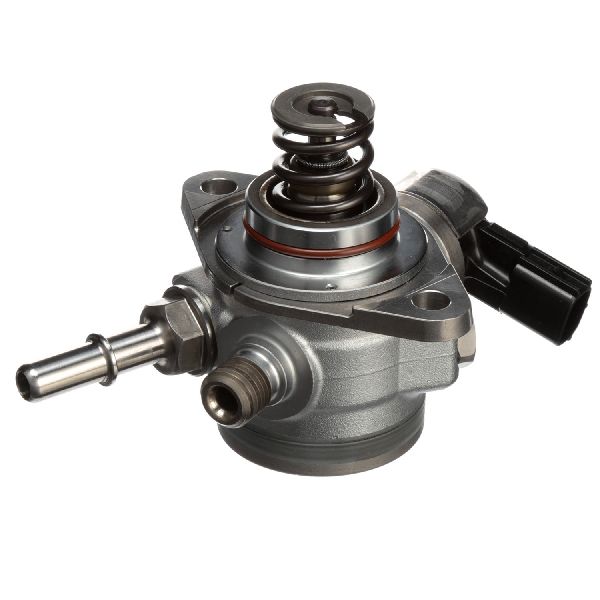
(OEM #CM5253)— This is the second most common cause, responsible for generating the high pressure required for the GDI system. It is a mechanical pump that wears out over time.
Trusted brands: Motorcraft, Bosch
OEM price range: $400-$600
Aftermarket price range: $250-$450
Related Codes That Often Appear With This One
- P0087 — This code means 'Fuel Rail/System Pressure - Too Low'. It is a very common companion code, as a failing HPFP or a major leak will cause pressure to drop below the commanded level, triggering both codes.
- P0193 — This code means 'Fuel Rail Pressure Sensor Circuit High'. It can appear if the sensor is failing electrically and shorting to voltage, sending a constant high signal.
- P00C6 — This code means 'Fuel Rail Pressure Too Low - Engine Cranking'. It specifically points to a lack of pressure during startup, which can be caused by a weak HPFP or a sensor giving a false reading at startup.
Technical Service Bulletins (TSBs) & Recalls
- TSB 18-2361: Contrary to some online chatter, this TSB is for 'Seat Pan Looseness, Lateral Movement, Or Clunk/Thump Noise On Turns' and is unrelated to P0191 or engine wiring.
- Recall 18S32 / NHTSA 18V-735: This critical safety recall addresses a faulty Canister Purge Valve (CPV) that sticks open, causing excessive vacuum that can deform the fuel tank. Symptoms include stalling, inaccurate fuel gauge, and other drivability issues that can be confused with P0191.
Platform-Specific Known Issues
- Recall 18S32: This recall was for a faulty canister purge valve that could cause stalling and other fuel system issues. While it typically sets EVAP codes (like P1450 or P0456), the stalling symptom can be confused with a P0191 fault. It's important to verify if this recall has been performed, as it involves a PCM reprogram and potential replacement of the CPV, canister, and fuel tank.
- Cold Soak Startup: Some owners report the P0191 code only appears on the first start of the day after the vehicle has sat overnight. This can indicate a slow leak in the high-pressure system (e.g., from an injector or the HPFP itself) that allows pressure to bleed off over several hours.
Mechanic-Grade Diagnostic Values
- High-Pressure FRP Sensor Signal Voltage (Key On, Engine Off) — expected: ~0.5 V. Failure: Voltage is stuck high, near 4.7V - 5.0V (indicates short for P0193) or is erratic/implausible for P0191.
- FRP Sensor 5V Reference Voltage (at connector, sensor unplugged, KOEO) — expected: ~5.0 Volts. Failure: A reading near zero, such as 90 millivolts (0.09V), points to an open or short in the reference circuit, often from harness chafing.
- FRP Sensor Signal Wire Voltage (at connector, sensor unplugged, KOEO) — expected: Near 0 V. Failure: Voltage (especially 5V or 12V) is present, indicating a short to power in the wiring harness between the sensor and the PCM.
- Low-Side Fuel Pressure (supplying the HPFP) — expected: 55-75 PSI. Failure: Pressure below this range indicates a problem with the in-tank pump or filter, which will starve the HPFP.
- Scan Tool 'Actual Fuel Rail Pressure' PID (KOEO) — expected: Should show some residual pressure. If it bleeds to 0 PSI quickly, there may be a leak.. Failure: A reading of 0 PSI when other symptoms are present can point to an electrical fault (like a severed 5V reference wire) rather than a true lack of pressure.
Scan Tool Commands That Help
- FORScan / Ford IDS: Live Data Monitoring: FRP_V (Fuel Rail Pressure Voltage), FRP (Actual Fuel Rail Pressure), FRP_DSD (Desired Fuel Rail Pressure) — These PIDs are essential for diagnosing P0191. Comparing desired vs. actual pressure under load helps identify a weak HPFP. Monitoring the voltage PID can instantly reveal an electrical fault; for example, a reading of 0V or 5V with the key on points to a circuit issue, not a mechanical one.
Wiring & Ground Locations
- High-Pressure FRP Sensor Connector — On the fuel rail, located on the passenger side of the engine, partially under the intake manifold.. This is the primary connection point to test for 5V reference, ground, and signal voltage to determine if the fault is in the sensor, wiring, or PCM.
- Low-Pressure Sensor Wiring Harness Chafe Point — Where the low-pressure sensor wiring harness is secured by a plastic barb to a sharp corner on the rear of the intake manifold.. This is a well-documented failure point that specifically causes P0192 (Circuit Low) but is a critical wiring issue in the same area. The harness rubs through, severing the 5V reference (Gray wire). While P0191 is a 'Range/Performance' code, severe wiring damage here could potentially trigger it.
- FRP Sensor Connector Pinout (Typical) — At the sensor connector itself.. Knowing the wire colors is critical for testing. For the 2.0L GDI, typical colors are: Gray wire for 5V Reference, Blue/Brown for Signal Output to PCM, and a third wire for Ground. Verifying these inputs/outputs is the fastest way to isolate the fault.
Real Owner Repair Stories
- Ford Owners Club (2012 Ford Focus 1.0L EcoBoost (shares GDI principles)) — P0191 and 'Engine Malfunction' light appeared only at key-on if the car had been sitting for several hours. Restarting the engine would clear the message.
❌ Tried (didn't work) Replaced Fuel Rail Pressure (FRP) sensor, Replaced High-Pressure Fuel Pump (HPFP)
✅ What actually fixed it A Ford dealer discovered the priming function for the low-pressure pump was 'deactivated' in the PCM software. A PCM reprogram reactivated the priming sequence and resolved the key-on fault permanently. - YouTube - Channel: L8R HP (2014 Ford Focus) — P0087 (Fuel Pressure Too Low), limp mode, long crank, no power.
❌ Tried (didn't work) Initial diagnosis pointed towards a sensor or wiring.
✅ What actually fixed it The High-Pressure Fuel Pump (HPFP) was faulty. After replacement, the scan tool showed the 'Actual Fuel Rail Pressure' immediately matched the 'Desired Fuel Rail Pressure', and all symptoms were resolved. - YouTube - Channel: Fix It All (2013 Ford Focus 2.0L) — P0192 and P00C6, crank no-start or very long crank, no power. Scan tool showed 0 PSI actual fuel pressure and 0.09V on the 5V reference line.
❌ Tried (didn't work) Initial thought was a bad sensor or fuel pump.
✅ What actually fixed it A visual inspection revealed the low-pressure fuel sensor wiring harness had chafed through where it was routed around the intake manifold. Repairing the broken wires restored the 5V reference, and the car started and ran perfectly.
When the Usual Fixes Don't Work
- In one documented case for a similar Ford GDI engine, both the high-pressure fuel pump and the fuel rail pressure sensor were replaced, but the P0191 code persisted only on cold starts. The ultimate fix was not a hardware component but a PCM software update from a Ford dealer. The original software had an error where the low-pressure pump's priming cycle was deactivated, causing the PCM to see no fuel pressure at key-on and setting the code before the engine even cranked.
OEM Part Supersession History
BV6Z-9F972-A (Engineering Number)→CM5229 (Service Part Number)— Standard Ford part number transition from engineering/production to service/replacement.
Heads up: BV6Z-9F972-A and CM5229 refer to the same high-pressure FRP sensor and are interchangeable. Bosch P/N 0261230262 is the original OEM manufacturer part.
Model Year Variations Within This Range
- 2012-2014: TSB 18-2062 (unrelated to P0191 but for the same area) noted potential for wiring harness chafing near the intake manifold on these earlier models, which could affect circuits like the FRP sensor.
Diagnostic Flowchart
Other Known Issues on This Vehicle
Issues unrelated to this code that are worth knowing about as an owner of this generation:
- PowerShift (DPS6) Automatic Transmission Failure 🔴 High — Extremely common on 2012-2016 models. Symptoms include shuddering, hesitation, jerking, and complete loss of drive. (Ref: Subject of multiple lawsuits and customer satisfaction programs, but not a universal safety recall for all years.)
- Faulty Canister Purge Valve (CPV) 🔴 High — Very common across all 2012-2018 models with the 2.0L engine. Causes stalling (especially after refueling), rough idle, and difficulty starting. (Ref: Ford Safety Recall 18S32 (NHTSA 18V-735).)
- Collapsing Passenger-Side Engine Mount 🟠 Medium — Common failure item. The hydraulic mount collapses, causing the engine to rest on the frame bracket, leading to severe vibration and harshness felt in the cabin at idle and during acceleration.
- Power Steering Assist Failure 🔴 High — More prevalent on earlier models (especially 2012-2014). Can result in a sudden and complete loss of power steering, making the vehicle very difficult to steer. (Ref: Subject of NHTSA investigations and some regional customer satisfaction programs.)
- Faulty Door Latch 🔴 High — Widespread issue where a faulty latch spring can cause doors to not close properly or, in some cases, fly open while driving. (Ref: Covered by multiple Ford recalls.)
Used vs. New Parts: Buying Guide for This Vehicle
When a used part is the smart pick: For the expensive High-Pressure Fuel Pump (HPFP), a used part from a low-mileage, verified-running donor vehicle can be a cost-effective option. For the Fuel Rail Pressure (FRP) sensor, the low cost and high failure rate of the part make buying a new OEM or high-quality aftermarket part the smarter choice.
Donor-vehicle mileage cap: roughly under 70000 miles for the part to have meaningful remaining life.
What to inspect on the donor part:
- For a used HPFP, verify the donor vehicle's mileage and ensure it was not from a front-end collision.
- Inspect the electrical connector on the used pump for any signs of corrosion or damage.
- Ensure the cam follower (tappet) surface is smooth and free of scoring or excessive wear.
- Avoid parts from vehicles that have been sitting in a junkyard exposed to weather for a long time, as internal corrosion is a risk.
OEM-only on this vehicle (don't cheap out):
- High-Pressure Fuel Pump (HPFP): While some aftermarket options exist, the OEM Motorcraft or the original manufacturer (Bosch) are strongly recommended for reliability and correct pressure delivery.
Aftermarket brands forum-validated for this vehicle:
- Bosch (for the FRP sensor, as they are the OEM supplier)
- Standard Motor Products (SMP)
- NTK
Brands owners have reported issues with on this vehicle:
- No-name, unbranded sensors from online marketplaces are frequently reported to fail quickly or be dead-on-arrival. Given the labor to access the part, it is not worth the risk.
Real Owner Stories
Aggregated from forums and TSBs cited above. Mileages and costs reflect what owners reported in those sources.
2012-2018 Ford Focus 2.0L GDI
Symptoms: The engine would crank but would not start.
What fixed it: Unplugging the Fuel Rail Pressure (FRP) sensor allowed the car to start, confirming the sensor was sending an irrational signal. Replacing the FRP sensor resolved the issue.
Source hint: focusfanatics.com forum threads
Ford Focus 1.0L EcoBoost (GDI)
Symptoms: The P0191 code only triggered during startup after the vehicle had been sitting for several hours.
What fixed it: Diagnosis indicated a pressure bleed-off issue in the high-pressure fuel system during the soak period.
Source hint: fordownersclub.com user report
2012-2018 Ford Focus 2.0L GDI
Symptoms: Engine stalling unexpectedly at low speeds, when coming to a stop, or immediately after refueling.
What fixed it: While symptoms mimicked fuel pressure issues, the fix involved Ford Safety Recall 18S32, which required a PCM reprogram and potential replacement of the canister purge valve, canister, and fuel tank.
Source hint: Recall 18S32 / NHTSA 18V-735
Related OBD-II Codes
Frequently Asked Questions
Does TSB 18-2361 address the P0191 code or engine wiring issues on my Ford Focus?
My Focus stalls right after I fill up the gas tank; is this related to the P0191 code?
Is there a quick way to tell if my Fuel Rail Pressure (FRP) sensor is the cause of my crank-no-start?
Where is the Fuel Rail Pressure sensor located on the 2.0L GDI engine?
Can a bad high-pressure fuel pump (HPFP) cause P0191, and how is it different from the sensor failure?
Why does my P0191 code only appear first thing in the morning after the car sits?
Helpful Videos

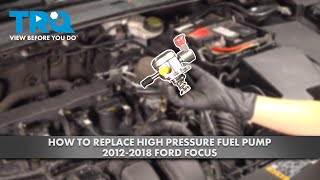
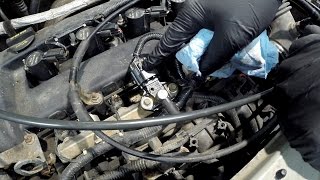

Used OEM Parts in Stock
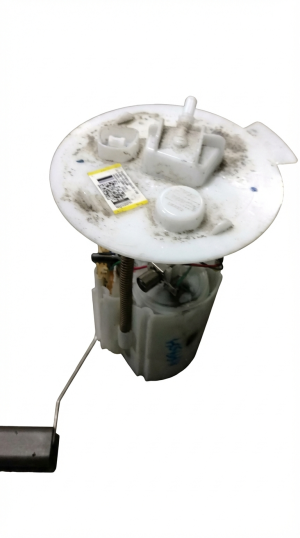
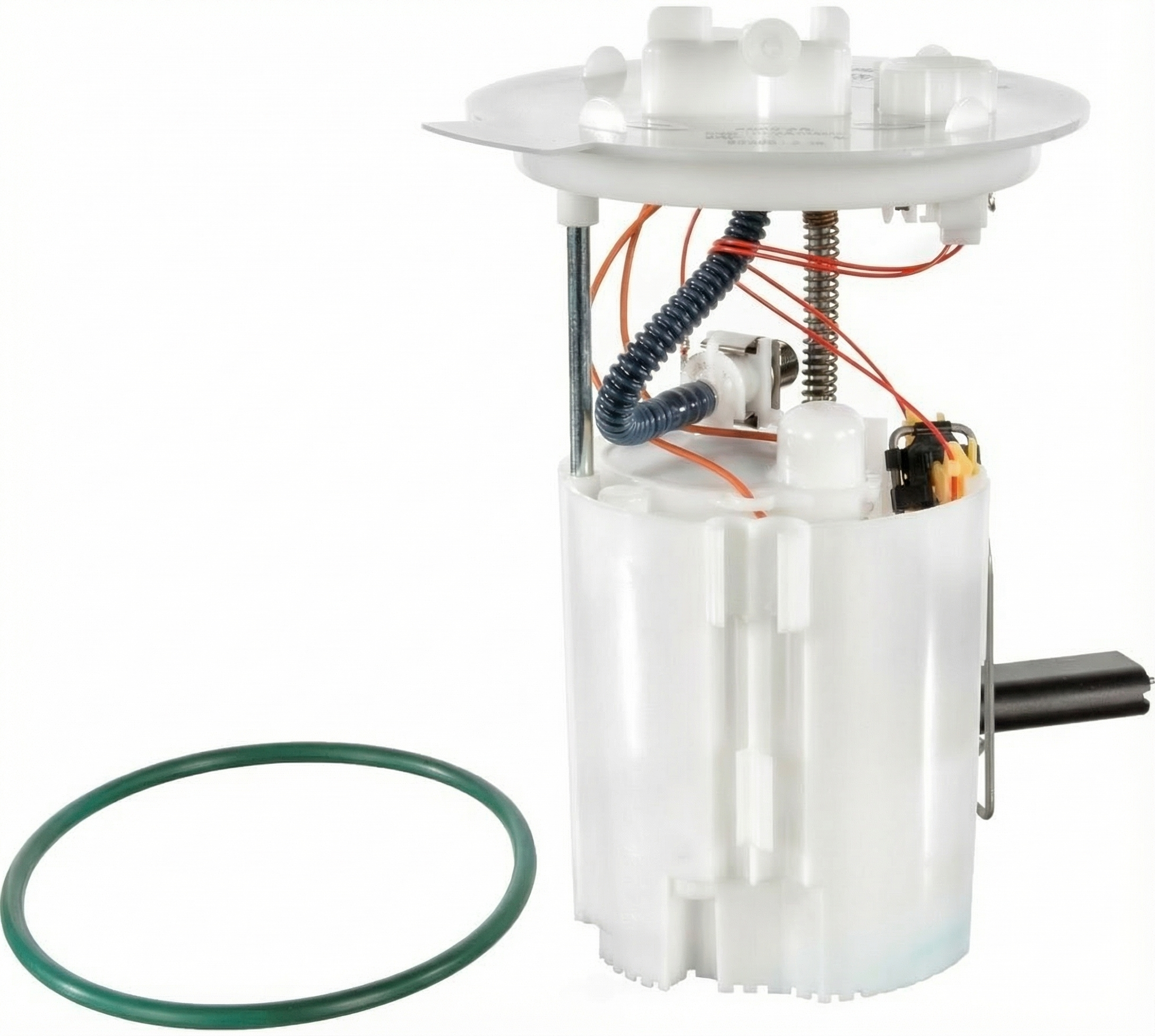
New Aftermarket Parts Available



The information in this article is provided for general reference and educational purposes only. Vehicle specifications, procedures, and part compatibility can vary by production date, trim level, and region. Always consult your vehicle's factory service manual and verify part numbers before purchasing or performing repairs. Safety-critical components such as airbags, seat belts, and braking systems should be installed by a qualified professional.
- Ford Focus:
- 🧭 Diagnostic Flowchart
- 🎬 Helpful Videos
- 🛍️ Shop This Part
- What's Unique About the 2012-2018 Ford Focus
- Symptoms You May Notice
- Most Likely Causes
- Rare But Worth Checking
- Diagnosis Steps
- Parts You'll Likely Need
- Related Codes That Often Appear With This One
- Technical Service Bulletins (TSBs) & Recalls
- Platform-Specific Known Issues
- Mechanic-Grade Diagnostic Values
- Scan Tool Commands That Help
- Wiring & Ground Locations
- Real Owner Repair Stories
- When the Usual Fixes Don't Work
- OEM Part Supersession History
- Model Year Variations Within This Range
- Other Known Issues on This Vehicle
- Used vs. New Parts: Buying Guide for This Vehicle
- Real Owner Stories
- 2012-2018 Ford Focus 2.0L GDI
- Ford Focus 1.0L EcoBoost (GDI)
- 2012-2018 Ford Focus 2.0L GDI
- Related OBD-II Codes
- Frequently Asked Questions
- 🎟️ Get 5% Off