

P0191 on 2005-2010 Ford Mustang 4.6L: Causes and Fixes for Fuel Rail Pressure Faults
For a P0191 code on a 2005-2010 Mustang GT, the most common causes are a faulty Fuel Rail Pressure (FRP) sensor or a clogged fuel filter. Start by checking these two items. Replacing the FRP sensor with a quality Motorcraft part is often the fix. If those are ruled out, the Fuel Pump Driver Module (FPDM) is the next likely suspect.
- P0191 on your Mustang GT means there's a problem with the fuel pressure reading.
- Start your diagnosis with the easiest and cheapest parts: check if the fuel filter is due for replacement.
- The most likely failed part is the Fuel Rail Pressure (FRP) sensor on the driver's side fuel rail. Use a quality Motorcraft or Bosch replacement.
- If the filter and sensor are good, investigate the Fuel Pump Driver Module (FPDM) in the trunk before condemning the more expensive fuel pump.
- Always confirm if the problem is the sensor's reading or the actual fuel pressure by using a mechanical gauge.
What's Unique About the 2005-2010 Ford Mustang
On the S197 Mustang with the 4.6L 3V V8, the fuel system uses a returnless design where the PCM controls fuel pressure by modulating the fuel pump's speed via a Fuel Pump Driver Module (FPDM). This system is sensitive to component failures. While the P0191 code can point to many parts, owners frequently find the issue is either the Fuel Rail Pressure (FRP) sensor itself or the FPDM located in the trunk. Forum discussions repeatedly stress the importance of using genuine Motorcraft or OEM-equivalent (like Bosch) parts, as these cars are known to be sensitive to aftermarket electronic components. A user on MustangForums.com noted that even new aftermarket coils and sensors can fail within days, reinforcing the 'Motorcraft or nothing' mantra for critical electronic parts on this platform.
Generation note: The 2005-2010 model years cover the first iteration of the S197 Mustang generation. A significant facelift occurred in 2010, but the 4.6L V8 engine and its fuel system architecture remained consistent, so the causes and fixes for P0191 are the same across this year range.
Symptoms You May Notice
- Check Engine Light is on
- Loss of engine power, especially during acceleration
- Engine hesitation or stumbling
- Rough idle or stalling
- Hard starting or no-start condition
- Increased fuel consumption
- Engine may backfire slightly or run erratically
- Car stumbles badly when trying to rev and then shuts off
- Replacing the fuel pump immediately without first checking the fuel filter, FRP sensor, and FPDM. The pump is more expensive and difficult to replace than the other components.
- Firing the 'parts cannon' by replacing multiple components with cheap aftermarket parts, which are known to fail quickly on this platform and can complicate diagnosis.
Most Likely Causes
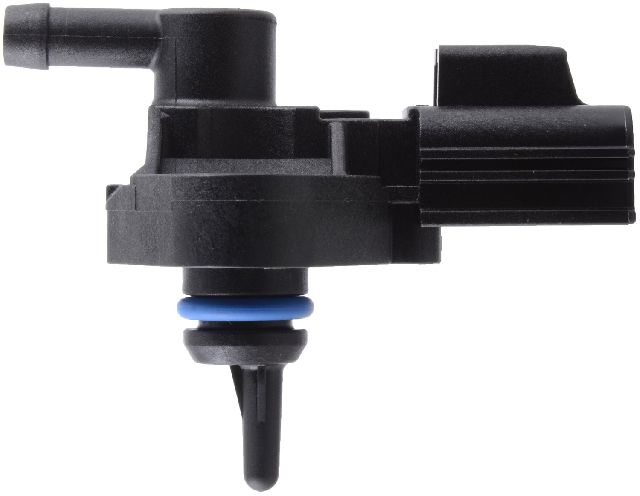
- Faulty Fuel Rail Pressure (FRP) Sensor 🔴 High Probability → Shop Fuel Pressure Sensor The sensor is a sensitive electronic component that can fail over time, sending incorrect voltage signals to the PCM. The internal diaphragm can break, leading to erratic readings or fuel leaking into the vacuum line. It's a very common failure point for this code.
How to confirm: With a scan tool, compare the fuel pressure PID to a mechanical gauge connected to the fuel rail. If the scan tool reading is erratic (e.g., jumping from 10 to 75 PSI) while the mechanical gauge is stable, the sensor is bad. The sensor is located on the driver's side fuel rail. You can also pull the vacuum line from the sensor; if there is any trace or smell of fuel, the sensor's internal diaphragm is ruptured and it must be replaced.
Typical fix: Replace the Fuel Rail Pressure sensor. It is highly recommended to use an OEM Motorcraft or Bosch replacement part, as Bosch is the original OEM supplier. NHTSA ODI #10446792 notes a case where the fuel rail pressure sensor was replaced specifically to address a P0191 code.
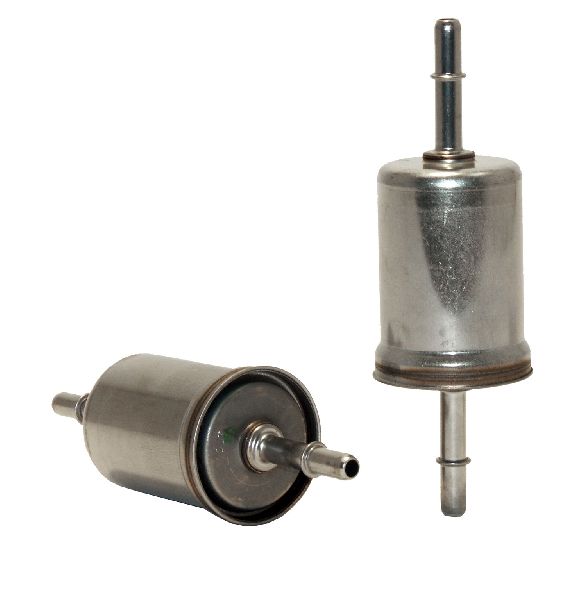
Est. part cost: $70-$120 - Clogged Fuel Filter 🔴 High Probability → Shop Fuel Filter The fuel filter is a maintenance item that is often neglected. A clogged filter restricts fuel flow, causing a drop in pressure that the PCM detects, triggering the P0191 code. This is a common and inexpensive first step in diagnosis.
How to confirm: If the fuel filter has not been replaced in over 30,000 miles, it's a likely suspect. A low fuel pressure reading on a mechanical gauge under load can also point to a restriction. The filter is located under the car, near the driver's side, covered by a small protective shield.
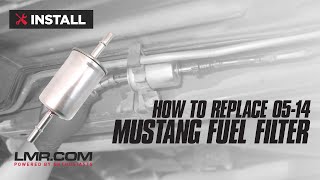
Typical fix: Replace the fuel filter. This is an inexpensive and straightforward maintenance task, though a special fuel line disconnect tool is required. 🎬 See this walkthrough on how to replace the fuel filter
Est. part cost: $15-$30 - Faulty Fuel Pump Driver Module (FPDM) 🟡 Medium Probability → Shop Fuel Pump This module controls the voltage to the fuel pump. On Mustangs, it is located in the trunk, typically on the driver's side behind the trim. While less prone to corrosion than on F-150s (where it's under the truck), it can still fail electronically, causing intermittent or no fuel pressure.
How to confirm: Check for power at the FPDM connector and output to the fuel pump. A scan tool may show related codes like P1233 (FPDM Offline). Diagnosis can involve checking for a command signal from the PCM and voltage output to the pump. An aftermarket tuner can sometimes interfere with the FPDM's operation, causing this code.
Typical fix: Replace the Fuel Pump Driver Module.
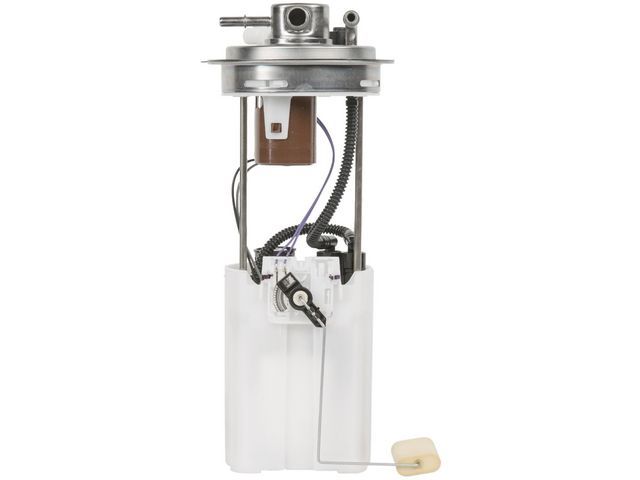
Est. part cost: $75-$150 - Failing Fuel Pump ⚪ Low Probability → Shop Fuel Pump The in-tank fuel pump can weaken with age and be unable to supply the pressure commanded by the FPDM, especially under high demand. This can also be caused by air bubbles forming around the pump during a long cruise, as noted in TSB 06-9-9. In some Ford vehicles, mechanical failures can occur; NHTSA ODI #10780588 describes a situation where bolts holding an internal fuel pump broke off, resulting in a P0191 code and a no-start condition.
How to confirm: Perform a fuel pressure test with a mechanical gauge. If pressure is consistently low (spec is ~40 PSI at idle) even with a new filter and a functioning FPDM, the pump is likely weak.
Typical fix: Replace the in-tank fuel pump assembly.
Est. part cost: $200-$400 - Damaged Wiring or Connectors ⚪ Low Probability Engine heat and vibration can damage the wiring or connector for the FRP sensor. A poor connection can cause an out-of-range signal. This can also affect the FPDM or fuel pump wiring. Manufacturer service bulletin TSB 19-2231 notes that an engine harness chafe on the PCM bracket can lead to an illuminated MIL and code P0191.
How to confirm: Visually inspect the wiring harness and connector for the FRP sensor for any signs of damage, corrosion, or loose pins. Wiggle the connector with the engine running to see if it affects idle. Perform a pin-to-pin continuity check on the circuit if a visual inspection is inconclusive.
Typical fix: Repair the damaged wiring or replace the connector pigtail.
Est. part cost: $10-$30
Rare But Worth Checking
- Inertia Fuel Shutoff Switch: This switch, designed to cut fuel in an accident, can sometimes be partially tripped or fail, causing intermittent fuel delivery issues. It's located in the driver's side footwell, behind the kick panel near the hood release.
- Hesitation after long cruise (TSB 06-9-9): Ford issued TSB 06-9-9 for an issue where air bubbles can form around the fuel pump during a long cruise. When the driver accelerates after stopping, the pump ingests these bubbles, causing a hesitation which could potentially trigger a P0191 if severe enough.
Diagnosis Steps
- Connect a scan tool and read the freeze frame data to see the conditions when the code was set.
- Monitor the Fuel Rail Pressure (FRP) PID on the scan tool with the key on, engine off. Note the reading.
- Safely relieve fuel system pressure, then connect a mechanical fuel pressure gauge to the schrader valve on the fuel rail.
- Turn the key on to pressurize the system. Compare the mechanical gauge reading to the scan tool PID. If they differ significantly or the PID is erratic, the FRP sensor is likely faulty.
- If the readings match but are low (typically should be around 39-40 PSI at idle), suspect a fuel delivery problem.
- Start by replacing the fuel filter, as it's a cheap and common maintenance item. A special tool is needed for the fuel lines.
- If pressure is still low, inspect the Fuel Pump Driver Module (FPDM) in the trunk for issues. Check its connectors and test for power in and out.
- Inspect the vacuum line connected to the FRP sensor for the presence of fuel. If fuel is found, the sensor's diaphragm has failed.
- If the filter and FPDM are good, the in-tank fuel pump is the next likely culprit.
- Throughout the process, inspect all related wiring and connectors for damage or corrosion, especially the harness for the FRP sensor.
Parts You'll Likely Need
- Fuel Rail Pressure Sensor
(OEM #3R3Z-9F972-AB)— This is the most common failure part for a P0191 code where the issue is the sensor reading itself, not actual fuel pressure.
Trusted brands: Motorcraft, Bosch
OEM price range: $90-$140
Aftermarket price range: $50-$100 - Fuel Filter
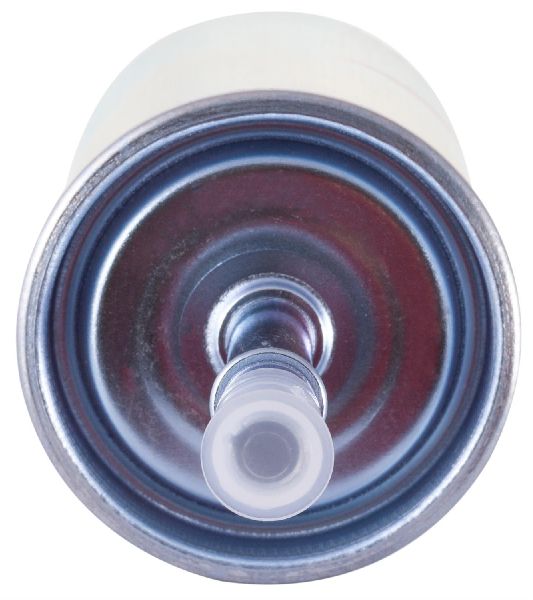
(OEM #FG-1083)— A clogged fuel filter is a frequent cause of low fuel pressure and is a simple, inexpensive maintenance item to rule out.
Trusted brands: Motorcraft, WIX
OEM price range: $20-$35
Aftermarket price range: $15-$25
Related Codes That Often Appear With This One
- P0171 — System Too Lean (Bank 1) - If the fuel pressure is genuinely low, the engine will run lean, and the oxygen sensors will report this to the PCM.
- P0172 — System Too Rich (Bank 1) - If the FRP sensor is faulty and reporting lower pressure than actual, the PCM might increase pump output, causing a rich condition.
- P0300-P0308 — Misfire codes can occur because incorrect fuel pressure leads to poor combustion in one or more cylinders. A P0191 is often a precursor to misfire codes.
- P1233 — Fuel Pump Driver Module Offline - This code specifically points to a problem with the FPDM, which directly causes the fuel pressure issue that triggers P0191.
Technical Service Bulletins (TSBs) & Recalls
- TSB 06-9-9: Some 2005-2006 Mustangs may exhibit a hesitation on acceleration after a long cruise due to air bubbles forming around the fuel pump.
- TSB 08-7-6: Details the difficult procedure for removing the original two-piece spark plugs on the 4.6L 3V engine to prevent them from breaking off in the cylinder head.
- TSB 18-2326: A manufacturer bulletin notes that vehicles may exhibit an illuminated MIL with diagnostic trouble code P0191 stored in the PCM, requiring specific service procedure steps to correct.
Platform-Specific Known Issues
- Owner Experience: Intermittent Hesitation and Hard Starts: An owner on MustangForums.com reported a P0191 code accompanied by hard starting (both cold and hot) and hesitation when applying moderate throttle. Despite having previously replaced the fuel pump, fuel filter, and FRP sensor with OEM parts, the issue returned, highlighting how elusive this problem can be.
- Owner Experience: The 'Parts Cannon' Trap: On MustangForums.com, a 2007 GT owner with P0191, P0171, and P0301 replaced the fuel filter, FRP sensor, all spark plugs, and all ignition coils. The problem returned within days. A responding user warned against using non-Motorcraft/Bosch parts, stating that aftermarket electronics are known to fail quickly on these cars, and advised starting diagnosis by swapping suspect coils with known good ones.
Mechanic-Grade Diagnostic Values
- Fuel Rail Pressure (FRP) Sensor Signal Voltage — expected: 0.5V to 4.5V. At idle, approximately 1.0V. Should increase with throttle.. Failure: Voltage is stuck, erratic, or does not correspond to actual pressure measured with a mechanical gauge. A reading below 0.5V or above 4.5V indicates a circuit fault.
- Fuel Pressure (Mechanical Gauge) — expected: Approximately 39-40 PSI at idle.. Failure: Pressure is significantly lower than 39 PSI, indicating a delivery issue (filter, FPDM, pump). Pressure that doesn't hold after shutdown may indicate a leaking injector or check valve.
- FRP Sensor Reference Voltage (VREF) — expected: 5.0V at the sensor connector (Pin 1, typically a Brown/White wire).. Failure: Voltage significantly lower or higher than 5.0V points to a PCM or wiring issue.
- FRP Sensor Signal Return (Ground) — expected: Less than 1.0 ohm of resistance between the sensor connector ground pin (Pin 2, typically a Gray/Red wire) and chassis ground.. Failure: High resistance indicates a bad ground connection, which can cause incorrect sensor readings.
Scan Tool Commands That Help
- Ford IDS (Integrated Diagnostic System): Fuel Pump Command — This bidirectional control allows a technician to command the fuel pump to a specific duty cycle (e.g., 25%, 50%, 75%) to test the response of the FPDM and the fuel pump. It helps verify if the FPDM is receiving the command from the PCM and if the pump can deliver the requested pressure.
- Ford IDS (Integrated Diagnostic System): Datalogger - PIDs: FRP, FRP_DSD, FP_DUTY — Monitoring Fuel Rail Pressure (FRP), Desired Fuel Rail Pressure (FRP_DSD), and Fuel Pump Duty Cycle (FP_DUTY) simultaneously. This allows a technician to see if the PCM's desired pressure matches the actual pressure and what duty cycle is being commanded to the FPDM to achieve it. A high duty cycle with low actual pressure points to a mechanical delivery problem (filter, pump).
Wiring & Ground Locations
- C168 — The 3-pin electrical connector on the Fuel Rail Pressure (FRP) sensor itself, located on the driver's side fuel rail.. This is the primary connection to check for corrosion, damage, or to perform voltage/resistance tests. Pin 1: VREF, Pin 2: SIGRTN, Pin 3: FRP Signal.
- G400 — In the trunk, on the driver's side, behind the trunk liner.. This is the primary ground point for the Fuel Pump Driver Module (FPDM). A loose or corroded connection here can cause intermittent FPDM operation, leading to erratic fuel pressure and a P0191 code.
- G104 — On the driver's side front fender apron, located behind the battery.. This is a major chassis and PCM ground point. While not the direct ground for the FRP sensor, a poor connection here can introduce electrical noise and cause a variety of sensor reading issues across the vehicle.
- G201 — Behind the passenger side kick panel, near the PCM.. This is a dedicated ground for the Powertrain Control Module (PCM). A fault here could cause widespread PCM issues, including incorrect processing of the FRP sensor signal.
- PCM Connector C175e — The middle of the three stacked connectors at the PCM, located in the passenger side engine bay.. The FRP sensor circuit wires terminate here. Specifically, for the 4.6L, the FRP signal is on Pin 32 (Gray/Red), VREF on Pin 57 (Brown/White), and Signal Return on Pin 58 (Gray/Red). This is the location for pin-to-pin continuity checks from the sensor.
Real Owner Repair Stories
- S197Forum.com user (2010 Mustang GT with aftermarket supercharger and tune) — Car sputtered and died. After restart, it ran terribly rich (A/F ratio ~10), fuel pressure spiked to 75 PSI, and it would stall within seconds.
❌ Tried (didn't work) Initial visual inspection under the hood showed no obvious issues.
✅ What actually fixed it The issue was traced back to the custom tune. The owner had recently installed GT500 fuel pumps, and the tune had not been properly adjusted for the higher flow. The PCM was commanding a high duty cycle, causing the pressure spike. A revised tune that correctly calibrated the fuel pump duty cycle resolved the P0191 and rich condition. - TheMustangSource.com user (2005-2010 Mustang GT) — After a 45-minute drive, the car lost all power, died, and would barely run upon restart. Code P0191 was present. After being towed and sitting overnight, the car started and ran perfectly.
❌ Tried (didn't work) The owner suspected bad fuel, as a similar issue a year prior was resolved with Seafoam after finding rusty water in the gas., The problem was highly intermittent, making diagnosis difficult.
✅ What actually fixed it The problem returned and eventually threw code P1233 (Fuel Pump Driver Module Offline) along with P0191. Replacing the Fuel Pump Driver Module (FPDM) in the trunk permanently fixed the intermittent stalling and fuel pressure issue. - NHTSA ODI #11478786 — An owner reported multiple equipment failures in the fuel system, with code P0191 appearing two to three times per day, even on a vehicle with low mileage.
OEM Part Supersession History
F8CZ-9F972-BC, XW4Z-9F972-BA→3R3Z-9F972-AA, then 3R3Z-9F972-AB— Standard part lifecycle updates and revisions for improved reliability and material changes.
Heads up: The 3R3Z-9F972-AB is the final, most current part number and is widely used across many Ford platforms from the early 2000s, including Crown Victoria, E-Series vans, and Explorer, making it a common and well-vetted component.
Model Year Variations Within This Range
- 2005-2006: Early S197 models were more prone to the issue described in TSB 06-9-9, where air bubbles could form around the fuel pump pickup during long cruises, causing a hesitation or stumble upon acceleration after a stop. This was addressed with a revised fuel pump assembly design in later years.
- 2010: The 2010 model year received a facelift and a slight power bump for the 4.6L V8 (from 300 hp to 315 hp) due to a revised cold air intake and engine calibration. However, the core fuel system architecture, including the FRP sensor, FPDM, and returnless design, remained the same as the 2005-2009 models.
Diagnostic Flowchart
Other Known Issues on This Vehicle
Issues unrelated to this code that are worth knowing about as an owner of this generation:
- Two-Piece Spark Plug Breakage 🔴 High — Extremely common on original plugs for 2005-early 2008 models. Occurs during removal. (Ref: TSB 08-7-6 provides a specific, lengthy procedure to minimize breakage.)
- Passenger Footwell Water Leak 🟠 Medium — Common issue caused by clogged cowl drains under the windshield, leading to water entering the cabin via the cabin air filter opening. (Ref: TSB 07-14-6 (referenced in forums) addresses sealing the cowl area.)
- Premature Alternator Failure 🟠 Medium — Alternators on 2005-2008 models are known to fail, sometimes repeatedly. High RPMs are often cited as a cause of failure.
- Plastic Intake Manifold Cracking 🟡 Low — Less common on the 3V than earlier 2V engines, but the plastic intake manifold can still develop cracks, especially around the thermostat housing, leading to coolant leaks.
- Thermostat Housing Leak 🟠 Medium — The plastic thermostat housing is a common failure point, leading to coolant leaks at the front of the engine. It is often replaced with an aluminum aftermarket part.
Used vs. New Parts: Buying Guide for This Vehicle
When a used part is the smart pick: For structural components like a fuel rail or connector pigtails, a used part from a reputable salvage yard is acceptable. A complete, low-mileage fuel pump assembly can be a cost-effective short-term solution if the original has failed, but its remaining life is uncertain.
Donor-vehicle mileage cap: roughly under 80000 miles for the part to have meaningful remaining life.
What to inspect on the donor part:
- For a fuel pump assembly, check the donor vehicle's mileage; under 80,000 miles is preferable.
- Inspect electrical connectors for any signs of corrosion, melting, or brittle plastic.
- When buying a used FPDM, inspect the rear aluminum plate for any signs of white powder or pitting from corrosion, even though it's less common on Mustangs than F-150s.
OEM-only on this vehicle (don't cheap out):
- Fuel Rail Pressure (FRP) Sensor
- Fuel Pump Driver Module (FPDM)
Aftermarket brands forum-validated for this vehicle:
- Bosch (for the FRP sensor, as they are the OEM supplier)
- Motorcraft (OEM)
Brands owners have reported issues with on this vehicle:
- Dorman (for the FPDM): Forum users report a high rate of premature failure and intermittent issues, sometimes worse than the part it replaced.
- Generic, no-name electronic sensors from online marketplaces.
Real Owner Stories
Aggregated from forums and TSBs cited above. Mileages and costs reflect what owners reported in those sources.
2005 Mustang GT 4.6L V8
Symptoms: Hard starting (both cold and hot) and hesitation when applying moderate throttle; the code returned even after replacing the fuel pump, filter, and sensor.
What fixed it: The source indicates this was a complex diagnostic path involving potential wiring or recurring component failure, highlighting that even OEM replacements require thorough circuit verification.
Source hint: MustangForums.com thread titled 'HELP P0191 error code!!!!!! 2005 Mustang GT'
2007 Mustang GT 4.6L V8
Symptoms: The car threw P0191 along with lean and misfire codes. The owner replaced the fuel filter, FRP sensor, spark plugs, and ignition coils, but the problem returned within days.
What fixed it: The resolution emphasized avoiding aftermarket electronics and using 'Motorcraft or nothing' for sensors and coils to ensure compatibility.
Source hint: MustangForums.com thread titled 'P0191 Fuel Rail Pressure Sensor Circuit - MustangForums.com'
2005-2010 Mustang (S197)
Symptoms: The code appeared immediately after making a pass at the drag strip.
What fixed it: Replacing the Fuel Rail Pressure (FRP) sensor after checking the vacuum line for fuel, as the diaphragm is a common failure point under high demand.
Source hint: S197 Mustang Forum thread titled 'P0191 | S197 Mustang Forum'
Related OBD-II Codes
Frequently Asked Questions
I have a 2005 Mustang GT; does TSB 06-9-9 apply to my car's P0191 code?
Which brand of Fuel Rail Pressure (FRP) sensor should I buy for my 4.6L V8 Mustang?
Where is the Fuel Pump Driver Module (FPDM) located on the 2005-2010 Mustang?
How can I tell if the Fuel Rail Pressure sensor diaphragm has failed without a scan tool?
Is there a specific maintenance item I should check first for a P0191 on my Mustang?
Can my aftermarket tuner cause a P0191 code on my 2005-2010 Mustang?
Helpful Videos
We Have This Part in Stock


The information in this article is provided for general reference and educational purposes only. Vehicle specifications, procedures, and part compatibility can vary by production date, trim level, and region. Always consult your vehicle's factory service manual and verify part numbers before purchasing or performing repairs. Safety-critical components such as airbags, seat belts, and braking systems should be installed by a qualified professional.
- Ford Mustang:
- 🧭 Diagnostic Flowchart
- 🎬 Helpful Videos
- 🛍️ Shop This Part
- What's Unique About the 2005-2010 Ford Mustang
- Symptoms You May Notice
- Most Likely Causes
- Rare But Worth Checking
- Diagnosis Steps
- Parts You'll Likely Need
- Related Codes That Often Appear With This One
- Technical Service Bulletins (TSBs) & Recalls
- Platform-Specific Known Issues
- Mechanic-Grade Diagnostic Values
- Scan Tool Commands That Help
- Wiring & Ground Locations
- Real Owner Repair Stories
- OEM Part Supersession History
- Model Year Variations Within This Range
- Other Known Issues on This Vehicle
- Used vs. New Parts: Buying Guide for This Vehicle
- Real Owner Stories
- 2005 Mustang GT 4.6L V8
- 2007 Mustang GT 4.6L V8
- 2005-2010 Mustang (S197)
- Related OBD-II Codes
- Frequently Asked Questions
- 🎟️ Get 5% Off