

P0191 on 2015-2019 Hyundai Sonata: Fuel Rail Pressure Sensor Causes and Fixes
On a 2015-2019 Sonata with a GDI engine, code P0191 is most often caused by a failing High-Pressure Fuel Pump (HPFP), a known issue. Symptoms include hard starts, stalling, and hesitation. Expect to pay $600-$1200 for a new HPFP replacement at an independent shop, more at a dealer.
- P0191 on a 2015-2019 Sonata GDI almost always points to a problem in the high-pressure fuel system.
- The most likely culprit is a failing High-Pressure Fuel Pump (HPFP), especially if code P0087 is also present.
- Before replacing any parts, check for the less expensive possibility of a bad wiring connection at the Fuel Rail Pressure Sensor.
- This is a serious code that can cause dangerous stalling; do not continue to drive the vehicle.
- Due to the extreme pressure and fire risk, this repair is best left to a professional mechanic.
What's Unique About the 2015-2019 Hyundai Sonata
The 2.0T and 2.4L GDI (Gasoline Direct Injection) engines in this Sonata generation use a high-pressure fuel system to operate effectively. This system has two fuel pumps: a low-pressure pump in the tank and a high-pressure fuel pump (HPFP) driven by a dedicated lobe on the camshaft. The HPFP is a widely documented failure point on these engines and is the most common cause of code P0191. A common failure mode is the internal collapse of the pump's plunger. Additionally, the high-pressure fuel pipe connecting the pump to the rail was subject to a safety recall, making the integrity of the entire high-pressure system a primary concern when this code appears.
Symptoms You May Notice
- Sudden loss of engine power and entering 'limp mode'
- Engine hesitation or sputtering during acceleration.
- Hard starting or extended cranking time, especially when cold.
- Rough or unstable idle.
- Engine stalling, especially when coming to a stop or at idle.
- Check Engine Light is on
- Strong smell of gasoline in the engine oil, indicating an internal HPFP leak.
- Rough or weird shifting, even without a transmission-specific code.
- Replacing the in-tank (low-pressure) fuel pump before diagnosing the high-pressure system.
- Replacing the Fuel Rail Pressure Sensor without first testing its wiring harness and connectors for faults.
Most Likely Causes
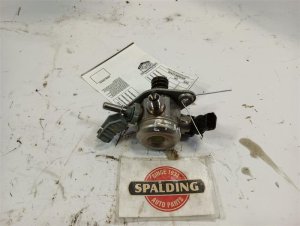
- Failing High-Pressure Fuel Pump (HPFP) 🔴 High Probability → Shop Fuel Pump The HPFP is a known common failure item on Hyundai/Kia GDI engines of this era. Internal failure or a collapsed plunger is a frequent diagnosis. The roller tappet that rides on the camshaft to drive the pump can also wear out.
How to confirm: A mechanic can use a scan tool to monitor commanded vs. actual fuel rail pressure. If actual pressure cannot meet the commanded pressure, especially under load, the HPFP is likely faulty. This is often seen with code P0087. A smell of fuel in the engine oil is another strong indicator of an internal HPFP seal failure.
Typical fix: Replacement of the high-pressure fuel pump and sometimes the associated roller tappet/lifter.
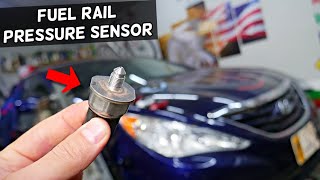
Est. part cost: $300-$800 - Faulty Fuel Rail Pressure Sensor (FRPS) 🟡 Medium Probability → Shop Fuel Pressure Sensor The sensor itself can fail, sending incorrect voltage signals to the ECM. However, it is often misdiagnosed when the true fault lies in the wiring.
How to confirm: With the engine off, a scan tool should show a very low (near zero) pressure reading. If it shows high pressure, the sensor is likely bad. If the reading is erratic, test the wiring harness between the sensor and the ECM for continuity and shorts before replacing the sensor.
Typical fix: If wiring is confirmed to be good, replace the fuel rail pressure sensor located on the end of the fuel rail.
Est. part cost: $70-$150 - Wiring Harness or Connector Issue 🟡 Medium Probability The wiring harness to the FRPS can become damaged from engine heat and vibration, or the connector pins can corrode or loosen. Rodent damage to the soy-based wire insulation is also a known possibility. An intermittent connection at a harness plug under the intake manifold is a documented issue.
How to confirm: Perform a continuity test on the three wires (5V reference, signal, ground) from the FRPS connector to the ECM. Wiggle the harness during the test to check for intermittent breaks or shorts. Visually inspect all related connectors for corrosion or damage.
Typical fix: Repair the damaged section of the wire or clean/replace the connector pigtail. In some cases, simply re-seating a loose connector can solve the problem.
Est. part cost: $10-$50
Rare But Worth Checking
- Leaking High-Pressure Fuel Pipe: → Shop Fuel Line This was subject to Hyundai Recall 180. A leak in this pipe can cause a loss of pressure, triggering P0191, and poses a serious fire hazard. It should be inspected, especially if the engine was ever replaced, as improper installation during an engine swap is the primary reason for the recall.
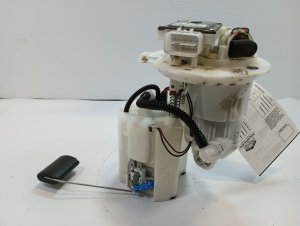
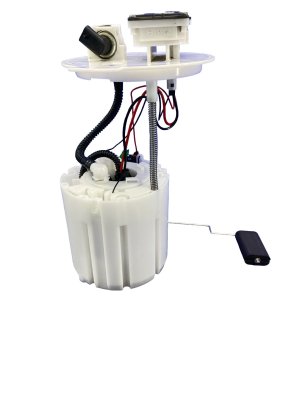
- Failing Low-Pressure Fuel Pump: → Shop Fuel Pump If the in-tank fuel pump is weak, it cannot supply enough fuel to the HPFP, causing it to be starved and unable to generate the required pressure. This is less common than an HPFP failure but should be tested if the high-pressure system checks out.
- Clogged Fuel Filter: → Shop Fuel Filter A severely clogged in-tank fuel filter can restrict flow to the HPFP, leading to low pressure readings under demand.
Diagnosis Steps
- Connect an OBD-II scanner and check for any other accompanying codes, particularly P0087 or P0193.
- Use the scanner's live data function to monitor 'Commanded Fuel Rail Pressure' and 'Actual Fuel Rail Pressure'.
- With the Key On, Engine Off (KOEO), the actual pressure should be very low (<100 PSI). If it reads high, suspect a faulty Fuel Rail Pressure Sensor (FRPS).
- Start the engine. At idle, the actual pressure should closely match the commanded pressure (typically 400-600 PSI). Briefly rev the engine; the actual pressure should rise and fall with the commanded pressure, potentially exceeding 2000 PSI under load.
- If the actual pressure is consistently lower than commanded, especially under load, the High-Pressure Fuel Pump (HPFP) is the primary suspect.
- If the pressure reading is erratic, intermittent, or stuck at a fixed value, inspect the FRPS wiring harness and connector for damage, corrosion, or loose pins. Perform a wiggle test while monitoring live data.
- Check the engine oil for a strong gasoline smell. If present, this strongly indicates an internal leak in the HPFP, requiring its replacement.
- Carefully inspect the high-pressure fuel pipe between the pump and the fuel rail for any signs of fuel leaks or strong fuel smells. Check if the vehicle was subject to Recall 180.
- If the HPFP is removed, inspect the roller tappet (lifter) that it rides on for excessive wear or damage.
- If the high-pressure side seems okay, test the low-pressure fuel pump to ensure it is delivering adequate pressure to the HPFP.
Parts You'll Likely Need
- High-Pressure Fuel Pump (HPFP)
(OEM #35320-2G740)— This is the most common failure point on these GDI engines that leads to code P0191.
Trusted brands: Hyundai (OEM), Bosch, Delphi
OEM price range: $500-$830
Aftermarket price range: $200-$550 - Fuel Rail Pressure Sensor (FRPS)
(OEM #35342-2G710)— This is the second most likely part to fail, either internally or due to a wiring issue, causing an incorrect signal.
Trusted brands: Hyundai (OEM), Delphi, Standard Motor Products (SMP)
OEM price range: $100-$150
Aftermarket price range: $60-$100 - HPFP Roller Tappet (Lifter)
(OEM #35325-2G700)— This is the mechanical lifter that the HPFP plunger rides on. It is a wear item and should be inspected whenever the HPFP is replaced. A worn tappet can cause noise and lead to premature failure of the new pump.
Trusted brands: Hyundai (OEM)
OEM price range: $20-$40
Aftermarket price range: $15-$30
Related Codes That Often Appear With This One
- P0087 — Stands for 'Fuel Rail/System Pressure - Too Low'. This code is a direct companion and is often set for the exact same reason: a failing HPFP that cannot supply the pressure commanded by the ECM.
- P0193 — Stands for 'Fuel Rail Pressure Sensor Circuit High Input'. Seeing this with P0191 often points to an electrical problem, such as a short in the sensor's wiring or an internal sensor failure causing erratic signals.
Technical Service Bulletins (TSBs) & Recalls
- 19-01-001H (Recall Campaign 180): Describes the inspection and replacement procedure for the high-pressure fuel pipe that may leak.
- 19-FL-003H: Details the procedure for writing the VIN to a new ECM/PCM during replacement.
Platform-Specific Known Issues
- Recall 180 (NHTSA 18V934 / TSB 19-01-001H): Affects 2015-2018 Sonatas. The high-pressure fuel pipe may have been damaged or improperly installed during prior engine replacements (a common event for these cars), leading to a fuel leak and fire risk. This can also cause a pressure drop that triggers P0191.
- TSB 19-FL-003H: Provides an updated procedure for programming the VIN into a new ECM/PCM. While not a direct fix for P0191, it is relevant if the ECM is suspected to be faulty and requires replacement.
Mechanic-Grade Diagnostic Values
- Fuel Rail Pressure Sensor (FRPS) Signal Voltage, Key On Engine Off (KOEO) — expected: Approx. 0.5V. Failure: A reading near 5.0V indicates a short or open in the circuit; a reading significantly different from 0.5V (e.g., 1.7V) can indicate a faulty sensor.
- Fuel Rail Pressure Sensor (FRPS) Signal Voltage, at Idle — expected: Approx. 1.4V - 1.8V. Failure: Voltage that is stuck, erratic, or does not correspond to engine load changes.
- High-Pressure Fuel System Pressure, at Idle — expected: Approx. 40 bar (~580 PSI). Failure: Actual pressure on a scan tool consistently lags more than 200-300 PSI behind 'Desired' pressure, especially under load.
- Low-Pressure Fuel System Pressure (feeding HPFP) — expected: 49-65 PSI. Failure: Pressure below 45 PSI suggests a weak in-tank pump or clogged filter.
- FRPS Reference Voltage at sensor connector — expected: 5.0V with key on. Failure: No voltage or low voltage points to a wiring issue or a problem with the PCM's 5V reference circuit.
Scan Tool Commands That Help
- Hyundai GDS (or advanced generic scanner): Fuel Pump Activation / Fuel System Test — Allows the technician to run the low-pressure in-tank fuel pump with the engine off to test its ability to build and hold pressure, helping to isolate a weak in-tank pump.
- Hyundai GDS (or advanced generic scanner): Fuel System Bleed — After replacing components like the HPFP or fuel filter, this function cycles the pump to purge air from the fuel lines, ensuring accurate pressure readings and preventing hard starts.
Wiring & Ground Locations
- Engine Ground Strap — Typically a braided cable connecting the engine block to the vehicle's chassis/frame, often near a motor mount or on the back of the engine block.. A poor engine ground can cause a host of electrical issues, including erratic sensor readings. While not a primary cause, verifying the ground is clean and tight is a crucial step in diagnosing any electrical fault code like P0191.
- FRPS Connector — On the end of the high-pressure fuel rail, located underneath the intake manifold on both the 2.4L and 2.0T GDI engines.. This connector is the direct interface for the sensor. Its location makes it susceptible to heat and vibration, and access requires removing the intake manifold, making it critical to test wiring thoroughly before undertaking the job.
Real Owner Repair Stories
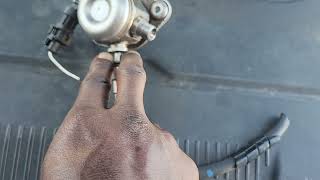
- YouTube channel 'Dave's Auto' (2015 Hyundai Sonata 2.4L GDI) — Check Engine Light on, hard starts when cold.
✅ What actually fixed it The vehicle had codes P0087 and P0191. The diagnosis pointed to a faulty high-pressure fuel pump (HPFP). The technician replaced the HPFP and found the old pump's internal plunger had physically collapsed and was shorter than the new one. This resolved both codes and the starting issue. - Go-Parts.com article citing a YouTube tech (2012 Kia Optima 2.4L GDI (shared engine/platform)) — Intermittent crank-no-start, long crank times, codes P0087 and P0193.
❌ Tried (didn't work) Installed a new, genuine Hyundai High-Pressure Fuel Pump (HPFP)., Installed a new aftermarket Fuel Rail Pressure Sensor (FRPS).
✅ What actually fixed it The new aftermarket FRPS was faulty out of the box. It was sending an incorrect voltage signal (1.7V at KOEO instead of the correct ~0.5V). Replacing the new aftermarket sensor with a quality OEM sensor resolved the codes and symptoms. - YouTube channel 'mr diyguy123' (2015 Hyundai Elantra 2.0L GDI (similar GDI system)) — Rough/weird shifting, engine bucks, intermittent P0191 and P0193 codes.
✅ What actually fixed it After extensive electrical testing, the technician found a broken wire within the wiring harness leading to the FRPS. Wiggling the harness caused the sensor's resistance reading to fluctuate wildly. The final fix was to bypass the broken section of wire, which solved the intermittent codes and drivability issues. - NHTSA ODI #11552762 (Hyundai Tucson with similar GDI system) — An owner reported that the car lost the ability to accelerate and was shuddering, with a personal code reader pulling up codes P0191 and P0303 indicating an engine misfire.
OEM Part Supersession History
35320-2G720, 35320-2G730→35320-2G740— Standard part evolution for improved reliability or manufacturing changes.
Heads up: The latest part number, 35320-2G740, is generally backward compatible with vehicles that used the older numbers. However, always verify fitment with a VIN as there can be mid-year production changes.
Model Year Variations Within This Range
- 2018-2019: The Hyundai Sonata received a significant facelift for the 2018 model year, with updated exterior and interior styling. However, the core 2.4L GDI and 2.0T GDI powertrain options remained largely the same as the 2015-2017 models. Therefore, the causes and diagnostic procedures for code P0191 are consistent across the entire 2015-2019 generation.
Diagnostic Flowchart
Other Known Issues on This Vehicle
Issues unrelated to this code that are worth knowing about as an owner of this generation:
- Theta II Engine Connecting Rod Bearing Failure 🔴 High — Widespread across 2011-2019 models with 2.0T & 2.4L GDI engines. Can occur at any mileage but is more common between 60k-120k miles. Caused by manufacturing debris restricting oil flow. (Ref: Subject of multiple class-action lawsuits and settlements, leading to extended warranties (15-year/150k-mile) and the Knock Sensor Detection System (KSDS) software update campaign (e.g., Campaign 953, TSB 19-01-006H).)
- Excessive Oil Consumption 🟠 Medium — Common issue, often a precursor to more serious engine problems. Owners may need to add a quart of oil every 1,000-2,000 miles. (Ref: Addressed by Hyundai through oil consumption tests and, in some cases, engine replacement under the extended warranty. TSBs like 21-EM-003H provide inspection guidelines.)
- Intake Valve Carbon Buildup 🟠 Medium — An inherent issue with all GDI engines, as fuel is not sprayed over the intake valves to clean them. Symptoms like misfiring, rough idle, and power loss typically appear after 60,000-80,000 miles. (Ref: No specific recall, but regular induction cleaning services (walnut blasting or chemical cleaning) are recommended maintenance. TSB 19-FL-001H discusses GDI system service.)
Used vs. New Parts: Buying Guide for This Vehicle
When a used part is the smart pick: For this repair, buying used parts is generally not recommended. The primary culprits, the HPFP and FRPS, are high-wear and precision electronic components, respectively. A used HPFP carries a high risk of having the same internal wear that caused the original failure. The only exception might be a low-cost structural component like a wiring harness connector pigtail if the original is physically broken.
Donor-vehicle mileage cap: roughly under 30000 miles for the part to have meaningful remaining life.
What to inspect on the donor part:
- For an HPFP, there are no reliable visual cues. Failure is internal.
- For a sensor or wiring, look for clean connectors with no corrosion, and intact wire insulation with no signs of brittleness, cracking, or rotary damage.
OEM-only on this vehicle (don't cheap out):
- High-Pressure Fuel Pump (HPFP)
- Fuel Rail Pressure Sensor (FRPS)
Aftermarket brands forum-validated for this vehicle:
- Bosch (Often the OEM supplier)
- Delphi
Brands owners have reported issues with on this vehicle:
- Unbranded, 'white-box' parts from online marketplaces should be avoided. A real-world case showed an aftermarket FRPS was faulty right out of the box, causing the diagnosis to continue unnecessarily.
Real Owner Stories
Aggregated from forums and TSBs cited above. Mileages and costs reflect what owners reported in those sources.
2015 Hyundai Sonata 2.4L GDI
Symptoms: The car was throwing codes P0087 and P0191 simultaneously.
What fixed it: Replacement of the high-pressure fuel pump; the old pump's plunger had collapsed.
Source hint: YouTube - Dave's Auto - 'HYUNDAI SONATA CODE P0087 & P0191 FIX'
2018 Hyundai i30 SR Premium (Theta II GDI platform)
Symptoms: The vehicle was throwing three codes: P0087 (Fuel Rail/System Pressure - Too Low Bank 1), P0191 (Fuel Rail Pressure Sensor 'A'), and a third code.
What fixed it: The context provided identifies the HPFP as the high-probability fix for these combined codes on this engine platform.
Source hint: reddit r/Hyundai
Hyundai Tucson (GDI Platform)
Symptoms: An owner reported that the car lost the ability to accelerate and was shuddering, with a personal code reader pulling up codes P0191 and P0303 indicating an engine misfire.
What fixed it: This report highlights the common drivability failures associated with P0191 on Hyundai GDI systems.
Source hint: NHTSA ODI #11552762
Related OBD-II Codes
Frequently Asked Questions
Is there a recall for my 2015-2018 Sonata regarding fuel leaks that might cause P0191?
My 2015 Sonata 2.4L GDI has P0191 and P0087; what is the most likely fix?
Can I just replace the Fuel Rail Pressure Sensor to fix this code?
Why does my engine oil smell like gasoline along with the P0191 code?
Is the P0191 code related to the widespread Theta II engine bearing failures?
What should the fuel pressure readings be on my Sonata's GDI engine?
Helpful Videos

Used OEM Parts in Stock
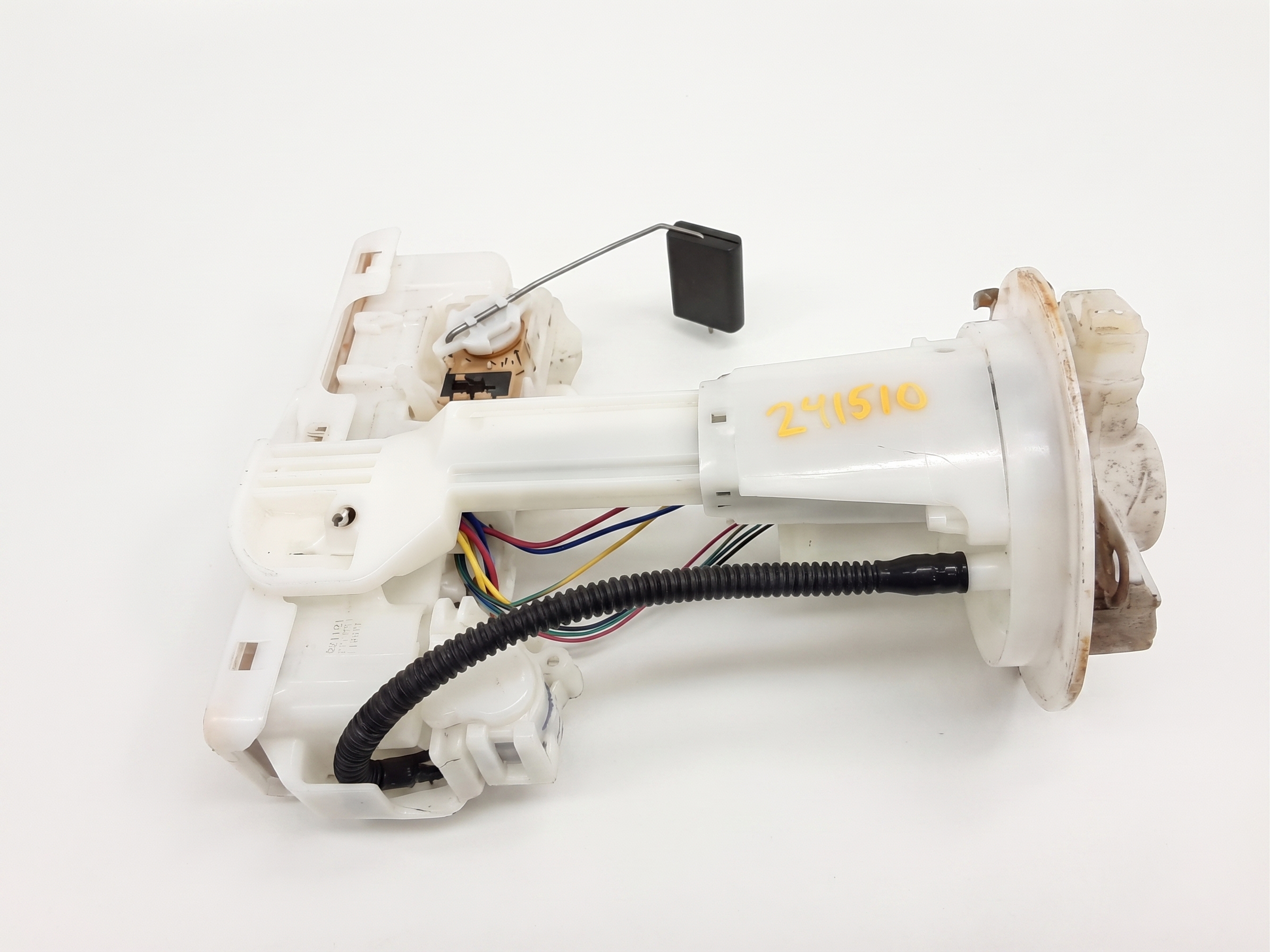
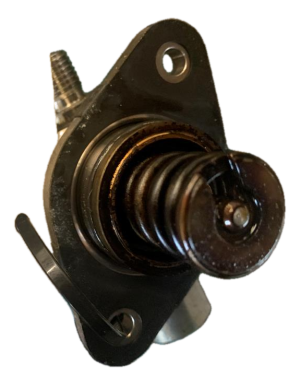
New Aftermarket Parts Available

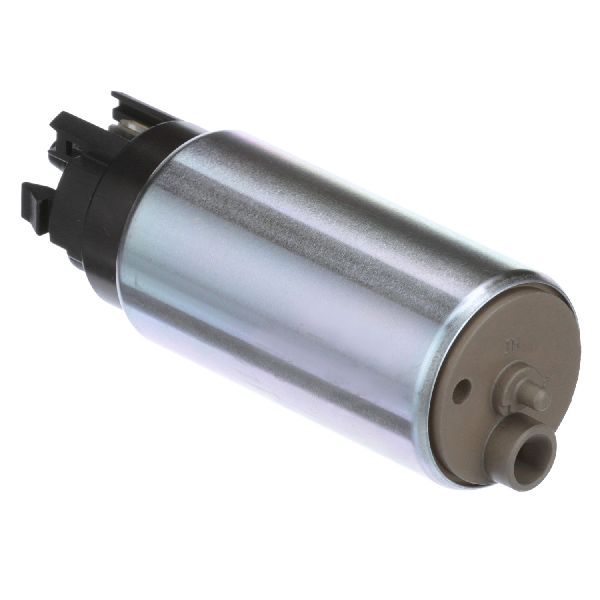
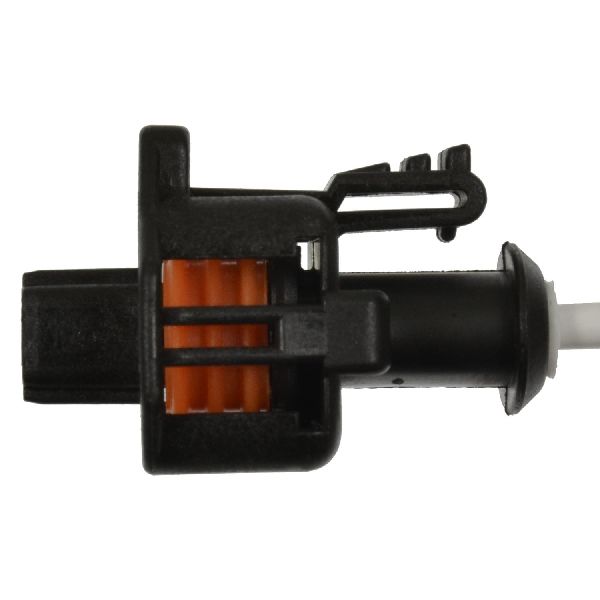

The information in this article is provided for general reference and educational purposes only. Vehicle specifications, procedures, and part compatibility can vary by production date, trim level, and region. Always consult your vehicle's factory service manual and verify part numbers before purchasing or performing repairs. Safety-critical components such as airbags, seat belts, and braking systems should be installed by a qualified professional.
- Hyundai Sonata:
- 🧭 Diagnostic Flowchart
- 🎬 Helpful Videos
- 🛍️ Shop This Part
- What's Unique About the 2015-2019 Hyundai Sonata
- Symptoms You May Notice
- Most Likely Causes
- Rare But Worth Checking
- Diagnosis Steps
- Parts You'll Likely Need
- Related Codes That Often Appear With This One
- Technical Service Bulletins (TSBs) & Recalls
- Platform-Specific Known Issues
- Mechanic-Grade Diagnostic Values
- Scan Tool Commands That Help
- Wiring & Ground Locations
- Real Owner Repair Stories
- OEM Part Supersession History
- Model Year Variations Within This Range
- Other Known Issues on This Vehicle
- Used vs. New Parts: Buying Guide for This Vehicle
- Real Owner Stories
- 2015 Hyundai Sonata 2.4L GDI
- 2018 Hyundai i30 SR Premium (Theta II GDI platform)
- Hyundai Tucson (GDI Platform)
- Related OBD-II Codes
- Frequently Asked Questions
- 🎟️ Get 5% Off