

P0192 on 2015-2020 Chevrolet Tahoe: Fuel Rail Pressure Sensor Circuit Low Causes and Fixes
For a 2015-2020 Tahoe, code P0192 almost always points to a failed Fuel Rail Pressure Sensor (FRPS). This is a known issue, referenced in GM TSB PIP5279A. Replacement requires removing the intake manifold and costs around $70-$150 for the OEM part. Before starting the repair, double-check that harness connectors at the back of the engine weren't accidentally swapped during previous service.
- P0192 on a 2015-2020 Tahoe is an electrical fault code for the Fuel Rail Pressure Sensor circuit, not a confirmation of low fuel pressure.
- The most likely cause by far is a failed Fuel Rail Pressure Sensor (FRPS).
- GM Technical Service Bulletin PIP5279A supports replacing the sensor as the primary fix when other circuit tests pass.
- Replacement is a labor-intensive job (DIY difficulty 4/5) because the sensor is located under the intake manifold.
- Before replacing the sensor, always verify its electrical circuit has a proper 5-volt reference and ground. If recent engine work was done, check for swapped harness connectors first.
What's Unique About the 2015-2020 Chevrolet Tahoe
On the 2015-2020 Tahoe with the L83 and L86 direct-injection engines, the fuel system operates under extremely high pressure. The P0192 code is a frequent issue, so much so that General Motors issued a Technical Service Bulletin (PIP5279A) advising technicians to replace the Fuel Rail Pressure Sensor if initial diagnostics for this and other related codes are inconclusive. The sensor is located under the intake manifold, making replacement more involved than on many other vehicles.
Symptoms You May Notice
- Check Engine Light is on
- Engine hesitation or stumbling on acceleration
- Reduced engine power or 'limp mode'
- Hard starting or extended cranking time
- Rough or erratic idle
- Engine stalling
- Complete no-start condition
- Replacing the high-pressure fuel pump or the in-tank fuel pump. P0192 is an electrical circuit code, not a low-pressure code (like P0087). Always diagnose the sensor and its circuit first.
Most Likely Causes
- Faulty Fuel Rail Pressure Sensor (FRPS) 🔴 High Probability → Shop Fuel Pressure Sensor This is a well-documented failure point on GM's Gen V direct injection engines, as acknowledged by TSB PIP5279A which recommends replacing the sensor if other diagnostics are inconclusive. Forum discussions on platforms like TahoeYukonForum confirm this is the most common fix.
How to confirm: Using a scan tool, observe the live data for 'Fuel Rail Pressure'. If the reading is stuck at an abnormally low value (e.g., 0 PSI) and does not change when the engine is cranked, and the sensor's wiring has a correct 5V reference and ground, the sensor has failed internally. A voltage reading on the signal wire below 0.5V with the key on, engine off, also points to a faulty sensor.
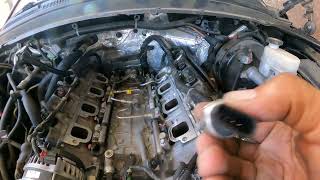
Typical fix: Replace the Fuel Rail Pressure Sensor. This requires removing the intake manifold to access the sensor on the driver's side fuel rail.
Est. part cost: $70-$150 - Wiring or Connector Issue 🟡 Medium Probability The sensor is located at the back of the engine under the intake manifold, where engine heat and vibration can degrade the wiring or connector over time. Harness chafing against engine or chassis components is also possible.
How to confirm: Visually inspect the sensor's electrical connector and nearby wiring for damage, corrosion, or loose connections. Disconnect the sensor and use a multimeter to verify a 4.8V-5.2V reference signal and a solid ground connection at the connector.
Typical fix: Repair the damaged section of the wiring harness or replace the connector pigtail.
Est. part cost: $20-$50 - Swapped Harness Connectors ⚪ Low Probability After major engine work (like an AFM lifter replacement or engine swap), there are two similar 4-pin connectors at the back of the engine that can be accidentally swapped. This will cause an immediate P0192 code and a no-start condition. Always check this before replacing parts if recent work has been performed.
How to confirm: Visually inspect the main harness connections at the rear of the intake manifold. Compare the wire colors and connector keying to a service manual diagram to ensure they are in their correct positions.
Typical fix: Swap the connectors back to their correct locations.
Est. part cost: $0
Rare But Worth Checking
- Faulty Powertrain Control Module (PCM): → Shop Engine Control Module (ECM) This is very rare. The PCM's internal circuit for the sensor could fail, but this should only be considered after thoroughly ruling out the sensor and its wiring. A corrupted software flash could also theoretically cause this code.
Diagnosis Steps
- Connect an OBD-II scanner and confirm that P0192 is the active code. Note any other codes present, especially P0193, P0089, or P228C.
- Using the scanner's live data function, monitor the 'Fuel Rail Pressure' PID. With P0192, the reading will likely be abnormally low (e.g., 0 psi) and will not change when the engine is cranked or running.
- If the vehicle has recently had major engine service, first check the large bulk harness connectors at the rear of the engine to ensure they have not been swapped by mistake.
- Turn the ignition off. Locate the fuel rail pressure sensor on the high-pressure fuel rail, which is under the intake manifold at the rear of the driver's side fuel rail.
- Visually inspect the sensor's electrical connector and the nearby wiring harness for any obvious signs of damage, corrosion, or loose connections. Pay close attention to areas where the harness may chafe against engine components.
- Disconnect the sensor's electrical connector. There is often a small white or gray locking tab that must be released first. Turn the ignition to the 'ON' position.
- Using a multimeter, check for a 5-volt reference signal on the appropriate pin of the connector. Check for a good ground on the ground pin (less than 100 ohms of resistance to the battery negative terminal).
- If the 5-volt reference and ground are good, the wiring is likely okay, and the sensor itself is the primary suspect.
- If either the reference voltage or ground is missing, trace the wiring back to the ECM to find the open or short in the circuit.
- Before replacing the sensor, it is critical to relieve the high pressure in the fuel rail. This can be done by pulling the fuel pump relay and running the engine until it stalls.
Parts You'll Likely Need
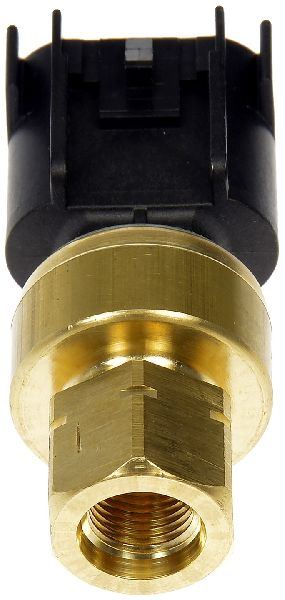
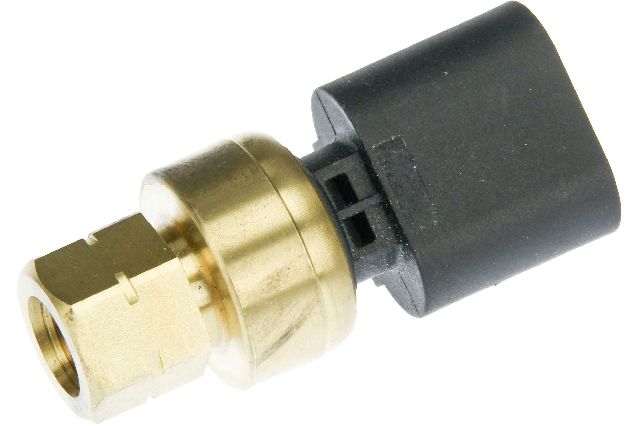
- Fuel Rail Pressure Sensor
(OEM #12673824 (for 2015-2016 models, supersedes 12623130), 12708493 (for 2017-2020 models, supersedes 12684286 & 12664124))— This is the most common failure point for the P0192 code on this platform, as identified by common repair data and a manufacturer TSB.
Trusted brands: ACDelco, Bosch
OEM price range: $70-$150
Aftermarket price range: $40-$90
Related Codes That Often Appear With This One
- P0193 — This code for 'Fuel Rail Pressure Sensor Circuit High Input' can appear with P0192 if there is an intermittent short or wiring problem causing the voltage to fluctuate between too high and too low.
- P0089 — This code for 'Fuel Pressure Regulator Performance' is listed in TSB PIP5279A as being related and may set due to the erratic signals from the faulty sensor circuit.
- P228C — Stands for 'Fuel Pressure Regulator 1 Exceeded Control Limits - Pressure Too Low' and is also mentioned in TSB PIP5279A as a related code that may appear alongside P0192.
- P127C — This code for 'Fuel Rail Pressure Sensor Plausibility' is another code mentioned in TSB PIP5279A and can be set when the sensor's readings are illogical, often in conjunction with P0192 or P0193.
Technical Service Bulletins (TSBs) & Recalls
- PIP5279A: Recommends replacing the Fuel Rail Pressure Sensor (FRPS) if diagnostics for codes P0089, P127C, P127D, P0192, P0193, P228C, P228D, and P006C are inconclusive. This TSB applies to a wide range of 2014 and newer GM vehicles with direct injection.
Platform-Specific Known Issues
- A user on the 'TahoeYukonForum.com' with a 2015 Tahoe experienced the P0192 code along with stalling and no-start issues. After confirming the 5V reference at the sensor connector was present, they proceeded with replacing the fuel rail pressure sensor. The repair, which involved removing the intake manifold, took approximately 3-4 hours and completely resolved the code and drivability problems. 🎬 Watch a mechanic diagnose a Tahoe with these exact codes.
Mechanic-Grade Diagnostic Values
- FRPS 5V Reference (at connector, sensor unplugged, KOEO) — expected: 4.8V - 5.2V. Failure: A reading of 0V indicates an open or short to ground in the reference circuit.
- FRPS Signal Voltage (KOEO, sensor plugged in) — expected: ~1.5V - 1.8V. Failure: A reading below 0.5V indicates a short to ground or an internal sensor failure.
- High-Side Fuel Rail Pressure (Scan Tool, Cranking) — expected: 300 - 400 PSI. Failure: A reading of 0 PSI or a fixed low value that doesn't change points to a circuit/sensor fault.
- High-Side Fuel Rail Pressure (Scan Tool, Idle) — expected: 500 - 1000 PSI, may fluctuate.. Failure: A reading that is stuck low or does not respond to RPM changes.
- Low-Side Fuel Pressure (Scan Tool or Gauge) — expected: 55 - 62 PSI (commanded by FPCM).. Failure: While not a direct cause of P0192, low pressure here can indicate a failing in-tank pump, which is a separate issue.
Scan Tool Commands That Help
- GDS2 (GM Dealer Software): Fuel System Depressurize — With the engine cold and at idle, commanding the system to depressurize should cause the fuel pressure sensor value to drop to zero and the engine to stall. If the engine stalls but the sensor reading remains high (e.g., 30-40 PSI), it indicates a faulty sensor that is not responding correctly.
Wiring & Ground Locations
- G103 — On the front of the passenger side (right) cylinder head.. This is a primary engine sensor ground. A loose or corroded connection at G103 can cause erratic voltage readings for multiple sensors, including the FRPS, leading to a P0192 or other codes.
- G104 — On the rear of the driver's side (left) cylinder head.. Another critical engine ground point. Service information often highlights checking the integrity of this ground when diagnosing various electrical faults on the engine.
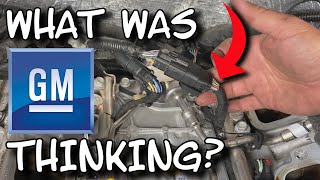
- Bulk Harness Connectors — At the rear of the engine, near the firewall, where the main engine harness connects to the fuel rail sub-harnesses.. There are two large, physically similar connectors that can be accidentally swapped during major service (like intake manifold removal). Swapping them will mis-wire the FRPS, causing an immediate P0192/P0193 and a no-start condition.
Real Owner Repair Stories
- YouTube channel 'Auto V Fix' (Chevrolet Truck (platform equivalent to Tahoe/Silverado) with Gen V V8) — Crank but no-start condition, codes P0192 and P127C stored.
❌ Tried (didn't work) Initial diagnosis focused on testing the sensor itself.
✅ What actually fixed it The technician discovered two large, similar bulk harness connectors at the back of the engine were swapped. One connector was for the driver-side fuel rail (with the FRPS) and the other for the passenger side. Correcting the connector positions restored the 5V reference to the sensor and resolved the no-start condition and codes.
OEM Part Supersession History
12623130→12673824— Standard part update and consolidation by GM/ACDelco.
Heads up: Part number 12673824 is typically for 2015-2016 models with a 3-wire sensor connector.12664124, 12684286→12708493— Standard part update and consolidation by GM/ACDelco.
Heads up: Part number 12708493 is typically for 2017-2020 models with a 4-wire sensor connector. The connectors are physically different, and the harnesses must match the sensor type.
Model Year Variations Within This Range
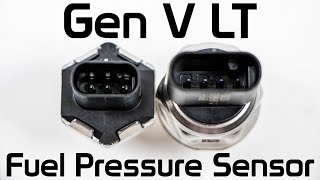
- 2015-2016: These earlier models typically use a 3-wire Fuel Rail Pressure Sensor (PN 12673824). The wiring harness connector will have three terminals.
- 2017-2020: These later models typically use a 4-wire Fuel Rail Pressure Sensor (PN 12708493). The wiring harness connector is slightly wider and has four terminals. The sensor and harness must match.
Diagnostic Flowchart
Other Known Issues on This Vehicle
Issues unrelated to this code that are worth knowing about as an owner of this generation:
- Active/Dynamic Fuel Management (AFM/DFM) Lifter Failure 🔴 High — Common issue, can occur as early as 50,000 miles. Results in misfires (P0300), ticking noise, and can lead to camshaft damage requiring extensive engine repair. (Ref: Multiple TSBs exist, e.g., SB-10078567-7690.)
- A/C Condenser Leak 🟠 Medium — Very common on 2015-2017 models. The integrated transmission/AC cooler (combi-cooler) can crack from thermal stress, causing refrigerant to leak and the A/C to blow warm air. (Ref: GM Special Coverage Adjustment 17336 extends the warranty for this specific issue.)
- Harsh Shifting / Shudder in 8-Speed (8L90) Transmission 🟠 Medium — Widespread issue known as the 'Chevy Shake'. Owners report shuddering at highway speeds and harsh or jerky shifts. Often attributed to torque converter issues or contaminated transmission fluid. (Ref: Various TSBs address fluid flushes and torque converter replacement.)
- Brake Vacuum Pump Failure 🔴 High — Common on 2015-2018 models. The engine-driven vacuum pump can degrade, leading to a hard brake pedal and increased stopping distances, especially at low speeds. (Ref: NHTSA Recall 19V645000 (GM #N192268490). The fix involves reprogramming the Electronic Brake Control Module and, if necessary, replacing the pump.)
Used vs. New Parts: Buying Guide for This Vehicle
When a used part is the smart pick: For this specific repair, buying a used sensor is generally not recommended due to the high failure rate and the labor involved in replacement. However, obtaining a used wiring harness pigtail from a junkyard is a viable option if only the connector is damaged.
Donor-vehicle mileage cap: roughly under 75000 miles for the part to have meaningful remaining life.
What to inspect on the donor part:
- For a pigtail, ensure the connector body is not cracked or brittle.
- Check that the locking tab is intact and functional.
- Inspect the wire insulation for any signs of melting, chafing, or oil contamination.
- Ensure there is at least 6 inches of wire attached for easier splicing.
OEM-only on this vehicle (don't cheap out):
- Fuel Rail Pressure Sensor
Aftermarket brands forum-validated for this vehicle:
- Bosch (often the OEM supplier)
- ACDelco (GM's official brand)
Brands owners have reported issues with on this vehicle:
- No-name, unbranded sensors from online marketplaces. Given the criticality of this sensor in a high-pressure direct injection system, using a cheap, unverified part can lead to poor performance, repeat failures, and potential safety issues.
Real Owner Stories
Aggregated from forums and TSBs cited above. Mileages and costs reflect what owners reported in those sources.
2015 Chevrolet Tahoe 5.3L L83
Symptoms: Check engine light with P0192 code, stalling, and no-start issues.
What fixed it: Replacement of the fuel rail pressure sensor after confirming the 5V reference was present. The repair required removing the intake manifold.
Source hint: vehicle_specific_issues / TahoeYukonForum.com thread titled '2015-tahoe-ltz-nostart-p0192-fuel-rail-pressure-sensor-circuit-low.112933/'
Related OBD-II Codes
Frequently Asked Questions
Is there a Technical Service Bulletin for the P0192 code on my 2015-2020 Tahoe?
Where is the Fuel Rail Pressure Sensor located on the 5.3L L83 or 6.2L L86 engine?
Why did my Tahoe stop starting immediately after I had the AFM lifters replaced?
How long does it typically take to replace the fuel rail pressure sensor on this vehicle?
Can I use a used sensor to fix the P0192 code on my Tahoe?
What voltage should I see when testing the fuel rail pressure sensor connector?
Helpful Videos
We Have This Part in Stock

The information in this article is provided for general reference and educational purposes only. Vehicle specifications, procedures, and part compatibility can vary by production date, trim level, and region. Always consult your vehicle's factory service manual and verify part numbers before purchasing or performing repairs. Safety-critical components such as airbags, seat belts, and braking systems should be installed by a qualified professional.
- Chevrolet Tahoe:
- 🧭 Diagnostic Flowchart
- 🎬 Helpful Videos
- 🛍️ Shop This Part
- What's Unique About the 2015-2020 Chevrolet Tahoe
- Symptoms You May Notice
- Most Likely Causes
- Rare But Worth Checking
- Diagnosis Steps
- Parts You'll Likely Need
- Related Codes That Often Appear With This One
- Technical Service Bulletins (TSBs) & Recalls
- Platform-Specific Known Issues
- Mechanic-Grade Diagnostic Values
- Scan Tool Commands That Help
- Wiring & Ground Locations
- Real Owner Repair Stories
- OEM Part Supersession History
- Model Year Variations Within This Range
- Other Known Issues on This Vehicle
- Used vs. New Parts: Buying Guide for This Vehicle
- Real Owner Stories
- 2015 Chevrolet Tahoe 5.3L L83
- Related OBD-II Codes
- Frequently Asked Questions
- 🎟️ Get 5% Off