

P0192 on 2005-2009 Ford Expedition 5.4L: Fuel Rail Pressure Sensor Circuit Low Fixes
On a 2005-2009 Expedition, P0192 often points to a faulty Fuel Rail Pressure (FRP) sensor or its wiring. However, a corroded Fuel Pump Driver Module (FPDM) located on the frame crossmember above the spare tire is a very common related failure that can cause identical symptoms and should be inspected first. A new FRP sensor costs about $50-$100, while an improved Dorman FPDM (part 590-001) costs around $60-$100.
- P0192 specifically points to a low voltage electrical fault in the Fuel Rail Pressure sensor circuit.
- Before replacing any parts, ALWAYS inspect the Fuel Pump Driver Module (FPDM) above the spare tire for corrosion, as it is a very common failure point on these trucks and can cause this code.
- Symptoms are serious and include stalling and no-start conditions, so the vehicle should be repaired promptly.
- Diagnosis relies on a scan tool to read live fuel pressure data, as there is no mechanical test port on the fuel rail.
What's Unique About the 2005-2009 Ford Expedition
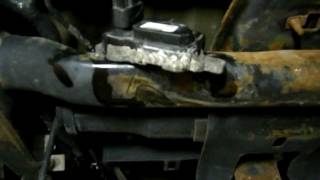
On this generation of Ford Expedition and other Ford trucks, the Fuel Pump Driver Module (FPDM) is a notoriously common failure point that can cause fuel pressure codes like P0192. The module is mounted to a steel frame crossmember near the spare tire, and its bare aluminum body corrodes due to galvanic reaction with the steel frame. This corrosion eventually cracks the housing, allowing moisture to damage the internal electronics. This FPDM failure often produces the same symptoms as a bad fuel rail pressure sensor, making it a critical first inspection point before replacing other, more expensive parts.
Generation note: This range covers the end of the second generation (2005-2006) and the beginning of the third generation (2007-2009) Ford Expedition. The 5.4L 3V V8 engine and the fundamental fuel system design, including the problematic Fuel Pump Driver Module (FPDM), are consistent across these years, so the causes and diagnostics are largely the same.
Symptoms You May Notice
- Check Engine Light is on
- Engine is hard to start or requires long cranking time
- Engine stalls, especially at idle or when coming to a stop
- Hesitation, stumbling, or lack of power during acceleration
- Rough or unstable idle
- Engine cranks but will not start
- Replacing the fuel pump without first inspecting the Fuel Pump Driver Module (FPDM). The FPDM is a much more common failure point on these vehicles and produces identical symptoms.
- Replacing the Fuel Rail Pressure Sensor without testing its wiring and connector first. A simple wiring issue can mimic a failed sensor.
Most Likely Causes
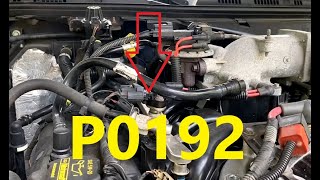
- Faulty Fuel Rail Pressure (FRP) Sensor 🔴 High Probability → Shop Fuel Pressure Sensor The sensor is subjected to constant heat cycles 🎬 See how to diagnose and fix a P0192 sensor code. and vibration on the engine's fuel rail, leading to eventual electronic failure.
How to confirm: With the key on and engine off, use a scan tool to read the FRP sensor voltage PID (FRP V). If the voltage is below ~0.25-0.5V, the sensor or its circuit is faulty. You can also test the sensor's 3-wire connector for a 5-volt reference, a good ground, and a signal wire.
Typical fix: Replace the Fuel Rail Pressure sensor located on the engine's fuel rail, typically on the passenger side.
Est. part cost: $50-$120 - Failed Fuel Pump Driver Module (FPDM) 🔴 High Probability → Shop Fuel Pump The FPDM's aluminum body corrodes severely against the steel frame where it's mounted, typically above the spare tire. This galvanic corrosion allows water intrusion and electronic failure. This is a very well-documented design flaw on Ford trucks and SUVs of this era.
How to confirm: Lower the spare tire and visually inspect the FPDM for heavy corrosion, cracks, or a white powdery substance. Often, a hole will be rotted through the back of the module. A scan tool may also show code P1233 (FPDM Offline) along with P0192, which strongly points to the FPDM as the cause. 🎬 Watch this diagnostic guide to test your FPDM and fuel pump.
Typical fix: Replace the Fuel Pump Driver Module. Improved aftermarket versions, like the Dorman 590-001 🎬 Watch this video to see how a rusty module causes stalling., come with rubber spacers or standoffs to prevent direct contact with the frame and reduce future corrosion.
Est. part cost: $60-$150 - Damaged Wiring or Connectors 🟡 Medium Probability The wiring harness to the FRP sensor can become brittle from engine heat, or the connector pins can corrode. The harness to the FPDM near the spare tire is also exposed to the elements and can be damaged.
How to confirm: Visually inspect the wiring harness and connector for the FRP sensor for any signs of chafing, melting, or corrosion. Do the same for the FPDM connector. Use a multimeter to check for continuity and shorts on the signal and ground wires between the sensor connector and the PCM.
Typical fix: Repair the damaged section of the wiring harness or replace the connector pigtail.
Est. part cost: $15-$40
Rare But Worth Checking
- Weak Fuel Pump: → Shop Fuel Pump While P0192 is an electrical code, a severely weak or failing fuel pump can cause pressure to drop so low that it falls below the sensor's minimum voltage threshold, triggering the code. This is less common than a direct sensor or FPDM fault and would likely be accompanied by code P0087 (Fuel Rail/System Pressure - Too Low).
- Clogged Fuel Filter: → Shop Fuel Filter A severely restricted fuel filter can starve the fuel rail of pressure, potentially causing the sensor's voltage to drop below the minimum threshold. This is a maintenance item that should be checked or replaced as a matter of course if its age is unknown.
- Faulty Powertrain Control Module (PCM): → Shop Engine Control Module (ECM) In very rare cases, the internal circuitry of the PCM that reads the FRP sensor signal can fail. This should only be considered after all other possibilities, including wiring, the sensor, and the FPDM, have been exhaustively ruled out.
Diagnosis Steps
- Check for other stored trouble codes that could provide more context, such as P0191, P0087, or especially P1233.
- Crucial First Step: Lower the spare tire and visually inspect the Fuel Pump Driver Module (FPDM) located on the frame crossmember. Look for signs of heavy corrosion, cracks, or holes in the aluminum casing.
- If the FPDM looks suspicious, consider tapping on it with a screwdriver handle while an assistant cranks the engine or while monitoring fuel pressure data on a scan tool. A change in engine behavior or data suggests a faulty module.
- Inspect the wiring harness and connector for the Fuel Rail Pressure (FRP) sensor on the engine's fuel rail. Look for any signs of damage, melting, or corrosion.
- Using a scan tool, monitor the live data for the Fuel Rail Pressure (FRP) PID and FRP Voltage PID with the key on, engine off. The voltage should be around 0.5V. If it's reading near zero, the sensor or circuit is faulty.
- If you have access to a multimeter, disconnect the FRP sensor. With the key on, check for a 5-volt reference on one wire and a good ground on another. The third wire is the signal wire.
- If the FPDM, sensor, and wiring all appear to be in good condition, check the fuel filter's condition and consider testing the fuel pump's performance.
- Note: These vehicles do not have a Schrader valve on the fuel rail for a mechanical fuel pressure gauge, so diagnosis relies heavily on scan tool data from the FRP sensor.
Parts You'll Likely Need
- Fuel Pump Driver Module (FPDM)
(OEM #5L8Z-9D370-A)— This module is a very common failure point on 2005-2009 Expeditions due to corrosion, and its failure directly impacts fuel pump operation and pressure, often causing P0192. The OEM part number has been superseded many times.
Trusted brands: Motorcraft, Dorman (OE FIX Part #590-001)
OEM price range: $100-$150
Aftermarket price range: $60-$100 - Fuel Rail Pressure Sensor
(OEM #3R3Z-9F972-AA (Motorcraft CM-5229))— This sensor is the most direct cause of a P0192 code, as it provides the voltage signal that the PCM is reading as too low.
Trusted brands: Motorcraft, Bosch, Delphi, Standard Motor Products
OEM price range: $80-$120
Aftermarket price range: $40-$80
Related Codes That Often Appear With This One
- P0191 — This code indicates a 'Range/Performance' issue with the FRP sensor. It often appears with P0192 as the sensor's signal becomes erratic or implausible before failing completely low.
- P1233 — This Ford-specific code means 'Fuel Pump Driver Module Offline' and is a strong indicator that the FPDM is the root cause of the fuel pressure issue. Seeing it with P0192 makes the FPDM the primary suspect.
- P0087 — This code means 'Fuel Rail/System Pressure - Too Low'. While P0192 points to an electrical fault, P0087 indicates a mechanical fault (low pressure). Seeing them together suggests a failing fuel pump or a major restriction is causing the pressure to drop so low it triggers the electrical code.
Technical Service Bulletins (TSBs) & Recalls
- TSB 08-7-6: Details the updated procedure for removing the problematic two-piece spark plugs on the 5.4L 3V engine to prevent breakage.
- TSB 06-19-8: Addresses ticking and knocking noises related to the Variable Cam Timing (VCT) phasers and lash adjusters.
Platform-Specific Known Issues
- The Fuel Pump Driver Module (FPDM) is highly prone to failure due to galvanic corrosion from being mounted directly to the steel frame. This is arguably the most common cause of fuel delivery problems on this platform.
- Aftermarket FPDM kits from brands like Dorman include standoffs or rubber bushings to create an air gap between the module and the frame, preventing the dissimilar metal corrosion that destroys the original part.
Mechanic-Grade Diagnostic Values
- FRP Sensor Signal Voltage (Key On, Engine Off) — expected: ~0.5V DC. Failure: Voltage is less than 0.25V, often near 0V.
- FRP Sensor Signal Voltage (Engine Idling) — expected: 62-69 PSI (This is a pressure reading, voltage will vary but should be higher than KOEO). Failure: Pressure reading is erratic or does not respond to throttle input.
- FRP Sensor 5V Reference (VREF) at Connector — expected: 4.8V - 5.2V DC (with sensor disconnected, key on). Failure: Voltage is near 0V, indicating an open or short in the VREF wire from the PCM.
- Fuel Pressure (Key On, Engine Off) — expected: 35-45 PSI. Failure: Pressure is significantly lower, which may indicate a mechanical issue (pump, filter) rather than an electrical one.
Scan Tool Commands That Help
- Ford IDS (or equivalent): Jumper Wire Test (Manual Procedure) — To definitively isolate a faulty FRP sensor. By disconnecting the sensor and jumping the 5V reference pin to the signal pin at the connector, the FRP voltage PID on the scan tool should read >4.5V. If it does, the wiring and PCM are good, confirming the sensor is the fault.
- Ford IDS (or equivalent): Datalogger - Wiggle Test — To find intermittent wiring faults. While monitoring the live FRP voltage PID, wiggle the wiring harness for the sensor and FPDM. Any sudden drops to zero or erratic changes in the reading confirm a wiring or connection issue.
Wiring & Ground Locations
- G103 / G104 — On the right and left front radiator supports, respectively.. These are primary engine compartment grounds. A loose or corroded connection at these points can affect the sensor's ground reference, leading to an incorrect low voltage reading at the PCM.
- FRP Sensor Connector — On the fuel rail, typically on the passenger side of the 5.4L V8 engine.. This connector is the most common point for wiring failures due to high engine heat causing wires to become brittle and break, or pins to corrode, resulting in a low or open signal circuit.
- Main Engine-to-Firewall Ground — A braided ground strap often located on the passenger side, connecting the rear of the engine to the firewall.. A compromised main ground can cause widespread, erratic electrical problems and unstable sensor readings, potentially triggering a P0192 code as a secondary effect.
Real Owner Repair Stories
- Reddit user on r/MechanicAdvice (2007 Ford F-150 5.4L) — P0191 code (related range/performance code), likely accompanied by stalling or no-start.
❌ Tried (didn't work) Replaced Fuel Rail Pressure Sensor, Replaced Fuel Filter, Replaced Fuel Pump Driver Module
✅ What actually fixed it The user ultimately had to replace the in-tank fuel pump to resolve the recurring fuel pressure code, suggesting that a weak pump was causing the pressure to be out of range, which can sometimes trigger related electrical codes like P0192.
OEM Part Supersession History
3R3Z-9F972-AA→3R3Z-9F972-AB— Standard part revision by the manufacturer.Multiple (e.g., 5L3Z-9D370-A, 6L2Z-9D372-A)→5L8Z-9D370-A— Ford consolidated multiple FPDM part numbers for different models into a single service part.
Heads up: The final service part 5L8Z-9D370-A is the correct replacement for a wide range of Ford vehicles from this era.
Model Year Variations Within This Range
- 2005-2006: These are part of the second generation (U222). While the 5.4L 3V engine and FPDM issue are the same, some interior and exterior styling differs from the 2007-2009 models.
- 2007-2009: These are part of the third generation (U324), which received a new 6-speed automatic transmission (6R75, then 6R80 in 2009) and refreshed styling, but the core 5.4L engine and fuel delivery system causing P0192 remained consistent.
Diagnostic Flowchart
Other Known Issues on This Vehicle
Issues unrelated to this code that are worth knowing about as an owner of this generation:
- 5.4L 3V Cam Phaser / VCT Solenoid Failure 🔴 High — Very common, often presents as a diesel-like knocking or ticking sound at idle, especially when warm. Can occur at any mileage but is more frequent over 80,000 miles. (Ref: TSB 06-19-8)
- Two-Piece Spark Plug Breakage During Removal 🔴 High — Extremely common on 5.4L 3V engines built before late 2007. Carbon buildup seizes the long ground shield of the spark plug in the cylinder head, causing it to break off during removal. (Ref: TSB 08-7-6)
- Cracked PCV Hose / Vacuum Leaks 🟠 Medium — The PCV valve hose, especially the elbow at the back of the intake manifold, is prone to cracking, causing a vacuum leak that leads to a rough idle and lean codes (P0171, P0174).
- Failing Fuel Pump Driver Module (FPDM) 🔴 High → Shop Fuel Pump — Extremely common, especially in regions with road salt. The aluminum module corrodes where it mounts to the steel frame, causing stalling or no-start conditions. This is a primary cause of P0192.
- IWE Solenoid / Vacuum Line Failure 🟠 Medium — The Integrated Wheel End (IWE) system, which engages the 4WD, can fail due to a faulty solenoid or cracked vacuum lines, causing a grinding noise from the front hubs.
Used vs. New Parts: Buying Guide for This Vehicle
When a used part is the smart pick: A used Fuel Rail Pressure (FRP) sensor from a low-mileage donor vehicle is a reasonable cost-saving measure. Used wiring pigtails from a junkyard are also an excellent option for repairing damaged connectors.
Donor-vehicle mileage cap: roughly under 80000 miles for the part to have meaningful remaining life.
What to inspect on the donor part:
- For an FRP sensor, ensure the donor vehicle was not in a front-end collision.
- For wiring, check for any signs of brittleness, cracking, or previous repairs on the donor harness.
- Avoid any parts from vehicles that show signs of flood damage or excessive corrosion.
OEM-only on this vehicle (don't cheap out):
- Fuel Pump Driver Module (FPDM) - It is strongly recommended to buy a NEW part. Used OEM modules will have the same design flaw (aluminum on steel) and are likely near failure. A new aftermarket part with an improved design is often a better choice than a used OEM part.
Aftermarket brands forum-validated for this vehicle:
- Dorman (OE FIX Part #590-001 for FPDM) - Widely cited as a reliable replacement that includes standoffs to prevent corrosion.
- Bosch (For FRP Sensor) - A reputable OEM supplier known for quality electronics.
Brands owners have reported issues with on this vehicle:
- Some users have reported premature failures with lower-quality, unbranded FPDM units, leading to repeat repairs. One user reported going through three Dorman units before switching to OEM, suggesting quality control can vary.
Real Owner Stories
Aggregated from forums and TSBs cited above. Mileages and costs reflect what owners reported in those sources.
2006 Ford Expedition 5.4L V8
Symptoms: The vehicle was stalling. Upon inspection, the Fuel Pump Driver Module was completely corroded with a hole rotted through the back of the aluminum casing.
What fixed it: Replacing the Fuel Pump Driver Module with a redesigned part that includes spacers to prevent future corrosion.
Source hint: Ford Truck Enthusiasts Forums - '2006 Expedition FPDM / Fuel Pump issue FIXED - pics'
Related OBD-II Codes
Frequently Asked Questions
Where is the Fuel Pump Driver Module (FPDM) located on my 2005-2009 Ford Expedition?
Is there a specific aftermarket part recommended to prevent the FPDM from failing again?
Can I use a mechanical fuel pressure gauge to diagnose P0192 on my 5.4L V8?
Does TSB 08-7-6 relate to my fuel system issues?
What should the Fuel Rail Pressure (FRP) voltage be with the key on and engine off?
Are there other common issues on the 5.4L 3V engine I should be aware of while fixing this?
Helpful Videos

Used OEM Parts in Stock
New Aftermarket Parts Available


The information in this article is provided for general reference and educational purposes only. Vehicle specifications, procedures, and part compatibility can vary by production date, trim level, and region. Always consult your vehicle's factory service manual and verify part numbers before purchasing or performing repairs. Safety-critical components such as airbags, seat belts, and braking systems should be installed by a qualified professional.
- Ford Expedition:
- 🧭 Diagnostic Flowchart
- 🎬 Helpful Videos
- 🛍️ Shop This Part
- What's Unique About the 2005-2009 Ford Expedition
- Symptoms You May Notice
- Most Likely Causes
- Rare But Worth Checking
- Diagnosis Steps
- Parts You'll Likely Need
- Related Codes That Often Appear With This One
- Technical Service Bulletins (TSBs) & Recalls
- Platform-Specific Known Issues
- Mechanic-Grade Diagnostic Values
- Scan Tool Commands That Help
- Wiring & Ground Locations
- Real Owner Repair Stories
- OEM Part Supersession History
- Model Year Variations Within This Range
- Other Known Issues on This Vehicle
- Used vs. New Parts: Buying Guide for This Vehicle
- Real Owner Stories
- 2006 Ford Expedition 5.4L V8
- Related OBD-II Codes
- Frequently Asked Questions
- 🎟️ Get 5% Off