

P0192 on 2013-2020 Lincoln MKZ: Causes and Fixes for Fuel Rail Pressure Sensor Circuit Low
For a 2013-2020 Lincoln MKZ, code P0192 almost always points to a failed Fuel Rail Pressure (FRP) sensor or a wiring issue. This is a very common issue across many Ford and Lincoln vehicles sharing the same engines and sensors. Expect to pay $180-$220 for a professional repair, or around $60-$100 for an OEM sensor for a DIY fix.
- P0192 on your MKZ points directly to an electrical fault in the Fuel Rail Pressure (FRP) sensor circuit.
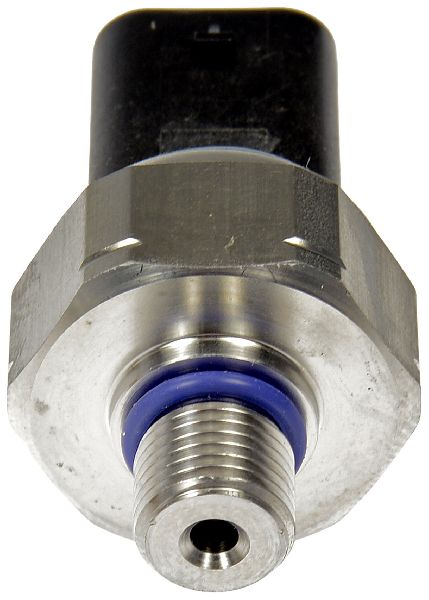
- The most likely fix is replacing the FRP sensor itself, which is a relatively inexpensive part (OEM part BU5Z-9F972-B).
- Before buying parts, always check the sensor's wiring and connector for damage, as a broken wire or corrosion can mimic a sensor failure.
- The job is DIY-friendly for those comfortable with basic auto repair; just be sure to safely relieve fuel pressure before starting.
- This is a common failure across many Ford/Lincoln vehicles, not a problem unique to the MKZ.
What's Unique About the 2013-2020 Lincoln MKZ
The 2013-2020 Lincoln MKZ, particularly with the popular 2.0L EcoBoost engine, uses a modern direct-injection fuel system that relies on this sensor for precise operation. While the P0192 code is not an unusually common complaint on the MKZ platform according to forum data, the failure of the sensor itself is a known issue across many Ford and Lincoln vehicles that use the same part, such as the Ford Fusion, Edge, and Escape. There are no specific recalls or Technical Service Bulletins (TSBs) for this code on the MKZ, suggesting failures are typically isolated incidents rather than a widespread defect. However, TSBs on other Ford models for wiring harness chafing causing this code do exist, highlighting the importance of checking the wiring.
Symptoms You May Notice
- Check Engine Light is on
- Hard starting or long crank times
- Engine hesitation or stumbling during acceleration
- Loss of engine power
- Rough idle
- Engine may stall, especially at low speeds or when stopping
- Increased fuel consumption
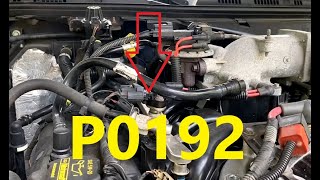
- Replacing the high-pressure fuel pump or the in-tank fuel pump. P0192 is an electrical circuit code 🎬 Watch: Understanding the causes and fixes for code P0192, not a performance code. While a pump failure can cause low pressure, it usually won't cause the sensor's voltage output to be electrically low unless there are multiple simultaneous failures. Always diagnose the circuit fault first.
Most Likely Causes
- Faulty Fuel Rail Pressure (FRP) Sensor 🔴 High Probability → Shop Fuel Pressure Sensor The sensor is an electronic component exposed to heat and pressure fluctuations in the engine bay, making it a common failure point over time across many Ford/Lincoln models. It is the most cited cause for this code.
How to confirm: After verifying the wiring is intact and has correct voltage, the sensor is the most likely culprit. A scan tool showing 0 or near-0 PSI for fuel rail pressure with the engine running (when it clearly has pressure) points to a bad sensor. The voltage reading will also be near zero, well below the normal 0.5V at idle.
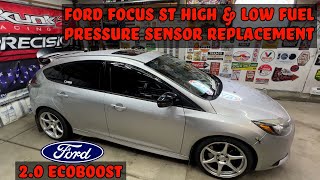
Typical fix: Replace the fuel rail pressure sensor. Be sure to relieve fuel pressure before removal. 🎬 See this walkthrough for replacing the high and low sensors
Est. part cost: $60-$100 - Wiring Harness or Connector Issue 🟡 Medium Probability Engine vibrations and heat can cause wires to chafe, or the connector pins can corrode or become loose, leading to a loss of signal. On other Ford products with similar engines, wiring harnesses have been known to rub against steering shafts or other components, causing a short.
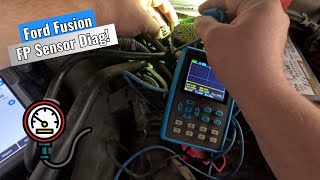
How to confirm: Visually inspect the sensor's connector and wiring for any signs of damage, melting, or corrosion. Use a multimeter to check for 5V reference voltage, a good ground, and a signal wire that is not shorted to ground. A YouTube repair video on a Ford Focus showed the 5V reference wire completely severed inside the harness loom 🎬 Watch: Real-world diagnostic steps for a Ford fuel sensor, which is a plausible failure mode.
Typical fix: Repair the damaged section of the wiring harness or clean/replace the connector. Solder and heat-shrink are recommended for wire repairs.
Est. part cost: $5-$50 - Faulty Powertrain Control Module (PCM) ⚪ Low Probability → Shop Engine Control Module (ECM)
How to confirm: This should only be considered after the sensor and its entire circuit have been thoroughly tested and proven to be good. This is a diagnosis of exclusion.
Typical fix: The PCM would need to be professionally diagnosed, and likely replaced and programmed.
Est. part cost: $500-$1200
Diagnosis Steps
- Connect an OBD-II scanner and confirm P0192 is the active code. Check for any other related codes.
- View the live data stream on the scanner. Look at the Fuel Rail Pressure (FRP) PID and the FRP Sensor Voltage. With the key on and engine off, it should show some pressure. While running, if it reads 0 or a fixed, incorrect low value (e.g., <0.5V), it points to a sensor or circuit issue.
- Turn the vehicle off. Locate the Fuel Rail Pressure sensor on the engine's fuel rail. The location varies by engine (on the 2.0L, it is on the right side of the engine, visible below the engine cover). For the 3.7L V6, it is similarly located on the fuel rail.
- Inspect the sensor's electrical connector and the nearby wiring for any obvious signs of damage, corrosion, or loose connections. Follow the harness as far back as possible, looking for chafe points.
- Disconnect the sensor. With the key on, use a multimeter to test the connector terminals. You should find a 5-volt reference wire, a ground wire (near 0 volts), and a signal wire.
- If the 5-volt reference or ground is missing, you have a wiring issue or a PCM problem that needs to be traced. Check for related fuses before condemning the PCM.
- If power and ground are good, the sensor is the most likely cause of the problem.
- Before replacing the sensor, relieve the fuel system pressure to prevent fuel spray. This can be done by pulling the fuel pump fuse and running the engine until it stalls.
Parts You'll Likely Need
- Fuel Rail Pressure Sensor
(OEM #BU5Z-9F972-B)— This is the most common component to fail, causing the P0192 code. It is an electronic sensor that wears out over time. This part number supersedes previous versions like BU5Z-9F972-A.
Trusted brands: Motorcraft (OEM), Bosch, Standard Motor Products
OEM price range: $60-$100
Aftermarket price range: $35-$75
Related Codes That Often Appear With This One
- P0193 — This code for 'Fuel Rail Pressure Sensor Circuit High Input' can appear intermittently with P0192 if the sensor is failing erratically or there's a loose connection causing voltage spikes.
- P0087 — This code for 'Fuel Rail/System Pressure - Too Low' may accompany P0192 if the PCM detects both a circuit fault and a resulting low-pressure condition.
- P0191 — This code for 'Fuel Rail Pressure Sensor Circuit Range/Performance' can be set if the sensor signal is intermittent or irrational, which can happen with a failing sensor or a loose wire that also causes P0192.
Technical Service Bulletins (TSBs) & Recalls
- While no TSBs are specific to P0192 on the MKZ, Ford has issued TSBs like SSM 50245 and SSM 50116 for the related Ford Escape/Bronco Sport platform, where a wiring harness (14290) chafing on the steering shaft can cause P0192 and other codes. This highlights the possibility of wiring chafe as a root cause.
Mechanic-Grade Diagnostic Values
- FRP Sensor Signal Voltage — expected: 0.5V - 4.5V (Normal Operating Range). Failure: A reading below 0.5V, and especially below 0.2V, indicates a low input fault.
- FRP Sensor Reference Voltage (at connector, sensor unplugged) — expected: 5.0V (typically between 4.8V and 5.2V).. Failure: No voltage or significantly low voltage points to a wiring issue or a problem with the PCM's 5V reference circuit.
- FRP Sensor Ground (at connector) — expected: Near 0V, with good continuity to chassis ground.. Failure: Voltage present on the ground wire indicates a bad ground connection.
- High-Pressure Fuel Rail Pressure (Scan Tool PID, at idle) — expected: Approximately 300-500 PSI.. Failure: A reading of 0 PSI while the engine is running strongly suggests a failed sensor or circuit, as the engine would not run with zero pressure.
Scan Tool Commands That Help
- Ford IDS (or equivalent high-level scanner): Jumper 5V Reference to Signal Wire — This is a definitive test to isolate the sensor from the wiring. With the sensor unplugged, use a fused jumper wire to connect the 5V reference pin to the signal wire pin on the harness connector. The scan tool's voltage PID should jump to a high reading (near 5V). If it does, the wiring and PCM are confirmed good, and the sensor itself is faulty.
Wiring & Ground Locations
- FRP Sensor Connector (2.0L EcoBoost) — On the high-pressure fuel rail, typically on the right side of the engine. It is a 3-pin connector.. This is the primary connection point to test for power, ground, and signal. Corrosion or damage here is a common cause of P0192.
- PCM Connector C175B — At the Powertrain Control Module (PCM), located in the engine compartment.. The FRP sensor wires terminate here. Pushed-out or corroded pins at this connector can cause the code. A documented repair on a similar platform found pushed-out pins at the PCM to be the root cause after multiple parts were replaced.
- Ground G104 / G105 — Located on the right side of the engine compartment.. These are primary engine bay ground points. A poor ground connection here can cause erratic voltage readings for various sensors, including the FRP sensor, which relies on a stable ground reference.
Real Owner Repair Stories
- ScannerDanner Forum User (2014 Ford Fusion 2.0L EcoBoost (platform-mate to MKZ)) — Long crank time to start, poor acceleration, and code P0087 (often related to FRP sensor issues).
❌ Tried (didn't work) Replaced low-pressure fuel sensor, Replaced high-pressure fuel sensor, Installed a used high-pressure fuel pump
✅ What actually fixed it The root cause was discovered to be two pushed-out connector pins at the main Powertrain Control Module (PCM) socket, which had likely occurred during a previous accident repair. Reseating the pins resolved the issue. - YouTube User Diagnosis (2014 Lincoln MKZ 2.0L EcoBoost) — Check engine light with codes P0171 (System Lean) and P008A (Low Fuel Pressure System Pressure Too Low).
❌ Tried (didn't work) Initial thought was a failing fuel pump.
✅ What actually fixed it Diagnosis showed the low-side fuel pressure sensor PID on the scan tool was stuck at 13.8 PSI, while a mechanical gauge showed a healthy 80-90 PSI. This discrepancy confirmed the low-pressure sensor was faulty, not the pump. Replacing the low-pressure sensor fixed the issue.
OEM Part Supersession History
BU5Z-9F972-A→BU5Z-9F972-B (Motorcraft CM-5225)— Standard part revision and improvement by the manufacturer.
Model Year Variations Within This Range
- 2017-2020: For the 2017 model year, Lincoln introduced an optional 3.0L Twin-Turbo V6 engine, replacing the previous 3.7L V6. This 3.0T engine uses a different fuel system and sensors than the 2.0L EcoBoost. While P0192 can still occur, the part numbers and specific locations will differ. The 2.0L EcoBoost remained available and its components are consistent with the 2013-2016 models.
Diagnostic Flowchart
Other Known Issues on This Vehicle
Issues unrelated to this code that are worth knowing about as an owner of this generation:
- 2.0L EcoBoost Coolant Intrusion 🔴 High — A known issue on 2017-2019 models where coolant leaks into the cylinders due to a block design flaw, often requiring engine replacement. (Ref: TSB 19-2346 (supersedes 19-2208))
- PTU (Power Transfer Unit) Failure (AWD Models) 🔴 High — The PTU fluid can overheat and break down due to proximity to the exhaust, leading to gear failure. Fluid changes every 30k miles are recommended to prevent this. (Ref: TSB 19-2017 (for leaks))
- Panoramic Roof Sunshade/Mechanism Failure 🟠 Medium — The large panoramic roof can develop issues with the sunshade bunching up or the tracks failing due to dried grease, leading to expensive repairs.
- Internal Water Pump Failure (3.7L V6) 🔴 High — The water pump is driven by the timing chain. When it fails, it can leak coolant into the oil, potentially causing catastrophic engine damage. Failure is most common after 100,000 miles.
- Heated/Cooled Seat Module Failure 🟡 Low — A common electrical issue where the seat climate control module under the passenger seat fails, often due to a bad ground pin, disabling the function.
- Transmission Shifting Problems 🟠 Medium — Some owners report harsh shifting, delays, or hesitation, particularly in earlier models of the generation.
Used vs. New Parts: Buying Guide for This Vehicle
When a used part is the smart pick: For this repair, a used part is generally not recommended. The fuel rail pressure sensor is a relatively low-cost electronic component that is a known failure point. The risk of getting a used sensor that is already near the end of its service life outweighs the small cost savings over a new aftermarket or OEM part.
Donor-vehicle mileage cap: roughly under 30000 miles for the part to have meaningful remaining life.
What to inspect on the donor part:
- If buying used is the only option, ensure the connector pins are perfectly straight and free of any corrosion.
- Avoid parts from vehicles with signs of engine bay fire, flood damage, or major front-end collisions.
OEM-only on this vehicle (don't cheap out):
- While not strictly OEM-only, using a Motorcraft (OEM) sensor is highly recommended for fitment and reliability. The cost difference is often minimal compared to the labor of a potential second repair.
Aftermarket brands forum-validated for this vehicle:
- Bosch
- Standard Motor Products (SMP)
- Dorman
Brands owners have reported issues with on this vehicle:
- Avoid no-name, unbranded sensors from online marketplaces. These often have high failure rates and may not meet OEM specifications for accuracy and durability, leading to the code returning.
Real Owner Stories
Aggregated from forums and TSBs cited above. Mileages and costs reflect what owners reported in those sources.
Ford Focus 2.0L
Symptoms: Vehicle presented with a P0192 trouble code.
What fixed it: The cause was found to be a completely severed 5V reference wire inside the main wiring harness loom, which was then repaired.
Source hint: Documented case on a Ford Focus, which shares engine architecture with the MKZ
Ford Escape/Bronco Sport
Symptoms: Vehicle stored code P0192, possibly along with other electrical fault codes.
What fixed it: The issue was traced to the 14290 wiring harness chafing against the steering shaft, causing a short circuit. The fix involved repairing the damaged wires.
Source hint: TSB SSM 50245 and SSM 50116
Related OBD-II Codes
Frequently Asked Questions
I have a P0192 code on my 2015 Lincoln MKZ. Is it more likely the sensor or the wiring?
Where is the Fuel Rail Pressure sensor located on my MKZ's 2.0L EcoBoost engine?
Are there any official recalls or TSBs for code P0192 on the Lincoln MKZ?
My mechanic wants to replace the PCM to fix the P0192 code. Is this a common fix?
My Ford Fusion has a P0192 code. Is the diagnosis the same as for the Lincoln MKZ?
What are the most common symptoms I might experience with a P0192 code?
Helpful Videos
We Have This Part in Stock

The information in this article is provided for general reference and educational purposes only. Vehicle specifications, procedures, and part compatibility can vary by production date, trim level, and region. Always consult your vehicle's factory service manual and verify part numbers before purchasing or performing repairs. Safety-critical components such as airbags, seat belts, and braking systems should be installed by a qualified professional.
- Lincoln MKZ:
- 🧭 Diagnostic Flowchart
- 🎬 Helpful Videos
- 🛍️ Shop This Part
- What's Unique About the 2013-2020 Lincoln MKZ
- Symptoms You May Notice
- Most Likely Causes
- Diagnosis Steps
- Parts You'll Likely Need
- Related Codes That Often Appear With This One
- Technical Service Bulletins (TSBs) & Recalls
- Mechanic-Grade Diagnostic Values
- Scan Tool Commands That Help
- Wiring & Ground Locations
- Real Owner Repair Stories
- OEM Part Supersession History
- Model Year Variations Within This Range
- Other Known Issues on This Vehicle
- Used vs. New Parts: Buying Guide for This Vehicle
- Real Owner Stories
- Ford Focus 2.0L
- Ford Escape/Bronco Sport
- Related OBD-II Codes
- Frequently Asked Questions
- 🎟️ Get 5% Off