

P0192 on 2016-2018 Mazda CX-9 2.5T: Fuel Pressure Sensor Causes and Fixes
On a 2016-2018 Mazda CX-9, code P0192 is often caused by outdated Powertrain Control Module (PCM) software. The first step is a dealer software update per TSB 01-003/18. This update makes the system more sensitive to actual fuel delivery problems. If the code persists, the most likely cause is a faulty fuel rail pressure sensor or a failing low or high-pressure fuel pump.
- Your first step MUST be to check with a Mazda dealer if your vehicle needs the PCM software update from TSB 01-003/18.
- Do not immediately replace the fuel pressure sensor; the software update is a very common and necessary fix for this specific vehicle and may be all that is needed.
- If symptoms are worse on a low tank of fuel, suspect the in-tank low-pressure fuel pump before the more expensive high-pressure pump.
- If the vehicle stalls or loses power, pull over safely as soon as possible. Continued driving could be hazardous.
What's Unique About the 2016-2018 Mazda CX-9
What's unique to this generation of Mazda CX-9 is a specific Technical Service Bulletin (TSB 01-003/18) that directly addresses the diagnostic logic for this code. Originally, Mazda released a PCM software update to fix an issue where the engine would lose power under load (especially at high temperatures) without storing any trouble codes. A side effect of this update was that the system became more sensitive and would correctly store code P0192 or P0087 if it detected insufficient fuel delivery. This means the code may not be a simple sensor fault but could be the PCM correctly identifying a deeper fuel system issue after being updated. An owner complaint filed with the NHTSA confirms a highway stall with P0192 was resolved by this PCM update. Manufacturer TSB Bulletin #01-003-18-3421 further clarifies that the PCM control logic was modified specifically so as not to limit engine power without storing a code, ensuring that P0192:00 (High fuel pressure sensor circuit low input) is stored when the fuel injection amount is insufficient.
Symptoms You May Notice
- Check Engine Light is on
- Engine stalling or shutting off while driving, sometimes at highway speeds
- Lack of power or hesitation during acceleration
- Hard starting or long crank times
- Rough idle, with RPMs fluctuating
- Engine enters 'limp mode' with severely reduced power
- Replacing the fuel rail pressure sensor when the actual problem is outdated PCM software that needs the TSB 01-003/18 update.
- Replacing the high-pressure fuel pump (HPFP) when the issue is a weak in-tank low-pressure fuel pump starving the system of fuel.
- Assuming the sensor is bad without first checking the integrity of its wiring and connector.
Most Likely Causes
- Outdated PCM Software 🔴 High Probability Mazda issued TSB 01-003/18 to update the PCM logic. The original software could mask fuel delivery problems by limiting engine power without setting a code. The updated software correctly identifies and flags these issues with P0192 or P0087.
How to confirm: A Mazda dealership or a qualified shop with a Mazda-specific scan tool (M-MDS) can check your vehicle's VIN against the TSB (vehicles produced before Nov. 10, 2017) and verify the current software calibration.
Typical fix: Reprogram the Powertrain Control Module (PCM) to the latest calibration per TSB 01-003/18.
Est. part cost: $0 (if under warranty) - $150 (dealer labor) - Faulty Fuel Rail Pressure Sensor 🟡 Medium Probability → Shop Fuel Pressure Sensor The sensor operates in a high-heat, high-pressure environment and can fail electrically or mechanically over time. It is a common failure point for this code across many direct-injection vehicles.
How to confirm: Using a scan tool, monitor the fuel rail pressure reading. P0192 is set when the sensor voltage is below 0.5V. At idle, a healthy system should show around 500-600 PSI. If the voltage is stuck low or doesn't change with engine RPM, the sensor is likely bad. You can also test the sensor's wiring for 5V reference, ground, and signal continuity.
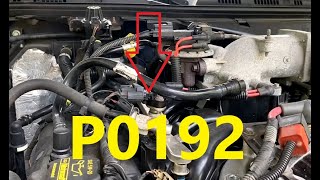
Typical fix: Replace the fuel rail pressure sensor. 🎬 Watch: How to diagnose and fix a P0192 code Note: On some SKYACTIV-G engines, Mazda may not sell the sensor separately, requiring the purchase of the entire fuel rail assembly. However, some technicians have successfully replaced only the sensor with an aftermarket part.
Est. part cost: $150-$300 - Wiring or Connector Issue ⚪ Low Probability Vibrations and heat in the engine bay can cause wires to chafe or the connector at the sensor to become loose or corroded over time.
How to confirm: Visually inspect the wiring harness and connector for the fuel rail pressure sensor. Check for any signs of damage, corrosion, or loose pins. Perform a wiggle test on the harness while monitoring the sensor data on a scan tool. A multimeter can be used to check for a short to ground or an open circuit.
Typical fix: Repair the damaged wiring or clean/replace the connector.
Est. part cost: $5-$50 - Failing High-Pressure Fuel Pump (HPFP) ⚪ Low Probability → Shop Fuel Pump While less common for P0192 than a sensor or software issue, the HPFP can wear out, failing to generate the pressure commanded by the PCM. This is a known issue on some SKYACTIV engines, often presenting with P0191 or P0087. The TSB notes that P0192 can be stored when the 'fuel injection amount is insufficient,' which points directly to a weak HPFP.
How to confirm: A technician can use a scan tool to compare the 'Desired Fuel Rail Pressure' with the 'Actual Fuel Rail Pressure'. If the actual pressure is consistently much lower than desired, and the sensor/wiring are good, the HPFP is suspect.
Typical fix: Replace the high-pressure fuel pump.
Est. part cost: $800-$1200
Rare But Worth Checking
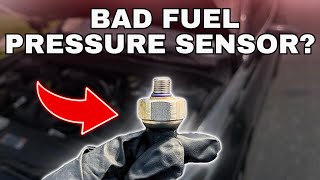
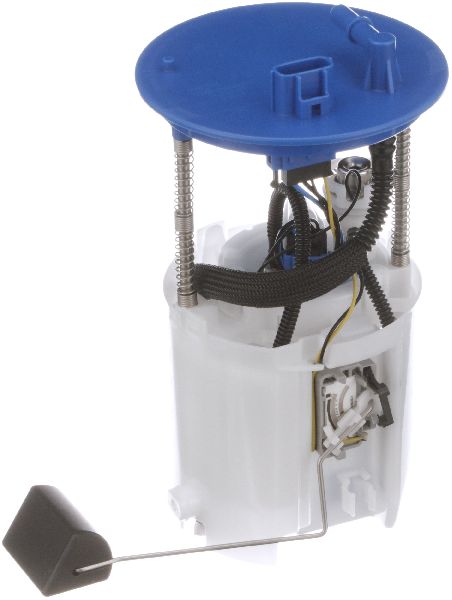
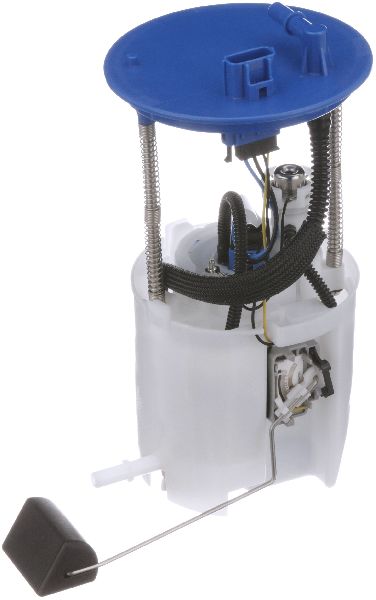
- Failing Low-Pressure Fuel Pump (In-Tank): → Shop Fuel Pump The in-tank low-pressure pump feeds the high-pressure pump. If it's weak, it can starve the HPFP, leading to low rail pressure. TSB 01-003/18 specifically includes a procedure to test the low-pressure pump's performance. Forum users report P0192 symptoms are more likely to appear when the fuel tank is below 1/4 full, which strongly suggests a weak in-tank pump. Additionally, 2018 models were subject to a recall for defective low-pressure fuel pump impellers. 🎬 See this guide on replacing a low fuel pressure sensor
- Clogged Fuel Filter: → Shop Fuel Filter A clogged fuel filter, which is often part of the in-tank fuel pump assembly, can restrict fuel flow to the high-pressure pump, causing a drop in rail pressure under load.
Diagnosis Steps
- Check for Technical Service Bulletins (TSBs). With your VIN, contact a Mazda dealer to verify if TSB 01-003/18 has been performed. If not, this is the mandatory first step.
- Connect an OBD-II scanner and check for any other stored codes, particularly P0087 or P0171.
- Monitor live data for 'Fuel Rail Pressure' (FRP). With the key on and engine off, the pressure should be at a baseline. While idling, it should be stable around 500-600 PSI and increase with throttle input.
- If the FRP reading is stuck low (voltage < 0.5V) or erratic, inspect the fuel rail pressure sensor's wiring and connector for damage, corrosion, or loose connections.
- Using a multimeter, verify the sensor is receiving a 5-volt reference and has a good ground connection.
- If wiring is confirmed to be good, the fuel rail pressure sensor is a likely culprit.
- If the sensor and wiring are good, but pressure is still low, follow the diagnostic procedure in TSB 01-003/18 to test the low-pressure fuel pump's performance using a Mazda-specific scan tool.
- If the low-pressure pump tests good but actual pressure still doesn't meet desired pressure, the high-pressure fuel pump (HPFP) is the next component to investigate.
Parts You'll Likely Need
- Fuel Rail Pressure Sensor
(OEM #PY8V-13-2S0)— This sensor is the most common hardware failure that triggers P0192 after the software has been updated.
Trusted brands: Mazda OE, Bosch, Denso
OEM price range: $200-$300
Aftermarket price range: $120-$200 - High-Pressure Fuel Pump
(OEM #PY8V-13-3S0 (or newer revisions like PY8V-20-3F0C))— If the sensor and software are good, the pump itself may have failed and is unable to generate the required pressure.
Trusted brands: Mazda OE, Bosch
OEM price range: $800-$1200
Aftermarket price range: $500-$800
Related Codes That Often Appear With This One
- P0087 — Stands for "Fuel Rail/System Pressure - Too Low." It is mentioned in the same TSB as P0192 and points to the same underlying issue of insufficient fuel pressure. The PCM update causes either code to be stored when fuel delivery is inadequate.
- P0171 — Stands for "System Too Lean (Bank 1)." If the fuel pressure is too low, the injectors can't deliver the correct amount of fuel, leading to a lean air/fuel mixture which triggers this code.
Technical Service Bulletins (TSBs) & Recalls
- 01-003/18: Addresses a lack of power with no DTCs by updating PCM logic. After the update, DTCs P0192 or P0087 will be stored if fuel delivery is insufficient. It also provides a diagnostic procedure for the low-pressure fuel pump.
- TSB Bulletin #01-003-18-3421: Notes that the PCM control logic was modified to ensure DTCs P0192:00 or P0087:00 are stored when the fuel injection amount is insufficient, rather than limiting engine power without a code.
Platform-Specific Known Issues
- A PCM software logic issue is a primary cause for this code, addressed by TSB 01-003/18. The update makes the system more accurately report underlying fuel delivery problems.
- A weak in-tank low-pressure fuel pump can be the root cause, starving the high-pressure pump. This is often more noticeable when the fuel level is low.
Mechanic-Grade Diagnostic Values
- Fuel Rail Pressure Sensor Signal Voltage (Key On, Engine Off) — expected: ~0.5V. Failure: Voltage is significantly different, stuck high (5V) or at 0V. P0192 sets when voltage is below 0.5V.
- Fuel Rail Pressure Sensor Signal Voltage (Engine Idling) — expected: ~1.0V - 1.7V. Failure: Voltage is stuck low (near 0.5V) or does not increase with engine RPM.
- Low-Pressure Fuel Pump Pressure (In-tank) — expected: 55 - 71 PSI. Failure: Pressure is below 55 PSI, indicating a weak in-tank pump that can starve the HPFP.
- High-Pressure Fuel Rail Pressure (Scan Tool, at Idle) — expected: 500 - 600 PSI. Failure: Pressure remains low (e.g., 60-70 PSI) after starting, indicating a non-functioning HPFP.
- High-Pressure Fuel Rail Pressure (Scan Tool, Under Load) — expected: Up to ~2,900 PSI. Failure: Pressure fails to rise significantly from idle when revving or driving under load.
Scan Tool Commands That Help
- Mazda M-MDS (or equivalent like FORScan): Low-Pressure Fuel Pump Performance Test — This is a specific procedure outlined in TSB 01-003/18 to be performed after the PCM update. It uses live PID data to determine if the in-tank pump can supply adequate volume to the HPFP.
- Mazda M-MDS: Simulation Function 'FP' — This command manually activates the fuel pump with the engine off. It is used to test the low-pressure pump's ability to build and hold pressure without the engine running.
Wiring & Ground Locations
- Fuel Rail Pressure Sensor Connector — On the high-pressure fuel rail, mounted to the engine.. This is the primary connection point. It has three wires: a 5V reference from the PCM, a ground wire provided by the PCM, and the signal wire that sends the voltage reading back to the PCM. Corrosion, damage, or a loose connection here is a direct cause of P0192.
- Engine Block / Cylinder Head Grounds — Various points on the engine block and cylinder head bolted to the chassis.. While not specific to the sensor circuit, a poor main engine ground can cause floating voltages and erratic sensor readings across the entire engine management system. Ensuring the main ground straps are clean and tight is a crucial, often overlooked, diagnostic step.
Real Owner Repair Stories
- Mazda Forum User (2016 Mazda CX-5 (2.5L SKYACTIV-G)) — P0192 and P0171, lack of power, stumbling. Symptoms were only present when the fuel tank was below 1/4 full.
❌ Tried (didn't work) Initial diagnosis pointed towards HPFP or sensor.
✅ What actually fixed it Adding gasoline to the tank temporarily fixed the issue instantly. The root cause was identified as a failing in-tank low-pressure fuel pump that could not function properly when the fuel level was low. - MazdaSpeeds Forum User (Mazda with SKYACTIV engine) — P0192 and P0300 (random misfire), especially in cold weather until the engine warmed up. Fuel cuts at higher RPM.
❌ Tried (didn't work) Checking spark plugs, Cleaning HPFP, Checking hoses
✅ What actually fixed it Replaced the fuel rail pressure sensor only with a Bosch part (0261545053), which resolved all symptoms. This avoided the expensive dealer-recommended replacement of the entire fuel rail assembly. - Mazda Forum User (2015 Mazda CX-5 2.5L) — P0192, stalling at idle, no power when accelerating.
❌ Tried (didn't work) Replacing the entire fuel rail with a new sensor.
✅ What actually fixed it The vehicle was taken to a dealer where the final repair was the replacement of the high-pressure fuel pump (HPFP). Total cost was approximately $1,333. - NHTSA ODI #11299308 — An owner reported that after the car was towed to a service center with error code P0192, they were informed that the PCM (Power Control Module) software had to be updated to resolve the issue.
OEM Part Supersession History
PY8V-13-3S0→PY8V-20-3F0C, PE19-20-3F0— Revisions to improve reliability of the high-pressure fuel pump.
Heads up: Later revisions are generally backwards compatible, but always confirm with the dealer using the vehicle's VIN.
Model Year Variations Within This Range
- 2016 - 2018 (produced before Nov. 10, 2017): These vehicles are subject to TSB 01-003/18 and may have outdated PCM software that misdiagnoses or masks fuel delivery issues. The software update is the first required step.
- 2018: This model year was subject to a specific safety recall (NHTSA #21V875000) for a defective low-pressure fuel pump impeller that could crack and cause the pump to fail, leading to stalling. This makes the in-tank pump a higher probability cause for 2018 models.
Diagnostic Flowchart
Other Known Issues on This Vehicle
Issues unrelated to this code that are worth knowing about as an owner of this generation:
- Cracked Cylinder Head Coolant Leak 🔴 High — A well-documented issue affecting 2016-2020 models. Coolant leaks externally from the back of the cylinder head near the exhaust manifold/turbocharger. Can lead to engine overheating and catastrophic failure if ignored. (Ref: TSB 01-013/21 (later updated to 01-002/23) and Customer Satisfaction Program CSP11 extending warranty coverage.)
- Turbocharger Oil Leaks 🟠 Medium → Shop Turbocharger — Leaks can develop from the turbocharger's oil feed or return lines over time, causing a burning oil smell and potential oil loss.
- Carbon Buildup on Intake Valves 🟠 Medium — Common to all direct-injection engines, including the 2.5T SKYACTIV-G. Over time, carbon deposits can build up on the intake valves, leading to rough idle, hesitation, and reduced performance. Typically requires walnut blasting to clean.
- Premature Brake Booster Failure 🟠 Medium — Some owners have reported premature failure of the brake booster, resulting in a hard brake pedal that requires significantly more effort to stop the vehicle.
Used vs. New Parts: Buying Guide for This Vehicle
When a used part is the smart pick: For the high-pressure fuel pump (HPFP), a used part from a verified low-mileage donor vehicle can be a significant cost-saving measure, as new OEM units are very expensive. Other components like wiring harnesses or connectors are also good candidates for used parts.
Donor-vehicle mileage cap: roughly under 50000 miles for the part to have meaningful remaining life.
What to inspect on the donor part:
- For an HPFP, check the donor vehicle's history for any fuel system-related codes.
- Visually inspect the part for any signs of physical damage, corrosion, or fuel leaks.
- Ensure the part comes from a vehicle that was not in a major front-end collision.
OEM-only on this vehicle (don't cheap out):
- PCM Software Update: This can only be performed by a Mazda dealer or a specialized shop with access to Mazda's proprietary software.
Aftermarket brands forum-validated for this vehicle:
- Bosch: A forum-validated good alternative for the fuel rail pressure sensor, potentially avoiding the need to buy the entire fuel rail assembly.
- Denso: A well-regarded OEM supplier for many Japanese vehicles, including fuel system components.
Brands owners have reported issues with on this vehicle:
- No-name, unbranded electronic sensors from online marketplaces are generally not recommended due to high failure rates and inaccurate readings.
Real Owner Stories
Aggregated from forums and TSBs cited above. Mileages and costs reflect what owners reported in those sources.
2016 Mazda CX-9 2.5T
Symptoms: The vehicle stalled while driving at highway speeds and the Check Engine Light came on with code P0192.
What fixed it: The dealer performed the PCM software update outlined in TSB 01-003/18.
Source hint: NHTSA ODI Complaint #11299308
2016-2018 Mazda CX-9 2.5T
Symptoms: Stalling and limp mode symptoms were noticed exclusively when the fuel tank was below 1/4 full. Filling the tank temporarily resolved the issue.
What fixed it: Replacement of the in-tank low-pressure fuel pump.
Source hint: General Forum Consensus on Low Fuel Level
Related OBD-II Codes
Frequently Asked Questions
Does TSB 01-003/18 apply to my 2017 Mazda CX-9?
Why does my CX-9 only stall or show P0192 when the gas tank is low?
Can I replace just the fuel rail pressure sensor on the 2.5T SKYACTIV-G engine?
How much does it cost to fix the PCM software issue mentioned in the TSB?
Is the P0192 code related to the coolant leak issue on the 2016-2018 CX-9?
What is the difference between the low-pressure and high-pressure fuel pump regarding this code?
Helpful Videos
Used OEM Parts in Stock
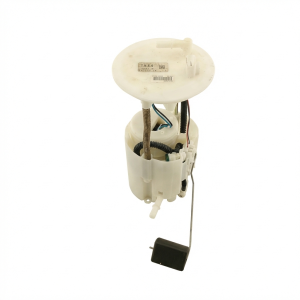
New Aftermarket Parts Available


The information in this article is provided for general reference and educational purposes only. Vehicle specifications, procedures, and part compatibility can vary by production date, trim level, and region. Always consult your vehicle's factory service manual and verify part numbers before purchasing or performing repairs. Safety-critical components such as airbags, seat belts, and braking systems should be installed by a qualified professional.
- Mazda CX-9:
- 🧭 Diagnostic Flowchart
- 🎬 Helpful Videos
- 🛍️ Shop This Part
- What's Unique About the 2016-2018 Mazda CX-9
- Symptoms You May Notice
- Most Likely Causes
- Rare But Worth Checking
- Diagnosis Steps
- Parts You'll Likely Need
- Related Codes That Often Appear With This One
- Technical Service Bulletins (TSBs) & Recalls
- Platform-Specific Known Issues
- Mechanic-Grade Diagnostic Values
- Scan Tool Commands That Help
- Wiring & Ground Locations
- Real Owner Repair Stories
- OEM Part Supersession History
- Model Year Variations Within This Range
- Other Known Issues on This Vehicle
- Used vs. New Parts: Buying Guide for This Vehicle
- Real Owner Stories
- 2016 Mazda CX-9 2.5T
- 2016-2018 Mazda CX-9 2.5T
- Related OBD-II Codes
- Frequently Asked Questions
- 🎟️ Get 5% Off