

P0192 on 2011-2018 Porsche Cayenne Turbo: Fuel Pressure Sensor Circuit Low Fixes
This code typically points to a faulty fuel rail pressure sensor or its wiring. On the Cayenne Turbo, this sensor is critical for the direct injection system. Expect to pay $50-$100 for a quality aftermarket sensor and around 1-2 hours for diagnosis and replacement.
- P0192 on a Cayenne Turbo points to a low voltage signal from the fuel rail pressure sensor, often reading below 0.5V.
- The most common cause is a failed fuel rail pressure sensor itself, followed by wiring issues.
- Do not assume the expensive high-pressure fuel pump has failed without first testing the sensor and its electrical circuit.
- Symptoms include serious drivability issues like hesitation, power loss, and stalling.
- Diagnosis can be done with a multimeter and an OBD-II scanner that can read live fuel pressure data.
What's Unique About the 2011-2018 Porsche Cayenne
The Porsche Cayenne Turbo uses a high-pressure direct injection fuel system, which operates at significantly higher pressures (up to 1740 psi or more) than traditional port injection systems. This makes the fuel rail pressure sensor a critical component for performance. While the code itself is generic, the high-pressure nature of the system means that symptoms like hesitation and power loss can be more pronounced and diagnosis requires extreme care due to the high pressures involved, which can cause serious injury if not handled correctly.
Symptoms You May Notice
- Check Engine Light is on
- Engine hesitation or stumbling on acceleration.
- Loss of power, especially at higher speeds or under load.
- Difficulty starting the engine or long crank times.
- Rough or unstable idle.
- Engine stalling unexpectedly.
- Increased fuel consumption.
- Engine backfiring during acceleration.
- Replacing the fuel pump without first testing the fuel rail pressure sensor and its circuit. The sensor is far more likely to fail and is much cheaper to replace.
Most Likely Causes
- Faulty Fuel Rail Pressure Sensor 🔴 High Probability → Shop Fuel Pressure Sensor The sensor operates in a high-heat, high-pressure environment, leading to eventual electronic failure. 🎬 Watch: Symptoms of a bad fuel rail pressure sensor It is the most common cause for a P0192 code.
How to confirm: With the ignition on and engine off, use a multimeter to check the sensor's signal wire voltage. A reading below the typical 0.5V reference suggests a faulty sensor. Also, inspect the sensor's vacuum line (if applicable) for any signs of raw fuel, which indicates an internal diaphragm failure.
Typical fix: Replace the fuel rail pressure sensor. On the 4.8L V8 Turbo, the sensor is located on the high-pressure fuel rail.
Est. part cost: $50-$150 - Wiring or Connector Issue 🟡 Medium Probability Engine bay heat can make wiring and plastic connectors brittle over time, leading to cracks, corrosion, or loose connections. Wires can also chafe against other components, causing a short to ground.
How to confirm: Visually inspect the wiring harness and connector for the fuel rail pressure sensor. Look for any signs of damage, chafing, melting, or corrosion. Perform a continuity test with a multimeter from the sensor connector back to the ECM to check for opens or shorts in the circuit.
Typical fix: Repair the damaged section of wiring or replace the connector pigtail.
Est. part cost: $10-$40 - Failing High-Pressure Fuel Pump (HPFP) ⚪ Low Probability → Shop Fuel Pump While durable, the HPFP can wear out over time, especially on higher mileage vehicles, leading to an inability to generate the required fuel pressure. Symptoms often include long crank times and rough idle, especially when cold.
How to confirm: Use a capable OBD-II scanner to monitor live fuel rail pressure data while the engine is running. If the actual pressure is significantly lower than the desired pressure commanded by the ECM, especially during startup or acceleration, it points towards a fuel delivery issue. A user on Rennlist with a 2012 Cayenne Turbo experienced bogging and backfiring under acceleration which led to replacing the HPFP.
Typical fix: Replace the high-pressure fuel pump. This is a more involved and expensive repair. 🎬 See this step-by-step high pressure fuel pump replacement
Est. part cost: $500-$1200
Rare But Worth Checking
- Clogged Fuel Filter or Failing Low-Pressure Fuel Pump: → Shop Fuel Filter The high-pressure pump can't function correctly if it's not being supplied with adequate fuel from the in-tank low-pressure pump. An issue here can mimic a high-pressure side problem.
- Faulty Powertrain Control Module (PCM): → Shop Engine Control Module (ECM) This is extremely rare and should only be considered after all other possibilities, including sensors, wiring, and mechanical fuel system components, have been thoroughly tested and ruled out.
Diagnosis Steps
- Connect a professional OBD-II scanner to verify P0192 is the active code and check for any other related codes.
- Use the scanner to monitor live data for 'Fuel Rail Pressure'. Compare the actual pressure reading to the desired pressure commanded by the ECM.
- Perform a visual inspection of the fuel rail pressure sensor and its electrical connector. On the V8 Turbo, this is on one of the fuel rails in the engine valley. Look for any obvious signs of damage, corrosion, or loose connections.
- With the key on, engine off, use a multimeter to test the sensor's circuit. Verify you have a 5-volt reference and a good ground at the connector.
- Test the signal wire voltage. A reading below 0.5 volts typically indicates a faulty sensor or a short to ground in the signal wire.
- If the electrical circuit tests good, the fuel rail pressure sensor is the most likely culprit.
- If the sensor and circuit are good, but fuel pressure is confirmed to be low via the scanner, further diagnosis of the high and low-pressure fuel pumps and fuel filter is required.
Parts You'll Likely Need
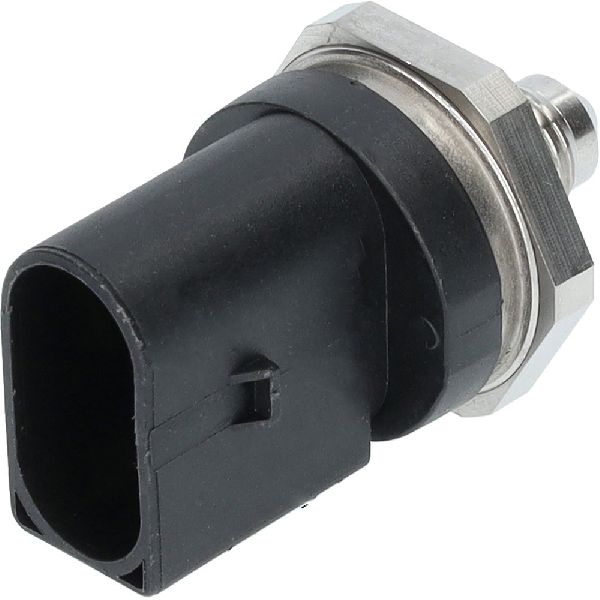
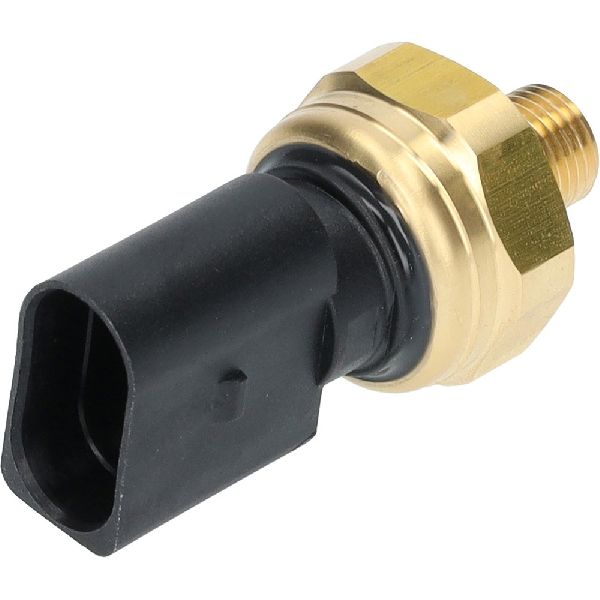
- Fuel Rail Pressure Sensor (High Pressure)
(OEM #95860623020)— This sensor is the most common failure point for a P0192 code, as it directly measures the value reported to the ECM. The original part may be superseded by newer versions.
Trusted brands: Bosch
OEM price range: $100-$160
Aftermarket price range: $50-$100
Related Codes That Often Appear With This One
- P0193 — Fuel Rail Pressure Sensor Circuit High Input. If the sensor is failing intermittently, it might send signals that are both too high and too low, causing both codes to appear. This often points to a wiring or connector issue.
- P0087 — Fuel Rail/System Pressure - Too Low. This code indicates a confirmed mechanical low pressure condition, whereas P0192 points specifically to an electrical circuit voltage issue. They can appear together if a failing sensor causes the PCM to also detect a pressure problem, or if a failing pump causes both low pressure and erratic sensor readings.
- P1026 — Fuel High Pressure Plausibility. This Porsche-specific code often accompanies fuel pressure sensor codes and can point towards a failing High-Pressure Fuel Pump (HPFP), as noted by owners on Rennlist. 🎬 Watch: How to troubleshoot Cayenne high pressure fuel codes
Mechanic-Grade Diagnostic Values
- Low-Pressure Fuel System Pressure — expected: 80 to 87 psi (5.5 to 6 bar) at idle.. Failure: Pressure below 65 psi while driving suggests a failing in-tank pump or clogged filter.
- High-Pressure Fuel System Holding Pressure (Engine Off) — expected: Approx. 5000.0 to 5500.0 mbar (72.5 to 79.7 psi).. Failure: Using a PIWIS Tester, the pressure should not drop by more than 1 bar (14.5 psi) in one hour. A significant drop indicates a leak in the high-pressure system (injector, HPFP, or sensor).
- High-Pressure Fuel System Actual Value (Idle) — expected: The 'Fuel high pressure actual value' on a PIWIS tester should closely match the 'set point' or desired value commanded by the DME. At idle, this is typically around 40-50 bar (580-725 psi).. Failure: A large discrepancy between the actual and set point values, or an actual value that is wildly implausible (e.g., thousands of bar), points to a sensor or wiring fault.
Scan Tool Commands That Help
- PIWIS Tester: DME Actual Values -> Fuel high-pressure control system — This is the primary function used to monitor the live data from the high-pressure fuel sensor. It allows a technician to compare the 'actual value' reported by the sensor against the 'set point' (desired pressure) commanded by the engine computer. This is critical for determining if the issue is electrical (bad sensor reading) or mechanical (pump not generating pressure).
- PIWIS Tester: Read all fault memories and erase if required — Used at the beginning of any diagnosis to get a full picture of all stored codes across all modules, and again after a repair to confirm the fix.
- PIWIS Tester: Guided Fault Finding — After retrieving codes like P0192, the PIWIS tester's guided fault finding function will provide a step-by-step diagnostic plan specific to that code and vehicle, prompting for specific measurements and checks.
Wiring & Ground Locations
- Engine-to-Chassis Ground Strap (Upper) — In the engine bay, a primary ground strap connects the engine block to the strut tower.. A corroded or loose main engine ground can introduce electrical noise and resistance into the system, potentially affecting the reference ground for various sensors, including the fuel rail pressure sensor, leading to erratic or incorrect readings.
- Engine-to-Chassis Ground Strap (Lower) — A second ground strap is located underneath the engine, connecting the bottom of the engine to the vehicle's frame, typically in the front right corner.. Similar to the upper ground, this is a critical path for the engine's electrical system. Corrosion from road salt and moisture can degrade this connection, causing a host of intermittent and difficult-to-diagnose electrical issues.
- Main Chassis Ground — A major ground point is located on the floor of the vehicle, in front of the driver's seat, accessible through a small carpet door.. While less likely to directly cause a P0192, this is a central grounding point for many interior modules. Any issue here can cause widespread electrical problems, and it's a known point to check for corrosion on the Cayenne.
Real Owner Repair Stories
- YouTube channel 'Pete_Tech_' (Porsche Cayenne S (958.1) 4.8L V8) — Check engine light, long crank time, and fault codes P1026 (Fuel high pressure implausible) and P1021.
❌ Tried (didn't work) The technician first verified that the low-pressure fuel system was supplying adequate fuel to the high-pressure pump, ruling out the in-tank pumps.
✅ What actually fixed it The technician observed on the scan tool that the fuel pressure sensor was reporting an implausible value of over 6,000 bar when the desired pressure was only 49 bar. Recognizing this was a classic sign of a failed sensor sending a nonsensical signal, he replaced the high-pressure fuel sensor first. This resolved the issue without needing to replace the much more expensive high-pressure fuel pump.
OEM Part Supersession History
Bosch 0261545059→Bosch 0261545111— This appears to be a standard revision and update by the original equipment manufacturer, Bosch. The new part number is a direct replacement.Porsche 95560623000 / 95560623001→Porsche 95860623020— Part number update corresponding to the new generation (958) and updated Bosch sensor.
Model Year Variations Within This Range
- 2015-2018 (958.2 Facelift): While the Cayenne Turbo and Turbo S retained the 4.8L twin-turbo V8 throughout the 2011-2018 range, the popular Cayenne S and GTS models had their naturally aspirated 4.8L V8s replaced with a 3.6L twin-turbo V6 starting in the 2015 model year. This does not directly affect the P0192 diagnosis for the Turbo model but is a key distinction within the 958 generation.
Diagnostic Flowchart
Other Known Issues on This Vehicle
Issues unrelated to this code that are worth knowing about as an owner of this generation:
- Transfer Case Failure 🔴 High — Very common issue across all 958 models. Symptoms like shuddering or jerking during acceleration often appear between 40,000 and 80,000 miles. Caused by rapid fluid breakdown in the small-capacity unit. (Ref: Porsche extended the warranty on transfer cases for many vehicles and issued TSBs regarding fluid changes and diagnostics.)
- Camshaft Adjuster Bolt Failure 🔴 High — Affects early models (primarily 2011-2012) with the 4.8L V8 engine. The aluminum bolts can shear, potentially leading to catastrophic engine failure. (Ref: NHTSA Campaign 17V368000 (Porsche recall AH08) was issued to replace the faulty fastening screws.)
- Coolant Pipe Leaks 🟠 Medium — The V8 engines use glued-in coolant pipes in the thermostat housing and other areas that can fail over time with heat cycles, causing significant coolant leaks. This is a well-documented issue carried over from the previous 957 generation.
- Air Suspension Leaks 🟠 Medium — Common on higher-mileage vehicles. The rubber air springs develop cracks and leak, causing the vehicle to sag at one corner and forcing the air compressor to overwork and eventually fail.
- Blocked Body/Sunroof Drains 🔴 High — Drains for the sunroof and plenum can become clogged with debris, causing water to leak into the cabin. This can damage sensitive electronics located under the carpets, leading to major electrical problems and potentially totaling the vehicle.
Used vs. New Parts: Buying Guide for This Vehicle
When a used part is the smart pick: For this specific fault, using a used part is generally not recommended. The fuel rail pressure sensor is a relatively inexpensive but critical electronic component. The risk of getting a part that is already near the end of its service life from a salvage yard outweighs the small cost savings.
Donor-vehicle mileage cap: roughly under 60000 miles for the part to have meaningful remaining life.
What to inspect on the donor part:
- Verify the part number on the used sensor matches the OEM or superseded Bosch number exactly.
- Inspect the electrical connector pins for any signs of corrosion, bending, or damage.
- Check the sensor body for any cracks or signs of physical damage.
OEM-only on this vehicle (don't cheap out):
- Fuel Rail Pressure Sensor
- High-Pressure Fuel Pump (HPFP)
Aftermarket brands forum-validated for this vehicle:
- Bosch (This is the Original Equipment Manufacturer, and is the most recommended option)
Brands owners have reported issues with on this vehicle:
- Unknown, no-name brands from online marketplaces. Given the high-pressure nature of the fuel system, using a non-reputable sensor is a significant risk to performance and safety.
Real Owner Stories
Aggregated from forums and TSBs cited above. Mileages and costs reflect what owners reported in those sources.
2012 Cayenne Turbo
Symptoms: The vehicle experienced bogging and backfiring under acceleration, accompanied by multiple fuel-related codes.
What fixed it: Replacement of the High-Pressure Fuel Pump (HPFP).
Source hint: Rennlist: '12 cayenne turbo with multiple fuel codes'
2011 Cayenne Turbo
Symptoms: The owner reported low fuel pressure codes, a rough idle, and long cranking times during startup.
What fixed it: Replacement of the High-Pressure Fuel Pump (HPFP) following a detailed DIY guide.
Source hint: Rennlist: '958 High Pressure Fuel Pump DIY'
Related OBD-II Codes
Frequently Asked Questions
Where is the fuel rail pressure sensor located on my 2011-2018 Cayenne Turbo?
My 2012 Cayenne Turbo is backfiring and bogging; could this be related to P0192?
Is there a recall for the engine issues on my 2011 Cayenne Turbo?
Can I use an aftermarket fuel rail pressure sensor to fix the P0192 code?
Does the 2011-2018 Cayenne Turbo have a known issue with the transfer case?
What should the voltage reading be for a healthy fuel rail pressure sensor on my Porsche?
Helpful Videos
We Have This Part in Stock


The information in this article is provided for general reference and educational purposes only. Vehicle specifications, procedures, and part compatibility can vary by production date, trim level, and region. Always consult your vehicle's factory service manual and verify part numbers before purchasing or performing repairs. Safety-critical components such as airbags, seat belts, and braking systems should be installed by a qualified professional.
- Porsche Cayenne:
- 🧭 Diagnostic Flowchart
- 🎬 Helpful Videos
- 🛍️ Shop This Part
- What's Unique About the 2011-2018 Porsche Cayenne
- Symptoms You May Notice
- Most Likely Causes
- Rare But Worth Checking
- Diagnosis Steps
- Parts You'll Likely Need
- Related Codes That Often Appear With This One
- Mechanic-Grade Diagnostic Values
- Scan Tool Commands That Help
- Wiring & Ground Locations
- Real Owner Repair Stories
- OEM Part Supersession History
- Model Year Variations Within This Range
- Other Known Issues on This Vehicle
- Used vs. New Parts: Buying Guide for This Vehicle
- Real Owner Stories
- 2012 Cayenne Turbo
- 2011 Cayenne Turbo
- Related OBD-II Codes
- Frequently Asked Questions
- 🎟️ Get 5% Off