

P0192 on 2001-2007 Volvo V70 2.4L: Fuel Pressure Sensor Low Input Causes and Fixes
On a 2001-2007 Volvo V70, code P0192 is almost always caused by a failed fuel pressure sensor located on the end of the fuel rail. The sensor sends a voltage signal to the ECM that is below the expected range (typically under 0.5V), indicating an electrical fault. Replacing this sensor is a simple DIY job that costs between $50 for an OEM-quality part and around $220 from a dealer.
- P0192 on a P2 Volvo V70 almost always points to the fuel pressure sensor itself.
- Before buying parts, perform a simple diagnostic test: compare a mechanical fuel pressure gauge reading to your scan tool's live data. This will confirm if the sensor is bad or if you have a real fuel delivery problem.
- Use a quality OEM brand like Bosch for the replacement sensor to ensure reliability; it's a critical part and aftermarket versions can be problematic.
- The replacement is very DIY-friendly, requiring only basic tools and about 30 minutes.
- Check if your 2003-2004 vehicle was part of the safety recall for this sensor.
What's Unique About the 2001-2007 Volvo V70
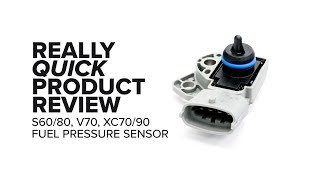
The fuel pressure sensor is a notoriously common failure point on the Volvo P2 platform, which includes this V70, the S60, S80, XC70, and XC90. Unlike older cars with mechanical regulators, these Volvos use this electronic sensor to control fuel pressure by sending a signal to the ECM, which then commands the fuel pump module (PEM). Due to a high failure rate, Volvo issued a recall (Recall #181, NHTSA 07V226000) for some 2003-2004 models for sensors that were prone to cracking and causing stalling. For this reason, the sensor itself is the primary suspect for a P0192 code 🎬 Watch: Volvo fuel pressure sensor symptoms and diagnostic review, often more so than wiring or the fuel pump.
Symptoms You May Notice
- Check Engine Light is on
- Engine is hard to start or requires long cranking
- Engine stalls, sometimes intermittently at idle or low speeds
- Hesitation or lack of power during acceleration
- Rough or erratic idle
- Decreased fuel economy
- Engine runs in 'limp mode' with reduced power
- Replacing the fuel pump when the issue is only the fuel pressure sensor. Always diagnose by comparing the scan tool data to a mechanical gauge first to save money and effort.
Most Likely Causes
- Faulty Fuel Pressure Sensor 🔴 High Probability → Shop Fuel Pressure Sensor This sensor is a well-documented, high-failure part on the Volvo P2 platform. The original design was subject to a safety recall on some model years for cracking. Age and heat cycles cause the internal electronics to fail, sending a low voltage signal.
How to confirm: With the engine running, compare the fuel pressure reading from a scan tool (Live Data) to a mechanical fuel pressure gauge connected to the Schrader valve on the fuel rail. 🎬 See this guide on how to check Volvo fuel pressure If the mechanical gauge shows proper pressure (approx. 55 PSI / 380 kPa at idle) but the scan tool shows a very low or zero reading, the sensor has failed. A failing sensor might also read a correct voltage at idle (around 3.7V) but drop out under load.
Typical fix: Replace the fuel pressure sensor on the end of the fuel rail. It is held by a single T25 Torx screw. Relieve fuel pressure at the Schrader valve before removal.
Est. part cost: $50-$100 - Damaged Wiring or Connector 🟡 Medium Probability The wiring harness and connector for the sensor are located on top of the engine and are exposed to heat and vibration, which can lead to chafing, brittle wires, or corrosion over time. The plastic connector can become brittle and crack, leading to a poor connection.
How to confirm: Visually inspect the wiring harness for any signs of melting, chafing, or breaks. Disconnect the sensor and check the connector pins for corrosion or damage. Use a multimeter to check for 5V reference voltage and a good ground at the connector with the key on. Wiggling the harness while monitoring voltage on a scan tool can reveal intermittent faults.
Typical fix: Repair the damaged section of wire with a new piece of wire and heat-shrink connectors. Clean corroded connectors with electrical contact cleaner or replace the connector pigtail if necessary.
Est. part cost: $5-$30 - Clogged Fuel Filter ⚪ Low Probability → Shop Fuel Filter While the code indicates an electrical fault, a severely clogged fuel filter can drop actual fuel pressure so low that it causes the sensor's reading to fall out of its specified range, potentially triggering the code. This is more likely if maintenance has been deferred.
How to confirm: Connect a mechanical fuel pressure gauge. If the pressure is significantly below the 380 kPa (55 PSI) specification at idle, the filter is a likely suspect, especially if it hasn't been changed in a long time.
Typical fix: Replace the fuel filter. This is a standard maintenance item that is often overlooked.
Est. part cost: $20-$50
Rare But Worth Checking
- Failing Fuel Pump or PEM Module: → Shop Fuel Pump While less common than the sensor, a weak fuel pump or a faulty Fuel Pump Electronic Module (PEM) can cause low actual fuel pressure, which can trigger this code. The PEM is located under the car near the fuel filter and is prone to corrosion. This should be considered if a new sensor and filter do not resolve the issue.
- Faulty Engine Control Module (ECM): → Shop Engine Control Module (ECM) In very rare cases, the internal circuitry of the ECM that processes the signal from the fuel pressure sensor can fail. This is an unlikely cause and should only be considered after all other possibilities have been exhausted.
Diagnosis Steps
- Read the trouble codes with an OBD-II scanner and note any other codes present (e.g., P0191, P0193, P0087).
- Visually inspect the fuel pressure sensor and its electrical connector/wiring on the fuel rail for obvious damage, corrosion, or loose connections.
- Connect a scan tool and observe the live data for 'Fuel Rail Pressure'. A reading near zero or one that doesn't change with RPM points to a sensor/wiring issue.
- For a definitive test, connect a mechanical fuel pressure gauge to the Schrader valve on the fuel rail.
- Start the engine and compare the mechanical gauge reading to the scan tool's reading. The pressure should be stable around 380 kPa (55 PSI) at idle.
- If the mechanical gauge shows good pressure but the scan tool shows a very low or erratic reading, the sensor is bad or the wiring is faulty.
- To test the wiring, turn the ignition on (engine off), disconnect the sensor, and use a multimeter to confirm you have a 5-volt reference and a good ground at the connector.
- If wiring checks out and the pressure readings mismatch, replace the fuel pressure sensor.
- If both the mechanical gauge and scan tool show low pressure, investigate the fuel pump, fuel pump relay, and fuel filter.
Parts You'll Likely Need
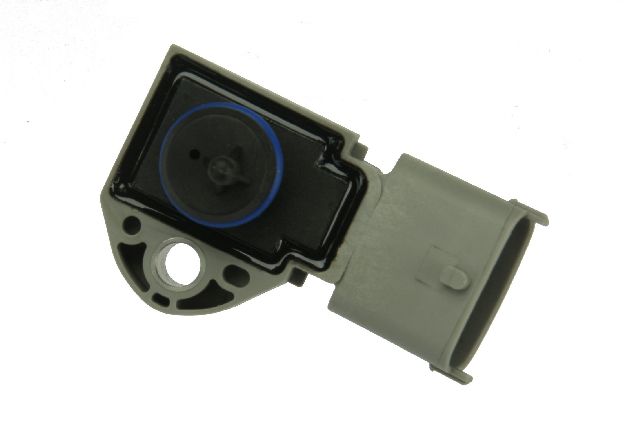
- Fuel Pressure Sensor
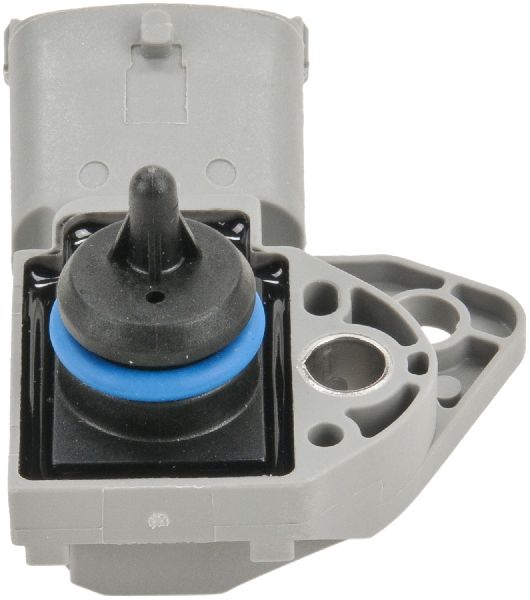
(OEM #31272730)— This is the most common cause of code P0192 on this vehicle due to a high rate of failure for this specific component. The original part number was 8699449, which has been superseded by 31272730.
Trusted brands: Bosch (OEM), Genuine Volvo, Standard Motor Products
OEM price range: $150-$225
Aftermarket price range: $50-$100
Related Codes That Often Appear With This One
- P0191 — This code indicates a 'Range/Performance' issue with the same sensor, often appearing if the sensor's failure is intermittent.
- P0193 — This code for 'Circuit High Input' can appear alongside P0192 if the sensor is failing erratically, sending signals that are both too high and too low at different times.
- P0089 — This code for 'Fuel Pressure Regulator Performance' can be triggered as the ECM struggles to control fuel pressure based on the faulty readings from the sensor.
- P0087 — This code for 'Fuel Rail/System Pressure - Too Low' may accompany P0192 if the sensor failure leads to an actual drop in fuel pressure commanded by the ECM.
Platform-Specific Known Issues
- A safety recall (NHTSA Campaign ID: 07V226000, Volvo Recall #181) was issued for the fuel pressure sensor on some 2003-2004 S60 and V70 models. The original sensors were prone to developing cracks, which could lead to incorrect signals and engine stalling.
Mechanic-Grade Diagnostic Values
- Fuel Pressure Sensor Signal Wire Voltage — expected: Approximately 3.7 Volts at idle.. Failure: Voltage drops, spikes, or is absent. A reading below 0.5V will trigger the P0192 code.
- Mechanical Fuel Pressure at Fuel Rail — expected: Approximately 55 PSI (380 kPa) at idle.. Failure: Pressure fluctuates wildly or is significantly below specification. This points to a mechanical fuel delivery issue (pump, filter) rather than just a sensor electrical fault.
- Fuel Pressure Sensor Connector - Reference Voltage — expected: 4.8V - 5.2V with ignition on, engine off.. Failure: Low or no voltage indicates a wiring problem between the ECM and the sensor 🎬 Watch: Troubleshooting guide for the P0192 circuit low code, or an issue with the ECM itself.
Hidden / Shadow Codes Worth Checking
- ECM-280B: Fuel pressure sensor - Signal too high. This Volvo-specific code can sometimes appear alongside P0192 if the sensor is failing erratically. (see via Volvo-specific diagnostic tools like VIDA/DiCE.)
- ECM-280C: Fuel pressure sensor - Signal too low. This is the direct Volvo equivalent for the generic P0192 code. (see via Volvo-specific diagnostic tools like VIDA/DiCE.)
Scan Tool Commands That Help
- Volvo VIDA: Quick test of fuel pump — This function, found under ECM > Advanced, allows the user to activate the fuel pump and observe pressure readings directly within the diagnostic software, helping to isolate a faulty pump or PEM from the sensor circuit.
- Advanced Scan Tool (e.g., iCarsoft, Autel): Fuel System Sensor Relearn/Calibration — After replacing the fuel pressure sensor, this function should be performed to ensure the ECM correctly calibrates to the new sensor's baseline readings. Failure to do so may result in continued incorrect fuel trim adjustments.
Wiring & Ground Locations
- Fuel Pressure Sensor Signal Wire — The Green wire with a Gray tracer at terminal 4 of the sensor's electrical connector.. This is the specific wire to back-probe with a multimeter to test for the correct 3.7V signal at idle. A low reading here confirms the fault circuit.
- Engine Ground Strap 1 — A small, often braided, strap running from the engine valve cover to the vehicle's firewall/bulkhead.. This ground is known to corrode at the valve cover connection. A poor ground here can cause a voltage drop across the entire engine sensor network, potentially triggering a P0192 code and other erratic electrical faults.
- Engine Ground Strap 2 — A large ground cable running from the transaxle housing to the vehicle's frame rail/subframe.. This is the main engine/transmission ground. While less likely to cause an isolated sensor code, verifying its integrity is crucial when diagnosing any electrical issue, as a loose or corroded connection can cause widespread problems.
Real Owner Repair Stories
- Turbobricks Forum user 'Janspeed' (P2 Volvo V70 (year not specified)) — Weird varying idle, CEL on, cam adjuster error, DSTC service message, weird throttle response. Errors were intermittent.
❌ Tried (didn't work) Initial diagnosis was confusing due to multiple, inconsistent error messages.
✅ What actually fixed it The root cause was a corroded engine-to-firewall ground strap at the valve cover. Cleaning the connection point and re-securing the ground cable resolved all the intermittent electronic faults, including those that could be related to P0192. - NHTSA ODI #10357926 (Volvo S60 platform reference) — An owner reported that after an incident of stalling, the check engine light illuminated with a generic OBD-II code of P0192. The owner noted that online research linked this code to the failure of the vehicle's fuel pressure sensor.
OEM Part Supersession History
8699449→31272730 (also 307560980 was an intermediate number)— The original sensor design was prone to cracking and failure, leading to a recall and subsequent design revisions by the OEM supplier, Bosch.
Heads up: The Bosch OEM part number is 0 261 230 110. Using the latest Genuine Volvo or Bosch part is recommended for reliability.
Model Year Variations Within This Range
- 2001-2007: The fuel pressure sensing system and the causes for P0192 are highly consistent across the 2001-2007 V70 2.4L model years. The most significant variation was the faulty batch of sensors installed on some 2003-2004 models which were subject to a safety recall. Any replacement part, regardless of year, should be the updated design.
Diagnostic Flowchart
Other Known Issues on This Vehicle
Issues unrelated to this code that are worth knowing about as an owner of this generation:
- Electronic Throttle Module (ETM) Failure 🔴 High — Very common on 1999-2002 models. Less common on later years with a revised design. Failure often occurs between 80,000-120,000 miles. (Ref: Volvo extended the warranty to 10 years/200,000 miles in the US, but this has expired. No formal recall was issued in most regions.)
- Clogged PCV / Oil Trap System 🟠 Medium — Considered a maintenance item. Clogs typically develop every 80,000-120,000 miles, leading to pressure buildup, oil leaks (e.g., RMS), and a 'smoking' dipstick.
- Automatic Transmission Shift Flare / Harsh Shifts 🔴 High — Common issue, particularly on earlier P2 models around 100,000+ miles. Often related to the valve body or requires a software update (B4 servo cover fix is also common). (Ref: Various software update TSBs were released by Volvo over the years.)
- AWD Angle Gear Collar Sleeve Failure 🟠 Medium — A known weak point on all AWD models, especially pre-2006. The splined sleeve connecting the transmission to the angle gear strips, resulting in loss of AWD. It is considered a wear item by many owners.
- Front Suspension Bushing and Mount Wear 🟠 Medium — Front control arm bushings, spring seats, and engine mounts (especially the upper torque mount) wear out prematurely, causing clunking noises, vibration, and poor handling.
Used vs. New Parts: Buying Guide for This Vehicle
When a used part is the smart pick: For this specific repair, using a used part is strongly discouraged. The primary cause is an electronic sensor with a notoriously high failure rate; a used part has unknown remaining life and is very likely to fail soon, if it works at all.
What to inspect on the donor part:
- Not applicable as used parts are not recommended for this failure.
OEM-only on this vehicle (don't cheap out):
- Fuel Pressure Sensor
Aftermarket brands forum-validated for this vehicle:
- Bosch (This is the Original Equipment Manufacturer, making it the best choice outside of a Genuine Volvo box).
Brands owners have reported issues with on this vehicle:
- Unknown or unbranded 'white-box' sensors. These often have poor quality control, leading to incorrect voltage readings, premature failure, and the code returning shortly after repair.
Real Owner Stories
Aggregated from forums and TSBs cited above. Mileages and costs reflect what owners reported in those sources.
2004 Volvo V70
Symptoms: The owner experienced stalling and hard starts, accompanied by codes P0192, P0193, and P0089.
What fixed it: The fix was replacing the fuel pressure sensor.
Source hint: Swedespeed Forum: P0192, P0193, P0089 - Stalling, Hard Start
Related OBD-II Codes
Frequently Asked Questions
I heard there was a recall on the fuel pressure sensor for my V70. Does this apply to my car?
My 2005 V70 is showing a P0192 code. How can I be sure it's the fuel pressure sensor before I buy a new one?
What should the correct fuel pressure be on my 2.4L V70 at idle?
Where is the fuel pressure sensor located on the 2.4L engine in my V70?
I checked my fuel pressure with a mechanical gauge and it's low, matching my scan tool. What should I check next?
Is this faulty fuel pressure sensor a common problem on other Volvos from this era, like the S60 or XC70?
Helpful Videos
We Have This Part in Stock


The information in this article is provided for general reference and educational purposes only. Vehicle specifications, procedures, and part compatibility can vary by production date, trim level, and region. Always consult your vehicle's factory service manual and verify part numbers before purchasing or performing repairs. Safety-critical components such as airbags, seat belts, and braking systems should be installed by a qualified professional.
- Volvo V70:
- 🧭 Diagnostic Flowchart
- 🎬 Helpful Videos
- 🛍️ Shop This Part
- What's Unique About the 2001-2007 Volvo V70
- Symptoms You May Notice
- Most Likely Causes
- Rare But Worth Checking
- Diagnosis Steps
- Parts You'll Likely Need
- Related Codes That Often Appear With This One
- Platform-Specific Known Issues
- Mechanic-Grade Diagnostic Values
- Hidden / Shadow Codes Worth Checking
- Scan Tool Commands That Help
- Wiring & Ground Locations
- Real Owner Repair Stories
- OEM Part Supersession History
- Model Year Variations Within This Range
- Other Known Issues on This Vehicle
- Used vs. New Parts: Buying Guide for This Vehicle
- Real Owner Stories
- 2004 Volvo V70
- Related OBD-II Codes
- Frequently Asked Questions
- 🎟️ Get 5% Off