

P0201 on 2009-2017 Audi Q5 2.0T: Injector Circuit Malfunction Causes and Fixes
Code P0201 on an Audi Q5 2.0T almost always means a bad fuel injector in cylinder 1 or a wiring issue. The most common fix is replacing the fuel injector. Expect to pay $50-$100 for a single OEM-quality injector (Bosch) and consider replacing all four. A damaged injector wiring harness is also a frequent culprit, especially after recent engine work.
- P0201 is an electrical code for the cylinder 1 injector circuit, not a fuel pressure or clogged injector code.
- The most likely cause is a failed fuel injector, which can be confirmed by swapping it with another cylinder to see if the fault code follows.
- If the code does not move after swapping injectors, the problem lies in the wiring harness or its connector.
- When replacing a fuel injector on this engine, you MUST also replace the one-time-use Teflon seal to prevent dangerous leaks.
- This code will almost always be paired with a P0301 misfire code; fixing the P0201 issue will resolve the misfire.
What's Unique About the 2009-2017 Audi Q5
On the Audi 2.0T direct-injection engine (EA888 Gen 2), the fuel injectors are located directly in the combustion chamber, subjecting them to extreme heat and pressure. This environment makes both the injectors and their wiring harnesses susceptible to failure over time. While carbon buildup is a famous issue on these engines, P0201 specifically points to an electrical circuit fault. The wiring harness that powers the injectors is a frequent culprit, often becoming brittle and causing open circuits or shorts after years of heat cycles. The harness is routed underneath the intake manifold, making it prone to being pinched or damaged during other repairs like carbon cleaning or intake manifold replacement.
Symptoms You May Notice
- Check Engine Light is on (may be flashing)
- EPC (Electronic Power Control) light may be on
- Rough, shaking, or vibrating idle
- Engine misfires (may feel like a stumble or hesitation)
- Noticeable loss of power and poor acceleration
- Reduced fuel economy
- Smell of unburnt fuel from the exhaust
- In some cases, the engine may be hard to start or stall
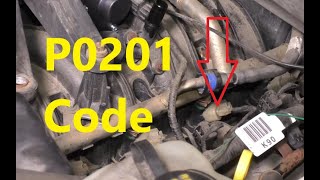
- Replacing the spark plug or ignition coil for cylinder 1. While these parts can cause a misfire (P0301), they will not cause an injector circuit code like P0201. The P0201 code is specifically for an electrical fault 🎬 Watch: A breakdown of P0201 causes and common fixes in the injector circuit.
- Assuming the new injectors need to be coded to the ECU. On the EA888 engine, injector coding or adaptation is not required; this is a procedure typically for TDI (diesel) engines. An owner on AudiWorld forums mistakenly believed this was necessary after getting a P0201 post-injector replacement, when the actual cause was a pinched wire.
Most Likely Causes
- Failed Cylinder 1 Fuel Injector 🔴 High Probability → Shop Fuel Injector The direct injection design places high stress on the injectors. Internal electrical components, like the solenoid coil, can fail from heat and vibration, creating an open or short circuit. There is an extended warranty for fuel injectors on some models (up to 10yr/120k miles), but it may be void if the vehicle has aftermarket software tuning.
How to confirm: The most definitive test is to swap the cylinder 1 fuel injector with another cylinder (e.g., cylinder 2). Clear the codes and run the engine. If the code changes to P0202 (Cylinder 2 Injector Circuit), the injector is faulty. You can also measure the resistance across the two pins of the disconnected injector; it should be between 1.4 and 2.6 Ohms at room temperature. A reading of infinity (OL) indicates an open circuit and a bad injector.
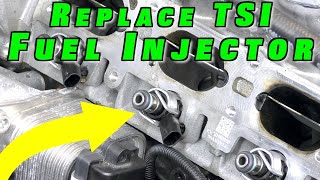
Typical fix: Replace the faulty fuel injector. It is highly recommended to replace all four injectors at the same time to ensure balanced fuel delivery and prevent future failures. Always replace the one-time-use Teflon seals and O-rings on the new injectors using the proper installation tools 🎬 See this walkthrough for replacing injectors on TSI engines to avoid damaging the new seals.
Est. part cost: $50 - $120 per injector - Damaged Fuel Injector Wiring Harness or Connector 🟡 Medium Probability → Shop Engine Wiring Harness The wiring harness sits on top of a hot engine and is subjected to constant vibration and heat cycles. Over time, the insulation can become brittle and crack. A very common failure point is the harness getting pinched or damaged during intake manifold removal/installation for services like carbon cleaning. This can cause an open or short circuit.
How to confirm: Visually inspect the wiring harness leading to all four fuel injectors, paying close attention to the connector for cylinder 1. Look for any signs of cracked insulation, exposed wires, or corrosion on the connector pins. The main 8-pin connector for the injector harness is located under the back right of the intake manifold and is a common place for issues. Use a 'noid light' to verify that the ECM is sending a pulse signal to the connector. If the light doesn't flash, the problem is in the wiring or ECM.
Typical fix: Repair the broken wire or replace the damaged connector. In many cases, replacing the entire fuel injector sub-harness (Part No. 06L971627A) is the most reliable and cost-effective repair, as the dealer price for the part can be surprisingly low ($60-$70).
Est. part cost: $5 - $150 depending on repair vs. replacement
Rare But Worth Checking
- Faulty Engine Control Module (ECM): → Shop Engine Control Module (ECM) This is the least likely cause. The ECM contains driver circuits for each injector, and one can fail. This should only be considered after definitively ruling out the injector and wiring as the cause.
Diagnosis Steps
- Read the codes: Use an OBD-II scanner to confirm P0201 and check for any other codes, such as P0301.
- Inspect the wiring: Perform a thorough visual inspection of the fuel injector wiring harness and the connector for cylinder 1. Look for any obvious signs of damage, chafing, or corrosion. Pay special attention to the area under the intake manifold if it was recently removed.
- Swap injectors: The easiest way to isolate the problem is to swap the fuel injector from cylinder 1 with the one from cylinder 2. This requires removing the intake manifold. Clear the codes, start the car, and let it run for a minute. Re-scan for codes. If the code is now P0202, the fuel injector is the problem.
- Test the circuit (if code does not move): If the P0201 code returns after the swap, the problem is in the wiring or the ECM. Disconnect the cylinder 1 injector connector. Use a 'noid light' to see if the ECM is sending a pulse signal while the engine is cranked. A flashing light means the ECM and wiring are likely okay up to that point.
- Test the injector resistance: With the injector disconnected, use a multimeter to measure the resistance between its two electrical pins. A reading between 1.4 and 2.6 ohms is expected. A reading of infinity (OL) indicates an open circuit and a bad injector.
- Check for power and ground: If the noid light doesn't flash, use a multimeter to check for battery voltage on one pin of the connector with the key on. The other pin is the ground, which is pulsed by the ECM.
- Conclude diagnosis: If the injector swap confirms a bad injector, replace it (preferably all four). If the wiring is visibly damaged, repair it or replace the sub-harness. If the wiring seems okay and a noid light test fails, the problem is likely further up the harness or, rarely, the ECM itself.
Parts You'll Likely Need
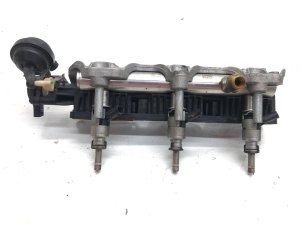
- Fuel Injector
(OEM #06H906036P (latest revision), supersedes 06H906036G, 06H906036E, 06H906036S)— This is the most common component to fail and cause a P0201 code due to an internal electrical fault. It's critical to use the latest revision for reliability.
Trusted brands: Bosch (OEM supplier), Genuine VW/Audi
OEM price range: $80-$120
Aftermarket price range: $50-$90 - Fuel Injector Seal Kit
(OEM #06J998907D)— The Teflon tip seal is a one-time-use part and MUST be replaced any time an injector is removed to prevent combustion leaks. Special tools are required to properly size the seal onto the injector tip. Most new injectors come with seals.
Trusted brands: Bosch, Elring, Genuine VW/Audi
OEM price range: $15-$25
Aftermarket price range: $10-$20 - Fuel Injector Wiring Harness
(OEM #06L971627A)— If the wiring is found to be brittle, cracked, or damaged, replacing the injector sub-harness is often the most reliable repair. It is a known failure point.
Trusted brands: Genuine VW/Audi
OEM price range: $60-$150
Aftermarket price range: $70-$120
Related Codes That Often Appear With This One
- P0301 — P0301 means 'Cylinder 1 Misfire Detected'. Since the P0201 code indicates the cylinder 1 injector isn't firing correctly, that cylinder can't produce power, which the ECM detects as a misfire.
- P0202, P0203, P0204 — If you see multiple injector circuit codes at once, especially after engine work, it strongly suggests a problem with the shared wiring harness or the main 8-pin connector under the intake manifold, rather than multiple individual injector failures.
- P0087 — 'Fuel Rail/System Pressure - Too Low'. While not always present, a leaking or malfunctioning injector can sometimes contribute to a loss of rail pressure, triggering this code alongside the circuit fault.
Technical Service Bulletins (TSBs) & Recalls
- Audi TSB 2027458 / 01-11-19: While primarily for P0087 (low fuel pressure), this TSB addresses an improved Fuel Pressure Sensor (G410) for the 2.0T TFSI engine, which is part of the same system.
- Audi TSB A301318 2028229: Mentions that a faulty fuel injector may cause misfire conditions and illuminate the MIL on 2009 A4s with the CAEB engine, which is directly applicable to the Q5.
Platform-Specific Known Issues
- Injector Harness Damage During Intake Manifold Service: → Shop Engine Intake Manifold A significant number of P0201 (and related P020x) faults appear immediately after the intake manifold has been removed for other services, such as carbon cleaning or PCV valve replacement. The injector harness runs underneath the manifold and can easily be pinched, its connectors not fully seated, or its wires chafed during reinstallation. One owner on AudiWorld forums reported this exact issue, which was resolved by finding and repairing a pinched wire after initially suspecting the new injectors were faulty.
Mechanic-Grade Diagnostic Values
- Fuel Injector Coil Resistance — expected: 1.4 - 2.6 Ohms (Ω) at room temperature. Failure: A reading of infinity (OL) indicates an open circuit; a reading significantly outside the range indicates a faulty injector coil.
- ECM Injector Circuit Trigger Current — expected: Greater than 2.1 Amps. Failure: The ECM will set a P0201 fault if the low side signal current is less than 2.1 Amps.
- Injector Harness Connector Voltage (at 8-pin connector) — expected: Approximately 22-25 Volts on the even-numbered pins (2, 4, 6, 8) with ignition on, engine off.. Failure: Significantly lower or no voltage suggests a problem in the power supply from the ECM.
- High-Pressure Fuel Rail Pressure (Hot Idle) — expected: Approximately 40 bar (4000 kPa). Failure: While not a direct test for P0201, pressure that is significantly low or bleeds off quickly after shutdown can indicate a mechanically stuck-open or leaking injector, which may sometimes accompany an electrical fault.
- High-Pressure Fuel Rail Pressure (Heat Soak Test) — expected: Pressure should rise to over 60 bar within a few minutes of shutting off a fully warmed-up engine.. Failure: If pressure fails to rise or drops, it indicates a leak in the high-pressure system, possibly from an injector seal or a faulty injector.
Scan Tool Commands That Help
- VCDS (VAG-COM): Engine (01) -> Output Tests (03) — This function allows you to individually activate each fuel injector. When activated, a healthy injector will make an audible clicking sound. This quickly confirms if the ECM driver and the wiring to the injector are capable of firing it, helping to isolate the fault.
- VCDS (VAG-COM): Engine (01) -> Adv. Meas. Values -> Search for 'Fuel high pressure' — Used to monitor live fuel rail pressure. This is useful for performing a leak-down test after shutting the engine off. A rapid drop in pressure can point to a mechanically leaking injector, which can be a related failure mode, even though P0201 is an electrical code.
Wiring & Ground Locations
- T8h - 8-Pin Injector Harness Connector — Located under the rear passenger side (right side) of the intake manifold. This connector links the main engine harness to the fuel injector sub-harness.. This is a critical failure point. It can be damaged or not seated correctly during intake manifold service. Testing for resistance and voltage can be done here to check all four injectors without removing the manifold. Pins 1&2 are for Cyl 1, 3&4 for Cyl 2, 5&6 for Cyl 3, and 7&8 for Cyl 4.
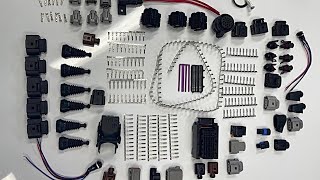
- Injector Connector (2-Pin) — Directly on top of each fuel injector.. This is the final connection point to the injector. The connector itself or its pins can become corroded or the locking tab can break, leading to a poor connection and an open circuit fault.
- Ground Point 624 — On the chassis, near the starter battery.. While not specific to the injector circuit, a poor main engine or chassis ground can cause a wide range of difficult-to-diagnose electrical issues, including intermittent faults in sensor and actuator circuits.
- Engine Block Ground Strap — Typically connects the engine block to the chassis frame rail. On the Q5, a primary ground lug is located in the plenum chamber near the positive jump-start post.. The ECM pulses the ground side of the injector circuit to fire it. A faulty or corroded main engine ground can create resistance in this path, potentially causing erratic behavior or fault codes.
Real Owner Repair Stories
- AudiWorld Forums user 'SMac770' and thread OP (2012 Audi Q5 2.0T CAEB, 120k miles) — Engine started but ran very rough, shaking, and threw code P0201 immediately after a major service.
❌ Tried (didn't work) Initially suspected new Bosch injectors were faulty or needed coding (adaptation)., Considered an ECM issue.
✅ What actually fixed it After removing the intake manifold again, a pinched wire was discovered in the fuel injector wiring harness. The harness was damaged during the reinstallation of the intake manifold after a carbon cleaning and injector replacement job. Repairing the wire resolved the P0201 code and rough running condition.
OEM Part Supersession History
06H906036E, 06H906036G, 06H906036S→06H906036P— Revisions to improve reliability and performance. It is critical to use the latest revision when replacing.06L971627A→06L971627AA, 06L971627AB— Minor revisions to the injector wiring sub-harness, potentially for improved heat resistance or durability.
Heads up: The newer revisions are backwards compatible and are the preferred replacement part.
Model Year Variations Within This Range
- 2009-2011.5 vs 2012-2017: Early models (CAEB engine code) used a full plastic intake manifold, while later models used a two-piece manifold with an aluminum upper section. While the P0201 fault causes are the same, the procedure for removing the manifold to access the injector harness underneath may have minor differences in hardware and torque specs.
Diagnostic Flowchart
Used vs. New Parts: Buying Guide for This Vehicle
When a used part is the smart pick: A used injector wiring harness (06L971627A) from a low-mileage donor vehicle can be a cost-effective option, as they are often damaged by improper service rather than wear. Used fuel injectors are generally not recommended due to unknown history and risk of failure, but can be a very cheap temporary part for diagnosis (e.g., swapping one in to see if a code clears before buying new).
Donor-vehicle mileage cap: roughly under 80000 miles for the part to have meaningful remaining life.
What to inspect on the donor part:
- For a wiring harness, inspect for any signs of cracking, brittleness, or heat damage on the convoluted tubing and wire insulation.
- Ensure all plastic connector housings and locking tabs are intact and not broken.
- Check for any signs of previous 'repairs' like electrical tape or butt connectors.
- For a used injector, look for a clean nozzle tip and intact, pliable O-rings (though seals should always be replaced).
OEM-only on this vehicle (don't cheap out):
- Fuel Injectors: Due to the high pressures and precise nature of direct injection, it is strongly recommended to use either Genuine Audi injectors or those from the OEM supplier, Bosch. Cheap, unbranded aftermarket injectors are a significant risk.
Aftermarket brands forum-validated for this vehicle:
- Bosch (for fuel injectors - they are the Original Equipment Manufacturer)
Brands owners have reported issues with on this vehicle:
- Unbranded, no-name fuel injectors from online marketplaces. Forum discussions frequently mention these failing quickly or causing performance issues right out of the box.
Real Owner Stories
Aggregated from forums and TSBs cited above. Mileages and costs reflect what owners reported in those sources.
Audi Q5 2.0T
Symptoms: A P0201 code appeared immediately after having the intake manifold removed for a carbon cleaning service and installation of new injectors.
What fixed it: The owner initially suspected the new injectors were faulty, but the actual cause was a pinched wire in the injector harness that was damaged during the reinstallation of the intake manifold. Repairing the wire resolved the code.
Source hint: vehicle_specific_issues section, citing an AudiWorld forums owner report
VW Tiguan (related EA888 platform)
Symptoms: Intermittent open circuit faults for fuel injectors.
What fixed it: The fuel injector harness was identified as the culprit and replaced. The mechanic noted that the replacement harness from the dealer was significantly cheaper than aftermarket alternatives.
Cost: $60-$70 (for the harness part)
Source hint: YouTube (European Auto Repair): 2018 VOLKSWAGEN TIGUAN FUEL INJECTOR OPEN CIRCUIT FAULT
VW Beetle (related EA888 platform) — ~110000 miles
Symptoms: Intermittent misfires and multiple injector codes (P0201, P0202, P0203, or P0204) along with an EPC light.
What fixed it: The problem was traced to a wiring short within the fuel injector harness, which was repaired under an extended warranty (10 years/120k miles).
Source hint: Reddit r/Volkswagen: 2018 VW Beetle EPC P0201, P0202, P0203 or P0204
Related OBD-II Codes
Frequently Asked Questions
I just had my intake manifold off for carbon cleaning and now I have a P0201 code. What's the most likely cause?
Is there an extended warranty for the fuel injectors on my 2012 Audi Q5 2.0T?
What resistance should I measure on a good fuel injector for this engine?
If I need to replace the injector on cylinder 1, should I replace all four?
Is it better to repair a wire or replace the entire injector sub-harness?
Does Audi TSB A301318 2028229 apply to my Q5 with the CAEB engine?
Helpful Videos
We Have This Part in Stock

The information in this article is provided for general reference and educational purposes only. Vehicle specifications, procedures, and part compatibility can vary by production date, trim level, and region. Always consult your vehicle's factory service manual and verify part numbers before purchasing or performing repairs. Safety-critical components such as airbags, seat belts, and braking systems should be installed by a qualified professional.
- Audi Q5:
- 🧭 Diagnostic Flowchart
- 🎬 Helpful Videos
- 🛍️ Shop This Part
- What's Unique About the 2009-2017 Audi Q5
- Symptoms You May Notice
- Most Likely Causes
- Rare But Worth Checking
- Diagnosis Steps
- Parts You'll Likely Need
- Related Codes That Often Appear With This One
- Technical Service Bulletins (TSBs) & Recalls
- Platform-Specific Known Issues
- Mechanic-Grade Diagnostic Values
- Scan Tool Commands That Help
- Wiring & Ground Locations
- Real Owner Repair Stories
- OEM Part Supersession History
- Model Year Variations Within This Range
- Used vs. New Parts: Buying Guide for This Vehicle
- Real Owner Stories
- Audi Q5 2.0T
- VW Tiguan (related EA888 platform)
- VW Beetle (related EA888 platform) — ~110000 miles
- Related OBD-II Codes
- Frequently Asked Questions
- 🎟️ Get 5% Off