

P0201 on 2005-2008 Chrysler Pacifica 3.5L: Injector Circuit Malfunction Causes and Fixes
This code indicates an electrical fault with the cylinder 1 fuel injector. The most likely cause is a failed injector, followed by a wiring issue. Replacing the injector is a 2-3 hour job requiring removal of the upper intake manifold, with the part costing between $50 and $180.
- P0201 on a 2005-2008 Pacifica 3.5L means there is an electrical problem with the cylinder 1 fuel injector.
- The most likely cause is a failed fuel injector, which will require replacement.
- Accessing the injector is labor-intensive, as the upper intake manifold must be removed. Always replace the intake gaskets at the same time.
- Before replacing the injector, test the wiring with a 'noid light' to rule out a simpler wiring problem.
- Driving with this code can lead to expensive damage to the catalytic converter.
What's Unique About the 2005-2008 Chrysler Pacifica
On the Chrysler 3.5L V6, the fuel injectors for cylinders 1, 3, and 5 are located on the rear bank of the engine (firewall side), underneath the upper intake manifold plenum. This makes accessing them more labor-intensive than on engines where the injectors are easily accessible. While Chrysler has a history of heat-related injector issues on other engines, the primary failure mode for the Pacifica is typically the internal coil of the injector itself failing or a wiring fault near the connector.
Symptoms You May Notice
- Check Engine Light is on
- Engine runs rough or idles poorly
- Noticeable loss of power and acceleration
- Engine misfires, which may feel like a shudder or stumble
- Reduced fuel economy
- Replacing the spark plug or ignition coil for cylinder 1. While these can cause a misfire (P0301), they will not cause an injector circuit code (P0201). The P0201 code is specifically an electrical fault related to the fuel injector circuit.
Most Likely Causes
- Failed Cylinder 1 Fuel Injector 🔴 High Probability → Shop Fuel Injector The internal electronic coil within the fuel injector is a common failure point over time due to heat cycles and age. This is the most frequent cause of a P0201 code.
How to confirm: Test the injector's resistance with a multimeter; a good injector should read around 12-14 ohms. An 'Open Loop' (OL) or infinite resistance reading indicates a failed injector. Another definitive method is to swap the cylinder 1 injector with another cylinder (e.g., cylinder 3, also on the rear bank). Clear the codes and run the engine. If the fault code follows the injector (e.g., changes to P0203), the injector is confirmed bad.
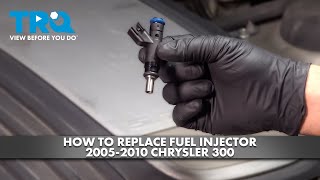
Typical fix: Replace the faulty fuel injector. Since accessing the injector requires removing the upper intake manifold, it is highly recommended to also replace the upper intake manifold gaskets to prevent vacuum leaks. 🎬 Watch a walkthrough on removing the upper intake manifold. Many owners and mechanics suggest replacing all three injectors on the rear bank (or all six) at the same time to save on future labor costs.
Est. part cost: $50-$180 - Damaged Wiring Harness or Connector 🟡 Medium Probability Engine vibration and heat can cause the wires leading to the injector to become brittle, chafe against other components, or break over time. The plastic locking tab on the connector can also break, leading to a poor connection.
How to confirm: Visually inspect the wiring and connector for cylinder 1 for any signs of damage, melting, or corrosion. Pay close attention to where the harness might rub against brackets or the engine itself. Use a 'noid light' to test for a pulse signal at the injector connector while the engine is cranked. If the light flashes, the wiring and PCM are likely okay. If it does not flash, there is a problem in the wiring or the PCM driver.
Typical fix: Repair the damaged section of the wiring harness or replace the injector connector pigtail. Ensure the repair is properly soldered and sealed with heat-shrink tubing.
Est. part cost: $10-$30 - Dirty or Clogged Fuel Injector ⚪ Low Probability → Shop Fuel Injector While possible, P0201 specifically points to an electrical circuit fault, not a fuel flow problem. A clog is more likely to cause a lean misfire code (P0301) without an accompanying injector circuit code.
How to confirm: This is difficult to confirm without specialized flow-testing equipment. It's usually diagnosed by ruling out electrical faults first.
Typical fix: Professional off-car cleaning and flow testing, or replacement of the injector.
Est. part cost: $50-$180
Rare But Worth Checking
- Powertrain Control Module (PCM) Failure: → Shop Engine Control Module (ECM) This is the least likely cause. The PCM contains a driver circuit for each injector. While these drivers can fail, it is very rare. You should exhaust all other diagnostic possibilities (injector and wiring) before condemning the PCM.
Diagnosis Steps
- Verify the code with an OBD-II scanner.
- Check for any other stored codes, particularly P0301 or P0171.
- Visually inspect the wiring harness and connector for the cylinder 1 fuel injector. Look for any obvious signs of damage, melting, or loose connections.
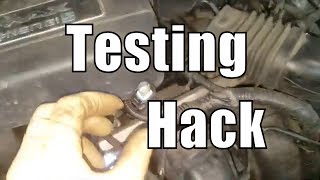
- Use a 'noid light' to test the injector connector. The light should flash when the engine is cranked, indicating the PCM is sending a signal. 🎬 See this clever hack for testing fuel injector circuits.
- If the noid light flashes, the problem is likely the injector itself. Turn off the vehicle and disconnect the battery.
- Test the resistance of the fuel injector using a multimeter. A typical reading is between 12 and 14 ohms. A reading of infinity (OL) means the injector's internal coil is broken and it must be replaced.
- If the noid light does NOT flash, the problem is in the wiring or the PCM. Check for 12V power on one wire of the connector with the key on. Then, check the continuity of the signal wire from the injector connector back to the PCM connector pin.
- As a final confirmation, swap the suspect injector with an adjacent one (e.g., cylinder 3). If the code changes to P0203, the injector is faulty. If P0201 returns, the wiring is the problem.
- If the injector and wiring are confirmed to be good, the PCM may be at fault, but this is rare and professional diagnosis is recommended.
Parts You'll Likely Need
- Fuel Injector
(OEM #4861238AC)— This is the most common failure point that triggers a P0201 code. The internal coil winding fails, creating an open circuit.
Trusted brands: Mopar, Bosch, Standard Motor Products (SMP)
OEM price range: $110-$180
Aftermarket price range: $50-$100 - Upper Intake Manifold Gasket Set
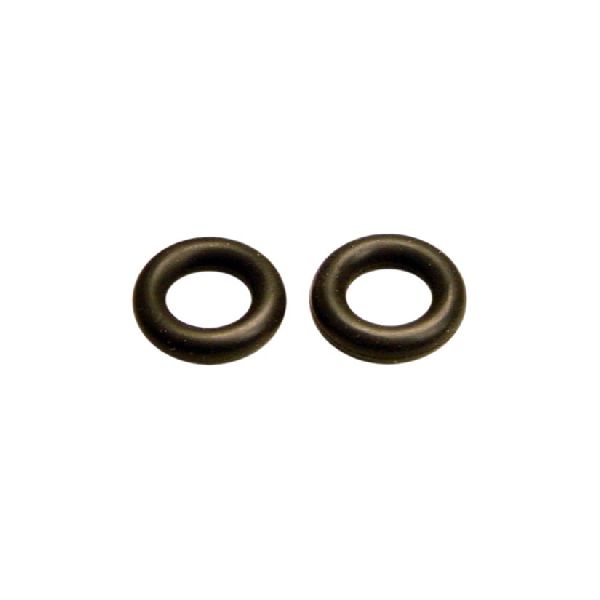
(OEM #MS92165)— The upper intake manifold must be removed to access the fuel injectors on the 3.5L V6. These gaskets are single-use and must be replaced to prevent vacuum leaks after the repair.
Trusted brands: Fel-Pro, Mahle, Mopar
OEM price range: $30-$50
Aftermarket price range: $15-$30
Related Codes That Often Appear With This One
- P0301 — P0301 means 'Cylinder 1 Misfire Detected'. Since P0201 indicates the injector for cylinder 1 isn't working correctly, that cylinder cannot combust fuel properly, which directly causes a misfire. This is the most common companion code.
- P0171 — P0171 means 'System Too Lean (Bank 1)'. If the injector is not firing, the cylinder fills with air but no fuel. This large amount of unburnt oxygen travels to the exhaust, where the O2 sensor for Bank 1 (the rear bank) reports a lean condition.
Technical Service Bulletins (TSBs) & Recalls
- While no TSB is directly for P0201 on the Pacifica, Chrysler TSB 18-031-03 for 1999-2004 Jeep models with the 4.0L engine addresses a rough idle and P0303 (Cylinder 3 Misfire) after a hot restart. The fix involves installing an insulator sleeve on the #3 injector to protect it from exhaust manifold heat. This TSB is often cited as an example of Chrysler acknowledging heat-soak related injector issues, a conceptually similar problem, even though it does not apply to the Pacifica's engine.
Platform-Specific Known Issues
- Cylinder Numbering Scheme: For accurate diagnosis, it's critical to know the cylinder layout. On the 3.5L V6, the rear bank (closest to the firewall) contains cylinders 1, 3, and 5, reading from the passenger side to the driver side. The front bank (closest to the radiator) contains cylinders 2, 4, and 6. P0201 refers to the rear-bank cylinder on the passenger side.
Mechanic-Grade Diagnostic Values
- Fuel Injector Coil Resistance — expected: 11-15 Ohms (typically 12-14 Ohms). Failure: An 'Open Loop' (OL) or infinite resistance reading indicates a broken internal coil. A reading near zero indicates a shorted coil.
- Injector Connector Power (Key On, Engine Off) — expected: Battery Voltage (~12V+). Failure: 0V indicates a problem with the power supply from the Auto Shutdown (ASD) relay, its fuse, or the wiring between the relay and the injector.
- Injector Control Circuit Continuity (PCM to Injector Connector) — expected: Less than 5.0 Ohms. Failure: A high resistance or open (OL) reading indicates a break in the control wire between the PCM and the injector connector.
- Injector Control Circuit to Ground — expected: Greater than 100 Ohms. Failure: A low resistance reading indicates a short to ground in the control circuit.
Scan Tool Commands That Help
- Chrysler wiTECH or other professional scan tools: Injector Kill Test / Cylinder Contribution Test — This bidirectional command allows the technician to individually disable the cylinder 1 injector while the engine is running. If disabling the injector causes no change in the engine's idle, it confirms that the injector was not working in the first place. If disabling it causes the engine to run rougher, it indicates the injector was working intermittently.
Wiring & Ground Locations
- Cylinder 1 Injector Control Wire — On 3.5L engines of this era, the injector control wire for cylinder #1 is typically a Brown/Orange wire. It runs from the injector connector to a specific pin on the PCM.. This is the specific wire the PCM uses to pulse the ground for the #1 injector. A break or short on this wire is a direct cause of P0201. Continuity should be checked from the injector connector back to the PCM connector pin.
- Injector Power Supply Wire — All fuel injectors share a common power supply wire, typically Dark Green/Orange on Chrysler products of this vintage. This wire receives 12V from the Auto Shutdown (ASD) relay.. While a failure here would likely cause multiple injector codes (P0201, P0202, etc.), damage to the wire near the cylinder 1 injector could uniquely affect it. Verifying 12V at this wire is a key first step.
- Ground G103 — Located on the driver's side inner fender/frame rail, near the battery tray and under the fuse box (TIPM).. This is a critical chassis and electronics ground. Multiple forum posts identify corrosion at this specific ground point causing a host of bizarre electrical issues, including TIPM/power-related problems that can manifest as injector circuit faults. The wires can corrode inside the crimped ring terminal, appearing intact but providing a poor ground.
- PCM Connector C2, Pin 11 (Example) — This is a representative pinout for a Chrysler 3.5L V6 PCM. The Cylinder 1 Injector Control is located at Pin 11 of the C2 connector.. When diagnosing a wiring fault where a noid light doesn't flash, knowing the exact pin at the PCM is essential for performing a continuity test on the control wire, ruling out a wiring break between the PCM and the injector.
Real Owner Repair Stories
- Chrysler Forum user 'gbeach' (2006 Chrysler Pacifica) — P0201 code, engine feels like it's on 5 cylinders. Problem only occurs after the first start of the day when the engine is warm. A cold start is fine, but a restart after sitting for a few minutes triggers the fault.
❌ Tried (didn't work) Replacing the alternator (for an unrelated issue), Unhooking the battery to reset the computer (temporary fix)
✅ What actually fixed it Another user in the same thread with identical symptoms ('Raindrop', 2006 Pacifica) confirmed the final fix was replacing the bad fuel injector. This points to a common heat-soak failure, where the injector's internal coil fails when hot but works when cold. - NHTSA ODI #10339808 — An owner of a similar Chrysler platform reported a diagnostic code indicating P0201: #1 fuel injector open circuit. The owner noted the vehicle was emitting smoke and required the removal of the top half of the intake manifold to address the fault.
OEM Part Supersession History
4861238AB→4861238AC, RL861238AC (reman)— Standard part revision and introduction of a remanufactured option.
Heads up: The part number 4861238AC is listed for the 3.8L V6 in some catalogs, but is also specified as the correct injector for the 3.5L in others. Cross-referencing indicates it is a widely used injector. However, a different part number (4591986AA) is also listed for the 3.5L/4.0L Pacifica. It is critical to verify the correct part number by VIN before ordering.
Diagnostic Flowchart
Other Known Issues on This Vehicle
Issues unrelated to this code that are worth knowing about as an owner of this generation:
- Engine Cradle / Subframe Corrosion 🔴 High — Very common on vehicles used in 'salt belt' states. Numerous complaints and a class-action lawsuit were filed. Can become structurally unsafe, with potential for the engine to detach in worst-case scenarios. (Ref: Chrysler issued TSBs and limited warranty extensions, but they were controversially restricted to specific build dates and regions.)
- Premature Engine Mount Failure 🟠 Medium — Widespread owner complaints of failure of the fluid-filled engine mounts, often occurring multiple times. Symptoms include excessive vibration at idle, and a 'clunk' when shifting into gear or accelerating. (Ref: No official recall, but it is a widely acknowledged common repair. Failure can sometimes cause secondary damage, like broken ground straps, leading to electrical issues.)
- Interference Engine - Timing Belt Replacement is Critical 🔴 High — The 3.5L V6 is an interference engine. This is not a defect, but a critical maintenance characteristic. Failure to replace the timing belt at the recommended interval (typically 100,000 miles) will result in catastrophic engine damage if the belt breaks.
- O2 Sensor Brand Sensitivity 🟡 Low — This platform is known to be very sensitive to the brand of oxygen sensor used. Owners and mechanics report that using non-OEM brands (especially Bosch) can cause new trouble codes (like P0132) to appear immediately after replacement.
- Oil Sludging due to Narrow Oil Channels 🟠 Medium — The Chrysler 3.5L engine family is noted as having narrow oil channels that can be prone to sludging if oil change intervals are extended or low-quality oil is used. This can lead to oil starvation and premature wear on internal components.
Used vs. New Parts: Buying Guide for This Vehicle
When a used part is the smart pick: A used fuel injector is generally not recommended. The primary failure mode is an internal coil failure from age and heat cycles, and a used part has unknown remaining life. The labor to replace the injector (removing the intake manifold) is significant, making it unwise to risk using a part that might fail soon. A used wiring harness pigtail or a complete engine wiring harness from a low-mileage donor can be a good value if the original is damaged.
Donor-vehicle mileage cap: roughly under 75000 miles for the part to have meaningful remaining life.
What to inspect on the donor part:
- For a wiring harness, check for any signs of prior repairs (tape, butt connectors).
- Ensure all connector locking tabs are intact and not brittle.
- Avoid harnesses from vehicles with signs of engine fire, major fluid leaks, or significant front-end collision damage.
OEM-only on this vehicle (don't cheap out):
- While not strictly OEM-only, using a reputable brand for the fuel injector is critical due to the high labor cost of replacement. Avoid unbranded, 'no-name' injectors.
Aftermarket brands forum-validated for this vehicle:
- Bosch
- Standard Motor Products (SMP)
- GB Remanufacturing
Brands owners have reported issues with on this vehicle:
- Unbranded, generic injectors sold on marketplace sites with no warranty or brand reputation.
Real Owner Stories
Aggregated from forums and TSBs cited above. Mileages and costs reflect what owners reported in those sources.
2006 Chrysler Pacifica 3.5L V6
Symptoms: The owner reported receiving error codes P0201 and P0301 simultaneously.
What fixed it: Replacement of the faulty fuel injector as diagnosed by a mechanic.
Source hint: Chrysler Forum - '2006 pacifica error codes, 301, 201'
Related OBD-II Codes
Frequently Asked Questions
Where is the cylinder 1 fuel injector located on my 3.5L V6 Pacifica?
Does Chrysler TSB 18-031-03 apply to my 2005-2008 Pacifica P0201 code?
What should the resistance be for a healthy fuel injector on this engine?
Why is it recommended to replace the upper intake manifold gaskets when fixing P0201?
Can I just clean the injector to fix the P0201 code?
Could my engine mounts be related to the P0201 wiring issues?
Helpful Videos
Used OEM Parts in Stock
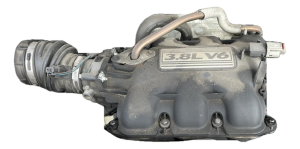
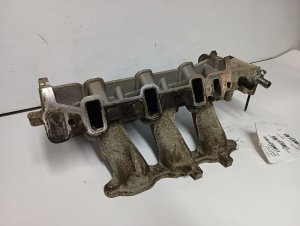
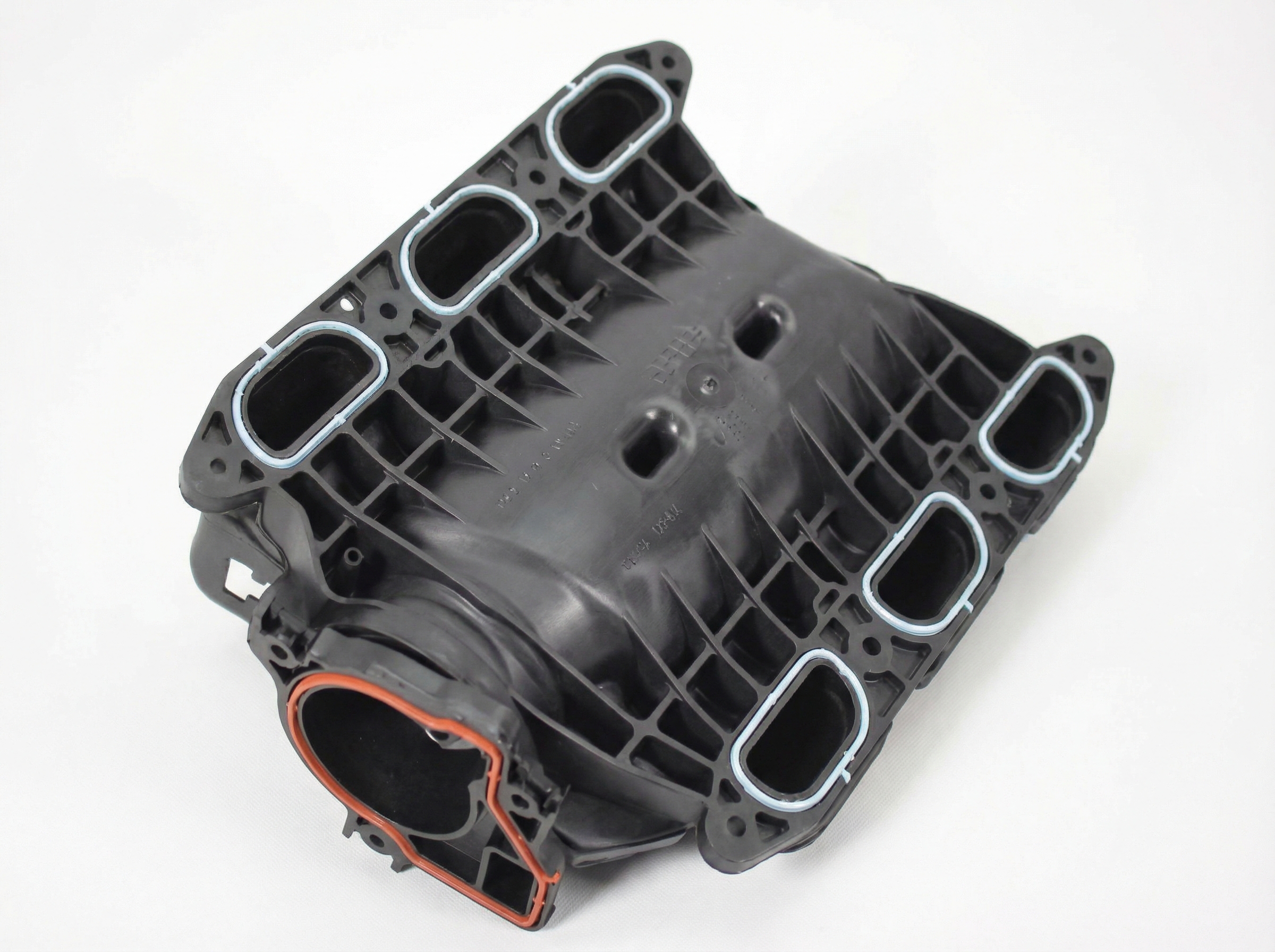
New Aftermarket Parts Available

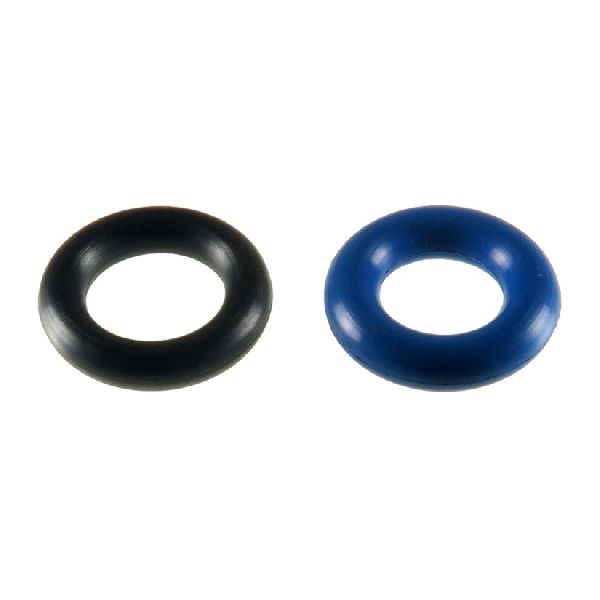

The information in this article is provided for general reference and educational purposes only. Vehicle specifications, procedures, and part compatibility can vary by production date, trim level, and region. Always consult your vehicle's factory service manual and verify part numbers before purchasing or performing repairs. Safety-critical components such as airbags, seat belts, and braking systems should be installed by a qualified professional.
- Chrysler Pacifica:
- 🧭 Diagnostic Flowchart
- 🎬 Helpful Videos
- 🛍️ Shop This Part
- What's Unique About the 2005-2008 Chrysler Pacifica
- Symptoms You May Notice
- Most Likely Causes
- Rare But Worth Checking
- Diagnosis Steps
- Parts You'll Likely Need
- Related Codes That Often Appear With This One
- Technical Service Bulletins (TSBs) & Recalls
- Platform-Specific Known Issues
- Mechanic-Grade Diagnostic Values
- Scan Tool Commands That Help
- Wiring & Ground Locations
- Real Owner Repair Stories
- OEM Part Supersession History
- Other Known Issues on This Vehicle
- Used vs. New Parts: Buying Guide for This Vehicle
- Real Owner Stories
- 2006 Chrysler Pacifica 3.5L V6
- Related OBD-II Codes
- Frequently Asked Questions
- 🎟️ Get 5% Off