

P0201 on 2006-2010 Dodge Charger 3.5L: Injector Circuit Malfunction Causes and Fixes
P0201 on a 2006-2010 Dodge Charger 3.5L indicates an electrical fault in the cylinder 1 fuel injector circuit. The most common causes are a failed fuel injector or a damaged wiring connector. Expect to pay $40-$90 for a new injector and consider it a DIY-friendly repair if you have basic mechanical skills.
- P0201 means there is an electrical problem with the fuel injector circuit for cylinder 1, not necessarily a clog.
- The most likely fix is replacing the cylinder 1 fuel injector.
- Always use a 'noid light' to check for a signal at the injector harness before replacing the injector to rule out a wiring problem.
- Cylinder 1 is located on the passenger side of the engine, closest to the radiator.
- Accessing the injector requires removing the upper intake manifold, so you must also replace the intake gaskets to prevent future vacuum leaks.
What's Unique About the 2006-2010 Dodge Charger
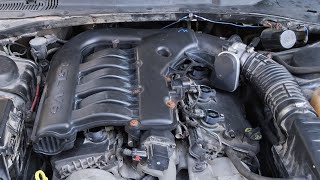
On the Dodge Charger with the 3.5L V6 engine, the layout places cylinder 1 on the passenger side, closest to the front of the car. Unlike some other Dodge engines known for wiring harness issues inside the valve cover, the primary culprits for a P0201 on this platform are typically the injector itself or the external connector and wiring leading to it. Accessing the injectors on the passenger side (Bank 1) requires removing the upper intake manifold, which is a manageable but involved job.
Symptoms You May Notice
- Check Engine Light is on
- Engine misfire, which may feel like shaking or stumbling, especially at idle
- Rough or unstable idle
- Noticeable loss of power and poor acceleration
- Reduced fuel economy
- Strong smell of gasoline if the injector is stuck open.
- Replacing the spark plug or ignition coil for cylinder 1. While these parts cause a misfire (P0301), they do not cause an injector circuit code like P0201. If you only have P0201, the issue is with the fuel system's electrical circuit, not ignition.
Most Likely Causes
- Failed Fuel Injector (Cylinder 1) 🔴 High Probability → Shop Fuel Injector The internal coil windings of the injector can fail over time due to heat and vibration, creating an open or shorted circuit that the PCM detects.
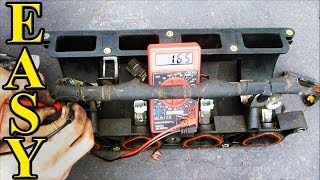
How to confirm: Swap the cylinder 1 fuel injector with another cylinder's injector (e.g., cylinder 3). If the code changes to P0203, the injector is faulty. You can also test the injector's resistance with a multimeter; it should be around 12 ohms. An open circuit (infinite resistance) or a reading far from this value indicates a bad injector. 🎬 See how to test injector resistance with a multimeter.
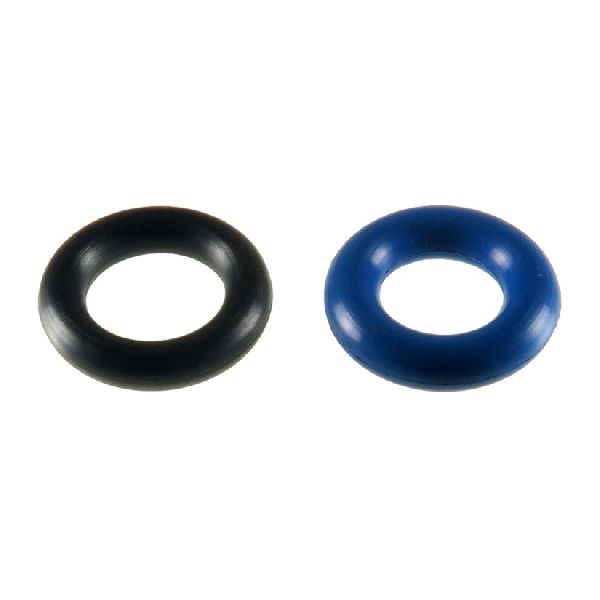
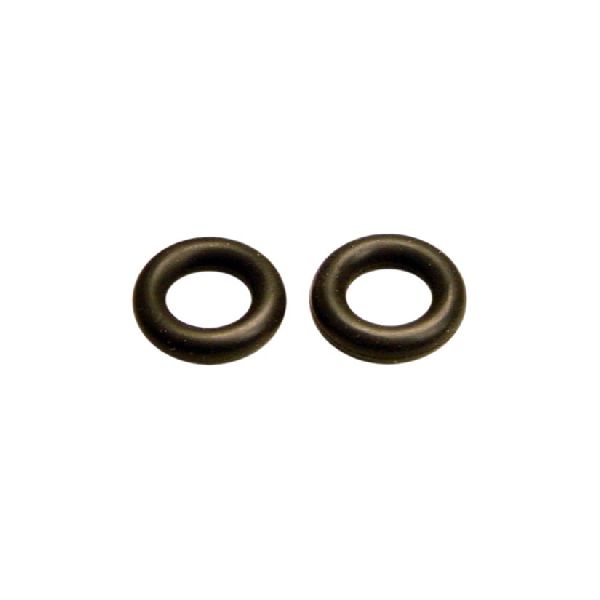
Typical fix: Replace the failed fuel injector. It is recommended to replace the O-rings on the new injector.
Est. part cost: $40-$90 - Damaged Wiring Harness or Connector 🟡 Medium Probability Engine vibration and heat can cause wires to chafe, break, or corrode over time. The plastic locking tabs on the connectors can also become brittle and break, leading to a poor connection.
How to confirm: Visually inspect the wiring going to the cylinder 1 injector for any signs of fraying, melting, or corrosion. Use a noid light to test for a pulse signal at the injector connector. If the noid light doesn't flash, there's a problem in the wiring or the PCM. Also check main engine ground points like G105 and G106 for corrosion, as a bad ground can cause intermittent electrical faults.
Typical fix: Repair the damaged section of wire or replace the injector connector pigtail.
Est. part cost: $10-$25 - Leaking Upper Intake Manifold Gasket ⚪ Low Probability → Shop Engine Intake Manifold While this typically causes lean codes or random misfires, a significant vacuum leak near cylinder 1 can sometimes be misinterpreted by the PCM or contribute to drivability issues that occur alongside a P0201.
How to confirm: With the engine running, spray brake cleaner or a propane torch (unlit) around the intake manifold gasket area near cylinder 1. If the engine idle changes, you have a vacuum leak.
Typical fix: Replace the upper intake manifold gaskets. Since the manifold must be removed to access the injectors, it's wise to replace these gaskets during an injector job regardless.
Est. part cost: $20-$50
Rare But Worth Checking
- Faulty Powertrain Control Module (PCM): → Shop Engine Control Module (ECM) This is the least likely cause. The internal driver circuit for the injector can fail, but all other possibilities (injector, wiring) must be exhaustively ruled out before condemning the PCM.
Diagnosis Steps
- Verify the code P0201 is present using an OBD-II scanner. Check for any other codes, especially P0301.
- Perform a visual inspection of the cylinder 1 fuel injector wiring and connector. Look for obvious signs of damage, corrosion, or loose connections. Cylinder 1 is on the passenger side, closest to the radiator.
- Use a noid light to test the electrical signal at the injector connector. Disconnect the injector and plug in the noid light. Start the engine; the light should flash steadily. If it doesn't flash, the problem is in the wiring or the PCM. If it flashes, the wiring and PCM are likely okay, and the injector itself is the probable cause.
- If the noid light flashes, test the injector's resistance. Disconnect the injector and use a multimeter set to ohms to measure across the two pins. A good injector should read approximately 12 ohms. If it reads as an open loop (OL) or a significantly different value, the injector has failed electrically.
- As a final confirmation, swap the cylinder 1 injector with the cylinder 3 injector (the next one back on the same side). This requires removing the upper intake manifold.
- Clear the codes, start the car, and wait for the Check Engine Light to return. If the code is now P0203 ('Injector Circuit/Open - Cylinder 3'), you have confirmed the fuel injector is bad.
- If the code remains P0201 after the swap, the problem lies within the wiring harness for cylinder 1 or, rarely, the PCM.
- If the injector is confirmed bad, replace it. Since accessing the injectors requires removing the upper intake manifold, it is highly recommended to replace the intake manifold gaskets at the same time.
Parts You'll Likely Need
- Fuel Injector
(OEM #04591986AA)— This is the most common component to fail for a P0201 code, either due to an internal electrical short or open circuit. The Bosch cross-reference part number is 0280158028.
Trusted brands: Mopar, Bosch, Standard Motor Products (SMP)
OEM price range: $90-$120
Aftermarket price range: $40-$90 - Upper Intake Manifold Gasket Set
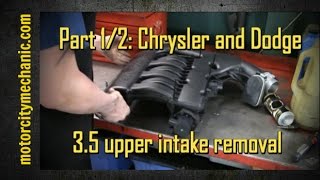
(OEM #MS96684)— This must be removed to access the fuel injectors on the 3.5L V6. It is critical to replace the gaskets to prevent vacuum leaks after the repair. 🎬 Watch: Step-by-step guide to removing the upper intake manifold.
Trusted brands: Fel-Pro, Mahle, Mopar
OEM price range: $30-$50
Aftermarket price range: $20-$40 - Fuel Injector Connector Pigtail — If the diagnostic process reveals a broken connector or damaged wiring right at the injector, this part is needed to repair the harness.
Trusted brands: Dorman, Standard Motor Products (SMP), WVE/NTK
OEM price range: $15-$30
Aftermarket price range: $10-$25
Related Codes That Often Appear With This One
- P0301 — This code means 'Cylinder 1 Misfire Detected'. It is a direct symptom of P0201, as the injector circuit failure prevents fuel from being delivered, causing the cylinder to misfire.
Technical Service Bulletins (TSBs) & Recalls
- TSB 09-010-06: Notes that on 2005-2006 models with the 3.5L engine, misfire codes (P030x) can be caused by excessive carbon buildup on the exhaust valves. While P0201 is a circuit code, this underlying issue can occur concurrently and contribute to poor engine performance.
- TSB Bulletin #9002688: A manufacturer service bulletin for related Dodge/Ram vehicles advises that before replacing injectors for codes P0201 through P0206, technicians should ensure the wiring loom or connector in the valve cover gasket is not the root cause.
Mechanic-Grade Diagnostic Values
- Fuel Injector Coil Resistance — expected: 12 to 14 ohms. Failure: A reading of infinity (O.L.) indicates an open circuit; a reading near zero indicates a short. Either confirms a failed injector.
- Injector Connector Power Supply (KOEO) — expected: Battery voltage (~12V). Failure: No voltage indicates a break in the power supply wire from the ASD (Auto Shutdown) relay.
- Injector Inductive Kick Voltage Spike — expected: ~50 Volts. Failure: The absence of this voltage spike when the injector driver in the PCM releases the ground is what triggers the P0201 code.
Scan Tool Commands That Help
- StarSCAN or wiTECH (Dealer-level scan tool): Actuate Auto Shutdown (ASD) Relay Control State — This bidirectional command is used to manually energize the ASD relay. It helps a technician confirm if the power supply portion of the injector circuit is functional without needing to start the engine.
Wiring & Ground Locations
- G105 (3.5L) — On the engine near the wiring harness breakout for the #5 ignition coil.. This is a primary engine ground. Corrosion or a loose connection here can cause intermittent electrical faults across multiple components, including the injector circuits.
- G106 (3.5L) — On the left side of the engine block.. Another critical engine-to-chassis ground point. A poor connection here can lead to unstable sensor and actuator operation.
- G107 (3.5L) — On the right side of the engine, near the generator (alternator).. This ground is crucial for the proper functioning of the alternator and other components on the right side of the engine. A fault here can introduce electrical noise and voltage irregularities.
Real Owner Repair Stories
- Reddit user in r/MechanicAdvice (2010 Dodge Charger 3.5L V6, 145,000 miles) — Sudden rough running and a P0201 code after restarting the car on a trip.
❌ Tried (didn't work) The initial diagnosis from a parts store scan was a bad injector, and the owner was preparing to replace it.
✅ What actually fixed it Before replacing any parts, the owner disconnected the battery for 5 minutes. After reconnecting, the car started and ran perfectly with no code, suggesting an intermittent electrical fault or a PCM logic latch rather than a hard failure of the injector.
OEM Part Supersession History
RL591986AA→04591986AA— Standard part number update and revision by Mopar.
Model Year Variations Within This Range
- 2007-2010: While the 3.5L V6 was the standard engine for the SE trim in 2006, the base SE model switched to a smaller 2.7L V6 from 2007-2010. The 3.5L engine remained available in the SXT trim during those years. This is a trim-level difference, not a change to the 3.5L engine itself.
Diagnostic Flowchart
Other Known Issues on This Vehicle
Issues unrelated to this code that are worth knowing about as an owner of this generation:
- Timing Belt Failure 🔴 High — This is a critical maintenance item. The belt must be replaced every 100,000-105,000 miles. Failure is common on neglected vehicles and will cause catastrophic engine damage as the 3.5L is an interference engine.
- Shifter Stuck in Park ('Pink Thingy' Failure) 🔴 High — Extremely common across all 2005-2010 LX platform vehicles. A small plastic park-interlock lever inside the shifter assembly breaks, preventing the shifter from moving out of Park. It can happen at any mileage. (Ref: No recall, but a widely known failure. Aftermarket metal replacements (e.g., Dorman 924-706) are the recommended permanent fix.)
- Oil Cooler Gasket Leak 🟠 Medium — A very common source of oil leaks on the 3.5L engine. The gasket for the oil cooler assembly, located near the oil filter, degrades over time and seeps oil.
- Front Suspension Component Wear 🟠 Medium — Common after 70,000 miles. The tension struts (front lower control arms) and outer tie rod ends wear out, causing clunking noises over bumps, steering wheel vibration, and uneven tire wear.
- Rocker Arm Assembly Failure / Engine Tick 🟠 Medium — A well-known issue on the 3.5L EGG engine. A dowel pin can shear, causing the rocker arms to become misaligned and starved of oil, resulting in a loud ticking/tapping noise from the top of the engine.
Used vs. New Parts: Buying Guide for This Vehicle
When a used part is the smart pick: For a single failed fuel injector, a used OEM part (Mopar or Bosch) from a reputable salvage yard is a cost-effective and reliable option, as they are not a high-failure item prone to premature wear.
Donor-vehicle mileage cap: roughly under 100000 miles for the part to have meaningful remaining life.
What to inspect on the donor part:
- Ensure the donor vehicle was not in a major front-end collision that could have damaged the engine.
- Inspect the injector's plastic connector body for cracks or brittleness.
- Check the metal body for significant rust or corrosion.
- Verify the part number on the injector matches the OEM (04591986AA) or Bosch (0280158028) number.
OEM-only on this vehicle (don't cheap out):
- No parts for this specific repair are considered 'OEM-only', but using the OEM-supplier brand (Bosch) for the injector is highly recommended for guaranteed fit and performance.
Aftermarket brands forum-validated for this vehicle:
- Bosch (OEM supplier)
- Standard Motor Products (SMP)
Brands owners have reported issues with on this vehicle:
- Unbranded, generic 'sets of 6' from online marketplaces should be avoided. While cheap, they often have inconsistent flow rates and poor quality control, which can lead to other performance issues.
Real Owner Stories
Aggregated from forums and TSBs cited above. Mileages and costs reflect what owners reported in those sources.
2010 Dodge Charger 3.5L V6 — 145000 miles
Symptoms: Vehicle was acting like it was missing a little... I turned off the car and let it sit and restarted and could tell it was still missing and the engine light was on.
What fixed it: Replace the failed fuel injector and O-rings.
Source hint: reddit r/MechanicAdvice
2001 Chrysler 300M 3.5L V6
Symptoms: Diagnostic Trouble Code P0201 present; diagnostic path consistent across the 3.5L engine family.
What fixed it: Followed diagnostic path to identify injector circuit/open fault.
Source hint: iATN - P0201 Diagnostic Trouble Code Discussion (Aug 2011)
Related OBD-II Codes
Frequently Asked Questions
Where is cylinder 1 located on my 2006-2010 Dodge Charger 3.5L V6?
Does TSB 09-010-06 apply to my P0201 code?
I'm replacing the cylinder 1 injector; should I replace the intake gaskets too?
What should the resistance reading be for a healthy injector on this engine?
Can I swap injectors to confirm the failure on this platform?
Are there specific ground points I should check for intermittent P0201 issues?
Helpful Videos
We Have This Part in Stock


The information in this article is provided for general reference and educational purposes only. Vehicle specifications, procedures, and part compatibility can vary by production date, trim level, and region. Always consult your vehicle's factory service manual and verify part numbers before purchasing or performing repairs. Safety-critical components such as airbags, seat belts, and braking systems should be installed by a qualified professional.
- Dodge Charger:
- 🧭 Diagnostic Flowchart
- 🎬 Helpful Videos
- 🛍️ Shop This Part
- What's Unique About the 2006-2010 Dodge Charger
- Symptoms You May Notice
- Most Likely Causes
- Rare But Worth Checking
- Diagnosis Steps
- Parts You'll Likely Need
- Related Codes That Often Appear With This One
- Technical Service Bulletins (TSBs) & Recalls
- Mechanic-Grade Diagnostic Values
- Scan Tool Commands That Help
- Wiring & Ground Locations
- Real Owner Repair Stories
- OEM Part Supersession History
- Model Year Variations Within This Range
- Other Known Issues on This Vehicle
- Used vs. New Parts: Buying Guide for This Vehicle
- Real Owner Stories
- 2010 Dodge Charger 3.5L V6 — 145000 miles
- 2001 Chrysler 300M 3.5L V6
- Related OBD-II Codes
- Frequently Asked Questions
- 🎟️ Get 5% Off