

P0201 on 1998-2003 Dodge Durango 4.7L: Injector Circuit Causes and Fixes
On a 1998-2003 Durango with the 4.7L V8, code P0201 most often points to a bad fuel injector for cylinder 1 or a problem with its wiring connector. Expect to pay $40-$90 for a new injector and consider replacing the connector pigtail at the same time. Before replacing parts, wiggle the connector and check wiring, as these are common and cheap failure points.
- P0201 on your Durango means the computer has found an electrical problem with the fuel injector in cylinder 1.
- The most likely causes are a bad fuel injector or a faulty wiring connector going to the injector.
- Symptoms typically include a rough idle, misfire, and the Check Engine Light.
- Diagnosis involves checking the wiring, testing the injector's resistance (10.8-13.2 ohms), and using a noid light to verify the signal from the PCM.
- This issue is shared with other vehicles using the 4.7L PowerTech V8, like the Jeep Grand Cherokee and Dodge Dakota.
What's Unique About the 1998-2003 Dodge Durango
The first-generation Dodge Durango, particularly with the 4.7L PowerTech V8 (available from 2000-2003), is known for having injector-related issues that can be intermittent and frustrating to diagnose. Owners on forums frequently report the code appearing with a rough idle, sometimes after the vehicle has been sitting. While the injector itself can fail, the wiring and connectors are common points of failure due to age, heat, and vibration in the engine bay. It's a platform where checking the simple things, like wiggling the injector connector to see if the idle changes, can often lead to a quick fix. In some cases, multiple injector codes can appear at once, which may point to a shared power/ground issue or even a failing PCM.
Symptoms You May Notice
- Check Engine Light is on
- Engine runs rough or shakes, especially at idle
- Noticeable loss of power and acceleration
- Engine misfire (may be accompanied by a P0301 code)
- Increased fuel consumption
- Engine may stall or be hard to start
- Smell of raw fuel from the exhaust
- Backfire through the intake, as reported by one owner after a wiring repair attempt.
- Replacing spark plugs and ignition coils without diagnosing the fuel system first. While these can cause misfires (P0301), they will not set a P0201 circuit code.
- Replacing the fuel pump. A failing fuel pump would typically affect all cylinders, causing low fuel pressure, and would not set an isolated circuit code for cylinder 1.
Most Likely Causes
- Faulty Cylinder 1 Fuel Injector 🔴 High Probability → Shop Fuel Injector Over time, the internal coil windings of the fuel injector can fail (open or short), or the injector can become mechanically stuck due to varnish and carbon buildup. An intermittent internal short can also overheat the PCM driver, causing it to temporarily shut down, mimicking a wiring fault. This is a common failure item on many vehicles as they age.
How to confirm: Use a multimeter to check the resistance of the injector. For the 4.7L engine, the specification is typically 10.8-13.2 ohms. An open circuit (infinite resistance) or a short (near zero resistance) indicates a bad injector. A more definitive test is to swap the injector with an adjacent cylinder (e.g., cylinder 3) and see if the code follows (e.g., changes to P0203). If the code changes, the injector is confirmed bad.
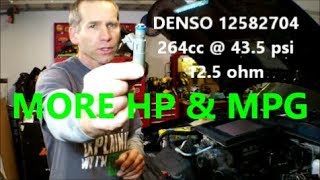
Typical fix: Replace the fuel injector for cylinder 1. It is often recommended to replace all injectors as a set on a high-mileage engine to ensure balanced fuel delivery and prevent future failures. 🎬 Watch: Step-by-step guide to replacing your fuel injectors.
Est. part cost: $40-$90 - Bad Fuel Injector Wiring or Connector 🔴 High Probability → Shop Fuel Injector The wiring harness and plastic connectors become brittle from years of heat cycles and vibration. Wires can fray or break, and the connector terminals can lose their grip or corrode, causing a poor or intermittent connection. Forum users frequently report finding exposed or broken wires at the injector connector.
How to confirm: Visually inspect the wiring going to the cylinder 1 injector for any signs of damage, fraying, or corrosion. Wiggle the connector while the engine is running to see if it affects the idle. Use a 'noid light' to test for a pulse signal at the injector connector; disconnect the injector, plug in the light, and start the engine. If the light doesn't flash, the problem is in the wiring or the PCM. If it flashes, the circuit up to the connector is good.
Typical fix: Repair the damaged section of wire or replace the injector connector pigtail. Use solder and heat-shrink tubing for a durable repair. Applying dielectric grease to the new connector can help prevent future moisture intrusion.
Est. part cost: $10-$25 - Powertrain Control Module (PCM) Failure ⚪ Low Probability → Shop Engine Control Module (ECM) While less common, the internal driver circuit for the cylinder 1 injector within the PCM can fail. This is more likely after other causes have been ruled out. A short in the injector wiring or the injector itself can sometimes damage the PCM driver, requiring both to be fixed. Some forum users have ended up replacing the PCM after exhausting all other options.
How to confirm: This is typically a last resort after confirming the injector and wiring are good. If a noid light shows no pulse at the injector connector and the wiring has been tested for continuity back to the PCM with no breaks or shorts found, the PCM is the likely culprit. A service manual is critical for testing the specific pin at the PCM connector.
Typical fix: Replace the Powertrain Control Module. This often requires programming the new unit to the vehicle's VIN and may be best left to a professional or a specialized service.
Est. part cost: $200-$500
Rare But Worth Checking
- Faulty Camshaft or Crankshaft Position Sensor: In one forum thread, a user with intermittent P0201 and P0205 codes reported that replacing both the cam and crank sensors ultimately solved the problem, suggesting that erratic signals can sometimes be misinterpreted by the PCM.
Diagnosis Steps
- Retrieve the stored trouble codes with an OBD-II scanner to confirm P0201 is present.
- Perform a visual inspection of the cylinder 1 fuel injector and its wiring connector. Look for any obvious damage, loose connections, or corrosion. Cylinder 1 on the 4.7L V8 is the front-most cylinder on the driver's side.
- With the engine running, carefully wiggle the connector for the cylinder 1 injector. If the engine's idle changes or stumbles, the connector or its wiring is likely faulty.
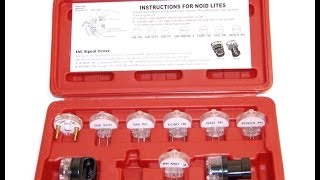
- Test the circuit with a noid light. Disconnect the injector and plug the noid light into the connector. Start the engine. The light should flash steadily. If it does not flash, the problem is in the wiring or the PCM. If it flashes, the wiring and PCM are likely okay, and the injector itself is the problem. 🎬 See how to use a noid light for testing.
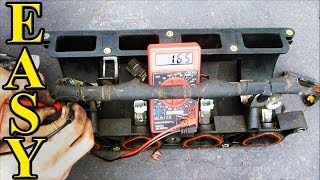
- Test the fuel injector's resistance. Disconnect the injector and use a multimeter set to ohms to measure the resistance between its two terminals. A reading between 10.8 and 13.2 ohms is expected. A reading of infinity (OL) indicates an open coil, while near zero indicates a shorted coil.
- If the noid light test passes and resistance is in spec, consider an injector swap. Move the cylinder 1 injector to cylinder 3, and the cylinder 3 injector to cylinder 1. Clear the codes and drive. If the code changes to P0203, the injector is faulty. If P0201 returns, the problem is in the wiring.
- If the noid light test fails, check for continuity in the wiring harness between the injector connector and the PCM. A wiring diagram is essential for this step to identify the correct wire color (K11 circuit) and PCM pin.
- If all other components test good, the final step is to suspect a faulty PCM injector driver.
Parts You'll Likely Need
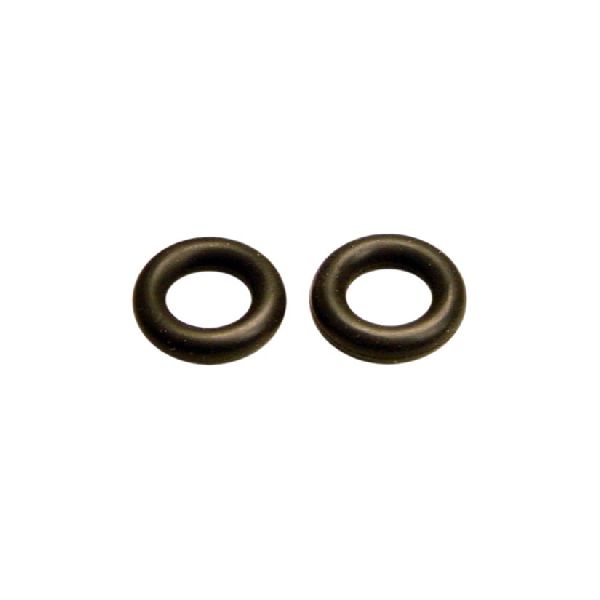
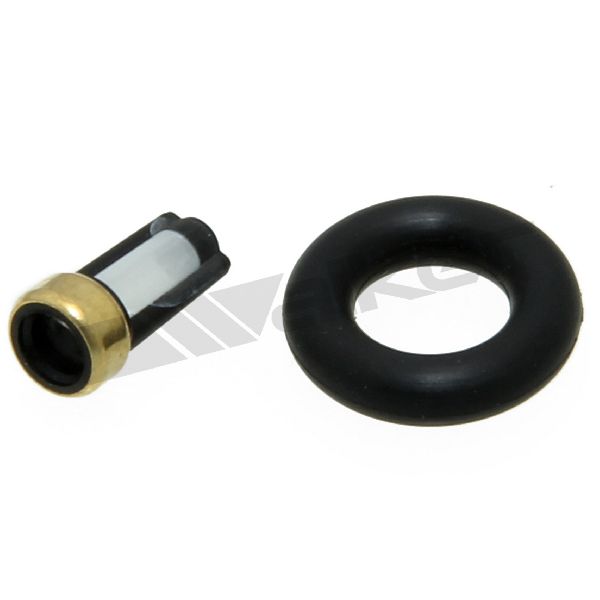
- Fuel Injector
(OEM #53032145AA)— This is the most common part to fail internally, causing the P0201 circuit code. The OEM part number 53032145AA fits 2001-2003 Durango, Dakota, Ram 1500, and Jeep Grand Cherokee with the 4.7L V8.
Trusted brands: Mopar, Bosch, Standard Motor Products (SMP)
OEM price range: $70-$110
Aftermarket price range: $40-$90 - Fuel Injector Connector Pigtail
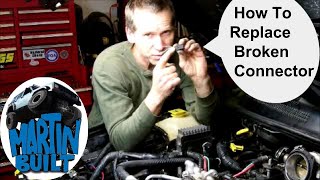
(OEM #Standard Motor Products S-824)— The plastic connector and its locking tab often become brittle and break, leading to a poor electrical connection that triggers the code. Replacing the pigtail is a common repair. 🎬 Watch: How to properly replace a damaged injector connector.
Trusted brands: Dorman, Standard Motor Products (SMP)
OEM price range: $15-$30
Aftermarket price range: $10-$25
Related Codes That Often Appear With This One
- P0301 — P0301 means 'Cylinder 1 Misfire Detected'. Since P0201 indicates a problem with the fuel injector circuit for cylinder 1, that cylinder isn't getting the correct amount of fuel, which directly causes a misfire.
- P0202-P0208 — If multiple injector codes (e.g., P0201, P0203, P0205) appear simultaneously, it could indicate a problem with the shared power supply from the ASD (Auto Shutdown) relay, a bad ground, or a more serious PCM issue, rather than multiple individual injector failures.
Technical Service Bulletins (TSBs) & Recalls
- While no TSB was found specifically for P0201 on the 1998-2003 Durango 4.7L, Chrysler has issued TSBs for similar issues on other platforms. For example, TSB 18-024-03 and 18-004-08 address injector wiring harness failures where they pass through the valve cover on Magnum and later 4.7L engines, respectively. This reinforces the idea that injector wiring is a known weak point for Chrysler truck engines of this era.
- A manufacturer service bulletin for related Dodge vehicles, TSB Bulletin #9002688, advises technicians that before replacing injectors for codes P0201 through P0206, they must ensure the wiring loom and/or connector in the valve cover gasket is not the root cause of the failure.
Platform-Specific Known Issues
- Intermittent Nature of Failure: Several owners on DodgeForum.com report the P0201 code being very intermittent. One user with a 2000 Durango 4.7L noted the engine would run rough with the code, but then start running fine later in the drive, only for the problem to return after the vehicle sat for a few days. This often points to a failing connector, a wire that is making intermittent contact, or an injector that is beginning to short internally and overheat the PCM driver.
- Wiring Harness Damage: A user on DodgeForum.com with a 2001 Durango 4.7L found exposed wires on the cylinder 1 injector harness. After replacing the pigtail, the code persisted, and a noid light test showed no signal, leading them to suspect a PCM failure as the final cause.
Mechanic-Grade Diagnostic Values
- Fuel Injector Resistance — expected: 10.8 - 13.2 Ohms at 68°F (20°C). Failure: A reading of infinity (OL) indicates an open coil; a reading near zero indicates a shorted coil.
- Fuel Pressure (Key On, Engine Running) — expected: 44 - 54 PSI for 2000-2002 models; 47.2 - 51.2 PSI for 2003 models.. Failure: Pressure significantly outside this range indicates a fuel pump or regulator issue, not typically a P0201 cause, but important system context.
- Injector Pulse Width (at warm idle) — expected: 2.0 - 4.0 milliseconds (ms). Failure: A value of 0 ms on a scan tool for cylinder 1 while others are normal points to a PCM or wiring issue.
- Injector Inductive Kick (via oscilloscope) — expected: A sharp voltage spike of 60-80 Volts when the injector is commanded off.. Failure: A missing or weak spike is the electrical signature the PCM detects to set the P0201 'Open Circuit' code.
- Injector Connector Voltage (Key On, Engine Off) — expected: ~12V (battery voltage) on the power supply wire (A955 circuit).. Failure: Low or no voltage indicates a problem with the ASD relay or the power feed wire from the relay.
Scan Tool Commands That Help
- DRB III or equivalent professional scan tool: Actuate ASD Relay — During diagnosis when testing for power supply at the injector connector. A scan tool can command the ASD relay on without the engine running, allowing a technician to safely check for 12V at the injector's power feed wire.
- DRB III or equivalent professional scan tool: Injector Kill / Cylinder Power Balance Test — To confirm which cylinder is not contributing. While a P0201 already points to cylinder 1, this test can verify the severity of the misfire by deactivating other injectors one by one and observing the change in engine RPM.
Wiring & Ground Locations
- Cylinder 1 Injector Control Circuit — Wire running from the PCM C2 harness connector to pin 2 of the cylinder 1 fuel injector connector.. This is the specific ground-side control wire for the #1 injector, designated as circuit K11 in service literature. An open or short on this wire is a direct cause of P0201.
- ASD Relay Output Circuit — Wire running from the Auto Shutdown (ASD) relay in the under-hood Power Distribution Center to pin 1 of the fuel injector connector.. This circuit, designated A955, provides 12V power to all fuel injectors on the bank. A failure here would typically cause multiple injector codes, but a fault in the harness affecting only the branch to cylinder 1 is possible.
- PCM C2 Connector — The middle (often gray) connector of the three large connectors on the Powertrain Control Module, located on the passenger-side firewall.. This is the connector that contains the pin for the cylinder 1 injector control wire (K11). Testing for continuity requires checking the wire from the injector connector back to the appropriate pin on this PCM connector.
Real Owner Repair Stories
- 2CarPros forum user (2003 Dodge Durango 4.7L 2WD) — No power on acceleration, sluggish running, multiple misfire codes, then isolated to no voltage on injector #7 harness.
❌ Tried (didn't work) Replacing ignition coils and spark plugs., Replacing the injector wiring harness pigtail (fix was only temporary).
✅ What actually fixed it The expert diagnosis was that the fuel injector itself was intermittently shorting out, which overheats the injector driver circuit in the PCM, causing it to shut down power to that injector. The ultimate fix is to replace the faulty injector to prevent permanent PCM damage. - DodgeForum.com user 'Derrick Covington' (2001 Dodge Durango 4.7L) — Rough idle, backfire through intake, burning rich smell, stalling. Started with P0201 and P0202, then only P0201 remained.
❌ Tried (didn't work) Replacing injectors, Replacing spark plugs, Replacing TPS, Replacing fuel pump, Replacing the frayed wiring harness pigtail for injector #1
✅ What actually fixed it The user performed a noid light test after replacing the pigtail and found there was still no pulse signal at the connector. The thread concluded with the user suspecting a failed PCM injector driver was the final culprit, as all other components in the circuit had been replaced or verified. - DodgeForum.com user 'kap258' (2000 Dodge Durango 4.7L with 136k miles) — Intermittent very rough running with P0201 and P0205. Problem would appear, then disappear during the same drive, but return after the vehicle sat for a few days.
❌ Tried (didn't work) Reseating the injector connector (only a temporary fix)., Tune-up (new plugs, air filter).
✅ What actually fixed it The original poster did not provide a final fix, but another user in a similar thread reported that replacing both the camshaft and crankshaft position sensors resolved their intermittent injector codes. This suggests erratic engine position signals can sometimes be misinterpreted by the PCM as an injector circuit fault.
OEM Part Supersession History
53032145AA→RL032145AA (Note: Some sources list this as the part it replaces, indicating Mopar uses both interchangeably), 53032704AB, 53032722AA— Part number consolidation and potential design updates over the years.
Heads up: When ordering, it is critical to verify fitment using the vehicle's VIN. While later part numbers may fit, they could have slightly different flow rates intended for newer versions of the 4.7L engine. For a single injector replacement, sticking to the original part number or a direct-replacement aftermarket part is safest.
Model Year Variations Within This Range
- 2000-2003: The 4.7L PowerTech V8 was introduced in the 2000 model year, so this fault does not apply to 1998-1999 Durangos which used the Magnum 5.2L/5.9L engines.
- 2003 only: The fuel pressure specification is tighter on 2003 models (47.2-51.2 PSI) compared to 2000-2002 models (44-54 PSI). This may be related to the introduction of the Next Generation Controller (NGC) PCM around this time.
Diagnostic Flowchart
Used vs. New Parts: Buying Guide for This Vehicle
When a used part is the smart pick: A used wiring connector pigtail from a junkyard is a perfectly acceptable repair if the plastic is not brittle and the terminals are clean. A complete engine wiring harness could also be sourced used if significant damage is found.
Donor-vehicle mileage cap: roughly under 120000 miles for the part to have meaningful remaining life.
What to inspect on the donor part:
- For connectors: Check for flexibility, the locking tab must be intact, and no green corrosion on the pins.
- For wiring harnesses: Inspect for any previous repairs (tape, butt connectors), brittleness, or damage from heat/rodents.
- For injectors: Avoid used injectors unless they come with a warranty or have been professionally cleaned and flow-tested with a report.
OEM-only on this vehicle (don't cheap out):
- Powertrain Control Module (PCM): While aftermarket rebuilders exist, an OEM or Mopar-remanufactured PCM is strongly recommended. Junkyard PCMs often have VIN-lock issues and require dealer programming that can be problematic on older vehicles.
Aftermarket brands forum-validated for this vehicle:
- Bosch: Often the original equipment manufacturer for fuel system components.
- Standard Motor Products (SMP): A well-regarded aftermarket brand for sensors and electrical components like connector pigtails.
- Denso: A reputable brand for fuel and electrical system parts.
Brands owners have reported issues with on this vehicle:
- Unnamed, no-brand 'white box' injectors from online marketplaces. Forum discussions frequently show these parts failing quickly or having inconsistent flow rates, causing more problems than they solve.
Real Owner Stories
Aggregated from forums and TSBs cited above. Mileages and costs reflect what owners reported in those sources.
2001 Dodge Durango 4.7L
Symptoms: The owner found exposed wires on the cylinder 1 injector harness. After replacing the pigtail, the P0201 code persisted and a noid light test showed no signal.
What fixed it: The diagnosis pointed to a Powertrain Control Module (PCM) failure as the final cause after the wiring repair did not restore the injector pulse.
Source hint: DodgeForum.com - 'P0201 with rough idle.' (2021)
2000 Dodge Durango 4.7L
Symptoms: Experienced intermittent rough running and the P0201 code.
What fixed it: The issue was temporarily resolved by simply reseating the injector connector, indicating a poor connection was the cause.
Source hint: DodgeForum.com - 'P0201 and P0205 Fuel Injector Connector Malfunction' (2007)
2000 Dodge Durango 4.7L
Symptoms: The engine would run rough with the code active, but then would suddenly start running fine later in the drive. The problem would return after the vehicle sat for a few days.
What fixed it: The context does not state the final fix, but notes that these intermittent symptoms often point to a failing connector, a wire making intermittent contact, or an injector shorting internally.
Source hint: vehicle_specific_issues section citing a 2000 Durango 4.7L owner
2001 Dodge Durango 4.7L
Symptoms: The vehicle had simultaneous injector codes, including P0201 and P0205.
What fixed it: The presence of multiple injector circuit codes led to the diagnosis of a Powertrain Control Module (PCM) failure as the ultimate cause.
Source hint: DodgeForum.com - 'Injector Circuit Malfunction 2001 durango 4.7' (2008)
Related OBD-II Codes
Frequently Asked Questions
Where is cylinder 1 located on my 4.7L V8 Durango?
What is the correct resistance for a fuel injector on this engine?
My P0201 code is intermittent and the engine roughness comes and goes. What's the likely cause?
How can I test if the problem is the injector or the wiring without just replacing parts?
I replaced the injector and the pigtail connector, but the code came back. What should I check next?
Are there any official TSBs from Dodge for the P0201 code on my 1998-2003 Durango?
Should I replace just the one bad injector or all eight?
Helpful Videos

We Have This Part in Stock


The information in this article is provided for general reference and educational purposes only. Vehicle specifications, procedures, and part compatibility can vary by production date, trim level, and region. Always consult your vehicle's factory service manual and verify part numbers before purchasing or performing repairs. Safety-critical components such as airbags, seat belts, and braking systems should be installed by a qualified professional.
- Dodge Durango:
- 🧭 Diagnostic Flowchart
- 🎬 Helpful Videos
- 🛍️ Shop This Part
- What's Unique About the 1998-2003 Dodge Durango
- Symptoms You May Notice
- Most Likely Causes
- Rare But Worth Checking
- Diagnosis Steps
- Parts You'll Likely Need
- Related Codes That Often Appear With This One
- Technical Service Bulletins (TSBs) & Recalls
- Platform-Specific Known Issues
- Mechanic-Grade Diagnostic Values
- Scan Tool Commands That Help
- Wiring & Ground Locations
- Real Owner Repair Stories
- OEM Part Supersession History
- Model Year Variations Within This Range
- Used vs. New Parts: Buying Guide for This Vehicle
- Real Owner Stories
- 2001 Dodge Durango 4.7L
- 2000 Dodge Durango 4.7L
- 2000 Dodge Durango 4.7L
- 2001 Dodge Durango 4.7L
- Related OBD-II Codes
- Frequently Asked Questions
- 🎟️ Get 5% Off