

P0201 on 2000-2003 Dodge RAM WAGON: Injector Circuit Malfunction Guide
On a 2000-2003 Dodge Ram Wagon, code P0201 is frequently caused by a faulty wiring loom inside the valve cover gasket, not a bad fuel injector. A manufacturer TSB specifically advises checking this wiring before replacing the injector itself. This issue is common across Dodge trucks and vans with Magnum engines from this era.
- Always check the wiring before the part. For P0201 on this van, that means testing the valve cover pass-through harness first.
- A Technical Service Bulletin (TSB #9002688) directly addresses this exact issue, making it a known and documented problem.
- Do not replace the PCM unless you are 100% certain all wiring and the injector itself are good.
- The repair involves replacing the valve cover gasket, which contains the new wiring loom. This issue is shared with other Dodge trucks and SUVs from the same era with Magnum engines.
What's Unique About the 2000-2003 Dodge RAM WAGON
For this generation of Dodge Ram Wagon (and related vans/trucks with Magnum engines), the wiring harness for the fuel injectors passes through the valve cover gasket. This design makes the wiring susceptible to heat, oil, and vibration degradation over time, leading to breaks or shorts in the circuit. A Technical Service Bulletin (TSB #9002688) was issued, warning technicians to inspect this specific wiring loom before condemning the fuel injector, as it is a very common point of failure for P0201 and related injector codes (P0202-P0206).
Diagnostic Flowchart
Tap your situation to follow the diagnostic path that matches what you're seeing on this vehicle.
Symptoms You May Notice
- Check Engine Light is on and may be flashing
- Rough or shaking idle
- Engine misfire, which may feel like a stumble, hesitation, or violent shaking
- Noticeable loss of power and poor acceleration
- Reduced fuel economy
- Engine may be hard to start or stall
- Exhaust may smell of raw fuel
- Replacing the fuel injector without first testing the valve cover pass-through harness. The TSB specifically warns against this.
- Replacing the PCM when the fault lies in the wiring harness.
Most Likely Causes
- Faulty Wiring Loom in Valve Cover Gasket 🔴 High Probability → Shop Engine Valve Cover As documented in TSB #9002688, the design of routing injector wires through the gasket makes them a common failure point due to constant exposure to engine heat and oil. This is a well-known issue on Dodge Magnum engines.
How to confirm: Disconnect the main engine harness from the valve cover. Use a multimeter to check for continuity and resistance between the pins for cylinder 1 on both sides of the pass-through connector. Resistance should be very low, less than 1 ohm. Also check for a short to ground from each pin.
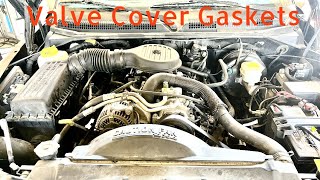
Typical fix: Replace the entire valve cover gasket, which includes the new integrated wiring loom. Aftermarket brands like Fel-Pro are popular for this repair. 🎬 Watch: Step-by-step guide to replacing the valve cover gasket.
Est. part cost: $75-$150 - Defective Cylinder 1 Fuel Injector 🟡 Medium Probability → Shop Fuel Injector Fuel injectors are wear-and-tear items whose internal coils can fail over time, causing an open circuit.
How to confirm: After confirming the wiring is good, swap the cylinder 1 injector with an adjacent one (e.g., cylinder 3). Clear codes and run the engine. If the code changes to P0203, the injector is faulty. You can also test the injector's internal resistance with a multimeter set to ohms; an open circuit (infinite resistance) or a reading outside the typical 11-14 ohm range confirms it's bad.
Typical fix: Replace the faulty fuel injector. It is often recommended to replace them as a set to ensure balanced flow.
Est. part cost: $40-$90 - Open or Short in Engine Wiring Harness ⚪ Low Probability → Shop Engine Wiring Harness Wires can become brittle and crack from age and heat, or get damaged by chafing against engine components.
How to confirm: Visually inspect the wiring harness leading from the PCM to the valve cover for any signs of damage, chafing, or corrosion, especially near the injector connector. Perform a continuity test on the cylinder 1 injector wires between the PCM connector and the valve cover connector.
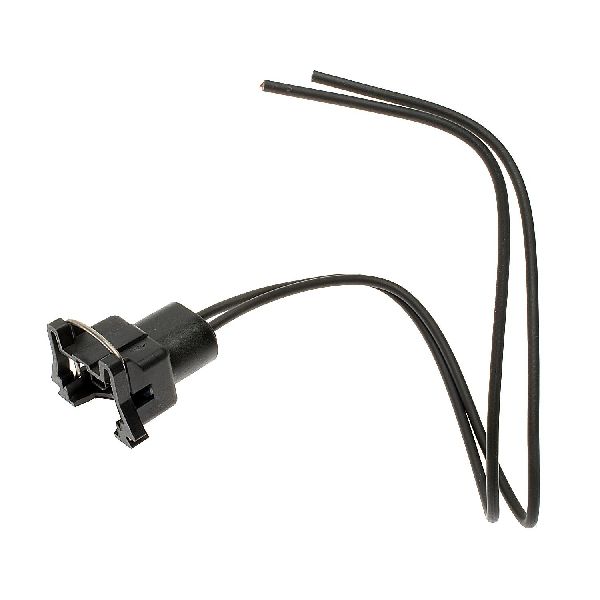
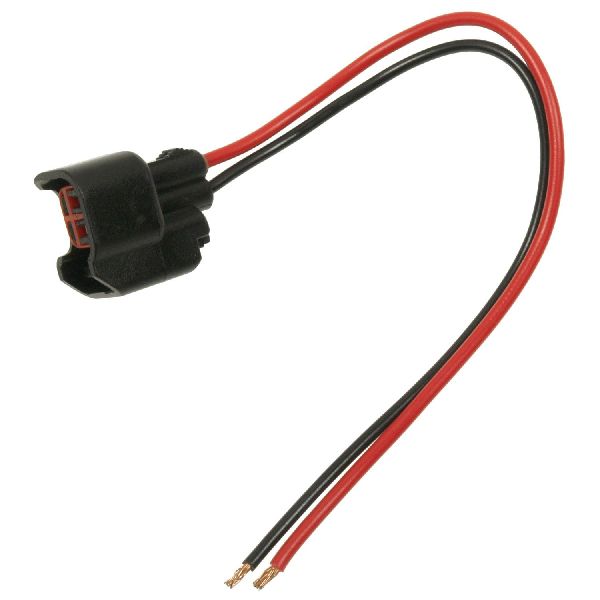
Typical fix: Repair the damaged section of wire or replace the connector pigtail.
Est. part cost: $10-$500
Rare But Worth Checking
- Faulty Powertrain Control Module (PCM): → Shop Engine Control Module (ECM) This is very rare and should only be considered after all other possibilities (wiring and injector) have been definitively ruled out. The PCM's internal injector driver can fail, but this is uncommon. Misdiagnosing a bad PCM is a frequent and costly mistake.
Diagnosis Steps
- Verify the P0201 code is present using an OBD-II scanner.
- Visually inspect the wiring harness leading to the driver's side valve cover for obvious damage, melting, or corrosion.
- Locate cylinder 1 (front-most cylinder on the driver's side for V6 and V8 engines).
- Disconnect the main harness at the valve cover. Test the continuity of the cylinder 1 injector wires through the valve cover gasket's integrated harness. Per TSB #9002688, this is the most likely failure point. Resistance should be under 1 ohm.
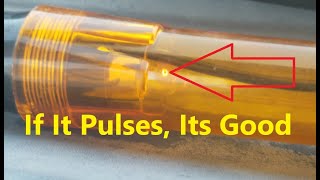
- If the pass-through harness tests good, use a noid light on the engine-side harness connector to verify the PCM is sending a pulse signal to the injector. No light indicates a problem upstream (wiring to PCM or the PCM itself). 🎬 See how to test the injector circuit with a meter.
- If a signal is present, the issue is downstream. Reconnect the main harness and access the injector connector itself. Disconnect it and test the injector's resistance with a multimeter. It should be within the manufacturer's specified range (typically 11-14 ohms). An open circuit or very high resistance indicates a bad injector.
- As a final confirmation, swap the cylinder 1 injector with another cylinder's injector (e.g., cylinder 3). Clear the codes, run the engine, and see if the trouble code follows the injector (e.g., P0201 becomes P0203). If it does, the injector is confirmed bad. If the code remains P0201, the problem is in the wiring.
Parts You'll Likely Need
- Cylinder Head Cover Gasket (with wiring loom)
(OEM #68069384A$, R8069384A$, 68086182A$, R8027067A$, RL002012A$)— This is the most common cause of P0201 on this vehicle, as identified by a manufacturer TSB. The wiring inside the gasket fails, causing an open circuit.
Trusted brands: Mopar, Fel-Pro (e.g., VS50521R for driver's side), Mahle
OEM price range: $120-$180
Aftermarket price range: $75-$120 - Fuel Injector
(OEM #04854181, 53031655AA (rail), 0280155934, 0280155784)— If the wiring is confirmed to be good, the fuel injector itself is the next most likely component to have failed.
Trusted brands: Bosch, Standard Motor Products, Delphi
OEM price range: $80-$120
Aftermarket price range: $40-$90
Related Codes That Often Appear With This One
- P0301: Cylinder 1 Misfire Detected. This code is often a direct result of the P0201 fault, as the injector circuit malfunction prevents proper fueling, causing a misfire.
Technical Service Bulletins (TSBs) & Recalls
- Bulletin #9002688: Advises checking the wiring loom and/or connector in the valve cover gasket before replacing injectors for codes P0201 through P0206. This is the primary vehicle-specific diagnostic information for this code.
Platform-Specific Known Issues
- TSB #9002688 explicitly identifies the wiring loom within the valve cover gasket as a primary cause for P0201-P0206 codes, advising it be checked before replacing injectors.
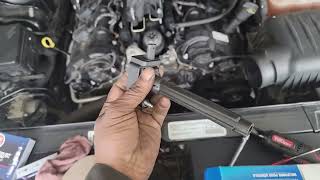
- source — A user with a 2001 Dodge Ram 1500 5.9L experienced a P0301 (misfire) code which then became a P0201 after replacing the injector. This highlights how the two codes are linked and the diagnostic frustration that can occur. 🎬 Watch a mobile mechanic diagnose and fix these specific codes. The recommended next step from the forum was to check the injector's electrical connector and trace the wiring back to the PCM, reinforcing the common wiring failure point.
- source — In a DodgeForum.com thread about a 2000 Durango with a 4.7L engine (which has a similar injector setup), an owner reported intermittent P0201 and P0205 codes where the engine would run rough and then suddenly run fine. This points to a wiring connection that is failing, but not completely broken, a common symptom of this issue.
Mechanic-Grade Diagnostic Values
- Fuel Injector Coil Resistance — expected: 12 Ohms +/- 1.2 Ohms (approx. 11-13 Ohms) at room temperature.. Failure: A reading of infinite resistance (open circuit), zero resistance (short circuit), or a value significantly outside the specified range.
- Injector Connector Power Wire Voltage (KOEO) — expected: Battery voltage (approx. 12V) on the power feed wire (typically Dark Green/Orange).. Failure: Voltage significantly below 12V or no voltage indicates a problem with the power supply from the ASD relay or fuse.
- Injector Driver Wire Activity (Engine Cranking/Running) — expected: Using a noid light, a rhythmic flashing indicates the PCM is commanding the injector to fire. With an oscilloscope, you should see the PCM pulling the circuit to ground for a few milliseconds, followed by a large inductive voltage spike (35-55V) when the circuit is released.. Failure: No flash from the noid light, or a flat line/no activity on an oscilloscope, points to a wiring issue back to the PCM or a failed PCM driver.
Scan Tool Commands That Help
- DRB III or equivalent professional scan tool (e.g., Snap-on, Autel): Injector Kill / Cylinder Cutout Test — This bidirectional command allows the technician to manually disable individual fuel injectors while the engine is running. If you 'kill' cylinder 1 and there is no change in how the engine runs (no drop in RPM or change in sound), it confirms that cylinder was not contributing, which is the expected result with an active P0201 fault. This helps verify the fault is active and isolated to that cylinder before performing physical part swaps.
Wiring & Ground Locations
- Cylinder 1 Injector Wires — At the injector connector for the front-most cylinder on the driver's side.. The power feed wire is typically Dark Green/Orange. The control (driver) wire from the PCM is typically White/Dark Blue. Knowing these colors is essential for testing the correct wires between the injector, valve cover pass-through, and PCM.
- PCM Connector C2, Pin 18 — The Powertrain Control Module (PCM) is located on the passenger-side firewall. C2 is the black connector.. Pin 18 on the C2 connector is the specific driver circuit for the cylinder 1 fuel injector. Testing for continuity from this pin to the injector harness is the final step to confirm if the wiring harness is intact or if the fault is within the PCM itself.
- G104 (Engine Ground) — On the engine block, typically near the A/C compressor and alternator bracket.. A poor or corroded main engine ground can cause a host of intermittent and difficult-to-diagnose electrical issues, including erratic sensor readings and injector circuit faults. While not a direct cause of a single injector code, ensuring this ground is clean and tight is a crucial step in any electrical diagnosis.
Real Owner Repair Stories
- RamForumZ user (2001 Dodge Ram 1500 5.9L) — P0201 and P0301 codes, rough idle, misfire.
❌ Tried (didn't work) Initial diagnosis pointed to a bad injector.
✅ What actually fixed it The owner replaced the driver's side valve cover gasket which included the integrated injector wiring harness (using Fel-Pro part VS50521R). This completely resolved the P0201 code, confirming the TSB's warning about this common failure point. - DodgeTalk user (2001 Dodge Ram 1500 5.9L) — P0201, P0301, misfire, engine stumble.
❌ Tried (didn't work) Swapped injector from cylinder 1 to cylinder 3 (code did not move)., Tested wiring from PCM to injector connector, which showed good continuity.
✅ What actually fixed it After confirming the injector and wiring were good, the owner replaced the Powertrain Control Module (PCM). This was the final fix, indicating a rare failure of the internal injector driver circuit within the PCM. - BAP forum user (2001 Dodge Ram 1500 5.2L) — Intermittent P0201 code, engine would run rough only after it warmed up to operating temperature.
❌ Tried (didn't work) Checking for codes when the engine was cold would often show nothing.
✅ What actually fixed it The problem was a hairline crack in the injector wiring inside the valve cover gasket harness. When the engine was cold, the connection was fine. As the engine heated up, thermal expansion would open the crack, breaking the circuit and triggering the code. Replacing the valve cover gasket/harness assembly fixed the issue.
"I Checked Everything" — The Actual Cause
- A common scenario for this P0201 code is not a failed smoke test, but a passed continuity test. A technician may test the wiring for continuity from the PCM to the injector when the engine is cold and find that it passes (shows less than 1 ohm of resistance). However, the actual fault is a microscopic break in the wire inside the valve cover gasket harness that only separates and creates an open circuit when the engine heats up and the metal expands. This leads to a misdiagnosis where the wiring is assumed to be good, but it is actually the root cause, failing only under specific thermal conditions.
When the Usual Fixes Don't Work
- While the TSB and overwhelming community experience point to the valve cover gasket harness as the primary culprit for P0201, it is not the only cause. There are documented cases where, after extensive testing confirmed the harness and injector were functioning correctly, the final resolution was a failed injector driver inside the Powertrain Control Module (PCM). This serves as a critical reminder to follow a complete diagnostic procedure and not to assume the most common cause is the only cause. Swapping the injector to another cylinder and verifying that the code does *not* follow the injector is a key step before focusing solely on the wiring. If the code stays on cylinder 1 and the wiring from the PCM connector to the injector tests perfect, the PCM itself becomes the primary suspect.
OEM Part Supersession History
Multiple OEM numbers, see TSB→Fel-Pro VS50521R (Driver/Left Side)— The OEM part is simply a gasket with an integrated harness. Aftermarket solutions like Fel-Pro became a popular and trusted replacement for this high-failure-rate item.
Heads up: Cylinder 1 is on the driver's (left) side. You must use the correct side gasket set. The passenger (right) side is a different part number (e.g., Fel-Pro VS50522R) and will not fit.
Model Year Variations Within This Range
- 2000-2003: No significant variations affecting the cause or diagnosis of a P0201 code have been identified within this model year range for the Ram Wagon. The Magnum engine architecture and the injector-wiring-through-gasket design were consistent throughout this period.
Helpful Videos
We Have This Part in Stock


The information in this article is provided for general reference and educational purposes only. Vehicle specifications, procedures, and part compatibility can vary by production date, trim level, and region. Always consult your vehicle's factory service manual and verify part numbers before purchasing or performing repairs. Safety-critical components such as airbags, seat belts, and braking systems should be installed by a qualified professional.
- Dodge RAM WAGON:
- 🧭 Diagnostic Flowchart
- 🎬 Helpful Videos
- 🛍️ Shop This Part
- What's Unique About the 2000-2003 Dodge RAM WAGON
- Symptoms You May Notice
- Most Likely Causes
- Rare But Worth Checking
- Diagnosis Steps
- Parts You'll Likely Need
- Related Codes That Often Appear With This One
- Technical Service Bulletins (TSBs) & Recalls
- Platform-Specific Known Issues
- Mechanic-Grade Diagnostic Values
- Scan Tool Commands That Help
- Wiring & Ground Locations
- Real Owner Repair Stories
- "I Checked Everything" — The Actual Cause
- When the Usual Fixes Don't Work
- OEM Part Supersession History
- Model Year Variations Within This Range
- 🎟️ Get 5% Off