

P0201 on 2008-2012 Jeep Liberty 3.7L: Injector Circuit Fixes and Causes
P0201 on a Jeep Liberty 3.7L almost always points to a failed fuel injector for cylinder #1. A bad injector is the most likely culprit, followed by wiring issues. A replacement injector costs between $30 for an aftermarket part and $85 for an OEM Mopar part.
- P0201 on your Jeep Liberty means the injector circuit for cylinder 1 (driver's side, front) has a fault.
- The most likely cause is a bad fuel injector. A simple way to confirm is to swap it with another cylinder's injector and see if the code follows.
- Before buying parts, check the wiring and connector for damage, and confirm with a multimeter that the injector's resistance is out of spec (should be ~12-15 Ohms).
- A smell of fuel inside the electrical connector is a sure sign the injector has failed internally and needs replacement.
What's Unique About the 2008-2012 Jeep Liberty
The 3.7L PowerTech V6, used from 2002 to 2012, is a durable but straightforward SOHC engine. For this P0201 code, there are no particularly unique design flaws. The causes are typical for most port-injected engines of this era. The most common failure point is simply a high-mileage fuel injector failing electrically. Diagnosis is straightforward due to easy access to the cylinder #1 injector and its wiring at the front of the engine.
Symptoms You May Notice
- Check Engine Light is on
- Rough or shaky idle
- Engine misfire, which may feel like a stumble or hesitation during acceleration
- Reduced engine power and poor acceleration
- Decreased fuel economy
- Smell of raw fuel, sometimes noticeable inside the injector's electrical connector
- Replacing the spark plug or ignition coil. While a misfire code (P0301) often accompanies P0201, the P0201 code specifically points to an electrical circuit issue with the injector, not the ignition system. Always diagnose the injector circuit code first. 🎬 Watch this overview of what the P0201 code means and how to fix it.
Most Likely Causes
- Failed Fuel Injector (Cylinder 1) 🔴 High Probability → Shop Fuel Injector Injectors can fail electrically (internal coil opens or shorts) or mechanically (internal seals fail) after many years and miles. A key sign of internal failure is the smell of gasoline inside the electrical connector, which indicates fuel has leaked past the injector's body into the electronics. One owner on a forum noted their injector failed at 238,000 miles. The failure can sometimes be temperature-dependent, working when cold but failing when hot.
How to confirm: Swap the cylinder 1 injector with the cylinder 3 injector (also on the driver's side). If the code changes to P0203, the injector is bad. Alternatively, measure the resistance across the two pins of the injector; it should be around 12-15 Ohms when warm. An 'OL' or infinite reading means the injector's internal coil is open and has failed. A reading significantly lower than spec indicates a short.
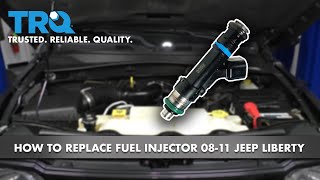
Typical fix: Replace the failed fuel injector. It is often recommended to replace all six injectors on a high-mileage engine to ensure balanced performance and prevent future failures. 🎬 See this step-by-step walkthrough for installing a new fuel injector.
Est. part cost: $30-$90 - Wiring Harness or Connector Issue 🟡 Medium Probability The plastic loom protecting the injector wires can become brittle with age and heat from the engine, allowing wires to chafe or break near the connector. The connector itself can also become corroded, or the locking tab can break, leading to a poor connection. A short in the wiring can also damage the PCM.
How to confirm: Visually inspect the wiring going to the cylinder 1 injector for any signs of damage, melting, or breaks. Unplug the connector and check for corrosion on the pins. With the key on, use a multimeter or test light to confirm ~12V power is present at one of the pins on the connector (power comes from the ASD relay). Check for continuity on the ground/control wire from the injector connector back to the PCM.
Typical fix: Repair the damaged section of wire or replace the injector pigtail connector if it is damaged.
Est. part cost: $10-$25 - Faulty Powertrain Control Module (PCM) ⚪ Low Probability → Shop Engine Control Module (ECM) While not common, a short circuit in the injector wiring or within the injector itself can damage the internal driver circuit in the PCM that controls the injector.
How to confirm: This is typically diagnosed by exclusion. If the injector and wiring have both been tested and are known to be good, but a noid light shows no pulse from the PCM, the PCM is the likely culprit. 🎬 Watch a mechanic demonstrate three ways to test the injector circuit. Before condemning the PCM, ensure all power and ground circuits to the PCM itself are intact.
Typical fix: Replace the Powertrain Control Module. This requires programming the new unit to the vehicle's VIN and security information.
Est. part cost: $200-$500
Rare But Worth Checking
- Heat Soak Related Misfire:
Diagnosis Steps
- Identify Cylinder 1: Locate the #1 cylinder. On the 3.7L V6, it is the cylinder at the very front of the engine on the driver's side.
- Check the Connector: Ensure the electrical connector is fully seated on the fuel injector and that the locking tab is engaged. Inspect for any obvious wiring damage, brittleness, or melting. Check for the smell of fuel inside the connector.
- Use a Noid Light: Disconnect the injector and plug a noid light into the connector. Start the engine. The noid light should flash rapidly, indicating the PCM is sending a pulse signal. If it does not flash, the problem is likely in the wiring or the PCM. If it flashes, the injector is the likely problem.
- Test Injector Resistance: Disconnect the injector and use a multimeter set to Ohms to measure the resistance between the two electrical pins on the injector itself. A good injector for this engine should read approximately 12-15 Ohms when warm. An 'OL' or infinite reading means the injector's internal coil is open and has failed.
- Swap Injectors: As a definitive test, swap the fuel injector from cylinder 1 with the one from cylinder 3 (the next one back on the same side). Clear the codes and run the engine. If the code returns as P0203, you have confirmed the fuel injector is the faulty part.
- Check for Power: If the noid light did not flash, use a multimeter to check for power at the connector. With the key in the 'On' position, one of the two pins in the connector should show 12 volts. This power comes from the Auto Shutdown (ASD) relay. If not present, check the ASD relay and its fuse.
- Check the Ground Signal Wire: If power is present but the noid light doesn't flash, the final step is to check the continuity of the ground signal wire (the one without 12V power) between the injector connector and the PCM connector. If the wire is good (resistance less than 5 ohms), the PCM's internal driver has likely failed.
Parts You'll Likely Need
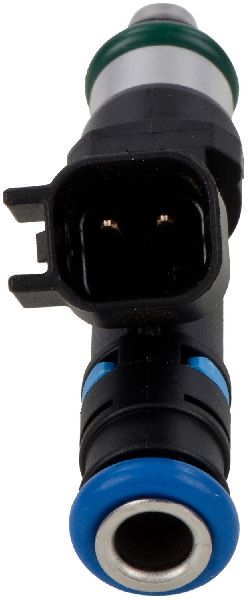
- Fuel Injector
(OEM #53032701AA)— This is the most common cause of a P0201 code on the 3.7L engine, typically due to an internal electrical failure of the injector coil.
Trusted brands: Mopar (OEM, P/N 53032701AA, supersedes rl032701aa), Bosch (OEM supplier, P/N 0280158020), Standard Motor Products (SMP), SKP
OEM price range: $80-$100
Aftermarket price range: $30-$60 - Fuel Injector Connector Pigtail — If the wiring or connector itself is found to be damaged from heat or chafing, replacing the pigtail is the standard repair.
Trusted brands: Dorman, Mopar
OEM price range: $20-$30
Aftermarket price range: $10-$20
Related Codes That Often Appear With This One
- P0301 — P0301 means 'Cylinder 1 Misfire Detected'. Since the P0201 code indicates the injector for cylinder 1 is not working correctly, that cylinder cannot contribute to engine power, resulting in a detected misfire.
Technical Service Bulletins (TSBs) & Recalls
- While no TSB is directly for P0201 on the 3.7L Liberty, TSB 18-031-03 for the older 4.0L engine describes a similar symptom (misfire on hot restart) caused by fuel vaporizing in the injector due to heat soak, which is a useful diagnostic consideration.
Platform-Specific Known Issues
- Intermittent P0201/P0301 on Hot Restarts: A 2008 Liberty owner on jeepkj.com reported a strange issue where codes P0201 and P0301 would only set after stopping and restarting the engine when hot. The first drive of the day was always fine, regardless of length. This points to a potential heat-soak issue where a component (likely the injector itself) fails only when subjected to residual engine heat after shutdown.
Mechanic-Grade Diagnostic Values
- Fuel Injector Coil Resistance — expected: 12-15 Ohms. Failure: Infinite resistance (OL) indicates an open coil; significantly lower resistance indicates a short.
- Injector Connector Power (Key On) — expected: ~12V (Battery Voltage). Failure: 0V indicates a problem with the ASD relay, fuse, or power feed wire.
- Injector Control Wire to PCM Continuity — expected: < 5 Ohms. Failure: High resistance or an open circuit (OL) indicates a break in the wire between the injector connector and the PCM.
- Injector Pulse Width (at idle) — expected: 1-5 milliseconds (ms). Failure: A value of 0 or an unchanging value when the engine is running suggests the PCM is not commanding the injector to fire.
Scan Tool Commands That Help
- wiTECH or equivalent professional scan tool: Injector Kill Test / Cylinder Power Balance Test — This command allows a technician to disable individual fuel injectors one at a time while the engine is running. If disabling cylinder 1 causes no change in the engine's idle quality, it confirms that cylinder is not contributing, helping to isolate the fault without swapping parts.
Wiring & Ground Locations
- Cylinder 1 Injector Control Wire — Pin 14 of PCM connector C2 (a 38-pin black/orange connector). The wire color is typically Brown/Tan.. This is the specific wire that the PCM uses to ground-pulse the cylinder 1 fuel injector. A break or short in this wire is a primary cause of P0201. Continuity must be checked from this pin to the injector connector.
- Injector Power Feed — A Dark Green/Orange wire provides power to all injectors from the ASD (Auto Shutdown) relay.. While a failure here would likely cause codes for multiple injectors, a partial failure or corrosion at a splice point could theoretically affect only one injector. This wire should have battery voltage with the key on.
- G102 / G103 - Engine/Cowl Grounds — Located at the left rear of the engine compartment, often on the cowl above the brake booster. There are several key grounds in this area.. The PCM and its related sensors rely on clean ground connections. A corroded or loose ground at these common points can cause a host of bizarre electrical issues, including intermittent injector circuit faults.
- Main Engine Block Ground — A primary ground strap connects from the battery negative terminal to the engine block, located near the oil filter area.. This is the main ground reference for the entire engine. While a failure here would cause more severe issues than just P0201, ensuring it's clean and tight is a fundamental step in diagnosing any engine electrical problem.
Real Owner Repair Stories
- YouTube user 'Foregone Trails' (Jeep Cherokee XJ (similar wiring principle)) — P0201 code, misfire on cylinder 1.
❌ Tried (didn't work) Swapping fuel injector from cylinder 1 to 2 (code did not move), Verifying 14V at the injector connector with the engine running, Checking fuel pressure
✅ What actually fixed it The two wires for the injector had chafed, touched, and shorted out, which damaged the injector driver inside the ECU/PCM. The final fix was replacing the ECU and repairing the damaged wiring with a new pigtail connector to prevent a repeat failure. - Jeep KJ and KK Liberty Forum user (2008 Jeep Liberty with 238,000 miles) — P0201, rough running.
❌ Tried (didn't work) Initial diagnosis
✅ What actually fixed it The user removed the electrical connector from the #1 injector and smelled raw fuel inside the plastic connector itself. This indicated the injector's internal seals had failed, allowing fuel to leak up into the electrical portion, causing a short. Replacing the single Mopar injector (P/N 53032701AA) resolved the issue. - Car Talk Community Forum User (2005 Jeep Liberty 3.7L) — P0204 (Cylinder 4, but same diagnostic principle), engine cutout like hitting a rev limiter at 2000 RPM.
❌ Tried (didn't work) Verified proper voltage to the injector, Verified continuity on the ground wire from injector to PCM
✅ What actually fixed it After all wiring and the injector tested good, the conclusion was a failed injector driver inside the PCM. This is a diagnosis by exclusion, where the PCM is the only component left.
OEM Part Supersession History
rl032701aa→53032701AA— Standard part number update. 'rl' often denotes a remanufactured part in Mopar's system, which was superseded by the new part number.
Heads up: The parts are directly interchangeable.
Model Year Variations Within This Range
- 2005-2007 vs 2008-2012: The PCM and engine wiring harnesses are different between the 2005-2007 and 2008+ model years. An '04 harness, for example, has 3 PCM plugs, while later models have 4. When sourcing used parts like a PCM or engine harness, it is critical to match the model year range exactly.
Diagnostic Flowchart
Real Owner Stories
Aggregated from forums and TSBs cited above. Mileages and costs reflect what owners reported in those sources.
2008 Jeep Liberty 3.7L V6 — 238000 miles
Symptoms: Experienced a P0201 code. Upon inspecting the engine, noticed the smell of gas inside the electrical connector for the cylinder 1 fuel injector.
What fixed it: Replaced the failed fuel injector with OEM part number 53032701AA.
Source hint: Jeep KJ and KK Liberty Forum - 'P0201 Fuel Injector issue' (2024)
2008 Jeep Liberty 3.7L V6
Symptoms: Codes P0201 and P0301 would only set after stopping and restarting the engine when hot. The first drive of the day was always fine, regardless of length, but return trips triggered the check engine light.
What fixed it: Diagnosed as a heat-soak related failure of the fuel injector, which failed only when subjected to residual engine heat.
Source hint: Jeep KJ and KK Liberty Forum - 'CEL P0201/P0301... but only on return trips?' (2020)
Related OBD-II Codes
Frequently Asked Questions
Why do I smell gas near the engine when I have code P0201 on my 3.7L Liberty?
Is there a TSB for the P0201 code on the 2008-2012 Jeep Liberty?
My Liberty only throws P0201 and P0301 codes after a hot restart. What causes this?
How can I confirm if the cylinder 1 injector is bad on my 3.7L V6?
What is the OEM part number for the fuel injector on the 2008 Liberty 3.7L?
Where does the cylinder 1 injector get its power on the Jeep Liberty?
Helpful Videos

We Have This Part in Stock



The information in this article is provided for general reference and educational purposes only. Vehicle specifications, procedures, and part compatibility can vary by production date, trim level, and region. Always consult your vehicle's factory service manual and verify part numbers before purchasing or performing repairs. Safety-critical components such as airbags, seat belts, and braking systems should be installed by a qualified professional.
- Jeep Liberty:
- 🧭 Diagnostic Flowchart
- 🎬 Helpful Videos
- 🛍️ Shop This Part
- What's Unique About the 2008-2012 Jeep Liberty
- Symptoms You May Notice
- Most Likely Causes
- Rare But Worth Checking
- Diagnosis Steps
- Parts You'll Likely Need
- Related Codes That Often Appear With This One
- Technical Service Bulletins (TSBs) & Recalls
- Platform-Specific Known Issues
- Mechanic-Grade Diagnostic Values
- Scan Tool Commands That Help
- Wiring & Ground Locations
- Real Owner Repair Stories
- OEM Part Supersession History
- Model Year Variations Within This Range
- Real Owner Stories
- 2008 Jeep Liberty 3.7L V6 — 238000 miles
- 2008 Jeep Liberty 3.7L V6
- Related OBD-II Codes
- Frequently Asked Questions
- 🎟️ Get 5% Off