

P0201 on 2013-2019 Lincoln MKZ 2.0L Hybrid: Injector Circuit Malfunction Causes and Fixes
P0201 on a Lincoln MKZ Hybrid indicates an electrical fault in the cylinder 1 fuel injector circuit. The most common causes are a bad fuel injector or a wiring issue. Swapping the injector with another cylinder is a key diagnostic step to confirm the cause. On this platform, it is also critical to check for oil contamination in the injector connector.
- P0201 specifically points to an electrical problem with the cylinder 1 injector circuit, not another component.
- The most effective DIY diagnostic is to swap the cylinder 1 injector with another cylinder (like cylinder 2) and see if the code follows the injector (changing to P0202).
- Before replacing any parts, always perform a thorough visual inspection of the injector's wiring and connector for obvious damage, corrosion, or looseness.
- Driving with this fault can cause damage to your catalytic converter, turning a relatively inexpensive repair into a very costly one.
- If the code does not move when the injector is swapped, the problem is in the wiring harness or, rarely, the PCM.
What's Unique About the 2013-2019 Lincoln MKZ
The 2.0L Hybrid engine, shared with the Ford Fusion and C-Max, has the fuel injectors located under an upper engine cover, making access slightly more involved than on some other engines. A common issue found on this specific powertrain is engine oil from a leaky valve cover gasket or from spillage during an oil change seeping into the fuel injector connectors, causing a poor connection and triggering a P0201-P0204 code. While the P0201 code itself is a standard electrical fault, it's important to be thorough. On related non-hybrid 2.0L Ford engines, there is a known TSB (22-2229) for coolant intrusion causing misfire codes (like P0301), so it's wise to rule out any signs of coolant loss when diagnosing any cylinder-specific fault, even though P0201 is an injector circuit code.
Symptoms You May Notice
- Check Engine Light is on
- Rough or shaky idle
- Engine misfires, which may feel like a stumble or hesitation
- Poor acceleration and reduced engine power
- Decreased fuel economy
- Hard starting or stalling
- Replacing the spark plug or ignition coil. While these parts can cause a misfire (P0301), the P0201 code specifically points to an electrical fault in the injector circuit, not the ignition system. A P0201 will almost always cause a P0301, but P0301 can have many other causes.
Most Likely Causes
- Faulty Cylinder 1 Fuel Injector 🔴 High Probability → Shop Fuel Injector Fuel injectors can fail electrically when the internal coil winding shorts out or breaks (opens), which is a common failure point on many modern engines after many miles and heat cycles. This is considered the most likely cause, with some repair databases suggesting it accounts for ~60% of P0201 cases.
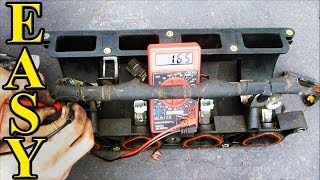
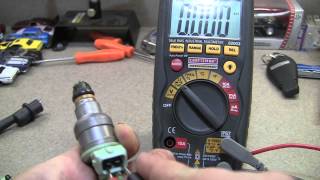
How to confirm: Swap the cylinder 1 fuel injector with the cylinder 2 injector. Clear the codes and run the engine. If the code changes to P0202 (Cylinder 2 Injector Circuit), the injector is faulty. You can also test the injector's internal resistance with a multimeter; a typical reading for this type of Bosch injector is around 11-15 ohms. 🎬 Watch: How to check fuel injector resistance with a multimeter. An out-of-spec reading or an open circuit (infinite resistance) confirms a bad injector.
Typical fix: Replace the faulty fuel injector. It is often recommended to replace all four injectors as a set to ensure balanced fuel delivery, especially on higher mileage vehicles.
Est. part cost: $80-$150 - Wiring or Connector Issue 🟡 Medium Probability The wiring harness to the fuel injector can become damaged from engine heat and vibration. Specifically on the Ford/Lincoln 2.0L Hybrid platform, oil spilled during oil changes or from a leaky valve cover gasket can contaminate the injector connector, leading to a poor connection and this code.
How to confirm: Visually inspect the wiring harness leading to the cylinder 1 injector for any signs of fraying, melting, or breaks. Disconnect the connector and check for corrosion or oil inside. Clean any contamination with electrical contact cleaner. Use a noid light to confirm the PCM is sending a pulse signal to the connector; a flashing light indicates the wiring to the connector is likely good.
Typical fix: Repair the damaged section of wire or clean/replace the electrical connector. If contaminated with oil, also inspect the valve cover gasket for leaks. Apply dielectric grease to the new connection to prevent future corrosion.
Est. part cost: $5-$30 - Blown Fuse or Faulty Relay ⚪ Low Probability While not specific to this vehicle, a short circuit in the injector system can cause the related fuse or relay to fail. If multiple injector codes (e.g., P0201, P0202, etc.) and a fuel pump code (P0230) are present simultaneously, a blown fuse or bad fuel pump relay is a strong possibility.
How to confirm: Locate and inspect the fuse for the fuel injectors in the vehicle's fuse box. If multiple injector codes are present, a blown fuse is more likely. You can test a relay by swapping it with a known good, identical relay from another circuit (e.g., the horn).
Typical fix: Replace the blown fuse or relay. If the new fuse blows immediately, it indicates a persistent short circuit in the wiring that must be found and repaired.
Est. part cost: $1-$15
Rare But Worth Checking
- Faulty Powertrain Control Module (PCM): → Shop Engine Control Module (ECM) This is the least likely cause. The internal driver circuit in the PCM that controls the injector can fail. This should only be considered after all other possibilities (injector, wiring) have been definitively ruled out. A professional diagnosis is usually required to confirm a bad PCM.
Diagnosis Steps
- Scan for Codes: Use an OBD-II scanner to confirm P0201 is the primary code. Note any other codes, like P0301, which is an expected companion code.
- Visual Inspection: Open the hood and remove the upper engine cover. Visually inspect the electrical connector and wiring going to the cylinder 1 fuel injector (the cylinder on the far left/passenger side). Look for loose connections, corrosion, oil contamination, or damaged wires.
- Use a Noid Light: Disconnect the injector and plug a noid light into the connector. Start the engine. The noid light should flash, indicating the PCM is sending a signal. If it doesn't flash, the problem is in the wiring or the PCM. If it does flash, the problem is likely the injector itself.
- Test Injector Resistance: Disconnect the injector and use a multimeter set to Ohms (Ω) to measure the resistance across the two pins on the injector. A good injector for this engine should read between 11-15 Ohms. 🎬 See this guide on using a multimeter to test injectors. If the reading is significantly higher, lower, or shows an open loop (OL), the injector has failed electrically.
- Swap Injectors: If the resistance test is inconclusive, swap the fuel injector from cylinder 1 with the one from cylinder 2. Clear the codes with the scanner and start the car. Let it run for a few minutes.
- Re-scan for Codes: If the code changes to P0202, the fuel injector you moved to cylinder 2 is faulty and needs to be replaced.
- If P0201 Returns: If the P0201 code comes back after the swap, the injector is good, and the problem lies in the wiring harness or the PCM's driver circuit for cylinder 1.
- Test Wiring: With the battery disconnected, use a multimeter to check for continuity on the two wires for the cylinder 1 injector circuit between the PCM connector and the injector connector. Repair any open or shorted wires.
- Check PCM: If wiring and the injector are confirmed to be good, the issue may be a rare failure of the PCM's injector driver. This typically requires professional diagnosis.
Parts You'll Likely Need
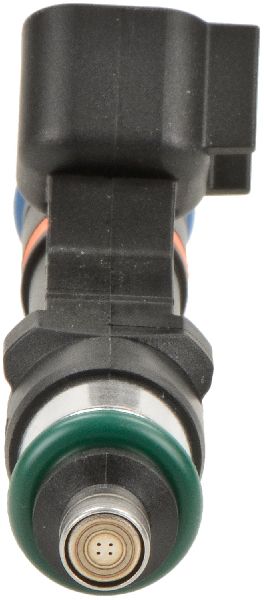
- Fuel Injector
(OEM #CM-5212 (Motorcraft), 8S4Z-9F593-A (Ford), 0280158179 (Bosch))— This is the most common component to fail when a P0201 code is present, either due to an internal electrical fault or clogging.
Trusted brands: Motorcraft, Bosch, Standard Motor Products
OEM price range: $110-$180
Aftermarket price range: $45-$120
Related Codes That Often Appear With This One
- P0301 — If the injector circuit fault prevents fuel from being delivered to cylinder 1, the cylinder will misfire, logging a P0301 'Cylinder 1 Misfire Detected' code. This is an expected and very common companion code.
- P0171 — If the injector is not delivering enough fuel, it can cause the engine to run lean (too much air, not enough fuel), potentially triggering a 'System Too Lean (Bank 1)' code.
- P0316 — Indicates a misfire was detected within the first 1,000 engine revolutions after startup. This can happen if the injector fails to fire on a cold start.
Technical Service Bulletins (TSBs) & Recalls
- TSB 22-2229: While this TSB is for the 2.0L EcoBoost (non-hybrid) engine and primarily addresses misfire codes (P0301-P0304) due to coolant intrusion, it's relevant context for the platform. It highlights a known issue with engine block integrity on related 2.0L engines that can lead to cylinder-specific problems. If symptoms like coolant loss or white smoke are present with P0201, this underlying issue should be considered.
Platform-Specific Known Issues
- Oil Contamination of Injector Connectors: On the 2.0L Hybrid engine, the location of the fuel injectors makes them susceptible to contamination from engine oil, either from a leaky valve cover gasket or from spillage during an oil change. This oil can work its way into the electrical connector for the injector, disrupting the signal and causing a P0201-P0204 code. Always inspect the connector for oil before replacing parts.
Mechanic-Grade Diagnostic Values
- Fuel Injector Coil Resistance — expected: 11 - 15 Ohms. Failure: A reading of 0 Ohms (short circuit) or infinite/OL (open circuit).
- Injector Connector Voltage (Power Wire) — expected: 10V or more with Key On, Engine Off (KOEO).. Failure: Significantly less than 10V or 0V indicates an open in the power supply wire or a blown fuse.
- Injector Pulse Signal (with Noid Light) — expected: A steady, flashing light while the engine is cranking or running.. Failure: No light or a very dim, inconsistent flicker suggests a problem with the wiring from the PCM or the PCM driver itself.
Scan Tool Commands That Help
- Ford IDS (or equivalent professional scanner): Power Balance Test — This test graphically displays the contribution of each cylinder to engine speed. When diagnosing a P0201, the graph will show a significant drop for cylinder 1, confirming it is not contributing power. This is useful to verify the symptom before disassembly and can help differentiate an electrical fault (P0201) from a mechanical one.
- Ford IDS (or equivalent professional scanner): Injector Electrical Self-Test (Click Test) — This command attempts to actuate each injector individually. You should hear an audible click from the injector being tested. If you command cylinder 1 to fire and hear no click, it helps confirm the fault is in the injector or its circuit, rather than a fuel supply or compression issue.
Wiring & Ground Locations
- G104 — A primary engine ground point located on the right side (passenger side) of the engine compartment.. A loose or corroded connection at this primary engine ground can cause insufficient or unstable grounding for various engine sensors and actuators, including the PCM's reference. This can lead to erratic electrical behavior and trigger circuit codes like P0201.
- PCM Connector (C175B) — The main engine harness connector at the Powertrain Control Module, typically located on the firewall.. The control wire (ground pulse) for the cylinder 1 fuel injector runs from a specific pin on this connector to the injector. When testing for a broken wire, you will check for continuity between this PCM pin and the corresponding pin at the injector connector.
- Fuel Injector 1 Control Wire — Runs from the PCM connector to pin 2 of the fuel injector connector.. This is the wire the PCM pulses to ground to fire the injector. An open or short-to-ground on this specific wire will cause P0201. Continuity should be less than 5 ohms from end to end.
- Fuel Injector Power Wire — Runs from a shared power source (fuse) to pin 1 of the fuel injector connector.. This wire supplies 12V+ to the injector. While a fault here would likely trigger codes for multiple injectors, a break in the wire near the cylinder 1 connector could isolate the fault. You should see battery voltage at this pin with the key on.
Real Owner Repair Stories
- YouTube video by 'Electrical Car Repair LIVE' (2013 Ford C-Max (shares 2.0L Hybrid powertrain with MKZ)) — Check Engine Light with codes P0201, P0202, P0203, P0204.
✅ What actually fixed it The video identifies engine oil spilled during an oil change had contaminated the fuel injector electrical connectors. Cleaning the oil out of the connectors and ensuring a secure connection resolved the issue. This is presented as a very common cause on this specific platform.
OEM Part Supersession History
BB5Z-9F593-A, BB5Z-9F593-B, CM-5196, CM-5198→CM-5212 (Motorcraft)— Part consolidation and potential minor revisions for durability or performance.8S4G-AA (Ford Engineering Number)→8S4Z-9F593-A (Ford Service Part), which then corresponds to Motorcraft CM-5212.— Standard engineering to service part number conversion.
Heads up: The Bosch part number 0280158179 is the original manufacturer part that corresponds to these Ford numbers.
Diagnostic Flowchart
Used vs. New Parts: Buying Guide for This Vehicle
When a used part is the smart pick: A used fuel injector is generally not recommended for this vehicle. These are high-pressure, precision components that are sensitive to contamination and wear. The risk of getting a clogged, leaking, or electrically failing used injector is high, and the labor to replace it again negates any initial cost savings.
Donor-vehicle mileage cap: roughly under 50000 miles for the part to have meaningful remaining life.
What to inspect on the donor part:
- Ensure the donor vehicle was not in a front-end collision that could have damaged the fuel rail.
- Ask for the mileage of the donor vehicle; lower is always better.
- Inspect the electrical connector pins for any signs of corrosion or damage.
- Look at the injector tip for heavy carbon buildup, which could indicate poor performance.
OEM-only on this vehicle (don't cheap out):
- Powertrain Control Module (PCM) - Aftermarket or used modules often have compatibility and programming issues. A new or remanufactured OEM unit programmed to the vehicle's VIN is critical.
Aftermarket brands forum-validated for this vehicle:
- Bosch (often the Original Equipment Manufacturer)
- Motorcraft (OEM)
Brands owners have reported issues with on this vehicle:
- Unnamed, no-brand injectors from online marketplaces. These often have inconsistent flow rates and high failure rates, leading to persistent performance issues even if they resolve the P0201 code.
Real Owner Stories
Aggregated from forums and TSBs cited above. Mileages and costs reflect what owners reported in those sources.
2013-2019 Lincoln MKZ 2.0L Hybrid
Symptoms: The check engine light came on with a P0201 code, and the engine was idling rough and hesitating on acceleration.
What fixed it: After inspection, found that engine oil from a previous oil change had seeped into the electrical connector for the cylinder 1 fuel injector. The problem was resolved by cleaning the oil out of the connector with electrical contact cleaner.
Source hint: vehicle_specific_issues: Oil Contamination of Injector Connectors
Related OBD-II Codes
Frequently Asked Questions
I spilled some oil during my last oil change on my MKZ Hybrid. Could that cause a P0201 code?
What is the most common reason for a P0201 code on the 2013-2019 Lincoln MKZ Hybrid?
How can I test the fuel injector myself to confirm it's bad?
If I need to replace a fuel injector, what brand should I use for my MKZ Hybrid?
Should I replace just the one bad injector or all four at the same time?
My MKZ Hybrid has a P0201 code and I'm also losing coolant. Are these issues related?
Are other Ford or Lincoln models known to have this same P0201 issue?
Helpful Videos
We Have This Part in Stock


The information in this article is provided for general reference and educational purposes only. Vehicle specifications, procedures, and part compatibility can vary by production date, trim level, and region. Always consult your vehicle's factory service manual and verify part numbers before purchasing or performing repairs. Safety-critical components such as airbags, seat belts, and braking systems should be installed by a qualified professional.
- Lincoln MKZ:
- 🧭 Diagnostic Flowchart
- 🎬 Helpful Videos
- 🛍️ Shop This Part
- What's Unique About the 2013-2019 Lincoln MKZ
- Symptoms You May Notice
- Most Likely Causes
- Rare But Worth Checking
- Diagnosis Steps
- Parts You'll Likely Need
- Related Codes That Often Appear With This One
- Technical Service Bulletins (TSBs) & Recalls
- Platform-Specific Known Issues
- Mechanic-Grade Diagnostic Values
- Scan Tool Commands That Help
- Wiring & Ground Locations
- Real Owner Repair Stories
- OEM Part Supersession History
- Used vs. New Parts: Buying Guide for This Vehicle
- Real Owner Stories
- 2013-2019 Lincoln MKZ 2.0L Hybrid
- Related OBD-II Codes
- Frequently Asked Questions
- 🎟️ Get 5% Off