

P0201 on 2013-2016 Mazda CX-5: Injector Circuit Malfunction Causes and Fixes
On a 2013-2016 Mazda CX-5, code P0201 is most often caused by an internal failure of the Powertrain Control Module (PCM), not the fuel injector itself. This is a known issue covered by Mazda TSB #01-017/16, which also affects the Mazda3 and Mazda6 of the same era. The failure typically presents with P0201 and P0204 together. The fix is a PCM replacement, which requires professional programming.
- For a 2013-2016 Mazda CX-5, P0201 is very frequently caused by a known PCM failure, not a bad injector.
- Always check for Mazda TSB #01-017/16 before replacing any parts. If P0204 is also present, the PCM is highly suspect.
- Do not replace the spark plug or ignition coil; P0201 is an electrical fault in the fuel injector circuit.
- Driving with this code can damage your catalytic converter over time due to unburnt fuel.
- Replacing the PCM requires professional programming, making this a difficult DIY repair for the most common cause.
What's Unique About the 2013-2016 Mazda CX-5
For this specific generation of Mazda CX-5 and its platform mates (Mazda3, Mazda6), the P0201 code has a very distinct and well-documented cause that differs from the generic answer. Mazda issued Technical Service Bulletin (TSB) #01-017/16 for an internal failure within the injector driver integrated circuit of the DENSO-made Powertrain Control Module (PCM). This defect often causes the injector driver channels for cylinders 1 and 4 to fail simultaneously, causing P0201 to appear with P0204. Therefore, unlike on most other vehicles where the injector itself is the primary suspect, on this CX-5, the PCM is the most probable cause, making it critical to check the TSB before replacing any parts.
Symptoms You May Notice
- Check Engine Light is on (may be flashing if misfire is severe)
- Rough or shaking idle
- Engine misfire (may feel like a stumble or hesitation)
- Reduced engine power and poor acceleration
- Decreased fuel economy
- Strong smell of unburnt fuel from the exhaust
- Replacing the fuel injector without first checking for the TSB-related PCM failure, especially when P0204 is also present.
- Replacing the spark plug or ignition coil for cylinder 1. P0201 is a fuel injector circuit code, not an ignition system code, though a misfire code like P0301 will almost certainly be present as a direct result.
Most Likely Causes
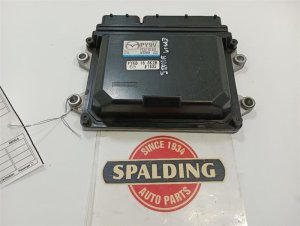
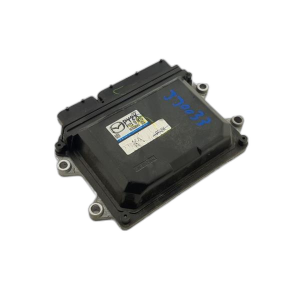
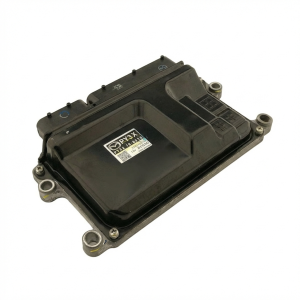
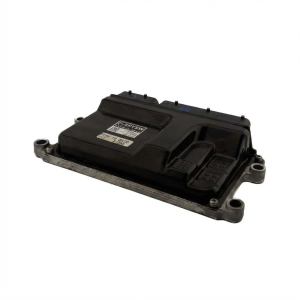
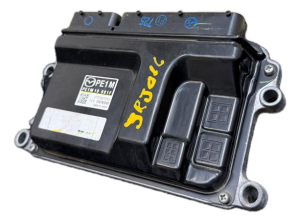
- Internal Powertrain Control Module (PCM) Failure 🔴 High Probability → Shop Engine Control Module (ECM) A specific batch of DENSO-made PCMs contains a faulty injector driver circuit that is known to fail, as documented in Mazda TSB #01-017/16. Manufacturer TSB Bulletin #01-004-17 also confirms that vehicles may experience a rough running engine and check engine light due to this internal failure. The failure affects the injector driver circuits for paired cylinders (1 and 4, or 2 and 3).
How to confirm: Check if P0204 (or P0202 and P0203) is also present, as this is the key indicator. Check the vehicle's VIN against TSB #01-017/16 (affects Japan-built vehicles with VINs lower than JM3KE**820183). Visually inspect the PCM to see if it is a DENSO unit, not Mitsubishi.
Typical fix: Replace the PCM with an updated part and program it to the vehicle using Mazda's diagnostic software. This must be done by a dealer or a qualified shop. Remanufactured/refurbished PCMs are available as a more affordable option.
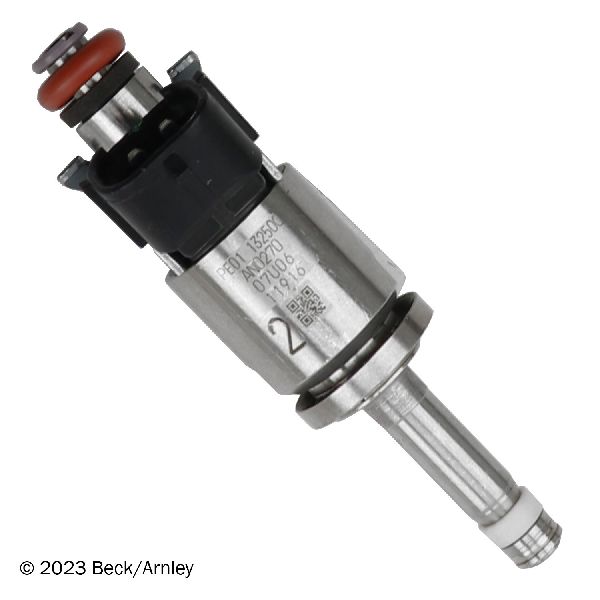
Est. part cost: $800-$1300 (New OEM), $300-$600 (Remanufactured) - Faulty Cylinder 1 Fuel Injector 🟡 Medium Probability → Shop Fuel Injector While less common than the PCM issue on this model, Skyactiv direct injection fuel injectors can fail due to internal coil shorts, opens, or clogging from carbon buildup.
How to confirm: After ruling out the PCM, swap the cylinder 1 injector with the cylinder 2 injector. Clear the codes. If the code changes to P0202, the injector is faulty. You can also measure the injector's resistance with a multimeter; it should be within 12.3-12.9 ohms when cold. A new OEM injector measures around 12.8 ohms.
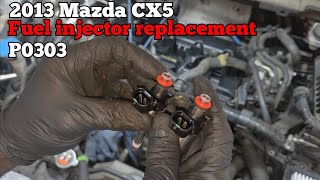
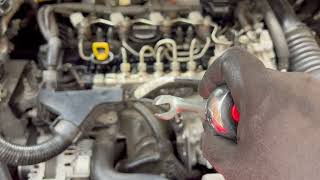
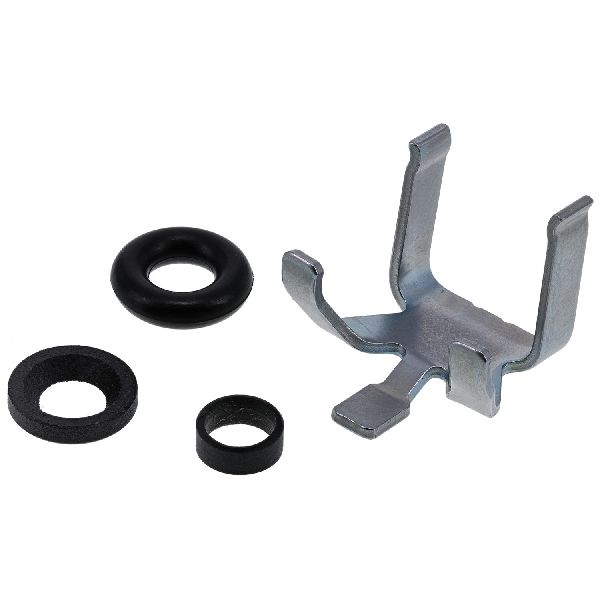
Typical fix: Replace the fuel injector and its associated seals. The OEM part number is PY01-13-250. 🎬 Watch: Step-by-step guide on how to remove the fuel injectors.
Est. part cost: $60-$180 - Wiring Harness or Connector Issue ⚪ Low Probability
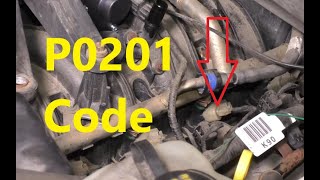
How to confirm: Visually inspect the wiring and connector for the cylinder 1 injector for any signs of damage, corrosion, or loose pins. Use a noid light to verify a pulse signal is reaching the injector connector. 🎬 See this video for common causes and fixes for P0201. If the light flashes, the wiring and PCM driver are likely functioning.
Typical fix: Repair the damaged section of the wiring harness or replace the faulty connector.
Est. part cost: $10-$50
Rare But Worth Checking
- Clogged Fuel Injector: → Shop Fuel Injector While P0201 is an electrical code, severe clogging can sometimes cause erratic electrical readings or performance issues that get misdiagnosed. This is unlikely to be the primary cause but can be a contributing factor to poor performance.
- Weak or Failing Battery: A battery with low voltage can cause a variety of unpredictable electrical issues and codes, including injector circuit faults. Before extensive diagnosis, ensure the battery and charging system are healthy.
Diagnosis Steps
- Scan the PCM for all stored fault codes. Note if P0204, P0202/P0203, or any P030x misfire codes are present. The presence of P0201 and P0204 together is a strong pointer to the TSB.
- Check your vehicle's VIN against Mazda TSB #01-017/16. If the VIN is within the affected range (Japan-built, lower than JM3KE**820183) and you have paired codes (P0201/P0204), a PCM failure is the most likely cause.
- If the TSB applies, visually inspect the PCM label to confirm it is a DENSO-produced unit before ordering a replacement. If it is a Mitsubishi unit, the TSB does not apply.
- If the TSB does not apply, proceed with standard diagnostics. Visually inspect the wiring harness and connector for the cylinder 1 fuel injector for any damage, corrosion, or loose connections.
- Disconnect the injector connector and use a 'noid light' to test for a pulse signal from the PCM while the engine is cranked. If the light flashes, the PCM and wiring are likely okay.
- If the noid light flashes, turn off the engine and measure the internal resistance of the fuel injector using a multimeter. Compare the reading to the specification (12.3-12.9 ohms). A reading of 0 ohms (short) or OL/infinite (open) indicates a faulty injector.
- As a final confirmation, swap the cylinder 1 injector with the cylinder 2 injector. Clear the codes, run the engine, and see if the code returns as P0202. If it does, the injector is confirmed bad. If P0201 returns, the fault is in the wiring or PCM.
Parts You'll Likely Need
- Powertrain Control Module (PCM)
(OEM #PYXR-18-881C (example, dealer must verify by VIN). Replaces: PY3X-18-881C, PY3X-18-881D, PY3X-18-881F, PY3X-18-881G.)— This is the most common failure point for this specific code on this vehicle, as documented by Mazda TSB #01-017/16.
Trusted brands: Mazda (OEM), Flagship One (Remanufactured), FS1 (Remanufactured)
OEM price range: $1000-$1300
Aftermarket price range: $300-$600 (Remanufactured) - Fuel Injector
(OEM #PY01-13-250)— If the PCM is not the cause, the fuel injector itself is the next most likely component to have failed.
Trusted brands: Mazda (OEM), Bosch, Denso, Standard Motor Products
OEM price range: $120-$180
Aftermarket price range: $60-$110
Related Codes That Often Appear With This One
- P0204 — According to Mazda TSB #01-017/16, an internal PCM failure often causes the injector circuits for cylinders 1 and 4 to fail together, logging P0201 and P0204 as a pair. This is the strongest indicator of the known PCM issue.
- P0301 — This code means "Cylinder 1 Misfire Detected." Since P0201 indicates the injector circuit is failing, cylinder 1 is not receiving the correct amount of fuel, which directly causes a misfire. The TSB confirms misfire codes are usually stored at the same time.
- P0300 — This code for "Random Misfire Detected" can appear alongside P0201 if the fueling issue is intermittent or if the resulting imbalance is affecting overall engine stability.
Technical Service Bulletins (TSBs) & Recalls
- 01-017/16: Engine runs rough with check engine light on and DTCs P0201/P0204 or P0202/P0203 stored, due to an internal failure of the DENSO PCM. Affects 2013-16 CX-5, 2014-16 Mazda3, and 2014-16 Mazda6.
- TSB Bulletin #01-004-17-3317a: Notes that some vehicles may experience a rough running engine and check engine light with DTCs P0201 and P0204 or P0202 and P0203. It specifically mentions that engine misfire related DTCs (P0301, P0302, P0303, P0304) are usually stored simultaneously.
Platform-Specific Known Issues
- Mazda Technical Service Bulletin TSB #01-017/16 addresses a known issue on some 2013-2016 Japan-built CX-5 models (VINs lower than JM3KE**820183) where an internal failure of the DENSO-produced PCM causes a rough running condition with DTCs P0201 and P0204 (or P0202 and P0203) to be stored. The fix is to replace the PCM with an updated part.
Mechanic-Grade Diagnostic Values
- High-Pressure Fuel Rail Pressure — expected: 435-2900 PSI (3.0-20.0 MPa). This value will vary significantly based on engine load.. Failure: Pressure that does not respond to engine load or is stuck at a very low or high reading. A P0192 code may accompany this.
- Mass Air Flow (MAF) Rate at Hot Idle — expected: Approximately 2-3 g/s.. Failure: Significantly higher or lower readings at idle can indicate a dirty or faulty MAF sensor, which can affect fuel calculations, though it won't directly cause a P0201.
- Injector Inductive Kick Voltage Spike — expected: Approximately 50-60 volts.. Failure: Absence of this voltage spike when the injector closes is what the PCM detects to set the P0201 'Open Circuit' code.
- PCM Pin Voltage (Injector Circuit) — expected: Approximately 12V (battery voltage) should be present on the trigger side of the injector connector (coming through the coil) when the key is on.. Failure: Lack of voltage suggests an open in the power supply side of the circuit.
Scan Tool Commands That Help
- FORScan / High-End Scanners: Injector Power Balance / Active Test — To individually disable each fuel injector while the engine is idling. If disabling cylinder 1 causes no change in engine RPM or smoothness, it confirms that cylinder is not contributing, which supports the P0201 diagnosis.
- Mazda IDS (Integrated Diagnostic System): Fuel Injector Correction Factors — This function is used to program the calibration codes of new injectors into the PCM. While primarily for diesel models, it's a critical step if injectors are replaced on some gasoline direct injection systems to ensure precise fueling.
Wiring & Ground Locations
- G03 — Left front of the engine compartment.. This is a primary ground point for multiple engine components. A loose or corroded connection here can cause various unpredictable electrical issues, including faults in the PCM or sensor circuits.
- G07 — Left rear of the engine.. Another critical engine ground. Ensuring this ground is clean and tight is a fundamental step in diagnosing any engine-related electrical fault code.
- PCM Connector 1 (Injector Pins) — At the Powertrain Control Module (PCM).. For continuity testing: Pin 1EE goes to Injector #1, Pin 1EF goes to Injector #2, Pin 1EG goes to Injector #3, and Pin 1EH goes to Injector #4. This allows a technician to test the wiring harness integrity between the PCM and the injector without removing the entire harness.
Real Owner Repair Stories
- Mazdas247 Forum User (2015 Mazda CX-5) — Check engine light on, rough running, codes P0201, P0204, P0301, P0304 all present.
❌ Tried (didn't work) Swapping fuel injectors between cylinders., Swapping ignition coils between cylinders., Replacing all spark plugs.
✅ What actually fixed it The combination of P0201 and P0204 pointed directly to the TSB for PCM failure. The owner had the dealer replace and program the PCM, which resolved all codes and drivability issues.
OEM Part Supersession History
PY3X-18-881x (where x is C, D, F, G)→PYXR-18-881C (example, must be verified by VIN)— The original DENSO PCMs were prone to an internal injector driver failure as per TSB 01-017/16. The superseding parts have this defect corrected.
Heads up: The TSB explicitly states that the part numbers themselves were not changed by the mass-production update. Therefore, ordering a replacement requires careful VIN verification by a dealer to ensure the updated hardware is supplied, not old stock.
Model Year Variations Within This Range
- 2013-2016 (Japan-built before May 23, 2016): Vehicles built before this date with VINs lower than JM3KE**820183 may have the faulty DENSO PCM. Vehicles built after this date, or those with Mitsubishi PCMs, are not subject to TSB 01-017/16.
Diagnostic Flowchart
Real Owner Stories
Aggregated from forums and TSBs cited above. Mileages and costs reflect what owners reported in those sources.
2013-2016 Mazda CX-5
Symptoms: Engine runs rough with the check engine light on and DTCs P0201 and P0204 stored simultaneously.
What fixed it: Replaced the DENSO PCM with an updated part to resolve the internal injector driver circuit failure.
Source hint: Mazda TSB #01-017/16
Mazda CX-5
Symptoms: Needed PCM and TCM software updates and programming after module replacement.
What fixed it: Dealer performed the PCM/TCM programming.
Cost: $189
Source hint: Mazdas247.com thread titled 'Dealer charging for PCM/TCM updates?'
Mazda CX-5 Skyactiv
Symptoms: Diagnosing a failed fuel injector and needed exact ohm measurements for testing.
What fixed it: Tested and confirmed a new OEM injector has a resistance of 12.8 ohms to use as a baseline for diagnosing the faulty injector.
Source hint: Mazdas247.com thread titled 'Failed Fuel Injector. Looking for exact fuel injector specs (ohm measurements)'
Related OBD-II Codes
Frequently Asked Questions
Does TSB #01-017/16 apply to my 2013-2016 Mazda CX-5?
Why am I getting P0201 and P0204 at the same time on my CX-5?
How can I test the cylinder 1 fuel injector on my Skyactiv engine?
What is the OEM part number for the fuel injector on the 2.0L/2.5L Skyactiv-G?
Do I have to buy a brand new PCM if mine failed due to the TSB?
How much does a dealer charge to program a new PCM for this Mazda?
Helpful Videos
Used OEM Parts in Stock
New Aftermarket Parts Available



The information in this article is provided for general reference and educational purposes only. Vehicle specifications, procedures, and part compatibility can vary by production date, trim level, and region. Always consult your vehicle's factory service manual and verify part numbers before purchasing or performing repairs. Safety-critical components such as airbags, seat belts, and braking systems should be installed by a qualified professional.
- Mazda CX-5:
- 🧭 Diagnostic Flowchart
- 🎬 Helpful Videos
- 🛍️ Shop This Part
- What's Unique About the 2013-2016 Mazda CX-5
- Symptoms You May Notice
- Most Likely Causes
- Rare But Worth Checking
- Diagnosis Steps
- Parts You'll Likely Need
- Related Codes That Often Appear With This One
- Technical Service Bulletins (TSBs) & Recalls
- Platform-Specific Known Issues
- Mechanic-Grade Diagnostic Values
- Scan Tool Commands That Help
- Wiring & Ground Locations
- Real Owner Repair Stories
- OEM Part Supersession History
- Model Year Variations Within This Range
- Real Owner Stories
- 2013-2016 Mazda CX-5
- Mazda CX-5
- Mazda CX-5 Skyactiv
- Related OBD-II Codes
- Frequently Asked Questions
- 🎟️ Get 5% Off