

P0201 on 2007-2015 Mazda CX-9 3.7L: Injector Circuit Malfunction Causes and Fixes
P0201 on a Mazda CX-9 3.7L V6 indicates an electrical fault with the cylinder 1 fuel injector. The most common cause is a failed injector. Because cylinder 1 is on the rear bank under the intake manifold, this is a labor-intensive repair. Expect a shop to charge $500-$800+ due to the 3-5 hours of labor required.
- P0201 on the CX-9 3.7L V6 points to an electrical issue with the cylinder 1 fuel injector.
- Cylinder 1 is under the intake manifold, making this a difficult and labor-intensive repair (DIY Difficulty: 4/5).
- The most likely cause is a failed injector, followed by a wiring issue. PCM failure is rare for this model.
- Always perform electrical tests (noid light, resistance check) before removing the intake manifold to confirm the injector is the fault.
- Due to the high labor cost, it is strongly recommended to replace all three rear injectors, spark plugs, and the intake gaskets at the same time.
What's Unique About the 2007-2015 Mazda CX-9
The 2008-2015 CX-9 uses a Ford-derived 3.7L V6 engine where the cylinders are numbered 1-2-3 on the rear bank (against the firewall) and 4-5-6 on the front bank (near the radiator). The critical issue for a P0201 code is that cylinder 1 is located under the upper intake manifold. This placement turns a simple part replacement into a much more complex and labor-intensive job, as the entire manifold must be removed for access. This significantly increases repair costs and difficulty compared to the same code on an engine with easier injector access.
Symptoms You May Notice
- Check Engine Light is on
- Rough, shaking idle
- Engine misfire, which may cause a flashing Check Engine Light during acceleration
- Noticeable loss of power and poor acceleration
- Hesitation when pressing the gas pedal
- Reduced fuel economy
- Strong fuel smell if the injector is stuck open or leaking
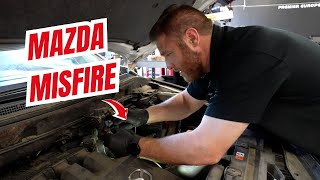
- Replacing the ignition coil or spark plug. While these parts can cause a misfire (P0301), the P0201 code specifically points to an electrical fault in the fuel injector's circuit, not the ignition system. Always diagnose based on the specific code stored. 🎬 Watch: A quick diagnostic walkthrough for fixing a CX-9 misfire.
Most Likely Causes
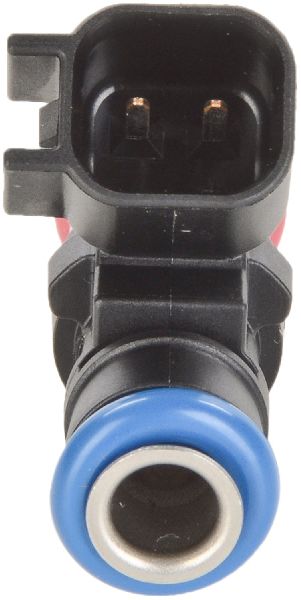
- Failed Cylinder 1 Fuel Injector 🔴 High Probability → Shop Fuel Injector The fuel injector itself can fail internally due to heat cycles and age, creating an open or shorted circuit in its internal coil. This is the most common failure point for a P0201 code on this platform.
How to confirm: After confirming the PCM is sending a pulse with a noid light, test the injector's resistance with a multimeter. A healthy injector should read between 11.3 and 12.7 ohms. A reading of infinite ohms (open), near zero ohms (short), or a high, erratic reading (e.g., over 30 ohms) confirms a failed injector. The definitive test is to swap the injector with another cylinder's (e.g., cylinder 4) and see if the code follows (e.g., becomes P0204), though this requires removing the intake manifold.
Typical fix: Replace the failed fuel injector. Due to the high labor cost to access the rear bank, it is highly recommended to replace all three rear injectors (1, 2, 3), the spark plugs, and the intake manifold gaskets at the same time to prevent future repairs.
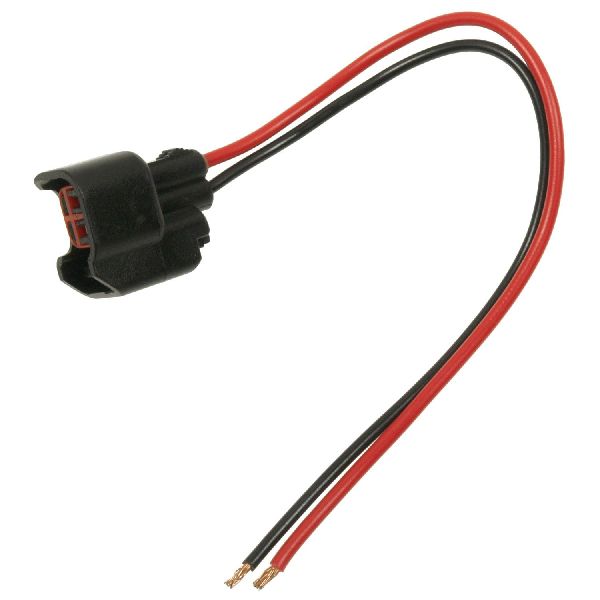
Est. part cost: $40-$150 per injector - Wiring Harness or Connector Fault 🟡 Medium Probability The wiring harness can become brittle from engine heat, or the connector pins can corrode, loosen, or break, causing an open or short in the circuit to the injector. The locking tab on the connector can also become brittle and break, leading to a loose connection.
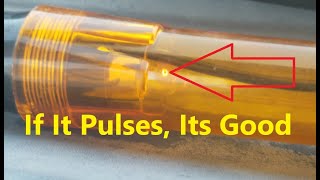
How to confirm: Visually inspect the wiring going to the cylinder 1 injector for any signs of damage, melting, or corrosion. Wiggle the connector while the engine is running to see if it affects the misfire. Use a multimeter to check for continuity between the injector connector and the PCM connector. Use a noid light at the injector connector to verify the PCM is sending a pulse signal. 🎬 See how to test the injector circuit using a test light. If the noid light does not flash, the problem is in the wiring or the PCM.
Typical fix: Repair the damaged section of wire or replace the injector connector pigtail.
Est. part cost: $15-$40 for a connector pigtail
Rare But Worth Checking
- Faulty Powertrain Control Module (PCM): → Shop Engine Control Module (ECM) While a known Mazda TSB (#01-017/16) points to PCM failure for this code on other models like the CX-5 and Mazda3, that TSB does NOT apply to the CX-9. A PCM driver failure is possible but very rare on this platform. This should only be considered after the injector and wiring have been definitively proven to be good through resistance and continuity testing.
Technical Service Bulletins (TSBs) & Recalls
- TSB Bulletin #01-004-17: A multi-model manufacturer bulletin notes that vehicles may experience a rough running engine and a check engine light accompanied by DTCs P0201 and P0204 or P0202 and P0203.
- TSB Bulletin #01-004-17-3317a: This manufacturer record indicates that some vehicles may experience a rough engine and check engine light with P0201 and P0204, noting that engine misfire related DTCs like P0301 are usually stored at the same time.
Diagnosis Steps
- Connect an OBD-II scanner and confirm P0201 is the primary code. Note any other codes, especially P0301 or P0171.
- Visually inspect the wiring harness and connector for cylinder 1's fuel injector. This is difficult as it's on the rear bank, but check any visible portions for obvious damage.
- Disconnect the injector and use a noid light to test for a pulse signal from the PCM while cranking the engine. If the light flashes, the PCM and wiring are likely good, and the injector is the problem.
- If the noid light does not flash, check for constant 12V power on one pin of the connector with the key on. On this vehicle, the power supply wire is typically Blue.
- If power is present but there's no pulse, the issue is likely in the ground-side control wire (typically Green/Blue) back to the PCM or the PCM itself. Perform a continuity test on that wire.
- If the noid light test passes, test the internal resistance of the fuel injector itself using a multimeter. A healthy injector should read between 11.3-12.7 ohms. An infinite reading (OL) means it's open, and a reading near zero means it's shorted. Both conditions require replacement.
- If extensive electrical testing points to the injector, proceed with removing the upper intake manifold to access and replace it.
Parts You'll Likely Need
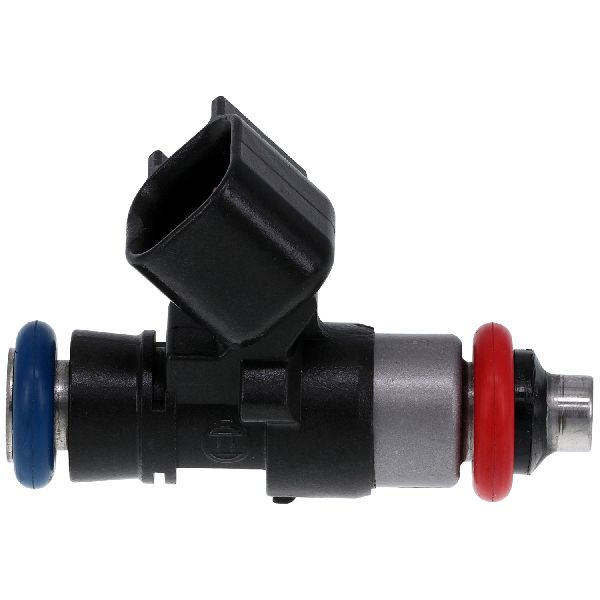
- Fuel Injector
(OEM #CY01-13-250, ZZJ1-13-250A)— This is the most common cause of a P0201 code. The injector fails internally, causing an open or shorted circuit.
Trusted brands: Bosch (0280158091), Standard Motor Products, Hitachi, Valeo (348283)
OEM price range: $120-$200
Aftermarket price range: $40-$90 - Upper Intake Manifold Gasket(s)
(OEM #C236-13-111)— These are mandatory to replace whenever the upper intake manifold is removed to prevent vacuum leaks. They are one-time-use seals.
Trusted brands: Fel-Pro, Mahle, Victor Reinz
OEM price range: $15-$25 (set)
Aftermarket price range: $10-$20 (set) - Lower Intake Manifold Gaskets
(OEM #ZZJ1-13-11C)— These are mandatory to replace whenever the lower intake manifold is removed to prevent vacuum leaks. They are one-time-use seals.
Trusted brands: Fel-Pro, Mahle, Victor Reinz
OEM price range: $40-$60 (set)
Aftermarket price range: $25-$50 (set)
Related Codes That Often Appear With This One
- P0301 — This code means 'Cylinder 1 Misfire Detected'. Since P0201 indicates the injector circuit is malfunctioning, cylinder 1 isn't getting the right amount of fuel, which directly causes a misfire.
- P0171 — This code means 'System Too Lean (Bank 1)'. Bank 1 is the rear bank of cylinders (1-2-3). If the cylinder 1 injector fails to fire, that cylinder pushes unburnt air (oxygen) into the exhaust. The Bank 1 oxygen sensor detects this excess oxygen and reports a lean condition.
Platform-Specific Known Issues
- Owners on forums like Mazdas247 frequently discuss the frustration of this repair due to the location of cylinder 1. The consensus is that if you are paying for the labor to remove the intake manifold, it is financially prudent to replace all three rear injectors (cylinders 1, 2, 3) and spark plugs at the same time to avoid a similar repair in the near future.
Mechanic-Grade Diagnostic Values
- Fuel Injector Coil Resistance — expected: 11.3 - 12.7 ohms at 20°C (68°F). Failure: A reading of infinite ohms (OL), near-zero ohms, or a high, erratic reading (e.g., >30 ohms) indicates a failed injector.
- Injector Connector Power Supply Voltage — expected: Battery voltage (~12V) with Key On, Engine Off. Failure: 0V indicates a problem with the power supply wire or the main/injector fuse.
Scan Tool Commands That Help
- Mazda M-MDS or FORScan: Active Test: Injector Cut (Simulation Function 'INJ') — Use this command to individually disable the cylinder 1 injector while the engine is idling. If there is no change in engine RPM or smoothness, it confirms cylinder 1 is not contributing, strongly suggesting a fault in its fuel or ignition system.
Wiring & Ground Locations
- Cylinder 1 Injector Connector — On the rear cylinder bank (firewall side), first cylinder from the passenger side. Access requires removal of the upper intake manifold.. This is the point for testing with a noid light and for checking injector resistance. The power supply wire is typically Blue, and the PCM control wire is typically Green/Blue.
- PCM (Powertrain Control Module) — Located in the left rear corner of the engine compartment, near the firewall and brake master cylinder.. This is the source of the ground-pulse signal that fires the injector. The final step in diagnosing a wiring fault is a continuity test from the injector connector to the corresponding pin on the PCM connector.
- PCM Pin 1EE — At the main PCM electrical connector.. On some Mazda models (specifically SkyActiv), this is the specific terminal for the cylinder 1 fuel injector control wire. A continuity test between this pin and the control wire pin at the injector connector confirms wire integrity. While not definitively confirmed for the 3.7L V6, it is the most likely candidate based on other Mazda diagnostic procedures.
- G3 (Ground Point) — Located on the left (driver's) side of the engine compartment.. A poor main engine ground can cause a variety of erratic electrical issues, including problems with sensor and actuator circuits. While not a direct cause of a single injector code, it should be checked if multiple electrical faults are present.
Real Owner Repair Stories
- YouTube channel 'Auto Repair Guys' (Similar vehicle with intake manifold removal required for injector access) — Check engine light on with a P0204 (Injector Circuit - Cylinder 4) after an engine replacement.
❌ Tried (didn't work) Initial scan and code reading.
✅ What actually fixed it Upon removing the intake manifold for inspection, the technician discovered the wiring connector for the #4 fuel injector was not fully seated. The metal retaining clip that locks the connector in place was missing or had been broken during the previous engine work, causing a loose connection. Properly securing the connector and clearing the codes resolved the issue completely. - YouTube channel 'Project Venture' (2015 Jeep Cherokee with a P0206 (Injector Circuit - Cylinder 6)) — Engine misfire and check engine light.
❌ Tried (didn't work) The diagnosis went straight to the injector based on the code.
✅ What actually fixed it An ohms test was performed on the suspect injector and compared to a known-good one and a new part. A good injector measured 12.4 ohms, while the new injector was 12.3 ohms. The failed injector from cylinder 6 gave a high, erratic reading that jumped around over 30 ohms, confirming it was electrically faulty. Replacing the single failed injector fixed the problem.
When the Usual Fixes Don't Work
- In a diagnostic video for a 2010 Mazda CX-9 with a misfire, the technician initially suspected a fuel injector based on experience with the 3.7L engine. However, after performing an ohms test on the injectors and finding them all within spec, further testing revealed the true cause was a bad ignition coil that was arcing to the cylinder head. This highlights the importance of not skipping diagnostic steps and confirming the injector circuit is the actual problem before beginning the labor-intensive replacement.
OEM Part Supersession History
CY01-13-250→ZZJ1-13-250A— Standard part revision and update by the manufacturer.
Heads up: ZZJ1-13-250A is the correct and current service replacement for the original part.
Model Year Variations Within This Range
- 2007: The 2007 model year used a 3.5L V6 engine. While architecturally similar to the 3.7L (2008-2015), part numbers for some components, including fuel injectors, may differ. The diagnostic process is nearly identical.
Diagnostic Flowchart
Other Known Issues on This Vehicle
Issues unrelated to this code that are worth knowing about as an owner of this generation:
- Internal Water Pump Failure 🔴 High — Common after 80,000 miles. Failure can cause coolant to mix with engine oil, leading to catastrophic engine damage if not caught early. (Ref: No official recall, but it is a widely documented design flaw of the Ford Cyclone/Mazda MZI V6 engine. A class-action lawsuit was filed regarding this issue for 2008-2015 CX-9 models.)
- AWD Transfer Case (PTU) Failure 🔴 High — Commonly occurs around 70,000-120,000 miles. The unit is located near the exhaust, causing the gear oil to overheat, break down into sludge, and lead to bearing failure. (Ref: Mazda issued Special Service Program (SSP) 92, extending the warranty for the PTU to 7 years or 90,000 miles for certain 2010-2014 models. Many failures occur outside this window.)
- Power Brake Booster Failure 🟠 Medium — Can occur at various mileages, often noted between 40,000 and 130,000 miles. Symptoms include a hard brake pedal and a hissing noise from the driver's footwell. (Ref: Mazda issued Special Service Program (SSP) 93, extending the warranty to 7 years or 90,000 miles for 2007-2013 models due to a diaphragm material issue.)
Used vs. New Parts: Buying Guide for This Vehicle
When a used part is the smart pick: For this repair, using a used fuel injector is generally not recommended. The part is relatively inexpensive compared to the 3-5 hours of labor required to access it under the intake manifold. The risk of a used injector failing shortly after installation outweighs the small cost savings. A used wiring harness pigtail could be a viable option if the connector is in excellent condition.
Donor-vehicle mileage cap: roughly under 80000 miles for the part to have meaningful remaining life.
What to inspect on the donor part:
- For a wiring connector: ensure the plastic is not brittle, the locking tab is intact and clicks firmly, and there is no corrosion on the pins.
- For an injector: check for cracks in the plastic body, ensure the O-rings are not flattened or torn (though they should be replaced anyway), and test the resistance with a multimeter before purchase if possible. It should be between 11.3 and 12.7 ohms.
OEM-only on this vehicle (don't cheap out):
- Intake Manifold Gaskets: While not strictly OEM-only, using high-quality gaskets (like Fel-Pro or Mahle) is critical to prevent vacuum leaks that would require re-doing the entire job. Avoid no-name, unbranded gasket sets.
Aftermarket brands forum-validated for this vehicle:
- Bosch: A well-regarded OEM supplier for fuel system components, their injectors are considered a reliable choice.
- Standard Motor Products (SMP): A trusted aftermarket brand with a long history of producing quality electronic components.
Brands owners have reported issues with on this vehicle:
- Unbranded, generic injector sets from online marketplaces. These often have inconsistent flow rates and high failure rates, which is a significant risk given the labor involved in this specific repair.
Real Owner Stories
Aggregated from forums and TSBs cited above. Mileages and costs reflect what owners reported in those sources.
2012 CX-9 Touring 3.7L V6
Symptoms: The check engine light started flashing about 3 minutes into a drive. The car was idling roughly and threw codes for all six injector circuits (P0201-P0206) along with a P0305 misfire.
What fixed it: The owner reset the light and the codes returned immediately, indicating a persistent circuit issue; diagnostic steps in the context suggest testing the injector resistance (11.3-12.7 ohms) or checking for a pulse with a noid light.
Source hint: Mazdas247 forum report in 'owner_reports' section
2012 CX-9 GT FWD — 40000 miles
Symptoms: While not specifically a P0201 report, this owner experienced a related common failure on the platform involving the brake booster, which was covered by a warranty extension.
What fixed it: Brake booster replacement covered by warranty extension (SSP 93).
Source hint: Mazdas247: 'Brake Booster failure on 2012 CX-9 GT FWD @ 40k miles'
Related OBD-II Codes
Frequently Asked Questions
I have a P0201 on my 2012 CX-9; is this covered under the SSP 93 warranty extension?
Why is the labor for replacing the Cylinder 1 injector so expensive on the 3.7L MZI V6?
What is the recommended resistance for a new fuel injector on this Mazda engine?
Should I replace just the Cylinder 1 injector or all of them while the manifold is off?
Can I use the same intake manifold gaskets after fixing the P0201 code?
Does the P0201 code on my CX-9 mean my PCM is definitely bad?
Helpful Videos
We Have This Part in Stock


The information in this article is provided for general reference and educational purposes only. Vehicle specifications, procedures, and part compatibility can vary by production date, trim level, and region. Always consult your vehicle's factory service manual and verify part numbers before purchasing or performing repairs. Safety-critical components such as airbags, seat belts, and braking systems should be installed by a qualified professional.
- Mazda CX-9:
- 🧭 Diagnostic Flowchart
- 🎬 Helpful Videos
- 🛍️ Shop This Part
- What's Unique About the 2007-2015 Mazda CX-9
- Symptoms You May Notice
- Most Likely Causes
- Rare But Worth Checking
- Technical Service Bulletins (TSBs) & Recalls
- Diagnosis Steps
- Parts You'll Likely Need
- Related Codes That Often Appear With This One
- Platform-Specific Known Issues
- Mechanic-Grade Diagnostic Values
- Scan Tool Commands That Help
- Wiring & Ground Locations
- Real Owner Repair Stories
- When the Usual Fixes Don't Work
- OEM Part Supersession History
- Model Year Variations Within This Range
- Other Known Issues on This Vehicle
- Used vs. New Parts: Buying Guide for This Vehicle
- Real Owner Stories
- 2012 CX-9 Touring 3.7L V6
- 2012 CX-9 GT FWD — 40000 miles
- Related OBD-II Codes
- Frequently Asked Questions
- 🎟️ Get 5% Off