

P0201 on 2014-2016 Mazda Mazda3: Injector Circuit Malfunction Causes and Fixes
On a 2014-2016 Mazda3, code P0201 is very often caused by an internal failure of the Powertrain Control Module (PCM), not the fuel injector itself. This is especially true if it appears with code P0204. The fix is a PCM replacement, which requires professional programming and can cost between $800 and $1600. This is a well-documented issue covered by Mazda Technical Service Bulletin #01-004/17.
- For a 2014-2016 Mazda3, P0201 is very often not a simple injector or wiring problem.
- **Always check for paired codes.** If you see P0201 with P0204, the problem is almost certainly the DENSO PCM, as documented in Mazda TSB #01-017/16.
- Do not replace the fuel injector if paired codes are present, as this is a common misdiagnosis that will not fix the root cause.
- If only P0201 is present, then standard diagnosis of the injector and its wiring is appropriate.
- PCM replacement requires professional programming and is a significantly more expensive repair than a fuel injector.
What's Unique About the 2014-2016 Mazda Mazda3
For this specific generation of Mazda3, a P0201 code is highly likely to be part of a larger, well-documented issue. Mazda issued a Technical Service Bulletin (TSB #01-017/16, later superseded by #01-004/17) explaining that P0201 often appears with P0204 due to an internal failure in certain Powertrain Control Modules (PCMs) supplied by DENSO. This is a critical platform-specific issue because the root cause is frequently the computer itself, not a simple wiring or injector failure. This problem also affects other Mazda models from the same era using the same PCM, like the 2013-2016 CX-5 and 2014-2016 Mazda6.
Symptoms You May Notice
- Check Engine Light is on (may flash if the misfire is severe)
- Rough or shaking engine idle
- Engine misfires, felt as hesitation or stumbling during acceleration
- Reduced engine power and performance
- Poor fuel economy
- Hard starting or extended cranking
- Fuel odor if the injector is stuck open
- Replacing the fuel injector when codes P0201 and P0204 are present together. The TSB indicates this scenario is almost always a PCM failure.
- Replacing spark plugs or ignition coils. While these parts can cause a misfire (P0301), they do not cause an injector circuit code like P0201.
Most Likely Causes
- Internal PCM Failure (DENSO-produced units) 🔴 High Probability Mazda identified an internal failure within specific DENSO-made PCMs affecting 2014-2016 Mazda3 models produced before May 23, 2016. This failure causes paired injector circuit codes (P0201/P0204 or P0202/P0203). The replacement PCMs have been internally corrected to eliminate this fault.
How to confirm: Scan for codes. If P0201 is paired with P0204 (and often misfire codes P0301/P0304), the PCM is the primary suspect. The TSB applies to Japan-built Mazda3s with VINs lower than JM1BM**352403. A dealer or shop must visually inspect the PCM's label to confirm it is a DENSO unit as per the TSB repair procedure.
Typical fix: Replace the Powertrain Control Module (PCM). This must be done by a dealer or qualified shop, as the new unit requires programming to the vehicle's VIN and immobilizer system.
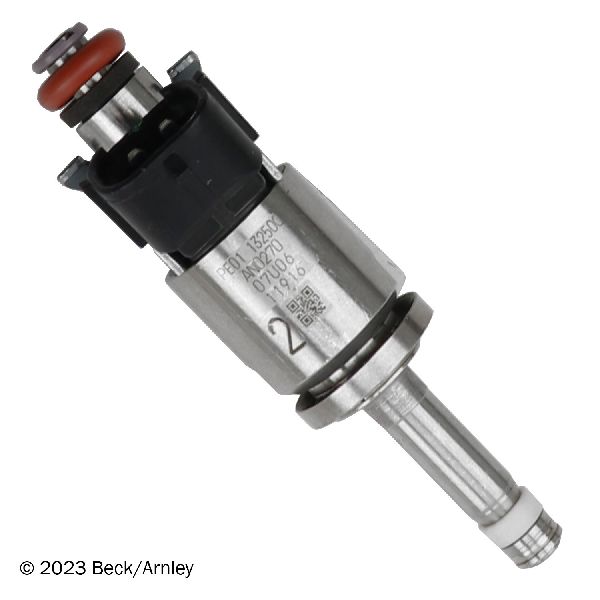
Est. part cost: $600-$1300 - Faulty Cylinder 1 Fuel Injector 🟡 Medium Probability → Shop Fuel Injector Direct injection fuel injectors operate under high pressure and can fail electrically or become clogged over time. This is a standard wear-and-tear component.
How to confirm: If P0201 appears alone, the injector is a more likely cause. Swap the cylinder 1 injector with another (e.g., cylinder 2). If the code changes to P0202, the injector is faulty. You can also test the injector's resistance with a multimeter. While some sources state 1.0-1.2 ohms, official Mazda data for some Skyactiv-G engines suggests 1.6-2.52 ohms. The most reliable test is comparing the resistance of the suspect injector to a known-good one. An open circuit (infinite resistance) or short (0 ohms) indicates failure.
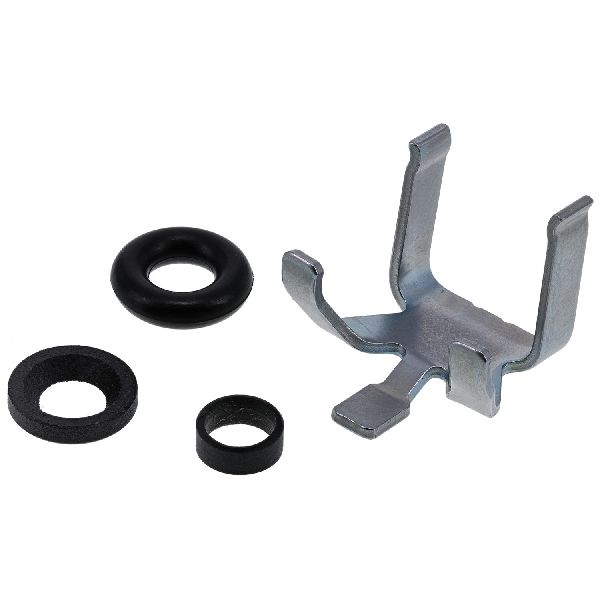
Typical fix: Replace the faulty fuel injector and its associated seals.
Est. part cost: $70-$150 - Wiring Harness or Connector Issue ⚪ Low Probability Engine bay vibrations and heat can cause wires to chafe against brackets or the engine block, leading to an open or shorted circuit. The injector connector's locking clip can also become brittle and break.
How to confirm: Visually inspect the wiring and connector at the cylinder 1 fuel injector for damage, corrosion, or loose pins. Use a noid light to check if the injector connector is receiving a pulse signal from the PCM while the engine is cranking. If there is no pulse, check for continuity on both wires from the injector connector back to the PCM connector.
Typical fix: Repair the damaged section of the wiring harness or replace the pigtail connector.
Est. part cost: $15-$50
Rare But Worth Checking
- Bent or Corroded Pins at PCM Connector:
Diagnosis Steps
- Scan the PCM for all stored trouble codes. Note if P0201 is alone or paired with P0204.
- If P0201 and P0204 are present: Immediately suspect a PCM failure per TSB #01-004/17. Check if your vehicle's VIN is lower than JM1BM**352403 (for Japan-built models). The next step is professional diagnosis to confirm the PCM is a DENSO unit and proceed with replacement if it is. Do not replace injectors first.
- If only P0201 is present: Begin by visually inspecting the wiring harness and connector at the cylinder 1 fuel injector. Look for any damage, corrosion, loose pins, or broken locking clips.
- Use a noid light to test the injector connector. The light should flash consistently when the engine is cranked, indicating the PCM is sending a pulse. If it doesn't flash, a wiring or PCM issue is likely.
- If the noid light flashes, test the injector itself. Turn the engine off. Disconnect the injector and measure its internal resistance with a multimeter. Compare the reading to a known-good cylinder's injector. A reading of infinity (open) or zero (short) confirms failure.
- As a final confirmation, swap the cylinder 1 injector with the cylinder 2 injector. Clear the codes and run the engine. If the code returns as P0202, the injector is confirmed to be faulty. If P0201 returns, the problem is in the wiring or, rarely, the PCM itself.
- If all other tests pass, inspect the PCM connectors for damage or corrosion as a final, rare possibility.
Parts You'll Likely Need
- Powertrain Control Module (PCM)
(OEM #PE07-18-881M (and other VIN-specific revisions like ****-18-881*))— This is the most common cause for P0201 on this vehicle, especially when paired with P0204, due to a known internal defect documented in Mazda TSB #01-004/17.
Trusted brands: Mazda (OEM)
OEM price range: $800-$1300
Aftermarket price range: Not Recommended - Fuel Injector
(OEM #PE01-13-250D (replaces PE01-13-250B, PE01-13-250C, PEAR-13-250))— If the code appears by itself and the PCM is not the cause, the injector itself may have failed electrically.
Trusted brands: Bosch, Denso, Mazda (OEM)
OEM price range: $120-$200
Aftermarket price range: $60-$150
Related Codes That Often Appear With This One
- P0204 — According to Mazda TSB #01-017/16, an internal PCM failure often causes these two codes to appear together as a pair.
- P0301 — A malfunction in the cylinder 1 injector circuit (P0201) prevents proper combustion, directly leading to a misfire in that cylinder. The TSB confirms misfire codes are usually stored at the same time.
- P0304 — If P0204 is also present due to the common PCM fault, a cylinder 4 misfire code is also likely to be stored.
- P0300 — This 'Random Misfire' code can appear if the PCM detects misfires on multiple cylinders, which is common with the paired injector fault.
Technical Service Bulletins (TSBs) & Recalls
- 01-017/16: "ENGINE RUNS ROUGH AND CHECK ENGINE LIGHT ON WITH DTCS P0201 AND P0204 OR P0202 AND P0203". Identifies an internal failure of the DENSO-produced PCM as the cause and lists affected models and VIN ranges.
- 01-004/17: Supersedes the earlier TSB with the same core information, confirming the issue and repair procedure. It clarifies that replacement PCMs have the internal failure eliminated.
- TSB Bulletin #01-004-17-3317a: This manufacturer record notes that vehicles may experience a rough-running engine and a check engine light with P0201 and P0204, and that engine misfire related DTCs (P0301-P0304) are usually stored simultaneously.
- TSB Bulletin #01-004-17: A multi-model manufacturer bulletin confirming that the engine may run rough with the check engine light on specifically when P0201 and P0204 (or P0202 and P0203) are stored.
Platform-Specific Known Issues
- Mazda TSB #01-017/16 (and superseding TSB #01-004/17) explicitly states that on 2014-2016 Mazda3 models built before May 23, 2016 (VIN lower than JM1BM**352403), a combination of codes P0201/P0204 or P0202/P0203 is likely caused by an internal failure of the DENSO-produced PCM.
Mechanic-Grade Diagnostic Values
- Fuel Injector Coil Resistance (Skyactiv-G) — expected: 1.6 - 2.52 ohms at 20°C (68°F). Failure: A reading of 0 ohms (shorted) or OL/infinity (open) on a multimeter.
- Injector Connector Power Supply (Key On, Engine Off) — expected: Approximately 12V (Battery Voltage) on one wire.. Failure: No voltage indicates a problem in the power supply circuit, possibly the INJECTOR 30A fuse or fuel injector relay.
- Injector Pulse Width (IPW) at idle (Scan Tool) — expected: 1-5 milliseconds (ms). Failure: A value of 0 ms for cylinder 1 while other cylinders show normal readings points to a circuit or PCM driver failure.
- Injector Control Circuit (Engine Cranking) — expected: A flashing signal between battery voltage and near-zero volts, observable with a noid light or oscilloscope.. Failure: A constant voltage or no voltage change indicates the PCM is not pulsing the ground to fire the injector.
- Injector Current Draw (Functioning) — expected: Approximately 7-8 amps during operation, visible as a multi-phase pulse on an oscilloscope with a current clamp.. Failure: No current flow. Note: The PCM may cut power to the driver if a fault is detected, requiring a code clear and key cycle to see a brief current spike on a faulty circuit.
Hidden / Shadow Codes Worth Checking
- P0201:00: The ':00' is a Failure Type Code (FTC) that may be displayed on advanced scanners like the Mazda M-MDS. It doesn't add new information to the base code but confirms it's a standard 'no subtype information' fault as defined by ISO 15031-6. (see via Mazda M-MDS or other professional-grade scan tools.)
Scan Tool Commands That Help
- Mazda M-MDS: Active Test: Injector Cut (Simulation Function 'INJ') — To individually disable each fuel injector while monitoring engine RPM (PID: ENG_RPM). If disabling cylinder 1 causes no change in RPM, it confirms that cylinder is not contributing, pointing to a failure in its fuel delivery.
- FORScan: Service Function: 'Fuel Injector Calibration' — After replacing a fuel injector, this function may be required to calibrate the new injector to the PCM for optimal performance. Users have successfully used this function to resolve running issues after injector replacement.
- FORScan: Live Data Monitoring (PIDs) — To monitor injector balance and performance data in real-time while driving. This can help identify intermittent issues that don't appear at idle.
Wiring & Ground Locations
- PCM Pin 1EE — At the main PCM electrical connector.. This is the specific terminal for the cylinder 1 fuel injector control (ground pulse) wire. A continuity test between this pin and the corresponding pin at the injector connector will confirm if the control wire is intact or has an open circuit.
- G02 - Main Engine Compartment Ground — Located on the left side (driver's side in LHD) of the engine compartment, often on the chassis frame rail near the strut tower.. A poor main engine ground can cause widespread, erratic electrical issues, including sensor and actuator faults. Verifying this ground is clean and tight is a crucial early step.
- G08 - Engine Ground — Located at the left rear of the engine assembly.. This is another primary ground point for the engine. A loose or corroded connection here can affect PCM and injector performance.
- Transmission Grounds — There are typically multiple ground points on the transmission housing, including one on top and two on the front.. The engine and transmission are a single electrical unit, and these grounds are critical for the entire powertrain control system. A bad ground here has been known to cause charging system and other electrical faults.
- INJECTOR Fuse (30A) — In the relay and fuse block located in the left rear of the engine compartment.. This fuse supplies power to the fuel injector relay, which in turn powers all the fuel injectors. If this fuse is blown, none of the injectors will have power.
Real Owner Repair Stories
- Auto Repair Guys YouTube Channel (Vehicle undergoing an engine replacement, likely similar platform.) — Check engine light on and misfiring sound immediately after engine replacement.
❌ Tried (didn't work) Initial assumption was a bad or incorrectly installed injector.
✅ What actually fixed it The problem was a loose electrical connector on the fuel injector. The metal retaining spring clip on the connector was not properly seated, causing a poor connection. Securing the connector and clearing the codes resolved the P0204 issue (same principle applies to P0201). - Reddit user r/mazda3 (2015 Mazda 3) — Multiple, seemingly unrelated warning lights on the dashboard ('Christmas tree' effect).
❌ Tried (didn't work) Dealer and independent mechanics could not diagnose the issue initially.
✅ What actually fixed it The root cause was a frayed and heavily corroded main ground strap underneath the vehicle. Replacing the bad ground strap resolved all the electrical warning lights. While not a P0201-specific story, it highlights the importance of checking main grounds when multiple electrical faults appear.
OEM Part Supersession History
PE07-18-881E, G, H, J, K, L→PE07-18-881M— Internal modifications to correct the injector driver circuit failure documented in TSB #01-017/16. The TSB notes that replacement PCMs have the failure eliminated.
Heads up: While the part numbers were superseded, the TSB states the base number did not change. Ordering a used PCM with an early part number (e.g., from a 2014-2015 vehicle) carries a high risk of inheriting the original defect. Always order the latest revision available for the VIN.
Model Year Variations Within This Range
- 2014 - May 22, 2016: Japan-built vehicles with VINs lower than JM1BM**352403 are equipped with the original DENSO PCM that is susceptible to the internal failure causing paired injector codes (P0201/P0204).
- May 23, 2016 - onward: Vehicles built after this date have a corrected PCM from the factory, making the TSB-related failure highly unlikely. For these later models, a P0201 code should be diagnosed as a standard injector, wiring, or (rarely) PCM fault.
Diagnostic Flowchart
Used vs. New Parts: Buying Guide for This Vehicle
When a used part is the smart pick: A used fuel injector from a low-mileage donor vehicle is a reasonable choice if you are trying to save money. Since it's an electrical and mechanical part, it can be tested for resistance before installation.
Donor-vehicle mileage cap: roughly under 80000 miles for the part to have meaningful remaining life.
What to inspect on the donor part:
- Check the resistance of the used injector with a multimeter; it should be within the 1.6-2.52 ohm range.
- Inspect the electrical connector for any corrosion or damage.
- Ensure the tip and O-rings are in good condition, though it's always recommended to install new seals and O-rings.
- Avoid injectors from engines that show signs of heavy sludge or poor maintenance.
OEM-only on this vehicle (don't cheap out):
- Powertrain Control Module (PCM) - This is the most critical part to buy new (or professionally remanufactured and updated) from a reputable source. A used PCM from a 2014-2016 donor vehicle has a very high probability of containing the same internal defect that causes the P0201/P0204 codes, as documented in the TSB. Buying used is likely to repeat the failure.
Aftermarket brands forum-validated for this vehicle:
- Injectors: Bosch, Denso (often the OEM supplier)
- Remanufactured PCMs: Cardone, Flagship One (FS1)
Brands owners have reported issues with on this vehicle:
- Unbranded, no-name fuel injectors or PCMs from online marketplaces should be avoided due to high failure rates and lack of quality control.
Real Owner Stories
Aggregated from forums and TSBs cited above. Mileages and costs reflect what owners reported in those sources.
2014-2016 Mazda Mazda3 Skyactiv-G 2.0L/2.5L
Symptoms: Engine runs rough and the Check Engine Light is on, with diagnostic trouble codes P0201 and P0204 stored in the computer.
What fixed it: Replacement of the DENSO-produced Powertrain Control Module (PCM), which had an internal failure. The new unit required programming to the vehicle.
Cost: $600-$1300
Source hint: TSB #01-004/17: "ENGINE RUNS ROUGH AND CHECK ENGINE LIGHT ON WITH DTCS P0201 AND P0204 OR P0202 AND P0203"
Related OBD-II Codes
Frequently Asked Questions
My 2015 Mazda3 has codes P0201 and P0204 together. Should I replace the injectors first?
Does the PCM failure issue described in the TSB apply to all 2014-2016 Mazda3s?
I only have code P0201. What is the most likely cause on my Mazda3?
Can I buy a used PCM from a junkyard to fix the P0201/P0204 issue?
What is the correct resistance for a fuel injector on my Skyactiv-G engine?
Does this same PCM problem affect other Mazda models like the CX-5 or Mazda6?
How can I test the injector wiring without special tools?
We Have This Part in Stock



The information in this article is provided for general reference and educational purposes only. Vehicle specifications, procedures, and part compatibility can vary by production date, trim level, and region. Always consult your vehicle's factory service manual and verify part numbers before purchasing or performing repairs. Safety-critical components such as airbags, seat belts, and braking systems should be installed by a qualified professional.
- Mazda Mazda3:
- 🧭 Diagnostic Flowchart
- 🛍️ Shop This Part
- What's Unique About the 2014-2016 Mazda Mazda3
- Symptoms You May Notice
- Most Likely Causes
- Rare But Worth Checking
- Diagnosis Steps
- Parts You'll Likely Need
- Related Codes That Often Appear With This One
- Technical Service Bulletins (TSBs) & Recalls
- Platform-Specific Known Issues
- Mechanic-Grade Diagnostic Values
- Hidden / Shadow Codes Worth Checking
- Scan Tool Commands That Help
- Wiring & Ground Locations
- Real Owner Repair Stories
- OEM Part Supersession History
- Model Year Variations Within This Range
- Used vs. New Parts: Buying Guide for This Vehicle
- Real Owner Stories
- 2014-2016 Mazda Mazda3 Skyactiv-G 2.0L/2.5L
- Related OBD-II Codes
- Frequently Asked Questions
- 🎟️ Get 5% Off