

P0201 on 2015-2019 Subaru Outback 2.0L Diesel: Injector Circuit Malfunction Causes and Fixes
Code P0201 on a Subaru Outback diesel points to an electrical problem with the fuel injector in cylinder #1. The most common causes are a failed fuel injector or a wiring issue. Due to the high-pressure diesel system and need for special tools, professional diagnosis is recommended.
- P0201 indicates an electrical fault with the cylinder 1 fuel injector, not necessarily a mechanical engine problem.
- The most likely causes are a bad fuel injector or a damaged wire/connector.
- The Subaru EE20 diesel engine has a known history of injector problems, making the injector itself a prime suspect.
- Due to the high-pressure common-rail system and the need to code new Piezo injectors to the computer, this repair should be left to a professional mechanic with diesel experience.
- Always perform thorough electrical diagnosis before replacing parts. Swapping the injector to another cylinder is the best way to confirm if the injector is the root cause.
What's Unique About the 2015-2019 Subaru Outback
The 2015-2019 Subaru Outback uses the Euro 6 version of the EE20 boxer diesel engine. Unlike earlier versions which used solenoid-style injectors, this engine is equipped with high-pressure Denso Piezo-style fuel injectors to meet stricter emissions standards. While the P0201 code itself is a standard electrical fault, injector failures are a known issue on the EE20 platform, making the injector itself a high-probability cause. Diagnosis and replacement of these injectors are more complex than on gasoline engines and require specialized tools and coding the new injector to the ECU.
Symptoms You May Notice
- Check Engine Light is on
- Flashing DPF (Diesel Particulate Filter) light in some cases
- Rough or shaking engine idle
- Engine misfires, sometimes felt as a violent shake
- Poor acceleration and loss of power, hesitation
- Reduced fuel economy
- Hard starting
- Engine may enter 'limp mode' with severely restricted power
- Replacing spark plugs (diesel engines do not have them).
- Replacing the fuel filter without diagnosing the electrical circuit first. While a clogged filter can cause performance issues, it will not cause a P0201 circuit code.
- Replacing the DPF without addressing the root cause. A faulty injector can cause DPF issues, but replacing the DPF won't fix the P0201 code.
Most Likely Causes
- Faulty Cylinder 1 Fuel Injector 🔴 High Probability → Shop Fuel Injector Injector failure is a documented common problem on the Subaru EE20 diesel engine platform. The Piezo injectors can fail internally due to an open/short in the coil or become restricted by carbon buildup.
How to confirm: The most definitive test is to swap the cylinder 1 injector with another cylinder (e.g., cylinder 3). Clear the codes, run the engine, and if the code changes to P0203, the injector is confirmed to be faulty. A technician can also test the injector's internal resistance with a multimeter, comparing it to the manufacturer's specification. A reading of infinite ohms (open) or very low ohms (short) indicates a failed injector.
Typical fix: Replace the faulty fuel injector. The new injector must be coded to the ECM using a diagnostic tool to ensure correct fuel delivery.
Est. part cost: $250-$500 - Wiring Harness or Connector Damage 🟡 Medium Probability Engine vibration and heat can cause wiring to chafe, break, or corrode over time. The injector connector itself can also develop loose pins or corrosion, leading to an open or short circuit.
How to confirm: Visually inspect the wiring harness going to the cylinder 1 injector for any signs of damage, melting, or chafing near hot surfaces. Check the connector for corrosion or loose pins. Use a multimeter to test for continuity and proper voltage (should be near 12V with key on) at the connector.
Typical fix: Repair the broken or shorted section of wire. If the connector is damaged, replace it with a new pigtail connector.
Est. part cost: $15-$50 - Failed Powertrain Control Module (PCM/ECM) ⚪ Low Probability → Shop Engine Control Module (ECM)
How to confirm: This is diagnosed by exclusion. If the injector and wiring have both been tested and are known to be good, the PCM's internal injector driver is the likely culprit. This is a rare failure.
Typical fix: Replace and reprogram the Powertrain Control Module. This is an expensive repair and should only be performed after all other possibilities are exhausted.
Est. part cost: $600-$1200
Diagnosis Steps
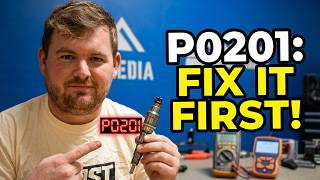
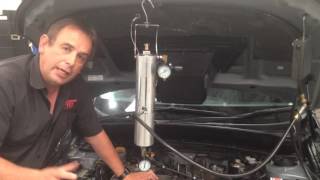
- Read the trouble codes with an OBD-II scanner to confirm P0201 is the primary code. 🎬 Watch: What to check first when you see code P0201. Note any other codes like P0301 or P0263.
- Visually inspect the wiring harness and connector for the cylinder 1 fuel injector. Look for any signs of chafing, melting, corrosion, or loose pins. Pay close attention to where the harness may rub against the engine.
- Disconnect the injector connector. With the key on and engine off, use a multimeter to verify that one of the pins on the connector has battery voltage (approx. 12V).
- Use a 'noid light' plugged into the injector connector. Crank the engine and check if the light flashes. A flashing light indicates the ECM is sending the command to fire the injector, suggesting the problem is the injector itself. No flash points to a wiring or ECM issue.
- If a noid light isn't available, check for a pulsing ground signal from the ECM on the other wire in the connector while cranking.
- With the ignition off, measure the internal resistance of the fuel injector using a multimeter set to Ohms. Compare the reading to the manufacturer's specifications. While specs vary, a reading that is infinite (open) or very low (short) indicates a bad injector. Compare the reading to an adjacent injector for a quick reference.
- If tools are available, perform an injector swap. Move the cylinder 1 injector to cylinder 2's position and vice-versa. Clear the codes and run the engine. If the code returns as P0202, the injector is faulty. If P0201 returns, the issue is in the wiring or ECM.
- If the injector and wiring are confirmed good, the final step is to suspect the PCM. This requires advanced diagnostics and should be left to a professional.
Parts You'll Likely Need
- Fuel Injector (Cylinder 1)
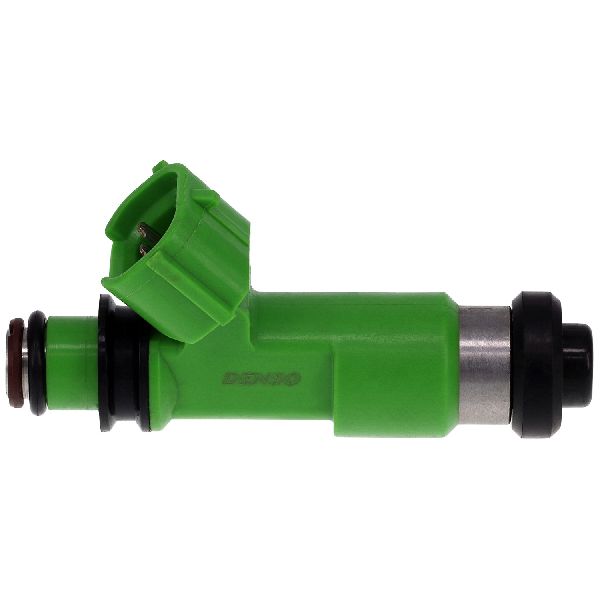
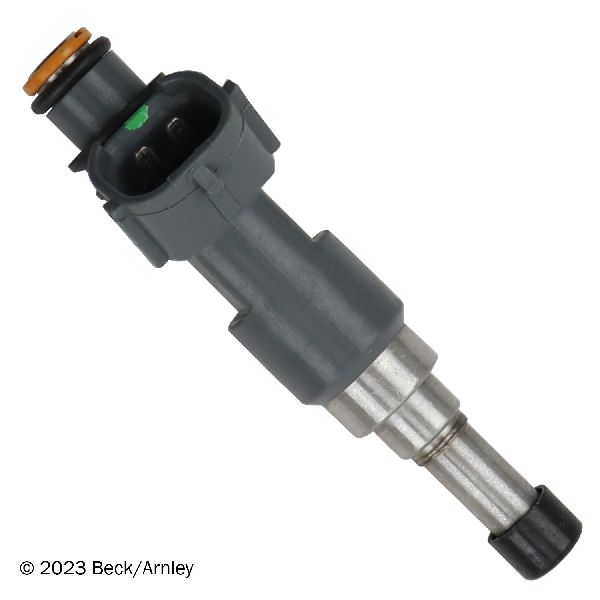
(OEM #16613AA030 (for Euro 5, verify for Euro 6))— This is the most common failure point for a P0201 code on the EE20 engine, which has a history of injector issues.
Trusted brands: Denso (OEM supplier)
OEM price range: $350-$500
Aftermarket price range: $250-$400 - Fuel Injector Connector Pigtail — If the fault is caused by a corroded or damaged electrical connector at the injector, replacing the connector is the required fix.
Trusted brands: Standard Motor Products, Dorman, iWire
OEM price range: $30-$60
Aftermarket price range: $15-$40
Related Codes That Often Appear With This One
- P0301 — P0301 is 'Cylinder 1 Misfire Detected'. Since P0201 indicates a problem with the cylinder 1 injector circuit, that cylinder cannot get the correct amount of fuel, leading to a misfire.
- P0263 — P0263 is 'Cylinder 1 Contribution/Balance'. This code is set when the ECM detects that cylinder 1 is not producing as much power as the other cylinders, which is a direct consequence of the injector malfunction indicated by P0201.
- P0087 — P0087 is 'Fuel Rail/System Pressure - Too Low'. While not a direct companion code, a severely malfunctioning injector or a related high-pressure pump issue on the EE20 can sometimes lead to overall pressure problems.
Technical Service Bulletins (TSBs) & Recalls
- TSB 09-74-21R: This service bulletin provides a procedure for cleaning carbon deposits from fuel injectors and internal engine components using Subaru P.E.A. cleaner. It is recommended to perform this cleaning procedure before replacing injectors for misfire or performance issues to rule out carbon buildup as the cause.
- TSB 09-81-21R: Announces a design change to the fuel injector assembly (for gasoline engines, but relevant context) to enhance durability of the internal needle flange to prevent wear that could restrict fuel flow. It reinforces the diagnostic principle of performing carbon cleaning before injector replacement.
Platform-Specific Known Issues
- The EE20 diesel engine is known to be susceptible to fuel injector failure.
- The 2015+ Euro 6 version of this engine uses Piezo injectors which require coding to the ECM upon replacement. Failure to code the new injector can result in poor performance or continued running issues.
- Early EE20 engines (pre-2013) were notorious for crankshaft failures, though this is less common on the 2015+ models.
Mechanic-Grade Diagnostic Values
- Piezo Injector Internal Resistance — expected: Approximately 180-200 kOhms (Note: This is much higher than older solenoid injectors). Failure: A reading of infinite ohms (open circuit) or significantly outside the expected range.
- Solenoid Injector Internal Resistance (for comparison with older EE20s) — expected: Approximately 0.45 Ohms. Some sources cite ranges up to 2.8-3.6 Ω for other solenoid types.. Failure: Open circuit (infinite ohms) or a direct short (near zero ohms).
- Injector Connector Voltage (Key On, Engine Off) — expected: Approximately 12V on the power supply wire.. Failure: Low or no voltage indicates a problem in the supply circuit, possibly a fuse or relay.
- Injector Return Flow (Leak-off test) — expected: Minimal and consistent flow across all injectors. A common acceptable limit is <160 ml/30 seconds.. Failure: An injector with significantly higher return flow (>240 ml/30 seconds) is internally worn or damaged and must be replaced.
Scan Tool Commands That Help
- Subaru Select Monitor (SSM) or equivalent professional scan tool: Injector Quantity Compensation / Injector Coding — This function is mandatory after replacing a fuel injector on the EE20 common rail diesel. Each injector has a unique multi-digit calibration code printed on it, which must be programmed into the ECM to ensure precise fuel delivery and engine balance.
- Subaru Select Monitor (SSM) or equivalent professional scan tool: Injector Actuation Test — This bidirectional test allows a technician to command the ECM to fire a specific injector while the engine is off. Listening for an audible click from the injector (with a stethoscope) can quickly confirm if the injector's solenoid/piezo stack is responding to the electrical command.
Wiring & Ground Locations
- Engine Harness Grounds — On top of the engine, underneath the intake manifold, there are ground points for the main engine wiring loom. These are typically ring terminals secured by 12mm bolts to the engine block.. The wiring loom that includes the fuel injector circuits is grounded at these points. A loose or corroded ground here can cause intermittent and difficult-to-diagnose electrical faults for all injectors, not just one.
- Chassis to Engine Ground Straps — There are typically braided ground straps connecting the engine block to the vehicle's chassis, often near the strut towers or firewall.. While a failure here usually causes multiple, widespread electrical issues, a degraded ground can introduce electrical noise and voltage drops that may affect sensitive components like the ECM's injector drivers.
- Injector Connector Pins — The 2-pin connector directly on the fuel injector.. One pin is the 12V power supply (Key On), and the other is the ground-side trigger from the ECM. Testing for voltage and the pulsing ground signal at these specific pins is the core of diagnosing the P0201 circuit.
OEM Part Supersession History
295050-0250→295050-0251— Minor revision or manufacturing update by Denso.
Heads up: The parts are generally considered interchangeable, but it is always best practice to replace injectors in sets or ensure the replacement matches the existing parts.Euro 5 Solenoid Injectors (e.g., G3 type)→Euro 6 Piezo Injectors— Major engine redesign for 2015+ models to meet stricter Euro 6 emissions standards.
Heads up: Euro 5 (solenoid) and Euro 6 (piezo) injectors are completely different and cannot be interchanged. The cylinder heads, wiring, and ECM driver circuits are all different.
Model Year Variations Within This Range
- 2015-2019: These models use the Euro 6 version of the EE20 engine, which is a significant update from the pre-2015 Euro 4 and Euro 5 versions. Key differences include the switch from solenoid to Piezo injectors, changes to the cylinder heads, and a more complex emissions system. Diagnostic procedures and parts are not interchangeable with earlier models.
Diagnostic Flowchart
Other Known Issues on This Vehicle
Issues unrelated to this code that are worth knowing about as an owner of this generation:
- Crankshaft Failure / Bottom-End Failure 🔴 High — Most common on pre-2013 Euro 4/5 engines, but the reputation lingers. Failures were attributed to design flaws, including the use of a cast-iron insert in the aluminum block and incorrect assembly torque, leading to block cracking or crank journal failure. Later Euro 6 models are considered more reliable, especially when paired with a CVT.
- Diesel Particulate Filter (DPF) Clogging 🟠 Medium — Common on vehicles used for frequent short trips, which prevents the DPF from reaching the temperature needed for automatic regeneration. This leads to a flashing DPF light, loss of power, and can require a forced regeneration at a dealer. Incorrect service procedures, like not resetting the oil dilution counter, can also trigger DPF warnings.
- Oil Dilution 🟠 Medium — A consequence of the DPF regeneration process, where diesel fuel can seep past piston rings and contaminate the engine oil. This thins the oil, reducing its lubricating properties and accelerating engine wear. It is critical to use the correct low-SAPS oil and reset the oil dilution counter at every service.
Used vs. New Parts: Buying Guide for This Vehicle
When a used part is the smart pick: For this specific fault on this engine, buying a used injector is a high-risk, low-reward strategy. Given that injectors are a known failure point and require specialized coding, a used part offers no guarantee of longevity and may not be accepted by the ECM if its calibration code is unreadable or damaged. A used wiring harness or connector pigtail from a low-mileage donor vehicle is a reasonable choice if the original is physically damaged.
Donor-vehicle mileage cap: roughly under 60000 miles for the part to have meaningful remaining life.
What to inspect on the donor part:
- For a used injector: Ensure the calibration code on the injector body is perfectly legible.
- For a used injector: The nozzle tip should be free of heavy carbon buildup or signs of melting.
- For a used injector: The electrical connector pins should be clean, straight, and free of corrosion.
- For a wiring harness: Check for any signs of brittleness, cracking, or previous repairs (e.g., tape, butt connectors).
OEM-only on this vehicle (don't cheap out):
- Fuel Injector: Due to the precision, reliability issues, and mandatory ECM coding, using a new or professionally remanufactured Denso (OEM) injector is strongly recommended.
Aftermarket brands forum-validated for this vehicle:
- Denso (OEM supplier for the injectors)
Brands owners have reported issues with on this vehicle:
- Unknown, no-name injectors from online marketplaces. The quality control and calibration of these parts are highly suspect and can lead to poor performance or even engine damage.
Real Owner Stories
Aggregated from forums and TSBs cited above. Mileages and costs reflect what owners reported in those sources.
2016 Subaru Forester EE20 Diesel
Symptoms: Recurring flashing DPF light despite following manual procedures for highway driving to enable regeneration.
What fixed it: The source highlights the sensitivity of the DPF system and notes that incorrect service procedures, like not resetting the oil dilution counter, can trigger these warnings.
Source hint: Reddit (r/SubaruForester) - Thread 'Diesel particulate filter (DPF) issues with Subaru forester'
2015+ Subaru Outback EE20 Diesel
Symptoms: Clutch vibrations that felt like engine issues.
What fixed it: The vibrations were actually due to crankshaft end play from worn thrust bearings, a known issue on the EE20 platform.
Source hint: Reddit (r/Justrolledintotheshop) - Thread 'Subaru EE20 diesel, definitely not a common sight here in the North American market.'
Related OBD-II Codes
Frequently Asked Questions
I have a 2015+ Euro 6 EE20 diesel; do I need to do anything special when replacing the Cylinder 1 injector?
My Outback is misfiring; should I replace the injector immediately?
Can I swap injectors between cylinders to test if the P0201 code is actually a bad injector?
Is the P0201 code related to the DPF light flashing on my dashboard?
How can I tell if the P0201 code is a wiring issue rather than a failed injector?
Helpful Videos
We Have This Part in Stock


The information in this article is provided for general reference and educational purposes only. Vehicle specifications, procedures, and part compatibility can vary by production date, trim level, and region. Always consult your vehicle's factory service manual and verify part numbers before purchasing or performing repairs. Safety-critical components such as airbags, seat belts, and braking systems should be installed by a qualified professional.
- Subaru Outback:
- 🧭 Diagnostic Flowchart
- 🎬 Helpful Videos
- 🛍️ Shop This Part
- What's Unique About the 2015-2019 Subaru Outback
- Symptoms You May Notice
- Most Likely Causes
- Diagnosis Steps
- Parts You'll Likely Need
- Related Codes That Often Appear With This One
- Technical Service Bulletins (TSBs) & Recalls
- Platform-Specific Known Issues
- Mechanic-Grade Diagnostic Values
- Scan Tool Commands That Help
- Wiring & Ground Locations
- OEM Part Supersession History
- Model Year Variations Within This Range
- Other Known Issues on This Vehicle
- Used vs. New Parts: Buying Guide for This Vehicle
- Real Owner Stories
- 2016 Subaru Forester EE20 Diesel
- 2015+ Subaru Outback EE20 Diesel
- Related OBD-II Codes
- Frequently Asked Questions
- 🎟️ Get 5% Off