

P0202 on 2005-2008 Audi A4 2.0T: Injector Circuit Malfunction Cylinder 2 Causes and Fixes
This code indicates an electrical fault in the cylinder 2 fuel injector circuit. The most common causes on the B7 Audi A4 are a failed fuel injector or a damaged wiring harness. A replacement Bosch (OEM) injector costs around $80-$120, and DIY replacement is moderately difficult due to the intake manifold needing removal.
- P0202 is an electrical circuit code for the cylinder 2 injector, not a fuel flow problem.
- The two most likely causes are a bad fuel injector or a damaged wiring harness due to engine heat.
- The most reliable diagnostic step is to swap the cylinder 2 injector with one from another cylinder and see if the fault code 'follows' the injector.
- Repairing this code requires removing the intake manifold, making it a more involved job than on many other vehicles.
- Always replace the Teflon injector seals when an injector is reinstalled to prevent dangerous fuel leaks.
What's Unique About the 2005-2008 Audi A4
The 2005-2008 (B7) Audi A4 uses the EA113 2.0T TFSI engine. On this platform, the fuel injector wiring harness is routed in a way that exposes it to significant engine heat. Over time, this heat can make the wiring insulation and plastic connectors brittle, leading to cracks and breaks that cause an open circuit. This makes wiring failure a particularly common cause for a P0202 code, rivaling the frequency of injector failure itself. The injector connectors themselves are also known for their plastic locking tabs becoming brittle and breaking, leading to poor connections.
Symptoms You May Notice
- Check Engine Light is on
- Rough, unstable idle
- Engine misfires, especially under load (may be felt as shaking or stumbling)
- Noticeable loss of engine power and poor acceleration
- Engine hesitation
- Hard starting or extended cranking time
- Smell of unburnt fuel from the exhaust
- Flashing Check Engine Light (if misfire is severe)
- Replacing spark plugs or ignition coils. While these can cause a misfire (P0302), they will not cause an injector circuit code like P0202.
- Assuming the injector is just 'clogged'. P0202 is an electrical fault code, not a fuel flow or pressure code. Fuel injector cleaning will not fix an open circuit malfunction.
Most Likely Causes
- Failed Cylinder 2 Fuel Injector 🔴 High Probability → Shop Fuel Injector Direct injection (FSI) injectors operate under high pressure and heat. The internal electronic coil can fail over time, creating an open circuit. This is a common failure mode for these injectors.
How to confirm: Swap the fuel injector from cylinder 2 with an injector from another cylinder (e.g., cylinder 1). Clear the codes and run the engine. If the fault code changes to P0201, the injector is confirmed to be faulty. Alternatively, test the injector's resistance with a multimeter. A good injector should have a resistance between 1.4 and 2.6 Ohms. A reading of 'OL' (Open Line) or a value significantly outside this range indicates failure.
Typical fix: Replace the faulty fuel injector. It is mandatory to also replace the single-use Teflon seal and retaining clip using a special seal installation tool. It is often recommended to replace all four injectors at once on higher mileage vehicles to ensure balanced fueling and prevent future failures.
Est. part cost: $80-$150 for one OEM-quality injector. - Damaged Injector Wiring Harness or Connector 🔴 High Probability → Shop Engine Wiring Harness The engine bay heat causes the wiring harness insulation to become brittle and crack over time, leading to shorts or open circuits. The connector itself can also become damaged, with broken locking tabs or corroded terminals being common points of failure.
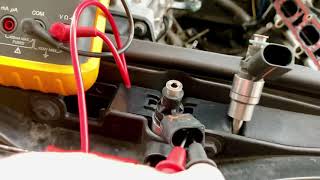
How to confirm: Visually inspect the wiring going to the cylinder 2 injector for cracks, chafing, or melted insulation. Wiggle the connector and harness with the engine running to see if it affects the idle. Use a 'noid light' in the injector connector; a steady flashing light while cranking means the wiring and PCM are likely good. If the noid light does not flash, check for continuity on the two wires for the #2 injector between the injector connector and the main ECU connector. 🎬 Watch: How to test the injector circuit with a meter Pay close attention to the 8-pin connector (T8I) between the injector sub-harness and the main engine harness, as this is a common point of failure noted in TSBs.
Typical fix: If only the connector is damaged, a new pigtail (repair connector) can be spliced in. If the wiring itself is damaged, the injector sub-harness may need to be replaced. Splicing requires proper weather-proof butt connectors or solder and heat shrink.
Est. part cost: $25-$50 for a connector pigtail, $100-$200 for a sub-harness.
Rare But Worth Checking
- Faulty Powertrain Control Module (PCM/ECU): → Shop Engine Control Module (ECM) This is very rare, but possible. The internal driver circuit for the injector can fail. This should only be considered after definitively ruling out the injector and wiring as the cause. Multiple injector circuit codes (e.g., P0201, P0202, P0203) appearing simultaneously could point towards an ECU driver failure. A diagnostic step is to run a temporary overlay wire from the ECU to the injector; if the fault remains, the ECU is highly suspect.
Diagnosis Steps
- Read fault codes with an OBD-II scanner to confirm P0202 is present and note any other codes, like P0302.
- Visually inspect the electrical connector and wiring for the cylinder 2 fuel injector (second from the front of the engine). Look for obvious damage like cracked wires, a broken connector tab, or a loose connection.
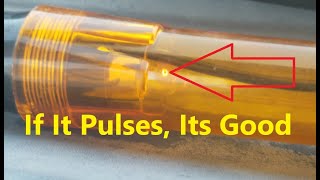
- Disconnect the injector connector and plug in a 'noid light'. Crank the engine. A consistent, flashing light indicates the PCM and wiring are sending the signal correctly, pointing to a bad injector.
- If the noid light does not flash, or stays on solid, there is a problem in the wiring or the PCM.
- If the noid light test is inconclusive, test the injector's internal resistance. Disconnect the injector and use a multimeter set to Ohms to measure across the two pins. A good injector should read between 1.4 and 2.6 Ohms. An open circuit (OL) confirms a failed injector.
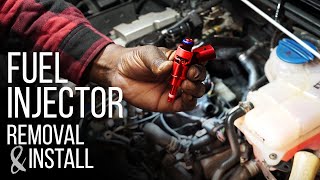
- If the resistance is good, perform an injector swap to be certain. Label and swap the fuel injectors between cylinder 2 and cylinder 1. This requires removing the intake manifold. 🎬 Watch: Step-by-step fuel injector removal and installation guide
- Reassemble, clear the codes, and start the engine. If the code returns as P0201 ('Injector Circuit / Open - Cylinder 1'), the fuel injector you moved is the faulty part.
- If the code remains P0202, the injector is good, and the problem lies within the wiring harness or the PCM itself.
- To further test the wiring, use a multimeter to check for continuity from the injector connector pins back to the corresponding pins at the PCM connector. Check for shorts to ground as well.
Parts You'll Likely Need
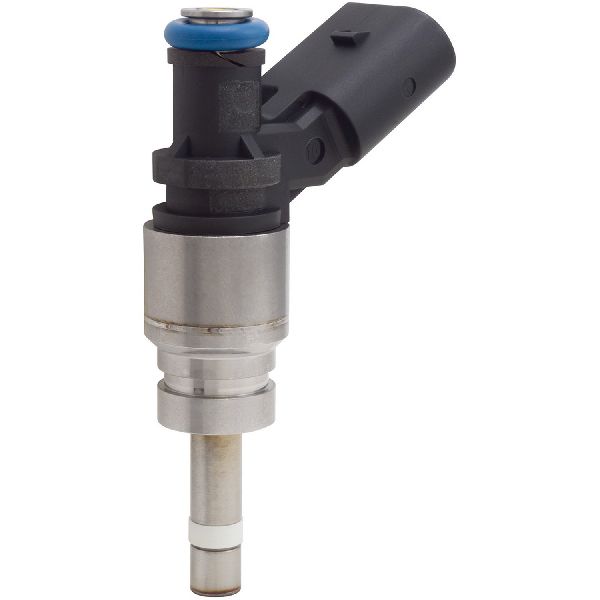
- Fuel Injector
(OEM #06F906036A)— This is the most common component to fail internally, causing an open circuit. Bosch is the original equipment manufacturer.
Trusted brands: Bosch, Hitachi
OEM price range: $120-$180
Aftermarket price range: $80-$130 - Fuel Injector Seal Kit
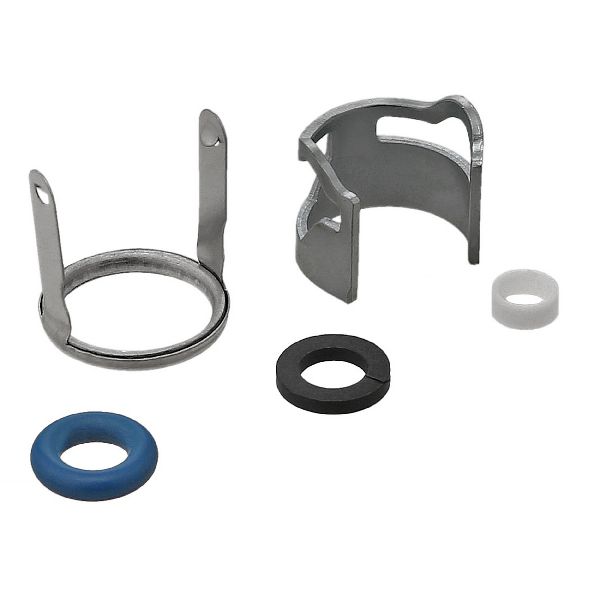
(OEM #06D998907)— The Teflon injector seals are single-use and must be replaced any time an injector is removed to prevent dangerous fuel and compression leaks. A special tool is required for proper installation.
Trusted brands: OEM Audi/VW, Elring
OEM price range: $15-$25
Aftermarket price range: $10-$20 - Fuel Injector Connector Pigtail
(OEM #4H0973702A)— The plastic locking tab on the connector often breaks from heat and age, or the terminals can corrode, causing a poor connection. Splicing in a new pigtail is easier than replacing the whole harness.
Trusted brands: Audi/VW Genuine, Dorman
OEM price range: $30-$50
Aftermarket price range: $15-$30
Related Codes That Often Appear With This One
- P0302 — P0302 means 'Cylinder 2 Misfire Detected'. Since P0202 indicates the cylinder 2 injector isn't firing, that cylinder isn't getting fuel, which directly causes a misfire. 🎬 Watch: How to solve common Audi misfire issues
- P0171 — P0171 means 'System Too Lean (Bank 1)'. An injector that isn't firing creates a lean condition (too much air, not enough fuel) that can be detected by the oxygen sensors, sometimes triggering this code alongside the injector fault.
Technical Service Bulletins (TSBs) & Recalls
- TT 97-18-02 (2053319) — Cylinders 1,2,3 or 4 - Injector Circuit Faults P0201, P0202, P0203 or P0204
Platform-Specific Known Issues
Mechanic-Grade Diagnostic Values
- Fuel Injector Coil Resistance — expected: 1.4 - 2.6 Ohms at room temperature. Failure: A reading of 'OL' (Open Line/infinite resistance) or a value significantly outside the expected range.
- High-Pressure Fuel Rail Pressure (at idle, warm engine) — expected: ~40 bar (~580 PSI). Failure: This value is for general system health; it does not directly diagnose the P0202 electrical fault but can spot mechanical injector issues (leaks).
- High-Pressure Fuel Rail Leak-Down Test (warm engine off) — expected: Pressure should rise above idle pressure (e.g., >60 bar) due to heat soak and hold for several minutes.. Failure: If pressure fails to rise or drops off quickly, it can indicate a mechanically leaking injector or a bad check valve in the high-pressure fuel pump.
Scan Tool Commands That Help
- VCDS (VAG-COM): Engine (01) -> Measuring Blocks (08) -> Group 106 — To monitor the high-pressure fuel rail pressure in real-time on CAN-based ECUs like those in the B7 A4. This helps assess the overall health of the high-pressure fuel system.
- VCDS (VAG-COM): Engine (01) -> Basic Settings (04) -> Group 060 — To perform a Throttle Body Adaptation. This should be done after removing and reinstalling the intake manifold for injector replacement to ensure the ECU has the correct baseline for the throttle plate position.
Wiring & Ground Locations
- ECU (PCM) — In the engine bay plenum chamber, under the plastic cowl cover near the base of the windshield, typically inside a black protective box.. This is the source of the command signal for the injector. All wiring tests for the injector circuit will terminate at this module's connector.
- G12 - ECU Ground — In the engine compartment, at the center of the firewall/plenum chamber.. This is a primary ground point for the Engine Control Module. A poor connection here can cause unstable ECU operation and lead to a variety of phantom electrical faults, including injector circuit codes.
- Engine Ground Strap — A braided strap connecting the engine block (often near the turbo or engine mount) to the vehicle's chassis/frame rail.. A corroded or loose main engine ground can create a floating ground, causing electrical noise and voltage drops that can interfere with sensor and actuator operation, potentially triggering a P0202 code intermittently.
- T8I Connector — The 8-pin electrical connector that joins the fuel injector sub-harness to the main engine wiring harness.. An Audi TSB specifically highlights this connector as a potential point of failure due to corrosion or loose terminals, which would cause an open circuit to one or more injectors.
Real Owner Repair Stories
- YouTube user 'ml414skidoo' (Audi A4 (B7 2.0T implied)) — Cylinder 2 misfire with a P0202 code.
❌ Tried (didn't work) Installing a new set of cheap injectors purchased from eBay.
✅ What actually fixed it The P0202 code appeared one day after installing the new eBay injectors. Testing the #2 injector with a multimeter showed it was an open circuit. The owner replaced the failed new injector with one of his old, known-good injectors, which resolved the fault. - Ross-Tech Forums user (2012 VW Eos 2.0T TSI (similar EA113 family principles)) — Persistent misfire on one cylinder that followed the injector after swapping.
❌ Tried (didn't work) Replacing a single injector with another cheap one from Amazon., Receiving a warranty replacement set and trying another new injector.
✅ What actually fixed it The user went through multiple sets of low-cost Amazon injectors, with several being dead-on-arrival or failing quickly. The story highlights the extremely high failure rate and poor quality control of unbranded injectors from online marketplaces, causing the P020x fault to persist despite replacing the part. The implication is that using a reputable brand (Bosch, OEM) is the real fix.
OEM Part Supersession History
06F906036A→06F906036F (and others, but 'A' remains common)— Minor revisions by the manufacturer. For the B7 2.0T application, these revisions are generally considered cross-compatible.
Heads up: No major incompatibility is noted for the B7 2.0T (EA113) engine. However, it is critical not to confuse this with injectors for the later EA888 engine (found in B8 A4s), such as those with part number starting in 06H, as they are not compatible.
Model Year Variations Within This Range
- 2005-2008: The 2.0T engine came with different engine codes, mainly BPG (2005.5-2006) and BWT (2007-2008). While there are minor internal and tuning differences, the fuel injectors, wiring harness design, and the causes/fixes for a P0202 code are identical across these B7 platform engine codes.
Diagnostic Flowchart
Other Known Issues on This Vehicle
Issues unrelated to this code that are worth knowing about as an owner of this generation:
- HPFP Cam Follower Wear 🔴 High — Very common. Recommended inspection every 20,000-30,000 miles. Failure can cause catastrophic damage to the high-pressure fuel pump and camshaft.
- PCV System Failure 🟠 Medium — Common failure item. The diaphragm in the PCV valve can tear, causing excessive oil consumption, rough idle, and oil leaks due to improper crankcase pressure. (Ref: Audi TSB 2015505/10 addresses updated PCV valve designs.)
- Excessive Oil Consumption 🟠 Medium — Widespread issue, often attributed to piston ring design. Many owners report consuming 1 quart of oil every 1,000-3,000 miles. While Audi has stated this is 'normal', it is a notable concern for owners.
- Diverter Valve (DV) Failure 🟡 Low → Shop Turbocharger — The original diaphragm-style DV is prone to tearing, causing a loss of boost pressure, reduced power, and a 'flutter' sound. An updated piston-style valve is the common fix.
- Clogged Oil Pickup Tube 🔴 High — Less common but severe. Sludge or debris from other failing plastic components can clog the oil pump pickup tube, leading to oil starvation and major engine damage.
Used vs. New Parts: Buying Guide for This Vehicle
When a used part is the smart pick: A used injector sub-harness from a low-mileage, accident-damaged vehicle can be a cost-effective fix if the original is confirmed faulty. A used ECU is a viable last resort, but it must match the original part number, engine code, and transmission exactly, and will likely require immobilizer programming.
Donor-vehicle mileage cap: roughly under 80000 miles for the part to have meaningful remaining life.
What to inspect on the donor part:
- For wiring harness: Check that all connector locking tabs are intact and not brittle. Squeeze the loom to feel for crunchy, stiff wires, which indicates heat damage.
- For injectors: Look for injectors from a single, known-running engine. Avoid mixed sets. If possible, ask the seller to measure the resistance for you.
- For an ECU: Verify the part number on the case sticker is an exact match. Check for any signs of water intrusion or corrosion on the case and pins.
OEM-only on this vehicle (don't cheap out):
- Fuel Injector Teflon Seals (Part # 06D998907): Never reuse these. Aftermarket seals are a gamble that can lead to dangerous high-pressure fuel leaks or compression loss. Always use OEM or a top-tier OE supplier like Elring.
Aftermarket brands forum-validated for this vehicle:
- Bosch (OEM supplier for injectors)
- Hitachi (OEM supplier for injectors)
Brands owners have reported issues with on this vehicle:
- Unbranded, generic injectors from online marketplaces (eBay, Amazon). Forum and video evidence shows these have an exceptionally high rate of out-of-box failure and are a common cause of repeat repairs.
Real Owner Stories
Aggregated from forums and TSBs cited above. Mileages and costs reflect what owners reported in those sources.
2005-2008 Audi A4 2.0T
Symptoms: The owner experienced P0202 and P0302 codes. To diagnose, they performed an injector swap between cylinders.
What fixed it: The fault moved to the new cylinder (confirmed by codes P0201/P0301), proving the fuel injector was the failed component.
Source hint: Audizine Forum Thread titled 'p0202 and p0302'
2005-2008 Audi A4 2.0T
Symptoms: After installing aftermarket eBay injectors, the car threw a P0202 code after only one day of use.
What fixed it: Testing with a multimeter showed the aftermarket injector had an 'OL' (Open Line) reading. Replacing it with a known-good injector showing 1.3-1.4 Ohms resolved the issue.
Source hint: ml414skidoo - Audi A4 eBay Injectors. Open Circuit
2005-2008 Audi A4 2.0T
Symptoms: The owner diagnosed a P0202 code using a noid light, but the light failed to illuminate at the cylinder 2 connector.
What fixed it: Because the noid light did not flash, the failure was identified as a wiring or ECU issue rather than a mechanical injector failure.
Source hint: Ross-Tech Forums - P0202 - injector cylinder 2 - (N31) circuit malfunction
Related OBD-II Codes
Frequently Asked Questions
My Audi A4 has a P0202 code; is there a specific Technical Service Bulletin I should check?
What is the correct resistance for a 2.0T TFSI fuel injector?
Can I just replace the injector on cylinder 2, or do I need other parts?
I've heard the wiring harness is a problem on the B7 A4. Where does it usually fail?
If I swap injectors to troubleshoot P0202, what should I look for?
Will a 'noid light' work for diagnosing this Audi's injector circuit?
Helpful Videos

We Have This Part in Stock



The information in this article is provided for general reference and educational purposes only. Vehicle specifications, procedures, and part compatibility can vary by production date, trim level, and region. Always consult your vehicle's factory service manual and verify part numbers before purchasing or performing repairs. Safety-critical components such as airbags, seat belts, and braking systems should be installed by a qualified professional.
- Audi A4:
- 🧭 Diagnostic Flowchart
- 🎬 Helpful Videos
- 🛍️ Shop This Part
- What's Unique About the 2005-2008 Audi A4
- Symptoms You May Notice
- Most Likely Causes
- Rare But Worth Checking
- Diagnosis Steps
- Parts You'll Likely Need
- Related Codes That Often Appear With This One
- Technical Service Bulletins (TSBs) & Recalls
- Platform-Specific Known Issues
- Mechanic-Grade Diagnostic Values
- Scan Tool Commands That Help
- Wiring & Ground Locations
- Real Owner Repair Stories
- OEM Part Supersession History
- Model Year Variations Within This Range
- Other Known Issues on This Vehicle
- Used vs. New Parts: Buying Guide for This Vehicle
- Real Owner Stories
- 2005-2008 Audi A4 2.0T
- 2005-2008 Audi A4 2.0T
- 2005-2008 Audi A4 2.0T
- Related OBD-II Codes
- Frequently Asked Questions
- 🎟️ Get 5% Off