

P0202 on 2009-2016 Audi A4 2.0T: Injector Circuit Malfunction Cylinder 2 Causes and Fixes
On a 2009-2016 Audi A4 2.0T, code P0202 is most often caused by a failed fuel injector in cylinder 2. A faulty injector wiring harness is the second most likely cause. Expect to pay around $50-$120 for a quality aftermarket injector (Bosch is the OEM supplier). If the wiring harness is the culprit, the updated OEM part (06L971627AB) is recommended for its improved durability.
- P0202 is an electrical circuit code for the cylinder 2 fuel injector, not a fuel flow or pressure problem.
- The most common cause is a failed fuel injector, followed by a damaged injector wiring harness.
- The definitive way to diagnose a bad injector is to swap it with one from another cylinder and see if the fault code follows the injector.
- Accessing the injectors on the 2.0T TFSI engine requires removing the intake manifold, making this a moderately difficult (4/5) DIY job.
- Always replace the Teflon injector seals when an injector is removed and reinstalled.
What's Unique About the 2009-2016 Audi A4
The 2.0T TFSI engine in the B8/B8.5 generation Audi A4 uses a direct injection system, which places the injectors inside the combustion chamber. Accessing them requires removing the entire intake manifold, making what would be a simple job on other cars more labor-intensive. The injector wiring harness is routed under the intake manifold and can become brittle from heat cycles, leading to cracked insulation or connection issues, especially after being disturbed for other service like carbon cleaning or intake manifold replacement. This harness is a known failure point across multiple VW/Audi models using this engine.
Generation note: The 2009-2016 model years cover the Audi A4 B8 (2009-2012) and the facelifted B8.5 (2013-2016) generations. The 2.0T TFSI engine (e.g., CAEB) and its fuel system are largely the same across these years, so the causes and fixes for P0202 are consistent.
Symptoms You May Notice
- Check Engine Light is on (may be flashing if misfire is severe)
- Engine runs rough, especially at idle
- Noticeable loss of power and hesitation during acceleration
- Engine misfires, which may feel like shaking or stumbling
- Increased fuel consumption
- Hard starting
- Engine may stall at low speeds or when stopped
- Replacing the spark plug or ignition coil for cylinder 2. While these parts can cause a misfire code (P0302), they will not cause an injector circuit code like P0202, which is specifically an electrical fault.
Most Likely Causes
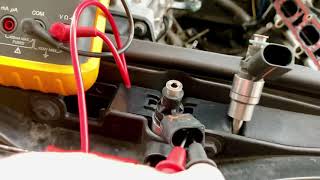
- Failed Fuel Injector (Cylinder 2) 🔴 High Probability → Shop Fuel Injector The internal electronic coil of the direct injector can fail, creating an open circuit. This is a common failure item on high-mileage vehicles and can also be caused by manufacturing defects. Using cheap, non-OEM injectors is a known cause of premature failure, with some owners reporting issues within a day of installation. 🎬 Watch: Why cheap aftermarket injectors often fail with open circuits.
How to confirm: Swap the fuel injector from cylinder 2 with another cylinder (e.g., cylinder 1). Clear the codes and run the engine. If the code changes to P0201, the injector is faulty. Alternatively, measure the resistance across the injector's two pins with a multimeter; a reading of infinity (Open Line) confirms an internal open circuit. A good injector should have a resistance between 1.4 and 2.6 Ohms.
Typical fix: Replace the failed fuel injector. It is often recommended to replace all four injectors at once on higher mileage vehicles to ensure balanced performance, but it is not strictly necessary. Always use new Teflon seals and O-rings when reinstalling an injector.
Est. part cost: $50 - $180 per injector - Damaged Fuel Injector Wiring Harness 🟡 Medium Probability → Shop Engine Wiring Harness The wiring harness that connects the four injectors sits under the intake manifold and is exposed to significant heat. Over time, the insulation can become brittle and crack, leading to an open or shorted wire. This is especially common if the harness was recently disturbed for another repair. VW/Audi has issued technical tips specifically pointing to this harness as a cause for P020x codes.
How to confirm: If the fault code does NOT move when swapping injectors, the wiring is the next suspect. Visually inspect the harness for any signs of damage, especially at the connectors. Use a 'noid light' on the cylinder 2 connector; if it does not flash while cranking the engine, there is no signal from the ECM, pointing to a wiring or ECM issue. 🎬 Watch: How to diagnose an injector circuit malfunction using a noid light. Also inspect the main 8-pin connector (T8I) for the sub-harness, as it's a common point of failure.
Typical fix: Repairing a single broken wire is possible but often temporary. The recommended fix is to replace the entire injector sub-harness with the updated part number (06L971627AB), which features improvements for durability.
Est. part cost: $70 - $150 for a new harness - Loose or Corroded Connector ⚪ Low Probability Vibration and heat can cause the electrical connector at the fuel injector or at the main 8-pin harness connector to become loose or corroded. Moisture intrusion can also lead to pin corrosion.
How to confirm: Visually inspect the connector for cylinder 2. Ensure it is fully seated and the locking tab is engaged. Check the pins for any signs of green or white corrosion. Wiggle the connector with the engine running to see if it induces a misfire.
Typical fix: Clean the connector pins with a specialized contact cleaner and apply dielectric grease to prevent future corrosion. If the connector housing or locking tab is damaged, it may need to be replaced.
Est. part cost: $5 - $30
Rare But Worth Checking
- Faulty Engine Control Module (ECM): → Shop Engine Control Module (ECM) This is the least likely cause. The internal driver circuit within the ECM that fires the injector can fail, but all other possibilities should be exhausted before condemning the expensive ECM. A temporary wire overlay from the ECM to the injector can be used to rule out the entire engine harness.
Diagnosis Steps
- Read fault codes with an OBD-II scanner to confirm P0202 is present and check for other codes like P0302.
- The most definitive diagnostic step is to swap the fuel injector from cylinder 2 with an adjacent one, like cylinder 1.
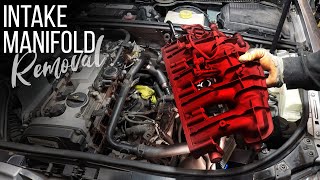
- To do this, you must first relieve fuel pressure and remove the intake manifold to access the fuel rail and injectors. 🎬 See this step-by-step guide for removing the intake manifold and injectors.
- After swapping the injectors, reinstall the intake manifold using new gaskets, clear the fault codes, and start the engine.
- Scan for codes again. If the code has moved to P0201 ('Injector Circuit / Open - Cylinder 1'), the fuel injector itself is faulty and needs to be replaced.
- If the P0202 code returns, the injector is good, and the problem lies within the wiring harness or, rarely, the ECM.
- Inspect the injector wiring harness (Part No. 06L971627A or similar) for any visible damage, chafing, or brittle/cracked insulation. Pay close attention to the individual injector connectors and the main 8-pin connector.
- Use a 'noid light' on the cylinder 2 electrical connector while an assistant cranks the engine. A flashing light indicates the ECM is sending a signal; no light points to a wiring or ECM issue.
Parts You'll Likely Need
- Fuel Injector
(OEM #06H906036G / 06H906036P)— This is the most common failure part for a P0202 code on this engine. The internal coil fails, creating an open circuit. Part number 06H906036G has been superseded by 06H906036P.
Trusted brands: Bosch (OEM), Genuine VW/Audi
OEM price range: $120-$180
Aftermarket price range: $50-$120 - Fuel Injector Wiring Harness
(OEM #06L971627AB)— If the injector itself is not the cause, the sub-harness is the next most likely culprit due to heat-induced brittleness. A VW/Audi TSB specifically recommends replacing the harness with the updated part number 06L971627AB to resolve intermittent injector circuit faults. The original part was 06L971627A.
Trusted brands: Genuine VW/Audi
OEM price range: $70-$150
Aftermarket price range: $50-$100 - Fuel Injector Seal Kit
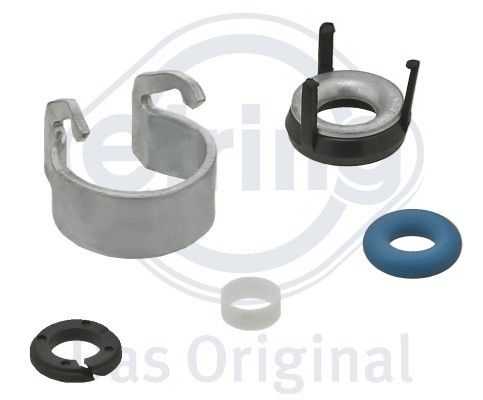
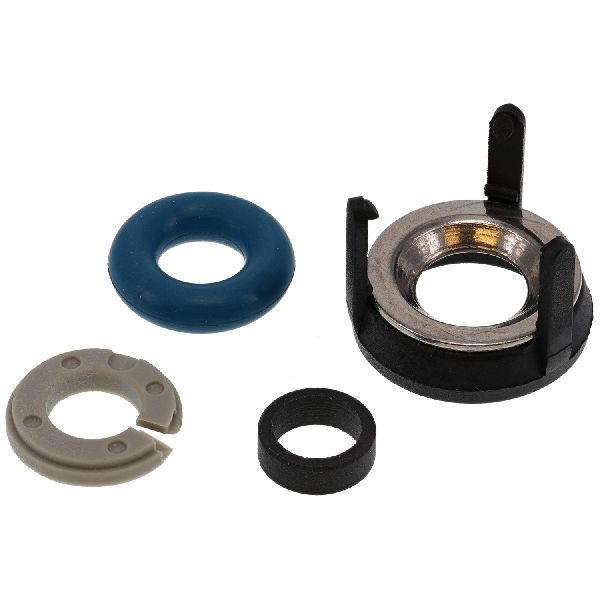
(OEM #06J998907D)— Whenever a direct fuel injector is removed and reinstalled, the Teflon seal and O-rings must be replaced to prevent combustion leaks. Special tools are required to properly size the new Teflon seal onto the injector tip. Most new injectors come with these seals pre-installed.
Trusted brands: Bosch, Elring, Genuine VW/Audi
OEM price range: $15-$25 per injector
Aftermarket price range: $8-$15 per injector - Intake Manifold Gasket
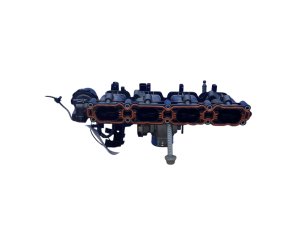
(OEM #06F129717D)— The intake manifold must be removed to access the fuel injectors and harness. The gasket is a one-time use part and must be replaced to prevent vacuum leaks upon reassembly.
Trusted brands: Victor Reinz, Elring, Genuine VW/Audi
OEM price range: $20-$30
Aftermarket price range: $10-$20
Related Codes That Often Appear With This One
- P0302 — Stands for 'Cylinder 2 Misfire Detected'. Since P0202 indicates an electrical fault is preventing the injector from firing, the cylinder gets no fuel, which the ECM immediately detects as a misfire.
Technical Service Bulletins (TSBs) & Recalls
- TT 97-18-02 / TSB 2053319: Addresses injector circuit faults (P0201-P0204) caused by harness connection issues. It provides a diagnostic flow of swapping injectors, then checking wiring, and if necessary, performing a wire overlay before replacing the main engine harness.
- TT 01-20-02 / TSB 2058719: Recommends inspecting the injector harness part number and replacing it with the updated version (06L 971 627 AB) if intermittent injector circuit faults are present and the old harness is still installed.
Mechanic-Grade Diagnostic Values
- Fuel Injector Coil Resistance — expected: 1.4 - 2.6 Ohms (Ω) at room temperature.. Failure: A reading of infinity (OL) indicates an open circuit. A reading significantly outside the specified range indicates a faulty coil.
- Low-Side Fuel Pressure (to HPFP) — expected: 3.0 to 10.5 bar (43 to 152 PSI), regulated by the in-tank pump.. Failure: Pressure below this range can indicate a failing low-pressure fuel pump, but will not typically cause a P0202 circuit code.
- High-Side Fuel Pressure (at Fuel Rail) — expected: 30 to 150 bar (435 to 2175 PSI), depending on engine load and temperature.. Failure: Pressure issues here usually set P0087 (low pressure) or P0088 (high pressure), not P0202.
- ECM Injector Trigger Current — expected: Greater than 2.1 Amps.. Failure: The ECM may set a P020x fault if the measured low-side signal current is less than 2.1 Amps during the injector pulse.
- Injector Harness Main Connector Voltage (Key On, Engine Off) — expected: Approximately 22-25 Volts on the even-numbered pins (2, 4, 6, 8) of the 8-pin connector T8I.. Failure: No voltage or significantly lower voltage can indicate a problem with the power supply to the injector harness.
Scan Tool Commands That Help
- VCDS (VAG-COM) / ODIS: Selective Output Test for Fuel Injectors — With the engine off, this function allows the technician to command each injector to fire individually. A healthy injector will produce an audible 'click', confirming the circuit is complete and the injector solenoid is not seized. No click points to an open circuit or failed injector.
- VCDS (VAG-COM) / ODIS: Reset Adaptation Values of Engine Control Module — After replacing one or more fuel injectors, official repair procedures state that learned fuel pressure and engine adaptations should be reset. This forces the ECM to relearn fuel trims with the new components, ensuring optimal performance and preventing rough running.
- VCDS (VAG-COM) / ODIS: Live Data - Misfire Counter — To confirm the fault is active and isolated to cylinder 2. While driving or at idle, the misfire counter for cylinder 2 will increase rapidly if the P0202 fault is causing a complete lack of fueling.
Wiring & Ground Locations
- N31 — The electrical connector on the fuel injector for cylinder 2 (second from the front of the engine).. This is the end point of the circuit. A poor connection or corrosion here will directly cause a P0202 fault.
- T8I Connector — The main 8-pin connector for the fuel injector sub-harness, located under the intake manifold, typically on the right side.. This is a common failure point where all four injector circuits connect to the main engine harness. Damage or corrosion at this single connector can cause faults on one or multiple injector circuits.
- Engine Block Ground — Primary ground strap from the engine block/transmission bellhousing to the chassis/firewall. A key ground point is also located on the cylinder head, often near the ignition coils.. The ECM's injector drivers are ground-switched. A poor or corroded engine ground can create an unstable voltage reference for the entire engine management system, leading to intermittent and hard-to-diagnose electrical faults like P0202.
Real Owner Repair Stories
- Reddit user via Go-Parts article (2012 Audi A4 2.0T (CAEB)) — P0201 and P0301, rough running.
❌ Tried (didn't work) Swapped fuel injector from cylinder 1 to cylinder 2.
✅ What actually fixed it The fault code remained P0201 after swapping the injector, proving the injector was good. The final fix was replacing the fuel injector wiring harness (Part No. 06L971627A). The old harness was noted to be extremely brittle and cracked upon removal.
OEM Part Supersession History
06H906036G, 06H906036E→06H906036P— Revision for improved reliability and performance.06L971627A→06L971627AB— Updated design with improved heat shielding and wire insulation to prevent brittleness and cracking.
Model Year Variations Within This Range
- 2012-2016 (B8.5): Later B8.5 models (e.g., with CPMA/CPMB engine codes) may feature a two-piece intake manifold (plastic lower, aluminum upper) and an additional port-side fuel injector for FlexFuel capability. While P0202 still refers to the primary direct injector, technicians should be aware of the different intake manifold design during disassembly and reassembly.
Diagnostic Flowchart
Other Known Issues on This Vehicle
Issues unrelated to this code that are worth knowing about as an owner of this generation:
- Excessive Oil Consumption 🔴 High — Very common on 2009-2011.5 models with CAEB engines, often starting before 80,000 miles. Caused by defective piston rings. (Ref: Subject of multiple class-action lawsuits, leading to settlement programs for repair reimbursement and extended warranties.)
- Timing Chain Tensioner Failure 🔴 High — Common on engines built before ~2013, typically between 60,000 and 100,000 miles. The original tensioner design can fail without warning, causing the chain to jump and leading to catastrophic engine damage. (Ref: An updated tensioner part is available. While no recall was issued, it's a widely documented failure.)
- Water Pump / Thermostat Housing Failure 🟠 Medium — The original water pump assembly has a plastic housing that becomes brittle and cracks, typically leading to coolant leaks between 60,000 and 90,000 miles. (Ref: A class-action settlement extended the warranty on this part for some vehicles. Aftermarket replacements with metal housings are a popular upgrade.)
- Carbon Buildup on Intake Valves 🟠 Medium — As a direct-injection engine, fuel doesn't wash over the intake valves. This leads to carbon accumulation over time, typically requiring cleaning every 50,000-80,000 miles to restore performance and prevent misfires.
- PCV Valve / Oil Separator Failure 🟠 Medium — The PCV valve diaphragm can tear, leading to high oil consumption, rough idle, and a whistling noise. Failure is common around 60,000-80,000 miles.
- After-Run Electric Coolant Pump Failure 🟡 Low — This auxiliary pump can short circuit, creating a fire risk. It primarily affected 2013-2017 models. (Ref: Safety Recalls 19N4 / 19O2 / 19M1 were issued to disconnect or replace the faulty pump.)
Used vs. New Parts: Buying Guide for This Vehicle
When a used part is the smart pick: A used injector wiring harness from a clearly low-mileage (<60k miles) donor vehicle can be a cost-effective alternative to a new OEM part. A used fuel injector is a significant gamble and generally not recommended.
Donor-vehicle mileage cap: roughly under 60000 miles for the part to have meaningful remaining life.
What to inspect on the donor part:
- For a wiring harness, inspect it off the car. The loom should be flexible, not stiff or crunchy. All connector locking tabs must be intact. There should be zero signs of cracking insulation on the wires leading into the connectors.
OEM-only on this vehicle (don't cheap out):
- Fuel Injector: Due to the precision required for direct injection and the high failure rate of cheap unbranded clones, it is strongly recommended to use either Genuine VW/Audi injectors or those from the OEM supplier, Bosch.
Aftermarket brands forum-validated for this vehicle:
- Bosch (OEM supplier for fuel injectors)
- Victor Reinz / Elring (for intake manifold and other gaskets)
Brands owners have reported issues with on this vehicle:
- Unbranded, no-name fuel injectors and wiring harnesses sold on platforms like eBay or Amazon. Forum consensus indicates these parts have a high rate of out-of-the-box failure or premature failure.
Real Owner Stories
Aggregated from forums and TSBs cited above. Mileages and costs reflect what owners reported in those sources.
2011 Audi A4 2.0T TFSI
Symptoms: Multiple injectors failed and required replacement within a short period of time.
What fixed it: Replacement of multiple fuel injectors.
Source hint: AudiWorld Forums
2011 Audi A4 2.0T TFSI
Symptoms: The owner installed a set of cheap eBay injectors, but one failed almost immediately with an open circuit code.
What fixed it: Replacing the faulty non-OEM injector (P0202 occurred within a day of installation).
Source hint: YouTube (2021-05-26): A video titled "Audi A4 eBay Injectors. Open Circuit"
2021 Audi A4 2.0T TFSI
Symptoms: Troubleshooting a P0202 code; a noid light test showed the connector for cylinder 2 would not flash while cranking.
What fixed it: The diagnosis pointed to a wiring issue rather than a failed injector because the ECM signal was not reaching the connector.
Source hint: Ross-Tech Forums (2021-10-14)
2012 Audi A4 2.0T TFSI
Symptoms: Injector circuit fault code present.
What fixed it: A technician advised fitting a new injector loom (wiring harness) as the primary solution before other repairs.
Source hint: Audi-Sport.net (2012-02-19)
Related OBD-II Codes
Frequently Asked Questions
My 2011 Audi A4 is throwing P0202; is there a specific Technical Service Bulletin for this?
Should I replace the entire wiring harness or just the injector for a P0202 code on my 2.0T TFSI?
What is the correct resistance for a healthy fuel injector on the Audi CAEB engine?
Can I use aftermarket injectors from eBay to fix this code?
Is there a specific connector I should check if I suspect a wiring issue?
Helpful Videos


Used OEM Parts in Stock
New Aftermarket Parts Available



The information in this article is provided for general reference and educational purposes only. Vehicle specifications, procedures, and part compatibility can vary by production date, trim level, and region. Always consult your vehicle's factory service manual and verify part numbers before purchasing or performing repairs. Safety-critical components such as airbags, seat belts, and braking systems should be installed by a qualified professional.
- Audi A4:
- 🧭 Diagnostic Flowchart
- 🎬 Helpful Videos
- 🛍️ Shop This Part
- What's Unique About the 2009-2016 Audi A4
- Symptoms You May Notice
- Most Likely Causes
- Rare But Worth Checking
- Diagnosis Steps
- Parts You'll Likely Need
- Related Codes That Often Appear With This One
- Technical Service Bulletins (TSBs) & Recalls
- Mechanic-Grade Diagnostic Values
- Scan Tool Commands That Help
- Wiring & Ground Locations
- Real Owner Repair Stories
- OEM Part Supersession History
- Model Year Variations Within This Range
- Other Known Issues on This Vehicle
- Used vs. New Parts: Buying Guide for This Vehicle
- Real Owner Stories
- 2011 Audi A4 2.0T TFSI
- 2011 Audi A4 2.0T TFSI
- 2021 Audi A4 2.0T TFSI
- 2012 Audi A4 2.0T TFSI
- Related OBD-II Codes
- Frequently Asked Questions
- 🎟️ Get 5% Off