

P0202 on 2007-2014 Ford Edge 3.5L: Injector Circuit Malfunction Causes and Fixes
P0202 on a 3.5L Ford Edge means there's an electrical fault with the cylinder 2 fuel injector. The most common fix is replacing the injector itself. However, cylinder 2 is on the rear bank against the firewall, so the upper intake manifold must be removed for access, making this a more labor-intensive repair.
- P0202 points specifically to an electrical problem in the cylinder 2 injector circuit, not a spark or compression issue.
- The most likely culprit is a failed fuel injector.
- The main difficulty of this repair on a 3.5L V6 Ford Edge is that cylinder 2 is on the rear bank, requiring removal of the upper intake manifold.
- Due to the labor involved, it is highly recommended to replace all three rear fuel injectors and the intake gaskets at the same time.
- Driving with this code can cause expensive damage to the catalytic converter, so the issue should be addressed promptly.
What's Unique About the 2007-2014 Ford Edge
The primary challenge with a P0202 code on the 2007-2014 Ford Edge is the physical location of cylinder 2. On the transversely mounted 3.5L V6, the rear bank of cylinders (Bank 1) is pressed up against the firewall. Bank 1 contains cylinders 1, 2, and 3, while the front bank (Bank 2) contains 4, 5, and 6. Cylinder 2 is the middle cylinder on this difficult-to-access rear bank. This means that to diagnose or replace the injector, the entire upper intake manifold must be removed, which adds significant time and complexity to the job compared to working on the front cylinders.
Generation note: This range covers the first generation Ford Edge (2007-2010) and its mid-cycle facelift (2011-2014). The 3.5L Duratec V6 engine and its layout were consistent throughout these years, so the causes and repair procedures for code P0202 are the same across this entire period.
Symptoms You May Notice
- Rough, shaking, or vibrating idle
- Engine misfire, which may feel like a stumble or hesitation
- Noticeable loss of power during acceleration
- Check Engine Light is on and may be flashing in a severe misfire
- Decreased fuel economy
- A smell of raw fuel from the exhaust
- Replacing the spark plug or ignition coil for cylinder 2. While these parts can cause a misfire code (P0302), they will not trigger an injector circuit code like P0202. The P0202 code is specifically an electrical fault related to the fuel injector's control circuit, not a combustion misfire, although the circuit fault will lead to a misfire.
Most Likely Causes
- Failed Cylinder 2 Fuel Injector 🔴 High Probability → Shop Fuel Injector Injectors are a wear-and-tear component. After many miles and heat cycles, the internal electronic coil can fail by shorting out or breaking (an open circuit), which is a common failure mode for this code.
How to confirm: After gaining access, test the injector's resistance with a multimeter. A good injector for this engine should read between 11 and 14 ohms. The most definitive test is to swap the cylinder 2 injector with an adjacent one (like cylinder 1 or 3). Clear the codes and run the engine. If the code changes to P0201 or P0203, the injector is confirmed to be faulty.
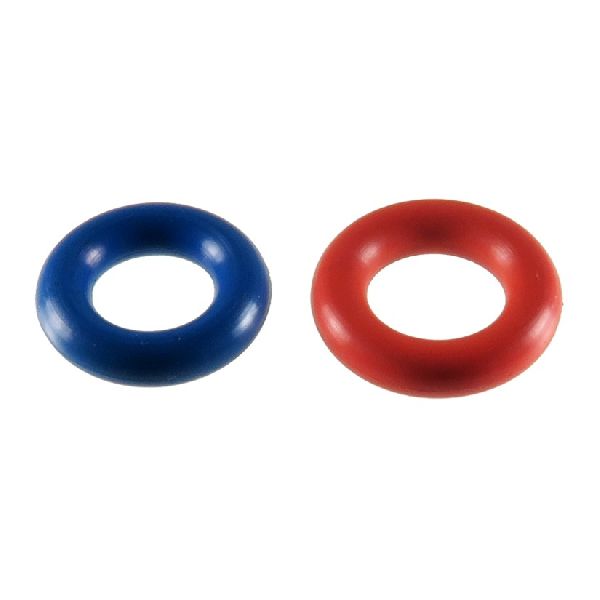
Typical fix: Replace the fuel injector. It is highly recommended to replace all three injectors on the rear bank at the same time, as they have all been subjected to the same conditions and labor to access them is high. Always use new O-rings lubricated with clean engine oil.
Est. part cost: $40-$65 for a single OEM Motorcraft injector. - Wiring Harness or Connector Damage 🟡 Medium Probability The engine wiring harness, especially the section running to the rear bank, is exposed to significant heat. Over time, the plastic loom can become brittle and wires can chafe. The injector connector tabs are also known to become brittle and break, leading to a poor connection that can be temporarily secured with a zip tie but should be properly replaced.
How to confirm: Visually inspect the wiring leading to the cylinder 2 injector for any signs of melting, chafing, or breaks. Check that the connector is securely plugged in and the locking tab isn't broken. Use a 'noid light' plugged into the injector connector; it should flash steadily while the engine is cranking or running, indicating the PCM is sending a signal. If there is no flash, the problem is in the wiring or the PCM.
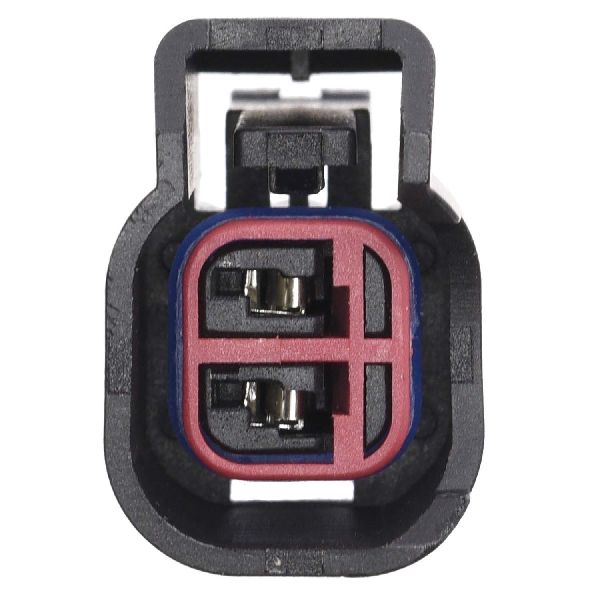
Typical fix: Repair the damaged section of wire. If the connector is broken or corroded, replace it with a new pigtail connector (e.g., Motorcraft WPT-1051).
Est. part cost: $15-$30 for a connector pigtail. - Faulty Powertrain Control Module (PCM) ⚪ Low Probability → Shop Engine Control Module (ECM) While less common, the internal injector driver circuit within the PCM can fail. This can sometimes happen after a shorted injector or wiring issue damages the driver. In some forum cases, a PCM was replaced only to have the same code return, suggesting the root cause was an intermittent injector that eventually damaged the new PCM's driver.
How to confirm: This should be the last resort after confirming the injector and wiring are good. If a noid light does not flash at the connector and the wiring shows good continuity back to the PCM pins, the internal injector driver for cylinder 2 has likely failed. This requires professional diagnosis.
Typical fix: The PCM must be repaired or replaced and programmed to the vehicle. It is critical to ensure the injector and wiring are not shorted before installing a new PCM, as the fault could damage the replacement unit.
Est. part cost: $300-$800 for a replacement PCM.
Diagnosis Steps
- Connect an OBD-II scanner to confirm the P0202 code and check for any other related codes like P0302 or P0171.
- Plan for the intake manifold removal. This is required to access cylinder 2 on the rear bank. Gather necessary parts like new intake gaskets.
- Disconnect the battery. Remove the air intake tubing, throttle body, and all necessary vacuum lines and electrical connectors from the upper intake manifold.
- Unbolt and carefully remove the upper intake manifold. It's recommended to cover the open lower intake ports with clean rags to prevent debris from falling into the engine.
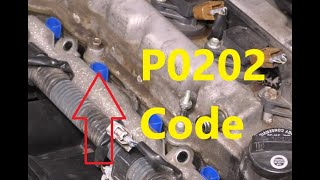
- Locate the cylinder 2 injector (middle injector on the rear fuel rail). Visually inspect its electrical connector and the surrounding wiring for any obvious damage, like broken locking tabs or chafed wires.
- Disconnect the injector and test its resistance with a multimeter. A reading between 11-14 ohms is expected. An infinite reading means an open circuit, and a reading near zero means a short. Either indicates a bad injector.
- To be certain, swap the cylinder 2 injector with the cylinder 1 or 3 injector. Partially reassemble enough to run the engine, clear the codes, and see if the fault code moves to P0201 or P0203. If it does, the injector is the problem.
- If the code remains P0202 after the swap, the issue is in the wiring or PCM. Use a noid light on the cylinder 2 connector and crank the engine. A flashing light means the wiring and PCM are likely okay, pointing back to an intermittent injector issue. No flash means you have a wiring or PCM problem.
- If no flash was present, check for continuity on the control wire from the injector connector back to the PCM connector pin. If continuity is good, the PCM injector driver is the most likely culprit.
- Once the faulty part is identified, perform the replacement.
- Reassemble using a new upper intake manifold gasket set (e.g., Fel-Pro MS 96684) to prevent vacuum leaks. Torque all bolts to manufacturer specifications.
Parts You'll Likely Need
- Fuel Injector
(OEM #CM-5188 (Ford Service Part Number), BR3Z-9F593-B (Ford Engineering Part Number))— This is the most common cause of a P0202 circuit code. The internal electronics of the injector fail over time.
Trusted brands: Motorcraft, Bosch, Standard Motor Products
OEM price range: $40-$65
Aftermarket price range: $25-$50 - Upper Intake Manifold Gasket Set
(OEM #Fel-Pro MS 96684)— This gasket set must be replaced anytime the upper intake manifold is removed to prevent vacuum leaks upon reassembly. It is a required part for this specific repair.
Trusted brands: Fel-Pro, Mahle, Victor Reinz
OEM price range: $40-$60
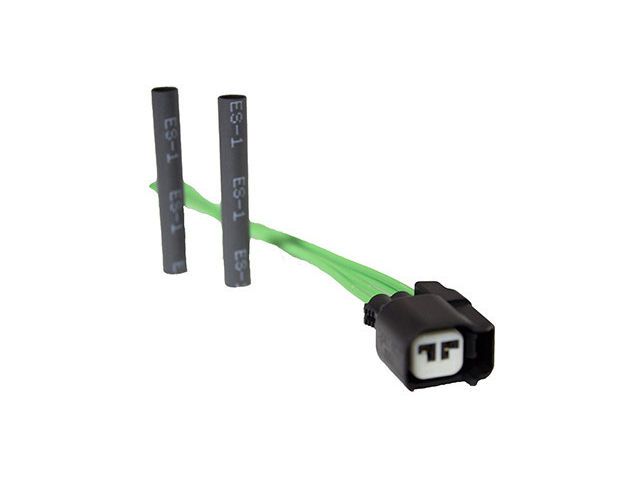
Aftermarket price range: $25-$50 - Injector Connector Pigtail
(OEM #Motorcraft WPT-1051)— Needed if the original connector's locking tab is broken or if the terminals are corroded, causing a poor connection.
Trusted brands: Motorcraft, Dorman, Standard Motor Products
OEM price range: $25-$35
Aftermarket price range: $10-$20
Related Codes That Often Appear With This One
- P0302 — This code means 'Cylinder 2 Misfire Detected'. It is a direct consequence of the P0202 fault, as the injector circuit malfunction prevents fuel from being delivered, causing the cylinder to misfire.
- P0171 — This code means 'System Too Lean (Bank 1)'. Bank 1 is the rear bank where cylinder 2 is located. When the injector fails to fire, that cylinder pumps unburnt air into the exhaust. The oxygen sensor detects this excess air and reports a lean condition for the entire bank.
Platform-Specific Known Issues
- Broken Injector Connector Tabs: A recurring theme in forums is mechanics and owners finding the plastic locking tabs on the fuel injector connectors have become brittle and broken off, sometimes on multiple injectors. This can lead to a loose connection that triggers an intermittent circuit code. In many cases, a zip tie is used as a temporary field fix, but replacing the connector pigtail is the correct repair.
Technical Service Bulletins (TSBs) & Recalls
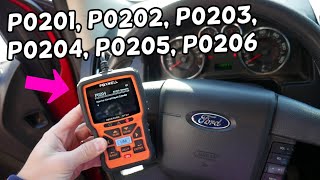
- TSB Bulletin #SSM 49759: While issued for other Ford models like the Expedition, this manufacturer bulletin notes that an illuminated MIL with codes P0201 through P0206 may occur and directs technicians to follow specific pinpoint tests in the Powertrain Control/Emissions Diagnosis Manual.
Mechanic-Grade Diagnostic Values
- Fuel Injector Coil Resistance — expected: 11 - 14 Ohms. Failure: A reading of infinity (OL) indicates an open circuit, while a near-zero reading indicates a shorted coil.
- Injector Pulse Width (at idle, via scan tool) — expected: 0.8 ms to 2.5 ms. Failure: A pulse width for cylinder 2 that is zero or significantly different from other cylinders indicates a control or injector issue.
- Injector Connector Voltage (Key On, Engine Off) — expected: Greater than 10 Volts DC on the power supply pin.. Failure: Voltage below 10V or no voltage indicates an open circuit in the power supply (VPWR) wire from the PCM power relay.
- Mode $06 Misfire Count (Test ID $A3) — expected: Zero or very low counts for cylinder 2.. Failure: A high number of misfire counts for cylinder 2 confirms the misfire location before it's severe enough to always trigger P0302.
Hidden / Shadow Codes Worth Checking
- Mode $06, Test ID $A2-$AD: Provides raw misfire counts for each cylinder for the current or last driving cycle. Cylinder 2 is typically Component ID $02. This allows a technician to see intermittent misfires on cylinder 2 before they are frequent enough to set a P0302 code. (see via An advanced OBD-II scanner capable of reading Mode $06 data, such as Ford's IDS, FORScan, or other professional-grade scanners.)
Scan Tool Commands That Help
- Ford IDS (or equivalent professional scanner): Power Balance Test — This bidirectional test graphically displays the RPM drop and power contribution of each cylinder in real-time. It can instantly confirm that cylinder 2 is not contributing power, validating the P0202 fault location without swapping any parts.
Wiring & Ground Locations
- G103 / G104 — Located on the left (driver's) side of the engine compartment, on the inner fender/frame rail area.. These are primary engine bay grounds. A corroded or loose connection at these points can cause intermittent electrical issues, including erratic voltage for injector circuits. While not a direct cause, checking these grounds is a crucial step when diagnosing stubborn electrical faults.
- Main Engine Block Ground — The main negative battery cable bolts directly to the side of the engine block, which requires battery removal to access on some models.. This is the most critical ground for all engine electronics, including the PCM and its injector drivers. A poor connection here can cause a host of unpredictable electrical problems, including injector circuit codes.
- Cylinder 2 Injector PCM Pin — The control wire for the cylinder 2 injector runs from the injector connector directly to a specific pin on the Powertrain Control Module (PCM) connector.. When a noid light test fails, checking for continuity between the injector connector pin and the corresponding PCM pin is the definitive test to rule out a broken wire in the harness. A wiring diagram is required to identify the exact pin number for the specific model year.
Real Owner Repair Stories
- YouTube channel 'Andy The X Tech' (2006 Ford Edge (demonstrates on a similar setup)) — Intermittent misfire on cylinder 2 with a P0202 code.
❌ Tried (didn't work) Visual inspection of the wiring harness (no visible damage found).
✅ What actually fixed it The resistance of the cylinder 2 injector was significantly different from the other five injectors (which all read around 12.6-12.9 ohms). Replacing the single faulty injector resolved the code and misfire. - NHTSA ODI #10944544: An owner of a similar Ford powertrain reported that the vehicle would turn over but not start with the check engine light on and codes P0201 and P0202 present, indicating an open circuit for the injectors.
- NHTSA ODI #10405277: A report on a related Ford model describes a situation where the driver had to pull over immediately after codes P0201, P0202, P0203, and P0204 were pulled; the dealer checked electrical connections and reassembled the components.
OEM Part Supersession History
7T4Z-9F593-B / CM-5165→BR3Z-9F593-B / CM-5188— Part update corresponding with the 2011 model year engine refresh.
Heads up: The 2007-2010 models use injector CM-5165 (Bosch 62399 / Standard Motor Products FJ1000). The 2011-2014 models use injector CM-5188. While they may physically fit, using the wrong injector could lead to improper fuel trim values due to different flow rates or spray patterns matching the updated PCM calibration.
Model Year Variations Within This Range
- 2011-2014: The 3.5L V6 engine was updated for the 2011 model year to include Twin Independent Variable Camshaft Timing (Ti-VCT), which varies timing on both intake and exhaust camshafts (the 2007-2010 models only had it on the intake). This change increased horsepower from 265 to 285 and involved a different PCM calibration and different fuel injectors (part CM-5188).
Diagnostic Flowchart
Other Known Issues on This Vehicle
Issues unrelated to this code that are worth knowing about as an owner of this generation:
- Internal Water Pump Failure 🔴 High — Common after 80,000-120,000 miles. Failure is catastrophic.
- Power Transfer Unit (PTU) Failure (AWD Models) 🔴 High — Commonly occurs around 70,000-100,000 miles.
- Electronic Throttle Body (ETB) Failure 🟠 Medium — Widespread issue, can occur at various mileages. (Ref: Ford Customer Satisfaction Program 13N03 (Expired))
- Faulty Door Ajar Sensor 🟡 Low — Very common across all model years in this generation.
- Brake Booster Failure 🔴 High — Common enough to warrant a recall and customer satisfaction program. (Ref: Recall 23S12, Customer Satisfaction Program 13N02)
Used vs. New Parts: Buying Guide for This Vehicle
When a used part is the smart pick: A used wiring harness pigtail (connector) from a junkyard is a perfectly acceptable and cost-effective repair if the original is broken, as it is a simple electrical connector. A used PCM can be an option but is risky due to the need for professional programming (VIN matching) and the possibility that it has its own internal faults.
Donor-vehicle mileage cap: roughly under 80000 miles for the part to have meaningful remaining life.
What to inspect on the donor part:
- For a wiring connector, ensure the plastic is not brittle and the locking tab is intact.
- For a fuel injector, ask for the donor vehicle's mileage. Avoid injectors from very high-mileage cars (>100k miles) as they are a wear item.
- Check the injector's electrical pins for any signs of corrosion or damage.
OEM-only on this vehicle (don't cheap out):
- Powertrain Control Module (PCM) - While used units are available, a new or professionally remanufactured unit with proper VIN programming is highly recommended to avoid compatibility and security system issues.
Aftermarket brands forum-validated for this vehicle:
- Bosch (often the OEM manufacturer)
- Standard Motor Products (SMP)
- Fel-Pro (for intake gaskets)
Brands owners have reported issues with on this vehicle:
- Unbranded, no-name injectors from online marketplaces. Forum discussions frequently warn against ultra-cheap injector sets that often fail prematurely or have inconsistent flow rates, leading to persistent performance issues.
Real Owner Stories
Aggregated from forums and TSBs cited above. Mileages and costs reflect what owners reported in those sources.
Ford Edge 3.5L V6
Symptoms: The vehicle experienced a P0202 code and a misfire. The owner noted the difficulty of the job due to the requirement of removing the intake manifold to reach the rear bank.
What fixed it: The owner acknowledged the need to access the injector for testing/replacement after removing the intake manifold.
Source hint: Ford Edge Forum - P0202 cylinder 2 - 3.5L
Ford Edge 3.5L V6
Symptoms: Recurring PCM failure specifically for the injector driver circuit.
What fixed it: Diagnosis suggested the injector itself was faulty and damaging the PCM driver; testing resistance (11-18 ohms) was required to identify the root cause.
Source hint: Ford Edge Forum - Injector issue
Related OBD-II Codes
Frequently Asked Questions
Where is the cylinder 2 injector located on my 3.5L V6 Ford Edge?
What is the correct resistance for a fuel injector on the 2007-2014 Ford Edge 3.5L?
Can I just zip tie a loose injector connector on my Ford Edge?
Why is it recommended to replace all three rear injectors at once on the 3.5L V6?
What intake manifold gasket should I use when reassembling my Ford Edge after an injector repair?
Could a bad fuel injector actually damage my Ford Edge's PCM?
Helpful Videos


We Have This Part in Stock



The information in this article is provided for general reference and educational purposes only. Vehicle specifications, procedures, and part compatibility can vary by production date, trim level, and region. Always consult your vehicle's factory service manual and verify part numbers before purchasing or performing repairs. Safety-critical components such as airbags, seat belts, and braking systems should be installed by a qualified professional.
- Ford Edge:
- 🧭 Diagnostic Flowchart
- 🎬 Helpful Videos
- 🛍️ Shop This Part
- What's Unique About the 2007-2014 Ford Edge
- Symptoms You May Notice
- Most Likely Causes
- Diagnosis Steps
- Parts You'll Likely Need
- Related Codes That Often Appear With This One
- Platform-Specific Known Issues
- Technical Service Bulletins (TSBs) & Recalls
- Mechanic-Grade Diagnostic Values
- Hidden / Shadow Codes Worth Checking
- Scan Tool Commands That Help
- Wiring & Ground Locations
- Real Owner Repair Stories
- OEM Part Supersession History
- Model Year Variations Within This Range
- Other Known Issues on This Vehicle
- Used vs. New Parts: Buying Guide for This Vehicle
- Real Owner Stories
- Ford Edge 3.5L V6
- Ford Edge 3.5L V6
- Related OBD-II Codes
- Frequently Asked Questions
- 🎟️ Get 5% Off