

P0202 on 2002-2005 Ford Explorer 4.0L V6: Injector Circuit Malfunction Causes and Fixes
Code P0202 on a 2002-2005 Ford Explorer 4.0L V6 almost always points to a failed fuel injector for cylinder #2. The fix involves replacing the injector, its plastic adapter seal, and the intake manifold gaskets, with a DIY difficulty of 4/5 due to the need to remove the upper intake manifold.
- P0202 on this Explorer almost certainly means you need a new fuel injector for cylinder #2 (middle cylinder, passenger side).
- When you replace the injector, you MUST also replace the small plastic adapter seal (Part # F77Z-9G512-AA) it sits in, as the old one will be brittle and will cause a vacuum leak if reused.
- Always confirm the diagnosis by swapping the suspect injector with a neighboring one before starting the repair, as accessing the injectors requires removing the upper intake manifold.
What's Unique About the 2002-2005 Ford Explorer
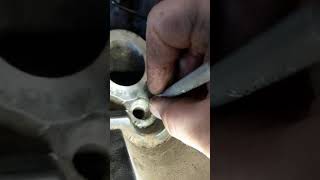
On the Ford Explorer's 4.0L SOHC V6 engine, this code is straightforward and very commonly caused by the fuel injector itself failing internally. A unique aspect of this repair is the small, plastic fuel injector adapter seals that sit in the lower intake manifold. These seals become extremely brittle with age and often break during injector removal 🎬 See why these plastic injector sleeves are so easy to break, causing vacuum leaks if not replaced. Experienced technicians and DIYers know to replace these seals as a mandatory part of the job. This issue is well-documented across forums for the Explorer and its platform-mates like the Ford Ranger.
Symptoms You May Notice
- Check Engine Light is on
- Engine runs rough or has a noticeable vibration, especially at idle
- Engine misfire, which may feel like a stumble or a shake
- Hesitation or lack of power during acceleration
- Reduced fuel economy
- Smell of gasoline from the exhaust
- Replacing the spark plug or ignition coil for cylinder #2. While these can cause a misfire (P0302), they will not cause an injector circuit code like P0202.
Most Likely Causes
- Failed Fuel Injector (Cylinder #2) 🔴 High Probability → Shop Fuel Injector The internal coil windings of the injector can fail over time due to heat and vibration, creating an open circuit that the PCM detects. This is the most frequent cause for a P0202 on this platform.
How to confirm: Swap the cylinder #2 injector with an adjacent injector (e.g., cylinder #1 or #3). Clear codes and run the engine. If the code changes to P0201 or P0203, the injector is faulty. You can also test the injector's resistance with a multimeter; it should be between 11-18 ohms. An open circuit (infinite resistance) or a significantly different reading from other injectors confirms failure.
Typical fix: Replace the faulty fuel injector. It is highly recommended to replace the small plastic injector adapter seal at the same time.
Est. part cost: $40-$110 - Damaged Wiring or Connector 🟡 Medium Probability The wiring harness sits on top of a hot engine and is subject to vibrations, which can cause wires to break or insulation to chafe over time. A known chafe point on the 4.0L platform is near the fuel injector heat shields. The connector's plastic can become brittle and the locking tab can break. Pin fitment issues at the connector can also cause an intermittent open circuit.
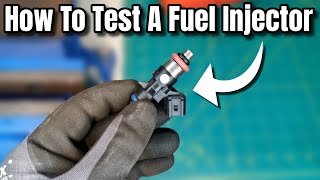
How to confirm: Visually inspect the wiring harness leading to the cylinder #2 injector for any signs of breaks, chafing, or melting, paying close attention to the area near heat shields. Check the connector for corrosion, backed-out pins, or a loose fit. Use a 'noid light' to confirm if the PCM is sending a pulse signal 🎬 Watch: 5 simple DIY methods to test your fuel injectors to the connector; the light should flash when cranking. If the noid light works, but the injector doesn't, the injector is bad. If the noid light doesn't flash, the problem is in the wiring or PCM.
Typical fix: Repair the broken or shorted wire. If the connector is damaged or has poor pin fit, replace the connector pigtail.
Est. part cost: $15-$30 - Faulty Powertrain Control Module (PCM) ⚪ Low Probability → Shop Engine Control Module (ECM) While not common, the internal driver circuit in the PCM that controls the injector can fail. This is much less likely than an injector or wiring fault and can be caused by internal hardware failure or issues with the PCM's own power or ground supply.
How to confirm: This is a diagnosis of exclusion. If the injector and wiring have both been tested and are confirmed to be good (injector swaps, noid light test passes, and wiring continuity check from injector to PCM is good), the PCM is the likely culprit. This should be confirmed by a professional.
Typical fix: The PCM will need to be repaired by a specialist or replaced and programmed to the vehicle.
Est. part cost: $250-$600
Technical Service Bulletins (TSBs) & Recalls
While specific to other Ford models, manufacturer service bulletin #SSM 49759 notes that an illuminated malfunction indicator lamp with codes P0201 through P0206 may occur, requiring pinpoint tests in the Powertrain Control/Emissions Diagnosis Manual to resolve the circuit condition.
Diagnosis Steps
- Verify the code with an OBD-II scanner.
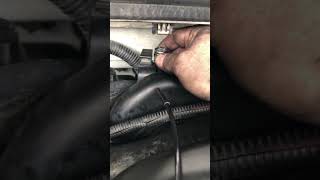
- Locate cylinder #2. On the 4.0L V6, it is the middle cylinder on the passenger (right) side 🎬 Watch this walkthrough of the 4.0 SOHC fuel injector replacement of the engine, front to back is 1-2-3.
- Visually inspect the wiring and connector for cylinder #2's fuel injector. Look for obvious signs of damage, melting, corrosion, or rodent damage. Pay special attention to the harness near any heat shields.
- Disconnect the injector and test for a signal using a noid light. The light should flash when the engine is cranked or running, indicating the PCM is sending a signal.
- If the noid light flashes, the problem is likely the injector itself. If it does not flash, the problem is in the wiring or PCM.
- To confirm a bad injector, measure its resistance with a multimeter set to ohms. A good injector will read between 11 and 18 ohms. A specific Bosch equivalent part (0280156029) is rated at 14.5 ohms. An 'OL' or infinite reading means the injector is open and bad. Compare the reading to an adjacent, working injector.
- The most definitive test: Swap the fuel injector from cylinder #2 with the one from cylinder #3 (or #1). Clear the codes and drive the vehicle. If the code returns as P0203 (or P0201), you have confirmed the injector is the faulty component. If P0202 returns, the issue is in the wiring or PCM.
- If the injector swap doesn't move the code, perform a continuity test on the injector harness between the injector connector and the PCM connector (Pin 101) to rule out a broken wire.
Parts You'll Likely Need
- Fuel Injector
(OEM #0280156029 (2002-2003), 4L2Z-9F593-EB (2004-2005))— This is the most common cause of a P0202 code due to internal failure.
Trusted brands: Bosch, Motorcraft, Standard Motor Products
OEM price range: $90-$120
Aftermarket price range: $40-$70 - Fuel Injector Adapter Seal
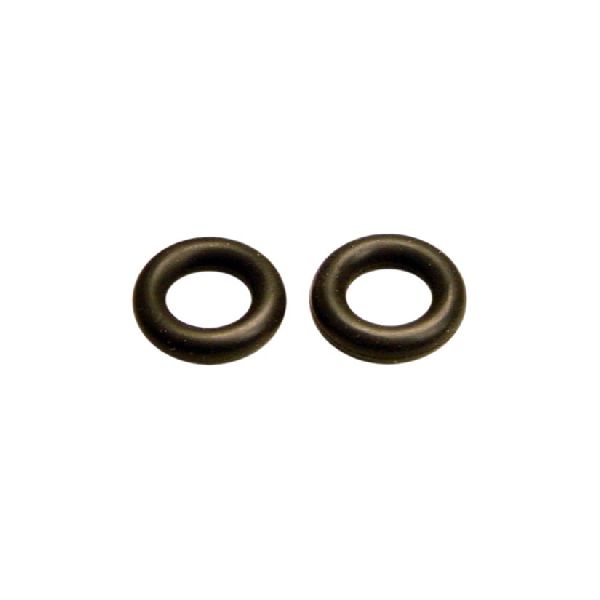
(OEM #F77Z-9G512-AA)— This small plastic seal in the intake manifold becomes brittle and almost always breaks upon injector removal. Failure to replace it will cause a significant vacuum leak.
Trusted brands: Motorcraft, Dorman
OEM price range: $8-$15
Aftermarket price range: $5-$10 - Intake Manifold Gasket Set
(OEM #MS96124 (Fel-Pro example))— The upper intake manifold must be removed to access the fuel injectors. The gaskets are one-time use and must be replaced to prevent vacuum leaks.
Trusted brands: Fel-Pro, Mahle, Motorcraft
OEM price range: $40-$60
Aftermarket price range: $20-$40
Related Codes That Often Appear With This One
- P0302 — P0302 means 'Cylinder 2 Misfire Detected'. Since the P0202 code indicates the injector for cylinder 2 is not working, that cylinder cannot combust fuel properly, which the PCM detects as a misfire. This is an expected companion code.
- P0171 or P0174 — If the injector issue is intermittent or other related problems like vacuum leaks from broken injector seals exist, the engine may run lean, triggering 'System Too Lean' codes for Bank 1 or Bank 2.
- P1131 — A case study showed a P1131 (Lack of HO2S-11 Switch - Sensor Indicates Lean) can appear after a P0202 repair if new vacuum leaks are introduced, for example, from a poorly seated intake manifold gasket or a broken EGR component during the repair.
Platform-Specific Known Issues
- Real Owner Experience: Injector Swap Confirms Diagnosis: A user on Ranger-Forums with a 2004 4.0L engine experienced P0202 and P0204 codes. After replacing injectors with no fix, further diagnosis revealed a wiring issue. This highlights the importance of following diagnostic steps like the injector swap or wiring tests before simply replacing parts.
- Repair Story: Pin Fitment Issue: On a Mustang6G.com forum, a user with a P0202 code on a Ford vehicle discovered the cause was not the injector itself, but a poor 'pin fit' issue on the wiring harness connector (C1082). The dealer replaced the connector to resolve the intermittent open circuit. This is a good reminder to check the physical connection and pin tension at the connector.
Mechanic-Grade Diagnostic Values
- Fuel Injector Coil Resistance — expected: 11-18 Ohms. Specifically, 14.5 Ohms for Bosch P/N 0280156029 (2002-2003 models).. Failure: An 'OL' (Over Limit / Open) reading on a multimeter, or a value significantly outside the expected range.
- Injector Connector Power Supply — expected: ~12 Volts (Battery Voltage) with Key On, Engine Off.. Failure: Significantly lower voltage or no voltage indicates a problem in the power supply wire to the injector.
Scan Tool Commands That Help
- Ford IDS (Integrated Diagnostic System) or capable aftermarket tool like FORScan: Key On Engine Off (KOEO) Injector Electrical Self Test (commonly known as 'Injector Buzz Test') — This command allows the PCM to cycle each injector individually, creating an audible 'buzz'. It's used to quickly verify that the PCM driver and the wiring to each injector are capable of activating the injector's coil. A weak or absent buzz from cylinder #2 would point towards a circuit or injector coil issue.
Wiring & Ground Locations
- PCM Pin 101 — On the 104-pin Powertrain Control Module connector, located on the passenger side firewall.. This is the specific control pin for the cylinder #2 fuel injector. A continuity test between this pin and the ground/control wire at the injector connector will confirm if the wire is intact.
- G104 (Ground) — Left front of the engine compartment, often on the fender apron or engine support.. This is a primary engine compartment ground. A poor connection here can cause unstable voltage and erratic behavior from the PCM and its sensor inputs, potentially affecting injector driver operation.
- G100 / G101 (Grounds) — Located in the engine compartment, typically on the left side near the battery or rear corner.. These are major chassis and engine grounds. The PCM relies on solid ground connections to function. A corroded or loose ground at these points can lead to a variety of electrical issues, including false circuit codes.
- Injector Harness Chafe Point — On the 4.0L SOHC engine platform, the wiring harness near the fuel injector heat shields is a potential chafe point.. Vibration and heat can cause the harness insulation to wear through where it contacts the metal heat shield, leading to a short or open in the injector circuit.
OEM Part Supersession History
4L2Z-9F593-EA→4L2Z-9F593-EB— Part revision by manufacturer.
Heads up: This part is for 2004-2005 models.1L2E-B5A (Ford Engineering #)→0280156029 (Bosch P/N)— Standard part numbering.
Heads up: This part is for 2002-2003 models and uses an EV1 (Jetronic) style connector. It is not interchangeable with the 2004-2005 style injector.
Model Year Variations Within This Range
- 2002-2003: Uses fuel injector part number 0280156029 (or equivalent Ford P/N 1L2Z9F593BA). This injector uses the older EV1/Jetronic style electrical connector.
- 2004-2005: Uses fuel injector part number 4L2Z-9F593-EB. This injector uses the newer USCAR/EV6 style electrical connector. The two types are not plug-and-play interchangeable.
Diagnostic Flowchart
Other Known Issues on This Vehicle
Issues unrelated to this code that are worth knowing about as an owner of this generation:
- Timing Chain Cassette Failure 🔴 High — Very common, especially on earlier SOHC models ('97-'03). Failure can occur as early as 45,000-60,000 miles, but is a risk at any mileage. Often presents as a 'rattle' on startup or at idle. (Ref: No recall, but multiple TSBs and updated parts were released over the years. Repair is extremely labor-intensive as one chain is at the rear of the engine, requiring engine removal.)
- Cracked Plastic Thermostat Housing 🔴 High — Extremely common. The OEM plastic housing is prone to cracking and warping from heat cycles, causing significant coolant leaks. (Ref: No recall. Aftermarket manufacturers offer more durable aluminum replacement housings (e.g., Dorman 902-1999 for 2002-2010 models).)
- 5R55S/W/N Transmission Failure 🔴 High — Widespread. Common issues include harsh/delayed shifting, shift flares, loss of gears, and flashing O/D light. Problems often stem from worn servo bores in the aluminum case or solenoid pack failure. (Ref: Numerous TSBs exist for various shift quality complaints. No major recall. Fixes range from solenoid pack replacement to servo bore sleeves or a full transmission rebuild.)
- Rear Wheel Bearing Failure 🟠 Medium — Common. Owners report a loud humming or grinding noise from the rear of the vehicle that increases with speed. Failure can occur before 100,000 miles. (Ref: No recall. The bearing is a press-in unit within the rear knuckle, making replacement more difficult than a bolt-on hub assembly.)
Used vs. New Parts: Buying Guide for This Vehicle
When a used part is the smart pick: For this repair, a used OEM fuel injector from a low-mileage donor vehicle can be a cost-effective option, as OEM injectors (Motorcraft/Bosch) are generally reliable. However, given the critical nature of the part and the labor involved, a new or professionally remanufactured injector is often a safer bet.
Donor-vehicle mileage cap: roughly under 80000 miles for the part to have meaningful remaining life.
What to inspect on the donor part:
- Check for physical damage, cracks in the plastic body, or severe corrosion on the electrical connector.
- Ensure the pintle cap (the small plastic tip) is intact and not missing or broken.
- If possible, ask for the resistance reading of the injector before purchase to verify it's within the 11-18 ohm spec.
- Verify the part number on the injector body matches the correct one for your model year (0280156029 for '02-'03, 4L2Z-9F593-EB for '04-'05).
OEM-only on this vehicle (don't cheap out):
- While not strictly 'OEM-only', using Motorcraft or the original OEM supplier (Bosch) for fuel injectors is highly recommended for fitment and performance consistency.
Aftermarket brands forum-validated for this vehicle:
- Bosch (OEM supplier)
- Standard Motor Products (SMP)
- GP Sorensen
- Duralast (from AutoZone)
Brands owners have reported issues with on this vehicle:
- Unnamed, no-brand injectors from online marketplaces should be avoided. Some sources specifically warn against mixing aftermarket and genuine injectors in the same engine due to potential differences in flow rates and spray patterns, which can cause subtle performance issues. It is best practice to replace all six injectors if moving from OEM to an aftermarket brand.
Real Owner Stories
Aggregated from forums and TSBs cited above. Mileages and costs reflect what owners reported in those sources.
2004 Ford Ranger 4.0L SOHC
Symptoms: Experienced P0202 and P0204 codes. The owner replaced injectors but the issue persisted.
What fixed it: Further diagnosis revealed a wiring issue rather than faulty injectors.
Source hint: ranger-forums.com thread 'injector circuit open cant find issuep0202-p0204-2004-4-0-a'
2002-2005 Ford Explorer (General)
Symptoms: Check engine light with P0202 code; intermittent open circuit.
What fixed it: Replacement of the wiring harness connector (C1082) due to a poor 'pin fit' issue and loss of pin tension.
Source hint: mustang6g.com forum account of P0202 wiring connector pin fitment issue
Documented NHTSA Reports
Multiple Circuit Failures Reported
Symptoms: An owner reported that while driving, their vehicle would turn over but not start, with the check engine light displaying codes P0201 and P0202, indicating an open circuit for every injector (NHTSA ODI #10944544).
Intermittent Electrical Issues
Symptoms: Another report described a situation where the vehicle required pulling over immediately due to codes P0010, P0201, P0202, P0203, and P0204. Although the dealer checked and reassembled electrical connections, the issue recurred (NHTSA ODI #10405277).
Related OBD-II Codes
Frequently Asked Questions
Where is cylinder #2 located on my 2002-2005 Ford Explorer 4.0L V6?
What is the correct resistance for a replacement fuel injector on this engine?
Is there a specific spot where the wiring harness usually fails on the Explorer 4.0L?
Should I replace anything else while I am replacing the cylinder #2 injector?
Can I use a 'noid light' to test the injector circuit on my Ford?
Are there any other common 4.0L SOHC issues I should look out for while fixing this?
Helpful Videos
We Have This Part in Stock


The information in this article is provided for general reference and educational purposes only. Vehicle specifications, procedures, and part compatibility can vary by production date, trim level, and region. Always consult your vehicle's factory service manual and verify part numbers before purchasing or performing repairs. Safety-critical components such as airbags, seat belts, and braking systems should be installed by a qualified professional.
- Ford Explorer:
- 🧭 Diagnostic Flowchart
- 🎬 Helpful Videos
- 🛍️ Shop This Part
- What's Unique About the 2002-2005 Ford Explorer
- Symptoms You May Notice
- Most Likely Causes
- Technical Service Bulletins (TSBs) & Recalls
- Diagnosis Steps
- Parts You'll Likely Need
- Related Codes That Often Appear With This One
- Platform-Specific Known Issues
- Mechanic-Grade Diagnostic Values
- Scan Tool Commands That Help
- Wiring & Ground Locations
- OEM Part Supersession History
- Model Year Variations Within This Range
- Other Known Issues on This Vehicle
- Used vs. New Parts: Buying Guide for This Vehicle
- Real Owner Stories
- 2004 Ford Ranger 4.0L SOHC
- 2002-2005 Ford Explorer (General)
- Documented NHTSA Reports
- Multiple Circuit Failures Reported
- Intermittent Electrical Issues
- Related OBD-II Codes
- Frequently Asked Questions
- 🎟️ Get 5% Off