

P0202 on 2008-2019 Ford Taurus 3.5L: Injector Circuit Malfunction Causes and Fixes
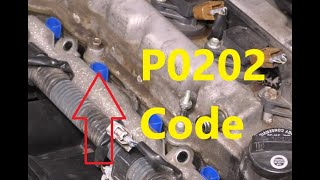
Code P0202 on a Ford Taurus 3.5L V6 indicates an electrical problem with the fuel injector in cylinder #2. The most common cause is a failed fuel injector, followed by wiring issues. Expect to pay $50-$175 for a new injector and 1.5-2.5 hours of labor if a shop does the work, as the intake manifold must be removed to access the rear bank.
- P0202 means there is an electrical fault with the fuel injector for cylinder #2.
- The most likely cause is a failed fuel injector, which can be confirmed by testing its resistance with a multimeter.
- Cylinder #2 is the middle cylinder on the rear bank (near the firewall), which requires removing the upper intake manifold for access.
- Always check the wiring and connector before condemning the injector. A 'noid light' is the best tool to verify the PCM is sending a signal.
- If the code persists after replacing the injector, the wiring harness or the PCM itself could be at fault.
What's Unique About the 2008-2019 Ford Taurus
On the Ford Taurus with the transverse 3.5L V6, cylinder #2 is located on the rear cylinder bank (closest to the firewall), which makes accessing the injector and its wiring more difficult than for the front cylinders. Additionally, some Ford engine control systems of this era have been noted to have insufficient circuit protection between the fuel injectors and the PCM. This means a short-circuited fuel injector can sometimes cause permanent damage to the injector driver circuit inside the PCM, turning a simple injector job into a more complex and expensive computer replacement. In some cases, a faulty PCM can be diagnosed by wiggling or squeezing the module and observing a change in engine behavior.
Generation note: This guide covers the fifth generation (2008-2009) and sixth generation (2010-2019) Ford Taurus. Both generations used the 3.5L Duratec V6 engine, and the causes and diagnostic procedures for code P0202 are consistent across them as the core engine design did not change. The primary difference is body styling and interior features, which do not affect this specific repair.
Symptoms You May Notice
- Check Engine Light is on (may be flashing if the misfire is severe)
- Rough, shaking, or uneven idle
- Noticeable engine misfire, which may feel like a shudder or stumble
- Hesitation or loss of power when accelerating
- Decreased fuel economy
- Engine may be difficult to start
- Strong smell of raw gasoline from the exhaust
- Replacing the spark plug or ignition coil for cylinder 2. While these parts can cause a misfire code (P0302), the P0202 code specifically points to an electrical fault in the fuel injector's circuit, not the ignition system. The misfire is 🎬 Watch: Understanding the causes and fixes for the P0202 code. a symptom of the injector problem.
Most Likely Causes
- Failed Cylinder 2 Fuel Injector 🔴 High Probability → Shop Fuel Injector The internal coil winding of the fuel injector can fail from heat cycles and age, creating an open circuit. This is the most common failure point for this code.
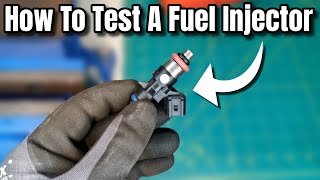
How to confirm: Measure the resistance of the injector using a multimeter. A healthy injector for this engine should read between 11-18 ohms. If the reading is infinite (OL for 'Open Loop'), the injector is open and has failed. Alternatively, swap the #2 injector with an adjacent one (like #1 or #3). Clear the codes and run the engine. If the code changes to P0201 or P0203, the injector is confirmed bad. 🎬 See this guide for 5 simple ways to test injectors.
Typical fix: Replace the faulty fuel injector. Since accessing the rear bank requires removing the upper intake manifold, many owners and technicians choose to replace all three rear injectors (or all six) at the same time as a preventative measure to avoid future repeat labor costs.
Est. part cost: $50-$175 per injector - Wiring Harness or Connector Fault 🟡 Medium Probability The engine wiring harness is exposed to heat and vibration, which can cause wires to chafe, break, or corrode. The injector connector itself can also become brittle, corroded, or have its pins back out. Check where the harness may rub against engine components or brackets.
How to confirm: Visually inspect the wiring going to the cylinder 2 injector for any signs of melting, chafing, or breaks. Unplug the connector and check for corrosion or bent/damaged pins. Use a 'noid light' in the connector; it should flash when the engine is cranked, indicating a signal from the PCM. If there is no signal, test for continuity on both wires between the injector connector and the PCM connector.
Typical fix: Repair the damaged section of wire using a quality butt connector with heat shrink. If the connector is damaged, replace it with a new pigtail connector (Motorcraft WPT-1175 is a common example, but verify application).
Est. part cost: $15-$40 for a pigtail connector
Rare But Worth Checking
- Faulty Powertrain Control Module (PCM): → Shop Engine Control Module (ECM) This is rare, but should be considered if the injector and wiring have both been proven to be good. A shorted injector can sometimes damage the internal driver circuit within the PCM, requiring the PCM to be repaired or replaced. Always confirm the injector is not shorted (near-zero resistance) before installing a new PCM to prevent immediate damage to the replacement unit.
Diagnosis Steps
- Verify the code with an OBD-II scanner. Note if P0302 is also present.
- Identify Cylinder 2. On the transverse 3.5L V6, the cylinders against the firewall are 1-2-3, from passenger to driver side. Cylinder 2 is the middle one on the rear bank.
- Visually inspect the wiring harness leading to the cylinder 2 injector. Look for any obvious signs of damage, melting, or chafing against other components. Check that the connector is securely plugged in.
- Test the injector circuit signal. The best tool is a 'noid light', which plugs into the injector harness connector. Start the engine; the light should flash steadily. If it does, the PCM and wiring are likely okay, pointing to a bad injector. If it does not flash, the problem is in the wiring or the PCM. Pro Tip: The PCM may shut down the driver circuit after detecting a fault. If the noid light doesn't flash, clear the codes and try again immediately upon cranking.
- Test the injector resistance. Disconnect the injector and use a multimeter set to Ohms. Touch the probes to the two pins on the injector. A good injector should read between 11-18 Ohms. An infinite reading (OL) means the injector is open and bad. A reading of zero or very low ohms means it's shorted and bad.
- (Optional) Swap injectors. If the injector resistance tests good but you still suspect it, swap the #2 injector with the #3 injector. If the code changes to P0203, the injector is confirmed to be faulty.
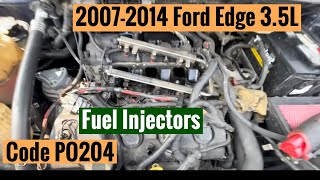
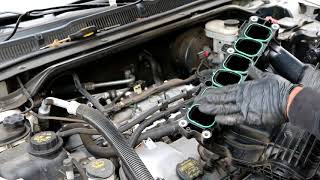
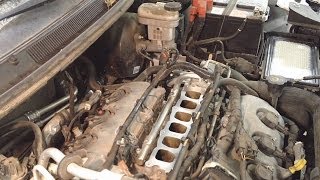
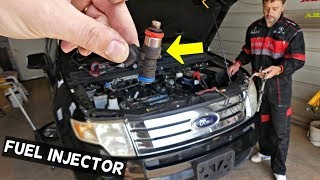
- If the injector tests bad, replace it. Access requires removing the upper intake manifold. 🎬 Watch: Step-by-step fuel injector replacement on the Ford 3.5L engine.
- If the injector tests good but the noid light doesn't flash, you must test the wiring. Check for continuity on both wires from the injector connector back to the PCM connector. Repair any open or shorted wires.
- If the wiring and injector are both confirmed good, the fault likely lies within the PCM itself, which may require professional diagnosis and replacement.
Parts You'll Likely Need
- Fuel Injector
(OEM #BA5E-9F593-AA / 0280158191 / CM5165 / 7T4Z-9F593-B)— This is the most common cause of a P0202 code, due to internal electrical failure of the injector's coil.
Trusted brands: Motorcraft, Bosch, Standard Motor Products
OEM price range: $120-$180
Aftermarket price range: $50-$90 - Upper Intake Manifold Gaskets
(OEM #7T4Z-9439-A (Upper to Lower), 7T4Z-9E936-A (Throttle Body))— These must be replaced whenever the upper intake manifold is removed to access the fuel injectors on the 3.5L V6 engine to prevent vacuum leaks.
Trusted brands: Fel-Pro, Motorcraft, Mahle
OEM price range: $25-$40
Aftermarket price range: $15-$30 - Injector Connector Pigtail
(OEM #Motorcraft WPT-1175)— Needed if the original connector is broken, corroded, or the wires are damaged at the connector.
Trusted brands: Motorcraft, Dorman
OEM price range: $25-$40
Aftermarket price range: $15-$25
Related Codes That Often Appear With This One
- P0302 — P0302 means 'Cylinder 2 Misfire Detected'. Since the P0202 code indicates the cylinder 2 injector isn't firing correctly, that cylinder isn't producing power, which the PCM detects as a misfire. The P0202 is the cause, and the P0302 is the symptom.
- P0171 or P0174 — These are 'System Too Lean' codes for Bank 1 or Bank 2. If an injector isn't firing, the oxygen sensor for that bank will detect excess oxygen in the exhaust, leading the PCM to believe the engine is running lean.
- P0201, P0203 — If other injector codes for the same bank appear simultaneously, it strongly suggests a wiring harness problem (like a shared power or ground fault) or a blown fuse, rather than multiple injectors failing at once.
Platform-Specific Known Issues
- Real-World Diagnosis by Swapping Injectors: A user on r/fordfusion with a 3.5L engine (same family) experienced intermittent P0203 and P0303 codes. They confirmed the injector was the root cause by swapping it with the cylinder 2 injector. The codes followed the injector, changing to P0202 and P0302, proving the injector was faulty and needed replacement. This is a highly effective real-world diagnostic step.
Technical Service Bulletins (TSBs) & Recalls
- Bulletin #SSM 49759: A manufacturer service bulletin notes that an illuminated malfunction indicator lamp (MIL) may occur with diagnostic trouble codes P0201, P0202, P0203, P0204, P0205, or P0206. It advises technicians to follow appropriate Pinpoint Tests in the Powertrain Control/Emissions Diagnosis Manual (PC/ED) for the DTCs received.
Mechanic-Grade Diagnostic Values
- Fuel Injector Coil Resistance — expected: 11 - 16 Ohms. Failure: A reading of infinity (OL) indicates an open circuit. A reading near zero indicates a short. A high resistance reading (e.g., 23 kOhms) also indicates failure.
- Injector Connector Power Supply Voltage (KOEO) — expected: Greater than 10.5 Volts DC (should be close to battery voltage). Failure: Voltage below 10.5V indicates an open or high resistance in the power supply (VPWR) wire from the power relay.
- Injector Pulse Width (at idle, via scan tool) — expected: 0.8 ms to 2.5 ms. Failure: A pulse width on cylinder 2 that is zero or significantly different from other cylinders points to a control or injector issue.
Hidden / Shadow Codes Worth Checking
- P062D: 'Fuel Injector Driver Circuit Performance Bank 1'. While P0202 points to a specific cylinder, this code can sometimes appear alongside it, indicating a broader issue with the group of injector drivers in the PCM for Bank 1 (which includes cylinder 2). (see via Most standard OBD-II scanners. It may appear if the fault is severe enough to affect the entire bank's driver circuit monitoring.)
Scan Tool Commands That Help
- FORScan: Key On Engine Off (KOEO) Injector Electrical Self Test (Buzz Test) — This is an excellent, accessible test for DIYers. It commands the PCM to individually 'buzz' each injector. You can listen for an audible, crisp click from each injector. A weak or silent injector #2 points to a failure in the injector or its wiring. The software may also report a circuit fault code directly.
- Ford IDS (Integrated Diagnostic System): Relative Injector Flow Test — This is a professional-level bidirectional test. The IDS cranks the engine, pulses each injector individually, and measures the corresponding fuel pressure drop using the fuel rail pressure sensor. It then compares the flow rate (in milliseconds) of each injector. If injector #2 shows a flow rate significantly different from the others, it confirms a mechanical or electrical issue with that injector.
Wiring & Ground Locations
- PCM Connector C175E — The Powertrain Control Module (PCM) is located in the engine bay, typically on the passenger side firewall.. This is one of the main connectors to the PCM. The control wire for the cylinder #2 fuel injector runs to a specific pin on this connector. For a 2011 model, for example, the injector 2 control wire is a Green/Brown wire at Pin 67 of C175E. This is the terminal to test for continuity back to the injector connector.
- Injector Power Supply — The power supply wire is common to all injectors on a bank.. The power wire (often Violet/Green on some diagrams) provides battery voltage to one side of the injector. The PCM provides the pulsed ground on the other wire (the control wire) to fire it. A lack of voltage on the power wire would affect multiple injectors, not just cylinder 2.
- Main Engine/Body Grounds — Key ground points are located on the vehicle's frame rails, inner fenders, and on the engine block itself. For example, a common body ground cable part number is DG1Z-19A095-B for 2013-2019 models.. A poor or corroded main engine or PCM ground can cause a host of electrical issues, including erratic injector performance. While less likely to isolate to a single injector, it's a critical check if multiple strange electrical faults are present.
Real Owner Repair Stories
- YouTube channel 'Ford/lincoln/mercury v6 3.5L p0203 Fuel Injector circuit' (Lincoln with 3.5L V6 (same engine family)) — Check Engine Light with codes P0203 and P0303 (Cylinder 3, but same diagnostic principle).
❌ Tried (didn't work) Initial check of wiring diagrams from a popular service was found to be incorrect for the PCM pinout.
✅ What actually fixed it After removing the intake manifold, the technician tested the resistance of the #3 injector and found it was 2.23 kOhms (2,230 Ohms), while a known-good injector measured 12 Ohms. The extremely high resistance of the faulty injector confirmed it had failed internally. The injector was replaced to fix the issue. - NHTSA ODI #10944544: An owner reported that while driving, their vehicle would turn over but not start. The check engine light was on with OBD codes P0201 and P0202, indicating an open circuit for every injector.
- NHTSA ODI #10405277: A driver reported having to pull over immediately when their vehicle experienced issues. The codes pulled were P0010, P0201, P0202, P0203, and P0204. The dealer checked the electrical connections and reassembled the components.
OEM Part Supersession History
7T4Z-9F593-B→BA5E-9F593-AA (Motorcraft CM-5165)— Standard part number evolution and potential minor design or manufacturing improvements.
Heads up: These part numbers apply to the Port Fuel Injection (PFI) Duratec 3.5L. They are NOT compatible with the Gasoline Direct Injection (GDI) injectors used on the 3.5L EcoBoost engine, which have a much lower resistance (1-2 Ohms vs 11-16 Ohms).
Model Year Variations Within This Range
- 2008-2010 vs 2011-2019: While the base engine remained the same, the 2011 model year introduced Ti-VCT (Twin Independent Variable Camshaft Timing) to the 3.5L Duratec, which boosted horsepower. This involved PCM software changes, but the fundamental fuel injector design, resistance specifications, and diagnostic approach for a P0202 code remain consistent across the entire generation span.
Diagnostic Flowchart
Other Known Issues on This Vehicle
Issues unrelated to this code that are worth knowing about as an owner of this generation:
- Internal Water Pump Failure 🔴 High — Common failure, often cited between 80,000 and 150,000 miles. When the pump fails, it leaks coolant directly into the engine oil crankcase. (Ref: No recall, but it is a widely documented design flaw. Failure leads to contaminated oil, which can cause catastrophic bearing and timing chain failure if not caught immediately.)
- Electronic Throttle Body (ETB) Failure 🟠 Medium — Widespread issue on many Ford models of this era, causing the vehicle to suddenly enter a low-power 'limp mode'. (Ref: Ford issued Customer Satisfaction Program 13N03 for this issue on some models. The failure is typically internal to the ETB electronics and requires full replacement.)
- Timing Chain Stretch / Phaser Rattle 🟠 Medium — Can occur, especially on higher mileage vehicles or when oil change intervals are extended. Often exacerbated by oil contamination from a failing water pump. (Ref: Multiple TSBs (e.g., SSM 50067, SSM 47170) address related VCT solenoid issues, which can be a symptom of the larger timing system wear.)
- Power Transfer Unit (PTU) Leak / Failure (AWD Models) 🔴 High — The PTU on all-wheel-drive models is prone to overheating and fluid breakdown due to its small fluid capacity and lack of a drain plug, leading to seal leaks and internal failure.
Used vs. New Parts: Buying Guide for This Vehicle
When a used part is the smart pick: A used fuel injector is generally not recommended. The cost of labor (especially removing the intake manifold) is high, and the failure is electronic wear-and-tear. The risk of a used injector failing shortly after installation outweighs the small cost savings over a new aftermarket part.
Donor-vehicle mileage cap: roughly under 50000 miles for the part to have meaningful remaining life.
What to inspect on the donor part:
- Verify the part number on the injector matches the OEM number for your vehicle.
- Check the electrical connector for any cracks, corrosion, or bent pins.
- Inspect the plastic body for any signs of cracking or heat damage.
- Ask for the resistance reading (in Ohms) from the seller if possible; it should be within the 11-16 Ohm range.
OEM-only on this vehicle (don't cheap out):
- Powertrain Control Module (PCM) - Due to vehicle-specific programming (VIN, PATS security), a used PCM must be professionally reprogrammed, often making a pre-programmed remanufactured unit a better choice.
Aftermarket brands forum-validated for this vehicle:
- Bosch (often the OEM supplier)
- Standard Motor Products (SMP)
- GB Remanufacturing (for quality remanufactured injectors)
Brands owners have reported issues with on this vehicle:
- Unnamed, no-brand injectors from online marketplaces. These often have inconsistent quality control, incorrect resistance values, or poor spray patterns that can cause performance issues even if they resolve the P0202 code.
Real Owner Stories
Aggregated from forums and TSBs cited above. Mileages and costs reflect what owners reported in those sources.
Ford Fusion 3.5L V6 (Platform Mate)
Symptoms: Intermittent P0203 and P0303 codes (misfire and injector circuit codes for cylinder 3).
What fixed it: The owner swapped the #3 injector with the #2 injector. The codes followed the injector, changing to P0202 and P0302, confirming the injector itself was faulty and required replacement.
Source hint: vehicle_specific_issues - Real-World Diagnosis by Swapping Injectors (referencing r/fordfusion)
Related OBD-II Codes
Frequently Asked Questions
Where is Cylinder 2 located on my 2008-2019 Ford Taurus 3.5L V6?
What is the correct resistance for a fuel injector on the Duratec 35 engine?
Is there a specific replacement connector part number for the injector wiring?
Why do mechanics recommend replacing all rear injectors at once on the Taurus?
Can a bad fuel injector cause my Taurus to enter 'limp mode'?
My noid light isn't flashing on Cylinder 2; does this mean my PCM is definitely bad?
Helpful Videos
We Have This Part in Stock



The information in this article is provided for general reference and educational purposes only. Vehicle specifications, procedures, and part compatibility can vary by production date, trim level, and region. Always consult your vehicle's factory service manual and verify part numbers before purchasing or performing repairs. Safety-critical components such as airbags, seat belts, and braking systems should be installed by a qualified professional.
- Ford Taurus:
- 🧭 Diagnostic Flowchart
- 🎬 Helpful Videos
- 🛍️ Shop This Part
- What's Unique About the 2008-2019 Ford Taurus
- Symptoms You May Notice
- Most Likely Causes
- Rare But Worth Checking
- Diagnosis Steps
- Parts You'll Likely Need
- Related Codes That Often Appear With This One
- Platform-Specific Known Issues
- Technical Service Bulletins (TSBs) & Recalls
- Mechanic-Grade Diagnostic Values
- Hidden / Shadow Codes Worth Checking
- Scan Tool Commands That Help
- Wiring & Ground Locations
- Real Owner Repair Stories
- OEM Part Supersession History
- Model Year Variations Within This Range
- Other Known Issues on This Vehicle
- Used vs. New Parts: Buying Guide for This Vehicle
- Real Owner Stories
- Ford Fusion 3.5L V6 (Platform Mate)
- Related OBD-II Codes
- Frequently Asked Questions
- 🎟️ Get 5% Off