

P0202 on 2016-2022 Honda Pilot: Injector Circuit Malfunction Causes and Fixes
On a 2016-2022 Pilot, code P0202 is most often caused by a faulty fuel injector, a known issue acknowledged by Honda. Before paying for repairs, check with a dealer if your VIN is covered by a warranty extension (TSB 21-010) for 10 years/150,000 miles. The official fix is to replace all six injectors with the updated part kit.
- P0202 on a 2016-2022 Pilot is very likely due to a known fuel injector defect.
- Your first action should be to call a Honda dealer with your VIN to check for coverage under the 10-year/150,000-mile warranty extension.
- The correct repair is to replace all six injectors as a set, not just the one for cylinder 2.
- This is not a beginner-friendly DIY repair due to the location of the rear fuel rail, which requires removing the intake manifold.
- Ignoring the issue can lead to costly damage to the catalytic converter.
What's Unique About the 2016-2022 Honda Pilot
The 2016-2022 Honda Pilot with the J35Y6 direct-injection V6 has a well-documented, widespread issue with its fuel injectors. Honda issued Technical Service Bulletin 21-010 (which supersedes earlier versions like 20-100 and 18-025), acknowledging that debris from the high-pressure fuel pump or the original injector manufacturing process can cause injectors to become clogged or fail internally. This problem is so prevalent that Honda extended the warranty on the fuel injectors to 10 years or 150,000 miles for affected vehicles. Therefore, a P0202 code on this specific vehicle is highly likely to be related to this known defect rather than a random wiring issue.
Symptoms You May Notice
- Check Engine Light is on
- Rough or unstable idle
- Engine misfiring or vibrating, especially noticeable at idle
- Hesitation or lack of power during acceleration
- Reduced fuel economy
- Engine may stall intermittently
- Replacing only the spark plug or ignition coil for cylinder 2. While these can cause a misfire (P0302), they do not cause an injector circuit code (P0202). The issue is with the fuel delivery circuit, not ignition.
Most Likely Causes
- Faulty or Clogged Fuel Injector #2 🔴 High Probability → Shop Fuel Injector A known manufacturing defect can cause debris to clog or damage the injectors. Honda has acknowledged this with TSB 21-010 and a subsequent warranty extension.
How to confirm: The first step is to contact a Honda dealer with your VIN to check for eligibility under the fuel injector warranty extension. If not covered, a technician can perform a cylinder balance test or swap the injector with another cylinder to see if the fault code follows (e.g., changes to P0201 if swapped with cylinder 1).
Typical fix: Replace all six fuel injectors as a set with the updated parts (Kit P/N 06160-RLV-315), along with a new fuel joint pipe and associated seals, as recommended by Honda's TSB.
Est. part cost: $350-$500 for a complete OEM kit. - Damaged Wiring or Loose Connector 🟡 Medium Probability Rodents are known to chew on the soy-based wiring insulation used in many modern vehicles, including Hondas. The harness leading to the rear bank of injectors can be an attractive target.
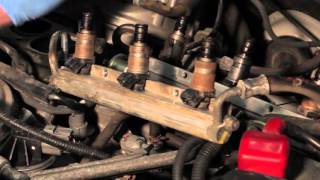
How to confirm: Visually inspect the wiring harness and connector going to the cylinder 2 fuel injector for any signs of damage, corrosion, or looseness. Use a multimeter to check for continuity to the PCM and a noid light to verify the PCM is sending a pulse signal. 🎬 Watch this video to understand P0202 causes and circuit fixes.
Typical fix: Repair the damaged section of the wiring harness or clean/replace the connector.
Est. part cost: $5-$50
Rare But Worth Checking
- Faulty Powertrain Control Module (PCM): → Shop Engine Control Module (ECM) This is the least likely cause. The PCM's internal driver for the injector can fail, but all other possibilities should be exhausted before considering PCM replacement, as it is expensive and requires programming.
Diagnosis Steps
- Read the trouble codes with an OBD-II scanner and note any other codes present.
- CRITICAL FIRST STEP: Contact a Honda dealership with your vehicle's VIN. Ask if it is covered under the warranty extension for fuel injectors related to TSB 21-010. If it is, the diagnosis and repair should be covered free of charge.
- If not covered by warranty, proceed with diagnosis. Locate cylinder #2 (rear bank, middle cylinder). Access will require removing the upper intake manifold.
- Visually inspect the fuel injector's electrical connector and wiring for any obvious signs of damage, corrosion, or loose connections.
- Disconnect the injector and check its resistance with a multimeter. Direct injectors have very low resistance (typically 1-2 ohms), so a precise reading is difficult. The key is to compare the reading to the other injectors. A significant deviation or an open circuit (infinite resistance) indicates a bad injector.
- Use a 'noid light' to test the electrical connector. The light should flash consistently when the engine is cranked, indicating the PCM is sending a signal.
- If the wiring and signal are good, the injector is the most likely culprit. To be 100% certain, swap the #2 injector with an adjacent one (e.g., #1 or #3). This is labor-intensive. Clear the codes and run the engine. If the code changes to P0201 or P0203, the injector is confirmed faulty.
Parts You'll Likely Need
- Fuel Injector Kit (Set of 6)
(OEM #06160-RLV-315 (supersedes 06160-RLV-305))— This is the official fix per Honda's TSB 21-010. It includes all six updated injectors and required seals to resolve the known manufacturing defect.
Trusted brands: Genuine Honda
OEM price range: $400-$500
Aftermarket price range: N/A (Strongly recommended to use OEM kit) - Fuel Joint Pipe
(OEM #16012-R9P-315 (supersedes 16012-R9P-305))— This is a one-time-use high-pressure fuel pipe that connects the fuel rails. It must be replaced anytime the fuel rail is serviced, per Honda's repair procedure.
Trusted brands: Genuine Honda
OEM price range: $80-$120
Aftermarket price range: N/A - Intake Manifold Gaskets
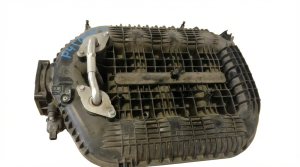
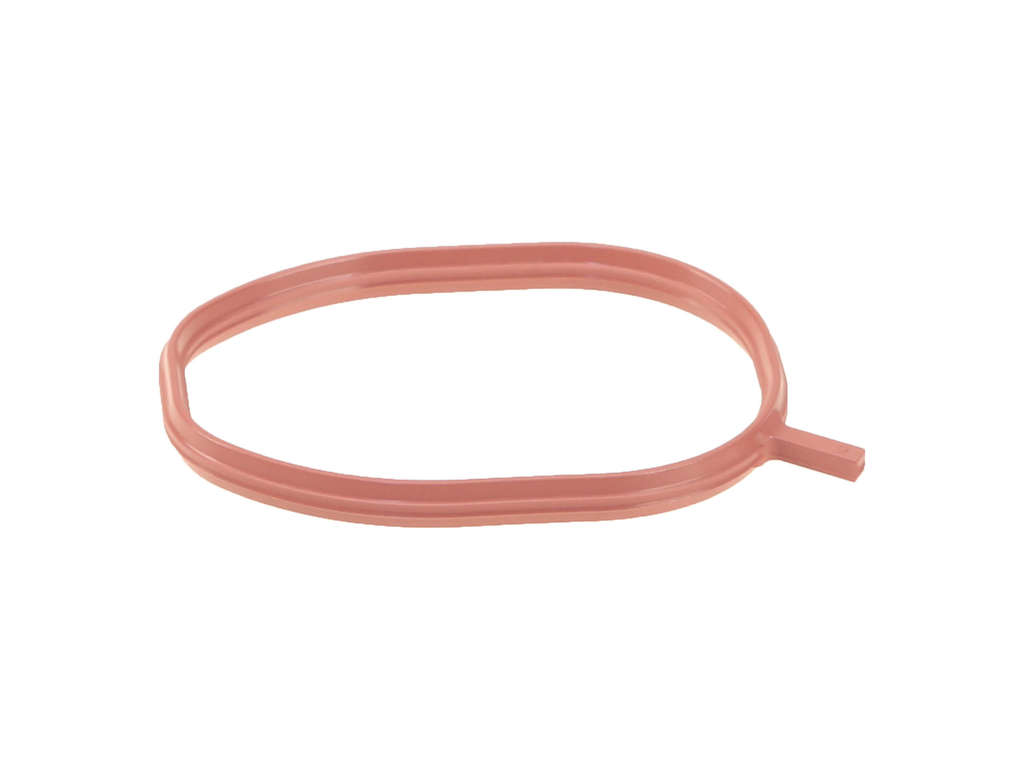
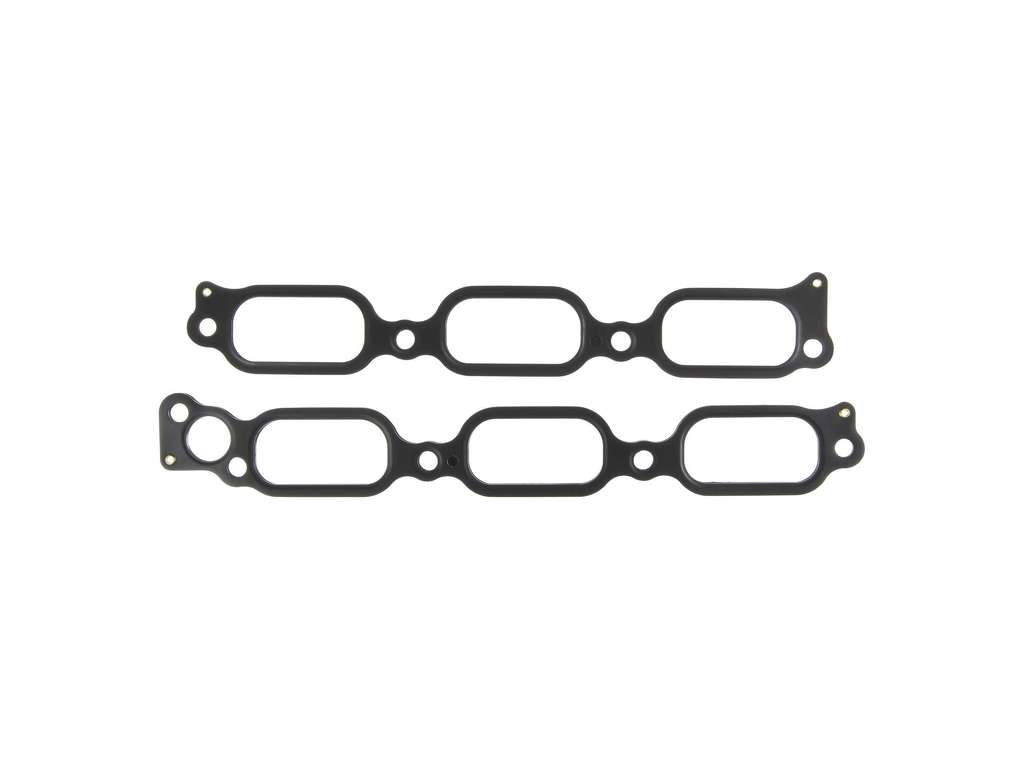
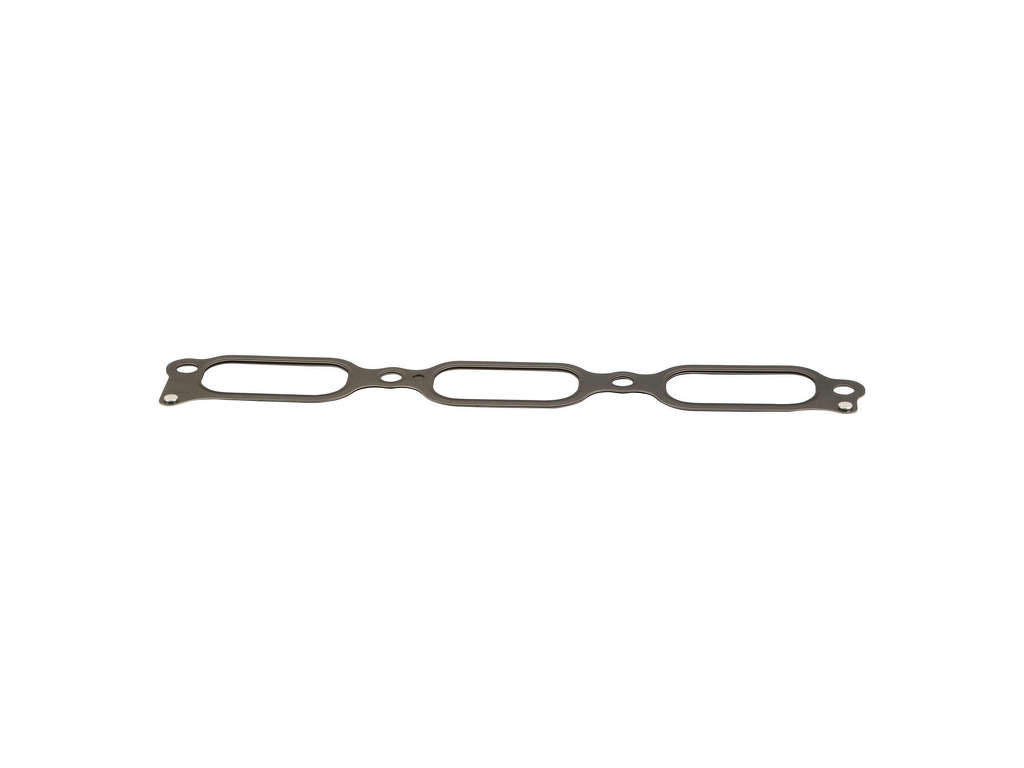
(OEM #17146-5J6-A01 (Rear), 17106-5J2-A01 (Front))— The intake manifold must be removed to access the fuel injectors on the rear bank. The gaskets are considered one-time-use and should be replaced to prevent vacuum leaks.
Trusted brands: Genuine Honda, Mahle, Fel-Pro
OEM price range: $40-$60
Aftermarket price range: $20-$40
Related Codes That Often Appear With This One
- P0302 — Stands for 'Cylinder 2 Misfire Detected.' A faulty injector circuit will prevent proper fueling, leading to a misfire in that cylinder.
- P0300 — Stands for 'Random/Multiple Cylinder Misfire.' The injector issue is known to affect multiple cylinders, often triggering a random misfire code as the problem progresses.
- P219A / P219B — These codes indicate an air-fuel ratio imbalance. They are specifically mentioned in Honda's TSB 21-010 as being directly related to the faulty injector problem. 🎬 Watch a technician diagnose the P219B air-fuel imbalance code.
- P0420 / P0430 — Catalyst system efficiency codes. These are also mentioned in TSB 21-010, as the PCM software could misinterpret the effects of a bad injector as a failing catalytic converter.
Technical Service Bulletins (TSBs) & Recalls
- TSB 21-010: 'Warranty Extension: MIL Comes On with DTC P0420/P0430, P030x, and/or P219A/B'. This is the primary, most current document outlining the injector issue, the 10yr/150k mile warranty extension, and the repair procedure. It supersedes previous bulletins.
- TSB 20-100: The predecessor to 21-010, this bulletin also detailed the warranty extension and injector problem.
- TSB 18-025: An even earlier version of the bulletin addressing the same misfire and injector issue, later superseded by the warranty extension.
Platform-Specific Known Issues
- Warranty Extension (TSB 21-010): Honda has extended the warranty on fuel injectors to 10 years/150,000 miles for many vehicles in this range due to a known defect causing them to clog or fail. This is the most critical piece of information for an owner facing this code.
- Crankshaft Recall (23V-751): A recall was issued in November 2023 for some 2016-2019 Pilots with the J35Y6 engine due to a crankshaft manufacturing error that could lead to premature bearing wear and engine failure. While unrelated to P0202, it is a significant known issue for this powertrain.
Mechanic-Grade Diagnostic Values
- Fuel Injector Resistance (Direct Injection) — expected: 1.0 - 2.0 ohms. Failure: A reading of infinite resistance (open circuit) or a significant deviation when compared to other injectors.
- Fuel Injector Resistance (Port Injection - for comparison) — expected: 10 - 13 ohms. Failure: A reading outside this range indicates a faulty injector.
- High-Pressure Fuel Rail Pressure (at idle) — expected: 30 ±5 MPa (4352 ±725 psi). Failure: Pressure significantly below this range could indicate a weak high-pressure fuel pump, though this would likely affect all cylinders, not just one.
- Injector Circuit Voltage (Key On, Engine Off) — expected: ~12 Volts (Battery Voltage). Failure: No voltage suggests an open in the power supply circuit from the relay.
Scan Tool Commands That Help
- Honda Diagnostic System (HDS): Cylinder Power Test / Injector Cut-out Test — This bidirectional control allows the technician to disable individual fuel injectors one at a time. If disabling cylinder #2 causes no change in engine RPM, while disabling other cylinders causes a noticeable drop, it confirms that cylinder #2 was not contributing, strongly pointing to a fault in its fuel or ignition system.
- Honda Diagnostic System (HDS): CKP Pattern Relearn — While not a direct fix for P0202, this procedure is required after major engine work (like the 105k service) to ensure the PCM correctly interprets crankshaft position for timing and misfire detection. If skipped, it can lead to erroneous misfire codes.
Wiring & Ground Locations
- Cylinder #2 Location — The rear bank of cylinders (closest to the firewall). Cylinder #2 is the middle cylinder of the three in that bank. The rear bank is numbered 1-2-3 from passenger side to driver side.. This is the physical location of the component and wiring harness in question. Access is difficult and requires removing the intake manifold.
- G101 — Typically located on the engine block or thermostat housing. It serves as a primary ground termination point for the PCM and engine sensors.. A loose or corroded G101 ground can cause a wide range of bizarre electrical issues, including erratic sensor readings and injector circuit faults. While not a common cause for a single injector code, it should be checked if multiple, seemingly unrelated electrical codes are present.
- PCM Location — Located in the center console area, accessible from both driver and passenger footwells, mounted to the firewall.. Necessary for testing continuity of the injector control wire directly from the PCM connector to the injector connector, which is the definitive way to rule out a wiring problem.
Real Owner Repair Stories
- CarParts.com Q&A (Jeep Liberty (similar P0202 issue, principle applies)) — P0202 code persists with misfire and strong gas smell.
❌ Tried (didn't work) Replaced fuel injector, Replaced spark plugs, Replaced fuel rail
✅ What actually fixed it The issue was not resolved in the thread, but the expert advice pointed toward checking for a vacuum leak near cylinder 2, verifying injector connector cleanliness, and performing a compression test, as the issue was clearly not the replaced parts themselves. - Reddit user r/hondapilot (2016 Honda Pilot EX-L with 204,000 miles) — P0430, P0139, P0141, P219B, rich exhaust smell.
❌ Tried (didn't work) Injectors had been replaced previously under the TSB.
✅ What actually fixed it The consensus in the discussion was that the new codes (P0139/P0141) pointed to a faulty downstream oxygen sensor on bank 1, not a repeat failure of the injectors. The PCM was likely trying to compensate for the bad sensor reading, causing the rich condition and related codes. The fix was to diagnose and replace the O2 sensor.
OEM Part Supersession History
06160-RLV-305→06160-RLV-315— The original injectors were prone to internal failure and clogging due to debris. The -315 kit contains updated injectors designed to be more robust against this issue.16012-R9P-305→16012-R9P-315— Part update corresponding with the updated injector kit. This high-pressure fuel pipe is a one-time-use part and must be replaced during injector service.
Model Year Variations Within This Range
- 2016-2022: The J35Y6 engine and its direct injection fuel system were used consistently throughout this generation. The fuel injector problem and the associated TSB 21-010 apply to all years in this range. A 2019 refresh primarily affected the transmission and infotainment, not the core engine components related to this code.
Diagnostic Flowchart
Other Known Issues on This Vehicle
Issues unrelated to this code that are worth knowing about as an owner of this generation:
- 9-Speed Transmission Judder / Rough Shifting 🔴 High — Very common, especially on 2016-2020 models. Can occur at low mileage. Owners report judder, hesitation, or hard shifts. (Ref: TSB 17-040; TSB 23-078. Fixes often involve multiple fluid flushes and a PCM software update. In some cases, torque converter replacement is required.)
- Infotainment System Malfunctions (Black Screen, Popping Audio) 🟠 Medium — Widespread issue affecting many 2018-2022 models, leading to a class-action lawsuit. Symptoms include a blank/unresponsive screen, popping/crackling audio, and loss of backup camera. (Ref: TSB 20-049; TSB 23-047. Honda extended the warranty for the MOST bus network connectors, which are a common cause.)
- Auto Idle-Stop Failure to Restart 🔴 High — Common on 2016-2020 models. The engine shuts off at a stop but fails to restart, requiring a full power cycle. This prompted an NHTSA investigation and a class-action lawsuit. (Ref: TSB 23-008/009/010. Honda initiated a product update campaign involving a software update to remedy the issue.)
- Crankshaft/Connecting Rod Bearing Failure 🔴 High — Affects a specific range of 2016-2019 Pilots. A manufacturing defect in the crankshaft can lead to premature connecting rod bearing wear and catastrophic engine failure. (Ref: NHTSA Recall 23V-751. The fix involves inspection and potential engine replacement.)
- Carbon Buildup on Intake Valves 🟠 Medium — An inherent issue with the J35Y6 direct-injection engine. Over time (typically 80k-120k miles), carbon deposits can build up on intake valves, causing misfires, rough idle, and power loss.
Used vs. New Parts: Buying Guide for This Vehicle
When a used part is the smart pick: For this specific repair, using used parts is almost never a smart choice. However, if the cause is confirmed to be a wiring harness damaged by rodents, a used harness from a junkyard can be a cost-effective solution.
Donor-vehicle mileage cap: roughly under 100000 miles for the part to have meaningful remaining life.
What to inspect on the donor part:
- For a wiring harness, inspect for any signs of rodent damage (chew marks, nests).
- Ensure all connectors are intact with no broken clips or corroded pins.
- Check that the part comes from a vehicle that was not in a frontal collision.
OEM-only on this vehicle (don't cheap out):
- Fuel Injector Kit: The entire problem stems from a defect in the original OEM injectors. Only the updated Genuine Honda kit (06160-RLV-315) is proven to fix the issue. Aftermarket or used original-spec injectors will likely fail again.
- Fuel Joint Pipe: This is a critical high-pressure, one-time-use component. Using a non-OEM or used part is a significant safety risk.
Aftermarket brands forum-validated for this vehicle:
- For intake gaskets, brands like Mahle and Fel-Pro are considered reliable alternatives to OEM.
Brands owners have reported issues with on this vehicle:
- Avoid any aftermarket or remanufactured fuel injectors for this application. The problem is specific to a design flaw that only the updated OEM parts address.
Real Owner Stories
Aggregated from forums and TSBs cited above. Mileages and costs reflect what owners reported in those sources.
2016 Honda Pilot EX-L J35Y6
Symptoms: Multiple misfire codes including P0301, P0303, P0304, P0300, and P219A.
What fixed it: The dealer replaced all six injectors and the fuel pipe under the extended warranty (TSB 20-100).
Source hint: Piloteers.org - Thread '2016 Pilot EX-L P0301, P0303, P0304, P0300, P219A'
2016 Honda Pilot J35Y6
Symptoms: Emissions light came on with codes P0430 and P219A.
What fixed it: Dealer replacement of all injectors as per the fuel injector bulletin 20-100.
Source hint: Reddit.com/r/hondapilot - Thread '2016 Honda Pilot Fuel Injector Bulletin 20-100'
2017-2022 Honda Ridgeline J35Y6
Symptoms: Emissions light illuminated; vehicle shares the same J35Y6 engine and platform as the Pilot.
What fixed it: The dealer diagnosed and fixed the injectors under the TSB 21-010 warranty extension.
Source hint: Ridgelineownersclub.com - Thread 'TSB 21-010 Warranty Extension...'
Related OBD-II Codes
Frequently Asked Questions
Is there a warranty extension for the fuel injectors on my 2016-2022 Honda Pilot?
What specific parts does Honda recommend for fixing the P0202 injector issue?
Can I just replace the single faulty injector on cylinder #2?
Does the crankshaft recall (23V-751) cause the P0202 code?
Could rodents be the cause of my P0202 code instead of a bad injector?
How can I confirm if the injector itself is bad without buying parts?
Helpful Videos
Used OEM Parts in Stock
New Aftermarket Parts Available



The information in this article is provided for general reference and educational purposes only. Vehicle specifications, procedures, and part compatibility can vary by production date, trim level, and region. Always consult your vehicle's factory service manual and verify part numbers before purchasing or performing repairs. Safety-critical components such as airbags, seat belts, and braking systems should be installed by a qualified professional.
- Honda Pilot:
- 🧭 Diagnostic Flowchart
- 🎬 Helpful Videos
- 🛍️ Shop This Part
- What's Unique About the 2016-2022 Honda Pilot
- Symptoms You May Notice
- Most Likely Causes
- Rare But Worth Checking
- Diagnosis Steps
- Parts You'll Likely Need
- Related Codes That Often Appear With This One
- Technical Service Bulletins (TSBs) & Recalls
- Platform-Specific Known Issues
- Mechanic-Grade Diagnostic Values
- Scan Tool Commands That Help
- Wiring & Ground Locations
- Real Owner Repair Stories
- OEM Part Supersession History
- Model Year Variations Within This Range
- Other Known Issues on This Vehicle
- Used vs. New Parts: Buying Guide for This Vehicle
- Real Owner Stories
- 2016 Honda Pilot EX-L J35Y6
- 2016 Honda Pilot J35Y6
- 2017-2022 Honda Ridgeline J35Y6
- Related OBD-II Codes
- Frequently Asked Questions
- 🎟️ Get 5% Off