

P0202 on 2014-2018 Mazda Mazda3: Injector Circuit Malfunction Cylinder 2 Causes and Fixes
On a 2014-2018 Mazda3, P0202 means an electrical fault with the cylinder 2 fuel injector. Before replacing parts, check if code P0203 is also present. If both codes appear on a 2014-2016 Japan-built model, the PCM is the likely culprit per a Mazda TSB. If P0202 is alone, the fuel injector is the most probable cause.
- The first step in diagnosing P0202 on a 2014-2018 Mazda3 is to check for P0203. This is critical.
- If P0202 and P0203 are found together on a 2014-2016 Japan-built model, the PCM is the most likely culprit per TSB 01-004/17.
- If P0202 appears alone, the fault is most likely the fuel injector itself or its wiring.
- Swapping the suspect injector with one from another cylinder is a simple and effective way to confirm if the injector is the problem.
- Do not replace ignition components like spark plugs or coils for a P0202 code, as it is an electrical fuel circuit fault.
What's Unique About the 2014-2018 Mazda Mazda3
For the 2014-2016 Mazda3, this code has a very specific history documented by Mazda. A Technical Service Bulletin (TSB 01-004/17, which supersedes 01-017/16) states that if P0202 appears *together with P0203*, the cause is likely an internal failure of the DENSO-made Powertrain Control Module (PCM). This affects Japan-built models produced before May 23, 2016 (VINs lower than JM1BM**352403). This issue is also shared with platform mates like the Mazda6 and CX-5. If P0202 appears by itself, the issue is more likely a standard component failure like the injector or its wiring.
Symptoms You May Notice
- Check Engine Light illuminated (may be flashing in severe cases)
- Rough engine idle and vibration
- Engine hesitation or stumbling during acceleration
- Noticeable loss of power
- Reduced fuel economy
- Engine misfire, which may feel like a shudder or pop
- Strong fuel smell from the exhaust due to unburned fuel
- Replacing the spark plug or ignition coil for cylinder 2. P0202 is an injector *circuit* code, not an ignition or general misfire code. While a misfire (P0302) is a symptom, the root cause is in the fuel system's electrical side.
Most Likely Causes
- Faulty Powertrain Control Module (PCM) 🔴 High Probability → Shop Engine Control Module (ECM) A known issue documented in Mazda TSB 01-004/17 affects certain 2014-2016 Japan-built models (VINs lower than JM1BM**352403), causing an internal PCM failure that specifically triggers P0202 and P0203 together.
How to confirm: Scan for codes. If P0202 and P0203 are both present, and the vehicle is a DENSO-equipped model within the affected VIN range, the PCM is the confirmed cause according to the TSB. Misfire codes like P0302 and P0303 are also usually stored at the same time.
Typical fix: Replace the Powertrain Control Module (PCM). This requires programming the new module to the vehicle's VIN, which is typically done by a dealer or a specialized shop with access to Mazda's online system.
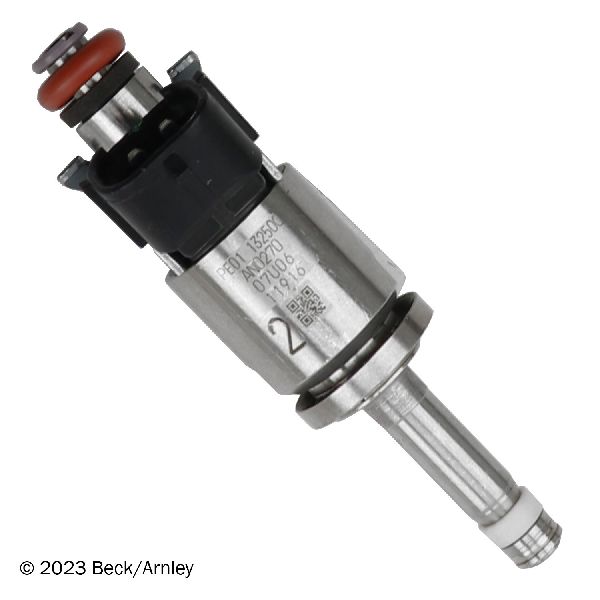
Est. part cost: $800-$1400 for a new, programmed OEM unit. - Failed Fuel Injector (Cylinder 2) 🟡 Medium Probability → Shop Fuel Injector This is the most common cause if P0202 appears alone. The internal coil of the injector can fail, creating an open circuit, or it can become clogged. This is a common failure point on many vehicles.
How to confirm: Swap the cylinder 2 fuel injector with one from another cylinder (e.g., cylinder 1). Clear the codes and run the engine. If the code changes to P0201, the injector is faulty. Alternatively, use a multimeter to check the injector's resistance; a good injector should have a specific resistance (often 12-13 ohms), while a failed 🎬 See how to test a Mazda fuel injector one may read as an open circuit (infinite ohms).
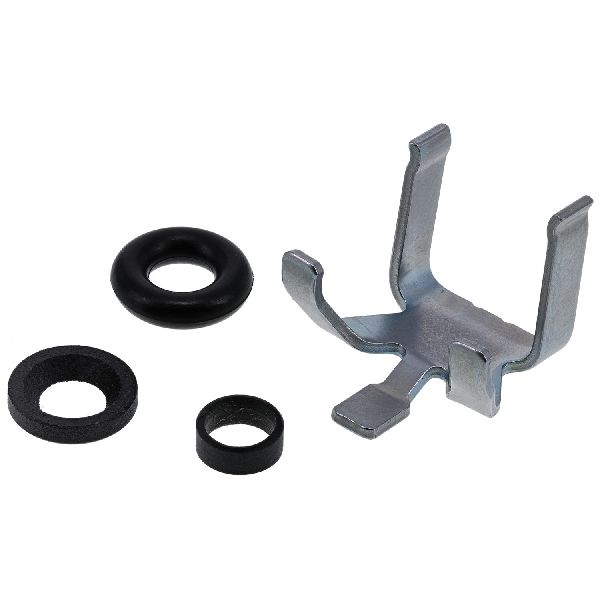
Typical fix: Replace the faulty fuel injector. It is highly recommended to replace the injector seals (O-rings) at the same time.
Est. part cost: $70-$265 for a single direct injector. - Wiring Harness or Connector Fault ⚪ Low Probability Wiring can become damaged from engine heat, vibration, or rodent damage. Mazda has also investigated potential contact between the injector wiring harness and the camshaft housing cover insulator, which could cause chafing.
How to confirm: Visually inspect the wiring harness and connector going to the cylinder 2 injector for any signs of damage, corrosion, or loose pins. Use a noid light to confirm the PCM is sending a pulse signal to the connector. Use a multimeter to check for continuity from the PCM connector to the injector connector and check for shorts to ground or power.
Typical fix: Repair the damaged section of wire or replace the connector pigtail. Ensure the harness is routed away from any potential chafe points.
Est. part cost: $15-$50 for a connector pigtail or wiring repair supplies.
Diagnosis Steps
- Connect an OBD-II scanner and confirm P0202 is present. Crucially, check for any other codes, especially P0203, P0201, or P0204.
- IF P0203 IS ALSO PRESENT: Check your vehicle's VIN and production date. If it's a Japan-built model made before May 23, 2016 (VIN lower than JM1BM**352403), the PCM is the most likely cause per TSB 01-004/17. Proceed with PCM replacement.
- IF P0202 IS THE ONLY INJECTOR CODE: Begin standard diagnosis. Locate cylinder 2 (second from the front of the engine).
- Visually inspect the wiring and connector for the cylinder 2 fuel injector. Look for any obvious signs of damage, melting, corrosion, or rodent activity. Check for potential chafing against the camshaft cover insulator.
- Test the circuit signal using a noid light. Disconnect the injector and plug in the noid light. Crank the engine. The light should flash, indicating the 🎬 Watch: How to test and fix a P0202 circuit code PCM is sending a pulse. If it doesn't flash or stays on solid, a wiring or PCM driver issue is likely.
- To quickly test the injector itself, swap the cylinder 2 injector with the cylinder 1 injector. Clear the codes, start the engine, and let it run for a few minutes.
- Re-scan for codes. If the code has moved to P0201 ('Injector Circuit / Open - Cylinder 1'), the fuel injector you moved is faulty and needs to be replaced.
- If the P0202 code returns after the swap, the injector is good, and the problem lies in the wiring or the PCM's injector driver.
- Use a multimeter to check the wiring. Test for continuity on both wires between the PCM connector and the injector connector. Then, check each wire for a short to ground or a short to power.
- If wiring is confirmed to be good, and the injector has been ruled out, the fault lies within the PCM's internal driver circuit for cylinder 2, requiring PCM replacement.
Parts You'll Likely Need
- Powertrain Control Module (PCM)
(OEM #VIN-dependent, e.g., ****-18-881*)— The most likely fix if codes P0202 and P0203 are present together on an affected 2014-2016 model, due to a known internal failure.
Trusted brands: Mazda (OEM - DENSO)
OEM price range: $900-$1400.
Aftermarket price range: N/A - Fuel Injector
(OEM #PE01-13-250D (supersedes PE01-13-250C and PE01-13-250B))— The most common fix if P0202 appears by itself. The injector's internal electronics have failed.
Trusted brands: Mazda (OEM), Bosch, Standard Motor Products (FJ1193)
OEM price range: $180-$265
Aftermarket price range: $70-$150
Related Codes That Often Appear With This One
- P0203 — According to Mazda TSBs, P0202 and P0203 appearing together is the primary indicator of a specific internal PCM failure on affected 2014-2016 models.
- P0302 — This code means 'Cylinder 2 Misfire Detected'. Since P0202 prevents the injector from delivering fuel, the cylinder cannot combust properly, leading to a misfire. P0202 is the cause, and P0302 is the effect.
- P0300 — This indicates a 'Random or Multiple Cylinder Misfire'. If the PCM fault is intermittent or severe, it can disrupt engine timing enough to be logged as a general misfire.
Technical Service Bulletins (TSBs) & Recalls
- 01-004/17 (supersedes 01-017/16): Documents a known issue where a faulty DENSO PCM causes P0202 and P0203 to appear together on certain 2014-2016 Mazda3, Mazda6, and CX-5 models.
- Bulletin #01-004-17-3317a: Notes that some vehicles may experience an engine that runs rough with the check engine light on and DTCs P0202 and P0203, often with engine misfire related DTCs (P0301-P0304) stored at the same time.
- Bulletin #01-004-17: Confirms a multi-model issue where the engine runs rough and the check engine light illuminates specifically with DTCs P0201 and P0204 or P0202 and P0203.
Platform-Specific Known Issues
- Mazda Technical Service Bulletin 01-004/17 (which supersedes 01-017/16) identifies an issue on 2014-2016 Japan-built Mazda3s where an internal PCM failure causes DTCs P0202 and P0203 to be stored simultaneously, often with corresponding misfire codes.
Mechanic-Grade Diagnostic Values
- Fuel Injector Internal Resistance — expected: 1.6–2.52 ohms (when measured between 0–80 °C / 32–176 °F). Failure: A reading of infinite ohms (Open Line) or significantly outside the specified range indicates a faulty injector coil.
- Injector Connector Voltage (KOEO) — expected: 0 V at terminal A (wiring harness-side). Failure: Any voltage reading indicates a short to power in the wiring harness. This test confirms the circuit is not shorted before checking for an open.
- Continuity Check from Injector to PCM — expected: Continuity should exist between Injector #2 connector terminal A and PCM connector terminal 1DW, and between Injector #2 terminal B and PCM terminal 1DX.. Failure: No continuity (infinite resistance) indicates an open wire in the harness.
- Injector Pulse Width (Live Data) — expected: Approximately 1-8 milliseconds (ms) at idle, increasing with engine load.. Failure: A value of 0 ms, or a value that is static and does not change with RPM, for cylinder 2 while other cylinders show normal readings.
Hidden / Shadow Codes Worth Checking
- P0202 + P0203: This specific combination of codes (along with P0302 and P0303) is not a hidden code itself, but acts as a unique diagnostic flag. Per Mazda TSB 01-004/17, this pattern is the primary indicator of the known internal PCM failure on affected models, overriding the need to diagnose injectors or wiring first. (see via Any standard OBD-II scanner. The key is interpreting the *pattern* of codes, not just a single code.)
Scan Tool Commands That Help
- Mazda M-MDS (or equivalent J2534 with Mazda software): KOER On Demand Self Test — To have the PCM run a comprehensive check of all its circuits, including the injector drivers, while the engine is running. This can confirm if the fault is currently active.
- Mazda M-MDS / FORScan: Active Fuel Injector Test / Cylinder Power Balance — To individually disable cylinder 2's injector and observe the change in engine RPM and smoothness. If disabling cylinder 2 causes no change, it confirms that injector was not contributing, validating the fault location.
Wiring & Ground Locations
- Cylinder 2 Injector Wires at PCM — The two wires for the cylinder 2 injector terminate at pins 1DW and 1DX of the main PCM connector.. This is the endpoint for testing the wiring harness. A continuity test from the injector connector to these specific pins is the definitive way to confirm the harness is intact.
- G02 — Main engine compartment ground, located on the left side of the engine compartment.. A poor main engine ground can cause floating voltages and erratic behavior in multiple sensor and actuator circuits, including the PCM's reference for the injector drivers.
- G08 — Engine ground, located on the left rear of the engine block/head.. This ground is physically on the engine and is critical for components mounted there, such as ignition coils and potentially the injector harness common ground point.
- G10 — Main dash ground, located behind the left side of the dashboard.. This ground point is essential for the instrument cluster and various interior modules. While less likely to cause a single injector code, a fault here can cause bizarre electrical issues that could be misdiagnosed.
"I Checked Everything" — The Actual Cause
- For this electrical code, the equivalent scenario is when all standard electrical tests pass. A technician might find that the noid light flashes (PCM is sending a signal), the injector was swapped and the code did not move (injector is good), and the wiring shows continuity from the injector connector to the PCM. In this scenario, where P0202 appears alone and all components test good, the root cause is an isolated failure of the cylinder 2 injector driver circuit *inside the PCM*. This is different from the TSB issue, which affects two cylinders simultaneously. The official Mazda diagnostic procedure confirms this, with the final step after all other tests pass being 'Replace the PCM'.
OEM Part Supersession History
PE01-13-250B, PE01-13-250C, PEAR13250→PE01-13-250D— Standard part revision and improvement by the manufacturer.
Heads up: While the part number is the same, some parts databases show a application date split around 06/07/2015, suggesting a minor internal change may have occurred. However, PE01-13-250D is the correct service part for the entire 2014-2018 range.****-18-881* (VIN Dependent)→Latest version per Mazda GEPC— The TSB for the P0202/P0203 issue states the PCM internal failure was eliminated in newer production, but the part numbers themselves were not changed.
Heads up: It is critical to order a PCM based on the vehicle's specific VIN using the Mazda electronic parts catalog. Simply ordering a PCM for a '2016 Mazda3' is not sufficient and may result in an incompatible part.
Model Year Variations Within This Range
- 2014-2016 (Japan-built): Models built before May 23, 2016 (VINs lower than JM1BM**352403) are susceptible to the specific PCM failure outlined in TSB 01-004/17, which causes P0202 and P0203 to appear together. Models built after this date have a revised PCM where this internal failure was corrected.
Diagnostic Flowchart
Other Known Issues on This Vehicle
Issues unrelated to this code that are worth knowing about as an owner of this generation:
- Mazda Connect Infotainment System Glitches 🟠 Medium — Widespread issue affecting 2014-2018 models. Symptoms include screen freezing, 'ghost touching', endless reboot loops, and backup camera failure. (Ref: Subject of a class-action lawsuit and settlement. Mazda also issued warranty extensions (e.g., SSPB6) for some screen-related issues.)
- Premature Brake Wear 🟡 Low — Common complaint, particularly on the 2014-2016 models, involving both front and rear brakes wearing out faster than expected.
- Skyactiv-G Carbon Buildup on Intake Valves 🟡 Low — A potential long-term issue inherent to all direct-injection engines. While Mazda's design aims to minimize it by running hotter valves, buildup can still occur over high mileage (100k+ miles) or with frequent short trips, potentially causing hesitation. (Ref: Mazda has issued bulletins on procedures for decarbonization ('top engine cleaner').)
- Failing Motor Mounts 🟠 Medium — The rubber in the engine mounts can degrade and separate, leading to a noticeable bang or clunk during acceleration, braking, or shifting into gear.
- HVAC Blend Door Actuator Failure 🟡 Low — Owners report the climate control 'flip-flopping' between hot and cold from side to side, often traced back to a faulty blend door actuator.
Used vs. New Parts: Buying Guide for This Vehicle
When a used part is the smart pick: A used Powertrain Control Module (PCM) can be a cost-effective option if the cause is the known TSB issue, potentially saving hundreds of dollars. This is only advisable if you have confirmed beforehand that a local Mazda dealer or a specialized independent shop is willing and able to reprogram the used module to your vehicle's VIN. For fuel injectors, new aftermarket parts are affordable enough that the risk and unknown history of a used injector is not worth the small savings.
Donor-vehicle mileage cap: roughly under 80000 miles for the part to have meaningful remaining life.
What to inspect on the donor part:
- For a used PCM, verify the donor vehicle was not involved in a flood or fire.
- Match the part number on the used PCM exactly, but be aware that a newer hardware revision is ideal.
- Ensure the donor vehicle is from the same model year range and has the same engine and transmission.
- Ask for the VIN of the donor car; this can sometimes help the programmer.
- Obtain a warranty or return policy from the salvage yard in case the unit is dead on arrival.
Aftermarket brands forum-validated for this vehicle:
- Fuel Injectors: Bosch, Standard Motor Products (SMP)
Brands owners have reported issues with on this vehicle:
- Unbranded, no-name fuel injectors from online marketplaces are frequently reported as being poorly manufactured, failing quickly, or having inconsistent flow rates that can cause other engine issues.
Real Owner Stories
Aggregated from forums and TSBs cited above. Mileages and costs reflect what owners reported in those sources.
2014-2016 Mazda6 (Skyactiv-G 2.5L)
Symptoms: Vehicle experienced P0202 and P0203 codes simultaneously. The dealer quoted a high price for a new PCM.
What fixed it: Sourced a used PCM and had the dealer reprogram it to the vehicle.
Cost: $500-$550
Source hint: mazda6forums.com discussion regarding platform mate PCM failure
2014-2018 Mazda Mazda3
Symptoms: P0202 code appeared after the fuel injectors were cleaned. Diagnostic steps included checking connector pins and testing resistance.
What fixed it: Swapping the injector to another cylinder confirmed the injector itself was faulty, leading to replacement.
Source hint: mazdaspeeds.org - '[SOLVED] - P0202 Following Injector cleaning'
Related OBD-II Codes
Frequently Asked Questions
My 2015 Japan-built Mazda3 has both P0202 and P0203 codes. Does TSB 01-004/17 apply to me?
Can I just replace the cylinder 2 injector to fix a P0202 on my Skyactiv-G engine?
Is there a known wiring issue for the injectors on the 2014-2018 Mazda3?
How much does it cost to fix the PCM issue mentioned in TSB 01-004/17?
Will carbon buildup cause a P0202 code on my 2.0L/2.5L Skyactiv engine?
What is the recommended way to confirm if the injector itself is bad?
Helpful Videos
We Have This Part in Stock



The information in this article is provided for general reference and educational purposes only. Vehicle specifications, procedures, and part compatibility can vary by production date, trim level, and region. Always consult your vehicle's factory service manual and verify part numbers before purchasing or performing repairs. Safety-critical components such as airbags, seat belts, and braking systems should be installed by a qualified professional.
- Mazda Mazda3:
- 🧭 Diagnostic Flowchart
- 🎬 Helpful Videos
- 🛍️ Shop This Part
- What's Unique About the 2014-2018 Mazda Mazda3
- Symptoms You May Notice
- Most Likely Causes
- Diagnosis Steps
- Parts You'll Likely Need
- Related Codes That Often Appear With This One
- Technical Service Bulletins (TSBs) & Recalls
- Platform-Specific Known Issues
- Mechanic-Grade Diagnostic Values
- Hidden / Shadow Codes Worth Checking
- Scan Tool Commands That Help
- Wiring & Ground Locations
- "I Checked Everything" — The Actual Cause
- OEM Part Supersession History
- Model Year Variations Within This Range
- Other Known Issues on This Vehicle
- Used vs. New Parts: Buying Guide for This Vehicle
- Real Owner Stories
- 2014-2016 Mazda6 (Skyactiv-G 2.5L)
- 2014-2018 Mazda Mazda3
- Related OBD-II Codes
- Frequently Asked Questions
- 🎟️ Get 5% Off