

P0203 on 2002 Buick Regal 3.8L Supercharged V6: Injector Circuit Malfunction Causes and Fixes
On a 2002 Buick Regal with the 3.8L Supercharged V6 (L67), code P0203 almost always indicates a failed fuel injector for cylinder #3. The failure is typically electrical (open or shorted coil) and heat-related, sometimes only appearing when the engine is warm. A simple swap test with an adjacent injector can confirm the diagnosis. Expect to pay around $50-$90 for a quality aftermarket injector, and it's a very manageable DIY repair due to the easy access to the front-bank injectors.
- P0203 on your 2002 Regal means there is an electrical problem with the fuel injector on cylinder #3.
- The most likely cause is a failed fuel injector, which is a common issue for a vehicle of this age, often failing when hot.
- A simple 'swap test' by moving the cylinder #3 injector to another cylinder is the best way to confirm the diagnosis without special tools.
- Always check the wiring and connector for damage before buying a new injector.
- This is a DIY-friendly repair; cylinder #3 is on the front bank of the engine and is easy to access.
What's Unique About the 2002-2002 Buick Regal
The GM 3800 Series II (L67) Supercharged V6 is a well-regarded engine known for its durability. Unlike some platforms where P020x codes are frequently caused by complex wiring issues or ECU failures, on this engine, the cause is overwhelmingly a simple, age-related failure of the individual fuel injector. The diagnosis is straightforward, and access to the front-bank injectors (including cylinder #3) is relatively easy, making this a common and manageable repair for DIY mechanics. The injector connectors themselves are also known to become brittle and fail over time, but this is less common than the injector itself.
Symptoms You May Notice
- Check Engine Light is on (may flash during misfires)
- Rough idle or stalling, sometimes shaking the steering wheel.
- Engine hesitation or stumbling during acceleration
- Noticeable loss of power
- Decreased fuel economy
- A 'popping' or 'jerking' sensation from the engine.
- The issue may be intermittent, only occurring when the engine is fully warmed up.
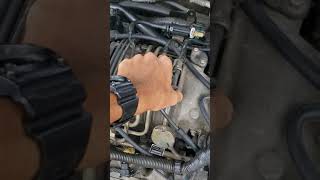
- Replacing the spark plug or ignition coil for cylinder 3. While these can cause a misfire code (P0303), they will not cause an injector circuit code (P0203). The P0203 code specifically points to an electrical fault in the fuel injector circuit, not a combustion problem. 🎬 Watch: Understanding the causes and fixes for code P0203
Most Likely Causes
- Failed Cylinder 3 Fuel Injector 🔴 High Probability → Shop Fuel Injector After many years and thousands of heat cycles, the internal coil windings of the injector can fail, leading to an open or shorted circuit. This is a very common failure item on high-mileage GM 3800 engines. The failure can be intermittent, often happening only when the injector is hot, causing the winding to expand and break the connection.
How to confirm: Swap the cylinder 3 injector with the cylinder 1 injector (another easily accessible one on the same bank). Clear the codes and drive the vehicle. If the code changes to P0201, the injector is confirmed to be faulty. Alternatively, measure the injector's resistance with a multimeter when the engine is cold and again when it's hot (if the problem is intermittent). It should be within 11-14 ohms. 🎬 See how to perform a fuel injector coil resistance test An infinite reading (OL) means it's open, and a reading near zero means it's shorted.
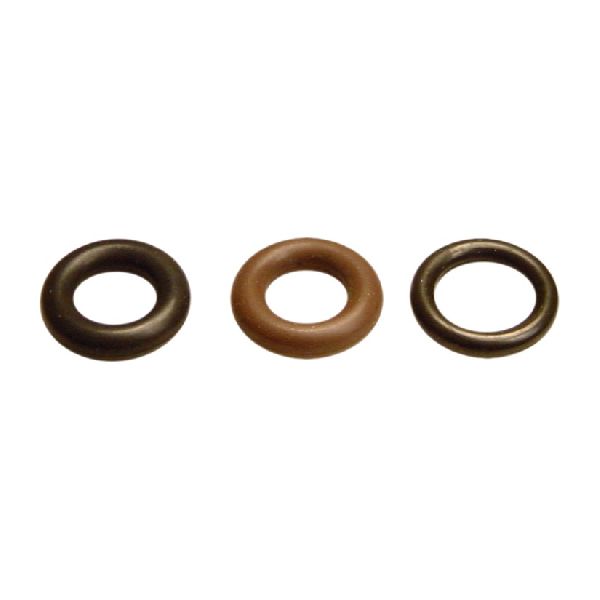
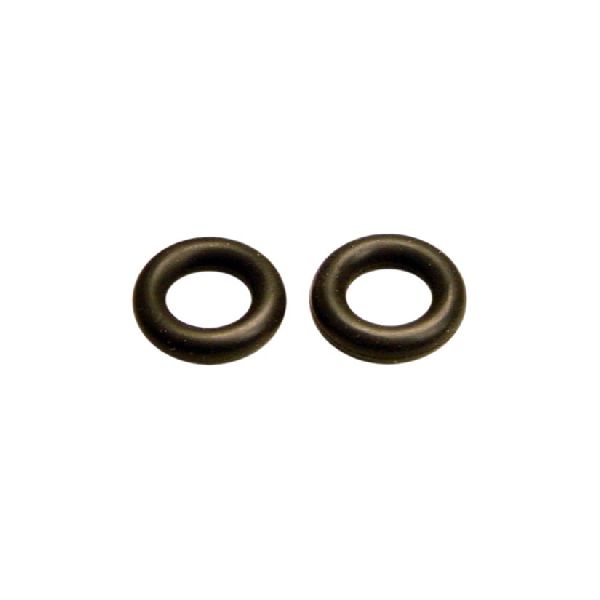
Typical fix: Replace the faulty fuel injector. It's recommended to replace the O-rings on adjacent injectors that are removed for access and apply a small amount of clean motor oil to the new O-rings for easier installation. 🎬 Watch: Brief walkthrough of the L67 supercharged injector replacement
Est. part cost: $50-$90 - Wiring Harness or Connector Issue 🟡 Medium Probability The wiring harness in the engine bay is exposed to heat and vibration, which can cause wires to become brittle, chafe, or break over time. The plastic connector itself can also become brittle and the locking tab can break, leading to a poor connection. On some GM platforms, harnesses are known to rub against the fuel rail or cylinder head.
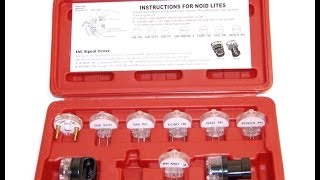
How to confirm: Visually inspect the wiring leading to the cylinder 3 injector for any signs of cracking, melting, or chafing. Check the connector for corrosion, backed-out pins, or a loose fit. Use a noid light to confirm that the PCM is sending a pulse signal to the connector; the light should flash steadily with the engine running. A 'wiggle test' on the harness and connector while the engine is running can also help identify an intermittent short or open circuit.
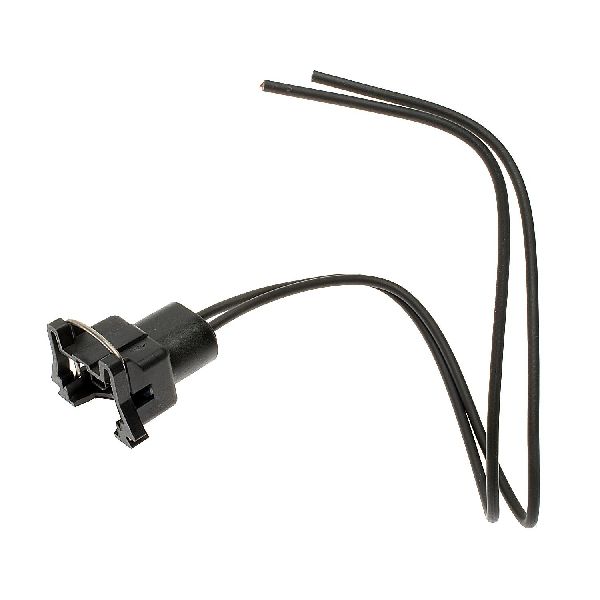
Typical fix: If the connector is damaged, replace it with a new pigtail connector (ACDelco PT2024 or equivalent). If a wire is broken or chafed, repair it with solder and heat-shrink tubing for a durable, weather-resistant seal.
Est. part cost: $15-$30
Rare But Worth Checking
- Powertrain Control Module (PCM) Failure: → Shop Engine Control Module (ECM) This is the least likely cause. The internal driver circuit (a transistor) for the injector can fail, but this should only be considered after the injector and wiring have been definitively ruled out as the problem. If multiple injector codes (e.g., P0201, P0203, P0205) are present simultaneously, it points more strongly toward a PCM or wiring harness issue.
Technical Service Bulletins (TSBs) & Recalls
- TSB Bulletin #PIP4924D: A manufacturer service bulletin notes that technicians may find Diagnostic Trouble Codes P0201 through P0206, including P0203, on vehicles exhibiting a Service Engine Soon Malfunction Indicator Lamp and a misfire. This bulletin highlights that these injector circuit codes are often found in conjunction with other fuel system codes like P0261 or P2146.
Diagnosis Steps
- Confirm the presence of code P0203 with an OBD-II scanner. Note if P0303 is also present, which is highly likely.
- Locate cylinder #3. On the transverse 3.8L V6, the cylinders are numbered 1-3-5 on the front bank (radiator side) and 2-4-6 on the rear bank (firewall side), arranged from passenger to driver side. Cylinder #3 is the middle cylinder on the easily accessible front bank.
- With the engine off, disconnect the electrical connector from the #3 injector. Inspect the connector and the injector pins for corrosion, damage, or pushed-out terminals.
- Use a multimeter set to Ohms (Ω) to measure the resistance across the two pins on the fuel injector. A good injector for this engine should read between 11 and 14 ohms. A reading of infinity (OL) indicates an open circuit, and a reading near zero indicates a short. Both mean the injector is bad. If the problem is intermittent, perform this test when the engine is hot and the symptom is present.
- If the resistance is good, check the wiring. Plug a 'noid light' into the injector's electrical connector and start the engine. The light should flash steadily, indicating the PCM is sending a signal. If there is no light or a very weak/solid light, there is a problem in the wiring harness or the PCM.
- If you don't have a noid light, perform a swap test. Relieve fuel pressure at the Schrader valve on the fuel rail (use a rag to catch gas). Disconnect the fuel rail and swap the #3 fuel injector with the #1 fuel injector. Re-seat the rail and clear the codes with the scanner.
- Drive the vehicle until the Check Engine Light returns. If the scanner now shows code P0201 ('Injector Circuit Malfunction - Cylinder 1'), the fuel injector is confirmed to be faulty and needs to be replaced.
- If the scanner still shows P0203 after the swap, the problem is in the wiring harness leading to the #3 injector connector or, in very rare cases, the PCM itself.
Parts You'll Likely Need
- Fuel Injector
(OEM #ACDelco 217-3427 (GM 12633784))— This is the most common point of failure for a P0203 code on this engine due to internal electrical faults from age and heat cycles. The original part number may have been superseded.
Trusted brands: ACDelco, Bosch, Delphi, Standard Motor Products (FJ1154)
OEM price range: $90-$120
Aftermarket price range: $50-$90 - Fuel Injector Connector Pigtail
(OEM #ACDelco PT2024 (GM 13576410))— If the wiring inspection reveals a broken or corroded connector, replacing the pigtail is the correct repair. The plastic can become brittle and fail.
Trusted brands: ACDelco, Dorman
OEM price range: $25-$40
Aftermarket price range: $15-$25
Related Codes That Often Appear With This One
- P0303 — P0303 means 'Cylinder 3 Misfire Detected.' Since the P0203 code indicates the injector isn't firing correctly, the cylinder won't receive fuel for combustion, leading to a misfire. These two codes almost always appear together.
Platform-Specific Known Issues
- Heat-Soak Injector Failure: A common owner complaint is that the car runs fine when cold, but after it warms up and is shut down for a short period (e.g., going into a store), it will start up with a severe misfire and the P0203/P0303 codes. This points to an injector whose internal coil winding opens up when hot, then works again after it fully cools down.
Mechanic-Grade Diagnostic Values
- Fuel Injector Coil Resistance — expected: 11 to 14 ohms when engine temperature is between 50-90°F. Resistance will be higher when the engine is hot.. Failure: A reading of infinity (OL) indicates an open circuit. A reading near zero ohms indicates a shorted circuit. A reading significantly outside the 11-14 ohm range when cool indicates a faulty injector.
- Fuel Pressure (Key On, Engine Off) — expected: 48 to 55 PSI for the Series II L67 engine.. Failure: Pressure significantly below 48 PSI could indicate a weak fuel pump or clogged filter, though this would typically affect all cylinders, not just one.
- Fuel Pressure (Engine Idling) — expected: 3 to 10 PSI less than the KOEO reading (approx. 38-52 PSI).. Failure: Pressure should hold steady. A rapid drop could indicate a leak or a faulty fuel pressure regulator.
- Injector Pulse Width (at idle) — expected: Approximately 3.4 milliseconds at idle on a warm engine.. Failure: A scan tool showing zero or erratic pulse width for cylinder 3 would point to a PCM or wiring issue.
- Injector Balance Test (Pressure Drop) — expected: The pressure drop for each injector should be within 1.5 PSI (or 20 kPa) of the average pressure drop across all six injectors.. Failure: If injector #3 shows a pressure drop significantly different from the others, it indicates a flow problem (clogged or leaking).
Scan Tool Commands That Help
- GM Tech2 or equivalent bidirectional scanner: Fuel Injector Balance Test — This test is used to identify a mechanically failing injector (clogged or leaking) after electrical tests (resistance, noid light) are inconclusive. It precisely measures the pressure drop caused by firing each injector, comparing their flow rates.
- GM Tech2 or equivalent bidirectional scanner: Cylinder Power Balance / Injector Disable — This function allows the technician to disable one injector at a time while monitoring the RPM drop. If disabling cylinder #3 results in little or no RPM drop compared to other cylinders, it confirms that cylinder #3 was not contributing power, which is the expected result with a P0203 code.
Wiring & Ground Locations
- Cylinder 3 Injector Control Wire — Pink/Black wire running from the fuel injector connector to the PCM.. This is the specific wire that the PCM uses to ground (and thus fire) the cylinder 3 fuel injector. A break, short to ground, or short to voltage on this wire will cause a P0203 code.
- PCM Connector C1, Pin 3 — Pin 3 of the BLUE PCM connector. The PCM is located in the air cleaner assembly on the left front side of the engine compartment.. This is the specific pin on the PCM for the cylinder 3 injector control circuit. A continuity test should be performed from this pin to the injector connector to rule out a wiring break.
- Main Engine-to-Chassis Grounds — A primary ground is located on a transmission bolt/stud near the starter. Another is on the cylinder head near the thermostat housing.. While not specific to one injector, a poor main engine ground can cause a host of bizarre electrical issues, including erratic sensor and actuator behavior. Verifying these grounds are clean and tight is a crucial step in any electrical diagnosis.
- Injector Power Feed (Pink Wire) — All six injectors receive 12V power from a common pink wire, which is energized when the key is on.. If there is no 12V power at the injector #3 connector, the problem is upstream of the injector. Since this wire feeds all injectors, a problem here would likely cause multiple injector codes (e.g., P0201, P0202, P0203, etc.) and a no-start condition.
Real Owner Repair Stories
- Automotive Forums Car Chat user (2002 Buick Regal GS, 3.8L Supercharged, 166,000 miles) — Car runs fine when cold. After warming up and sitting for a short time, it has a severe miss with flashing check engine light and codes P0203 and P0303.
❌ Tried (didn't work) A shop quoted $440 to replace the injector, which the owner declined.
✅ What actually fixed it The owner replaced the cylinder 3 fuel injector themselves, which resolved the problem. This is a classic example of heat-soak failure where the injector's internal coil fails only when hot. - 2CarPros forum user (2002 Buick Regal 3.8L) — No injector pulse on any cylinder, no-start condition, 54 lbs fuel pressure confirmed. Vehicle was driven through deep water.
❌ Tried (didn't work) Initial fumbling and checking for voltage.
✅ What actually fixed it The crankshaft position (CKP) sensor electrical connector, located behind the splash guard, had filled with water. This prevented the PCM from seeing an RPM signal, so it would not fire the injectors. Drying the connector resolved the no-start condition without replacing any parts.
OEM Part Supersession History
Unknown original part number→GM 12633784 (also sold as ACDelco 217-3427)— Part consolidation and design updates over time.
Heads up: While this part number is listed for many GM vehicles, it is critical to verify fitment for the 3.8L L67 engine. Some sources list this part for newer, direct-injection engines. Always confirm with the parts supplier that it is compatible with a 2002 Buick Regal 3.8L SC.
Diagnostic Flowchart
Used vs. New Parts: Buying Guide for This Vehicle
When a used part is the smart pick: For this repair, using a used fuel injector from a junkyard is a reasonable, low-cost diagnostic step, especially if you pull it yourself. If swapping a used injector from another cylinder on your own car isn't possible, a junkyard injector can help confirm the diagnosis before you spend money on a new part. Used wiring connectors or a full engine harness are also good value if your current harness is damaged.
Donor-vehicle mileage cap: roughly under 150000 miles for the part to have meaningful remaining life.
What to inspect on the donor part:
- For injectors, look for a donor vehicle with lower mileage and no obvious signs of engine fire or front-end collision damage.
- Inspect the injector's plastic connector for cracks or brittleness before removal.
- When pulling a wiring harness, carefully inspect for any cuts, melted sections, or previous repairs (indicated by non-factory electrical tape or butt connectors).
- Ensure the locking tabs on any plastic connectors are intact.
OEM-only on this vehicle (don't cheap out):
- Powertrain Control Module (PCM) - While a used PCM can be installed, it will require reprogramming with a Tech2 scanner to match the vehicle's VIN and options (VATS/security). This often makes a professionally refurbished, pre-programmed unit a better choice than a junkyard part.
Aftermarket brands forum-validated for this vehicle:
- ACDelco (OEM)
- Bosch
- Delphi
- Standard Motor Products (SMP)
Brands owners have reported issues with on this vehicle:
- Avoid unbranded, 'no-name' injectors from online marketplaces. Forum discussions frequently highlight issues with poor flow matching, incorrect spray patterns, and premature failure with cheap, non-reputable brands.
Real Owner Stories
Aggregated from forums and TSBs cited above. Mileages and costs reflect what owners reported in those sources.
2002 Buick Regal GS 3.8L Supercharged V6 — 166000 miles
Symptoms: The car drove perfectly fine from a cold start. However, if driven until warm and then parked for a short period (under an hour), it would start back up with a severe misfire and a flashing Check Engine Light, consistently logging codes P0203 and P0303.
What fixed it: The cause was a heat-sensitive failure in the cylinder 3 fuel injector. Replacing the faulty fuel injector resolved the misfire and cleared the codes.
Source hint: Automotive Forums Car Chat - 'P0203 & P0303 when engine is warmed up'
Related OBD-II Codes
Frequently Asked Questions
My 2002 Regal only gets the P0203 code and misfires after it's been driven and then sits for a few minutes. What's going on?
Where is cylinder #3 located on my Regal's 3.8L Supercharged engine?
How can I test the fuel injector on my Buick to see if it's bad?
Is there a way to confirm the injector is the problem before I buy a new one?
What's the part number for the injector wiring connector if mine is broken?
I checked the injector and it seems okay. What else could cause P0203?
What other GM cars have the same P0203 issue as my Regal GS?
Helpful Videos

We Have This Part in Stock


The information in this article is provided for general reference and educational purposes only. Vehicle specifications, procedures, and part compatibility can vary by production date, trim level, and region. Always consult your vehicle's factory service manual and verify part numbers before purchasing or performing repairs. Safety-critical components such as airbags, seat belts, and braking systems should be installed by a qualified professional.
- Buick Regal:
- 🧭 Diagnostic Flowchart
- 🎬 Helpful Videos
- 🛍️ Shop This Part
- What's Unique About the 2002-2002 Buick Regal
- Symptoms You May Notice
- Most Likely Causes
- Rare But Worth Checking
- Technical Service Bulletins (TSBs) & Recalls
- Diagnosis Steps
- Parts You'll Likely Need
- Related Codes That Often Appear With This One
- Platform-Specific Known Issues
- Mechanic-Grade Diagnostic Values
- Scan Tool Commands That Help
- Wiring & Ground Locations
- Real Owner Repair Stories
- OEM Part Supersession History
- Used vs. New Parts: Buying Guide for This Vehicle
- Real Owner Stories
- 2002 Buick Regal GS 3.8L Supercharged V6 — 166000 miles
- Related OBD-II Codes
- Frequently Asked Questions
- 🎟️ Get 5% Off