

P0203 on 2015-2024 Ford Transit: Injector Circuit Malfunction Causes and Fixes
P0203 on a Ford Transit indicates an electrical fault with the cylinder 3 fuel injector circuit. The most common causes are a failed fuel injector or a wiring issue at the injector's connector. Expect to pay $75-$200 for a new injector and consider it a moderately difficult DIY job.
- P0203 is an electrical fault for the cylinder 3 injector circuit, not a mechanical or fuel mixture issue.
- The most likely causes are a bad fuel injector or a damaged wire/connector.
- Diagnosis involves using a multimeter to check resistance, a noid light to check for a signal, and potentially swapping injectors to confirm the fault.
- Driving with this code is not recommended as it can cause expensive damage to the catalytic converter.
- Check for wiring harness chafing, especially near the passenger side of the engine bay, as this is a known issue on similar Ford platforms.
What's Unique About the 2015-2024 Ford Transit

For the 2015-2024 Ford Transit, which is equipped with either Port Fuel Injection (PFI) on the 3.7L V6 or a combination of direct and port injection on the 3.5L EcoBoost V6, this code points squarely at an electrical issue with a *port* fuel injector. While the injector itself can fail, wiring harness problems are a significant consideration due to engine vibrations and heat cycles causing chafing or corrosion. A known issue on related Ford platforms like the F-150 involves the engine wiring harness rubbing against an A/C line stud, which can cause injector circuit faults. While no specific TSB for the Transit points to this exact issue, the similar engine architecture makes it a point of interest for inspection.
Symptoms You May Notice
- Check Engine Light is on
- Rough idle and engine vibration
- Engine misfire, sometimes felt as shaking or hesitation
- Reduced engine power and poor acceleration
- Decreased fuel economy
- Potential engine stalling
- Possible black smoke from the exhaust or oil dilution
- Replacing the spark plug or ignition coil for cylinder 3. While these can cause a misfire (P0303), the P0203 code is specific to the injector's electrical circuit, not the ignition system. A P0203 will cause a P0303, but a P0303 can occur without a P0203.
Most Likely Causes

- Faulty Cylinder 3 Fuel Injector 🔴 High Probability → Shop Fuel Injector Fuel injectors are electro-mechanical parts that can fail internally over time due to heat cycles and mileage. The internal coil can develop an open or short circuit, leading to an out-of-spec resistance reading.
How to confirm: Disconnect the injector and measure its internal resistance with a multimeter. Compare the reading to the manufacturer's specification (typically 11-18 ohms for Ford PFI injectors). A reading of infinity (open circuit) or near zero (short circuit) indicates a bad injector. A more definitive test is to swap the cylinder 3 injector with an adjacent one (e.g., cylinder 2), clear the codes, and run the engine. If the trouble code changes to P0202, the injector is confirmed to be faulty.
Typical fix: Replace the faulty fuel injector. It is highly recommended to replace all O-rings and seals on the new injector to prevent fuel or vacuum leaks.
Est. part cost: $75-$200 - Wiring or Connector Issue 🟡 Medium Probability Engine vibration and heat can cause wiring to chafe, break, or corrode over time, especially where the harness is routed near hot components or sharp edges. The plastic connector at the injector can also become brittle, and its terminal pins can loosen or corrode.
How to confirm: Visually inspect the wiring harness and connector for cylinder 3 for any signs of damage, melting, or corrosion. With the engine running, carefully wiggle the connector and wiring to see if it affects the engine idle. Use a noid light plugged into the injector connector to verify the PCM is sending a pulse signal. 🎬 See how to diagnose Ford injector circuit faults with a multimeter. The light should flash steadily. If it doesn't flash, the problem is in the wiring or the PCM. If it does flash, but the injector resistance is good, the issue may be a poor connection at the pins.
Typical fix: Repair the damaged section of wire or replace the injector pigtail connector. Ensure the connection is secure and apply dielectric grease to the connector 🎬 Watch this video for a quick fix on Ford injector circuits. to prevent future moisture intrusion and corrosion.
Est. part cost: $15-$40
Rare But Worth Checking
- Powertrain Control Module (PCM) Failure: → Shop Engine Control Module (ECM) This is the least likely cause. The PCM contains 'drivers' that control each injector. While a driver can fail, all other possibilities should be exhausted before condemning the PCM. A failed PCM driver will result in no pulse signal from the noid light test, even with good wiring and a good injector. It's critical to ensure the injector or wiring is not shorted to ground, as this can damage the driver in a new PCM.
- Melted Fuse in Battery Junction Box (BJB): On related Ford platforms like the F-150, a known issue (covered by TSB 15-0137) is the fuel pump relay fuse (Fuse 27) melting in the BJB, causing a loss of fuel pressure and multiple injector codes, including P0203. While this TSB doesn't specifically list the Transit, it's worth inspecting the BJB for signs of overheating at the fuel pump fuse if multiple injector codes are present.
Diagnosis Steps
- Retrieve all stored trouble codes with an OBD-II scanner. Confirm P0203 is present and check for any other codes like P0303 or other P020x codes.
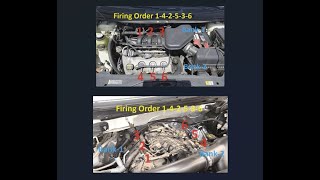
- Locate cylinder 3. On Ford V6 engines (3.5L/3.7L), the cylinders are numbered 1-2-3 on the passenger side (front bank, front to back) and 4-5-6 on the driver's side (rear bank, front to back). Cylinder 3 is the rearmost cylinder on the passenger side bank. 🎬 Watch: Visual guide to Ford V6 cylinder locations and banks.
- Visually inspect the fuel injector connector and nearby wiring for any obvious signs of damage, such as frayed wires, melting, corrosion, or rodent damage.
- Perform a 'wiggle test'. With the engine idling, carefully wiggle the connector and wiring for the cylinder 3 injector. If this causes a change in the engine's running condition, a wiring or connection issue is likely.
- Test the injector pulse with a noid light. Disconnect the injector harness, plug in the appropriate noid light, and have an assistant crank or start the engine. The light should flash steadily, indicating the PCM is sending a signal. If it doesn't flash, clear the codes and try again, as the PCM may shut down the driver to protect it. If it still doesn't flash, the problem is in the wiring or the PCM.
- Test the injector resistance. Disconnect the injector and use a multimeter set to Ohms to measure the resistance between its two electrical terminals. A typical reading for a Ford port injector should be between 11 and 18 ohms. A reading of infinity (OL) indicates an open circuit, while a reading near zero indicates a short circuit. Either means the injector is bad.
- If tests are inconclusive, swap the cylinder 3 injector with another cylinder's injector (e.g., cylinder 2). Clear the codes and run the engine. If the code returns as P0202 ('Injector Circuit / Open - Cylinder 2'), the injector is faulty. If P0203 returns, the problem is in the wiring or PCM.
- If the injector and pulse are good, check for continuity on the control wire between the injector connector and the PCM connector. Also, check the power wire for battery voltage with the key on.
Parts You'll Likely Need

- Fuel Injector
(OEM #CM-5188 (for 3.7L V6) / CM-5211 (for 3.5L EcoBoost V6 Port Injector))— This is the most common point of failure for a P0203 code when the internal coil of the injector fails.
Trusted brands: Motorcraft, Bosch, Standard Motor Products
OEM price range: $90-$180
Aftermarket price range: $40-$130 - Fuel Injector Connector Pigtail — If the fault is in the connector itself (corroded pins, broken locking tab, damaged wires), replacing the pigtail is the standard repair.
Trusted brands: Motorcraft, Dorman
OEM price range: $25-$40
Aftermarket price range: $15-$25
Related Codes That Often Appear With This One
- P0303 — P0303 means 'Cylinder 3 Misfire Detected'. Since a malfunctioning injector circuit prevents proper fueling for cylinder 3, it will almost always cause a misfire, triggering both codes.
- P0200 — P0200 stands for 'Injector Circuit Malfunction'. This is a general code that may appear alongside a specific cylinder code like P0203, especially if the fault is intermittent or affects the shared power/ground supply to the injectors.
- P0316 — P0316 indicates a 'Misfire Detected on Startup (First 1000 Revolutions)'. A dead injector circuit on cylinder 3 will cause an immediate misfire from a cold start, often logging this code along with P0203 and P0303.
Technical Service Bulletins (TSBs) & Recalls
- TSB 15-0137 (F-150): While not for the Transit, this TSB addresses a melting fuel pump fuse in the BJB that can cause multiple injector circuit codes, including P0203. This is relevant if multiple P020x codes are present.
- TSB 22-2223 (F-150): Details a known issue on 2021-2022 F-150s with 3.5L EcoBoost engines where the engine harness chafes on an A/C stud, causing injector circuit codes. This provides a valuable inspection point for Transit owners with the same engine.
- Bulletin #SSM 49759: A manufacturer service bulletin notes that an illuminated MIL with codes P0201, P0202, P0203, P0204, P0205 or P0206 may occur, requiring pinpoint tests in the PC/ED manual.
Platform-Specific Known Issues
- Wiring Harness Chafing: While not documented by a Transit-specific TSB, the related F-150 platform has a known issue (TSB 22-2223) where the engine harness can rub against an A/C hose mounting stud near the passenger side valve cover, causing injector circuit faults. It is worth inspecting this area on the Transit for similar potential chafing points.
Mechanic-Grade Diagnostic Values
- Fuel Injector Coil Resistance — expected: 11 to 18 Ohms. Failure: A reading of infinity (OL) indicates an open coil, while a near-zero reading indicates a shorted coil.
- Injector Power Wire Voltage (Key On, Engine Off) — expected: ~12.5V (Battery Voltage). Failure: No voltage indicates a problem with the power supply wire or a blown fuse.
- Injector Control Wire Voltage (Key On, Engine Off) — expected: Should show battery voltage (power flows through the injector coil from the power wire).. Failure: No voltage when the power side is confirmed good points to an open injector coil.
- Injector Pulse Width at Idle (Scan Tool Live Data) — expected: ~1-5 milliseconds (ms). Failure: Zero or erratic pulse width readings for cylinder 3 suggest a circuit or PCM driver issue.
Scan Tool Commands That Help
- Ford IDS (Integrated Diagnostic System): Power Balance Test — This graphical test displays the contribution of each cylinder. A cylinder with a P0203 fault will show a significant drop in performance compared to the others, confirming the misfire's location without disassembly.
- Ford IDS (Integrated Diagnostic System) or high-end bidirectional scanner: Injector Buzz Test / Actuator Test — This command allows the technician to manually fire each injector one by one. When cylinder 3 is commanded, you should hear an audible 'click' from the injector. If there is no click, but a noid light flashes on the connector, the injector itself is mechanically failed or stuck.
Wiring & Ground Locations

- Cylinder 3 Injector Connector — Rearmost fuel injector on the passenger side of the engine.. This is the primary connection point to test. The power wire is typically Yellow-Blue (YE-BU) and the control (ground pulse) wire from the PCM is Violet-Gray (VT-GY) on some models. Always verify with a vehicle-specific diagram.
- PCM Connector C175B — This is one of the main connectors at the Powertrain Control Module, typically located in the engine bay near the firewall or battery.. The control wire for the cylinder 3 injector terminates here. For example, on some Ford V6 applications, the injector 3 control wire is at Pin 56 of C175B. This allows for continuity testing of the wire from the PCM to the injector.
- Ground G103 / G104 — Common Ford engine bay ground points. G103 is often found on the cowl, above the brake booster, while G104 can be on the inner fender.. While the PCM directly grounds the injector, the PCM itself relies on clean, solid main ground connections. A corroded or loose main ground can cause a host of bizarre electrical issues, including phantom injector circuit faults.
Real Owner Repair Stories
- YouTube channel 'Bearded Ford Tech' (2017 Ford Transit T-250 with 3.7L V6) — Check engine light on, engine misfiring. Codes P0203 (Injector Circuit Open), P0303 (Cylinder 3 Misfire), and P0316 (Misfire on Startup) were present.
❌ Tried (didn't work) The technician first performed pinpoint tests on the wiring. He verified 12.5V (source voltage) at the power pin on the injector connector, confirming the power supply was good.
✅ What actually fixed it The technician measured the resistance of the cylinder 3 fuel injector and got an 'O.L.' (Open Line) reading, indicating an internal open circuit. He compared this to a known-good injector (cylinder 2), which read 12.3 Ohms. Replacing the faulty cylinder 3 fuel injector resolved all codes and symptoms. - NHTSA ODI #11351494: An owner reported a misfire on cylinder 3 with code P0203 occurring at 75,000 miles, following a previous transmission replacement.
- NHTSA ODI #10405277: A driver reported that their vehicle threw codes P0010, P0201, P0202, P0203, and P0204, forcing them to pull over immediately; the dealer inspected electrical connections and reassembled the components.
OEM Part Supersession History
BR3Z-9F593-B→CM-5188— Standard part number update and consolidation for service replacement.
Model Year Variations Within This Range
- 2020-2024: For the 2020 model year refresh, the 3.7L V6 was replaced by a new naturally aspirated 3.5L V6 (non-EcoBoost) as the base engine. While the cylinder numbering and general diagnosis for a P0203 remain the same, technicians should verify the correct part number for the fuel injector, as it may differ from the earlier 3.7L engine.
Diagnostic Flowchart
Used vs. New Parts: Buying Guide for This Vehicle
When a used part is the smart pick: A used fuel injector from a reputable salvage yard can be a cost-effective option, especially if the budget is tight. Since it's an external engine part that doesn't require major disassembly to access on the V6 engines, the labor cost to replace it again if the used part fails is moderate.
Donor-vehicle mileage cap: roughly under 80000 miles for the part to have meaningful remaining life.
What to inspect on the donor part:
- Check for a clean, low-mileage donor vehicle that was involved in a rear or side collision, suggesting the engine was running well before the accident.
- Inspect the injector's plastic body and connector for any cracks, brittleness, or signs of heat damage.
- Ensure the electrical pins inside the connector are straight and free of corrosion.
- Ask the seller if they can test the resistance of the injector before purchase; it should fall within the 11-18 ohm range.
OEM-only on this vehicle (don't cheap out):
- Powertrain Control Module (PCM) - Aftermarket or improperly programmed used PCMs can cause a host of issues, including immobilizer problems. If the PCM is condemned, a new, VIN-matched unit from Ford or a specialist programming service is the only reliable fix.
Aftermarket brands forum-validated for this vehicle:
- Bosch
- Standard Motor Products (SMP)
- GB Remanufacturing
Brands owners have reported issues with on this vehicle:
- Unbranded, no-name injectors from online marketplaces should be avoided. They often have inconsistent flow rates and high failure rates, leading to persistent performance issues even if they resolve the electrical code.
Real Owner Stories
Aggregated from forums and TSBs cited above. Mileages and costs reflect what owners reported in those sources.
2015 Ford Transit
Symptoms: An intermittent misfire with code P0203.
What fixed it: The user was asking for advice and did not report the final solution.
Source hint: Reddit r/MechanicAdvice
2015 Ford Transit 2.2 tdci
Symptoms: P0201, P0203 and P0204 codes were thrown.
What fixed it: The owner diagnosed a wiring issue by noting the fault did not move when injectors were swapped. The fix involved repairing the wiring at the injector plug.
Source hint: Ford Transit Forum
2021-2022 Ford F-150 with 3.5L EcoBoost
Symptoms: Injector circuit faults, such as P0203.
What fixed it: The issue was a known problem where the engine harness chafes against an A/C hose mounting stud. The fix is to inspect and repair the damaged wiring in that specific location.
Source hint: TSB 22-2223 (F-150)
Related OBD-II Codes
Frequently Asked Questions
Where is cylinder 3 located on my 2015-2024 Ford Transit's V6 engine?
What is the correct resistance for a fuel injector on my Ford Transit?
I heard about a wiring harness issue on the F-150 causing this code. Could that be the problem on my Transit?
How can I confirm the injector is bad without just replacing it?
What is a 'noid light' and why is it mentioned for diagnosing P0203?
My Transit has P0203 along with other injector codes like P0201 and P0204. What could cause this?
Helpful Videos


We Have This Part in Stock


The information in this article is provided for general reference and educational purposes only. Vehicle specifications, procedures, and part compatibility can vary by production date, trim level, and region. Always consult your vehicle's factory service manual and verify part numbers before purchasing or performing repairs. Safety-critical components such as airbags, seat belts, and braking systems should be installed by a qualified professional.
- Ford Transit:
- 🧭 Diagnostic Flowchart
- 🎬 Helpful Videos
- 🛍️ Shop This Part
- What's Unique About the 2015-2024 Ford Transit
- Symptoms You May Notice
- Most Likely Causes
- Rare But Worth Checking
- Diagnosis Steps
- Parts You'll Likely Need
- Related Codes That Often Appear With This One
- Technical Service Bulletins (TSBs) & Recalls
- Platform-Specific Known Issues
- Mechanic-Grade Diagnostic Values
- Scan Tool Commands That Help
- Wiring & Ground Locations
- Real Owner Repair Stories
- OEM Part Supersession History
- Model Year Variations Within This Range
- Used vs. New Parts: Buying Guide for This Vehicle
- Real Owner Stories
- 2015 Ford Transit
- 2015 Ford Transit 2.2 tdci
- 2021-2022 Ford F-150 with 3.5L EcoBoost
- Related OBD-II Codes
- Frequently Asked Questions
- 🎟️ Get 5% Off